
Myotonic Goat
Also known as: myotonic, tennessee fainting goat, fainting goat
The Myotonic goat excels at thriving on diverse forage and requires minimal intervention, simplifying management for farmers seeking hardy livestock. Originating in the United States, these "fainting goats" are renowned for their dramatic muscle stiffening when startled, a unique trait that also contributes to their meat quality and kidding ease. Their exceptional browsing and foraging abilities make them ideal for silvopasture and rotational grazing systems, effectively clearing brush and improving pasture health. While not their primary focus, Myotonics offer good dual-purpose potential and demonstrate impressive parasite resistance, further reducing the need for intensive management.
Regenerative Quick Profile
Best Suited For
Climates: Temperate to humid subtropical, with distinct seasons and moderate rainfall.
Terrain: Best for rolling to steep terrain
Scale: Excellent for small homesteads (1-10 animals)
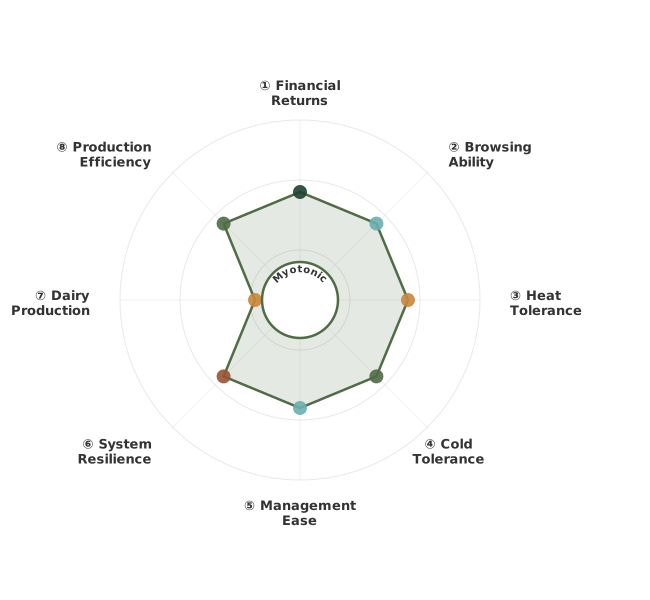
How These Traits Are Calculated
Trait dimensions are ordered clockwise starting from the top of the chart (12 o'clock position):
1. Financial Returns
Annual income per doe from kids, milk, or fiber
WHAT: Evaluates annual profit potential across meat (kid sales), dairy (milk production), fiber (cashmere/mohair), or dual-purpose value. Combines production output with input costs, kidding rates, and market premiums.
WHY: Goat profitability varies by enterprise type—dairy goats producing 1,500-2,500 lbs milk annually generate $400-800 revenue versus meat goats at $150-300 from kid sales. Understanding income potential by enterprise type helps match breeds to market opportunities and farm goals.
HOW: Calculated from enterprise-specific production data (milk yield, kid growth, fiber weight) combined with efficiency traits and costs. Exceptional (≥2.6): high output for enterprise type + low inputs + strong markets. Typical (1.8-2.5): moderate production and costs. Limited (<1.8): low output or premium-dependent without reliable access.
2. Browsing Ability
Effectiveness at consuming brush, weeds, and woody plants
WHAT: Measures goat effectiveness at controlling unwanted vegetation—clearing brush, managing invasive plants, consuming woody browse—while providing land management services that reduce fuel loads and restore degraded pastures.
WHY: Browsers reduce land clearing costs $200-600 per acre compared to mechanical methods while providing income. Effective browsers tackle multiflora rose, kudzu, poison ivy, and small trees where grazers fail, converting liability into profitability.
HOW: Rated from database trait 'browsing_ability' and documented land management effectiveness. Exceptional (≥2.6): aggressive browsers, thrives on brush, excellent weed control. Typical (1.8-2.5): moderate browsing with mixed diet. Limited (<1.8): prefers grass, minimal brush consumption.
3. Heat Tolerance
Milk production and health in hot weather above 85°F (29°C)
WHAT: Evaluates adaptation to sustained heat above 85°F (29°C), measuring production maintenance, heat stress resistance, and cooling behavior. Critical for dairy goats where heat drops milk production 20-40%.
WHY: Heat-sensitive breeds stop milking during summer peaks, creating 2-4 month income gaps in hot climates. Heat-adapted breeds maintain production year-round, provide consistent cash flow, and eliminate need for expensive cooling systems (fans, misters, air conditioning).
HOW: Rated from database trait 'heat_tolerance' based on documented characteristics. Exceptional (≥2.6): tropical origins, maintains production in 95°F+ (35°C+). Typical (1.8-2.5): moderate tolerance with shade and water. Limited (<1.8): production drops significantly above 85°F, requires cooling.
4. Cold Tolerance
Performance in cold weather below 20°F (-7°C)
WHAT: Evaluates adaptation to sustained cold below 20°F (-7°C), measuring coat thickness, metabolic adaptation, and winter performance. Important for northern climates with harsh winters and winter kidding systems.
WHY: Cold stress increases feed requirements 30-50%, complicates kidding (newborns at high risk), and drops milk production in dairy breeds. Cold-hardy breeds maintain production and kid successfully outdoors where others require heated barns.
HOW: Rated from database trait 'cold_tolerance' based on breed characteristics. Exceptional (≥2.6): thick winter coats, northern origins, thrives in <0°F (-18°C). Typical (1.8-2.5): moderate hardiness, basic shelter sufficient. Limited (<1.8): requires heated shelter, struggles with winter kidding.
5. Management Ease
Handling temperament and kidding ease
WHAT: Measures daily management simplicity combining temperament (calm vs flighty), kidding ease (unassisted births), and fence respect. Easy breeds cooperate with routines while difficult breeds create constant challenges.
WHY: Difficult goats increase labor 2-3× through kidding interventions, frequent escapes requiring fence repairs, and handling challenges (especially in dairy operations with twice-daily milking). Calm breeds with easy kidding enable efficient one-person operations.
HOW: Weighted assessment: temperament (40%), kidding ease (35%), fence respect (25%). Exceptional (≥2.6): calm and cooperative, unassisted kidding, respects fencing. Typical (1.8-2.5): manageable with experience. Limited (<1.8): flighty or aggressive, frequent interventions, notorious escapers.
6. Herd Resilience
Health and productivity under stress conditions
WHAT: Evaluates herd robustness across disease resistance, parasite tolerance, drought adaptation, and general hardiness. Measures ability to maintain health and production through typical challenges that affect goats.
WHY: Resilient breeds reduce veterinary costs, survive parasite pressure that kills others (goats being highly susceptible), thrive on sparse forage during drought, and maintain productivity through weather extremes. This determines whether herds thrive independently or require constant medical interventions.
HOW: Composite assessment across multiple resilience factors. Exceptional (≥2.6): exceptional health + parasite resistant + drought tolerant + hardy. Typical (1.8-2.5): standard resilience with routine care. Limited (<1.8): health-sensitive, requires intensive management.
7. Milk Production
Annual milk yield and lactation length for dairy breeds
WHAT: Measures milk output for dairy breeds, evaluating annual yield (1,200-3,000+ lbs), lactation length (8-12 months), milk quality (butterfat, protein), and production consistency. Only relevant for dairy-type breeds.
WHY: Dairy goats provide daily income through milk sales, cheese production, or value-added products. High producers (2,000+ lbs) generating $3-6 daily revenue make dairy operations viable at small scales (10-20 does) where lower producers require larger herds to achieve profitability.
HOW: Rated from database dairy production data and breed standards. Exceptional (≥2.6): 2,400+ lbs annually, 10+ month lactations, high quality milk. Typical (1.8-2.5): 1,500-2,400 lbs, standard lactations. Limited (<1.8): <1,500 lbs or short lactations, primarily meat-type.
8. Production Efficiency
Output relative to feed consumed and care required
WHAT: Measures how effectively goats convert feed into saleable output (milk, meat, fiber), combining feed efficiency, foraging ability, and growth/production rates. Efficient breeds maximize output per dollar of feed input.
WHY: Feed costs represent 50-70% of operating expenses. Breeds converting 4:1 versus 6:1 (feed:output) save $100-200 annually per goat. Excellent foragers reduce purchased feed needs 30-50%, making the difference between profitable and marginal operations.
HOW: Weighted formula: feed efficiency (40%), foraging ability reduces purchased feed (35%), production rate (25%). Exceptional (≥2.6): excellent feed conversion + strong foragers + high output. Typical (1.8-2.5): moderate efficiency. Limited (<1.8): poor feed conversion or low output relative to inputs.
Regenerative Advantages
- Parasite Resistance: Their inherent hardiness and effective foraging often correlate with good natural resistance to parasites.
- Hardiness: Myotonic goats exhibit remarkable resilience, thriving in diverse conditions with minimal care due to their unique physiology and selective breeding history.
- Kidding Ease: These goats possess strong maternal instincts, consistently delivering unassisted births and producing vigorous offspring with few complications.
- Water Requirements: Their robust nature and adaptability suggest efficient nutrient and water utilization, indicating a lower-than-average water requirement.
- Small Scale Suitability: Their 'fainting' trait makes them easy to contain and handle. They are hardy and efficient grazers, ideal for small-scale operations.
Know the Debate
- Myotonic meat quality generally good, but commercial viability debated.
- Hardiness and foraging excel; compare growth rates with specialized breeds.
- Adaptable to low-input and diverse regenerative systems.
Value Streams
- Meat production
- Nutrient cycling and soil building
- Brush clearing and fire risk reduction
- Invasive species control
Experience Level
Consult local experts for handling requirements
4
Know the Debate
Myotonic goats are recognized for their hardiness, efficient foraging on diverse vegetation, and unique 'fainting' trait, making them appealing for...
Know the Debate
Myotonic goats are recognized for their hardiness, efficient foraging on diverse vegetation, and unique 'fainting' trait, making them appealing for...
Myotonic goats are recognized for their hardiness, efficient foraging on diverse vegetation, and unique 'fainting' trait, making them appealing for regenerative systems. Their suitability as a meat breed, however, sparks discussion. While they thrive on marginal lands and offer good dual-purpose potential with minimal inputs, questions arise regarding their growth rates and carcass yields compared to specialized meat breeds for commercial operations. Management involves balancing their unique needs, such as secure fencing and social interaction, with typical goat husbandry practices.
Myotonic goat meat quality and commercial viability?
Good dual-purpose meat, hardy on diverse forage
Field experience and heritage breed focus suggest Myotonics offer good meat quality, thrive on varied forages with minimal input, and are highly resilient. Their foraging ability makes them excellent for brush control and pasture improvement in regenerative systems.
Sources behind this view
Sources behind this view
 Videos & Podcasts
-
The biggest challenge for goat grazing businesses is the lack of sufficient hearty goats in the US, despite rising prices and demand. Producers need to focus on genetics and diverse revenue streams for profitability.

-
Start meat goat operations small and expand gradually. Track average daily gain (ADG) at weaning (90-100 days) using scales and ear tags to market premium animals, especially in 100% grass-fed systems.

 From the Web
-
Goat meat production offers significant opportunities in regenerative agriculture, driven by cultural demand, its leanness, and unique ecosystem services. Goats effectively manage brush, improve land utilization, and can provide a greater return on investment than cattle, aligning with sustainable ranching practices.
Slower growth/yield than specialized meat breeds for commercial focus
Academic research suggests that while Myotonics have good meat palatability, their growth rates and muscling may not match specialized breeds like Boer for high-volume commercial meat production. Optimization of feed and breeding programs are key challenges.
Sources behind this view
Sources behind this view
 Research
-
72 Comparison of Myotonic, Kiko, and Spanish Sires for Meat Goat Doe-Kid Traits (opens in new window)
This study found: Abstract Myotonic goats are a small-framed heritage breed known for the condition myotonia congenita which causes a prolonged contraction of their muscles when startled. There is a potential for them to be utilized in commercial meat goat systems within the United States. This study evaluated the effect of Myotonic sires on kid preweaning and doe reproductive traits across a 2-yr period. Myotonic (n = 6) and Kiko (n = 5) sires were bred to a group of 72 Kiko-influenced does and produced 139 kids. Myotonic (n = 6) and Spanish (n = 4) sires were bred to a group of 53 Spanish-influenced does and produced 123 kids. Sire breed comparisons were made within doe group. Kids were weighed at birth and weaning (3 months of age). Within both doe groups, litter size affected (P &lt; 0.05) weaning weight but not birth weight, whereas kid sex influenced (P &lt; 0.05) both birth and weaning weights. Doe age affected (P &lt; 0.05) birth and weaning kid weights in the Kiko group but did not influence (P &gt; 0.05) kid weights within the Spanish group. Myotonic- and Kiko-sired kids did not differ (P &gt; 0.05) for birth (2.81 ± 0.11 vs 2.81 ± 0.11 kg, respectively) and weaning (16.43 ± 0.65 vs. 16.92 ± 0.61 kg, respectively) weights. Likewise, Myotonic- and Spanish-sired kids did not differ (P &gt; 0.05) for birth (2.66 ± 0.13 vs. 2.89 ± 0.13 kg, respectively) and weaning weights (14.96 ± 0.62 vs. 15.37 ± 0.61 kg, respectively). There was no effect (P &gt; 0.05) of sire breed on ADG and survivability among kids within either doe group. Doe age did not influence (P &gt; 0.05) litter weight at birth but did influence (P &lt; 0.05) litter weight at weaning within the Kiko group. Doe age had no effect (P &gt; 0.05) on these litter traits within the Spanish group. Myotonic and Kiko sires did not differ (P &gt; 0.05) for birth (4.09 ± 0.25 vs. 4.43 ± 0.25 kg, respectively) and weaning (23.66 ± 1.51 vs. 23.69 ± 1.50 kg, respectively) litter weights. Litter weight at birth did not differ (P &gt; 0.05) for Myotonic and Spanish sires (4.09 ± 0.15 vs. 4.44 ± 0.15 kg, respectively). Myotonic sires produced lighter (P &lt; 0.05) litters at weaning than Spanish sires (21.10 ± 0.79 vs. 23.61 ± 0.92 kg). Service sire breed did not influence (P &gt; 0.05) litter size at birth and weaning nor kidding and weaning rates within either doe group. Sire breed did not consistently affect preweaning kid traits nor doe reproductive traits. Myotonic sires did not significantly reduce birth and weaning kid weights compared with Kiko and Spanish sires in this preliminary study.
-
Meat quality of Boer goat kids and Mutton Merino lambs 2. Sensory meat evaluation (opens in new window)
This study found: AbstractThe meat palatability, water-holding capacity, colour and shear force values of 32 Boer goat (BG) kids and 32 South African Mutton Merino (MM) lambs were investigated. Two pelleted diets (offered to 16 animals per species) with either a low (LE, 9·9 MJ/kg dry matter (DM)) or a high (HE, 12·1 MJ/kg DM) metabolizable energy level were given to the animals for either 28 or 56 days. Thereafter the animals were slaughtered, the meat cooked and presented to a trained sensory panel. Organoleptically, a difference between goat and lamb was noted. Each one had a specific species flavour, which was not influenced by energy level of the diet. BG meat was perceived to be stringier than that of the MM, but there was no significant difference in Warner-Bratzler shear force values. Tenderness declined with age in both species and there was also a tendency for goat meat to be less juicy than lamb. Chevon had a more pronounced after-taste than lamb. No objective difference could be distinguished between the colour of the cooked goat and lamb, but there was a tendency for fresh lamb to have a higher a*-value (redness) than goat. Although diet did not influence drip loss, drip loss increased with an increase in slaughter age. Only after 56 days did the m. semimembranosus of MM have a significantly higher drip loss than that of BG (LE: 4·84 v. 3·43%; HE: 4·72 v. 3·23%). In the m. semimembranosus of both species cooking loss increased with an increase in slaughter age. It can be concluded that goat meat compares favourably with lamb in terms of water-holding capacity, colour and shear force values. If goats are finished in the feedlot, it can be done on a LE diet, since diet does not influences any of the mentioned characteristics. This may render a direct economic advantage for BG feedlot finishing.
From the Web
-
Raising meat goats offers significant market demand, rapid growth, and income potential within 7-8 months. They require less land than cattle and buildings than hogs, and can provide tax benefits. The Boer breed is recommended for its growth rate.
Making Sense of the Differences
Myotonic goats are valued for their hardiness and foraging efficiency, making them well-suited for low-input regenerative systems. While they offer good meat quality and dual-purpose potential, their commercial viability for meat production compared to specialized breeds like Boer hinges on market demand and production intensity. Factors favoring Myotonics include brush control and resilience on marginal lands, while specialized breeds might offer faster growth and higher carcass yields in more intensive setups. Management focusing on balanced nutrition and genetic selection for meat traits can optimize outcomes.
5
Management, Care & Feeding
Operational guidance for raising this breed successfully
Management, Care & Feeding
Operational guidance for raising this breed successfully
Managing Myotonic goats effectively in a regenerative system centers on providing ample opportunity for their natural foraging behaviors and ensuring their unique physical characteristics are accommodated. They thrive in pasture-based settings and benefit greatly from rotational grazing or targeted browsing programs that utilize their ability to clear brush and varied vegetation. Ensure fences are secure, as their "fainting" can sometimes lead to unexpected movements, though their general disposition is docile. Regular observation for contentment and health is key, but their hardiness means they typically require less intensive intervention than many other breeds.
Feeding should focus on high-quality forage, supplemented as needed based on the stage of production and forage availability. Myotonics are efficient converters of feed, so avoid over-supplementation, which can lead to health issues like polioencephalomalacia. Their diet should include a variety of grasses, legumes, and browse; if pasture quality is low or brush is their primary food source, a mineral supplement tailored to goats is essential. Ensure access to clean, fresh water at all times. During kidding season, providing a safe, dry, and quiet kidding area will help minimize stress and aid in the successful delivery and bonding of mother and kid.
Health management for Myotonics emphasizes preventative care and monitoring. Their natural parasite resistance is a significant advantage, but regular fecal egg counts are still recommended, especially in more intensive systems, to guide any necessary deworming. Vaccinations for common goat diseases like Clostridium perfringens types C & D and tetanus are advisable. Monitor for signs of common goat ailments such as foot rot, external parasites like lice or mites, and ensure their environment is clean to prevent disease. Their myotonia trait means they can be momentarily incapacitated, so predator protection and safe handling practices are crucial to prevent injury.
Sources behind this view
 Community
-
Successful goat management involves proper fencing, varied browsing diets, and essential mineral supplementation (selenium, copper, calcium, magnesium) to control parasites. Owners must become knowled
Read more (opens in new window) permies.com -
Effective meat goat management requires adequate shelter, secure fencing (no-climb, electric), and proper nutrition, including fresh water and high-quality forage. Reproductive management involves str
Read more (opens in new window) ucanr.edu
Research
-
Optimizing Feed Formulation Strategies for Attaining Optimal Nutritional Balance in High-Performing Dairy Goats in Intensive Farming Production Systems (opens in new window)
Research explores optimizing dairy goat feed by considering genetics, environmental challenges, and nutritional interventions for better health, milk production, and sustainability in intensive farmin
7
Production Capabilities & Market Economics
Business case evaluation and production metrics
Production Capabilities & Market Economics
Business case evaluation and production metrics
Meat Production Economics
| Category | Value |
|---|---|
| Finish Weight | 60-80 lbs 27.2-36.3 kg |
| Months to Finish | 6-10 |
| Price Premium | +10% |
| Annual Input Cost/Head | $100-140 |
Finish Weight: Market weight for meat goats. Varies by breed - Boer goats finish heavier (80-120 lbs) than Kiko or Spanish goats (60-90 lbs). Kids marketed at 40-80 lbs for ethnic markets.
Months to Finish: Time from birth to market weight. Meat goats on pasture/browse finish at 6-10 months depending on target weight and forage quality. Year-round kidding possible with good management.
Price Premium: Premium above conventional goat meat prices. Grass-fed chevon sells for $4-8/lb live weight vs. $2-4/lb commodity. Strong ethnic market demand (Caribbean, Hispanic, Muslim communities). Premium requires direct marketing or ethnic market connections.
Annual Input Cost/Head: Minerals, health care (especially parasite control), and browse/pasture maintenance per doe per year. Goats are browsers and thrive on marginal land unsuitable for cattle. Excludes infrastructure, land, and labor.
Sources behind this view
Videos & Podcasts
-
Goat meat pricing should consider production costs and benchmarks like grass-fed lamb. Whole goat is $12.50/lb (25-30 lbs), while packaged meat ranges from $14.50-$17/lb, with discounts for local pick

-
Goats in Eastern Montana show comparable or better profitability than cows per animal unit ($2,800+), with advantages in scalability, lower infrastructure costs, and flexibility. Innovative forage str
-
The biggest challenge for goat grazing businesses is the lack of sufficient hearty goats in the US, despite rising prices and demand. Producers need to focus on genetics and diverse revenue streams fo
Community
-
Meat goat production on small acreages in California requires careful forage management and supplemental feeding. Key breeds are Boer and Kiko, with kids typically slaughtered at 4-6 months. Landowner
Read more (opens in new window) ucanr.edu
Research
-
Produktivitas dan Analisis Usaha di Peternakan Kambing Sumber Barokah, Banjarsari, Surakarta, Jawa Tengah (opens in new window)
A 30-day study in Central Java found a goat farm with 250 head to be well-managed and economically feasible, with goats gaining ~100g/day and a 4-year payback period.
From the Web
-
Meat goat profitability depends on strategic feeding aligned with the kidding cycle, optimized stocking rates, and multispecies grazing. Detailed budgets and financial principles highlight minimizing