Nubian Goats
Also known as: nubian dairy goats, nubians, anglo nubian, nubian does
The Nubian goat simplifies land management with its exceptional hardiness, remarkable browsing ability, and ease of kidding, making it a low-labor addition to any farm. Originating from the British Isles and developed from Anglo-Nubian stock, this breed is known for its distinctive Roman nose and long, pendulous ears. Nubians are highly adaptable foragers, thriving on diverse pasture and brush, which makes them ideal for clearing overgrown areas and integrating into rotational grazing systems. While also providing good quality meat and milk, their superior foraging skills and robust nature set them apart, offering farmers a versatile, self-sufficient livestock option that requires minimal intervention.
Regenerative Quick Profile
Best Suited For
Climates: Arid to semi-arid, Mediterranean, and humid subtropical climates
Terrain: Best for flat terrain
Scale: Suitable for small to medium operations (10-50 animals)
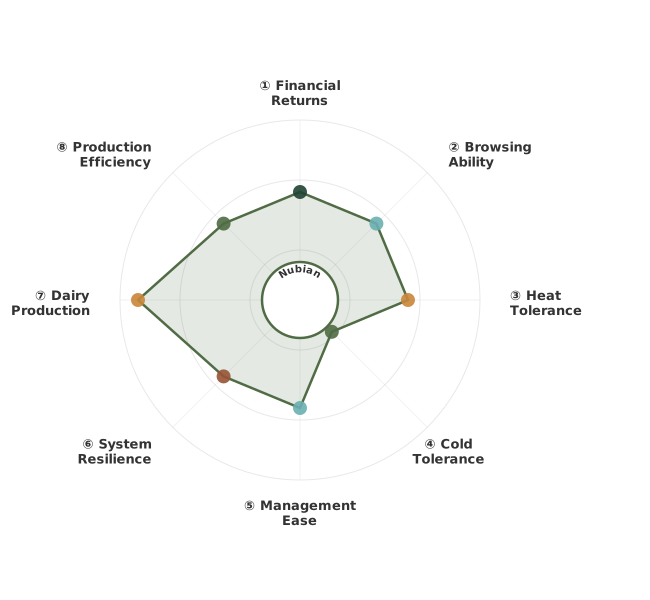
How These Traits Are Calculated
Trait dimensions are ordered clockwise starting from the top of the chart (12 o'clock position):
1. Financial Returns
Annual income per doe from kids, milk, or fiber
WHAT: Evaluates annual profit potential across meat (kid sales), dairy (milk production), fiber (cashmere/mohair), or dual-purpose value. Combines production output with input costs, kidding rates, and market premiums.
WHY: Goat profitability varies by enterprise type—dairy goats producing 1,500-2,500 lbs milk annually generate $400-800 revenue versus meat goats at $150-300 from kid sales. Understanding income potential by enterprise type helps match breeds to market opportunities and farm goals.
HOW: Calculated from enterprise-specific production data (milk yield, kid growth, fiber weight) combined with efficiency traits and costs. Exceptional (≥2.6): high output for enterprise type + low inputs + strong markets. Typical (1.8-2.5): moderate production and costs. Limited (<1.8): low output or premium-dependent without reliable access.
2. Browsing Ability
Effectiveness at consuming brush, weeds, and woody plants
WHAT: Measures goat effectiveness at controlling unwanted vegetation—clearing brush, managing invasive plants, consuming woody browse—while providing land management services that reduce fuel loads and restore degraded pastures.
WHY: Browsers reduce land clearing costs $200-600 per acre compared to mechanical methods while providing income. Effective browsers tackle multiflora rose, kudzu, poison ivy, and small trees where grazers fail, converting liability into profitability.
HOW: Rated from database trait 'browsing_ability' and documented land management effectiveness. Exceptional (≥2.6): aggressive browsers, thrives on brush, excellent weed control. Typical (1.8-2.5): moderate browsing with mixed diet. Limited (<1.8): prefers grass, minimal brush consumption.
3. Heat Tolerance
Milk production and health in hot weather above 85°F (29°C)
WHAT: Evaluates adaptation to sustained heat above 85°F (29°C), measuring production maintenance, heat stress resistance, and cooling behavior. Critical for dairy goats where heat drops milk production 20-40%.
WHY: Heat-sensitive breeds stop milking during summer peaks, creating 2-4 month income gaps in hot climates. Heat-adapted breeds maintain production year-round, provide consistent cash flow, and eliminate need for expensive cooling systems (fans, misters, air conditioning).
HOW: Rated from database trait 'heat_tolerance' based on documented characteristics. Exceptional (≥2.6): tropical origins, maintains production in 95°F+ (35°C+). Typical (1.8-2.5): moderate tolerance with shade and water. Limited (<1.8): production drops significantly above 85°F, requires cooling.
4. Cold Tolerance
Performance in cold weather below 20°F (-7°C)
WHAT: Evaluates adaptation to sustained cold below 20°F (-7°C), measuring coat thickness, metabolic adaptation, and winter performance. Important for northern climates with harsh winters and winter kidding systems.
WHY: Cold stress increases feed requirements 30-50%, complicates kidding (newborns at high risk), and drops milk production in dairy breeds. Cold-hardy breeds maintain production and kid successfully outdoors where others require heated barns.
HOW: Rated from database trait 'cold_tolerance' based on breed characteristics. Exceptional (≥2.6): thick winter coats, northern origins, thrives in <0°F (-18°C). Typical (1.8-2.5): moderate hardiness, basic shelter sufficient. Limited (<1.8): requires heated shelter, struggles with winter kidding.
5. Management Ease
Handling temperament and kidding ease
WHAT: Measures daily management simplicity combining temperament (calm vs flighty), kidding ease (unassisted births), and fence respect. Easy breeds cooperate with routines while difficult breeds create constant challenges.
WHY: Difficult goats increase labor 2-3× through kidding interventions, frequent escapes requiring fence repairs, and handling challenges (especially in dairy operations with twice-daily milking). Calm breeds with easy kidding enable efficient one-person operations.
HOW: Weighted assessment: temperament (40%), kidding ease (35%), fence respect (25%). Exceptional (≥2.6): calm and cooperative, unassisted kidding, respects fencing. Typical (1.8-2.5): manageable with experience. Limited (<1.8): flighty or aggressive, frequent interventions, notorious escapers.
6. Herd Resilience
Health and productivity under stress conditions
WHAT: Evaluates herd robustness across disease resistance, parasite tolerance, drought adaptation, and general hardiness. Measures ability to maintain health and production through typical challenges that affect goats.
WHY: Resilient breeds reduce veterinary costs, survive parasite pressure that kills others (goats being highly susceptible), thrive on sparse forage during drought, and maintain productivity through weather extremes. This determines whether herds thrive independently or require constant medical interventions.
HOW: Composite assessment across multiple resilience factors. Exceptional (≥2.6): exceptional health + parasite resistant + drought tolerant + hardy. Typical (1.8-2.5): standard resilience with routine care. Limited (<1.8): health-sensitive, requires intensive management.
7. Milk Production
Annual milk yield and lactation length for dairy breeds
WHAT: Measures milk output for dairy breeds, evaluating annual yield (1,200-3,000+ lbs), lactation length (8-12 months), milk quality (butterfat, protein), and production consistency. Only relevant for dairy-type breeds.
WHY: Dairy goats provide daily income through milk sales, cheese production, or value-added products. High producers (2,000+ lbs) generating $3-6 daily revenue make dairy operations viable at small scales (10-20 does) where lower producers require larger herds to achieve profitability.
HOW: Rated from database dairy production data and breed standards. Exceptional (≥2.6): 2,400+ lbs annually, 10+ month lactations, high quality milk. Typical (1.8-2.5): 1,500-2,400 lbs, standard lactations. Limited (<1.8): <1,500 lbs or short lactations, primarily meat-type.
8. Production Efficiency
Output relative to feed consumed and care required
WHAT: Measures how effectively goats convert feed into saleable output (milk, meat, fiber), combining feed efficiency, foraging ability, and growth/production rates. Efficient breeds maximize output per dollar of feed input.
WHY: Feed costs represent 50-70% of operating expenses. Breeds converting 4:1 versus 6:1 (feed:output) save $100-200 annually per goat. Excellent foragers reduce purchased feed needs 30-50%, making the difference between profitable and marginal operations.
HOW: Weighted formula: feed efficiency (40%), foraging ability reduces purchased feed (35%), production rate (25%). Exceptional (≥2.6): excellent feed conversion + strong foragers + high output. Typical (1.8-2.5): moderate efficiency. Limited (<1.8): poor feed conversion or low output relative to inputs.
Regenerative Advantages
- Kidding Ease: Nubians exhibit strong maternal instincts and prolificacy, consistently delivering multiple, healthy kids with a high percentage of unassisted births, justifying a typical rating.
Value Streams
- Dairy production
- Nutrient cycling and soil building
- Brush clearing and fire risk reduction
- Invasive species control
Experience Level
Consult local experts for handling requirements
3
Understanding Nubian Goats Characteristics
Physical traits, temperament, and what makes this breed unique
Understanding Nubian Goats Characteristics
Physical traits, temperament, and what makes this breed unique
The Nubian goat, a breed with roots tracing back to the Indian subcontinent and refined in Great Britain, is instantly recognizable by its long, pendulous ears and a distinctive Roman nose. These aren't just aesthetic traits; the large ears aid in heat dissipation, a significant advantage in warmer climates and a testament to their adaptability. Nubians are a dual-purpose breed, primarily known for their dairy production, but also valued for their meat and hides. They are generally larger than many other dairy breeds, with bucks weighing between 150-250 pounds and does typically ranging from 110-180 pounds.
Historically, the breed was developed by crossing indigenous dairy goats of India and the Middle East with European breeds like the Nubian ibex and possibly Anglo-Nubians. This crossbreeding aimed to enhance milk production, butterfat content, and overall conformation. The result was a hardy, adaptable goat capable of thriving in varied environments while maintaining excellent udder quality and milk volume. Their calm temperament also makes them easier to handle, a practical consideration for any farm operation.
What truly sets the Nubian apart is the combination of exceptional milk quality, characterized by high butterfat and protein content, with a robust constitution and a unique appearance. Unlike some more specialized dairy breeds, Nubians possess a degree of ruggedness that lends itself well to less intensive management systems. Their ability to produce consistently, even under challenging conditions, makes them a standout choice for farmers seeking both production and resilience in their herd.
Sources behind this view
 Community
-
Discusses dual-purpose goat breeds (Nubian, Saanen, Oberhasli) for meat and milk. Emphasizes that genetics, nutrition, and management are key, recommending individual milking records over breed alone
Read more (opens in new window) permies.com -
Goat breeds vary significantly in suitability for milk vs. meat production. Pygmy goats are hardy for meat/brush clearing but not milk; Nigerian Dwarfs offer rich milk but have milking challenges. Ful
Read more (opens in new window) permies.com
4
Management, Care & Feeding
Operational guidance for raising this breed successfully
Management, Care & Feeding
Operational guidance for raising this breed successfully
Managing Nubian goats effectively in a regenerative system centers on providing ample pasture and forage, supplemented as needed. Their excellent foraging instincts mean they can make good use of varied grazing lands, but rotational grazing is key to maximizing pasture health and preventing overgrazing. Ensure access to clean water at all times, and provide a mineral supplement formulated for goats, especially paying attention to copper levels, as they can be sensitive. Regular hoof trimming, parasite management through pasture rotation and observation, and access to shelter from extreme weather are also essential husbandry practices.
Feeding should prioritize high-quality forages like legumes and grasses. During lactation, especially for high-producing does, supplemental grain may be necessary to maintain body condition and milk yield, but this should be carefully balanced to avoid over-reliance. The high butterfat content of Nubian milk means they have significant energy demands. Monitor body condition scores closely; thin goats indicate inadequate nutrition, while overly fat goats can face health issues. In pasture-based systems, allow them to browse on brush and weeds, which not only supplements their diet but also contributes to land management goals.
Health management for Nubians involves vigilance against common goat ailments, with a focus on preventative care. Regular observation for signs of internal parasites is crucial; fecal testing can help guide deworming strategies, prioritizing targeted treatments over routine broad-spectrum applications. Ensure vaccinations are up-to-date, particularly for clostridial diseases. Their larger ears can sometimes trap debris or moisture, so occasional checks for ear mites or infections are advisable. Proper nutrition, stress reduction, and good sanitation are the cornerstones of maintaining a healthy, productive Nubian herd within a regenerative framework.
Sources behind this view
Community
-
Sustainable feeding of dairy goats on forage is achievable with breeds like Nubians. Utilizing dried tree leaves, bamboo, acorns, butternuts, pumpkins, sunflowers, and chicory can supplement or replac
Read more (opens in new window) permies.com -
Offers practical goat husbandry advice: brush clearing, fencing challenges (clay/rock soils), breeding timing (145-155 day gestation), and the development of the Nigora breed for dairy and fiber.
Read more (opens in new window) permies.com
 Research
-
Optimizing Feed Formulation Strategies for Attaining Optimal Nutritional Balance in High-Performing Dairy Goats in Intensive Farming Production Systems (opens in new window)
Research explores optimizing dairy goat feed by considering genetics, environmental challenges, and nutritional interventions for better health, milk production, and sustainability in intensive farmin
6
Production Capabilities & Market Economics
Business case evaluation and production metrics
Production Capabilities & Market Economics
Business case evaluation and production metrics
Dairy Production Economics
| Category | Value |
|---|---|
| Milk/Doe/Year | 1800-2500 lbs 816.5-1134 kg |
| Lactation Period (Months) | 240-300 |
| Age First Kidding (Months) | 12-15 |
| Price Premium | +10% |
| Annual Input Cost | 500-800 |
Price Premium: Premium above conventional goat milk prices. Grass-fed goat dairy typically sells for premium prices through direct sales or specialty markets. Premium only applies when farm qualifies through certification (organic, grass-fed, raw milk license where legal) or direct sales channels. Without certification or qualifying market access, premium falls to $0.
Sources behind this view
 Videos & Podcasts
-
Goats in Eastern Montana show comparable or better profitability than cows per animal unit ($2,800+), with advantages in scalability, lower infrastructure costs, and flexibility. Innovative forage str