
Ponies
Ponies offer farmers an exceptionally hardy and adaptable livestock option, simplifying management with their easy-keeping nature and remarkable longevity. These intelligent animals excel at thriving on diverse forage, making them ideal for rotational and multi-species grazing strategies. Originating from a history of varied development across different regions, ponies are generally known for their gentle temperament, making them a good choice for farms seeking a less demanding presence. Their inherent hardiness means they require minimal intervention, allowing farmers to allocate resources to other critical areas of their operation.
Regenerative Quick Profile
Best Suited For
Climates: Temperate, oceanic, and subarctic climates with cool summers and mild to cold winters.
Scale: Excellent for small homesteads (1-10 animals)
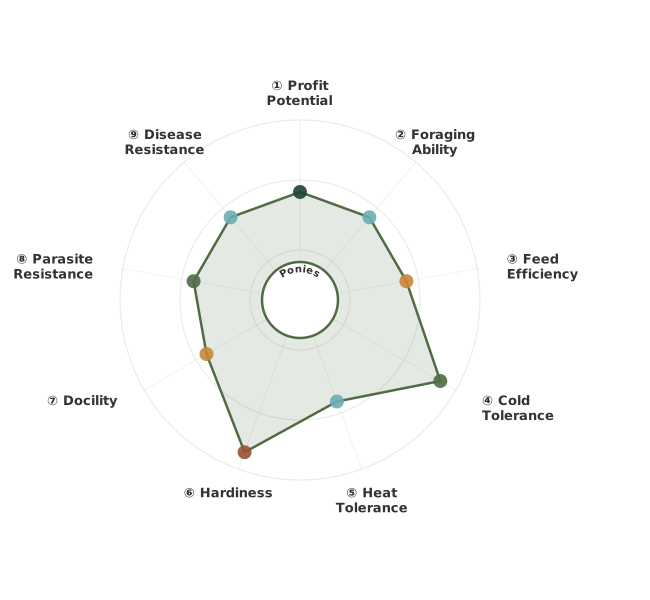
How These Traits Are Calculated
Trait dimensions are ordered clockwise starting from the top of the chart (12 o'clock position):
1. Profit Potential
Measures how a pony breed contributes to farm income.
WHAT: Profit Potential for ponies assesses their ability to generate income through various avenues, such as breeding, work, or specialized markets. Breeds differ significantly in their natural aptitudes for these income streams, influencing their overall economic viability.
WHY: Understanding a pony breed's profit potential is crucial for regenerative farmers seeking to integrate animals sustainably and profitably. It helps in selecting a breed that aligns with market demands and operational goals, ensuring financial resilience and supporting ecological stewardship.
HOW: Exceptional breeds offer multiple income streams, perhaps excelling in both high-value breeding and niche work (e.g., therapy ponies, premium riding ponies). Typical breeds provide one or two solid income streams. Limited breeds may have a very narrow market or require significant investment to achieve profitability.
2. Foraging Ability
Measures how well ponies graze and find nutrition from varied pasture.
WHAT: This trait assesses a pony's natural inclination and skill in seeking out and consuming a wide variety of forage, including grasses, herbs, and browse. Some pony breeds are naturally more adept at grazing diverse, less-managed pastures than others, reflecting their ancestral environments and selection history.
WHY: Excellent foraging ability allows ponies to thrive on less intensively managed pastures, reducing the need for supplemental feed and improving pasture health through varied grazing patterns. This trait is crucial for farmers aiming to maximize self-sufficiency and minimize external inputs in their animal husbandry.
HOW: Exceptional ponies actively seek out and efficiently digest a broad range of plants, thriving on roughage and requiring minimal supplemental feed (e.g., <10% of diet). Typical ponies graze well on good pasture but may need occasional supplements. Limited foragers are less efficient grazers and rely heavily on supplemental feed for adequate nutrition.
3. Feed Efficiency for Ponies
Measures how well a pony converts feed into usable energy and body mass.
WHAT: Feed efficiency in ponies refers to their ability to gain weight, maintain condition, or produce energy (work) from a given amount of feed. Some pony breeds are naturally "easy keepers" and require less forage, while others may need more to thrive.
WHY: For regenerative farmers, efficient ponies mean lower feed costs and reduced land impact from grazing or hay production. This trait is crucial for managing resources sustainably and maintaining animal health with minimal external inputs.
HOW: Exceptional ponies maintain good condition on less than 1.5% of their body weight in dry matter daily. Typical ponies thrive on 1.5-2.0% of body weight, while limited ponies may require over 2.0% and struggle to maintain condition otherwise.
4. Cold Tolerance
Measures a pony's ability to withstand and thrive in cold weather conditions.
WHAT: This trait assesses a pony's natural ability to maintain body temperature and stay healthy in cold environments. Some pony breeds possess thicker coats, better insulation, and more efficient metabolisms for cold, while others are more susceptible to lower temperatures.
WHY: For regenerative farms in colder climates, good cold tolerance is crucial for reducing the need for extensive shelter and supplemental heating. Ponies with high cold tolerance can graze more effectively year-round, minimizing feed costs and reliance on external inputs.
HOW: Exceptional cold tolerance means ponies can comfortably withstand temperatures below -10°C (14°F) with minimal shelter. Typical tolerance allows them to manage well in temperatures down to 0°C (32°F) with basic protection. Limited tolerance indicates ponies require significant shelter and warmth to avoid stress or health issues in temperatures above freezing.
5. Heat Tolerance
Assesses a pony's ability to cope with hot and humid conditions.
WHAT: This trait evaluates a pony's physiological and behavioral responses to heat stress, including their ability to regulate body temperature and maintain activity levels. Some pony breeds, often those originating from warmer climates, possess a naturally higher capacity to withstand heat than others.
WHY: For regenerative farmers, ponies with good heat tolerance can be more productive and require less intensive management in warmer regions, reducing the need for artificial cooling or restricted grazing times. This supports sustainable practices by minimizing energy inputs and maximizing animal welfare.
HOW: Exceptional ponies often show minimal signs of distress, maintain appetite, and can work or graze comfortably during hot periods. Typical ponies may show mild signs of heat stress, like reduced activity, and require some shade or water access. Limited ponies will exhibit significant distress, lethargy, and may refuse to move or eat in hot weather, potentially requiring immediate intervention.
6. Hardiness
Measures a pony's ability to thrive in challenging conditions.
WHAT: This trait assesses a pony's ability to withstand environmental stresses such as extreme temperatures, poor forage quality, and disease pressure. Breeds vary significantly in their natural resilience, with some being adapted to harsh climates and others requiring more careful management.
WHY: For regenerative farmers, hardy ponies can reduce input costs and reliance on supplemental feeding. Their ability to thrive on pasture and resist common ailments contributes to a more sustainable and self-sufficient system.
HOW: Exceptional ponies can maintain good condition and health with minimal intervention in freezing winters or hot summers. Typical ponies may require some shelter or supplementary feed during extreme weather. Limited ponies are more susceptible to illness and struggle to maintain weight without significant care.
7. Docility
Measures a pony's calm and cooperative nature when handled by humans.
WHAT: Docility assesses a pony's temperament, specifically its willingness to be approached, handled, and worked with. Some pony breeds are naturally more reserved or flighty, while others are known for their steady and tractable dispositions.
WHY: A docile pony is easier and safer to manage for daily chores, training, and interaction, reducing stress for both animal and handler. This trait is crucial for farms where ponies might be used for therapy, children's riding, or light farm work, ensuring a positive and productive relationship.
HOW: Exceptional docility means ponies are rarely startled, readily accept new experiences, and show minimal resistance to haltering, grooming, or riding, often requiring minimal reinforcement. Typical docility involves ponies that are generally good-natured but may require consistent handling and positive reinforcement to maintain cooperation. Limited docility indicates ponies that are easily spooked, show significant resistance to handling, or require advanced training techniques to manage.
8. Parasite Resistance
Measures how well ponies naturally fend off internal and external parasites.
WHAT: This trait assesses a pony's innate ability to resist and recover from parasitic infections, both internal (worms) and external (mites, lice). Some pony breeds have evolved in environments with higher parasite loads, leading to genetic predispositions for stronger immune responses and better tolerance.
WHY: For regenerative farmers, good parasite resistance means less reliance on chemical dewormers, reducing costs and environmental impact. Ponies with higher resistance are healthier, require less intensive management, and contribute to a more resilient farm ecosystem. This trait is crucial for sustainable grazing practices.
HOW: Exceptional resistance (e.g., scores of 4-5) indicates ponies that rarely require deworming and show minimal signs of infestation. Typical resistance (e.g., scores of 2-3) means ponies may need occasional treatment based on fecal egg counts or observed symptoms. Limited resistance (e.g., scores of 1) suggests ponies are highly susceptible and will likely need frequent veterinary intervention.
9. Disease Resistance
Measures how well ponies naturally fend off common illnesses.
WHAT: This trait assesses a pony breed's inherent ability to resist or recover from common ailments like internal parasites, respiratory issues, and skin conditions. Some pony breeds have evolved in environments that selected for stronger immune systems, making them naturally more robust.
WHY: For regenerative farmers, ponies with higher disease resistance require fewer veterinary interventions and less medication, leading to lower costs and reduced reliance on external inputs. This aligns with principles of self-sufficiency and reduced environmental impact.
HOW: Exceptional breeds can thrive with minimal parasite control or vaccination schedules, often showing no clinical signs of illness even when exposed. Typical breeds may require standard preventative care but recover quickly from minor issues. Limited breeds are more susceptible and may need frequent treatments to maintain health and productivity.
Regenerative Advantages
- Cold Tolerance: Hardy pony breeds (Icelandic, Shetland, Welsh Mountain) thrive in harsh winters with minimal shelter, developing thick double coats and tolerating -20°C to -30°C conditions.
- Hardiness: Hardy pony breeds live 30-40 years (vs 25-30 for horses) with minimal health issues, exceptional disease resistance, and ability to thrive in harsh conditions with basic care.
- Longevity: Ponies live 30-40 years (vs 25-30 for horses) with productive working life extending to 25-30 years, providing exceptional lifetime value and multi-generational use.
- Hoof Quality: Hardy pony breeds possess dense, tough hooves suited for barefoot work, requiring minimal farrier intervention (trimming every 8-12 weeks) compared to horses.
- Pack Capacity: Ponies carry 25-30% of body weight (vs 20% for horses) with pound-for-pound strength exceeding horses, making breeds like Haflingers and Icelandics excellent pack animals.
Value Streams
Experience Level
Consult local experts for handling requirements