
Quail
Quail simplify livestock operations through their rapid maturity, exceptional feed conversion, and remarkable space efficiency, making them ideal for high-density production. Their high reproduction rates ensure a consistent supply, while their robust nature offers good disease resistance and temperature tolerance, simplifying management across various climates. Originating from various wild species, these small, fast-growing birds excel at pastured poultry systems, thriving on diverse forage and requiring minimal intervention once established. Their ability to quickly cycle through production and their compact size set them apart for farmers seeking an agile and productive addition to their farm.
Regenerative Quick Profile
Best Suited For
Climates: Temperate to hot, dry summers and mild to cool winters
Scale: Excellent for small homesteads (1-10 animals)
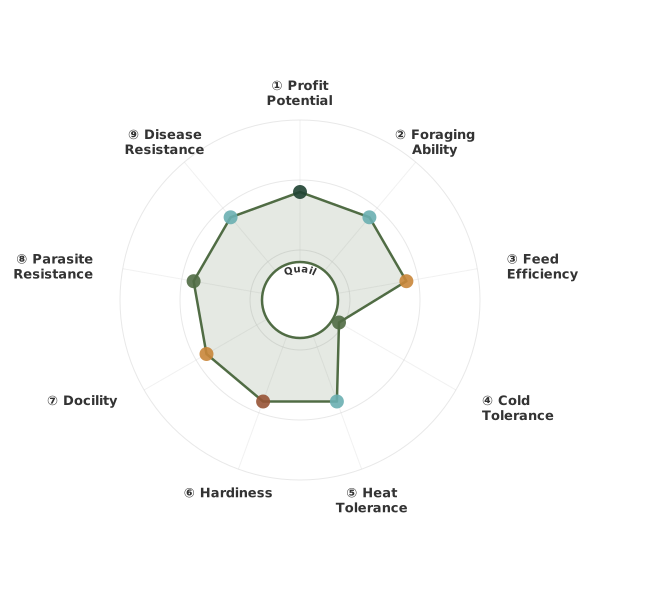
How These Traits Are Calculated
Trait dimensions are ordered clockwise starting from the top of the chart (12 o'clock position):
1. Financial Returns
Annual income per bird from eggs, meat, or specialty products
WHAT: Evaluates profit potential for specialty poultry (turkeys, ducks, geese, guinea fowl) combining meat yield, egg production (where applicable), growth timelines, and market premiums for specialty products.
WHY: Specialty poultry targets premium markets—heritage turkeys at $6-8/lb versus $1.50 commodity, duck eggs at $8-12/dozen versus $3-5 chicken eggs. Understanding enterprise-specific returns helps match birds to market opportunities, with successful operations generating 2-4× returns of conventional poultry.
HOW: Calculated from production data (market weight, timelines, egg yield) combined with efficiency traits and premium market access. Exceptional (≥2.6): strong output + premium markets + efficient growth. Typical (1.8-2.5): moderate production and markets. Limited (<1.8): low output or limited market access.
2. Foraging Ability
Feed cost reduction through natural foraging behavior
WHAT: Measures effectiveness at obtaining nutrition through foraging—consuming insects, seeds, greens, and other natural foods—reducing purchased feed requirements 20-50% in pasture-based systems.
WHY: Aggressive foragers reduce feed costs while providing pest control (insects, ticks, slugs) and weed management services. Turkeys consuming 30-40% of calories from forage save $15-30 per bird over growing season, making the difference between profitable and marginal operations.
HOW: Rated from documented foraging behavior and feed reduction potential. Exceptional (≥2.6): excellent foragers, 40-50% feed reduction, active pest control. Typical (1.8-2.5): moderate foraging, 20-30% reduction. Limited (<1.8): minimal foraging, requires full feeding.
3. Feed Efficiency
Measures how effectively quail convert feed into meat or eggs.
WHAT: Feed efficiency in quail refers to the amount of feed consumed relative to the amount of edible product produced (meat or eggs). Breeds will vary in their ability to extract nutrients and convert them into growth or egg production, with some requiring more feed per unit of output.
WHY: For regenerative farmers, highly feed-efficient quail breeds can significantly reduce feed costs and the environmental footprint associated with feed production. This leads to greater profitability and a more sustainable operation, especially when using on-farm or locally sourced feed.
HOW: Exceptional breeds will require less than 2.5 kg of feed per kg of live weight gain or per dozen eggs. Typical breeds might require 2.5-3.5 kg of feed. Limited breeds will need over 3.5 kg of feed, indicating less efficient nutrient utilization.
4. Cold Tolerance
Performance in cold weather below 20°F (-7°C)
WHAT: Evaluates adaptation to sustained cold below 20°F (-7°C), measuring feather insulation, cold-weather foraging activity, and winter production/growth maintenance. Important for year-round outdoor systems in northern climates.
WHY: Cold-sensitive birds require heated housing ($50-200 monthly winter costs), reduce activity limiting foraging value, and experience higher mortality. Cold-hardy breeds remain active outdoors year-round, maintain winter egg production (ducks/geese), and thrive with basic shelter.
HOW: Rated from database trait 'cold_tolerance' based on breed characteristics. Exceptional (≥2.6): excellent insulation, active in <0°F (-18°C), maintains winter production. Typical (1.8-2.5): moderate hardiness. Limited (<1.8): requires heated shelter, limited winter activity.
5. Heat Tolerance
Performance in hot weather above 85°F (29°C)
WHAT: Evaluates adaptation to sustained heat above 85°F (29°C), measuring heat stress resistance, growth/production maintenance, and survival during summer peaks. Critical for southern operations and summer meat production.
WHY: Heat stress reduces feed intake 20-40%, slows growth, and increases mortality—particularly problematic for turkeys naturally susceptible to heat. Heat-adapted breeds maintain production schedules where others require expensive cooling or suffer significant losses during summer.
HOW: Rated from database trait 'heat_tolerance' based on documented characteristics. Exceptional (≥2.6): maintains production in 95°F+ (35°C+), low mortality. Typical (1.8-2.5): manageable with shade and water. Limited (<1.8): high heat sensitivity, struggles above 85°F.
6. Hardiness
Quail's ability to withstand environmental challenges and disease.
WHAT: Hardiness in quail refers to their genetic predisposition to thrive in diverse and potentially stressful environments, resisting common diseases and parasites. Breeds can vary significantly in their ability to tolerate temperature fluctuations, humidity, and exposure to pathogens.
WHY: For regenerative farmers, hardy quail breeds require less intensive management, reducing the need for antibiotics and specialized housing. This trait ensures flock health and productivity with minimal external inputs, aligning with ecological principles.
HOW: Exceptional hardiness means quail readily adapt to variable conditions, showing minimal stress or illness even in challenging weather or sub-optimal feed. Typical hardiness indicates good resilience with standard care, while limited hardiness suggests a higher susceptibility to disease and environmental stress, requiring more vigilant oversight and protection.
7. Docility (Quail Temperament)
Measures how calm and manageable quail are, impacting handling and flock interaction.
WHAT: Docility evaluates how easily quail can be handled, their tendency to flee or peck, and their overall calmness. Breeds can vary significantly, with some being naturally skittish and others more settled.
WHY: For regenerative farmers, docile quail are easier to manage during health checks, egg collection, and flock integration. This reduces stress on birds and handlers, leading to better welfare and potentially improved egg production.
HOW: Exceptional breeds show minimal flight response and rarely peck, remaining calm when approached (e.g., <10% of birds exhibit strong flight response to gentle handling). Typical breeds may show some initial alarm but settle quickly. Limited breeds are highly excitable, prone to panic, and may exhibit aggressive pecking.
8. Parasite Resistance
Measures a quail breed's ability to naturally ward off internal and external parasites.
WHAT: This trait assesses a quail breed's natural defense mechanisms against common internal (e.g., roundworms, coccidia) and external (e.g., mites, lice) parasites. Some breeds have a genetic predisposition to be more robust and less susceptible to infestations and their negative effects.
WHY: High parasite resistance reduces the need for costly and potentially harmful chemical treatments, aligning with regenerative principles. It leads to healthier birds, improved feed conversion, and lower mortality rates, directly impacting profitability and bird welfare on a farm.
HOW: Exceptional breeds demonstrate very low incidence of parasitic infections even under challenging conditions, requiring minimal intervention (e.g., less than 5% of birds showing clinical signs). Typical breeds may require occasional monitoring and preventative measures. Limited breeds are highly susceptible and will likely need regular treatments to maintain flock health.
9. Disease Resistance
Measures quail's natural ability to fight off common poultry illnesses.
WHAT: This trait assesses the inherent ability of quail breeds to withstand and recover from common avian diseases and parasites. Some breeds possess genetic predispositions that make them naturally more robust against pathogens, while others may be more susceptible to outbreaks.
WHY: For regenerative farmers, high disease resistance reduces the need for veterinary interventions and medication, leading to lower costs and a more natural farming system. It ensures flock health and productivity, crucial for sustainable and ethical quail production.
HOW: Exceptional resistance means breeds rarely show symptoms of common diseases like coccidiosis or avian influenza and recover quickly. Typical breeds may experience mild, infrequent issues managed with good husbandry. Limited resistance indicates breeds are prone to significant illness, requiring frequent monitoring and treatment.
Regenerative Advantages
- Noise Level: Small size leads to relatively quiet chirps and calls, generally well below 50 dB for normal activity.
- Rapid Maturity: Commercially developed strains exhibit exceptional growth and early sexual maturity, consistently surpassing heritage breeds for efficient meat production.
- Feed Conversion: Quail demonstrate remarkably efficient feed conversion, rapidly reaching market weight with minimal feed input compared to larger poultry.
- Space Efficiency: Their compact size and low territoriality allow Coturnix quail to thrive at high densities, enabling efficient vertical housing and rapid growth.
- Free Range Radius: Small ground dwellers with a very tight foraging range, typically well under 100ft from their coop or sanctuary.
Value Streams
- Meat & Egg production
Experience Level
Suitable for first-time livestock owners
3
Understanding Quail Characteristics
Physical traits, temperament, and what makes this breed unique
Understanding Quail Characteristics
Physical traits, temperament, and what makes this breed unique
Quail, though small, are a fascinating addition to diverse agricultural landscapes, offering unique traits that distinguish them from larger poultry. Several species exist, with the Japanese Quail (Coturnix coturnix japonica) being the most common in domestic settings due to its rapid growth and prolific egg-laying. These birds are ground-dwellers, naturally adapted to foraging in dense vegetation, which influences their management needs. Their history is one of domestication from wild ancestors, selectively bred for traits like accelerated maturity and consistent egg production, making them efficient converters of feed into both meat and eggs.
What truly sets quail apart is their remarkable speed of development. Chicks can reach maturity in as little as six to eight weeks, and hens begin laying eggs shortly thereafter. This rapid life cycle allows for quick turnaround in production and efficient utilization of resources. Unlike chickens or turkeys, quail are not typically free-ranged in the same expansive manner; their management often involves more confined, yet carefully designed, spaces that mimic their natural habitat. Their small size also means they require less feed per bird, a significant factor when considering stocking densities and overall feed conversion ratios.
The dual-purpose nature of quail is another key characteristic. While they reach market weight quickly for meat production, their eggs, though small, are nutrient-dense and highly sought after. This versatility allows farmers to tap into different market niches with a single species. Their quiet demeanor and relatively compact adult size also make them suitable for smaller homesteads or integrated farming systems where space might be a limiting factor for larger poultry.
Sources behind this view
 Videos & Podcasts
-
Raising Japanese quail is presented as an easy and fast way to produce eggs, with chicks laying within six weeks if fed adequately. Black soldier fly larvae are noted as a potential high-protein feed
 Community
-
Detailed guide to raising Coturnix quail in urban settings for eggs and meat, covering housing, feeding, manure management, and their rapid maturation.
Read more (opens in new window) permies.com -
Provides practical guidance on raising coturnix quail in urban settings for egg production, including coop management, manure handling to mitigate ammonia, preventing bumblefoot, and feeding requireme
Read more (opens in new window) permies.com
 Research
-
An updated review on behavior of domestic quail with reference to the negative effect of heat stress (opens in new window)
Review on Japanese quail highlights fast growth and high egg production, but notes heat stress significantly harms bird welfare, meat/egg quality, and reproduction, impacting the poultry sector.
-
A critical review on the welfare of Japanese quail in cage-free housing: Current knowledge and future perspectives. (opens in new window)
Review highlights knowledge gaps in cage-free Japanese quail housing, emphasizing needs for nesting, dust bathing, and managing aggression. More research needed to ensure welfare during transition fro
4
Management, Care & Feeding
Operational guidance for raising this breed successfully
Management, Care & Feeding
Operational guidance for raising this breed successfully
Managing quail effectively in a regenerative system focuses on providing a safe, stimulating environment that meets their specific needs. Due to their ground-dwelling nature and tendency to startle easily, secure housing is paramount. This can include walk-in aviaries, floor-based pens with deep litter, or specialized brooder setups for young birds. Adequate ventilation is crucial, as quail are susceptible to respiratory issues, especially in crowded or poorly ventilated conditions. Providing opportunities for natural behaviors like dust bathing and foraging, even within confined spaces, is important for their welfare and reduces stress. Rotating pasture pens or providing varied substrate within their enclosures can enhance their well-being.
Feeding and grazing management for quail should capitalize on their foraging abilities while ensuring balanced nutrition. While they will consume insects, seeds, and greens, a high-protein starter feed is essential for chicks, transitioning to a grower and then a layer feed as they mature. In integrated systems, quail can forage for insects and seeds in pastures or cover crops, supplementing their diet. If using portable pens, these can be moved across pastures or crop residues after larger livestock have grazed, allowing quail to clean up insects and weed seeds. Supplementation with grit is necessary for proper digestion. Water must always be clean and readily available, often provided through specialized quail waterers to minimize waste and contamination.
Health management for quail emphasizes prevention through good husbandry, biosecurity, and stress reduction. Common health issues can include coccidiosis, respiratory infections, and leg problems, particularly in young birds. Regular observation for signs of illness, such as lethargy, ruffled feathers, or changes in droppings, is key. Maintaining clean living conditions, appropriate stocking densities, and a balanced diet are the most effective ways to prevent disease. Quarantine of new birds is advisable. While specific vaccinations are less common for quail than for chickens, consulting with a poultry veterinarian can provide guidance on preventative health strategies tailored to the farm's specific environment and risks.
Sources behind this view
Videos & Podcasts
-
Managing ecosystems for wildlife, especially bobwhite quail and whitetail deer, requires diverse habitats and avoiding monocultures. Key needs include year-round food, water, specific cover heights, a

-
Raising Japanese quail is presented as an easy and fast way to produce eggs, with chicks laying within six weeks if fed adequately. Black soldier fly larvae are noted as a potential high-protein feed
-
Bobwhite quail management via grazing requires careful consideration of stocking density and forage utilization. Continuous and simple rotational stocking, maintaining specific canopy heights (14-24 i
Community
-
Provides practical guidance on raising coturnix quail in urban settings for egg production, including coop management, manure handling to mitigate ammonia, preventing bumblefoot, and feeding requireme
Read more (opens in new window) permies.com -
Detailed guide to raising Coturnix quail in urban settings for eggs and meat, covering housing, feeding, manure management, and their rapid maturation.
Read more (opens in new window) permies.com
Research
-
A critical review on the welfare of Japanese quail in cage-free housing: Current knowledge and future perspectives. (opens in new window)
Review highlights knowledge gaps in cage-free Japanese quail housing, emphasizing needs for nesting, dust bathing, and managing aggression. More research needed to ensure welfare during transition fro
-
An updated review on behavior of domestic quail with reference to the negative effect of heat stress (opens in new window)
Review on Japanese quail highlights fast growth and high egg production, but notes heat stress significantly harms bird welfare, meat/egg quality, and reproduction, impacting the poultry sector.
-
Factors influencing Quail Farming: A critical literature review (opens in new window)
Raising quail offers protein and income potential but faces challenges in market access and farmer support. Policy changes and farmer groups are recommended to overcome these barriers, especially for