Quarter Horses
Also known as: american quarter horse, quarter horse, ranch horses, stock horses, working quarter horses
Quarter Horses simplify livestock management through their exceptional hardiness and placid temperament, making them a reliable choice for farmers. This versatile breed, originating in the United States and known for its athleticism and comfortable riding suitability, thrives on diverse forage and is well-suited to rotational and multi-species grazing practices. Their efficiency in converting feed to usable energy and their enduring nature reduce labor and input costs, allowing them to excel in various farm roles beyond just riding. The Quarter Horse's natural hardiness and calm disposition mean they require minimal intervention, making them an excellent option for farmers seeking dependable and adaptable equine partners.
Regenerative Quick Profile
Best Suited For
Climates: Semi-arid to humid subtropical and continental climates
Terrain: Excels on flat terrain
Scale: Suitable for small to medium operations (10-50 animals)
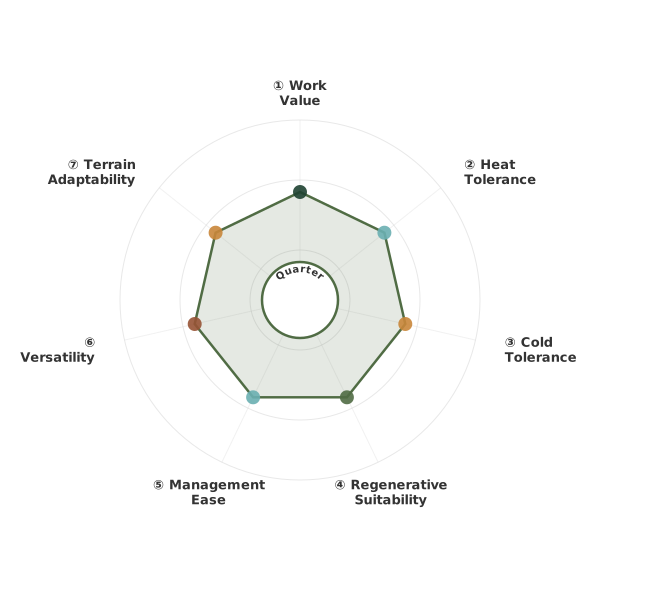
Regenerative Trait Ratings
How These Traits Are Calculated
Trait dimensions are ordered clockwise starting from the top of the chart (12 o'clock position):
1. Work Capability
Draft power, riding suitability, and work versatility
WHAT: Evaluates working ability across draft work (pulling power, harness training), riding suitability (gaits, endurance, carriage), and versatility (multiple work types). Measures practical utility for farm work, transportation, or recreational use.
WHY: Working horses provide power for tillage, hauling, logging, and transportation—services replacing tractors at $20-50 daily fuel costs while building soil health. Versatile breeds serving both draft and riding roles maximize utility on diversified farms.
HOW: Composite assessment of documented work characteristics, breed purpose, and traditional use. Exceptional (≥2.6): strong draft capability OR excellent riding + versatile. Typical (1.8-2.5): suitable for specific work types. Limited (<1.8): limited working ability, primarily ornamental or specialized.
2. Heat Tolerance
Work performance in hot weather above 85°F (29°C)
WHAT: Evaluates ability to maintain work output during sustained heat above 85°F (29°C), measuring metabolic efficiency, cooling adaptations, and documented performance in hot climates.
WHY: Heat stress reduces work capacity 30-50% and increases overheating risk during labor. Heat-adapted breeds maintain work schedules through summer where others require dawn/dusk-only work or risk heat exhaustion, cutting productive hours in half during peak season.
HOW: Rated from database trait 'heat_tolerance' based on breed characteristics. Exceptional (≥2.6): proven work in 95°F+ (35°C+), efficient cooling, maintains output. Typical (1.8-2.5): manageable with breaks and water. Limited (<1.8): struggles above 85°F, requires restricted work schedules.
3. Cold Tolerance
Work performance in cold weather below 20°F (-7°C)
WHAT: Evaluates ability to maintain work output during sustained cold below 20°F (-7°C), measuring coat insulation, metabolic adaptation, and winter performance. Critical for northern farms with outdoor winter work.
WHY: Cold-sensitive horses require heated barns ($100-300 monthly winter costs), limit outdoor work hours, and need increased feed (30-50% more) for maintenance. Cold-hardy breeds work full days outdoors year-round with basic shelter, maintaining productivity through harsh winters.
HOW: Rated from database trait 'cold_tolerance' based on documented characteristics. Exceptional (≥2.6): thick winter coats, proven work in <0°F (-18°C), minimal shelter needed. Typical (1.8-2.5): moderate hardiness. Limited (<1.8): requires heated shelter, limited winter work capacity.
4. Land Health Contribution
Positive impact on soil, biodiversity, and ecosystem function
WHAT: Evaluates how well horses contribute to land health improvement through appropriate stocking density, hoof impact on soil (compaction vs aeration), grazing patterns that promote biodiversity, and integration with regenerative practices.
WHY: Horses can enhance or degrade land depending on management and breed characteristics. Light-hooved breeds with moderate grazing pressure improve soil structure and plant diversity, while heavy breeds concentrated on small acreage cause compaction, overgrazing, and bare ground, undermining regenerative goals.
HOW: Assessed from typical stocking density needs, documented land impact, and integration with regenerative systems. Exceptional (≥2.6): light hoof loading + appropriate stocking + enhances biodiversity. Typical (1.8-2.5): neutral impact with good management. Limited (<1.8): heavy impact, requires careful management to avoid degradation.
5. Management Ease
Handling temperament and care requirements
WHAT: Measures daily management simplicity combining temperament (calm vs reactive), handling cooperation, health needs, and training responsiveness. Easy breeds enable confident handling by novice owners while difficult breeds require experienced horsepersonship.
WHY: Difficult horses create safety risks and increase labor 2-4× through nervous behavior, handling resistance, and health complications. Calm, cooperative breeds enable one-person operations and gentle training methods where reactive breeds need multiple handlers or professional training.
HOW: Weighted assessment: temperament (50%), handling cooperation (30%), health needs (20%). Exceptional (≥2.6): calm and willing, easy to handle, robust health. Typical (1.8-2.5): manageable with experience. Limited (<1.8): reactive or resistant, requires advanced handling skills.
6. Versatility
Range of roles and adaptability to different farm tasks
WHAT: Measures adaptability across multiple farm roles—draft work, riding, packing, driving, land management—and learning ease for new tasks. Versatile breeds excel in 3+ roles where specialized breeds serve narrow purposes.
WHY: Versatile horses maximize utility for diversified farms. A horse excelling at both draft work and trail riding provides power for farm work while also serving recreational needs, justifying keep costs where single-purpose horses sit idle between specialized uses.
HOW: Evaluated from documented multi-purpose capability and learning adaptability. Exceptional (≥2.6): excels in 3+ roles, learns new tasks readily. Typical (1.8-2.5): suitable for 2 roles or good at primary purpose. Limited (<1.8): single specialized purpose, limited adaptability.
7. Terrain Adaptability
Sure-footedness on hills, rocks, and challenging ground
WHAT: Evaluates ability to work safely and effectively on challenging terrain—steep hillsides, rocky ground, uneven footing, mountain trails—where less adapted breeds risk injury or refuse difficult passages.
WHY: Terrain-adapted horses enable work on diverse landscapes—hillside farming, mountain logging, backcountry access—where unsuitable breeds restrict work to flat improved ground. This expands productive acreage and enables enterprises (silvopasture, woodlot management) impossible with terrain-limited breeds.
HOW: Assessed from breed origins, documented terrain performance, and hoof/leg characteristics. Exceptional (≥2.6): mountain breeds, proven steep/rocky terrain work, natural sure-footedness. Typical (1.8-2.5): handles moderate terrain. Limited (<1.8): flat-ground specialists, struggles on challenging terrain.
Regenerative Advantages
- Feed Efficiency: Selected for rapid muscle development, Quarter Horses efficiently convert moderate feed inputs, demonstrating superior meat production suitability.
- Terrain Flat: Specifically bred for short, explosive speed, Quarter Horses excel on open, flat terrain due to their agility and stamina.
- Riding Suitability: Exceptionally trainable and athletic, Quarter Horses are suitable for a wide array of disciplines with minimal specialized care, placing them in a superior tier.
Value Streams
- Nutrient cycling and soil building
Experience Level
Consult local experts for handling requirements
How These Traits Are Calculated
Profit Potential
Profit Potential combines feed efficiency (35%), versatility (25%), temperament (20%), draft capability (10%), and riding suitability (10%). This score reflects work output per unit feed input, plus the breed's ability to serve multiple farm roles.
All other traits (Feed Efficiency, Foraging Ability, Cold Tolerance, etc.) are pulled directly from regenerative suitability assessments based on breed characteristics and historical performance data.
1
Climate Suitability Assessment
Will this breed thrive in your climate?
Climate Suitability Assessment
Will this breed thrive in your climate?
Köppen Zone: Cfa (Humid Subtropical), Cfb (Oceanic (Maritime Temperate)), Csa (Hot-Summer Mediterranean), Csb (Warm-Summer Mediterranean), Dfa (Hot-Summer Continental), Dfb (Warm-Summer Continental)
US Zone: 5b, 6a, 7a, 8a
EU Climate Region: Oceanic, Atlantic
Humid subtropical climates with mild winters and hot summers are well within the Quarter Horse's typical range. Their heat tolerance is manageable with shade, and winters are not extreme.
Köppen Zone: Aw (Tropical Savanna), BSh (Hot Semi-Arid (Steppe)), BSk (Cold Semi-Arid (Steppe)), BWk (Cold Desert), Cwa (Monsoon-Influenced Humid Subtropical), Cwb (Subtropical Highland), Dfc (Subarctic), Dwa (Monsoon-Influenced Hot-Summer Continental)
US Zone: 4a, 5a, 9a, 10a
EU Climate Region: Pannonian
The distinct dry season offers some respite from heat, but the hot year-round temperatures mean shade and water are critical. Their drought tolerance is beneficial during dry periods.
Köppen Zone: Af (Tropical Rainforest), Am (Tropical Monsoon), ET (Tundra), BWh (Hot Desert)
US Zone: 2a, 3a, 3b, 11a, 12a
EU Climate Region: Continental
Constant high heat and humidity are detrimental. Quarter Horses require significant cooling support and are not physiologically adapted to this climate.
Note: This breed's performance varies significantly by climate zone. Above are suitability ratings for major climate types where this breed can be raised successfully. If your climate isn't listed, this breed may not be a good fit. Breeds can technically survive in other climates with intensive management, but we don't recommend this for most regenerative operations due to questionable economics and high resource requirements.
2
Is This Breed Right for Your Operation?
Climate fit, terrain suitability, and scale considerations
Is This Breed Right for Your Operation?
Climate fit, terrain suitability, and scale considerations
Terrain & Environment
Can this breed handle my landscape? Performance on different terrain types and farm scales.
| Attribute | Suitability | Explanation |
|---|---|---|
| Flat Terrain | Ideally Suited | Specifically bred for short, explosive speed, Quarter Horses excel on open, flat terrain due to their agility and stamina. |
| Rolling Terrain | Adequate | Good balance and footing suit Quarter Horses for rolling pastures, but their speed focus limits exceptional performance on very broken ground. |
| Small Scale Suitability | Adequate | Versatile and manageable size (900-1,200 lbs) fits small farm operations. Require 2-3 acres per animal, with standard horse handling and fencing. |
Forage & Feeding Adaptations
What can I feed them and how efficiently? Grazing ability, feed conversion, and seasonal adaptation.
| Attribute | Suitability | Explanation |
|---|---|---|
| Browsing Ability | Adequate | Quarter Horses are primarily grazers and do not possess specific adaptations or strong behavioral drives for actively seeking out and consuming woody vegetation. While they will opportunistically ingest shrubs and branches, especially when preferred grasses are scarce, their diet is overwhelmingly grass-based. They lack the physical characteristics and the pronounced inclination towards browsing that specialized ruminants or even some other equine breeds might exhibit, making their woody vegetation consumption incidental rather than a primary strategy. |
| Fescue Tolerance | Adequate | Developed for ranch work and racing, not fescue, Quarter Horses exhibit typical performance with some susceptibility to its toxicity. |
| Dry Season Grazing | Adequate | Efficient energy conversion suits Quarter Horses for moderate forage, but they often need supplementation during prolonged dry spells. |
Browsing Ability: Specialized consumption of woody vegetation specifically (shrubs, trees, branches). Actively seeks woody plants, not just opportunistic. A specialized subset of foraging ability.
Fescue Tolerance: Resistance to endophyte-infected tall fescue toxicity (critical for Southern US pastures). Exceptional = minimal impact, Typical = manageable symptoms, Limited = poor performance.
Dry Season Grazing: Ability to utilize dormant or low-quality forage during dry periods. Important for year-round grazing systems.
Scale Considerations
Small-Scale Suitability: Adequate
Versatile and manageable size (900-1,200 lbs) fits small farm operations. Require 2-3 acres per animal, with standard horse handling and fencing.
Water Requirements: 5-10 gal/day (19-38 L/day) gallons/day
3
Understanding Quarter Horses Characteristics
Physical traits, temperament, and what makes this breed unique
Understanding Quarter Horses Characteristics
Physical traits, temperament, and what makes this breed unique
The American Quarter Horse, a breed deeply intertwined with the history of American ranching, is renowned for its compact, muscular build and exceptional athleticism. Developed in the 17th century from colonial horses bred with Spanish stock, they were initially favored for their speed over short distances, hence the name "Quarter Mile" horse. Their defining characteristics include a broad chest, powerful hindquarters, a refined head with a straight profile, and a generally calm, willing disposition. This combination of physical prowess and tractable nature makes them incredibly versatile, capable of everything from ranch work and rodeo events to pleasure riding and even racing. Their hardy constitution and longevity are also key traits, allowing them to thrive in various climates and endure demanding work for many years, a testament to their foundational breeding for utility and resilience.
4
Management, Care & Feeding
Operational guidance for raising this breed successfully
Management, Care & Feeding
Operational guidance for raising this breed successfully
Managing Quarter Horses in a regenerative system focuses on maximizing their natural strengths and ensuring their well-being through pasture-based care. Adequate pasture access is crucial, providing them with forage for sustenance and opportunities for natural movement and social interaction. Their dietary needs can often be met through high-quality grazing, supplemented with hay during periods of low forage availability or increased workload. Regular hoof care, including trimming and checking for soundness, is paramount given their working role. Routine veterinary check-ups, vaccinations, and deworming protocols tailored to their environment will help maintain their health and prevent common ailments. Training should be consistent and humane, building on their natural willingness to work and fostering a strong partnership between horse and handler.
5
Complete Trait Reference
Comprehensive trait ratings and explanations
Complete Trait Reference
Comprehensive trait ratings and explanations
Climate & Environmental Adaptation
How does this breed handle environmental challenges? Weather resilience, natural resistance, and adaptation.
| Attribute | Suitability | Explanation |
|---|---|---|
| Hardiness | Adequate | Developed in the American West, Quarter Horses exhibit robust health and adaptability, fitting the typical tier for well-managed livestock. |
| Heat Tolerance | Adequate | With moderate coats, Quarter Horses perform well up to 85°F but need cooling support above 90°F, fitting a typical tier. |
| Cold Tolerance | Adequate | Quarter Horses require housing and increased feed in cold climates, indicating a typical tolerance for temperate conditions. |
| Drought Tolerance | Adequate | Accustomed to varied climates, Quarter Horses are reasonably resilient with efficient metabolism during dry periods, fitting a typical tier. |
Terrain & Land Suitability
Can this breed handle my landscape? Performance on different terrain types and farm scales.
| Attribute | Suitability | Explanation |
|---|---|---|
| Flat Terrain | Ideally Suited | Specifically bred for short, explosive speed, Quarter Horses excel on open, flat terrain due to their agility and stamina. |
| Rolling Terrain | Adequate | Good balance and footing suit Quarter Horses for rolling pastures, but their speed focus limits exceptional performance on very broken ground. |
| Small Scale Suitability | Adequate | Versatile and manageable size (900-1,200 lbs) fits small farm operations. Require 2-3 acres per animal, with standard horse handling and fencing. |
Forage & Feeding Characteristics
What can I feed them and how efficiently? Grazing ability, feed conversion, and seasonal adaptation.
| Attribute | Suitability | Explanation |
|---|---|---|
| Browsing Ability | Adequate | Quarter Horses are primarily grazers and do not possess specific adaptations or strong behavioral drives for actively seeking out and consuming woody vegetation. While they will opportunistically ingest shrubs and branches, especially when preferred grasses are scarce, their diet is overwhelmingly grass-based. They lack the physical characteristics and the pronounced inclination towards browsing that specialized ruminants or even some other equine breeds might exhibit, making their woody vegetation consumption incidental rather than a primary strategy. |
| Fescue Tolerance | Adequate | Developed for ranch work and racing, not fescue, Quarter Horses exhibit typical performance with some susceptibility to its toxicity. |
| Dry Season Grazing | Adequate | Efficient energy conversion suits Quarter Horses for moderate forage, but they often need supplementation during prolonged dry spells. |
Browsing Ability: Specialized consumption of woody vegetation specifically (shrubs, trees, branches). Actively seeks woody plants, not just opportunistic. A specialized subset of foraging ability.
Fescue Tolerance: Resistance to endophyte-infected tall fescue toxicity (critical for Southern US pastures). Exceptional = minimal impact, Typical = manageable symptoms, Limited = poor performance.
Dry Season Grazing: Ability to utilize dormant or low-quality forage during dry periods. Important for year-round grazing systems.
Working Capability
Can this breed perform work? Draft power, pack transport, riding, and training ease.
| Attribute | Suitability | Explanation |
|---|---|---|
| Draft Capability | Adequate | While some individuals have substance, the breed's focus on speed limits their draft capability to moderate tasks, placing them in a typical tier. |
| Riding Suitability | Ideally Suited | Exceptionally trainable and athletic, Quarter Horses are suitable for a wide array of disciplines with minimal specialized care, placing them in a superior tier. |