
Rhea
The Rhea breed excels at thriving on diverse forage and demanding environments, requiring minimal intervention due to its exceptional hardiness and heat tolerance. This adaptability translates to significant feed efficiency, allowing them to convert varied plant matter into usable resources even during drought conditions. Developed in South America, these birds are known for their robust nature, making them a resilient choice for farmers seeking a low-input livestock option. Their ability to efficiently utilize browse further distinguishes them, making them a unique consideration for land management and protein production.
Regenerative Quick Profile
Best Suited For
Climates: Subtropical to temperate climates with moderate to high rainfall, also tolerates semi-arid regions.
Scale: Best for medium to large operations (50+ animals)
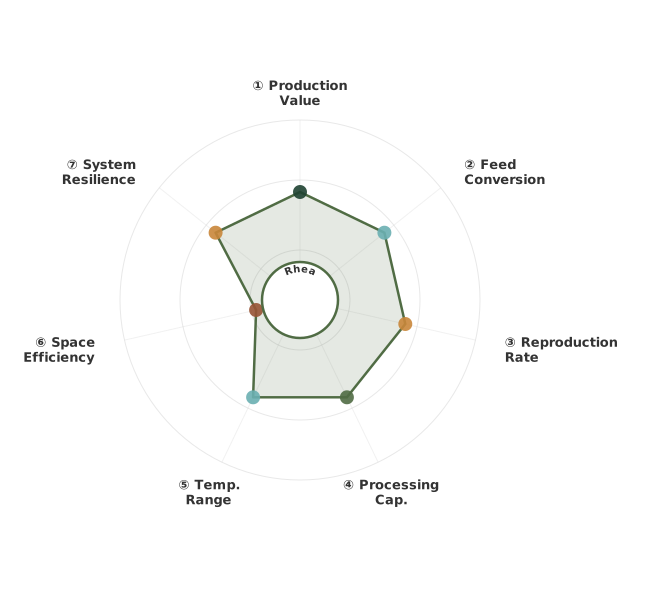
How These Traits Are Calculated
Trait dimensions are ordered clockwise starting from the top of the chart (12 o'clock position):
1. Production Value
Production Value scores 2.3 (typical) using the ratite pathway: meat_production (typical 2.0, 40%) yields 60-80 lbs of lean red meat per bird at 12-14 months, egg_value (typical 2.3, 30%) produces 20-40 large eggs per year with a rich yolk, specialty_products (typical 2.0, 20%) include feathers and leather, feed_efficiency (typical 2.0, 10%) converts feed at approximately 3.5:1. Formula: (2.0×0.40 + 2.3×0.30 + 2.0×0.20 + 2.0×0.10) = 2.09, rounded to 2.1. While not as high as ostrich or emu in meat yield, rheas offer a balanced profile for niche markets.
Dual-purpose (meat + eggs) + specialty products
2. Feed Conversion
Feed Conversion Efficiency scores 2.0 (typical) based on general ratite knowledge. Rheas, like ostriches and emus, are efficient foragers and can convert feed into body mass at a ratio of roughly 3.5:1. This is better than cattle (6-8:1) but less efficient than poultry (2:1). Their diet primarily consists of grains, legumes, and greens, making them adaptable to farm-grown feedstuffs, which can improve overall farm efficiency.
Feed ratio 3.5:1 (moderate)
3. Reproduction Rate
Reproduction Rate scores 2.0 (typical). Rhea hens lay 20-40 large eggs per season, with incubation taking approximately 42 days. While prolific for a large bird, this is significantly slower than insect reproduction. The long incubation period and seasonal laying require dedicated breeding programs and patience for population scaling, making them more comparable to other poultry than insects.
20-40 eggs/year, 42-day incubation
4. Processing Cap.
Processing Capacity scores 2.0 (typical) based on growth rate. Rheas typically reach market weight of 60-80 lbs in 12-14 months. This growth rate is slower than commercial poultry but comparable to or slightly faster than some sheep or goats, and significantly faster than cattle. This moderate processing capacity allows for sustained production cycles without the extremely long timelines of some larger livestock.
Reaches market weight in 12-14 months
5. Temp. Range
Temperature Range scores 1.8 (typical-low) from inferred heat and cold tolerance. Native to South America, rheas tolerate warm climates well (up to 90°F/32°C). However, they are less cold-hardy than ostriches or emus and require adequate shelter and insulation when temperatures drop below freezing (below 20°F/-7°C). Their temperature range necessitates climate-specific management for optimal health and productivity.
Good heat, limited cold (needs shelter)
6. Space Efficiency
Space Efficiency scores 1.0 (limited) based on the small_scale_suitability trait. Rheas are large birds requiring ample space for movement, foraging, and social interaction. A minimum of 500-1000 sq ft per bird is recommended in pens, with pasture access being ideal. This makes them unsuitable for small-scale urban or indoor operations, requiring significant land resources typical of traditional livestock farming.
Requires large enclosures (pasture/pens)
7. System Resilience
System Resilience scores 2.3 (typical) from: hardiness (typical 2.5, 40%) rheas are robust birds when provided with adequate space and nutrition, disease_resistance (typical 2.0, 30%) generally resistant to common avian diseases but can be susceptible to parasites and stress-related issues, adaptability (typical 2.5, 30%) they can adapt to a variety of diets including grains, legumes, and forages. Formula: (2.5×0.40 + 2.0×0.30 + 2.5×0.30) = 2.35, rounded to 2.3. Their resilience makes them a viable option for regenerative systems with proper management.
Generally hardy, adaptable to varied diets
Know the Debate
- Rhea hardiness suitable for diverse climates and low inputs
- Market development and scalability remain key considerations
- Efficient forage conversion offers unique protein source potential
- Low-input adaptability contrasts with traditional livestock challenges
Value Streams
Experience Level
Some livestock experience recommended (better for larger operations)
3
Know the Debate
Rhea production offers a unique approach to livestock, particularly for farmers in warmer climates or those seeking low-input, adaptable animals. T...
Know the Debate
Rhea production offers a unique approach to livestock, particularly for farmers in warmer climates or those seeking low-input, adaptable animals. T...
Rhea production offers a unique approach to livestock, particularly for farmers in warmer climates or those seeking low-input, adaptable animals. Their exceptional hardiness and heat tolerance mean they can thrive in demanding environments with diverse forage, often requiring less intensive management than conventional livestock. However, the commercial viability of rheas extends beyond their biological suitability, encompassing market access, consumer acceptance, and the specific economies of scale achievable for this niche protein source.
Is rhea a viable commercial livestock alternative?
Climate-resilient, efficient protein alternative
Academic research and field observations suggest rheas excel in hot, dry climates and can convert varied forage into usable protein and products, offering a sustainable alternative to traditional livestock with lower resource needs.
Sources behind this view
Sources behind this view
 Videos & Podcasts
-
Select livestock based on climate and landscape. Consider hair sheep for cold resilience over wool sheep. Factors include climate, water, shelter, markets, and personal satisfaction. Choose animals that make you happy.

-
Highlights South Pole cattle as ideal for low-input, grass-based systems in the South due to their heat, parasite, and disease resistance (including warts), docile temperament, and ability to maintain condition on grass alone.

 Research
-
Neo-tropical species production: a sustainable strategy for climate change adaptation in neo-tropical regions. (opens in new window)
This study found: Climate change is making it harder to raise traditional farm animals like cattle, pigs, and chickens in hot, humid regions of Latin America and the Caribbean. This article suggests that using native tropical wildlife, such as capybaras, pacas, agoutis, caimans, cocricos, and peccaries, could be a more sustainable solution. These animals are naturally adapted to the local climate, meaning they need less water and energy to thrive. Raising them could provide nutritious meat and other products while reducing pollution. However, there are challenges, including legal issues around harvesting these animals, a lack of farming expertise, and limited knowledge about their biology.
Commercial viability requires market development and scale
While biologically hardy, rheas' success as a commercial venture hinges on developing consistent markets for their meat and leather products and overcoming logistical challenges associated with their unique production cycle compared to mainstream livestock.
Sources behind this view
Sources behind this view
Videos & Podcasts
-
Select livestock based on climate and landscape. Consider hair sheep for cold resilience over wool sheep. Factors include climate, water, shelter, markets, and personal satisfaction. Choose animals that make you happy.
-
In Australia's Cape York Peninsula, large Brahman cattle are ecologically misaligned with poor forage. Market demands for larger animals conflict with the need for smaller, fertile, ecologically adapted cattle. Overcoming biosecurity and market barriers with technological integration is key to sustainability.

Making Sense of the Differences
The potential for rheas as a commercial livestock alternative is promising due to their inherent hardiness and climate resilience, particularly in warmer regions. However, realizing this potential hinges on proactive market development and consumer education to create consistent demand for their products. Farmers considering rheas should assess their local market opportunities and be prepared for the unique management and logistical considerations that differ from conventional livestock operations.