
Shire Horse
The Shire horse offers farmers a truly remarkable combination of unparalleled gentle temperament, exceptional cold tolerance, and formidable draft capability, simplifying heavy work and ensuring reliable performance in challenging climates. Originating from England, these majestic equines are renowned for their strength and calm disposition, making them ideal partners for demanding agricultural tasks. Their good endurance and hardiness allow them to thrive on diverse forage, requiring minimal intervention and making them efficient for silvopasture, rotational grazing, and mob grazing systems. While versatile enough for riding, their true distinction lies in their ability to perform heavy draft work with docility, a trait that sets them apart from lighter breeds and offers significant labor-saving potential for the discerning farmer.
Regenerative Quick Profile
Best Suited For
Climates: Temperate oceanic to humid continental climates, with cool summers and mild to cold winters. They originated in the damp, temperate regions of England.
Terrain: Requires carefully managed terrain
Scale: Best for medium to large operations (50+ animals)
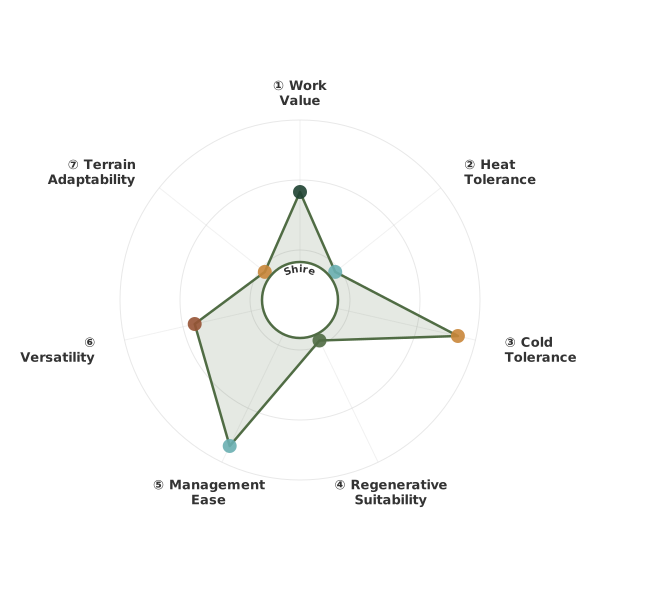
How These Traits Are Calculated
Trait dimensions are ordered clockwise starting from the top of the chart (12 o'clock position):
1. Work Capability
Draft power, riding suitability, and work versatility
WHAT: Evaluates working ability across draft work (pulling power, harness training), riding suitability (gaits, endurance, carriage), and versatility (multiple work types). Measures practical utility for farm work, transportation, or recreational use.
WHY: Working horses provide power for tillage, hauling, logging, and transportation—services replacing tractors at $20-50 daily fuel costs while building soil health. Versatile breeds serving both draft and riding roles maximize utility on diversified farms.
HOW: Composite assessment of documented work characteristics, breed purpose, and traditional use. Exceptional (≥2.6): strong draft capability OR excellent riding + versatile. Typical (1.8-2.5): suitable for specific work types. Limited (<1.8): limited working ability, primarily ornamental or specialized.
2. Heat Tolerance
Work performance in hot weather above 85°F (29°C)
WHAT: Evaluates ability to maintain work output during sustained heat above 85°F (29°C), measuring metabolic efficiency, cooling adaptations, and documented performance in hot climates.
WHY: Heat stress reduces work capacity 30-50% and increases overheating risk during labor. Heat-adapted breeds maintain work schedules through summer where others require dawn/dusk-only work or risk heat exhaustion, cutting productive hours in half during peak season.
HOW: Rated from database trait 'heat_tolerance' based on breed characteristics. Exceptional (≥2.6): proven work in 95°F+ (35°C+), efficient cooling, maintains output. Typical (1.8-2.5): manageable with breaks and water. Limited (<1.8): struggles above 85°F, requires restricted work schedules.
3. Cold Tolerance
Work performance in cold weather below 20°F (-7°C)
WHAT: Evaluates ability to maintain work output during sustained cold below 20°F (-7°C), measuring coat insulation, metabolic adaptation, and winter performance. Critical for northern farms with outdoor winter work.
WHY: Cold-sensitive horses require heated barns ($100-300 monthly winter costs), limit outdoor work hours, and need increased feed (30-50% more) for maintenance. Cold-hardy breeds work full days outdoors year-round with basic shelter, maintaining productivity through harsh winters.
HOW: Rated from database trait 'cold_tolerance' based on documented characteristics. Exceptional (≥2.6): thick winter coats, proven work in <0°F (-18°C), minimal shelter needed. Typical (1.8-2.5): moderate hardiness. Limited (<1.8): requires heated shelter, limited winter work capacity.
4. Land Health Contribution
Positive impact on soil, biodiversity, and ecosystem function
WHAT: Evaluates how well horses contribute to land health improvement through appropriate stocking density, hoof impact on soil (compaction vs aeration), grazing patterns that promote biodiversity, and integration with regenerative practices.
WHY: Horses can enhance or degrade land depending on management and breed characteristics. Light-hooved breeds with moderate grazing pressure improve soil structure and plant diversity, while heavy breeds concentrated on small acreage cause compaction, overgrazing, and bare ground, undermining regenerative goals.
HOW: Assessed from typical stocking density needs, documented land impact, and integration with regenerative systems. Exceptional (≥2.6): light hoof loading + appropriate stocking + enhances biodiversity. Typical (1.8-2.5): neutral impact with good management. Limited (<1.8): heavy impact, requires careful management to avoid degradation.
5. Management Ease
Handling temperament and care requirements
WHAT: Measures daily management simplicity combining temperament (calm vs reactive), handling cooperation, health needs, and training responsiveness. Easy breeds enable confident handling by novice owners while difficult breeds require experienced horsepersonship.
WHY: Difficult horses create safety risks and increase labor 2-4× through nervous behavior, handling resistance, and health complications. Calm, cooperative breeds enable one-person operations and gentle training methods where reactive breeds need multiple handlers or professional training.
HOW: Weighted assessment: temperament (50%), handling cooperation (30%), health needs (20%). Exceptional (≥2.6): calm and willing, easy to handle, robust health. Typical (1.8-2.5): manageable with experience. Limited (<1.8): reactive or resistant, requires advanced handling skills.
6. Versatility
Range of roles and adaptability to different farm tasks
WHAT: Measures adaptability across multiple farm roles—draft work, riding, packing, driving, land management—and learning ease for new tasks. Versatile breeds excel in 3+ roles where specialized breeds serve narrow purposes.
WHY: Versatile horses maximize utility for diversified farms. A horse excelling at both draft work and trail riding provides power for farm work while also serving recreational needs, justifying keep costs where single-purpose horses sit idle between specialized uses.
HOW: Evaluated from documented multi-purpose capability and learning adaptability. Exceptional (≥2.6): excels in 3+ roles, learns new tasks readily. Typical (1.8-2.5): suitable for 2 roles or good at primary purpose. Limited (<1.8): single specialized purpose, limited adaptability.
7. Terrain Adaptability
Sure-footedness on hills, rocks, and challenging ground
WHAT: Evaluates ability to work safely and effectively on challenging terrain—steep hillsides, rocky ground, uneven footing, mountain trails—where less adapted breeds risk injury or refuse difficult passages.
WHY: Terrain-adapted horses enable work on diverse landscapes—hillside farming, mountain logging, backcountry access—where unsuitable breeds restrict work to flat improved ground. This expands productive acreage and enables enterprises (silvopasture, woodlot management) impossible with terrain-limited breeds.
HOW: Assessed from breed origins, documented terrain performance, and hoof/leg characteristics. Exceptional (≥2.6): mountain breeds, proven steep/rocky terrain work, natural sure-footedness. Typical (1.8-2.5): handles moderate terrain. Limited (<1.8): flat-ground specialists, struggles on challenging terrain.
Regenerative Advantages
- Cold Tolerance: With dense coats and significant feathering, Shires possess excellent natural insulation, positioning them among the most cold-hardy domestic breeds.
- Temperament: Shire Horses are celebrated for their calm, docile, and willing disposition, making them exceptionally easy to handle and safe for riders of all experience levels.
- Draft Capability: As one of the largest breeds, Shires possess immense strength, bone, and stamina, specifically bred for pulling the heaviest loads and excelling in demanding draft applications.
Value Streams
- Nutrient cycling and soil building
Experience Level
Some livestock experience recommended (better for larger operations)