
Silver Appleyard Duck
Also known as: silver appleyard
The Silver Appleyard duck simplifies management by thriving on diverse forage, exhibiting excellent cold hardiness, and excelling at pest control, making them a low-intervention livestock choice. Originating from England, these striking, large-bodied ducks are known for their good docility and reliable egg production, offering a dual-purpose advantage for farmers. Their strong foraging instincts and disease resistance make them particularly well-suited for silvopasture and multi-species grazing operations, where they actively contribute to pasture health and reduce insect pressure. This breed's inherent hardiness and self-sufficiency set it apart, requiring minimal supplemental feed and care, especially in cooler climates.
Regenerative Quick Profile
Best Suited For
Climates: Temperate oceanic to humid subtropical
Scale: Excellent for small homesteads (1-10 animals)
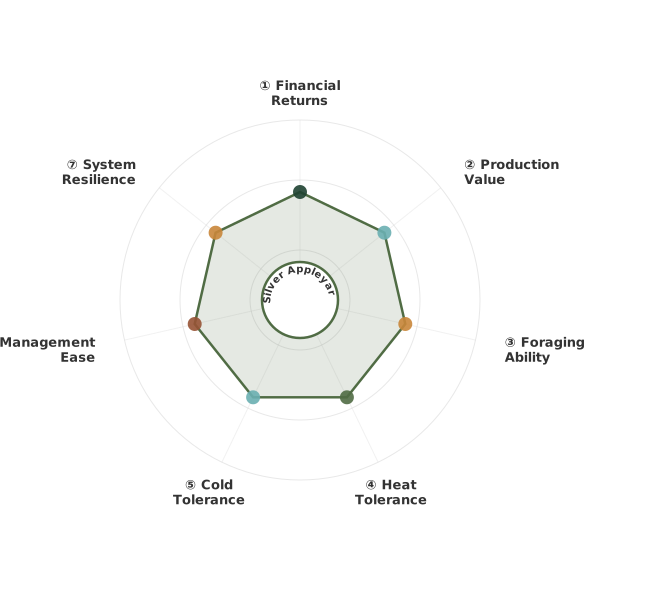
How These Traits Are Calculated
Trait dimensions are ordered clockwise starting from the top of the chart (12 o'clock position):
1. Financial Returns
Annual income per bird from eggs, meat, or specialty products
WHAT: Evaluates profit potential for specialty poultry (turkeys, ducks, geese, guinea fowl) combining meat yield, egg production (where applicable), growth timelines, and market premiums for specialty products.
WHY: Specialty poultry targets premium markets—heritage turkeys at $6-8/lb versus $1.50 commodity, duck eggs at $8-12/dozen versus $3-5 chicken eggs. Understanding enterprise-specific returns helps match birds to market opportunities, with successful operations generating 2-4× returns of conventional poultry.
HOW: Calculated from production data (market weight, timelines, egg yield) combined with efficiency traits and premium market access. Exceptional (≥2.6): strong output + premium markets + efficient growth. Typical (1.8-2.5): moderate production and markets. Limited (<1.8): low output or limited market access.
2. Production Value
Meat yield, egg production, and specialty product quality
WHAT: Measures output quality and quantity combining meat characteristics (size, flavor, texture prized by consumers), egg production (for laying breeds), and specialty products (foie gras, down feathers) that command premiums.
WHY: Production value determines market positioning. Heritage turkeys with superior flavor justify $6-8/lb premiums, duck eggs with rich yolks attract baking customers at $1+ per egg, quality down commands $20-40/lb. High production value enables profitable small-scale operations where commodity birds require large volume to achieve viability.
HOW: Composite assessment of documented production characteristics and market quality. Exceptional (≥2.6): superior product quality + strong output + specialty attributes. Typical (1.8-2.5): good standard production. Limited (<1.8): commodity quality, minimal specialty value.
3. Foraging Ability
Feed cost reduction through natural foraging behavior
WHAT: Measures effectiveness at obtaining nutrition through foraging—consuming insects, seeds, greens, and other natural foods—reducing purchased feed requirements 20-50% in pasture-based systems.
WHY: Aggressive foragers reduce feed costs while providing pest control (insects, ticks, slugs) and weed management services. Turkeys consuming 30-40% of calories from forage save $15-30 per bird over growing season, making the difference between profitable and marginal operations.
HOW: Rated from documented foraging behavior and feed reduction potential. Exceptional (≥2.6): excellent foragers, 40-50% feed reduction, active pest control. Typical (1.8-2.5): moderate foraging, 20-30% reduction. Limited (<1.8): minimal foraging, requires full feeding.
4. Heat Tolerance
Performance in hot weather above 85°F (29°C)
WHAT: Evaluates adaptation to sustained heat above 85°F (29°C), measuring heat stress resistance, growth/production maintenance, and survival during summer peaks. Critical for southern operations and summer meat production.
WHY: Heat stress reduces feed intake 20-40%, slows growth, and increases mortality—particularly problematic for turkeys naturally susceptible to heat. Heat-adapted breeds maintain production schedules where others require expensive cooling or suffer significant losses during summer.
HOW: Rated from database trait 'heat_tolerance' based on documented characteristics. Exceptional (≥2.6): maintains production in 95°F+ (35°C+), low mortality. Typical (1.8-2.5): manageable with shade and water. Limited (<1.8): high heat sensitivity, struggles above 85°F.
5. Cold Tolerance
Performance in cold weather below 20°F (-7°C)
WHAT: Evaluates adaptation to sustained cold below 20°F (-7°C), measuring feather insulation, cold-weather foraging activity, and winter production/growth maintenance. Important for year-round outdoor systems in northern climates.
WHY: Cold-sensitive birds require heated housing ($50-200 monthly winter costs), reduce activity limiting foraging value, and experience higher mortality. Cold-hardy breeds remain active outdoors year-round, maintain winter egg production (ducks/geese), and thrive with basic shelter.
HOW: Rated from database trait 'cold_tolerance' based on breed characteristics. Exceptional (≥2.6): excellent insulation, active in <0°F (-18°C), maintains winter production. Typical (1.8-2.5): moderate hardiness. Limited (<1.8): requires heated shelter, limited winter activity.
6. Management Ease
Handling temperament and care requirements
WHAT: Measures daily management simplicity combining temperament (calm vs flighty/aggressive), health needs, natural breeding ability (versus artificial insemination required), and routine handling cooperation.
WHY: Difficult birds increase labor 2-3× and create safety concerns. Aggressive turkeys or geese require protective equipment during handling, flighty birds complicate catching for processing, breeds requiring AI add complexity. Calm birds with good health enable confident management by beginners.
HOW: Weighted assessment: temperament (50%), health needs (30%), breeding ease (20%). Exceptional (≥2.6): calm and manageable, robust health, natural breeding. Typical (1.8-2.5): manageable with experience. Limited (<1.8): aggressive or nervous, high health needs, or breeding complications.
7. Flock Resilience
Disease resistance and survival under typical stresses
WHAT: Evaluates flock robustness across disease resistance (particularly respiratory issues and common poultry diseases), parasite tolerance, predator awareness, and general hardiness determining survival through typical challenges.
WHY: Resilient breeds maintain productivity through challenges causing 20-50% losses in susceptible birds—surviving disease pressure, evading predators through awareness, resisting parasites. This determines whether flocks thrive with basic care or require intensive interventions and predator-proof housing.
HOW: Composite assessment of documented health and survival characteristics. Exceptional (≥2.6): strong disease resistance + predator-savvy + hardy. Typical (1.8-2.5): standard resilience with routine care. Limited (<1.8): health-sensitive or vulnerable, requires intensive management and protection.
Regenerative Advantages
- Docility: Silver Appleyards exhibit remarkable gentleness and are easily handled, making them an excellent choice for farms prioritizing calm poultry.
- Cold Hardiness: Their substantial size and dense feathering provide superior insulation, allowing Silver Appleyards to remain active in frigid conditions with minimal shelter.
- Coop Aggression: Very docile and gentle ducks with minimal signs of aggression. 2 sq ft/bird is more than adequate for coop space.
- Integration Ease: Known for their docile and amenable nature. Silver Appleyards integrate quickly with minimal aggression, needing just a 1-2 week acclimation period.
- Dual Purpose Quality: Combining a good meat yield with respectable egg laying, Silver Appleyards are well-suited for diversified operations seeking balanced production.
Know the Debate
- Commercial viability varies: specialized breeds vs. heritage dual-purpose.
- Heritage breeds offer lower inputs and good welfare on pasture.
- Egg yield and growth rates differ significantly by breed and management.
Value Streams
- Meat & Egg production
- Insect and pest control
- Scratch tillage and compost distribution
Experience Level
Suitable for first-time livestock owners
4
Know the Debate
Silver Appleyard ducks offer a robust, dual-purpose option for regenerative systems, particularly suited for pasture-based operations. Their hardin...
Know the Debate
Silver Appleyard ducks offer a robust, dual-purpose option for regenerative systems, particularly suited for pasture-based operations. Their hardin...
Silver Appleyard ducks offer a robust, dual-purpose option for regenerative systems, particularly suited for pasture-based operations. Their hardiness and foraging efficiency reduce input needs and enhance soil health by controlling pests and distributing manure. However, their production yields and management requirements differ from specialized commercial breeds. While heritage breeds thrive in diverse, low-intervention environments, producers focusing on peak egg or meat output may find specialized hybrids offer higher efficiency but require more intensive management and specialized diets.
Are Silver Appleyards commercially viable for meat and eggs?
Potential for good eggs and meat, lower inputs
Heritage breeds like Silver Appleyards provide reliable eggs suitable for baking and quality meat. Their hardiness, foraging ability, and lower disease rates reduce reliance on supplemental feed and veterinary care, making them a cost-effective choice for diversified farms and lower-input systems.
Sources behind this view
Sources behind this view
 Videos & Podcasts
-
Ducks are a win for daily, high-quality eggs ideal for baking, despite causing some damage to low-lying garden produce when free-ranging.

-
Heritage hens lay for 6-7 years, with production dropping in winter and during molting. Artificial light can encourage laying. Hens also provide natural pest control and valuable manure, reducing reliance on petrochemical fertilizers and supporting soil health.
-
Discusses adapting duck production based on market demand, particularly from chefs, and highlights ducks' strong foraging ability requiring frequent pasture moves.
-
Acquiring new chicks (broilers and layers like Rhode Island Reds, B Rocks, Wyandottes) and ducks. Key advice on managing brooder temperature to prevent overheating. Also harvesting and drying apple mint tea, a frost-unbothered perennial.
Specialized breeds offer higher yields, faster growth
Modern commercial breeds, such as Cornish Cross for meat and Leghorn or Golden Comet hybrids for eggs, are bred for maximal efficiency. They achieve faster growth to harvest weight and higher annual egg production, often exceeding 300 eggs per year, through optimized diets and genetics.
Sources behind this view
Sources behind this view
Videos & Podcasts
-
Recommends hybrid chicken breeds: Golden Comets for egg layers and Rainbow Rangers for meat birds. Highlights Rainbow Rangers' fast growth, pasture suitability, and meat quality over dual-purpose breeds.

 Research
-
Duck Farming in Coastal Area: Assessing Nutritional Status and Its Contribution to Egg Production (opens in new window)
This study found: A six-week study surveyed 200 duck farms in coastal areas to understand how their feed affects egg laying. Researchers interviewed farmers weekly about what they fed their ducks and analyzed the feed's nutritional value, comparing it to recommended standards. They found that over half (58.5%) of the ducks had sufficient nutrition, while nearly 42% were not getting enough. Ducks with sufficient nutrition laid significantly more eggs (72% contribution) compared to those with insufficient nutrition (50% contribution). The study identified that farms with insufficient nutrition often fed too much rice bran and too little anchovies and fish waste. The key takeaway is that improving duck feed by reducing bran and increasing fish-based ingredients can substantially boost egg production.
-
Innovative layer genetics to handle global challenges in egg production. (opens in new window)
This study found: Breeding programs for egg-laying hens are focused on anticipating market needs, like improved animal welfare and cage-free systems, for the next five years. Key traits being selected for include good nesting behavior and reduced feather-pecking, which can be influenced by genetics. To ensure hens can handle longer production cycles without molting, breeders are also focusing on stronger bones and better skeletal health. Methods like beak shape adjustment (with low heritability) and assessing bone quality through palpation or ultrasound are being used. By combining these efforts with advanced genetic analysis, breeders aim to improve overall hen performance, health, and behavior.
 From the Web
-
Guidance on selecting chicken breeds for meat or eggs, with commercial layers reaching ~300 eggs/year via calcium-rich diets. Meat birds (broilers) should be harvested at desired weight for efficiency. Dual-purpose and heritage breeds are options for backyard flocks. Food safety, including HACCP for *Salmonella* reduction, is crucial.
Making Sense of the Differences
The commercial viability of Silver Appleyard ducks hinges on the farmer's goals and scale. For those prioritizing low-input systems, robust heritage breeds, and diverse farm ecosystems, their dual-purpose nature and hardiness are highly advantageous. However, producers focused on maximizing egg output or achieving rapid meat production for commodity markets will likely find specialized hybrids more efficient, though they require more intensive management, specific diets, and a greater upfront investment in genetics and infrastructure.
5
Management, Care & Feeding
Operational guidance for raising this breed successfully
Management, Care & Feeding
Operational guidance for raising this breed successfully
Managing Silver Appleyard ducks effectively in a regenerative system focuses on leveraging their natural behaviors and ensuring their basic needs are met. Provide them with ample space for foraging, ideally with access to diverse pasture and a clean water source. While they are excellent foragers, supplementing their diet with a quality waterfowl feed, especially during laying periods or when pasture is scarce, is recommended. Ensure the feed is appropriate for their life stage (starter, grower, layer). Ducks require water not just for drinking but also for cleaning their nostrils and eyes, so a pool, large tub, or pond is essential. Protection from predators is a key husbandry consideration; secure nighttime housing is crucial, as ducks can be vulnerable to foxes, raccoons, and birds of prey. Regular cleaning of their living quarters will help maintain hygiene and prevent disease. Due to their heritage breed status, they are generally robust, but monitoring for common duck ailments such as bumblefoot or respiratory issues is wise. Rotational grazing is highly beneficial, moving ducks to fresh pasture regularly to prevent overgrazing and allow vegetation to recover, while also distributing their nutrient-rich manure evenly across the land. This practice maximizes their contribution to soil health and minimizes parasite exposure. Consider their social needs; while they can be integrated with other poultry, ensure there's enough space and resources to avoid competition and stress. Their laying cycle is typically seasonal, peaking in spring and summer, so plan for egg collection and potential incubation needs accordingly. Their calm nature means they generally integrate well with other farm animals, but always observe introductions carefully.
Sources behind this view
 Community
-
Provides guidance on residential duck flock management, including selective breeding, culling, and using Cayuga ducks for quiet operation in residential areas with noise ordinances. It also offers str
Read more (opens in new window) permies.com -
Discusses duck management in electric netting paddocks, emphasizing frequent moves to protect vegetation and reduce feed costs via free-ranging. Recommends LGDs for predator protection against owls an
Read more (opens in new window) permies.com