
South Poll Cattle
Also known as: south poll, south polls, southpoll, southpoll cattle
South Poll cattle simplify management for farmers with their exceptional docility, remarkable hardiness, and outstanding foraging ability. This breed thrives on diverse pasture, requiring minimal intervention due to its superior grazing adaptation and mothering instincts, making it an excellent choice for grass-finishing operations. Developed in the United States, South Polls are a composite breed known for their heat tolerance and overall resilience. While also demonstrating good cold tolerance and parasite resistance, it's their innate ability to convert forage efficiently and their calm disposition that truly sets them apart, making them ideal for intensive rotational grazing systems.
Regenerative Quick Profile
Best Suited For
Climates: Humid subtropical to temperate, with tolerance for semi-arid conditions
Terrain: Adaptable to most terrain types
Scale: Excellent for small homesteads (1-10 animals)
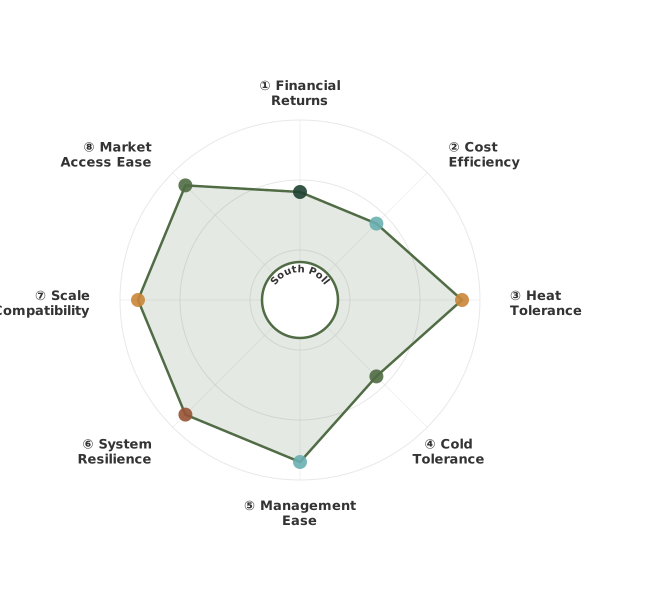
How These Traits Are Calculated
Trait dimensions are ordered clockwise starting from the top of the chart (12 o'clock position):
1. Financial Returns
Monthly income per animal after feed and care costs
WHAT: Evaluates net monthly profit by combining finish weight, time to market, price premiums, and input costs. Breeds with fast growth, efficient feed conversion, and premium market access generate higher returns per animal.
WHY: Farmers need clear income projections to sustain operations. Breeds returning $150+/month enable profitable small-scale operations, while those under $80/month require larger herds or alternative revenue streams to achieve viability.
HOW: Calculated from economics data (finish weight, months to finish, price premiums) combined with trait scores (feed efficiency, mothering ability, drought tolerance). Exceptional (≥2.6): fast growth ≤24 months + high capital efficiency >$180/month + low costs <30% of revenue. Typical (1.8-2.5): moderate returns or longer timelines. Limited (<1.8): slow growth >36 months or high input costs >50%.
2. Cost Efficiency
Feed, water, and input costs relative to output value
WHAT: Measures how well cattle convert inputs (pasture, hay, grain, water) into saleable output. Combines grass-finishing ability, feed efficiency, foraging capability, and water requirements into a composite efficiency score.
WHY: Input costs determine profitability more than market price. Breeds excelling on grass alone with minimal supplementation and low water needs reduce operating costs 40-60%, enabling viability even in drought years or when hay prices spike.
HOW: Weighted formula: grass finishing ability (30%), feed efficiency (30%), foraging ability (30%), water requirements inverted (10%). Exceptional (≥2.6): finishes on grass, exceptional feed conversion, thrives on rough forage. Typical (1.8-2.5): moderate efficiency, some grain needed. Limited (<1.8): grain-dependent, high inputs required.
3. Heat Tolerance
Performance in hot climates above 85°F (29°C)
WHAT: Evaluates breed adaptation to sustained heat above 85°F (29°C), measuring coat characteristics, metabolic adaptations, and documented performance in tropical or semi-arid regions.
WHY: Heat stress reduces feed intake 15-30%, lowers reproduction rates, and increases mortality. Heat-adapted breeds maintain productivity where others require expensive shade structures, cooling systems, or fail completely during summer peaks.
HOW: Rated from database trait 'heat_tolerance' based on breed characteristics. Exceptional (≥2.6): tropical origins, short sleek coats, proven success in regions >95°F (35°C). Typical (1.8-2.5): moderate tolerance, manageable with some shade. Limited (<1.8): temperate-adapted, struggles above 85°F without intensive cooling.
4. Cold Tolerance
Performance in cold climates below 20°F (-7°C)
WHAT: Evaluates breed adaptation to sustained cold below 20°F (-7°C), measuring coat thickness, body mass, metabolic efficiency, and documented performance in northern climates with harsh winters.
WHY: Cold stress increases feed requirements 20-40% for maintenance alone, elevates mortality in young stock, and complicates winter management. Cold-hardy breeds thrive outdoors year-round where others need expensive barns and supplemental heating.
HOW: Rated from database trait 'cold_tolerance' based on breed characteristics. Exceptional (≥2.6): northern origins, thick winter coats, proven success in regions <0°F (-18°C). Typical (1.8-2.5): moderate hardiness, windbreaks sufficient. Limited (<1.8): warm-adapted, requires shelter below 30°F (-1°C).
5. Management Ease
Temperament, handling requirements, and daily care needs
WHAT: Measures how straightforward cattle are to work with daily, combining temperament docility, calving ease, mothering ability, and fence respect into a management complexity score.
WHY: Difficult cattle increase labor 2-4× through longer handling times, more frequent escapes, calving interventions, and safety risks. Easy-handling breeds enable one-person operations and reduce stress for both farmer and animals.
HOW: Weighted formula: docility (40%), calving ease (30%), mothering ability (20%), fence respect (10%). Exceptional (≥2.6): calm docile temperament, unassisted calving, excellent mothers, respects basic fencing. Typical (1.8-2.5): manageable with experience. Limited (<1.8): nervous or aggressive, frequent interventions needed.
6. Drought & Disease Resilience
Survival and productivity under stress conditions
WHAT: Evaluates breed robustness across drought tolerance, parasite resistance, general hardiness, and disease resistance. Measures ability to maintain productivity when conditions deteriorate or health challenges arise.
WHY: Resilient breeds reduce veterinary costs 30-50%, survive drought years that devastate others, and maintain production through typical disease pressures. This determines whether you can sustain a herd through inevitable challenges or face repeated losses.
HOW: Weighted formula: drought tolerance (40%), parasite resistance (30%), general hardiness (20%), disease resistance (10%). Exceptional (≥2.6): thrives through drought, strong natural immunity, minimal interventions needed. Typical (1.8-2.5): moderate resilience, standard care sufficient. Limited (<1.8): requires intensive management to maintain health.
7. Farm Size Adaptability
Suitability across different farm scales and intensities
WHAT: Evaluates whether breeds work across small (1-10 head), medium (11-50 head), or large (50+ head) operations, considering size, handling needs, and infrastructure requirements.
WHY: Size mismatches create inefficiencies. Large commercial breeds overwhelm small pastures and facilities, while breeds requiring individual attention don't scale to large herds. Matching breed to scale prevents costly infrastructure changes or unmanageable daily workloads.
HOW: Matrix scoring based on breed size × small-scale suitability rating. Exceptional (≥2.6): adapts well to all scales or excels across 2+ scales. Typical (1.8-2.5): works best at specific scales. Limited (<1.8): narrow scale requirements, struggles outside optimal range.
8. Market Accessibility
Availability of buyers and premium market opportunities
WHAT: Evaluates market pathways by examining price premium potential, buyer network strength, and market accessibility. Inverted dimension where breeds requiring premiums to be viable score lower than those profitable at commodity prices.
WHY: Premium dependence creates risk. Breeds requiring 30-50% premiums need specialty buyers, direct marketing channels, and consumer education—adding 10-20 hours monthly overhead. Commodity-viable breeds sell through standard auctions with minimal marketing effort.
HOW: Inverted scoring: lower premiums = higher scores. Exceptional (≥2.6): profitable at commodity prices, sells through standard channels. Typical (1.8-2.5): moderate premium needs (10-20%), accessible specialty markets. Limited (<1.8): requires high premiums (30-50%), niche buyers, intensive marketing.
Regenerative Advantages
- Heat Tolerance: With Brahman influence, South Polls exhibit exceptional heat tolerance and efficient thermoregulation, thriving in temperatures above 95°F.
- Drought Tolerance: Exceptional at utilizing dry forage, South Polls maintain condition effectively during challenging, often dry, pasture conditions.
- Parasite Resistance: Selected in humid environments, South Polls possess exceptional natural resistance to parasites.
- Grazing Ability: South Polls are meticulously developed for high-performance grazing on quality grass-based pastures. Their composite genetics excel in converting diverse grasslands and polycultures into efficient beef production. They are a benchmark breed for intensive rotational grazing and grass-finishing operations, requiring minimal supplementation and representing a gold standard for pasture-based beef systems.
- Mothering Ability: South Polls exhibit strong maternal instincts and good milk production, ensuring robust calf development on pasture.
Know the Debate
- South Polls offer heat tolerance, often outperforming British breeds.
- Breed efficiency and docility suit low-input, regenerative systems.
- Naturally polled genetics eliminate dehorning needs for safety.
Value Streams
- Meat production
- Nutrient cycling and soil building
- Grassland management through grazing
- Carbon sequestration in grasslands
Experience Level
Suitable for first-time livestock owners
3
Understanding South Poll Cattle Characteristics
Physical traits, temperament, and what makes this breed unique
Understanding South Poll Cattle Characteristics
Physical traits, temperament, and what makes this breed unique
South Poll cattle are a relatively new composite breed, developed in the United States in the late 1980s by Teddy Gentry of Keatchie, Louisiana. The goal was to create a moderate-framed, efficient, and hardy beef animal that thrived in the humid southern climate. The breed's genetic makeup includes Hereford, Angus, Shorthorn, and Barzona, drawing upon the strengths of each. This blend results in a distinctive appearance: typically red or roan in color, polled (hornless), and often with a slightly thicker hide than some traditional British breeds, offering some protection against insects and the elements.
What truly sets South Polls apart is their combination of traits tailored for pasture efficiency. They are known for their moderate size, which contributes to lower maintenance requirements and less impact on pastures compared to larger, more continental breeds. Their maternal instincts are strong, and they are recognized for producing easily managed calves. The breed's development focused on adaptability to forage-based diets and a desire for a more docile animal, making them easier to handle in various management scenarios.
Compared to other breeds, South Polls offer a unique niche. They bridge the gap between the extreme hardiness of some native or composite breeds and the established market acceptance of traditional breeds like Angus or Hereford. Their polled nature is a significant advantage, eliminating the need for dehorning. Their adaptability to heat, humidity, and less-than-ideal forage conditions makes them a standout choice for producers in regions where other breeds might struggle, particularly in the Southeastern United States.
Sources behind this view
 Videos & Podcasts
-
South Poll cattle are highly recommended for new farmers due to their exceptional temperament and workability. They are docile, easily handled, and do not exhibit aggressive behaviors common in other

-
The South Poll breed exemplifies the principle of matching cattle to land, prioritizing fertility, longevity, and temperament. This flexible, low-input approach is accessible for new farmers and promo
-
Green Pastures Farm is auctioning two four-year-old South Poll bulls known for their ability to stay fat on grass, produce large, docile cows, and require no winter supplementation, contrasting this w
-
Implemented a cattle breeding program using natural selection to adapt animals to their environment, favoring South Polls and giving every heifer a chance to breed, which proved more effective than tr
4
Know the Debate
South Poll cattle are praised for their adaptability to challenging climates, particularly in the humid Southeastern United States, and their effic...
Know the Debate
South Poll cattle are praised for their adaptability to challenging climates, particularly in the humid Southeastern United States, and their effic...
South Poll cattle are praised for their adaptability to challenging climates, particularly in the humid Southeastern United States, and their efficiency on pasture. Their moderate size, fertility, and docile temperament make them a compelling choice for regenerative grazing systems aiming for low-input management. However, the extent of their superior heat tolerance compared to breeds with stronger Bos indicus genetics, and their overall advantage in 100% grass-fed operations, are points of discussion informed by both scientific principles and extensive farmer experience.
How do South Poll cattle compare in heat tolerance to other breeds?
High heat tolerance in humid conditions
Field practitioners consistently observe South Poll cattle thriving in hot, humid Southern climates, showcasing remarkable heat tolerance and low-stressgrazing. Their docility and adaptability to fescue pastures contribute to their efficiency and reduced need for supplementation, even in challenging weather.
Sources behind this view
Sources behind this view
Videos & Podcasts
-
South Poll cattle are highly recommended for new farmers due to their exceptional temperament and workability. They are docile, easily handled, and do not exhibit aggressive behaviors common in other breeds, making them ideal for first-generation farmers focused on genetics.
-
Teddy Gentry details the development of the South Pole cattle breed in Alabama, focusing on heat tolerance, meat tenderness, fertility, and longevity for grass-based systems. He incorporated Barzona and Cinnipole genetics to overcome issues with traditional breeds in the southern climate and reduce toughness, while selecting for smaller, more efficient animals.

-
Ralph and Jerry Voss switched from Angus to South Pole cattle due to issues with heat tolerance, fertility, and cow size. South Poles demonstrated superior performance in Missouri's climate, offering better heat tolerance, longevity, and fertility, allowing for efficient spring calving and improved herd replacement.
Bos indicus may offer superior heat tolerance
Scientific literature indicates that cattle breeds with significant Bos indicus heritage possess inherent physiological adaptations for extreme heat. While composite breeds like South Polls demonstrate good adaptability, they may not match the absolute heat resilience of breeds specifically developed and selected for arid, high-temperature environments.
Sources behind this view
Sources behind this view
 Research
-
The Complex and Diverse Genetic Architecture of the Absence of Horns (Polledness) in Domestic Ruminants, including Goats and Sheep. (opens in new window)
This study found: This review looks at the different genetic reasons why some cattle, sheep, and goats are born without horns (polled). While it might seem simple, the genetics behind hornlessness are surprisingly varied. In sheep, some breed differences are still not fully understood. In goats, being hornless can sometimes be linked to a genetic disorder called polled intersex syndrome (PIS), which affects both males and females. With growing concerns about animal welfare and potential bans on dehorning farm animals, there's increased interest in naturally hornless animals and the genes that cause this trait. While gene editing technology exists, it's not widely accepted for food animals, especially in Europe. Therefore, farmers and breeders are still mainly using genetic selection – choosing animals with the natural genes for hornlessness – to spread this trait within herds and flocks of cattle and sheep.
-
Public attitudes towards genetically modified polled cattle. (opens in new window)
This study found: A study surveyed people in the United States about using gene editing to make cows naturally hornless. This technology could prevent the painful dehorning procedures often done to cattle. Out of nearly 450 people who completed the survey, most (about 66%) thought modifying cows to be hornless was a good idea and said they would be willing to eat products from these animals. Their reasons often included improving animal welfare, though some expressed uncertainty about the technology itself. The findings suggest that people may be more accepting of genetic modification when it's seen as directly benefiting the animals.
Making Sense of the Differences
Observed heat tolerance in South Poll cattle may reflect their specific composite genetics and management on pasture, rather than pure physiological dominance over Bos indicus. Differences in reported performance could be influenced by specific climate conditions (humidity vs. dry heat), pasture quality and management intensity, and the specific breeds used for comparison. Farmers in hot, humid regions might find South Polls highly effective and efficient due to their overall adaptability. However, in extremely arid or exceptionally hot environments, breeds with a stronger Bos indicus lineage specifically selected for those conditions might still offer greater resilience.
Are South Poll cattle ideally suited for truly low-input, 100% grass-fed operations?
Excellent for low-input, 100% grass-fed
Field practitioners consistently highlight South Poll cattle's exceptional fertility, longevity, and docility, enabling them to thrive on 100% forage without grain supplementation. This low-input approach maximizes profitability and aligns with regenerative principles.
Sources behind this view
Sources behind this view
Videos & Podcasts
-
Green Pastures Farm is auctioning two four-year-old South Poll bulls known for their ability to stay fat on grass, produce large, docile cows, and require no winter supplementation, contrasting this with grain-fed systems.
-
Greg Judy learned about 'grass genetics' from Gerald Fry, discovering South Poll cattle can thrive on 100% forage without grain. He witnessed their ability to graze through snow, confirming their efficiency and leading him to adopt these genetics for his herd.

-
Grazing educator Greg Judy highlights South Poll cattle's 100% grass-fed efficiency, linking smaller cow size (750 lbs) to improved fertility, longevity, and meat tenderness. Docility is key for profitability and low-input management.
Adaptable but require balanced management
Academic and extension sources emphasize selecting cattle for efficiency and adaptability, noting that while breeds like South Polls offer practical advantages, success in low-input systems still relies on tailored genetics, environmental fit, and sound management practices to meet market and production goals.
Sources behind this view
Sources behind this view
Research
-
Candidate Genes, Markers, Signatures of Selection, and Quantitative Trait Loci (QTLs) and Their Association with Economic Traits in Livestock: Genomic Insights and Selection. (opens in new window)
This study found: This review summarizes how modern genetics research is improving livestock, like cattle and sheep, by understanding their DNA. Scientists are identifying specific genes and DNA markers linked to important traits such as faster growth, better milk production, disease resistance, and ability to handle heat. By using these genetic insights, breeders can select animals with desirable traits more effectively. For example, specific markers could help increase milk fat content in dairy cows by 15-20%, boosting farm profits. The research also looks at how animals have adapted over time and highlights the importance of preserving breeds that are naturally resilient to local conditions, like heat-tolerant cattle. While genetic advancements offer great potential, challenges remain, including understanding complex gene interactions and ensuring genetic diversity is maintained.
 From the Web
-
Guide to selecting 'regenerative cows' based on environmental fit, balanced maternal/terminal traits, moderate size, moderate milking, heterosis from crossbreeding, overall efficiency, and calf health. Specific breed examples are provided for each consideration.
-
Prioritizes longevity, adaptability, fertility, and soundness in livestock genetic selection, particularly for beef cattle. Recommends practical, on-farm observation over catalog data for breeding stock, emphasizing that non-breeding females and underperforming bulls can be finished for meat, ensuring financial return.
Making Sense of the Differences
The success of South Poll cattle in low-input systems is strongly supported by field observations emphasizing their efficiency on pasture and docile temperaments. While academic research provides general principles for herd selection (moderate size, fertility, adaptability), the specific advantages of South Polls for 100% grass-fed systems are largely validated by practitioner experience. The key is matching the breed's traits—hardiness, moderate frame, and maternal efficiency—to the specific forage resources and management style, which is where their 'low-input' advantage becomes evident.
Is dehorning necessary when breeding naturally polled cattle like South Polls?
Naturally polled breeds eliminate dehorning necessity
Field reports consistently highlight that naturally polled breeds such as South Poll cattle alleviate the need for dehorning. This simplification saves labor, reduces animal stress and injury, and creates a safer environment for both handlers and other herd members.
Sources behind this view
Sources behind this view
Videos & Podcasts
-
South Poll cattle are highly recommended for new farmers due to their exceptional temperament and workability. They are docile, easily handled, and do not exhibit aggressive behaviors common in other breeds, making them ideal for first-generation farmers focused on genetics.
-
Explains the difference between hornless South Pole and horned Corrientes cattle, noting the use of polled bulls to create a hornless herd. Corrientes are crossed with Red Angus to improve meat quality and carcass size for grass-fed systems.

Genetic advancements enable precise hornlessness
Scientific research confirms the existence of specific polled genes and mutations in various cattle breeds, with DNA marker tests and gene editing offering avenues for breeding and developing hornless animals with high accuracy and improved welfare.
Sources behind this view
Sources behind this view
Research
-
Characterization of the poll allele in Brahman cattle using long-read Oxford Nanopore sequencing. (opens in new window)
This study found: Researchers used advanced DNA sequencing technology (Oxford Nanopore) to investigate the genetic reason why some Brahman cattle are born without horns (polled). This trait is important for safety in the cattle industry. By sequencing DNA from polled, horned, and mixed-heritage Brahman cattle, they identified specific genetic changes, called insertions, that are present in polled animals but not in horned ones. The study provides strong evidence that a particular genetic variation, known as the Celtic poll allele, is responsible for the polled trait in Australian Brahman cattle.
-
Optimized Genetic Testing for Polledness in Multiple Breeds of Cattle. (opens in new window)
This study found: A new, improved genetic test has been developed to accurately predict whether cattle will be born without horns (polled). This is important for animal welfare, as physically removing horns from calves can be painful. Previous genetic tests, including older DNA marker tests and standard SNP tests, sometimes gave unclear results, especially in certain breeds, leaving about 1 in 10 animals with an uncertain prediction. This new optimized test uses a specific set of 5 DNA markers and successfully determined the horn status for over 99.9% of the nearly 40,000 cattle tested. This advancement will help farmers and breeders make better decisions for selective breeding programs, leading to more hornless cattle and improved animal well-being.
-
CRISPR/Cas12a mediated knock-in of the Polled Celtic variant to produce a polled genotype in dairy cattle. (opens in new window)
This study found: Researchers used a gene-editing tool called CRISPR/Cas12a to introduce a naturally occurring gene variant that causes hornlessness (polledness) into dairy cattle. This variant, known as the Polled Celtic variant, is common in beef cattle but rare in dairy breeds. By modifying skin cells from a horned bull and using a cloning technique, they aimed to create polled offspring. One fetus examined mid-pregnancy showed the polled trait, and a calf born from another pregnancy also had the polled phenotype, though it unfortunately died soon after birth. This study shows how gene editing can be practically applied in farming to improve animal welfare by preventing the need for painful dehorning.
Making Sense of the Differences
The debate centers on the practical advantage of naturally polled breeds versus the scientific ability to breed for hornlessness. Field experience clearly shows that using naturally horned breeds like South Polls eliminates the need for dehorning procedures altogether, offering immediate benefits in labor, animal welfare, and safety. Scientific advancements in genetic testing and gene editing confirm the feasibility of breeding for polled traits, supporting the selection of naturally hornless animals as a practical and effective approach.
5
Management, Care & Feeding
Operational guidance for raising this breed successfully
Management, Care & Feeding
Operational guidance for raising this breed successfully
Managing South Poll cattle effectively centers on leveraging their natural strengths in a pasture-based system. Their moderate size and efficient metabolism mean they do not require high-energy diets; high-quality forages are typically sufficient for maintenance and production. Focus on well-managed rotational grazing to provide a consistent supply of nutritious forage, taking advantage of their ability to utilize a diverse range of pasture species. Monitor body condition scores regularly, as this will indicate if nutritional needs are being met, and intervene with supplementation only when necessary, such as during late gestation or lactation, or extreme drought conditions.
Their docility makes them ideal for low-stress handling techniques. Utilizing gentle herding methods, calm movements, and well-designed handling facilities will further enhance their ease of management and reduce any potential stress. This calm disposition also aids in pasture movements, making rotational grazing more efficient and less labor-intensive. Ensure adequate fencing and water access across all paddocks to facilitate smooth rotations and animal comfort. Regular observation of the herd during grazing periods can help identify any issues early and allow for proactive management.
South Polls are generally hardy and possess good natural parasite resistance, especially when managed on well-balanced pastures that are rotated regularly. This reduces the need for frequent deworming. However, like all cattle, they benefit from a basic vaccination and health protocol, tailored to the specific risks in your region. Monitor for common cattle ailments, but their robust nature often means fewer health problems overall. Regular hoof checks and attention to dental health, especially in older animals, contribute to their longevity and continued productivity on forage.
Sources behind this view
Videos & Podcasts
-
South Poll cattle are highly recommended for new farmers due to their exceptional temperament and workability. They are docile, easily handled, and do not exhibit aggressive behaviors common in other
-
The South Poll breed exemplifies the principle of matching cattle to land, prioritizing fertility, longevity, and temperament. This flexible, low-input approach is accessible for new farmers and promo
-
The Severs discuss their shift to South Poll cattle for hybrid vigor and fly resistance, their high-tensile fencing infrastructure inspired by Greg Judy, and their interest in Jim Alzando's grazing sy

-
Green Pastures Farm is auctioning two four-year-old South Poll bulls known for their ability to stay fat on grass, produce large, docile cows, and require no winter supplementation, contrasting this w
7
Production Capabilities & Market Economics
Business case evaluation and production metrics
Production Capabilities & Market Economics
Business case evaluation and production metrics
Meat Production Economics
| Category | Value |
|---|---|
| Finish Weight | 1000-1200 lbs 453.6-544.3 kg |
| Months to Finish | 24-30 |
| Price Premium | 0% to 15% |
| Annual Input Cost/Head | $400-600 |
| DTC Retail Price | $10-14 |
| Hanging Weight Yield | 57-61 |
| Packaged Meat per Animal | 310-430 lbs 140-195 kg |
| Processing Cost | $700-1000 |
| Gross DTC Revenue | $3400-5800 |
Finish Weight: Market weight for grass-finished cattle. Varies by breed genetics, frame size, and forage quality. Smaller-framed heritage breeds typically finish at 900-1100 lbs vs. 1200-1400 lbs for larger commercial breeds.
Months to Finish: Time from weaning to finish weight on grass alone (no grain). Grass-finishing takes 24-30 months vs. 14-18 months for grain-finished feedlot cattle. Patient timeline suits regenerative grazing operations.
Price Premium: Premium above conventional beef prices ($0-6/lb range). Grass-finished beef typically sells for $6-12/lb vs. $4-6/lb for conventional. Premium only applies when farm qualifies through certification (organic, grass-fed verified, Animal Welfare Approved) or direct marketing establishes provenance. Without certification or direct sales channels, premium falls to $0.
Annual Input Cost/Head: Minerals, health care, pasture maintenance, and winter hay per animal per year. Excludes infrastructure, land, and labor. Grass-based systems have minimal input costs compared to grain finishing.
DTC Retail Price: Direct-to-consumer retail price range per pound of packaged beef (cuts average). Grass-finished DTC beef typically sells for $8-14/lb across all cuts. Breed reputation, marbling quality, and local market demand drive variation. Prices reflect farm-gate or farmers market sales — wholesale and commodity channels are significantly lower.
Hanging Weight Yield: Percentage of live weight retained as hanging carcass (after hide, head, organs removed). Most cattle dress out at 58-64% of live weight. Leaner grass-finished cattle may hang slightly lower than grain-finished. Breed frame size and condition affect yield.
Packaged Meat per Animal: Take-home meat after cutting and wrapping (typically 60-65% of hanging weight). Bone-in cuts yield more weight than boneless. Final packaged weight depends on cut sheet choices — ground beef maximizes total pounds, premium steaks reduce total weight but increase per-pound value.
Processing Cost: USDA-inspected slaughter, cutting, wrapping, and labeling per animal. Costs vary by region and processor availability — rural areas with more processors tend to be cheaper. Includes kill fee ($75-150), cut-and-wrap ($0.65-1.10/lb hanging), and any specialty processing (jerky, sausage). USDA inspection required for retail sales; custom-exempt processing costs less but meat cannot be resold.
Gross DTC Revenue: Total revenue per animal when selling all cuts direct to consumer. Calculated from packaged weight × average DTC price per pound. Does not deduct processing, marketing, delivery, or production costs. Actual net profit depends heavily on marketing efficiency and processing costs.
Sources behind this view
Videos & Podcasts
-
For profitable grass-finished beef, select appropriate genetics (smaller frame size, e.g., 1200-1300 lb bulls) and focus on animal performance. Larger frame animals often require supplemental feed and
-
Grass-finishing mechanics involve using quality genetics on planted forages in irrigated circles, with daily moves to ensure optimal nutrient intake. Animals are finished to 1200-1250 lbs, aiming for
-
Explains how finishing speed, genetics, soil fertility, pasture diversity, and proper processing are crucial for high-quality grass-finished beef. Addresses issues like cold shortening and the importa

-
Achieve profitable grass-finished beef by focusing on low cost of production through good pasture management, single-mob grazing, and ensuring animals have healthy digestive systems and shed winter co

 Community
-
Conventional beef systems yield standardized, higher-quality carcasses compared to grass-fed systems, which have variable harvest ages and lower marbling. While grass-fed beef has more omega-3s, conve
Read more (opens in new window) ucanr.edu -
Grass-finishing is the final fattening stage before slaughter, requiring target weight and minimal stress. While forage quality impacts fat profile and flavor, achieving tender, flavorful beef relies
Read more (opens in new window) permies.com
Research
-
Grass-fed vs. grain-fed beef systems: performance, economic, and environmental trade-offs. (opens in new window)
California study found conventional beef had better carcass quality and lower GHG emissions, while grass-fed systems had varied water/energy use and higher costs. No single system was superior across
-
Growth curve, blood parameters and carcass traits of grass-fed Angus steers. (opens in new window)
Grass-fed Angus steers took 188 days longer to market with 70% slower weight gain than grain-fed, but produced similar tenderness and better yield grades, though grain-fed had higher quality grades.
-
Integrated metabolomic and transcriptome analyses reveal finishing forage affects metabolic pathways related to beef quality and animal welfare. (opens in new window)
Grass-finished beef is more tender, has better fat profiles (more omega-3s), and comes from less stressed animals compared to grain-finished beef, according to gene and body chemistry analysis.
-
Net protein contribution and enteric methane production of pasture and grain-finished beef cattle supply chains. (opens in new window)
Australian study: Grass-fed beef is far more efficient at producing human-usable protein than grain-finished beef, but grass-fed systems have higher methane emissions per unit of protein.