
Spanish Goats
Also known as: spanish meat goats, brush goats, scrub goats, spanish does
For farmers seeking a robust and adaptable livestock option, Spanish goats excel with their remarkable hardiness, superior browsing ability, and exceptional foraging prowess. These traits simplify pasture management significantly, allowing them to thrive on challenging terrain and a wide variety of vegetation. Originating from Spain and brought to the Americas by explorers, these goats are renowned for their efficient conversion of brush and weeds into valuable meat, making them ideal for brush management programs. Furthermore, they demonstrate good kidding ease and parasite resistance, reducing labor and veterinary costs. Their dual-purpose quality and good meat characteristics offer farmers a versatile and low-intervention livestock choice.
Regenerative Quick Profile
Best Suited For
Climates: Semi-arid to temperate and hot dry climates, adaptable to Mediterranean and humid subtropical regions.
Terrain: Excels on rolling to steep terrain
Scale: Excellent for small homesteads (1-10 animals)
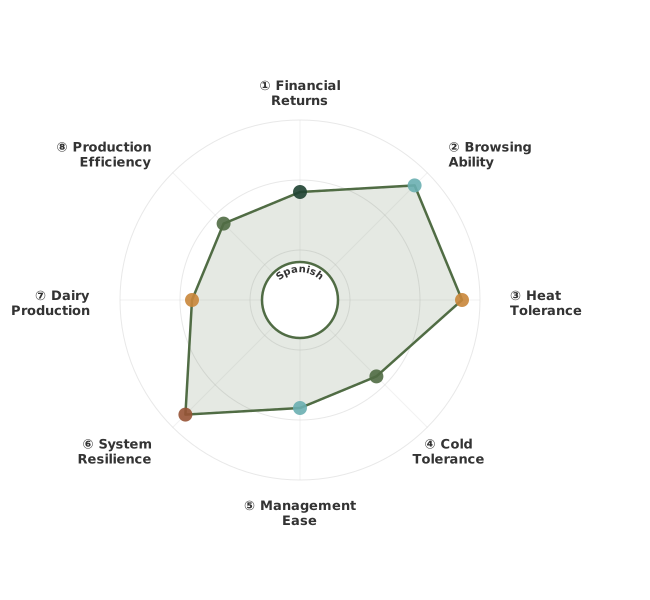
How These Traits Are Calculated
Trait dimensions are ordered clockwise starting from the top of the chart (12 o'clock position):
1. Financial Returns
Annual income per doe from kids, milk, or fiber
WHAT: Evaluates annual profit potential across meat (kid sales), dairy (milk production), fiber (cashmere/mohair), or dual-purpose value. Combines production output with input costs, kidding rates, and market premiums.
WHY: Goat profitability varies by enterprise type—dairy goats producing 1,500-2,500 lbs milk annually generate $400-800 revenue versus meat goats at $150-300 from kid sales. Understanding income potential by enterprise type helps match breeds to market opportunities and farm goals.
HOW: Calculated from enterprise-specific production data (milk yield, kid growth, fiber weight) combined with efficiency traits and costs. Exceptional (≥2.6): high output for enterprise type + low inputs + strong markets. Typical (1.8-2.5): moderate production and costs. Limited (<1.8): low output or premium-dependent without reliable access.
2. Browsing Ability
Effectiveness at consuming brush, weeds, and woody plants
WHAT: Measures goat effectiveness at controlling unwanted vegetation—clearing brush, managing invasive plants, consuming woody browse—while providing land management services that reduce fuel loads and restore degraded pastures.
WHY: Browsers reduce land clearing costs $200-600 per acre compared to mechanical methods while providing income. Effective browsers tackle multiflora rose, kudzu, poison ivy, and small trees where grazers fail, converting liability into profitability.
HOW: Rated from database trait 'browsing_ability' and documented land management effectiveness. Exceptional (≥2.6): aggressive browsers, thrives on brush, excellent weed control. Typical (1.8-2.5): moderate browsing with mixed diet. Limited (<1.8): prefers grass, minimal brush consumption.
3. Heat Tolerance
Milk production and health in hot weather above 85°F (29°C)
WHAT: Evaluates adaptation to sustained heat above 85°F (29°C), measuring production maintenance, heat stress resistance, and cooling behavior. Critical for dairy goats where heat drops milk production 20-40%.
WHY: Heat-sensitive breeds stop milking during summer peaks, creating 2-4 month income gaps in hot climates. Heat-adapted breeds maintain production year-round, provide consistent cash flow, and eliminate need for expensive cooling systems (fans, misters, air conditioning).
HOW: Rated from database trait 'heat_tolerance' based on documented characteristics. Exceptional (≥2.6): tropical origins, maintains production in 95°F+ (35°C+). Typical (1.8-2.5): moderate tolerance with shade and water. Limited (<1.8): production drops significantly above 85°F, requires cooling.
4. Cold Tolerance
Performance in cold weather below 20°F (-7°C)
WHAT: Evaluates adaptation to sustained cold below 20°F (-7°C), measuring coat thickness, metabolic adaptation, and winter performance. Important for northern climates with harsh winters and winter kidding systems.
WHY: Cold stress increases feed requirements 30-50%, complicates kidding (newborns at high risk), and drops milk production in dairy breeds. Cold-hardy breeds maintain production and kid successfully outdoors where others require heated barns.
HOW: Rated from database trait 'cold_tolerance' based on breed characteristics. Exceptional (≥2.6): thick winter coats, northern origins, thrives in <0°F (-18°C). Typical (1.8-2.5): moderate hardiness, basic shelter sufficient. Limited (<1.8): requires heated shelter, struggles with winter kidding.
5. Management Ease
Handling temperament and kidding ease
WHAT: Measures daily management simplicity combining temperament (calm vs flighty), kidding ease (unassisted births), and fence respect. Easy breeds cooperate with routines while difficult breeds create constant challenges.
WHY: Difficult goats increase labor 2-3× through kidding interventions, frequent escapes requiring fence repairs, and handling challenges (especially in dairy operations with twice-daily milking). Calm breeds with easy kidding enable efficient one-person operations.
HOW: Weighted assessment: temperament (40%), kidding ease (35%), fence respect (25%). Exceptional (≥2.6): calm and cooperative, unassisted kidding, respects fencing. Typical (1.8-2.5): manageable with experience. Limited (<1.8): flighty or aggressive, frequent interventions, notorious escapers.
6. Herd Resilience
Health and productivity under stress conditions
WHAT: Evaluates herd robustness across disease resistance, parasite tolerance, drought adaptation, and general hardiness. Measures ability to maintain health and production through typical challenges that affect goats.
WHY: Resilient breeds reduce veterinary costs, survive parasite pressure that kills others (goats being highly susceptible), thrive on sparse forage during drought, and maintain productivity through weather extremes. This determines whether herds thrive independently or require constant medical interventions.
HOW: Composite assessment across multiple resilience factors. Exceptional (≥2.6): exceptional health + parasite resistant + drought tolerant + hardy. Typical (1.8-2.5): standard resilience with routine care. Limited (<1.8): health-sensitive, requires intensive management.
7. Milk Production
Annual milk yield and lactation length for dairy breeds
WHAT: Measures milk output for dairy breeds, evaluating annual yield (1,200-3,000+ lbs), lactation length (8-12 months), milk quality (butterfat, protein), and production consistency. Only relevant for dairy-type breeds.
WHY: Dairy goats provide daily income through milk sales, cheese production, or value-added products. High producers (2,000+ lbs) generating $3-6 daily revenue make dairy operations viable at small scales (10-20 does) where lower producers require larger herds to achieve profitability.
HOW: Rated from database dairy production data and breed standards. Exceptional (≥2.6): 2,400+ lbs annually, 10+ month lactations, high quality milk. Typical (1.8-2.5): 1,500-2,400 lbs, standard lactations. Limited (<1.8): <1,500 lbs or short lactations, primarily meat-type.
8. Production Efficiency
Output relative to feed consumed and care required
WHAT: Measures how effectively goats convert feed into saleable output (milk, meat, fiber), combining feed efficiency, foraging ability, and growth/production rates. Efficient breeds maximize output per dollar of feed input.
WHY: Feed costs represent 50-70% of operating expenses. Breeds converting 4:1 versus 6:1 (feed:output) save $100-200 annually per goat. Excellent foragers reduce purchased feed needs 30-50%, making the difference between profitable and marginal operations.
HOW: Weighted formula: feed efficiency (40%), foraging ability reduces purchased feed (35%), production rate (25%). Exceptional (≥2.6): excellent feed conversion + strong foragers + high output. Typical (1.8-2.5): moderate efficiency. Limited (<1.8): poor feed conversion or low output relative to inputs.
Regenerative Advantages
- Heat Tolerance: Evolved in hot climates, these brush goats demonstrate exceptional heat tolerance, maintaining productivity above 95°F with minimal cooling.
- Drought Tolerance: Their ability to thrive on unimproved pastures and efficient water usage makes Spanish goats highly drought-tolerant, well-suited for arid conditions.
- Parasite Resistance: A long history in parasite-endemic regions has endowed Spanish goats with remarkable natural resistance and hardiness.
- Foraging Ability: Spanish goats exhibit exceptional foraging ability, thriving on a wide spectrum of marginal vegetation, including weeds, forbs, and rough forage. Their heritage and adaptability allow them to maintain excellent condition on unimproved rangeland and scrubland, requiring minimal supplementation. They efficiently convert diverse, low-quality feed sources into production, confirming their status as highly capable foragers.
- Browsing Ability: Spanish goats are supreme browsers, actively seeking and consuming woody vegetation such as shrubs and tree branches. They efficiently utilize browse as a primary dietary component, maintaining good condition on diets high in woody plants. Their natural agility and preference for browse make them adept at navigating challenging terrain and dominating brushy environments, distinguishing them as specialized browsers.
Know the Debate
- Spanish goats: hardy, adaptable, excellent foragers, low input.
- Boer goats: faster growth, potentially higher carcass weights.
- Parasite control needs rotation, fencing, guardian animals.
- Nutritional strategies support animal resilience and health.
Value Streams
- Meat production
- Nutrient cycling and soil building
- Brush clearing and fire risk reduction
- Invasive species control
Experience Level
Consult local experts for handling requirements
3
Understanding Spanish Goats Characteristics
Physical traits, temperament, and what makes this breed unique
Understanding Spanish Goats Characteristics
Physical traits, temperament, and what makes this breed unique
The Spanish Goat, often referred to as the "scrub goat" or "native goat," is not a formally recognized breed in the way some others are, but rather a type of goat that has developed through centuries of natural selection in the Americas. Their origins trace back to the goats brought by Spanish explorers and settlers, which subsequently bred freely and adapted to diverse environments across the continent. This long history of natural selection has resulted in remarkable genetic diversity within the Spanish Goat population, leading to a wide range of appearances, sizes, and colors. What truly sets them apart is their exceptional hardiness, adaptability, and foraging ability – traits honed by survival in varied and often challenging landscapes. They are typically medium-sized, with a lean, muscular build, and possess a keen instinct for seeking out and consuming a wide variety of browse, forbs, and grasses. Their independence and natural mothering instincts are also notable characteristics, contributing to their low-maintenance profile.
Unlike more specialized breeds developed for specific traits like extreme milk production or rapid growth under intensive feedlot conditions, Spanish Goats embody a natural resilience. They have not been selectively bred for uniformity in appearance or performance to the same extent as breeds like Boer or Nubian. This lack of intense pedigree focus, while sometimes seen as a disadvantage in conventional breeding programs, is precisely what makes them so valuable in regenerative systems. Their genetic diversity means they carry a broad spectrum of adaptive genes, allowing them to thrive in environments where other breeds might struggle. This inherent adaptability translates to fewer health issues and a reduced need for intensive management, making them a practical choice for farmers seeking a sustainable approach to livestock production.
Sources behind this view
 Community
-
Goat breeds vary significantly in suitability for milk vs. meat production. Pygmy goats are hardy for meat/brush clearing but not milk; Nigerian Dwarfs offer rich milk but have milking challenges. Ful
Read more (opens in new window) permies.com
 From the Web
-
Selecting healthy meat goats involves examining physical traits and production records. Key breeds include hardy Spanish goats, fast-growing Boer goats, New Zealand's Kiko breed, and crosses with dair
4
Know the Debate
Choosing the right goat breed for your regenerative operation depends heavily on your goals, environment, and management style. While Spanish goats...
Know the Debate
Choosing the right goat breed for your regenerative operation depends heavily on your goals, environment, and management style. While Spanish goats...
Choosing the right goat breed for your regenerative operation depends heavily on your goals, environment, and management style. While Spanish goats are praised for their hardiness and adaptability in diverse and challenging conditions, some operators may consider breeds like Boer for faster growth in more controlled settings. Effective management, particularly regarding parasite control and predator deterrence, demands careful consideration of fencing, rotational grazing strategies, and the use of guardian animals. The optimal approach balances the inherent strengths of the chosen breed with the specific demands of your landscape and operational scale.
Spanish goats vs. other breeds for meat production?
Spanish goats: Resilience & Adaptability
In challenging terrains and climates prone to heat or drought, Spanish goats excel due to their inherent resilience and superior foraging on diverse plant matter. Field practitioners note their parasite resistance and lower input needs, highlighting them as ideal for low-intervention, ecological brush control and meat production.
Sources behind this view
Sources behind this view
 Videos & Podcasts
-
Goats are ideal for hot, dry, rocky terrain and utilize different forage than cattle. Predator management with guard dogs is crucial; keep sheep bunched for dog effectiveness. Drought conditions favor goats, but management must adapt to environmental changes.
-
Greg Christensen advocates for meat goats due to their profitability and effective brush control. He highlights their potential to expand land access through grazing agreements, manage predators and parasites, and serve as a natural fit for operations seeking alternatives to costly brush eradication.
 Research
-
Goat as the ideal climate-resilient animal model in tropical environment: revisiting advantages over other livestock species. (opens in new window)
This study found: Goats are highlighted as the best livestock choice for dealing with climate change, especially in hot regions, compared to cattle and sheep. They are tough animals that can handle heat, drought, and scarce food and water better than other farm animals. Goats are also good at adapting their behavior and have physical traits that help them survive tough conditions. They are easier for small farmers to raise because they need less investment, fewer special facilities, and less labor, while still providing good returns. Their ability to digest poor-quality feed and conserve water makes them very efficient. This makes goats a key animal for ensuring food security as the climate changes.
From the Web
-
Offers detailed guidance on raising sheep and goats for meat, milk, and fiber on small farms, covering breed selection, nutrition, health management (parasites, predators), housing, and marketing, with specific advice for each species.
Boer goats: Faster Growth & Carcass Traits
Academic studies and breed critiques suggest that while Spanish goats are hardy, breeds like Boer are often selected for faster growth rates and heavier muscling, potentially offering a competitive edge in meat production under more intensive management systems.
Sources behind this view
Sources behind this view
Videos & Podcasts
-
Compares goats and sheep, noting goats are better for woody brush but harder to contain and less maternal. St. Croix hair sheep are highlighted for parasite resistance and good mothering. Sheep are preferred for pasture grazing and easier management, especially on small acreages.

Research
-
Goat as the ideal climate-resilient animal model in tropical environment: revisiting advantages over other livestock species. (opens in new window)
This study found: Goats are highlighted as the best livestock choice for dealing with climate change, especially in hot regions, compared to cattle and sheep. They are tough animals that can handle heat, drought, and scarce food and water better than other farm animals. Goats are also good at adapting their behavior and have physical traits that help them survive tough conditions. They are easier for small farmers to raise because they need less investment, fewer special facilities, and less labor, while still providing good returns. Their ability to digest poor-quality feed and conserve water makes them very efficient. This makes goats a key animal for ensuring food security as the climate changes.
From the Web
-
Selecting healthy meat goats involves examining physical traits and production records. Key breeds include hardy Spanish goats, fast-growing Boer goats, New Zealand's Kiko breed, and crosses with dairy breeds for improved milk production and kid size. Strict culling is vital for herd productivity.
Making Sense of the Differences
The choice between Spanish and Boer goats depends on operational goals and environment. Spanish goats excel in low-input, brush-clearing contexts due to their hardiness and adaptability. Boer goats may be favored when rapid growth and specific carcass traits are paramount, typically in more controlled systems. Farmers should align breed selection with available forage, desired management intensity, and market demands.
Effective parasite and predator control for goats?
Integrated Management (Rotation, Fencing, Guardians)
Field experience strongly emphasizes strategic rotational grazing, robust fencing (high-tensile, electrified), and dedicated guardian animals (dogs, llamas) as primary methods for parasite and predator control. Some practitioners report success with 'no-worming' strategies by keenly managing these elements.
Sources behind this view
Sources behind this view
Videos & Podcasts
-
Goats are ideal for hot, dry, rocky terrain and utilize different forage than cattle. Predator management with guard dogs is crucial; keep sheep bunched for dog effectiveness. Drought conditions favor goats, but management must adapt to environmental changes.
-
Goats can be raised in small spaces, including urban areas, with a focus on providing browse and activity. Fencing requires careful consideration due to their behavior. Livestock guardian dogs and llamas are effective against predators like coyotes and mountain lions.
-
Goats require mineral balance (copper, salt, selenium, iodine), good fencing (high-tensile, electrified), and social interaction. They excel at clearing overgrown areas and enjoy climbing, but need active management due to their tendency to get into trouble.

-
Successful no-worming strategy for Spanish and Kiko cross goats and hair sheep in overgrown, timbered terrain. Animals effectively clear brush and acorns, diversifying farm income and not competing with cattle.

Nutritional & Preventative Strategies
Academic guidance and institute resources highlight optimizing nutrition for robust immune systems, considering vaccination protocols, and strategic pasture management as key to minimizing parasite issues. This approach focuses on building natural resilience within the animals.
Sources behind this view
Sources behind this view
Videos & Podcasts
-
Key small ruminant knowledge includes: copper needs (goats need, sheep avoid), preventing acidosis and coccidia, stress minimization, vaccinations (overeating, tetanus), and planning production cycles aligned with forage. Develop business plans and budgets, purchase healthy stock, and prepare resources before acquiring animals.

Research
-
Optimizing Feed Formulation Strategies for Attaining Optimal Nutritional Balance in High-Performing Dairy Goats in Intensive Farming Production Systems (opens in new window)
This study found: This research looks at how to best feed high-producing dairy goats in large farms. It highlights that a goat's genetics play a big role in how well they produce milk and what nutrients they need. Environmental issues like heat waves and unpredictable feed supplies also create challenges. The study suggests that using precision farming techniques, incorporating local by-products into feed, and using supplements or herbal additives can help overcome these problems. The goal is to create balanced diets that meet the goats' changing needs, leading to better health, higher milk production, and more sustainable farming practices.
-
Welfare Assessment on Different-Sized Dairy Goat Farms in the Northern Serbian Province of Vojvodina. (opens in new window)
This study found: A study of 46 dairy goat farms in Serbia looked at animal well-being using a standard checklist. They found that the amount of space per goat varied greatly depending on the farm's size, with smaller farms offering more room. Most farms used soil or straw for flooring, and smaller farms were more likely to let goats go outside. Larger farms often kept goats indoors all the time, which limited their ability to behave naturally. Management practices like feeding, bedding, and deciding which goats to remove from the herd were different across farms. Low milk production was the main reason for removing goats. Smaller farms were more likely to dehorn their goats. The study observed that the goats' coat condition and how they ate at the feed rack were key welfare issues. Many goats also had poor body condition, uneven udders, or overgrown hooves. Larger farms had the most goats that were too thin or too fat. Overall, all types of farms had some welfare problems, showing a need for better management to ensure goats are healthy and comfortable.
From the Web
-
Establishing a meat goat enterprise requires understanding market demand, vegetation control applications, and key management practices like robust fencing, simple housing, and working facilities. Attention to parasite and predator control, nutrition, and breeding stock selection is crucial for success.
Making Sense of the Differences
Effective parasite and predator control for goats involves a layered approach. Field experience strongly emphasizes proactive, integrated strategies like vigilant rotational grazing, secure fencing, and guardian animals. Academic and institute resources support this by highlighting the importance of optimal nutrition and preventative health measures in building animal resilience. Combining these approaches—managing the environment and livestock behavior while ensuring good nutrition and health—provides the most robust defense against parasites and predators.
5
Management, Care & Feeding
Operational guidance for raising this breed successfully
Management, Care & Feeding
Operational guidance for raising this breed successfully
Managing Spanish Goats effectively in a regenerative system hinges on understanding and leveraging their natural instincts and hardiness. Their primary needs are access to varied forage, clean water, and basic shelter from extreme weather. Rotational grazing is paramount; moving them frequently through pastures and brushy areas allows them to efficiently clear vegetation, prevents overgrazing, and helps manage parasite loads naturally. Providing a diverse diet of grasses, forbs, and browse is key to their health and productivity. While they are excellent foragers, ensuring they have access to minerals, particularly selenium and copper, is important, often provided through loose mineral supplements designed for goats. Regular observation is more critical than intensive handling; look for signs of lameness, lethargy, or unusual behavior which might indicate underlying issues, but generally, their resilience means they require less hands-on intervention than more domesticated breeds.
Feeding and grazing management for Spanish Goats should focus on maximizing their natural foraging abilities. Utilize their browsing instinct to manage brush encroachment and improve pasture quality by incorporating them into planned grazing sequences. This means strategically placing them in areas that need clearing or in pastures that require a different grazing pressure to stimulate plant growth. Supplementation should be minimal and strategic, aimed at filling nutritional gaps rather than providing a primary food source. During periods of scarce forage, such as drought or winter, high-quality hay can be offered, but the goal is always to encourage them to utilize available pasture and browse as much as possible. Their ability to extract nutrition from lower-quality forages is a significant advantage in cost-effective, regenerative systems.
Health management for Spanish Goats should be proactive and preventative, focusing on maintaining a healthy environment and robust immune systems rather than reactive treatment. Their inherent parasite resistance is a major benefit, but it's not absolute. Rotational grazing is the most effective parasite control strategy, ensuring they are not repeatedly exposed to high concentrations of larvae. Monitoring fecal egg counts can help identify potential issues early. Vaccinations against common diseases like Clostridium perfringens (C&D) and tetanus are generally recommended, especially if kidding or potential for injury exists. Castration for males intended for meat production can be done using elastrator bands at a young age. Due to their hardiness, they often require less intervention for common ailments, but it's crucial to have a working relationship with a veterinarian familiar with goat health for any unforeseen issues.
Sources behind this view
Videos & Podcasts
-
Goats are profitable for brush and invasive species management, turning negatives into positives. A leasing program offers low-risk income. Focusing on hardy Spanish goat genetics and utilizing them f

-
Optimal kidding occurs in late April/early May to avoid cold rains and reduce labor. Proper nutrition, calculated using tools like Iowa State's 'Brands' program, is vital for milk production. Fencelin

-
Goat management involves challenges like parasites (managed by rotation, worming), kidding, fencing, and predators (coyotes, countered by guard dogs). Benefits include brush control, nutrient cycling,

-
The biggest challenge for goat grazing businesses is the lack of sufficient hearty goats in the US, despite rising prices and demand. Producers need to focus on genetics and diverse revenue streams fo

Community
-
Successful goat management involves proper fencing, varied browsing diets, and essential mineral supplementation (selenium, copper, calcium, magnesium) to control parasites. Owners must become knowled
Read more (opens in new window) permies.com -
Effective meat goat management requires adequate shelter, secure fencing (no-climb, electric), and proper nutrition, including fresh water and high-quality forage. Reproductive management involves str
Read more (opens in new window) ucanr.edu
Research
-
Optimizing Feed Formulation Strategies for Attaining Optimal Nutritional Balance in High-Performing Dairy Goats in Intensive Farming Production Systems (opens in new window)
Research explores optimizing dairy goat feed by considering genetics, environmental challenges, and nutritional interventions for better health, milk production, and sustainability in intensive farmin
-
SHEEP AND GOAT NUTRITION IN THE ORGANIC FARMING SYSTEM (opens in new window)
Organic farming requires careful feeding of sheep and goats, relying on fibrous feeds like hay and pasture, supplemented by organic concentrates. Goats are especially good at utilizing coarser feeds.
From the Web
-
Meat goat profitability depends on strategic feeding aligned with the kidding cycle, optimized stocking rates, and multispecies grazing. Detailed budgets and financial principles highlight minimizing
7
Production Capabilities & Market Economics
Business case evaluation and production metrics
Production Capabilities & Market Economics
Business case evaluation and production metrics
Meat Production Economics
| Category | Value |
|---|---|
| Finish Weight | 60-80 lbs 27.2-36.3 kg |
| Months to Finish | 6-8 |
| Price Premium | +10% |
| Annual Input Cost/Head | $100-140 |
Finish Weight: Market weight for meat goats. Varies by breed - Boer goats finish heavier (80-120 lbs) than Kiko or Spanish goats (60-90 lbs). Kids marketed at 40-80 lbs for ethnic markets.
Months to Finish: Time from birth to market weight. Meat goats on pasture/browse finish at 6-10 months depending on target weight and forage quality. Year-round kidding possible with good management.
Price Premium: Premium above conventional goat meat prices. Grass-fed chevon sells for $4-8/lb live weight vs. $2-4/lb commodity. Strong ethnic market demand (Caribbean, Hispanic, Muslim communities). Premium requires direct marketing or ethnic market connections.
Annual Input Cost/Head: Minerals, health care (especially parasite control), and browse/pasture maintenance per doe per year. Goats are browsers and thrive on marginal land unsuitable for cattle. Excludes infrastructure, land, and labor.
Sources behind this view
Videos & Podcasts
-
Goats in Eastern Montana show comparable or better profitability than cows per animal unit ($2,800+), with advantages in scalability, lower infrastructure costs, and flexibility. Innovative forage str
-
Goat meat pricing should consider production costs and benchmarks like grass-fed lamb. Whole goat is $12.50/lb (25-30 lbs), while packaged meat ranges from $14.50-$17/lb, with discounts for local pick

Community
-
Meat goat production on small acreages in California requires careful forage management and supplemental feeding. Key breeds are Boer and Kiko, with kids typically slaughtered at 4-6 months. Landowner
Read more (opens in new window) ucanr.edu
Research
-
Produktivitas dan Analisis Usaha di Peternakan Kambing Sumber Barokah, Banjarsari, Surakarta, Jawa Tengah (opens in new window)
A 30-day study in Central Java found a goat farm with 250 head to be well-managed and economically feasible, with goats gaining ~100g/day and a 4-year payback period.
From the Web
-
Meat goat profitability depends on strategic feeding aligned with the kidding cycle, optimized stocking rates, and multispecies grazing. Detailed budgets and financial principles highlight minimizing