
Standard Bronze Turkey
The Standard Bronze turkey simplifies flock management with its exceptional hardiness, superior foraging ability, and strong maternal instinct, making it an excellent choice for pasture-raised operations. This breed, originating from a cross between native American turkeys and imported European Bronze turkeys, is renowned for its robust constitution and natural breeding capabilities, requiring minimal intervention. Its adaptability to diverse pasture environments and silvopasture systems allows it to thrive on natural vegetation, significantly reducing feed costs. Furthermore, the Standard Bronze exhibits good docility and cold tolerance, contributing to a more manageable and resilient flock. For farmers seeking a self-sufficient and low-maintenance turkey breed that excels in natural environments, the Standard Bronze offers a distinct advantage.
Regenerative Quick Profile
Best Suited For
Climates: Humid subtropical to continental and semi-arid climates
Scale: Suitable for small to medium operations (10-50 animals)
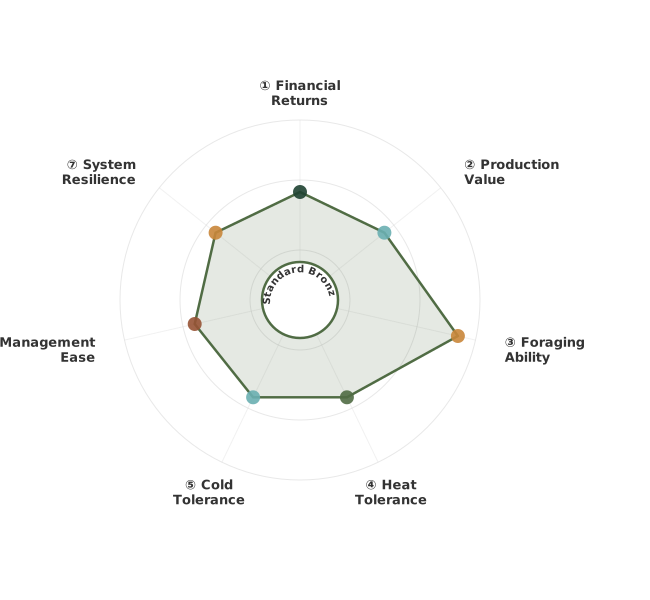
How These Traits Are Calculated
Trait dimensions are ordered clockwise starting from the top of the chart (12 o'clock position):
1. Financial Returns
Annual income per bird from eggs, meat, or specialty products
WHAT: Evaluates profit potential for specialty poultry (turkeys, ducks, geese, guinea fowl) combining meat yield, egg production (where applicable), growth timelines, and market premiums for specialty products.
WHY: Specialty poultry targets premium markets—heritage turkeys at $6-8/lb versus $1.50 commodity, duck eggs at $8-12/dozen versus $3-5 chicken eggs. Understanding enterprise-specific returns helps match birds to market opportunities, with successful operations generating 2-4× returns of conventional poultry.
HOW: Calculated from production data (market weight, timelines, egg yield) combined with efficiency traits and premium market access. Exceptional (≥2.6): strong output + premium markets + efficient growth. Typical (1.8-2.5): moderate production and markets. Limited (<1.8): low output or limited market access.
2. Production Value
Meat yield, egg production, and specialty product quality
WHAT: Measures output quality and quantity combining meat characteristics (size, flavor, texture prized by consumers), egg production (for laying breeds), and specialty products (foie gras, down feathers) that command premiums.
WHY: Production value determines market positioning. Heritage turkeys with superior flavor justify $6-8/lb premiums, duck eggs with rich yolks attract baking customers at $1+ per egg, quality down commands $20-40/lb. High production value enables profitable small-scale operations where commodity birds require large volume to achieve viability.
HOW: Composite assessment of documented production characteristics and market quality. Exceptional (≥2.6): superior product quality + strong output + specialty attributes. Typical (1.8-2.5): good standard production. Limited (<1.8): commodity quality, minimal specialty value.
3. Foraging Ability
Feed cost reduction through natural foraging behavior
WHAT: Measures effectiveness at obtaining nutrition through foraging—consuming insects, seeds, greens, and other natural foods—reducing purchased feed requirements 20-50% in pasture-based systems.
WHY: Aggressive foragers reduce feed costs while providing pest control (insects, ticks, slugs) and weed management services. Turkeys consuming 30-40% of calories from forage save $15-30 per bird over growing season, making the difference between profitable and marginal operations.
HOW: Rated from documented foraging behavior and feed reduction potential. Exceptional (≥2.6): excellent foragers, 40-50% feed reduction, active pest control. Typical (1.8-2.5): moderate foraging, 20-30% reduction. Limited (<1.8): minimal foraging, requires full feeding.
4. Heat Tolerance
Performance in hot weather above 85°F (29°C)
WHAT: Evaluates adaptation to sustained heat above 85°F (29°C), measuring heat stress resistance, growth/production maintenance, and survival during summer peaks. Critical for southern operations and summer meat production.
WHY: Heat stress reduces feed intake 20-40%, slows growth, and increases mortality—particularly problematic for turkeys naturally susceptible to heat. Heat-adapted breeds maintain production schedules where others require expensive cooling or suffer significant losses during summer.
HOW: Rated from database trait 'heat_tolerance' based on documented characteristics. Exceptional (≥2.6): maintains production in 95°F+ (35°C+), low mortality. Typical (1.8-2.5): manageable with shade and water. Limited (<1.8): high heat sensitivity, struggles above 85°F.
5. Cold Tolerance
Performance in cold weather below 20°F (-7°C)
WHAT: Evaluates adaptation to sustained cold below 20°F (-7°C), measuring feather insulation, cold-weather foraging activity, and winter production/growth maintenance. Important for year-round outdoor systems in northern climates.
WHY: Cold-sensitive birds require heated housing ($50-200 monthly winter costs), reduce activity limiting foraging value, and experience higher mortality. Cold-hardy breeds remain active outdoors year-round, maintain winter egg production (ducks/geese), and thrive with basic shelter.
HOW: Rated from database trait 'cold_tolerance' based on breed characteristics. Exceptional (≥2.6): excellent insulation, active in <0°F (-18°C), maintains winter production. Typical (1.8-2.5): moderate hardiness. Limited (<1.8): requires heated shelter, limited winter activity.
6. Management Ease
Handling temperament and care requirements
WHAT: Measures daily management simplicity combining temperament (calm vs flighty/aggressive), health needs, natural breeding ability (versus artificial insemination required), and routine handling cooperation.
WHY: Difficult birds increase labor 2-3× and create safety concerns. Aggressive turkeys or geese require protective equipment during handling, flighty birds complicate catching for processing, breeds requiring AI add complexity. Calm birds with good health enable confident management by beginners.
HOW: Weighted assessment: temperament (50%), health needs (30%), breeding ease (20%). Exceptional (≥2.6): calm and manageable, robust health, natural breeding. Typical (1.8-2.5): manageable with experience. Limited (<1.8): aggressive or nervous, high health needs, or breeding complications.
7. Flock Resilience
Disease resistance and survival under typical stresses
WHAT: Evaluates flock robustness across disease resistance (particularly respiratory issues and common poultry diseases), parasite tolerance, predator awareness, and general hardiness determining survival through typical challenges.
WHY: Resilient breeds maintain productivity through challenges causing 20-50% losses in susceptible birds—surviving disease pressure, evading predators through awareness, resisting parasites. This determines whether flocks thrive with basic care or require intensive interventions and predator-proof housing.
HOW: Composite assessment of documented health and survival characteristics. Exceptional (≥2.6): strong disease resistance + predator-savvy + hardy. Typical (1.8-2.5): standard resilience with routine care. Limited (<1.8): health-sensitive or vulnerable, requires intensive management and protection.
Regenerative Advantages
- Foraging Ability: The Standard Bronze turkey demonstrates exceptional foraging ability, consistently thriving on diverse and marginal vegetation. Their heritage genetics facilitate self-provisioning across varied environments, including scrublands and unimproved rangelands. They effectively utilize browse, forbs, and weeds, requiring minimal supplementation even when pasture quality is low. This broad utilization of natural, non-grass forage makes them highly adapted for regenerative systems.
- Maternal Instinct: Possessing strong broodiness and protective instincts, Standard Bronze hens reliably raise their young, contributing to high natural poult survival.
- Pasture Adaptability: Their robust health and foraging skills allow Standard Bronze turkeys to thrive on pasture, deriving significant nutrition and resisting common ailments.
Know the Debate
- Heritage turkeys offer hardiness and foraging; commercial breeds faster growth.
- Premium markets needed for heritage; commodity markets favor commercial.
- Labor and time investment differs significantly between breed types.
Value Streams
- Meat production
- Insect and pest control
- Scratch tillage and compost distribution
Experience Level
Suitable for first-time livestock owners
3
Understanding Standard Bronze Turkey Characteristics
Physical traits, temperament, and what makes this breed unique
Understanding Standard Bronze Turkey Characteristics
Physical traits, temperament, and what makes this breed unique
The Standard Bronze turkey is a heritage breed that embodies many of the robust traits of its wild ancestors, offering a dual-purpose utility for farmers seeking a hardy, adaptable bird. This breed is distinguished by its visually striking iridescent plumage, a shimmering tapestry of metallic bronze, green, and copper that provides natural camouflage in pasture settings. Unlike the highly specialized modern commercial lines, the Standard Bronze possesses a broad, deep, and muscular conformation that supports natural movement and agility, making it well-suited for active foraging. Its genetic lineage traces directly to the North American wild turkey, contributing to its resilience and ease of integration into pasture-based agricultural systems.
Physical Characteristics:• Plumage: Features iridescent feathers with metallic bronze, green, and copper hues, providing natural camouflage.
• Conformation: Broad, deep, and muscular body suitable for both meat production and natural movement, with a less extreme build than broad-breasted commercial varieties.
• Size: Mature toms typically weigh 23-25 lbs, and hens weigh 14-16 lbs, though individual weights can vary. This moderate size is ideal for direct-to-consumer sales and smaller processing operations.
• Legs: Sturdy legs positioned well under the body, supporting active foraging and movement across varied terrain.
Behavioral Traits:• Foraging Ability: Highly active foragers, adept at finding a significant portion of their diet from insects, seeds, and greens in pasture settings. This natural inclination reduces reliance on supplemental feed.
• Maternal Instinct: Hens exhibit strong nesting, incubation, and brooding behaviors, diligently caring for their poults and contributing to natural flock reproduction. This innate maternal drive simplifies flock management and reduces the need for artificial incubation.
• Docility: Generally exhibit a calm temperament, making them easier to manage and less prone to stress-related issues, which is beneficial for flock health and handling.
• Natural Breeding: Capable of successful natural mating, eliminating the need for artificial insemination and simplifying breeding management.
Biological Adaptations:• Hardiness: Possess good overall hardiness, allowing them to withstand a range of environmental conditions with minimal specialized care.
• Climate Tolerance: Demonstrates good tolerance to both colder temperatures and heat, though basic shelter from extreme elements and access to shade and water are essential.
• Shelter Dependency: Requires nightly shelter to protect against predators and environmental extremes, a critical consideration for flock management and ensuring poult survival.
• Water Requirements: Typically consume 0.5-1 gallon of water per day, with increased needs during hot weather or high activity, necessitating consistent water access.
• Predator Vulnerability: Possess a high vulnerability to predators due to their size and less aggressive defense mechanisms compared to wild counterparts, necessitating secure housing and vigilant flock management.
The Standard Bronze’s combination of heritage traits, robust physical form, and natural behaviors makes it a distinct option for farmers looking to integrate livestock into more extensive, pasture-based systems. Its biological adaptations lend themselves to environments where resourcefulness and resilience are key.
Sources behind this view
 Videos & Podcasts
-
Green Acres pasture-raises Broad Breasted Bronze turkeys for Thanksgiving, targeting 18-20 lbs. This breed is favored for hardiness and lower susceptibility to ailments compared to Broad Breasted Whit
-
Discusses raising heritage turkeys, noting higher labor, longer grow-out, and premium pricing ($9.50/lb) compared to broad-breasted varieties. Highlights processing challenges and pasture needs, while

 Community
-
Details raising Broad Breasted White and Bronze turkeys for meat and eggs, including pasture integration, breeding stock selection to avoid inbreeding, and managing their heavy impact on pasture throu
Read more (opens in new window) permies.com -
Compares heritage turkey breeds (Bourbon Red, Blue Slate) to Broad Breasted turkeys, noting heritage breeds have superior flavor but are smaller and slower growing; Bourbon Reds are easiest to pluck.
Read more (opens in new window) permies.com
4
Know the Debate
Standard Bronze turkeys are a heritage breed suited for regenerative systems, emphasizing hardiness and pasture foraging. This contrasts with Broad...
Know the Debate
Standard Bronze turkeys are a heritage breed suited for regenerative systems, emphasizing hardiness and pasture foraging. This contrasts with Broad...
Standard Bronze turkeys are a heritage breed suited for regenerative systems, emphasizing hardiness and pasture foraging. This contrasts with Broad Breasted White turkeys favored for commercial production due to rapid growth. The choice impacts profitability, labor, and market strategy. While heritage breeds command premium prices, they require longer grow-out periods. Commercial breeds offer faster returns but may have welfare implications and are geared toward commodity markets. Farmers must consider their specific goals, scale, and available market channels when selecting a breed.
Heritage vs. commercial turkeys: Profitability and practical challenges?
Heritage Breeds: Hardiness & Premium Potential
Heritage breeds like the Standard Bronze excel in pasture-raised systems due to their hardiness, strong foraging instincts, and natural breeding capabilities. This reduces feed costs and requires less intensive management, appealing to niche markets willing to pay a premium for quality and heritage status.
Sources behind this view
Sources behind this view
Videos & Podcasts
-
Discusses raising heritage turkeys, noting higher labor, longer grow-out, and premium pricing ($9.50/lb) compared to broad-breasted varieties. Highlights processing challenges and pasture needs, while acknowledging broad-breasted turkeys are more profitable but heritage breeds have strong customer demand.
 Research
-
Current status, reproductive performance, and health management of turkey (Meleagris gallopavo) breeds under farming systems in Bangladesh (opens in new window)
This study found: A study surveyed 33 turkey farms in Bangladesh to understand their current practices, how well they reproduce, and how they manage bird health. Most farmers were men, aged 31-40, with college degrees, and turkey farming was a side job for them. Many had no prior experience and didn't read up on turkey farming. The most common turkey breeds were American Black and White Holland. Farms often raised turkeys for multiple purposes (meat, eggs, poults). On average, farms produced about 32 eggs per day, and birds were sold around 5.75 months old, weighing about 8.8 kg (19.4 lbs) before dressing. While many hatcheries had good fertility and hatching rates (81-90%), most farmers made their own feed instead of using commercial rations. Diseases like turkey pox, Newcastle disease, and others were common. The main reasons farmers weren't making a profit and planned to stop farming were high feed costs, lack of technical help, poor market access, and unpredictable prices. The study suggests that government support through training, better feed access, and stable markets could help make turkey farming a sustainable income source.
 From the Web
-
Compares Broad Breasted White and heritage turkey breeds for pastured production, highlighting differences in growth rate, reproduction, size, and consumer preference. Details heritage breed criteria and poult costs ($6-$10 each).
-
Raising heritage turkeys involves specific standards (free-range, organic) and commands premium prices ($3.50-$4.00/lb) due to flavor and genetic value. Marketing through Slow Food and direct sales is key, though challenges like predator management and market establishment (2-5 years) exist.
Commercial Breeds: Speed & Economic Viability
Commercial breeds, such as Broad Breasted Whites, are favored for their rapid growth and efficient feed conversion, enabling quicker returns and suitability for larger-scale production. While they may not perform as well on pasture, their economic advantages are significant for meeting broad market demand.
Sources behind this view
Sources behind this view
Videos & Podcasts
-
Switched from Bourbon Red to bronze-breasted turkeys for shorter grow time (11 weeks to 12 lbs, aiming for 20-24 lbs by Thanksgiving), easier management, and comparable meat quality, while ensuring farm profitability and teaching children entrepreneurial skills.
-
Broad-breasted white turkeys are raised for ~4 months, finished at 18-20 lbs, and sold for $5.49/lb ($110-$115/bird). Daily pasture rotation enhances flavor, justifying premium pricing over heritage breeds which require more labor and time.
-
Discusses challenges with mail-order turkey poults experiencing high mortality due to transport stress, recommending local sourcing. Explains preference for Broad Breasted Bronze/White over heritage breeds for faster growth and marketability for Thanksgiving.
From the Web
-
Compares Broad Breasted White and heritage turkey breeds for pastured production, highlighting differences in growth rate, reproduction, size, and consumer preference. Details heritage breed criteria and poult costs ($6-$10 each).
Making Sense of the Differences
The choice between heritage and commercial turkey breeds hinges on market strategy and production goals. Heritage breeds like the Standard Bronze excel in pasture-based systems, offering hardiness and foraging ability that appeal to direct-to-consumer markets willing to pay a premium for quality and ethical production. However, their longer grow-out times and lower yields necessitate careful financial planning. Commercial breeds, primarily Broad Breasted Whites, offer rapid growth and efficient feed conversion, making them economically viable for higher volume sales in commodity markets, though they require more intensive management and raise welfare concerns. Farmers must align their breed selection with their target market, labor capacity, and desired on-farm ecological contribution.
5
Management, Care & Feeding
Operational guidance for raising this breed successfully
Management, Care & Feeding
Operational guidance for raising this breed successfully
Integrating Standard Bronze turkeys into a farm operation requires a thoughtful approach that leverages their heritage traits for both economic gain and ecological benefit. Success hinges on understanding their physical and behavioral needs, establishing appropriate market channels, and implementing management practices that align with regenerative principles. Their strong foraging instinct, natural breeding capabilities, and adaptability to pasture environments provide a solid foundation, but careful planning is essential to maximize their potential and mitigate risks. This breed is best suited for farms that can offer ample pasture or woodland foraging opportunities and are committed to developing direct-to-consumer or specialty market relationships.
Physical and Environmental Requirements:• Pasture Access: Provide access to well-managed pastures or woodland areas, ideally fenced for rotational grazing. This allows them to express their natural foraging behaviors and reduces feed costs.
• Nightly Shelter: Secure, predator-proof housing is essential for nighttime protection against predators and extreme weather. This can range from a simple coop to a more integrated structure within a silvopasture system.
• Water and Shade: Consistent access to clean water is critical, with requirements increasing in hot weather. Ample shade should be provided during warmer months to prevent heat stress.
• Space Requirements: While adaptable, adequate space per bird is necessary to prevent overcrowding and promote health. For pasture-based systems, this typically means ample acreage for rotation.
• Climate Considerations: While hardy, ensure basic protection from severe wind, rain, and extreme temperatures. Their good tolerance to a range of climates means they can thrive in USDA zones 4-9 with appropriate shelter.
Economic Implementation and Market Development:• Finishing Time: Factor in the 6-7 month finishing period, which requires a longer capital outlay before revenue is generated compared to faster-growing commercial breeds.
• Market Channel Strategy: Develop direct-to-consumer sales, farmers markets, local restaurants, or specialty butchers well in advance. Commodity markets offer little to no premium for heritage breeds. This market development can take 2-3 years to establish a consistent customer base.
• Processing Arrangements: Secure reliable processing facilities that can handle heritage breeds. This often involves working with smaller, local processors.
• Cost-Benefit Analysis: Conduct a thorough cost-benefit analysis, factoring in feed, labor, processing fees, marketing costs, and the potential price premium.
Management Practices:• Rotational Grazing: Implement rotational grazing to maximize forage utilization, distribute manure evenly, and prevent overgrazing. This also helps break up sod and improve soil health.
• Predator Management: Vigilant predator management is crucial. This includes secure housing, potentially guard animals, and careful observation of flock behavior.
• Natural Breeding Support: Allow toms and hens to naturally mate. Ensure sufficient numbers of toms for the flock size to optimize fertility.
• Poult Rearing: Hens typically exhibit strong maternal instincts, requiring minimal intervention for incubation and brooding. Monitor poults for health and provide access to feed and water.
• Health Monitoring: Regularly observe the flock for signs of stress or illness. Their hardiness generally means fewer health issues in well-managed pasture systems, but prompt attention to any problems is key.
• Supplementation: While foraging is significant, provide a balanced supplemental feed, especially during periods of low forage availability or for growing poults and lactating hens.
Integrating Standard Bronze turkeys is a commitment that rewards careful planning and management. By understanding their unique biological needs and strategically developing market access, producers can successfully incorporate this heritage breed into regenerative farming systems, enhancing both profitability and ecological health.
Sources behind this view
Videos & Podcasts
-
Green Acres pasture-raises Broad Breasted Bronze turkeys for Thanksgiving, targeting 18-20 lbs. This breed is favored for hardiness and lower susceptibility to ailments compared to Broad Breasted Whit
-
Ben Glasson details turkey and chicken production limits (2,000 broilers, 300 turkeys/year), optimal pasture fertilization with manure, disease prevention (no chicken-turkey mixing), and management us

-
Christine Martin sells turkey by cuts year-round, using samples to move less popular parts. She raises standard white turkeys, emphasizing critical temperature control for poults in their first month.

-
Discusses raising heritage turkeys, noting higher labor, longer grow-out, and premium pricing ($9.50/lb) compared to broad-breasted varieties. Highlights processing challenges and pasture needs, while
Community
-
Details raising Broad Breasted White and Bronze turkeys for meat and eggs, including pasture integration, breeding stock selection to avoid inbreeding, and managing their heavy impact on pasture throu
Read more (opens in new window) permies.com -
Provides a comprehensive checklist for raising pasture-raised turkeys, covering genetics (Broad Breasted White, heritage breeds), management (brooding, housing, grazing, pest/predator control), and ma
Read more (opens in new window) ucanr.edu -
Seeks advice on raising turkeys (BBB and Bourbon Red) with broilers, focusing on shelter needs, potential feed competition, space requirements, and wing clipping for containment, especially for herita
Read more (opens in new window) permies.com
Research
-
Current status, reproductive performance, and health management of turkey (Meleagris gallopavo) breeds under farming systems in Bangladesh (opens in new window)
A Bangladesh survey found turkey farmers struggle with high feed costs, poor support, and weak markets, leading to no profit and plans to quit. Government intervention in training, feed, and markets i
7
Production Capabilities & Market Economics
Business case evaluation and production metrics
Production Capabilities & Market Economics
Business case evaluation and production metrics
Meat Production Economics
| Category | Value |
|---|---|
| Dressed Rate per Bird | 15-20 lbs 6.8-9.1 kg |
| Months to Finish | 6-7 |
| Price Premium | +20% to +40% |
| Annual Input Cost/Bird | $40-50 |
Dressed weight refers to carcass weight after processing (feathers, head, feet, organs removed). Annual dressed production assumes 1-2 batches per year in pasture-based systems.
Price premium percentages represent the potential price increase over conventional commodity turkey when marketed through direct sales, farmers markets, or certified programs (organic, pasture-raised). Premium requires active marketing and certification. Birds sold through conventional wholesale channels typically receive commodity pricing (0% premium).
Sources behind this view
Videos & Podcasts
-
Presents turkey production data (2013-2016) from Many Hands Organic Farm: increasing harvest weights linked to pasture quality and comfrey, feed conversion of 3.4:1, feed costs at $0.66/lb, and net in
Research
-
Current status, reproductive performance, and health management of turkey (Meleagris gallopavo) breeds under farming systems in Bangladesh (opens in new window)
A Bangladesh survey found turkey farmers struggle with high feed costs, poor support, and weak markets, leading to no profit and plans to quit. Government intervention in training, feed, and markets i