
Water Buffalo
The Water Buffalo breed offers farmers an exceptionally hardy and adaptable livestock option, thriving on diverse forage and requiring minimal intervention, making it ideal for challenging environments. Originating from South Asia, these animals possess excellent heat tolerance and a natural affinity for wetland grazing, allowing them to effectively utilize areas unsuitable for other livestock. Their robust nature and impressive foraging ability simplify management, particularly in low-input and silvopasture systems. Water Buffalo also demonstrate good parasite resistance, further reducing the need for intensive veterinary care. They excel in rotational grazing and grass-based dairying, proving their versatility as dual-purpose animals for both meat and milk production, distinguishing them as a resilient and efficient choice for discerning farmers.
Regenerative Quick Profile
Best Suited For
Climates: Tropical monsoon, tropical savanna, humid subtropical, and warm temperate climates with dry winters.
Terrain: Best for rolling to steep terrain
Scale: Best for medium to large operations (50+ animals)
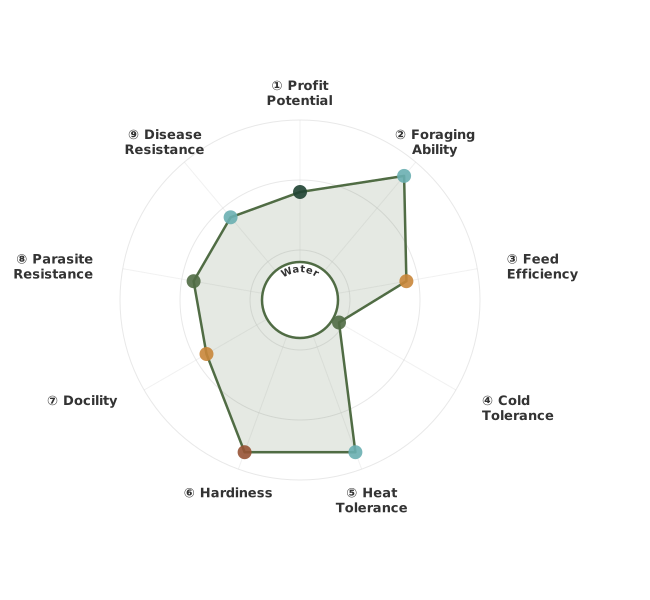
How These Traits Are Calculated
Trait dimensions are ordered clockwise starting from the top of the chart (12 o'clock position):
1. Profit Potential
Measures the buffalo's ability to generate income for the farm.
WHAT: Profit Potential assesses a buffalo breed's capacity to generate income through meat, milk, or other products. Breeds differ significantly in their growth rates, milk yields, fertility, and disease resistance, all impacting their economic viability.
WHY: For regenerative farmers, selecting a breed with high profit potential ensures the farm's economic sustainability. This helps offset the costs of regenerative practices and allows for reinvestment in land health and animal welfare.
HOW: Exceptional breeds offer rapid growth (e.g., reaching market weight >20% faster than average), high milk production (>3000 liters/lactation), or superior fertility rates (>90% calf crop). Typical breeds fall within industry averages. Limited breeds may have slower growth, lower yields, or higher susceptibility to common diseases, requiring more input and yielding less return.
2. Foraging Ability
Measures how effectively buffalo find and consume diverse plant matter in varied environments.
WHAT: This trait assesses a buffalo breed's capacity to efficiently locate, graze, and digest a wide range of vegetation, including coarse grasses, browse, and forbs. Breeds differ significantly in their preference for specific plant types and their ability to thrive on less palatable or lower-quality forage.
WHY: High foraging ability is crucial for regenerative systems as it reduces the need for supplemental feed, lowers input costs, and allows buffalo to utilize marginal lands effectively. This trait contributes to soil health through varied grazing patterns and reduced reliance on external resources.
HOW: Exceptional breeds can maintain body condition and reproductive rates on >80% roughage or browse with minimal supplementation, even in challenging terrain. Typical breeds perform well on good quality pasture but may require some supplementary feed during dry seasons or on poorer land. Limited breeds struggle to gain weight or remain productive without significant high-quality feed inputs.
3. Feed Efficiency in Buffalo
Measures how well buffalo convert feed into usable energy and product.
WHAT: Feed efficiency in buffalo refers to their ability to convert a given amount of feed into meat, milk, or other products with minimal waste. This trait can vary significantly between buffalo breeds, with some being naturally more adept at utilizing fibrous forage.
WHY: For regenerative farmers, feed efficiency is crucial for reducing reliance on external feed inputs, lowering costs, and minimizing environmental impact. More efficient buffalo breeds require less land and resources to maintain, contributing to a more sustainable and profitable operation.
HOW: Exceptional breeds can gain 0.8 kg per day on a diet of 7 kg dry matter. Typical breeds gain around 0.6 kg per day on 8 kg dry matter. Limited breeds may struggle to gain weight and require 10+ kg dry matter for less than 0.5 kg gain.
4. Cold Tolerance
Measures buffalo's ability to withstand cold weather and lower temperatures.
WHAT: This trait assesses a buffalo breed's inherent ability to thrive in cold climates, including their capacity to maintain body temperature and energy levels during winter months. Breeds vary significantly in their coat thickness, fat reserves, and metabolic adaptations for cold.
WHY: For regenerative farmers in cooler regions, good cold tolerance reduces the need for supplemental heating and feed, lowering operational costs and environmental impact. It ensures herd health and productivity, even in harsh winters, allowing for year-round grazing potential.
HOW: Exceptional breeds maintain body condition and productivity with minimal feed increase below freezing (e.g., < 5% increase). Typical breeds may require moderate feed adjustments in prolonged cold. Limited breeds struggle below 5°C (41°F) without significant supplemental care and feed.
5. Heat Tolerance
Measures buffalo's ability to thrive in warm conditions.
WHAT: This trait assesses how well buffalo breeds cope with high ambient temperatures and humidity. Breeds originating from hotter climates generally possess superior heat tolerance compared to those from cooler regions.
WHY: For regenerative farmers, selecting for heat tolerance ensures buffalo remain productive, healthy, and less stressed during warmer months, reducing the need for costly interventions and supporting animal welfare. This is crucial for sustainable grazing systems in varied climates.
HOW: Exceptional breeds can maintain normal activity and production with ambient temperatures exceeding 30°C (86°F) and high humidity for extended periods. Typical breeds may show slight reductions in feed intake or activity above 25°C (77°F). Limited breeds struggle significantly and require shade and water access above 20°C (68°F).
6. Hardiness
Measures buffalo's resilience to environmental challenges and disease.
WHAT: Hardiness assesses a buffalo breed's inherent ability to withstand harsh environmental conditions, diseases, and parasites with minimal human intervention. Some breeds are naturally more robust, requiring less supplemental feed, shelter, or veterinary care than others.
WHY: For regenerative farmers, hardy buffalo breeds reduce input costs and labor, contributing to a more self-sufficient and sustainable system. They are better suited to extensive grazing and can thrive in diverse climates, minimizing the need for costly infrastructure.
HOW: Exceptional breeds demonstrate survival rates over 95% in challenging environments with minimal losses to disease. Typical breeds have survival rates around 85-95% and may require moderate support. Limited breeds have survival rates below 85% and are highly susceptible to environmental stressors, requiring significant management.
7. Docility
Measures how calm and manageable buffalo are around humans.
WHAT: Docility assesses the inherent temperament of buffalo, evaluating their tendency to be calm, receptive to handling, and less prone to flight or aggression. Breeds can vary significantly, with some exhibiting more naturally placid dispositions than others.
WHY: For regenerative farmers, docile buffalo are easier to manage, reducing stress on both animals and handlers and minimizing the need for specialized, potentially disruptive handling techniques. This contributes to a more harmonious and sustainable farming system.
HOW: Exceptional docility means buffalo readily accept close contact and handling with minimal stress (< 5% flight response at 3 meters). Typical breeds might require some patient training but are generally manageable. Limited docility indicates a strong flight response or inherent nervousness, making them challenging to work with.
8. Parasite Resistance
Buffalo's innate ability to withstand internal and external parasites.
WHAT: This trait assesses the buffalo's natural ability to resist and manage infestations from internal parasites (like worms) and external parasites (like ticks and flies). Breeds vary significantly in their immune response and physical defenses, impacting their susceptibility to these common animal health challenges.
WHY: Robust parasite resistance reduces the need for chemical treatments, lowering costs and environmental impact, which is crucial for regenerative farming. Healthier, less stressed buffalo also perform better, leading to improved growth, reproduction, and overall herd vitality.
HOW: Exceptional breeds demonstrate very low reliance on dewormers and topical treatments, often requiring less than one treatment per year. Typical breeds might need occasional treatments, perhaps 1-3 times annually, while Limited breeds frequently require multiple treatments per year and may show signs of severe infestation.
9. Disease Resistance
Buffalo's natural ability to fight off common illnesses and parasites.
WHAT: This trait measures the inherent ability of buffalo to resist and recover from common diseases and parasitic infections. Some buffalo breeds have evolved in environments with higher disease pressure, leading to stronger natural immunity.
WHY: High disease resistance reduces the need for veterinary interventions and treatments, lowering costs and minimizing chemical inputs on regenerative farms. It also contributes to overall herd health, productivity, and reduces animal losses.
HOW: Exceptional breeds demonstrate very low susceptibility to common buffalo ailments like tick-borne diseases or foot rot, requiring minimal intervention (<5% treatment incidence). Typical breeds show moderate resistance, needing occasional treatment. Limited breeds are more prone to illness, requiring frequent veterinary care and potentially higher mortality rates (>15% treatment incidence).
Regenerative Advantages
- Heat Tolerance: Physiological adaptations, including sparse hair and a strong propensity for wallowing, allow water buffalo exceptional heat tolerance. This maintains high productivity and well-being in tropical conditions.
- Foraging Ability: Water buffalo demonstrate an exceptional ability to thrive on diverse and marginal vegetation, including aquatic plants, coarse grasses, and forbs. Their robust digestive systems and adaptability to varied ecosystems, particularly wetlands, allow them to maintain conditioning on unimproved rangelands. This broad utilization of varied plant types with minimal reliance on supplemental feed aligns perfectly with the definition of exceptional foraging across many vegetation types, not solely high-quality grasses.
- Hardiness: Water buffalo possess robust constitutions, thriving in challenging marshy environments with minimal inputs, demonstrating high survival rates. Their resilience reflects their natural selection in extensive systems.
- Grazing Adaptation: Exceptional adaptation to coarse, fibrous vegetation and marshy environments allows superior nutrient extraction from low-quality forage. They manage challenging pastures with minimal supplements.
- Wetland Adaptation: Water buffalo exhibit superior hoof integrity and a natural inclination for wetland forage. They far surpass other buffalo breeds in thriving in waterlogged environments without health issues.
Value Streams
- Meat & Dairy production
Experience Level
Some livestock experience recommended (better for larger operations)
3
Understanding Water Buffalo Characteristics
Physical traits, temperament, and what makes this breed unique
Understanding Water Buffalo Characteristics
Physical traits, temperament, and what makes this breed unique
Water Buffalo, scientifically known as *Bubalus bubalis*, are distinct from their African counterparts and are native to the Indian subcontinent and Southeast Asia. They are characterized by their heavy build, typically dark grey to black skin, and distinctive, often crescent-shaped horns that curve backward. Unlike most cattle, water buffalo have a preference for wet environments, spending significant time wallowing in mud or water to regulate their body temperature and protect their skin from the sun and insects. This affinity for water is a defining trait that significantly influences their management and habitat suitability.
Historically, water buffalo have been domesticated for thousands of years, serving as crucial draft animals for rice paddy cultivation and providing milk, meat, and hides. Their strength, docility, and ability to work in flooded fields made them indispensable in many Asian agricultural systems. There are two main types: the river buffalo, more common in India and the Middle East, known for its milk production, and the swamp buffalo, prevalent in Southeast Asia, prized for its hardiness and use as a draft animal. This dual heritage contributes to their adaptability to various farming roles.
What truly sets water buffalo apart is their remarkable resilience and unique physiological adaptations. Their ability to thrive in hot, humid climates, efficiently convert fibrous forage into usable energy, and tolerate brackish or muddy water sources makes them a unique proposition for livestock producers. Their thick skin, while less hairy than cattle, offers protection, and their preference for wallowing is not just for comfort but a vital thermoregulatory and pest-control mechanism. This makes them exceptionally well-suited for environments that might challenge conventional cattle breeds.
Sources behind this view
 Videos & Podcasts
-
Water buffalo demonstrate excellent resilience to cold weather and high altitudes, thriving without shelter and exhibiting strong group behavior for warmth. They have zero reported health issues, unli

 Research
-
Water buffalo farming, udder health and its dairy production status in Bangladesh: Practices, challenges, and potentialities (opens in new window)
Water buffalo farming in Bangladesh faces challenges like low farmer knowledge, poor feed access, and weak market support, hindering its dairy potential despite adaptability. Improvements in breeding,
-
Assessment of a specifically developed bullet casing gun for the stunning of water buffaloes. (opens in new window)
A new bullet gun effectively stuns water buffaloes, improving animal welfare and worker safety in slaughterhouses due to their unique head anatomy.
-
Assessment of a newly designed double-barreled bullet-shooting stunner for adequate stunning of water buffaloes. (opens in new window)
New bullet-firing stunner developed for water buffaloes due to unique skull anatomy, aiming to improve animal welfare during slaughter.
4
Management, Care & Feeding
Operational guidance for raising this breed successfully
Management, Care & Feeding
Operational guidance for raising this breed successfully
Managing water buffalo requires understanding their unique needs, particularly their reliance on water or mud for thermoregulation and skin health. Providing access to a wallow – a pool of water or mud – is crucial, especially during warmer months. This doesn't need to be elaborate; a small pond, a dug-out area, or even a large trough can suffice. Rotational grazing is highly recommended, similar to cattle, to manage pasture quality and prevent overgrazing. Their strong herd instinct makes them relatively easy to contain with appropriate fencing, though their strength means fencing must be robust.
Water buffalo are highly efficient grazers, capable of extracting nutrients from fibrous plant material. Their diet can consist primarily of pasture grasses and forages. In regenerative systems, they can be integrated into mixed grazing rotations with other livestock to break parasite cycles and improve pasture utilization. While they are hardy, access to clean drinking water is essential, even though they tolerate muddy wallows. During periods of extreme heat or drought, ensuring adequate hydration and wallowing opportunities is paramount for their well-being and productivity. Supplementation is generally minimal unless forage quality is exceptionally poor or during late gestation and lactation.
Health management for water buffalo is generally straightforward due to their robust constitution. They possess good natural resistance to many common diseases and parasites that affect cattle. However, regular observation for signs of distress, injury, or illness is still important. Ensure vaccinations are up-to-date according to local veterinary recommendations, particularly for diseases prevalent in the region. Parasite control should be managed through strategic grazing and, if necessary, appropriate deworming protocols, often less intensive than for cattle due to their natural resilience. Their thick skin can make them less susceptible to biting insects, but monitoring for any skin conditions or injuries, especially around the eyes and muzzle, is advisable.
Sources behind this view
Videos & Podcasts
-
Utilizes water buffalo, beef cattle, sheep, goats, poultry, and no-till cover cropping in a rotational grazing system on Ozark soils. Discusses animal impact on soil, manure diversity, and grazing str
-
Water buffalo are rotated every 1-2 weeks, with milking parlors moved every two weeks to prevent pasture damage. Grazing is used for weed management, and consistent handling and training are crucial f
Research
-
Water buffalo farming, udder health and its dairy production status in Bangladesh: Practices, challenges, and potentialities (opens in new window)
Water buffalo farming in Bangladesh faces challenges like low farmer knowledge, poor feed access, and weak market support, hindering its dairy potential despite adaptability. Improvements in breeding,
6
Production Capabilities & Market Economics
Business case evaluation and production metrics
Production Capabilities & Market Economics
Business case evaluation and production metrics
Meat Production Economics
| Category | Value |
|---|---|
| Finish Weight | 900-1200 lbs 408-544 kg |
| Months to Finish | 28-36 |
| Price Premium | +10% to +30% |
| Annual Input Cost | $250-400 |
Price Premium: Premium above conventional beef prices ($0-6/lb range). Water buffalo meat is leaner than beef, slightly sweet flavor. Markets developing in ethnic communities and health-conscious consumers. Direct sales command $6-10/lb. Premium requires direct marketing or specialty ethnic markets. Commodity channels may not recognize water buffalo meat.
Dairy Production Economics
| Category | Value |
|---|---|
| Milk/Buffalo/Year | 3000-5000 lbs 1361-2268 kg |
| Lactation Period (Months) | 8-10 |
| Age First Calving (Months) | 24-36 |
| Milk Fat | 7-8% |
| Price Premium | +20% to +40% |
| Annual Input Cost | $300-$600 |
Price Premium: Water buffalo milk commands significant premiums for specialty cheese production. Authentic buffalo mozzarella sells for $15-25/lb vs. $6-10/lb for cow mozzarella. Premium requires either direct dairy processing/sales or contracts with specialty cheesemakers. Selling through commodity milk channels generally not viable for water buffalo.
Milk/Buffalo/Year: River buffalo breeds produce 2,500-4,000 lbs/year (lower than dairy cattle) but milk's superior cheese yield (twice the mozzarella per gallon) makes buffalo competitive for value-added dairy.
Sources behind this view
Videos & Podcasts
-
Water buffalo yield about 0.5-1 gallon of milk per morning milking (leaving calves with mothers), with milk being denser, yielding more cheese, and being pure white due to beta-carotene conversion to
Research
-
Moving Buffalo Farming beyond Traditional Areas: Performances of Animals, and Quality of Mozzarella and Forages (opens in new window)
Moving dairy buffalo to hilly inland Italy reduced milk yield and reproductive success. Cooler temperatures and mozzarella production specifics are key challenges for expansion.
-
Water buffalo farming, udder health and its dairy production status in Bangladesh: Practices, challenges, and potentialities (opens in new window)
Water buffalo farming in Bangladesh faces challenges like low farmer knowledge, poor feed access, and weak market support, hindering its dairy potential despite adaptability. Improvements in breeding,