
Mimosa
Existing mentions highlight its potential within regenerative agriculture. Its primary role appears to be as a nitrogen fixer, a key component in building soil fertility without synthetic inputs. This capability makes it valuable for improving soil structure and health over time, contributing to the foundational goals of soil building and carbon sequestration. As a fast-growing species, it can also serve as a nurse crop or an early successional element in agroforestry systems, providing shade and support for other plants. Its flowers offer a valuable pollen source, supporting pollinator populations crucial for ecosystem health and farm biodiversity. Although specific farmer experiences with *Acacia dealbata* in regenerative systems are not detailed in our current knowledge base, its known nitrogen-fixing ability suggests integration into systems like alley cropping or as a component in cover crop mixes designed to enhance soil organic matter and reduce erosion. Further research into its specific performance and integration challenges in diverse regenerative contexts would be beneficial. While coverage in our knowledge base is limited, the above represents documented uses in regenerative systems.
For a full botanical description see: Plants For A Future(opens in new window) (external link)
Regenerative Quick Profile
All recommendations assume integrated, regenerative practices—not conventional inputs.
Climate & Soil Fit
Climate: Tropical Rainforest, Tropical Monsoon, Tropical Savanna, Hot Semi-Arid (Steppe), Cold Semi-Arid (Steppe), Hot Desert, Cold Desert, Humid Subtropical, Oceanic (Maritime Temperate), Hot-Summer Mediterranean, Warm-Summer Mediterranean, Monsoon-Influenced Humid Subtropical, Subtropical Highland, Hot-Summer Continental, Warm-Summer Continental, Subarctic, Monsoon-Influenced Hot-Summer Continental, Tundra
Zones: USDA 8-11, Australian Zones 3-14, EU Atlantic, Mediterranean, Oceanic
Optimal Soil: Loam Soil
System Role & Functions
Primary: Nitrogen Fixer
Secondary: Food Forest, Pollinator Support
Key Benefits: Multi-benefit value, Nitrogen Fixation, Root System Depth
Management Level
Experience: Beginner-Friendly
Maintenance: Moderate maintenance - Once established, its drought tolerance reduces the need for intensive water management, and its integration into the system minimizes external inputs for ongoing health.
Value Streams
- Nitrogen fixation
- Pollinator habitat and support
Know the Debate
- Nitrogen fixation benefits vs. invasive potential
- Ecological concerns debated alongside soil fertility gains
- Management strategies vary by region and Acacia species
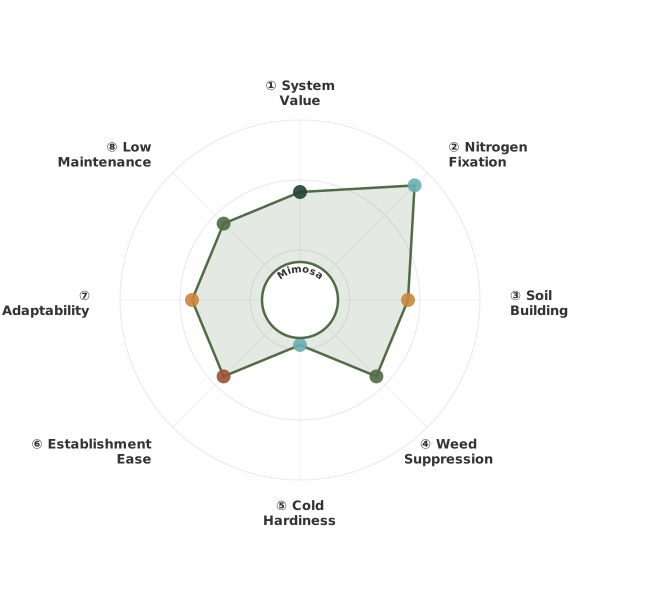
How These Traits Are Calculated
Trait dimensions are ordered clockwise starting from the top of the chart (12 o'clock position):
1. System Value
Ecosystem service stacking across nitrogen, carbon, water, biodiversity
WHAT: Synthesizes the compounding value of multiple ecosystem services delivered simultaneously—nitrogen fixation, soil organic matter building, pollinator support, erosion control, and water infiltration improvement. This is the total regenerative impact beyond single-function metrics.
WHY: The highest-value cover crops deliver 3-5 significant ecosystem services at once. A legume that fixes nitrogen, builds biomass, supports pollinators, and improves water infiltration provides $150-300/acre in combined benefits versus $30-60 for single-function covers. This service stacking is the core principle of regenerative agriculture.
HOW: Scored via LLM synthesis of economics data, timeline benefits, and trait combinations. Exceptional (3.0): 4-5 major services stacked with strong economic value ratios. Typical (2.0): 2-3 moderate services. Limited (1.0): Single-function covers with minimal service stacking. Considers seed cost relative to benefit value.
2. Nitrogen Fixation
Biological nitrogen production via legume root nodule bacteria
WHAT: Measures the ability to convert atmospheric nitrogen (N₂) into plant-available ammonia through symbiotic bacteria in root nodules. Legumes form partnerships with rhizobium bacteria that fix 60-150 lbs N/acre/year, reducing or eliminating synthetic fertilizer needs for following crops.
WHY: Nitrogen is the most expensive fertilizer input in crop production ($0.50-1.00/lb). Cover crops with exceptional nitrogen fixation can provide $60-150/acre worth of fertility while building soil organic matter. This biological process also reduces groundwater contamination from nitrogen runoff and lowers farm carbon footprint.
HOW: Ratings based on annual nitrogen fixation capacity and reliability across soil conditions. Exceptional (3.0): Legumes like hairy vetch, crimson clover, and field peas fixing >100 lbs N/acre/year. Typical (2.0): Moderate fixers like red clover at 60-100 lbs N/acre/year. Limited (1.0): Non-legumes (grasses, brassicas) with zero fixation capacity.
3. Soil Building
Weighted: biomass production (60%) + root system depth (40%)
WHAT: Combines above-ground biomass production with root depth to measure total soil organic matter contribution. Biomass provides surface organic matter, while deep roots deposit carbon at depth and break up compaction layers.
WHY: Soil organic matter is the foundation of regenerative agriculture, improving water retention, nutrient cycling, and biological activity. Each 1% increase in soil organic matter holds an additional 20,000 gallons of water per acre and represents $500-1,000 in fertility value. Deep roots access subsoil nutrients and create channels for water infiltration.
HOW: Weighted formula prioritizes biomass production (60% weight) for immediate organic matter contribution, with root depth (40% weight) for long-term soil structure. Exceptional (3.0): High-biomass crops with deep roots like cereal rye (8+ tons biomass, 5+ ft roots). Typical (2.0): Moderate on both factors. Limited (1.0): Low biomass or shallow roots.
4. Weed Suppression
Physical competition through rapid establishment and dense growth
WHAT: Measures the ability to outcompete weeds through rapid germination, aggressive early growth, and dense canopy formation. Physical smothering and light competition reduce weed pressure without herbicides.
WHY: Weed management is a major labor and cost burden for farmers. Cover crops that effectively suppress weeds reduce herbicide costs ($20-60/acre), decrease cultivation passes (fuel + labor), and provide clean seedbeds for cash crops. This is especially valuable in organic systems where herbicide options are limited.
HOW: Ratings based on germination speed, tillering density, and canopy closure timing. Exceptional (3.0): Fast-establishing, dense-tillering crops like cereal rye, oilseed radish that close canopy within 3-4 weeks. Typical (2.0): Moderate establishment and coverage. Limited (1.0): Slow-establishing or sparse crops that allow weed competition.
5. Cold Hardiness
Winter survival for fall planting and spring green manure value
WHAT: Measures tolerance to freezing temperatures and ability to survive winter conditions. Winter-hardy cover crops can be fall-planted, overwinter as living mulch, and provide early spring growth before cash crop planting.
WHY: Fall-planted winter-hardy covers extend the growing season into unused months, capturing solar energy and preventing erosion during wet periods. Spring green manure from overwintered covers provides early nitrogen and biomass. This timing flexibility is critical in cold climates with short growing seasons.
HOW: Ratings based on minimum survival temperature and winter active growth. Exceptional (3.0): Winter-hardy crops like cereal rye, hairy vetch, crimson clover surviving to -20°F with active growth in spring. Typical (2.0): Moderate cold tolerance. Limited (1.0): Warm-season crops like buckwheat, cowpea killed by first frost.
6. Establishment Ease
Germination speed, soil requirement flexibility, planting window breadth
WHAT: Measures how easily the cover crop establishes from seed, including germination speed, tolerance for variable soil conditions, and flexibility in planting timing. Easy establishment means reliable stands without intensive management.
WHY: Difficult-to-establish covers increase risk of stand failure, wasted seed costs, and reduced benefits. Easy establishment crops tolerate late planting, poor seedbed preparation, and variable moisture—critical when cover cropping windows are narrow between cash crops. Reliable establishment ensures consistent soil building and weed suppression benefits.
HOW: Ratings based on days to emergence, soil condition sensitivity, and planting window breadth. Exceptional (3.0): Fast germinators like buckwheat (3-5 days) and cereal rye (5-7 days) with wide planting windows. Typical (2.0): Moderate establishment requirements. Limited (1.0): Slow or finicky establishers requiring precise conditions.
7. Adaptability
Weighted: climate tolerance (60%) + multi-benefit versatility (40%)
WHAT: Combines climate adaptability (temperature and rainfall range) with multi-benefit versatility (diverse ecosystem services) to measure overall system flexibility. High adaptability means the cover works across farm regions and provides multiple functions.
WHY: Farmers need cover crops that work reliably across diverse fields and provide stacked benefits. Climate-adaptable covers reduce risk in variable weather, while multi-benefit crops deliver nitrogen fixation + pollinator support + forage value simultaneously. This versatility maximizes return on cover crop investment.
HOW: Weighted formula prioritizes climate tolerance (60% weight) for geographic reliability, with multi-benefit value (40% weight) for functional stacking. Exceptional (3.0): Wide climate range + multiple significant benefits. Typical (2.0): Moderate on both factors. Limited (1.0): Narrow climate range or single-function crops.
8. Low Maintenance
Inverted from maintenance intensity—low inputs mean high scores
WHAT: Measures minimal input requirements for successful cover cropping. Low-maintenance covers require no irrigation, minimal fertility, easy termination, and tolerate variable management timing.
WHY: Cover crops compete for resources with cash crops in tight rotations. Low-maintenance covers fit easily into existing systems without adding labor, equipment, or input costs. Easy termination is especially critical—covers that are difficult to kill can become weeds and delay cash crop planting.
HOW: Inverted score from maintenance intensity trait (4.0 minus raw score). Exceptional (3.0): Self-sufficient crops like cereal rye, field peas requiring no irrigation or fertility, easily terminated by mowing or winter-kill. Typical (2.0): Moderate input needs. Limited (1.0): High-maintenance crops needing irrigation, heavy fertility, or difficult termination (herbicides, multiple tillage passes).
Ratings are based on documented performance in regenerative systems, not conventional high-input scenarios. All traits assume integrated management practices focused on soil health and ecosystem services.
8
Know the Debate
Acacia species offer potential regenerative benefits, primarily through nitrogen fixation and soil improvement, but their invasive nature in non-na...
Know the Debate
Acacia species offer potential regenerative benefits, primarily through nitrogen fixation and soil improvement, but their invasive nature in non-na...
Acacia species offer potential regenerative benefits, primarily through nitrogen fixation and soil improvement, but their invasive nature in non-native regions presents a significant challenge. Successful integration requires careful species selection and context-specific management to harness benefits while mitigating ecological risks. Farmers in arid regions might find well-adapted varieties useful, while those in areas prone to invasion must exercise extreme caution or avoid the species altogether.
Is Acacia species integration beneficial or an ecological risk?
Beneficial Nitrogen Fixer
Certain Acacia species, like *Acacia auriculiformis* and *Acacia senegal*, are noted for their nitrogen-fixing capabilities, improving soil organic matter, nutrient levels, and promoting tree growth in silvopasture and agroforestry systems. These contributions can be significant for soil fertility in degraded or dryland areas.
Sources behind this view
Sources behind this view
 Videos & Podcasts
-
For arid Texas landscapes, consider Jujube (medicinal, edible, naturalizes), Catclaw Acacia & Royal Sweetwood (nitrogen-fixing companions), and experimental Almond varieties, all adapted to rocky soils.
 Research
-
Growth Performance and Soil Fertility Dynamics in Nutrient Managed Acacia auriculiformis Based Silvipastoral System (opens in new window)
This study found: A study in Bhubaneswar, India, looked at how different nutrient levels and grass types affected an agroforestry system combining Acacia auriculiformis trees with grasses. After about 7.5 years, the combination of Acacia auriculiformis trees with Guinea grass showed the best tree growth, including height, trunk thickness, and crown spread. This combination also led to the highest levels of soil organic matter, nitrogen, phosphorus, and potassium. While soil texture was sandy loam, the system with Guinea grass had good soil porosity. Leaf greenness (chlorophyll) was highest in Guinea grass and peaked during the rainy season, with solar radiation interception also highest in June. Soil moisture was also best in the Guinea grass system. Overall, the Acacia auriculiformis and Guinea grass combination, with the right amount of fertilizer, was the most productive for both tree growth and soil health.
-
Linkages between soil carbon, soil fertility and nitrogen fixation in<i>Acacia senegal</i>plantations of varying age in Sudan (opens in new window)
This study found: A study in dry regions of Sudan found that planting *Acacia senegal* trees (gum arabic trees) significantly improved soil health over time compared to grasslands. The older the tree plantations, the higher the soil organic matter and nutrient levels, especially in the topsoil. While the trees themselves didn't appear to be fixing much atmospheric nitrogen directly, the study suggests that nutrients are being brought up from deeper soil layers by the tree roots. Additionally, the presence of grazing animals in the plantations likely contributes to soil nitrogen through their droppings. The research indicates that these trees are crucial for improving soil fertility in these dry environments, with the plantations potentially being limited by phosphorus and the grasslands by nitrogen.
Invasive Threat
Other Acacia species, such as *Acacia dealbata* and Prickly Acacia, are identified as highly invasive outside their native range. They disrupt native ecosystems, outcompete native vegetation, and can lead to widespread land degradation, requiring extensive management or eradication efforts.
Sources behind this view
Sources behind this view
Videos & Podcasts
-
Prickly acacia infestation in Queensland (20M hectares) is spread by cattle, impacting water, native plants, and the economy. Drones are being used by Sunbirds and DCQ for cost-effective, high-resolution monitoring to aid targeted eradication.

-
Prickly acacia infestation in Queensland (20M hectares) is spread by cattle, impacting water, native plants, and the economy. Drones are being used by Sunbirds and DCQ for cost-effective, high-resolution monitoring to aid targeted eradication.
Research
-
Seed Germination Ecophysiology of Acacia dealbata Link and Acacia mearnsii De Wild.: Two Invasive Species in the Mediterranean Basin (opens in new window)
This study found: Acacia dealbata and A. mearnsii are two invasive species found in coastal, mountain, and riparian Mediterranean habitats. Seed biology and germination traits are important drivers of the competitive performance of plants and may significantly contribute to biological invasions. The seeds of Acacia s.l. have physical dormancy due to an impermeable epidermal layer. The aim of this study was to assess the germination capacity of scarified and non-scarified seeds of A. dealbata and A. mearnsii from different areas of the Mediterranean Basin. To test the seed imbibition capacity, the increase in mass was evaluated. Non-scarified seeds were tested at 15, 20, and 25 °C in light conditions. Scarified seeds were tested at 5, 10, 15, 20, and 25 °C and 25/10 °C in light and dark conditions. Scarified seeds increased in mass more than non-scarified seeds. Both species showed a higher germination capacity at 25 °C in non-scarified seeds; A. dealbata reached a germination maximum of 55%, while A. mearnsii reached 40%, showing a difference among these populations. Scarified seeds of both species reached germination percentages >95% at all temperatures except at 5 °C in dark conditions. Scarification was necessary to break dormancy and promote germination. The present study provides new knowledge about the seed ecology and germinative behaviour of the two Acacia species under different pre-treatment, temperature, and photoperiod regimes, contributing to the understanding of their invasive behaviour.
-
Colonization and decomposition of litter produced by invasive Acacia dealbata and native tree species by stream microbial decomposers (opens in new window)
This study found: Changes in forest composition and litter inputs to streams due to invasion by exotic tree species can affect the functioning of freshwater ecosystems. Acacia dealbata is an important invasive tree species in Mediterranean areas, and often replaces the native riparian vegetation. In this study, we assessed the chemical characteristics of three litter types produced by the invasive Ac. dealbata (leaflets, flowers and pods) and leaf litter produced by two native tree species with contrasting litter characteristics (Quercus robur and Alnus glutinosa). We then assessed litter decomposition and associated microbial activity (i.e., overall microbial metabolism as respiration, fungal growth as biomass accumulation, and reproduction by aquatic hyphomycetes as conidial production), and the aquatic hyphomycetes community structure, in laboratory microcosms. In general, Ac. dealbata pods supported lower microbial activity and decomposed slower than all other litter types, due to their low nutrient concentrations and high carbon:nutrients molar ratio. Alnus glutinosa leaf litter supported high microbial activity and decomposed fast, due to its relatively high nutrient concentrations, low carbon:nutrients molar ratios and low lignin concentration. Acacia dealbata leaflets and flowers and Q. robur leaf litter generally had similar microbial activity and decomposition rates, intermediate between those of Ac. dealbata pods and Al. glutinosa leaf litter, likely due to trade-offs between nutrient concentrations and concentrations of structural and secondary compound among litter types. Aquatic hyphomycetes community structure also differed among litter types. For instance, Ac. dealbata pods had the lowest species richness per sampling date, but due to high dissimilarity among replicates, total species richness over the incubation period was comparable to that of other litter types. The invasion of native riparian forests by Ac. dealbata can affect the quality of litter inputs into streams, potentially affecting the community structure and activity of microbial decomposers, thus altering the functioning of stream ecosystems.
Context-Dependent Management
The utility of Acacia species varies by region and management. While some are promoted for nitrogen fixation and fodder, careful selection is crucial. Managing invasive species involves advanced monitoring like drone imaging, and for beneficial uses, it's vital to select species and implement practices that prevent unintended spread.
Sources behind this view
Sources behind this view
Videos & Podcasts
-
Verified Acacia longifolia nitrogen fixation in Southern California by finding pink nodules on roots, indicating naturally present symbiotic bacteria. Method involves checking roots for pink nodules. Plant is evergreen, grows to 12ft, needs minimal water, and provides screening.
-
Discusses managing 'invasive' acacia in Australia, highlighting its nitrogen fixation and soil contribution. Explains that any plant can be controlled by preventing leaf growth, a method to manage succession and direct energy towards long-term species.

-
Manage understory plants and establish diverse, layered shelterbelts (min 12m wide) for livestock shelter, shade, and biodiversity. Acacias fix nitrogen but should be mid-row; use tree guards for immediate protection of valuable species.
Making Sense of the Differences
The central debate for Acacia species in regenerative agriculture revolves around balancing their potential for nitrogen fixation and soil improvement against their significant risk as invasive species. Acacias' aggressive growth and seed dispersal can outcompete native flora, especially in areas where they are not indigenous. While species like *Acacia auriculiformis* show promise for soil enrichment, the invasive nature of *Acacia dealbata* and Prickly Acacia necessitates extreme caution. Farmers must prioritize locally adapted, non-invasive plants or utilize highly managed systems that prevent spread, with drone monitoring and eradication efforts becoming critical in affected regions.
9
Learn More
Why farmers use this plant and additional resources
Learn More
Why farmers use this plant and additional resources
Why Regenerative Farmers Use This Plant
This plant offers significant regenerative benefits, acting as a versatile tool in tropical, subtropical, and temperate agricultural systems. Its primary roles include serving as a living mulch, soil improver, and nitrogen fixer (for specific species like Acacia dealbata).
Soil Fertility and Structure Improvement:
- Weed Suppression: Rapid growth and dense foliage effectively suppress weeds, reducing the need for mechanical cultivation or herbicides that can disrupt soil structure and harm beneficial organisms.
- Nutrient Scavenging and Cycling: While not a legume (in the case of Mimosa pudica), it is efficient at scavenging available nutrients, preventing leaching, especially during fallow periods. When incorporated into the soil, its biomass decomposes relatively quickly, releasing these nutrients. For nitrogen-fixing species like Acacia dealbata, atmospheric nitrogen is converted into plant-available forms, significantly enriching soil fertility. Established Acacia dealbata can fix an estimated 50-150 lbs of nitrogen per acre (56-168 kg/ha) annually, potentially saving farmers substantial costs on synthetic fertilizers.
- Soil Compaction and Aeration: An extensive root system, reaching depths of 12-24 inches (30-60 cm) for Mimosa pudica and 10-20 feet (3-6 m) or more for Acacia dealbata, helps break up soil compaction, improve aeration, and enhance water infiltration, thereby reducing erosion and increasing the soil's capacity to store water.
- Soil Organic Matter Enhancement: Consistent use as a living mulch or incorporated cover crop can lead to a notable increase in soil organic matter content. Over a 3-5 year rotation, this can improve soil fertility, water-holding capacity, and buffering against extreme weather events. Studies suggest well-managed agroforestry systems incorporating nitrogen-fixing trees can increase soil carbon by 0.5-1.5 tons per acre per year.
Biodiversity and Ecosystem Services:
- Habitat and Pollinator Support: Provides habitat and nectar for various beneficial insects, pollinators (bees, butterflies), and birds, contributing to a more resilient and biodiverse agroecosystem.
- Windbreaks and Erosion Control: Dense foliage and robust root systems offer excellent windbreaks, reducing soil erosion by wind and water, particularly on slopes or in areas prone to heavy rainfall.
- Carbon Sequestration: Vigorous growth captures atmospheric carbon dioxide, storing it in biomass and root systems, contributing to climate change mitigation.
- Livestock Fodder: In silvopasture systems, the foliage can serve as a nutritious fodder for livestock, providing protein and minerals.
Regional Success Stories:
- Southeast Asia: Widely used as a living mulch in fruit orchards and rubber plantations for weed control and soil cover.
- Brazil: Employed in coffee and cocoa agroforestry systems to improve soil fertility, reduce erosion on sloping lands, and provide mulch.
- India: Utilized in intercropping systems with sugarcane and other row crops to maximize land use and enhance soil health.
- Australia: Incorporated into wheat-sheep systems in shelterbelts or multi-purpose agroforestry blocks for shade, fodder, and nitrogen. Also used in sugarcane fields as ground cover.
- Mediterranean Europe: Used in agroforestry systems for vineyards and orchards, providing shade, nitrogen, and biomass for mulching.
- North America (Pacific Northwest/California): Used in agroforestry systems and for land reclamation to restore degraded soils.
- Florida, USA: Used as a summer cover crop in vegetable rotations.
Sources behind this view
 Community
-
Using mimosa as a nitrogen-fixing plant in food forests, coppicing it to manage size, encourage nitrogen release, and facilitate harvesting, while acknowledging its prolific seedling growth in disturb
Read more (opens in new window) permies.com