Available excerpts highlight its potential within agroforestry systems. Studies indicate that millet biomass production is enhanced when grown under baobab trees, suggesting a beneficial polyculture layer relationship. The tree's potential for soil building is hinted at through propagation methods utilizing manure and wood ash as a rooting medium. While not explicitly detailed as a nitrogen fixer, its integration into agroforestry parklands with other species like néré suggests a role in diversified farming systems that can improve overall ecosystem health. The tree's fruit and leaves are recognized as nutritious, with potential for human consumption and commercial value, though direct forage use is not mentioned. Further research is needed to fully understand its contributions to soil health, carbon sequestration, and pollinator support within regenerative contexts. While coverage in our knowledge base is limited, the above represents documented uses in regenerative systems.

Regenerative Quick Profile

All recommendations assume integrated, regenerative practices—not conventional inputs.

Climate & Soil Fit

Climate: Tropical Rainforest, Tropical Monsoon, Tropical Savanna, Hot Semi-Arid (Steppe), Hot Desert, Humid Subtropical, Oceanic (Maritime Temperate), Hot-Summer Mediterranean, Warm-Summer Mediterranean, Monsoon-Influenced Humid Subtropical, Subtropical Highland

Zones: USDA 9-11, Australian Zones 1-3, EU Mediterranean, Subtropical

Optimal Soil: Sandy Soil

System Role & Functions

Primary: Food Forest

Secondary: Specialty, Silvopasture

Key Benefits: Multi-benefit value, Drought tolerant, Integration-friendly

Management Level

Experience: Advanced

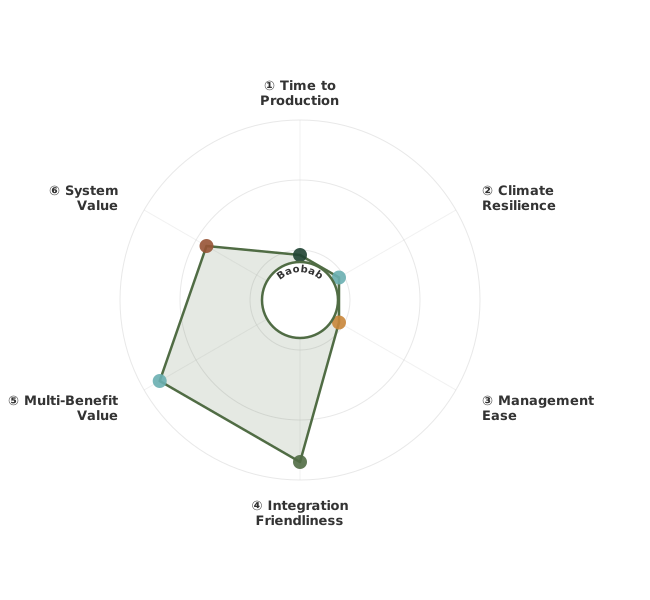
Maintenance: Very low maintenance - Once established, Baobab's inherent resilience and low pest/disease susceptibility mean its maintenance is primarily about ecosystem integration rather than external interventions.

Time to Production: Slow (5+ years) - While Baobab is a slow-growing species, its long-term contribution to system fertility and structure makes it a valuable component of a mature, regenerative landscape.

Value Streams

  • Fruit/nut harvest
1

Climate Suitability Assessment

Will this plant thrive in your climate?

IDEALLY SUITED

Köppen Zone: Af (Tropical Rainforest), Am (Tropical Monsoon), Aw (Tropical Savanna), Cfa (Humid Subtropical), Cwa (Monsoon-Influenced Humid Subtropical)
USDA Zone: 9a, 10a, 11a, 12a
Australian Zone: tropical, subtropical

Baobab performs optimally in climates characterized by high temperatures and distinct wet and dry seasons, or consistently warm and humid conditions. These include tropical and subtropical zones, aligning with Köppen Aw, Cwa (with sufficient summer rain), and regional zones like USDA 11-13, Australian tropical and subtropical, and parts of USDA 10. These regions provide the necessary heat units and rainfall (ideally 500-1500 mm annually) for vigorous growth, abundant fruit production, and successful establishment. The long, warm growing seasons, often with minimal frost risk, allow the baobab to complete its lifecycle efficiently, producing substantial yields for food forest applications. Silvopasture benefits are also high due to its hardy nature and potential fodder from leaves. Specialty uses are maximized in these conditions where the tree thrives without significant climate-related stress, ensuring reliable productivity and economic viability.

ADEQUATE

Köppen Zone: BSh (Hot Semi-Arid (Steppe)), BWh (Hot Desert), Csa (Hot-Summer Mediterranean), Csb (Warm-Summer Mediterranean)
USDA Zone: 8a
Australian Zone: grassland
EU Climate Region: atlantic

Baobab can be grown successfully in regions with adequate, but not ideal, climatic conditions, though it may require supplemental management. This includes Köppen As and Cwa zones with drier winters, and regional zones like USDA 8-10, Australian grassland, and EU Atlantic. These areas typically offer a long enough growing season and sufficient warmth, but may experience dry spells or less intense heat than optimal. While baobab can survive and produce fruit, yields might be reduced by 10-30% compared to ideal zones, particularly during prolonged droughts. Supplemental irrigation during dry periods is often necessary to ensure consistent fruit production and tree health, increasing operational costs. Establishment success is good but may be slightly lower without careful water management. These zones are suitable for food forests and silvopasture, but require a more hands-on approach to water management and site selection to maximize the plant's potential.

NOT RECOMMENDED

Köppen Zone: ET (Tundra), BSk (Cold Semi-Arid (Steppe)), BWk (Cold Desert), Cfb (Oceanic (Maritime Temperate)), Cwb (Subtropical Highland), Dfa (Hot-Summer Continental), Dfb (Warm-Summer Continental), Dfc (Subarctic), Dwa (Monsoon-Influenced Hot-Summer Continental)
USDA Zone: 2a, 3a, 3b, 4a, 5a, 5b, 6a, 7a
Australian Zone: arid, temperate
EU Climate Region: mediterranean

Baobab is not recommended for cultivation in climates that are too arid, too cold, or lack the necessary heat and rainfall patterns for its optimal growth and fruit production. This includes Köppen BWh (extreme deserts), BSh (semi-arid with low/erratic rainfall), and Csa (Mediterranean with hot, dry summers), as well as regional zones like Australian arid and temperate, and EU Mediterranean. These zones present significant challenges: extreme drought limits water availability for essential growth and fruit development, often requiring unsustainable irrigation; prolonged dry summers in Mediterranean climates prevent fruit maturation; and cooler temperate climates lack the sustained heat. Establishment success is low (<60%), and yields are unreliable or non-existent, making it economically unviable for food forests or silvopasture. Intensive management, including extensive irrigation infrastructure and protection from cold or drought, would be required, rendering it impractical and costly.

Better alternatives for these "not recommended" zones: Prosopis cineraria (Khejri) (Highly drought-tolerant tree native to arid regions, provides fodder and fuel.), Ziziphus mauritiana (Indian Jujube) (Drought-tolerant fruit tree that can produce in arid conditions with minimal water.), Ceratonia siliqua (Carob) (Drought-tolerant tree with edible pods, well-adapted to Mediterranean climates.), Olea europaea (Olive) (Iconic Mediterranean tree, highly drought-tolerant and productive.)

Note: Zones listed above represent climates where this plant can produce reliably with reasonable management. Climate zones not mentioned would require intensive climate modification (greenhouses, extensive infrastructure) and are not economically viable for regenerative agriculture purposes.

2

Soil Suitability Assessment

Which soil types work best for this plant?

IDEALLY SUITED

Sandy Soil

This plant thrives in these soil types without requiring amendments or remediation. Natural soil conditions support optimal growth and productivity.

ADEQUATE

Clay Soil, Desert Soil, Loam Soil, Rich Soil, Rocky Soil

This plant performs acceptably in these soil types with moderate, manageable remediation such as pH adjustment, compost addition, or drainage improvement. The required amendments are practical and cost-effective for regenerative agriculture.

NOT RECOMMENDED

Acidic Soil, Alkaline Soil, Saline Soil, Wet Soil

Growing this plant in these soil types would require impractical remediation such as complete soil replacement, extensive amendments, or cost-prohibitive infrastructure. These conditions are not economically viable for regenerative agriculture.

Note: Soil suitability assessments focus on remediation requirements. "Ideally Suited" means the plant generally thrives without the need for substantial amendments, "Adequate" means manageable remediation (lime, compost, mulch), and "Not Recommended" means impractical soil changes would be required. Climate factors like rainfall and temperature also influence success.

3

Seasonal Considerations

Planting timing, growth duration, and harvest windows

Establishing baobab trees thrives when planted during the active growing season, ideally after the last expected frost has passed and soil temperatures have warmed sufficiently. Container-grown seedlings offer flexibility, while bare-root stock should be planted as soon as it can be sourced in early spring, before bud break. Expect several years for robust establishment, typically 3-5 years before the tree begins to bear its first significant fruit. Full production, where the tree consistently yields substantial harvests, may take 7-10 years. Baobab is a long-lived species, with productive lifespans stretching for decades.

Seasonal management focuses on the tree's natural cycle. Pruning is best performed during the dormant season, after leaf drop, to shape the tree and encourage vigorous growth in the spring. Bloom typically occurs during the warmer, wetter months of summer, followed by fruit development through late summer and fall. As temperatures cool and days shorten in late fall, the tree will naturally enter winter dormancy, shedding its leaves to conserve energy until the return of spring warmth.

4

System Role & Multi-Benefit Value

Functional roles, integration strategies, and stacked benefits

Functional Role

Total System Value

Baobab offers substantial multi-benefit stacking in regenerative agriculture. Its direct harvest value comes from nutritious leaves and fruit pulp, a commercially important superfood. System enhancement is provided through significant shade, which can improve the growing conditions for companion crops like millet, as seen in agroforestry studies. While not a nitrogen fixer, its large biomass contributes to organic matter and soil building. Ecosystem services include potential carbon sequestration due to its large size and longevity, and habitat provision for wildlife. Risk diversification is achieved by adding a perennial, long-lived fruit and food source that is relatively drought-tolerant once established, contributing to farm resilience against market fluctuations and climate variability. Its potential use in cosmetic production also adds an economic diversification stream.

Integration Characteristics

Multi-Benefit Value: Ideally Suited - This keystone species provides abundant edible resources for humans and wildlife, while its substantial biomass and root system enhance soil structure and offer critical habitat.

Integration Friendliness: Ideally Suited - Offering diverse edible and ecological benefits, Baobab is exceptionally compatible with arid regenerative systems, contributing food, fodder, and vital soil health.

5

Management & Care Requirements

Integration guidance, maintenance needs, and care practices

How to Integrate This Plant

Baobab (Adansonia digitata) is a valuable addition to regenerative systems, primarily functioning as a food forest component and providing shade. Its large canopy can create beneficial microclimates for understory crops, as demonstrated by millet yielding higher biomass under baobab in agroforestry systems. Integrate baobab into food forests or agroforestry parklands, leveraging its potential for fruit and leaf production. While slow to fruit, its mature presence offers significant shade. Consider its role in enhancing soil health indirectly through organic matter. The plant's value extends beyond direct harvest to ecosystem services, supporting biodiversity and potentially improving local microclimates. Its inclusion diversifies the farm's output and resilience.

Integration Practices & Management

While the knowledge base highlights its nutritional value, commercial potential, and use in agroforestry systems, it does not detail establishment methods like seeding rates, timing, or tillage practices. Similarly, information regarding integration with grazing, including mob grazing, rotational systems, or specific timing and rest periods, is absent. Termination strategies for baobab are also not discussed within these texts. The sources do touch upon management considerations, such as its role in agroforestry parklands where it can influence the biomass production of companion crops like millet. One study evaluated baobab for cosmetic production and its potential in organic formulations, while another explored vegetative propagation techniques using organic rooting supplements. The commercial value of its fruit pulp is noted. However, practical farmer experiences and detailed insights on how regenerative farmers actively manage baobab within diverse cropping or livestock systems are not present in this knowledge base. While coverage in our knowledge base is limited, the above represents documented uses in regenerative systems.

Management Profile

Maintenance Intensity: Ideally Suited - Once established, Baobab's inherent resilience and low pest/disease susceptibility mean its maintenance is primarily about ecosystem integration rather than external interventions.

Pest Disease Pressure: Ideally Suited - Baobab's natural robustness minimizes pest and disease challenges, aligning with low-input regenerative practices and robust ecosystem health.

Time To Production: Not Recommended - While Baobab is a slow-growing species, its long-term contribution to system fertility and structure makes it a valuable component of a mature, regenerative landscape.

6

Economics & Value Streams

Direct harvest, system benefits, ecosystem services, and risk diversification

Comprehensive economic analysis including direct harvest value, system enhancement contributions, ecosystem services, value timeline, and risk diversification strategies.

Per-Tree Production Economics

Metric Value
Establishment Cost $10-20
Years to First Harvest 10-15 years
Annual Maintenance $3-7
Yield 100-300 lbs/year 45-136 kg/year
Market Price $0-1/lb $1-3/kg
Productive Lifespan 50-100 years
Net Annual Return* $-7 to $296/year

Values shown per mature tree, not per acre. In regenerative systems, trees are integrated at low densities across diverse landscapes. Establishment costs spread over the lifespan of the tree. Early years have costs but no revenue.

* Net Annual Return = (Yield × Market Price) − (Amortized Establishment Cost + Annual Maintenance). This return is realized only at/after first harvest; early years have costs but no revenue. Range shows worst case to best case scenarios.

System Enhancement Value

Beyond harvest: how understory complements overstory in polyculture

Food Forest System Contributions

Baobab offers a diverse range of ecosystem services beyond direct harvest. Its leaves and fruit pulp are highly nutritious, classified as a superfood, providing significant dietary value for humans and potentially as animal fodder. The fruit pulp's commercial importance, selling for $15-$30 per pound, creates a valuable market opportunity. Furthermore, baobab extracts are being explored for organic cosmetic production, demonstrating potential for value-added products that can reduce reliance on synthetic ingredients and support sustainable industries. Propagation research highlights the potential for sustainable cultivation using organic methods like air layering with Aloe vera extract, ensuring a renewable supply. Its large structure also provides habitat for wildlife and contributes to landscape biodiversity.

Nitrogen Fixation (if legume)

The baobab tree (Adansonia digitata) is not classified as a nitrogen-fixing legume. However, excerpt lists it alongside numerous nitrogen-fixing species recommended for soil enrichment, particularly when coppiced for chop-and-drop fertilization. This implies that while baobab itself doesn't fix atmospheric nitrogen, its biomass, when returned to the soil, contributes organic matter and nutrients. In integrated systems, this practice enhances soil fertility, reducing the need for synthetic fertilizers. The decomposition of baobab leaves and branches can improve soil structure, water retention, and nutrient availability for companion crops and other plants within the food forest or silvopasture. This organic matter contribution is a vital component of regenerative agriculture, building soil health over time.

Groundcover & Erosion Control

Variable, but potential for significant protection to adjacent areas, contributing to yield stability in intercropped systems.

Baobab trees are large, robust species capable of providing substantial windbreak and erosion control benefits, especially in semi-arid and arid regions where they are native. Their extensive root systems anchor soil, preventing wind and water erosion, a critical function highlighted in excerpt for tree species in general. Mature baobabs, with their sturdy trunks and broad canopies, can effectively reduce wind speed across agricultural landscapes. This protection is invaluable for intercropped species, such as millet and taro mentioned in excerpt, shielding them from damaging winds and reducing soil desiccation. By mitigating erosion and creating more stable microclimates, baobabs contribute to improved soil health and increased resilience of the entire farming system, potentially leading to more consistent crop yields and reduced land degradation.

Ecosystem Service Contributions

Environmental contributions: carbon, pollinators, wildlife, and water

  • Carbon Sequestration: Baobab trees are long-lived and can reach immense sizes, indicating a significant potential for carbon sequestration and storage in their biomass and root systems. Their slow growth rate in early years is offset by their longevity and massive mature size.
  • Pollinator Support: Medium. While not explicitly mentioned as a primary pollinator attractor in the excerpts, large flowering trees generally provide nectar and pollen resources for various insects, contributing to local pollinator populations.
  • Wildlife Habitat: High. The large size and structure of baobab trees offer significant habitat for various wildlife, including birds and insects. Their fruit and leaves can serve as a food source (mast).
  • Water Quality: Not applicable

Value Timeline: Understory Development

When you'll see results: groundcover/herbs year 1, shrubs 2-3, full layer integration 5-10

Years 1-2

Initial erosion control and soil stabilization due to root establishment. Gradual contribution of organic matter through leaf drop. Potential for early establishment of companion crops benefiting from microclimate modification.

Years 3-5

Established erosion control. Visible microclimate modification (shade). First light harvests of leaves and potentially fruit, though commercial production is slow to establish. Ongoing soil fertility enhancement from biomass decomposition.

Years 10-20

Significant fruit production, enabling commercial sales. Mature canopy providing substantial shade for silvopasture. Established windbreak effects. Full realization of organic matter contribution to soil health. Potential for cosmetic ingredient harvesting.

20+ Years

Maximum fruit yield and commercial value. Long-term, stable shade and windbreak services. Significant carbon sequestration. Potential for timber use if managed for that purpose, though primary value is usually in fruit and ecosystem services.

Farm Risk Reduction

How multi-layer systems diversify production and income

  • Multiple Revenue Streams: Food products (fruit pulp, leaves), cosmetic ingredients, animal fodder, ecosystem services (shade, windbreak, soil health).
  • Temporal Income Spread: Ongoing provision of ecosystem services (shade, windbreak, soil building) alongside periodic harvest of fruit and leaves, with potential for long-term timber value.
  • Market Risk Hedge: Drought tolerance and resilience in semi-arid regions reduce risk from climate variability. Diverse product streams (food, cosmetics) offer market alternatives and reduce reliance on single commodities. Long lifespan provides a stable, enduring asset.
7

Regenerative Suitability Details

Comprehensive trait ratings for system integration assessment

Comparative ratings for this plant across key regenerative agriculture traits.

Trait Suitability Explanation
Drought Tolerance Ideally Suited Baobab's deep taproots excel in moisture retention, making it highly resilient in arid climates and ideal for dryland systems that prioritize water conservation.
Establishment Ease Not Recommended Optimal germination is achieved through mimicking natural cycles of warmth and moisture, with young plants benefiting from protective mulching and carefully managed soil moisture.
Time To Production Not Recommended While Baobab is a slow-growing species, its long-term contribution to system fertility and structure makes it a valuable component of a mature, regenerative landscape.
Multi Benefit Value Ideally Suited This keystone species provides abundant edible resources for humans and wildlife, while its substantial biomass and root system enhance soil structure and offer critical habitat.
Climate Adaptability Not Recommended Thriving in hot, dry conditions, Baobab is a prime candidate for arid and semi-arid regions, contributing to biodiversity and resilience within these specific ecological zones.
Hardiness Zone Range Not Recommended Well-suited to warm, dry climates (zones 10-11), Baobab integrates best into systems that align with its natural environmental preferences, avoiding frost-prone areas.
Maintenance Intensity Ideally Suited Once established, Baobab's inherent resilience and low pest/disease susceptibility mean its maintenance is primarily about ecosystem integration rather than external interventions.
Pest Disease Pressure Ideally Suited Baobab's natural robustness minimizes pest and disease challenges, aligning with low-input regenerative practices and robust ecosystem health.
Integration Friendliness Ideally Suited Offering diverse edible and ecological benefits, Baobab is exceptionally compatible with arid regenerative systems, contributing food, fodder, and vital soil health.

Comparative System: Ratings compare plants within their economic category (e.g., cover crop nitrogen fixation compared to other cover crops, not to all plants). Individual farm conditions and management practices significantly influence actual performance.

8

Learn More

Why farmers use this plant and additional resources

Why Regenerative Farmers Use This Plant

Adansonia digitata, commonly known as the Baobab, is a cornerstone species for regenerative agriculture in arid and semi-arid tropical and subtropical regions, offering exceptional long-term ecological and economic benefits. This iconic tree is renowned for its remarkable drought tolerance and its ability to sequester significant amounts of carbon. Mature Baobab trees can sequester an estimated 2-5 tons of CO2e per acre per year, contributing substantially to climate change mitigation efforts. Its massive trunk stores water, making it a vital resource in dry landscapes and a living reservoir for the ecosystem. The Baobab's extensive root system also plays a crucial role in soil stabilization, preventing erosion in vulnerable environments.

Beyond its carbon sequestration capabilities, the Baobab provides invaluable canopy services. Its broad, spreading crown offers crucial shade, regulating microclimates for understory crops and livestock, reducing heat stress, and lowering irrigation needs. In windbreak designs, its robust structure effectively buffers agricultural fields from harsh winds, protecting crops and reducing soil disturbance. The Baobab is a keystone species for biodiversity, providing habitat and food sources for numerous bird and insect species, including vital pollinators. Its longevity means it accumulates asset value over decades, offering multi-generational economic returns through fruit, leaf, and seed production, as well as potential for timber and ecotourism.

The Baobab is exceptionally well-suited for integration into multi-story agroforestry systems. It establishes relatively slowly but becomes a highly productive and resilient component of the farm landscape. Years to first production of its nutrient-rich fruit can range from 5-10 years, with full production realized between 15-30 years, depending on growing conditions and management. Its deep taproot can reach depths of 15-30 feet (4.5-9 meters), accessing water and nutrients far below the surface, and contributing to significant soil organic matter accumulation over its lifespan. This makes it an ideal candidate for alley cropping or silvopasture systems where its shade and resource provision can benefit interplanted crops or grazing animals.

The Baobab's regenerative value is amplified by its role in supporting local food security and economic resilience. The fruit pulp is highly nutritious, rich in vitamin C, calcium, and antioxidants, and is increasingly valued in global markets for its health benefits. Leaves are edible and used as a vegetable, while seeds can be pressed for oil. Integrating Baobab into farming systems provides a diversified income stream that is less susceptible to the volatility of annual crops. Its presence enhances the overall health and productivity of the agricultural landscape, creating a more robust and sustainable food production system for the long term.

While not a nitrogen fixer, its extensive root system accesses deep soil moisture and nutrients, making them available to shallower-rooted companion plants and improving overall soil structure. The leaf litter contributes organic matter to the soil surface, enhancing microbial activity and water infiltration. Over its multi-decade lifespan, the Baobab becomes a living infrastructure, a source of food, medicine, and building materials, while continuously improving the ecological functions of the land. Its extensive root system, which can reach depths of 15-30 feet (4.5-9 m), dramatically improves soil infiltration and aeration, reducing runoff and erosion, especially in areas prone to heavy seasonal rains.

Sources behind this view

Videos & Podcasts
9

How to Integrate This Plant

Practical guidance for regenerative systems

Establishing Adansonia digitata requires careful consideration of its tropical to subtropical climate needs and its long-term growth habit. Propagation is typically done from seed, which should be scarified or soaked to improve germination rates. For direct seeding, seeds can be sown at a depth of 0.5-2 inches (1.3-5 cm). Planting is best timed with the onset of the rainy season, usually between March to May in the Northern Hemisphere and September to November in the Southern Hemisphere, to ensure adequate moisture for establishment. Spacing for individual trees in agroforestry or silvopasture systems typically ranges from 30-50 feet (9-15 meters) apart to allow for canopy development and light penetration. For initial establishment and faster growth, planting at a density of 50-100 trees per acre (125-250 trees/ha) can be considered, with thinning occurring as trees mature.

Seedlings are often grown in nurseries for 1-2 years before transplanting to their permanent location. Planting depth for bare-root seedlings is generally to the same level as they were in the nursery, ensuring the root collar is at soil level. The establishment phase for Baobab can take 1-3 years, during which consistent watering is crucial, aiming for approximately 1-2 inches (2.5-5 cm) of water per week if rainfall is insufficient. While Baobabs are highly drought-tolerant once mature, supplemental irrigation during dry spells in their early years will significantly improve growth rates.

Management during the establishment phase is critical for long-term success. Fertility management should prioritize biological approaches, such as incorporating composted organic matter around the base of young trees and utilizing nitrogen-fixing cover crops in the surrounding area. As the tree matures, its nutrient scavenging capacity becomes a significant benefit, reducing the need for external inputs. Growth is relatively slow initially, with trees reaching 5-10 feet (1.5-3 meters) in height within the first 3-5 years. Pruning is generally minimal, focused on removing dead or crossing branches to maintain tree health and shape, especially in younger trees.

Establishing Baobab in regenerative systems involves strategic planning for its mature size and ecological contributions. Trees typically take 1-3 years to become well-established after transplanting and can take 5-10 years to begin producing fruit, with full production realized by 15-30 years. In alley cropping designs, rows of Baobab can be planted 30-40 feet (9-12 meters) apart, allowing for intercropping of annuals or perennials in the alleys during the early years. As the Baobab canopy expands, shade-tolerant crops or grazing animals can be integrated. Companion planting with nitrogen-fixing ground covers like Centrosema or Macroptilium species can be beneficial during establishment to improve soil fertility. Measurable soil carbon increases can be observed by year 5-7 as the tree's biomass and root system develop. Long-term infrastructure considerations include initial protection from browsing animals, potentially with tree guards, and ensuring access for future harvesting.

Regional adaptations for Adansonia digitata are diverse, reflecting its wide climatic tolerance. In the Sahel region of Africa, it is a traditional component of farming systems, often preserved during land clearing and integrated into crop fields for its multiple benefits, providing essential resources during dry periods. In India, it is found in semi-arid regions and integrated into farm boundaries and homesteads, often planted along field edges and in village commons. In Australia, it is suited to the tropical and subtropical north and arid zones, where it can be incorporated into silvopasture systems with native grasses, providing shade and forage for livestock, and in revegetation projects. In parts of South America, such as Brazil, it can be integrated into agroforestry systems alongside crops like cashew or within cattle ranches to improve pasture quality and provide shade, and its potential is being explored in dry forest restoration.

View Full Document (Printable single-page version)