Albizia julibrissin, commonly known as mimosa, shows potential for use in regenerative agriculture, though knowledge base coverage is limited. Primarily, it functions as a nitrogen fixer, a key benefit in building soil fertility. Its residues have been studied for nutrient release and persistence, suggesting a role in soil building and potentially carbon sequestration when incorporated into the soil. While not explicitly detailed as a cover crop in the provided excerpts, its inclusion alongside other residue materials like lespedeza and oat straw in tillage studies implies its potential integration into systems aimed at improving soil health. Farmer experiences are not detailed in the limited knowledge base, but the study in Tallassee, AL, investigating residue management under different tillage systems highlights its contribution to the broader context of conservation and potentially no-till practices. Further research would be beneficial to fully understand its applications in polyculture layers, as a forage, or its specific benefits for pollinator support within regenerative systems.

Regenerative Quick Profile

All recommendations assume integrated, regenerative practices—not conventional inputs.

Climate & Soil Fit

Climate: Tropical Rainforest, Tropical Monsoon, Tropical Savanna, Hot Semi-Arid (Steppe), Cold Semi-Arid (Steppe), Hot Desert, Cold Desert, Humid Subtropical, Oceanic (Maritime Temperate), Hot-Summer Mediterranean, Warm-Summer Mediterranean, Monsoon-Influenced Humid Subtropical, Subtropical Highland, Hot-Summer Continental, Warm-Summer Continental, Subarctic, Monsoon-Influenced Hot-Summer Continental

Zones: USDA 6-9, Australian Zones 3-12

Optimal Soil: Loam Soil

System Role & Functions

Primary: Nitrogen Fixer

Secondary: Food Forest, Specialty

Management Level

Experience: Beginner-Friendly

Maintenance: Moderate maintenance - While moderately drought-tolerant, Albizia julibrissin's integration into a regenerative system involves monitoring for potential pest and disease pressures, with occasional pruning to support its role and overall system health.

Value Streams

  • Nitrogen fixation
1

Climate Suitability Assessment

Will this plant thrive in your climate?

IDEALLY SUITED

Köppen Zone: Af (Tropical Rainforest), Am (Tropical Monsoon), Aw (Tropical Savanna), Cfa (Humid Subtropical), Cwa (Monsoon-Influenced Humid Subtropical)
USDA Zone: 6a, 7a, 8a, 9a, 10a, 11a, 12a

Silk Tree performs exceptionally well in climates characterized by long, warm growing seasons and mild winters, such as Köppen Cfa, USDA zones 7a-10b, and parts of Australian subtropical and temperate regions. These conditions allow for robust growth, maximizing its nitrogen-fixing capabilities and contributing significantly to soil fertility. Optimal temperatures range from 70-85°F (21-29°C) during the growing season, with minimal frost risk. Establishment is generally high, with plants thriving and persisting for multiple years. However, the primary drawback in these ideal zones is Silk Tree's highly invasive nature. Its aggressive spread can outcompete native flora, posing a significant ecological threat. Therefore, while climatically suited, its use in regenerative agriculture within these regions necessitates stringent management practices, including containment, regular monitoring, and proactive control measures to prevent it from becoming a detrimental weed and disrupting local ecosystems. Its secondary functions as a food forest component are also maximized under these favorable conditions.

ADEQUATE

Köppen Zone: BSh (Hot Semi-Arid (Steppe)), Cfb (Oceanic (Maritime Temperate)), Csa (Hot-Summer Mediterranean), Csb (Warm-Summer Mediterranean), Cwb (Subtropical Highland), Dfa (Hot-Summer Continental), Dfb (Warm-Summer Continental)
USDA Zone: 5a, 5b
Australian Zone: temperate, subtropical
EU Climate Region: atlantic

Silk Tree is adequately suited to climates with moderate growing seasons and manageable winter temperatures, including Köppen Cfb, USDA zones 5b-6b, and Australian temperate and subtropical regions. These zones offer sufficient warmth for growth and nitrogen fixation, though yields and persistence may be slightly reduced compared to ideal conditions. Temperatures in the 60-75°F (15-24°C) range are generally met during the growing season, with winters typically above 0°F (-18°C). Establishment is good, but stand longevity can be variable, potentially requiring replanting every few years in cooler parts of this range. The main consideration in adequate zones is Silk Tree's invasive potential, which, while present, might be less aggressive than in warmer climates. Nevertheless, vigilance and management are still required to prevent it from spreading into unintended areas. Its role in food forests and as a specialty plant is viable, but careful site selection and monitoring are essential for sustainable integration.

NOT RECOMMENDED

Köppen Zone: ET (Tundra), BSk (Cold Semi-Arid (Steppe)), BWh (Hot Desert), BWk (Cold Desert), Dfc (Subarctic), Dwa (Monsoon-Influenced Hot-Summer Continental)
USDA Zone: 2a, 3a, 3b, 4a
EU Climate Region: continental

Silk Tree is not recommended for climates with extreme cold winters or prolonged dry, hot summers, encompassing Köppen Csa, Csb, Dfa, Dfb, USDA zones 3a-5a, and EU continental regions. In cold climates (e.g., USDA 3a-5a, EU continental), winter temperatures regularly drop below -10°F (-23°C), causing severe winter kill and making perennial survival highly unreliable, rendering its nitrogen-fixing benefits minimal and inconsistent. In hot, dry climates (e.g., Köppen Csa, Csb), extended drought periods stress the plant, reducing nitrogen fixation efficiency and overall vigor, while the risk of invasiveness can still be a concern in less extreme Mediterranean pockets. Establishment success is low (<70%), and management costs for intensive irrigation or protection would be prohibitive. Its primary function as a nitrogen fixer is compromised by these harsh conditions, making it economically and practically unviable. Alternative nitrogen-fixing plants better adapted to these specific challenging environments are strongly advised.

Better alternatives for these "not recommended" zones: Hairy Vetch (Vicia villosa) (cold-hardy annual legume for nitrogen fixation in cold zones), Winter Rye (Secale cereale) (extremely cold-hardy cover crop for biomass and soil protection), Carob Tree (Ceratonia siliqua) (drought-tolerant nitrogen fixer adapted to Mediterranean climates), Tagasaste (Chamaecytisus proliferus) (nitrogen-fixing shrub/small tree with good drought tolerance)

Note: Zones listed above represent climates where this plant can produce reliably with reasonable management. Climate zones not mentioned would require intensive climate modification (greenhouses, extensive infrastructure) and are not economically viable for regenerative agriculture purposes.

2

Soil Suitability Assessment

Which soil types work best for this plant?

IDEALLY SUITED

Loam Soil

This plant thrives in these soil types without requiring amendments or remediation. Natural soil conditions support optimal growth and productivity.

ADEQUATE

Clay Soil, Rich Soil, Rocky Soil, Sandy Soil

This plant performs acceptably in these soil types with moderate, manageable remediation such as pH adjustment, compost addition, or drainage improvement. The required amendments are practical and cost-effective for regenerative agriculture.

NOT RECOMMENDED

Acidic Soil, Alkaline Soil, Desert Soil, Saline Soil, Wet Soil

Growing this plant in these soil types would require impractical remediation such as complete soil replacement, extensive amendments, or cost-prohibitive infrastructure. These conditions are not economically viable for regenerative agriculture.

Note: Soil suitability assessments focus on remediation requirements. "Ideally Suited" means the plant generally thrives without the need for substantial amendments, "Adequate" means manageable remediation (lime, compost, mulch), and "Not Recommended" means impractical soil changes would be required. Climate factors like rainfall and temperature also influence success.

3

Seasonal Considerations

Planting timing, growth duration, and harvest windows

Establishing your Albizia Julibrissin requires careful timing. For nursery trees, planting is best done during the dormant season, either as bare-root stock or as container-grown trees, to allow roots to establish before active spring growth begins. Aim to plant after the ground has thawed and before new shoots emerge.

Expect Albizia to take a few years to fully establish, typically 2-3 years before reaching a productive state. While you might see some blooms in the second year, significant harvests will likely commence around year 4-5, with full production achieved within a decade. These trees can remain productive for decades, offering a long-term silvicultural investment.

Seasonal management focuses on harnessing natural cycles. Pruning is best performed during the late dormant season, before sap begins to flow, to shape the tree and remove any winter damage. The vibrant bloom season typically occurs in mid- to late summer, a key period for any ornamental or medicinal harvest. As temperatures cool in late autumn, the tree will prepare for winter dormancy, shedding its foliage. Protecting young trees from harsh winter winds is crucial during their early years.

4

System Role & Multi-Benefit Value

Functional roles, integration strategies, and stacked benefits

Functional Role

Total System Value

Mimosa's value in regenerative agriculture extends beyond its direct contribution of nitrogen to the soil. As a nitrogen fixer, it directly enhances soil health, a cornerstone of regenerative systems, reducing reliance on external inputs. The excerpt highlights its study in nutrient release, indicating its litter contributes to soil organic matter and nutrient cycling. This system enhancement supports the growth of companion crops and forage in practices like alley cropping and silvopasture. Furthermore, its rapid growth and biomass production offer potential for carbon sequestration in woody tissues and soil. While direct harvest value isn't emphasized, its role in improving soil fertility and potentially providing biomass for mulch or biochar contributes to overall farm resilience. By fixing atmospheric nitrogen, mimosa acts as a 'living fertilizer,' diversifying nutrient sources and mitigating risks associated with synthetic fertilizer price volatility and availability. Its ability to thrive on disturbed sites also contributes to ecosystem services by stabilizing soil and preventing erosion.

Integration Characteristics

Multi-Benefit Value: Adequate - This species supports pollinator populations with its blooms and provides dappled shade, though its limited nitrogen contribution and less significant soil improvement capacity mean its multi-benefit value is best realized when integrated with other system components.

5

Management & Care Requirements

Integration guidance, maintenance needs, and care practices

How to Integrate This Plant

Mimosa (Albizia julibrissin) can be integrated into regenerative systems primarily for its nitrogen-fixing capabilities, enhancing soil fertility and reducing the need for synthetic fertilizers. Its fast growth and deciduous nature make it suitable for alley cropping systems, where it can be planted between rows of crops to provide nitrogen and potential shade. In silvopasture, it can offer browse for animals while improving pasture quality through nitrogen deposition. As a pioneer species, it can also aid in land restoration and erosion control on degraded sites. The primary system role is nitrogen fixation, with secondary benefits including potential biomass for mulch or biochar, and habitat for beneficial insects. While not explicitly mentioned in the provided excerpt, its nitrogen-fixing ability suggests it would complement practices like food forests and hedgerows. Year 1-2: establishment and initial nitrogen fixation. Year 3-5: significant nitrogen contribution, biomass accumulation, and potential for shade. Year 10+: mature tree providing substantial nitrogen, biomass, and potential windbreak benefits.

Integration Practices & Management

The provided knowledge base offers limited insight into the practical integration of *Albizia julibrissin* within regenerative agriculture systems. While *Albizia julibrissin* is mentioned in the context of residue decomposition and nutrient release studies, specific details regarding its establishment, integration with grazing or cash crops, or termination strategies are not present. The sources do not elaborate on seeding rates, timing, companion planting, or tillage methods for its introduction. Similarly, information on its use within rotational grazing, mob grazing, or the implications of grazing timing and rest periods is absent. Termination methods, such as natural winterkill, grazing down, crimping, mowing, or herbicide use, are not discussed. Management considerations like fertility needs, competition with other species, or succession planning are also not detailed. Consequently, the knowledge base does not provide practical farmer experiences or specific regenerative management approaches for *Albizia julibrissin*.

Management Profile

Maintenance Intensity: Adequate - While moderately drought-tolerant, Albizia julibrissin's integration into a regenerative system involves monitoring for potential pest and disease pressures, with occasional pruning to support its role and overall system health.

6

Economics & Value Streams

Direct harvest, system benefits, ecosystem services, and risk diversification

Comprehensive economic analysis including direct harvest value, system enhancement contributions, ecosystem services, value timeline, and risk diversification strategies.

Cover Crop Investment

Metric Value
Seed Cost $20-50/acre $49-124/ha
Termination Cost 20-75 49-185
Biomass Production 2-5 4-11
N Fixation Value N/A N/A
Weed Control Savings 15-40 37-99

Cover crops are soil investments, not cash crops. Economics measured in soil health gains, input reduction, and subsequent crop performance. Values show direct costs and estimated benefits.

System Enhancement Value

Beyond harvest: nitrogen fixation replacing fertilizer costs

Nitrogen Fixation Value

50-150 lbs N/acre/year = $30-135/acre fertilizer replacement (based on an assumed N cost of $0.60 - $0.90/lb)

Albizia julibrissin, commonly known as mimosa, is a significant nitrogen-fixing species, a primary function highlighted across multiple knowledge base excerpts. As a legume, it enriches the soil by converting atmospheric nitrogen into a usable form for plants. This process is crucial in integrated farm systems, particularly in food forests, where it supports the growth of companion crops and reduces the need for synthetic nitrogen fertilizers. The quantitative reference data suggests a fixation range of 50-150 lbs N/acre/year. Knowledge base excerpt provides specific data on mimosa residue mineralization, showing that surface-placed mimosa can mineralize 33% of its initial nitrogen within a year, and when buried, this increases to 71%. This demonstrates its efficacy in contributing readily available nitrogen to the soil ecosystem, directly benefiting neighboring plants and improving overall soil fertility. This nitrogen input is a foundational element for sustainable agriculture, reducing external input costs and enhancing the system's self-sufficiency.

Additional Soil Building Benefits

Mimosa's role extends beyond nitrogen fixation and potential windbreak functions. Its inclusion as a pioneer species in dense food forest designs highlights its capacity to quickly establish biomass and contribute to nutrient cycling. The 'chop-and-drop' technique, mentioned in, leverages mimosa to provide valuable organic matter and nutrients to the soil, supporting the broader ecosystem. As a fast-growing species, it aids in rapid soil improvement and can help to suppress weeds by outcompeting them for light and resources. The knowledge base also notes its familiar presence and potential for use in food forests, suggesting it can be integrated into established agroforestry systems. Its flowers may also provide some support for pollinators, though this is not explicitly detailed in the provided excerpts. The ability to provide biomass for soil enrichment is a key multi-functional benefit.

Erosion Control

Variable, dependent on planting density and row configuration; potential for 3-5 acres protected per substantial row, with a 5-15% crop yield improvement in protected areas.

While not explicitly detailed as a windbreak in the provided excerpts, Albizia julibrissin's fast-growing nature and dense canopy, as suggested by its inclusion in pioneer species lists for food forests, imply potential windbreak and erosion control benefits. When planted in rows or as part of a mixed shelterbelt, its foliage and root system can help to slow wind speeds, protecting adjacent crops and soil from wind erosion. This is particularly relevant in agricultural landscapes prone to wind damage. The biomass generated by its 'chop-and-drop' potential, as mentioned in, also contributes to soil cover and stability, further mitigating erosion. The creation of a more sheltered microclimate can lead to improved growing conditions for more sensitive crops, potentially increasing yield and reducing stress-related losses. The effectiveness would be dependent on planting density and arrangement within the farm system.

Ecosystem Service Contributions

Environmental contributions: carbon, pollinators, wildlife, and water

  • Carbon Sequestration: As a fast-growing tree species, Albizia julibrissin has a good potential for carbon sequestration through biomass accumulation in its woody tissues and leaf litter. Its rapid growth rate in suitable climates contributes to drawing down atmospheric carbon dioxide.
  • Pollinator Support: Low to Medium. While not a primary focus in the provided excerpts, flowering plants generally offer some support for pollinators. Specific pollinator attraction data for mimosa is not detailed here.
  • Wildlife Habitat: Low. While it provides biomass and leaf litter which can support soil invertebrates and microhabitats, it is not typically cited for providing significant mast, nesting, or browse value for larger wildlife compared to other species.
  • Water Quality: Not applicable

Value Timeline: N Fixation & Production

When you'll see results: nitrogen fixation begins immediately, harvest at maturity

Years 1-2

Initial nitrogen fixation begins, contributing to soil fertility. Rapid biomass accumulation starts, aiding in soil cover and potential erosion control. Pioneer species establishment for future ecosystem development.

Years 3-5

Established nitrogen fixation providing significant soil amendment. Mature biomass production for chop-and-drop mulching. Developing shade and microclimate benefits if planted in denser configurations. Contribution to overall food forest structure.

Years 10-20

Full nitrogen contribution. Significant biomass production for ongoing soil enrichment. Established role in the food forest ecosystem, potentially providing ancillary benefits like habitat. Consideration for potential wood harvest or coppicing.

20+ Years

Long-term, sustained nitrogen contribution. Mature woody biomass for potential timber or bioenergy applications. Established ecosystem services within a mature food forest system.

Farm Risk Reduction

How this reduces farm risk: fertilizer cost hedge and rotation benefits

  • Multiple Revenue Streams: Reduced fertilizer costs (due to nitrogen fixation), soil amendment value (biomass), potential for specialty wood products (though not primary focus), enhanced yield of companion crops through improved soil fertility.
  • Temporal Income Spread: Ongoing soil improvement and nutrient cycling services from year 1, with increasing impact over time. Potential for periodic biomass harvesting. Long-term potential for timber or wood products.
  • Market Risk Hedge: Reduces reliance on external synthetic fertilizer markets. Enhances the resilience of companion crops by improving soil health, making them less susceptible to nutrient deficiencies and environmental stresses. Diversifies on-farm inputs by creating internal nutrient cycling.
7

Regenerative Suitability Details

Comprehensive trait ratings for system integration assessment

Comparative ratings for this plant across key regenerative agriculture traits.

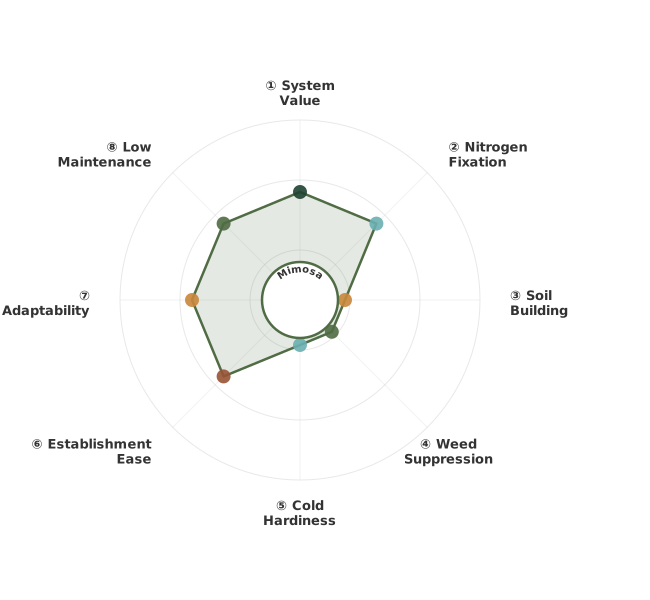
Trait Suitability Explanation
Cold Hardiness Not Recommended Albizia julibrissin is adaptable to zones 6-7, contributing to perennial system resilience where winters are not excessively harsh; its deciduous nature means it doesn't offer consistent winter ground cover in colder agricultural regions.
Weed Suppression Not Recommended While its developing canopy offers some shade, its slower closure and open structure mean it doesn't provide robust, single-season suppression of a broad spectrum of weeds, requiring complementary weed management strategies.
Nitrogen Fixation Adequate As a legume, Albizia julibrissin contributes moderately to soil fertility, with potential N-fixation of 50-120 lbs/acre when nodulation is optimized through appropriate inoculation practices.
Root System Depth Adequate Its moderately deep, spreading root system actively stabilizes soil structure and scavenges nutrients, enhancing soil health and contributing to nutrient cycling within the upper soil profiles.
Biomass Production Not Recommended While contributing some organic matter, Albizia julibrissin's biomass production is not primarily suited for dedicated cover cropping, with its role in building soil organic matter being less significant than specialized cover crop species.
Establishment Ease Adequate Albizia julibrissin establishes readily from seed or cuttings in well-drained soils (zones 6-9), exhibiting moderate early vigor that benefits from thoughtful site preparation to support its integration into the landscape.
Multi Benefit Value Adequate This species supports pollinator populations with its blooms and provides dappled shade, though its limited nitrogen contribution and less significant soil improvement capacity mean its multi-benefit value is best realized when integrated with other system components.
Climate Adaptability Adequate Albizia julibrissin thrives in zones 6-9, tolerating considerable heat and moderate cold, but requires well-drained soil and is susceptible to severe frost, indicating its suitability for specific microclimates within agricultural systems.
Maintenance Intensity Adequate While moderately drought-tolerant, Albizia julibrissin's integration into a regenerative system involves monitoring for potential pest and disease pressures, with occasional pruning to support its role and overall system health.

Comparative System: Ratings compare plants within their economic category (e.g., cover crop nitrogen fixation compared to other cover crops, not to all plants). Individual farm conditions and management practices significantly influence actual performance.

8

Learn More

Why farmers use this plant and additional resources

Why Regenerative Farmers Use This Plant

Albizia julibrissin, commonly known as the Persian silk tree or mimosa, offers a unique set of benefits when integrated into regenerative agricultural systems, particularly as a component in agroforestry, hedgerows, or as a nitrogen-fixing component in silvopasture systems. While not typically used as a conventional cover crop due to its perennial nature and potential for invasiveness in certain regions, its ability to fix atmospheric nitrogen significantly contributes to soil fertility. Over its lifespan, Albizia julibrissin can fix an estimated 50-100 lbs of nitrogen per acre (56-112 kg/ha) annually once mature, directly reducing the need for synthetic nitrogen fertilizers for adjacent or subsequent crops. This nitrogen credit can translate to substantial savings for farmers, potentially reducing fertilizer costs by 20-40% for nearby crops or forage, depending on current market prices and soil nutrient levels.

Beyond nitrogen fixation, Albizia julibrissin provides valuable ecosystem services. Its attractive, fragrant flowers are a significant attractant for a wide array of pollinators, including bees, butterflies, and other beneficial insects, enhancing biodiversity within the agricultural landscape. This increased pollinator activity can have positive spillover effects on nearby cash crops, potentially improving yields through enhanced pollination. The tree's biomass production, while not as rapid as annual cover crops, contributes to soil organic matter over time as leaves and branches decompose. Its woody biomass decomposition over several years steadily increases soil carbon content, improving soil aggregation, water-holding capacity, and nutrient retention. This process can lead to a measurable increase in soil organic matter of 0.5-1.5% over a 3-5 year rotation cycle, enhancing the soil's inherent fertility and reducing the need for external inputs.

The deep taproot system of Albizia julibrissin excels at scavenging nutrients from lower soil profiles, bringing them to the surface for subsequent crops. Its extensive root system, which can penetrate 6-15 feet (1.8-4.5 meters) or more, improves soil structure, enhances water infiltration, and mitigates erosion, particularly on sloped land. Its deep root channels create pathways for water and air, alleviating compaction and improving the environment for beneficial soil microbes. In silvopasture settings, its shade can offer respite for livestock, and its leaf litter contributes to forage quality and soil health. While its primary value lies in its ecological services rather than bulk forage production, its woody prunings can be chipped and spread as mulch, slowly decomposing over time and releasing nutrients.

The integration of Albizia julibrissin into a farm system can foster a more resilient and self-sustaining ecosystem. Its ability to thrive in a variety of soil types, including poorer soils, makes it a valuable tool for land reclamation and soil improvement. In regions where it is well-adapted, it can outcompete certain weeds due to its vigorous growth and nitrogen-fixing capabilities, indirectly contributing to weed suppression. The long-lived nature of this tree means its benefits are accrued over many years, contributing to long-term soil organic matter accumulation and a more stable soil carbon sink. This perennial nature aligns perfectly with regenerative principles that emphasize building long-term soil health and reducing reliance on annual inputs.

Farmers in diverse regions have found value in integrating Albizia julibrissin. In the southeastern United States, it is often incorporated into silvopasture systems for livestock shade and nitrogen input, and used in pecan orchards and pasture systems to improve soil fertility. In Australia, it can be used in arid and semi-arid regions within agroforestry designs to improve soil fertility and provide fodder, and has been trialed in drought-resilient agroforestry systems. Mediterranean growers have utilized it in hedgerows to enhance biodiversity and soil health in olive and grape production. In South America, particularly Brazil, it is used in coffee plantations and other tropical and subtropical agricultural systems to improve soil nitrogen levels and biodiversity, and serves as a valuable shade tree and nitrogen contributor in coffee agroforestry systems. In the Australian wheat-sheep belts with mild winters, it can be integrated into pasture systems to improve soil fertility and provide shade for livestock.

Sources behind this view

Community
  • Using mimosa as a nitrogen-fixing plant in food forests, coppicing it to manage size, encourage nitrogen release, and facilitate harvesting, while acknowledging its prolific seedling growth in disturb

9

How to Integrate This Plant

Practical guidance for regenerative systems

Establishing Albizia julibrissin is typically done through seed or cuttings. For direct seeding, rates can vary; for broadcast sowing, rates range from 15-30 lbs/acre (17-34 kg/ha), while drilled rates can be slightly lower at 10-20 lbs/acre (11-22 kg/ha). Alternatively, for broadcast seeding, rates can range from 0.5-1 lb per acre (0.56-1.12 kg/ha) or 1-2 lbs/acre (1.1-2.2 kg/ha) when drilled, sown at a depth of 0.25-0.5 inches (0.6-1.3 cm). Germination can be improved by scarifying the seeds or soaking them in warm water overnight. For optimal growth and branching, spacing between trees is generally recommended at 15-25 feet (4.5-7.5 meters), though it can be planted more densely in hedgerow or alley cropping systems. For hedgerows or windbreaks, spacing can be as close as 6-10 feet (1.8-3 m) apart. For intercropping or agroforestry, wider spacing of 15-25 feet (4.5-7.5 m) or more is common to allow for the growth of other species and adequate light penetration. In alley cropping or windbreaks, rows can be spaced 15-30 feet (4.5-9 m) apart, with trees planted 10-20 feet (3-6 m) within rows.

Optimal planting times are in early spring after the last frost, or in early autumn in regions with mild winters. In the Northern Hemisphere, planting typically occurs in early spring, from March to May, after the risk of frost has passed. In the Southern Hemisphere, this translates to September to November. Saplings provide a faster route to establishment and nitrogen fixation.

Once established, Albizia julibrissin requires minimal management, aligning with regenerative principles. It is relatively drought-tolerant once its deep root system is established, but supplemental watering during prolonged dry spells, especially in its first few years, is beneficial. Water needs are highest during the first year, with approximately 1 inch (2.5 cm) of rainfall or irrigation per week during the establishment phase. Mature trees are relatively drought-tolerant but benefit from supplemental watering during prolonged dry spells. Fertility needs are largely met through its own nitrogen fixation and the decomposition of its own leaf litter. Compost application in the planting year and the decomposition of its own leaf litter contribute to nutrient cycling.

Pest and disease management should prioritize biological controls; beneficial insects are often attracted to the tree, and its vigorous nature helps it resist many common issues. Maintaining tree vigor through good cultural practices and encouraging beneficial insect populations is key, rather than chemical interventions. If pruning is necessary for shaping or to manage size, it should be done in late winter or early spring before new growth begins, or before seed set to manage reseeding. Pruning in late winter or early spring before bud break is ideal. The tree typically reaches a mature height of 20-40 feet (6-12 m) within 5-10 years, depending on conditions.

As a nitrogen-fixing component, Albizia julibrissin plays a crucial role in nutrient cycling. Its leaves, which fall annually, decompose relatively quickly, releasing their fixed nitrogen into the topsoil. This decomposition process typically takes 30-60 days, with a significant portion of the fixed nitrogen becoming available for uptake by other plants within this timeframe. The nitrogen fixed by Albizia julibrissin is gradually released into the soil ecosystem through decomposition of leaf litter and root exudates, typically over 6-12 months. This slow, steady release provides a consistent nitrogen credit to the surrounding environment. Farmers can expect a nitrogen credit of 50-100 lbs N/acre (56-112 kg/ha) annually from well-established stands. To maximize nitrogen credit for a subsequent crop, it is beneficial to allow leaf litter to accumulate and decompose naturally. In silvopasture systems, livestock grazing under the trees can help incorporate the leaf litter into the soil through hoof action, further accelerating nutrient cycling. While Albizia julibrissin can reseed, its natural tendency to fix nitrogen and improve soil health often makes it a desirable volunteer in many regenerative systems, though monitoring is advised in areas where it could become invasive. Preventing excessive seed set through early pruning or by selecting less-prolific cultivars can mitigate this risk. In systems where volunteer establishment is desired, allowing seed drop is acceptable.

View Full Document (Printable single-page version)