
Shallot
Available data highlights its potential as a cultivated crop receiving beneficial soil amendments. Experiments indicate that shallots respond positively to nutrient management strategies, including complete nutrient application and organic fertilizers such as rice straw, blotong, and husk charcoal, suggesting its integration into crop rotations where soil fertility is a focus. Furthermore, research into integrated pest management (IPM) points to its compatibility with trap cropping systems using cucumber and arbuscular mycorrhizae application, demonstrating its potential role in polyculture systems aimed at pest reduction. Notably, the use of Black Soldier Fly Larvae (BSFL) frass significantly improved soil properties like pH and soil organic carbon when applied alongside shallots, underscoring its utility in systems that prioritize soil building and carbon sequestration through organic waste recycling. These findings suggest shallots can be a component in regenerative systems focused on soil health and sustainable pest control, though direct uses like cover cropping or nitrogen fixation are not indicated in this knowledge base. While coverage in our knowledge base is limited, the above represents documented uses in regenerative systems.
For a full botanical description see: Wikipedia(opens in new window) (external link)
Regenerative Quick Profile
All recommendations assume integrated, regenerative practices—not conventional inputs.
Climate & Soil Fit
Climate: Tropical Rainforest, Tropical Monsoon, Tropical Savanna, Hot Semi-Arid (Steppe), Cold Semi-Arid (Steppe), Hot Desert, Cold Desert, Humid Subtropical, Oceanic (Maritime Temperate), Hot-Summer Mediterranean, Warm-Summer Mediterranean, Monsoon-Influenced Humid Subtropical, Subtropical Highland, Hot-Summer Continental, Warm-Summer Continental, Subarctic, Monsoon-Influenced Hot-Summer Continental, Tundra
Zones: USDA 5-9, Australian Zones 3-7
Optimal Soil: Loam Soil
System Role & Functions
Primary: Cash Crop With Services
Secondary: Cover Crop System, Specialty
Key Benefits: Space Efficiency, Storage Longevity, Yield Reliability
Management Level
Experience: Beginner-Friendly
Maintenance: Moderate maintenance - As reliable producers with moderate soil fertility needs, shallots benefit from ongoing compost application and mulching, integrating seamlessly into regenerative garden management.
Value Streams
- Vegetable/specialty crop harvest
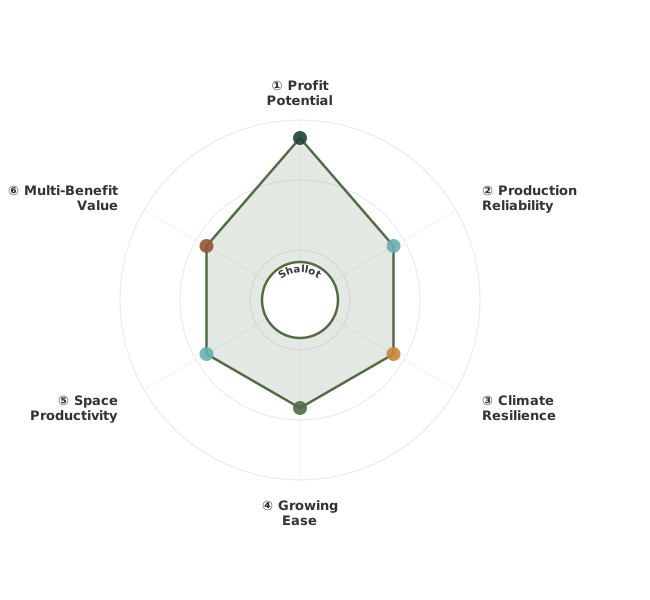
How These Traits Are Calculated
Trait dimensions are ordered clockwise starting from the top of the chart (12 o'clock position):
1. Profit Potential
Net returns per acre from yield, pricing, input costs, and labor efficiency
WHAT: Synthesizes gross revenue potential, input costs, labor requirements, and storage/marketing advantages into net profitability per acre. Captures the complete economic picture from planting to sale.
WHY: Not all vegetables are equally profitable. High-value crops with efficient production can return $10,000-30,000/acre versus $2,000-5,000/acre for lower-value options. Profit potential guides crop selection for maximum return on limited land and determines viable scale for farm businesses.
HOW: Scored via LLM synthesis of economics data (yields, prices, costs), storage advantages (season extension, value-added potential), and labor intensity. Exceptional (3.0): High yields × premium prices with moderate inputs and good storage (garlic, high-value salad greens). Typical (2.0): Moderate returns (tomatoes, squash). Limited (1.0): Low yields, commodity pricing, or intensive labor requirements (low-value greens).
2. Production Reliability
Weighted: yield consistency (60%) + disease/pest resistance (40%)
WHAT: Combines yield reliability (harvest consistency year-to-year) with disease and pest resistance to measure predictable production. Reliable vegetables deliver consistent harvests without catastrophic failures from pests or weather.
WHY: Market commitments and CSA subscriptions require dependable production. Unreliable crops that fail in bad years or require intensive pest management create cash flow gaps and customer dissatisfaction. Reliable producers allow confident planning and reduce input costs from emergency pest interventions.
HOW: Weighted formula prioritizes yield reliability (60% weight) for overall consistency, with disease/pest resistance (40% weight) to prevent total failures. Exceptional (3.0): Consistent yields across variable seasons with strong natural pest resistance. Typical (2.0): Generally reliable with some pest/weather sensitivity. Limited (1.0): Highly variable yields or severe pest vulnerability requiring intensive management.
3. Climate Resilience
Temperature and rainfall tolerance across diverse growing conditions
WHAT: Measures the breadth of climatic conditions where the vegetable produces successfully—temperature extremes, humidity ranges, and rainfall variability. Climate-resilient crops work across diverse regions and weather patterns.
WHY: Climate variability is increasing—unexpected heat waves, cold snaps, or drought periods can wipe out entire vegetable harvests. Resilient crops provide insurance against weather uncertainty and allow geographic expansion for market growth. This is especially critical for direct-market farmers who can't easily substitute crops mid-season.
HOW: Ratings based on the climate_adaptability trait documenting temperature tolerance and geographic range. Exceptional (3.0): Grows successfully in diverse climates (cold to hot, humid to dry) with wide hardiness zone range. Typical (2.0): Moderate climate flexibility. Limited (1.0): Narrow climate requirements (tropical-only, cool-season-only, humidity-sensitive).
4. Growing Ease
Weighted: establishment ease (50%) + low maintenance requirements (50%)
WHAT: Combines establishment difficulty (germination, transplanting) with ongoing maintenance needs (watering, fertilizing, pest management) to measure total labor requirements. Easy crops grow reliably with minimal intervention.
WHY: Labor is the primary cost for small-scale vegetable production. Easy-care crops allow farmers to manage more production area with the same labor, improving profitability. Difficult crops requiring constant attention, precise timing, or specialized skills reduce overall farm productivity and increase risk.
HOW: Weighted formula balances establishment ease (50% weight) for reliable startup and inverted maintenance intensity (50% weight) for ongoing care. Exceptional (3.0): Direct-seeded or easy transplants with minimal water/fertility/pest needs. Typical (2.0): Moderate care requirements. Limited (1.0): Difficult establishment or intensive ongoing management (daily watering, heavy feeding, constant pest monitoring).
5. Space Productivity
Weighted: yield per square foot (60%) + season extension potential (40%)
WHAT: Combines spatial productivity (yield per square foot) with temporal productivity (extended harvest windows from succession planting or season extension). Maximizes production from limited growing area.
WHY: Land is the primary constraint for vegetable farmers—especially those near urban markets. Space-efficient crops delivering high yields in small areas improve per-acre profitability dramatically. Season extension (spring tunnels, fall protection) adds bonus production windows when competing supply is limited and prices are higher.
HOW: Weighted formula prioritizes space efficiency (60% weight) for core yield per area, with season extension potential (40% weight) for bonus production opportunities. Exceptional (3.0): High yields per square foot (10,000+ lbs/acre equivalents) with season extension options. Typical (2.0): Moderate yields and extension potential. Limited (1.0): Low yields or crops unsuitable for season extension.
6. Multi-Benefit Value
Ecosystem services beyond harvest—pollinator support, nitrogen fixing, pest habitat
WHAT: Measures ecosystem services provided beyond harvestable yield. Multi-benefit vegetables contribute to farm ecology through nitrogen fixation (legumes), pollinator support (flowering crops), beneficial insect habitat, soil building, or erosion control.
WHY: Cash crops can either extract from farm ecosystems or contribute to them. Vegetables with strong multi-benefit value build soil fertility, support pollinators needed for fruit/vine crops, and create habitat for pest predators—reducing external input needs. Nitrogen-fixing vegetables (beans, peas) provide $40-80/acre worth of fertility for following crops.
HOW: Ratings based on the multi_benefit_value trait documenting service contributions. Exceptional (3.0): Significant ecosystem services (nitrogen fixation, heavy pollinator support, soil building, pest habitat). Typical (2.0): Some ecosystem contributions. Limited (1.0): Single-purpose cash crops with minimal farm ecology benefits.
Ratings are based on documented performance in regenerative systems, not conventional high-input scenarios. All traits assume integrated management practices focused on soil health and ecosystem services.
6
Economics & Value Streams
Direct harvest, system benefits, ecosystem services, and risk diversification
Economics & Value Streams
Direct harvest, system benefits, ecosystem services, and risk diversification
Comprehensive economic analysis including direct harvest value, system enhancement contributions, ecosystem services, value timeline, and risk diversification strategies.
Vegetable & Specialty Economics
| Metric | Value |
|---|---|
| Seed/Transplant Cost | 300-600 $/acre 741-1482 $/ha |
| Expected Yield | 5000-10000 lbs/acre 5604-11208 kg/ha |
| Market Price | 1.50-3.00 $/lb 3-6 $/kg |
| Harvest/Handling Cost | 700-1400 $/acre 1729-3459 $/ha |
| Marketing/Distribution Cost | 350-700 $/acre 864-1729 $/ha |
| Net Annual Return* | $4800-$28650/acre/year |
Economics highly variable by market channel (direct vs wholesale), scale, and management. Direct marketing commands premiums but requires labor. Values shown for mid-scale market garden operations.
* Net Annual Return = (Yield × Market Price) − (Amortized Establishment Cost + Annual Maintenance). This return is realized only at/after first harvest; early years have costs but no revenue. Range shows worst case to best case scenarios.
System Enhancement Value
Beyond harvest: ecosystem services from regenerative cash crop practices
Ecological Service Contributions
Shallots, as an Allium species, can play a role in integrated pest management (IPM) systems. Knowledge base excerpt highlights the use of shallots in trap cropping systems (TCS) with cucumber to manage Liriomyza spp. leaf miners. This integration reduces pest populations by approximately 40.1% and, when combined with arbuscular mycorrhizae (AM), can further enhance pest control by 47.5%. This demonstrates how shallots, when strategically placed, can act as a sacrificial crop, drawing pests away from primary cash crops and fostering beneficial insect populations like parasitoids. This contributes to a more resilient farm ecosystem by reducing reliance on chemical inputs. Furthermore, the nutrient management research suggests that sulfur is critical for shallot quality, indicating its role in plant health and potentially its contribution to soil nutrient cycling when crop residues are managed appropriately. While not directly a nitrogen fixer, its role in IPM systems indirectly supports the health and productivity of other crops, contributing to overall system value.
Ecosystem Service Contributions
Environmental contributions: carbon, pollinators, wildlife, and water
- Carbon Sequestration: Shallots are annual crops with relatively shallow root systems, contributing to soil organic matter through residue decomposition. Their carbon sequestration potential is modest compared to perennial or woody systems, primarily contributing to short-term soil health improvements.
- Pollinator Support: Low. While Allium species can produce flowers, their primary value is not as a significant pollinator attractant in commercial production settings. Pollinator support is likely minimal.
- Wildlife Habitat: Minimal. As an annual crop, shallots provide limited habitat or food sources for wildlife beyond immediate post-harvest residue.
- Water Quality: Not applicable
Value Timeline: Production & Services
When you'll see results: varies by crop (annual harvest vs. perennial establishment)
Years 1-2
Initial establishment of shallot crop, contributing to soil structure through root development and residue. Potential as a trap crop in IPM strategies (as per excerpt) begins immediately, offering early pest management benefits.
Years 3-5
Established shallot cultivation provides consistent cash crop revenue. Continued contribution to soil organic matter through annual residue. Enhanced IPM benefits from a well-integrated trap cropping system.
Years 10-20
Long-term integration into crop rotations can improve soil health and pest resilience. Consistent contribution to farm economics through annual harvests.
20+ Years
Sustained role in diversified farming systems, contributing to long-term soil fertility and pest management strategies within a regenerative system.
Farm Risk Reduction
How this reduces farm risk: backup income, weather protection, market hedges
- Multiple Revenue Streams: 1. Direct cash crop revenue from shallot sales. 2. Reduced input costs through integrated pest management (IPM) strategies where shallots act as a trap crop. 3. Potential for enhanced yield in companion crops due to reduced pest pressure.
- Temporal Income Spread: Shallots provide an annual harvest cycle, contributing to regular income. Their integration into IPM systems offers ongoing pest management benefits throughout the growing season, not tied to a single harvest.
- Market Risk Hedge: Diversifies farm revenue streams beyond a single commodity. As a component of IPM, it reduces reliance on external pest control inputs, hedging against price volatility of agrochemicals. Its role in trap cropping can also enhance the resilience of primary cash crops.
Sources behind this view
 Videos & Podcasts
-
Shallots are valuable for their long marketing window (late July-fall), offering consistent sales and customer satisfaction. They are sold in small quantities ($3.50/half-pint) and complement other cr

8
Learn More
Why farmers use this plant and additional resources
Learn More
Why farmers use this plant and additional resources
Why Regenerative Farmers Use This Plant
Allium ascalonicum, commonly known as shallots, offers significant regenerative value as a high-value specialty cash crop. Their relatively short growth cycle and high market demand make them an attractive option for diversified farm income streams. Shallots can yield between 10,000-20,000 lbs/acre (11,200-22,400 kg/ha) depending on variety and management, commanding premium prices in direct-to-consumer markets, farmers' markets, and specialty wholesale channels. Their unique flavor profile and culinary versatility make them a sought-after item, enabling farmers to build strong customer loyalty and secure consistent sales. The ability to achieve high yields further enhances their economic appeal.
Integrating shallots into a regenerative system offers numerous benefits beyond direct revenue. As a member of the Allium family, they can act as a natural deterrent to certain soil-borne pests and diseases, contributing to a more resilient farm ecosystem. Their relatively shallow root system (typically 6-12 inches or 15-30 cm) can scavenge nutrients efficiently from the upper soil profile, making them an excellent follow-up crop after nutrient-demanding plants or as part of a diverse rotation. When managed appropriately, their dense foliage can help suppress weeds, reducing the need for mechanical cultivation or external inputs. Furthermore, shallots can be strategically intercropped or rotated with other vegetables and cover crops to enhance biodiversity and improve soil structure.
The quantitative ecosystem benefits of shallots are more indirect, stemming from their integration into a broader regenerative farm plan. Their cultivation encourages healthy soil microbial communities through regular soil disturbance and organic matter addition from crop residues. While not nitrogen fixers, their efficient nutrient uptake and the incorporation of their organic residues post-harvest contribute to soil organic matter accumulation, which in turn improves soil structure, water infiltration, and the habitat for beneficial soil microorganisms. By minimizing reliance on synthetic inputs and promoting soil health, shallots play a role in enhancing the long-term sustainability and productivity of the agricultural landscape. The presence of shallots in a diversified planting can also attract beneficial insects and pollinators, particularly during their flowering stage, contributing to the overall health and balance of the farm's agroecosystem.
Shallots have demonstrated success in various regional farm systems. In the Pacific Northwest of the USA, farmers utilize them in intensive market garden rotations, achieving high yields and consistent demand, often following spring greens and preceding a fall cover crop. In parts of Europe, such as France and the Netherlands, shallots are a staple crop with well-established production methods that emphasize soil fertility and crop rotation, often grown in well-managed vegetable rotations where they contribute to income diversification. Australian growers in temperate regions integrate them into mixed vegetable farms, benefiting from their market appeal and relatively low water requirements once established, often in cooler southern regions as part of a mixed vegetable program. In regions with milder winters, like parts of Argentina, shallots can be planted in autumn for an earlier summer harvest. In the UK, they are a traditional crop, often followed by winter rye or vetch cover crops to build soil health. In regions with hotter summers, such as parts of India or the Mediterranean, planting may occur in the fall to avoid extreme heat during the bulb development stage.
Sources behind this view
 Research
-
INTEGRATED MANAGEMENT OF LEAF MINERS LIRIOMYZA SPP. (DIPTERA: AGROMYZIDAE) ON SHALLOT CROPS BY TRAP CROPPING SYSTEM AND ARBUSCULAR MYCORRHIZAE (opens in new window)
Combining cucumber trap crops with beneficial root fungi (AM) significantly reduced shallot leaf miner damage by nearly 48% in an Indonesian study, supporting sustainable pest management.