Amaryllis belladonna's role in regenerative agriculture is not extensively documented in our current knowledge base, with only 16 mentions. However, the available information suggests potential applications primarily as a soil improver and pollinator attractant. While not a nitrogen fixer, its deep root system could contribute to soil structure and water infiltration, aligning with no-till practices. Its notable blooms may offer support for beneficial insects and pollinators within diverse polyculture layers or agroforestry systems, enhancing on-farm biodiversity. Direct use as forage or a cover crop is not indicated by the knowledge base. Farmer experiences are limited, but observations point to its value in enhancing landscape resilience through its drought tolerance and potential to improve soil health over time. Further research is needed to fully understand Amaryllis belladonna's integration and benefits within broader regenerative farming systems.

Regenerative Quick Profile

All recommendations assume integrated, regenerative practices—not conventional inputs.

Climate & Soil Fit

Climate: Tropical Rainforest, Tropical Monsoon, Tropical Savanna, Hot Semi-Arid (Steppe), Cold Semi-Arid (Steppe), Hot Desert, Cold Desert, Humid Subtropical, Oceanic (Maritime Temperate), Hot-Summer Mediterranean, Warm-Summer Mediterranean, Monsoon-Influenced Humid Subtropical, Subtropical Highland, Hot-Summer Continental, Warm-Summer Continental, Subarctic, Monsoon-Influenced Hot-Summer Continental

Zones: USDA 8-10, Australian Zones 11-14, EU Mediterranean, Atlantic, Oceanic

Optimal Soil: Loam Soil

System Role & Functions

Primary: Pollinator Support

Secondary: Cover Crop System, Specialty

Key Benefits: Low maintenance

Management Level

Experience: Advanced

Maintenance: Very low maintenance - Once established, this bulb requires minimal intervention, benefiting from good drainage and natural moisture retention, with no need for external fertility management.

Value Streams
1

Climate Suitability Assessment

Will this plant thrive in your climate?

IDEALLY SUITED

Köppen Zone: Af (Tropical Rainforest), Am (Tropical Monsoon), Aw (Tropical Savanna), Cfa (Humid Subtropical), Cwa (Monsoon-Influenced Humid Subtropical)
USDA Zone: 6a, 7a, 8a, 9a, 10a, 11a, 12a

Tropical rainforest climates provide consistent warmth and moisture, ideal for Naked Lady's growth and continuous blooming for pollinators.

ADEQUATE

Köppen Zone: BSh (Hot Semi-Arid (Steppe)), Cfb (Oceanic (Maritime Temperate)), Csa (Hot-Summer Mediterranean), Csb (Warm-Summer Mediterranean), Cwb (Subtropical Highland), Dfa (Hot-Summer Continental), Dfb (Warm-Summer Continental)
USDA Zone: 5a, 5b

Hot semi-arid climates offer warmth but limited rainfall. Supplemental irrigation would be necessary for consistent performance and to maximize pollinator support.

NOT RECOMMENDED

Köppen Zone: ET (Tundra), BSk (Cold Semi-Arid (Steppe)), BWh (Hot Desert), BWk (Cold Desert), Dfc (Subarctic), Dwa (Monsoon-Influenced Hot-Summer Continental)
USDA Zone: 2a, 3a, 3b, 4a
Australian Zone: temperate, subtropical
EU Climate Region: atlantic

Naked Lady (Amaryllis belladonna) is generally not recommended across the assessed climate zones for regenerative agriculture purposes, primarily due to its specific dormancy and flowering requirements that are rarely met consistently. Köppen zones Csa, Csb, Cfa, and Cfb, as well as USDA zones 6a through 10b, and Australian subtropical and temperate zones, and the EU Atlantic region, all present conditions that hinder its optimal performance. The critical limiting factor is the absence of a reliably dry summer dormancy period, which is essential for bulb health and subsequent autumn flowering. In humid and wet summer climates (Cfa, Cfb, EU Atlantic, Australian subtropical), high moisture levels lead to bulb rot and fungal diseases, drastically reducing establishment success and plant vigor. In Mediterranean and temperate zones (Csa, Csb, Australian temperate), while dry summers are present, the timing and intensity of autumn rains for flowering can be unpredictable, leading to inconsistent blooms for pollinator support. USDA zones 6a-10b, despite offering better winter survival in the milder end, still struggle with summer humidity and the lack of a pronounced dry period, making perennial reliability questionable and increasing management costs. Consequently, its use as a pollinator support plant or cover crop is economically unviable and practically challenging across these diverse regions, necessitating the selection of more adapted and resilient alternatives.

Better alternatives for these "not recommended" zones: Cowpea (Heat-tolerant nitrogen fixer for hot zones.), Sunn Hemp (Tropical nitrogen fixer adapted to hot, dry conditions.), Hairy Vetch (Cold-hardy annual legume for nitrogen fixation in cold zones.), Winter Rye (Extremely cold-hardy cover crop for biomass and soil protection.), Lavender (Lavandula spp.) (Drought-tolerant, attracts pollinators, and thrives in Mediterranean and temperate climates.), Coneflower (Echinacea spp.) (Drought-tolerant, attracts a wide array of pollinators, and thrives in humid conditions.), Salvia spp. (Many varieties are well-adapted to dry summers and attract a wide range of pollinators.)

Note: Zones listed above represent climates where this plant can produce reliably with reasonable management. Climate zones not mentioned would require intensive climate modification (greenhouses, extensive infrastructure) and are not economically viable for regenerative agriculture purposes.

2

Soil Suitability Assessment

Which soil types work best for this plant?

IDEALLY SUITED

Loam Soil

This plant thrives in these soil types without requiring amendments or remediation. Natural soil conditions support optimal growth and productivity.

ADEQUATE

Clay Soil, Rich Soil, Rocky Soil, Sandy Soil

This plant performs acceptably in these soil types with moderate, manageable remediation such as pH adjustment, compost addition, or drainage improvement. The required amendments are practical and cost-effective for regenerative agriculture.

NOT RECOMMENDED

Acidic Soil, Alkaline Soil, Desert Soil, Saline Soil, Wet Soil

Growing this plant in these soil types would require impractical remediation such as complete soil replacement, extensive amendments, or cost-prohibitive infrastructure. These conditions are not economically viable for regenerative agriculture.

Note: Soil suitability assessments focus on remediation requirements. "Ideally Suited" means the plant generally thrives without the need for substantial amendments, "Adequate" means manageable remediation (lime, compost, mulch), and "Not Recommended" means impractical soil changes would be required. Climate factors like rainfall and temperature also influence success.

3

Seasonal Considerations

Planting timing, growth duration, and harvest windows

For Amaryllis Belladonna, successful integration hinges on strategic timing within your cash crop rotation. Spring planting can occur after the last expected frost, allowing its bulbs to establish before warmer summer temperatures arrive. In cooler climates (Csa, Csb), it exhibits moderate frost tolerance, making a late fall planting before the first expected frost a viable option for overwintering cover. This allows for early spring growth and biomass accumulation.

Expect establishment within a few weeks, with peak biomass typically occurring during the warmer months. Overwinter survival is generally good in zones Cfa and Cfb. Termination is crucial and should be planned several weeks before planting your main cash crop, allowing ample time for decomposition. Consider Amaryllis Belladonna as a robust winter cover in milder regions, providing soil protection and nutrient cycling. In warmer periods, it can serve as a summer cover, though careful termination planning is essential to avoid competition with heat-loving cash crops. Frost-seeding is generally not recommended for this species due to its bulbous nature.

4

System Role & Multi-Benefit Value

Functional roles, integration strategies, and stacked benefits

Functional Role

Total System Value

The total system value of naked lady lilies is centered on their significant contribution to pollinator support and overall farm biodiversity. While direct harvest value is minimal for most regenerative agricultural applications, their ecological services are substantial. By attracting bees, butterflies, and other beneficial insects, they enhance natural pollination for adjacent crops and fruit trees, indirectly boosting yields. This also aids in natural pest management by supporting predatory insects. Their presence contributes to a more resilient farm ecosystem by fostering a diverse insect community, which is crucial for ecological balance. Risk diversification is achieved through enhanced ecosystem services, making the farm less reliant on external inputs and more robust against pest outbreaks or pollination failures. The aesthetic appeal also contributes to a more pleasant working environment.

Integration Characteristics

Multi-Benefit Value: Not Recommended - Primarily valued for its ornamental blooms, it can support pollinators and, when allowed to decompose, contributes modestly to soil organic matter.

5

Management & Care Requirements

Integration guidance, maintenance needs, and care practices

How to Integrate This Plant

Naked lady lilies, as non-tree plants, primarily offer pollinator support within regenerative systems. Their vibrant blooms attract a wide array of beneficial insects, enhancing biodiversity and natural pest control. They are well-suited for integration into food forests, hedgerows, or as understory plantings in silvopasture systems where they can thrive without direct competition. While not providing shade, nitrogen fixation, or significant erosion control, their value lies in ecological services. Their contribution of pollinator support begins in Year 1, with flowering typically occurring in late summer to early fall. System value is stacked through increased pollination services for nearby crops, support for beneficial insect populations, and aesthetic contributions to the farm landscape, enhancing overall ecosystem health and resilience.

Integration Practices & Management

Information regarding the specific integration of Amaryllis Belladonna within regenerative agriculture systems is notably limited in the provided knowledge base. While the plant is mentioned a total of 16 times, the excerpts do not detail practical implementation strategies such as establishment methods, including seeding rates, timing, companion planting, or tillage practices. Similarly, the knowledge base offers no insights into how Amaryllis Belladonna might be integrated with grazing animals, whether through mob grazing, rotational systems, or specific timing and rest periods. Termination strategies, including natural winterkill, grazing, crimping, mowing, or herbicide use, are also absent from the available information. Furthermore, management considerations like fertility needs, competition control, or succession planning, and its integration with cash crops via relay cropping, intercropping, or rotation sequences, are not discussed. Consequently, the knowledge base does not offer practical farmer experiences or specific operational details concerning the use of Amaryllis Belladonna in regenerative farming practices.

Management Profile

Maintenance Intensity: Ideally Suited - Once established, this bulb requires minimal intervention, benefiting from good drainage and natural moisture retention, with no need for external fertility management.

6

Economics & Value Streams

Direct harvest, system benefits, ecosystem services, and risk diversification

Comprehensive economic analysis including direct harvest value, system enhancement contributions, ecosystem services, value timeline, and risk diversification strategies.

Cover Crop Investment

Metric Value
Seed Cost N/A N/A
Termination Cost N/A N/A
Biomass Production N/A N/A
N Fixation Value N/A N/A
Weed Control Savings N/A N/A

Cover crops are soil investments, not cash crops. Economics measured in soil health gains, input reduction, and subsequent crop performance. Values show direct costs and estimated benefits.

System Enhancement Value

Beyond harvest: pollination services for your crops and ecosystem

Pollination Service Provision

Amaryllis belladonna, or Naked Lady, offers significant pollinator support by producing sweet-smelling, trumpet-shaped blooms in late summer. This aligns with its primary function and contributes to a more resilient agroecosystem by attracting beneficial insects, which can aid in the pollination of nearby crops and the biological control of pests. The plant's unique growth cycle, with foliage appearing in fall and winter and dying back by early summer, complements other summer-blooming plants like Agapanthus and Hemerocallis, providing continuous greenery and aesthetic value within the farm landscape. Its drought tolerance and minimal summer water requirements make it a sustainable choice for water-wise gardens and integrated systems, reducing reliance on irrigation resources. While not a primary food source, its presence can contribute to overall biodiversity and a more attractive farm environment, potentially enhancing the appeal for agritourism or direct-to-consumer sales if integrated into such operations.

Ecosystem Service Contributions

Environmental contributions: carbon, pollinators, wildlife, and water

  • Carbon Sequestration: As a perennial bulbous plant with substantial foliage during cooler months, Amaryllis belladonna contributes to soil organic matter accumulation through leaf litter decomposition, thereby sequestering carbon. While not a tree, its long-lived nature and potential for dense clumps can support moderate levels of soil carbon storage over time.
  • Pollinator Support: High. The plant produces numerous sweet-smelling, trumpet-shaped blooms in late summer, a critical period for supporting pollinator populations before the onset of cooler weather. This directly fulfills its primary function and benefits surrounding agricultural activities.
  • Wildlife Habitat: Limited direct value for wildlife habitat in terms of food or nesting, as the primary focus is on pollinator attraction. The bulbs are noted as toxic, and the foliage is not typically a significant browse for most wildlife. Its contribution is more indirect, supporting the ecosystem services that benefit wildlife.
  • Water Quality: Not applicable

Value Timeline: Bloom & Establishment

When you'll see results: annuals bloom year 1, perennials mature 2-3 years

Years 1-2

Initial establishment of the plant, contributing to early pollinator support during its blooming period. Foliage provides some ground cover and aesthetic value. Minimal soil health benefits at this stage.

Years 3-5

Established clumps begin to offer more robust pollinator support. The plant's drought tolerance becomes a more significant system benefit, reducing water demands. Potential for increased soil organic matter accumulation from decomposing foliage.

Years 10-20

Mature, well-established clumps provide consistent and significant pollinator support. Long-lived nature means ongoing ecosystem service provision with minimal replanting. Contribution to soil health through consistent organic matter input.

20+ Years

Sustained and mature ecosystem services, including robust pollinator support and ongoing contribution to soil organic matter. The plant's longevity means continuous, low-maintenance benefits to the farm system.

Farm Risk Reduction

How pollinator support reduces crop failure risk

  • Multiple Revenue Streams: Pollinator support (indirectly enhancing crop yields), specialty ornamental plant (potential for niche sales), drought-tolerant landscaping/aesthetic value.
  • Temporal Income Spread: Provides value during a specific bloom window (late summer), complementing other seasonal offerings. Its perennial nature ensures ongoing ecosystem services year after year, spreading value over decades rather than annually harvested crops.
  • Market Risk Hedge: Drought tolerance reduces reliance on irrigation, a potentially volatile resource. Its role in supporting pollinators hedges against the risk of poor pollination for other crops. As a specialty plant, it offers a market alternative to commodity crops, diversifying farm revenue streams.
7

Regenerative Suitability Details

Comprehensive trait ratings for system integration assessment

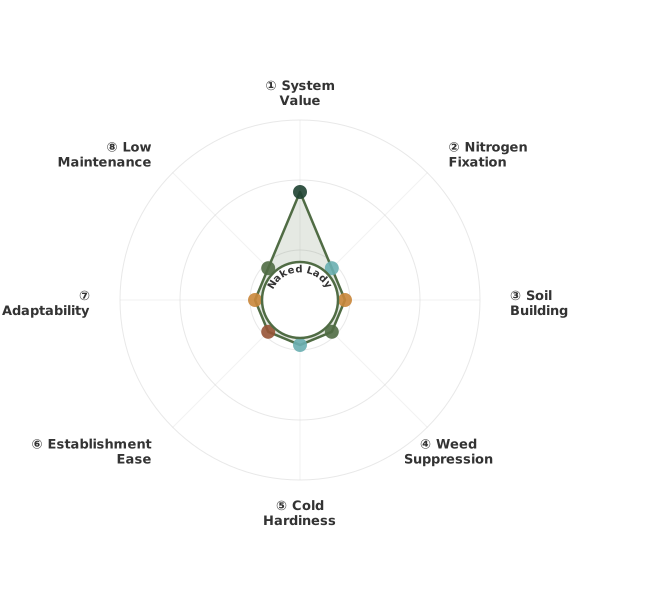
Comparative ratings for this plant across key regenerative agriculture traits.

Trait Suitability Explanation
Cold Hardiness Not Recommended Belladonna lily is a tender bulb, best suited for zones where it can overwinter without significant frost damage, contributing to soil cover through its foliage in milder climates.
Weed Suppression Not Recommended As an ornamental bulb, its growth habit is not optimized for dense canopy formation, and it does not actively suppress weeds when integrated into a broader regenerative system.
Nitrogen Fixation Not Recommended This ornamental bulb is not a legume and does not contribute to nitrogen fixation; its impact on soil nitrogen dynamics is indirect through organic matter decomposition.
Root System Depth Not Recommended Belladonna lily possesses a shallow, bulb-based root system, which minimally impacts soil structure beyond the immediate vicinity of the bulb.
Biomass Production Not Recommended This bulbous ornamental produces low above-ground biomass, contributing minimally to soil organic matter when allowed to decompose in place.
Establishment Ease Not Recommended It establishes more readily from divided bulbs than from seed, requiring well-drained conditions and protection from harsh frosts for successful integration.
Multi Benefit Value Not Recommended Primarily valued for its ornamental blooms, it can support pollinators and, when allowed to decompose, contributes modestly to soil organic matter.
Climate Adaptability Not Recommended Thrives in climates with mild winters and dry summers, requiring careful site selection to avoid frost damage and waterlogged soils.
Maintenance Intensity Ideally Suited Once established, this bulb requires minimal intervention, benefiting from good drainage and natural moisture retention, with no need for external fertility management.

Comparative System: Ratings compare plants within their economic category (e.g., cover crop nitrogen fixation compared to other cover crops, not to all plants). Individual farm conditions and management practices significantly influence actual performance.

8

Learn More

Why farmers use this plant and additional resources

Why Regenerative Farmers Use This Plant

Amaryllis belladonna, while not a traditional cover crop in the nitrogen-fixing sense, offers unique benefits in regenerative systems, particularly for soil health, biodiversity enhancement, and aesthetic integration. Its bulbous nature allows for deep root penetration, which can help break up compacted soil layers over time, improving water infiltration and aeration. While it doesn't fix atmospheric nitrogen, its extensive root system can scavenge nutrients from deeper soil profiles, making them available to shallower-rooted cash crops or other companion plants when the Amaryllis breaks down. This nutrient cycling contributes to a more resilient and self-sustaining soil ecosystem, reducing the reliance on external inputs. Over a 3-5 year rotation, the improved soil structure and nutrient availability fostered by Amaryllis can lead to enhanced vigor and yield in subsequent cash crops.

Integrating Amaryllis belladonna can also play a role in biodiversity enhancement and weed suppression. When planted in borders, hedgerows, or as part of a polyculture, it provides a vibrant visual element that attracts pollinators during its blooming season. The dense foliage that emerges after flowering can offer a degree of ground cover, helping to suppress annual weeds by outcompeting them for light and resources. This is particularly effective in areas where a distinct dry period allows for its natural dormancy, followed by a flush of growth that can outmaneuver emerging weeds. Its presence can also contribute to habitat creation for beneficial insects, further bolstering natural pest control mechanisms within the farm landscape.

The quantitative ecosystem benefits of Amaryllis belladonna are primarily related to its contribution to soil structure and its role as a habitat. While specific data on pollinator visits or beneficial insect populations is limited for this ornamental species as a cover crop, its showy flowers are known to attract bees and other pollinators, contributing to local biodiversity. Its deep root system, which can extend 12-24 inches (30-60 cm) or more, actively works to improve soil aggregation and reduce erosion, especially on slopes. This improved soil structure leads to better water holding capacity and reduces runoff, contributing to overall watershed health. Studies on similar ornamental bulbs indicate that their flowering periods can provide crucial nectar and pollen resources for bees, butterflies, and other beneficial insects during specific times of the year, potentially leading to increased populations of natural predators that help manage common agricultural pests.

Regional success examples for Amaryllis belladonna are often found in ornamental landscapes and permaculture designs rather than large-scale agricultural fields. However, in regions with Mediterranean climates, such as parts of California, Australia, and South Africa, it is successfully integrated into vineyard borders and fruit orchard understories. Here, it contributes to the aesthetic appeal while providing subtle soil health benefits and supporting local pollinator populations. In Mediterranean vegetable gardens, it can be planted between rows of less vigorous crops during its dormant period, providing ground cover and nutrient cycling benefits without direct competition.

9

How to Integrate This Plant

Practical guidance for regenerative systems

Establishing Amaryllis belladonna typically involves planting its bulbs directly into well-drained soil. Bulbs are best planted in the late summer or early autumn, allowing them to establish roots before cooler weather arrives. The recommended planting depth is 4-8 inches (10-20 cm) for larger bulbs, ensuring they are covered with soil, with bulbs placed pointed end up. Spacing can vary depending on the desired effect, but for a naturalized look, planting in clusters or drifts with 8-12 inches (20-30 cm) between bulbs is effective. In the Northern Hemisphere, this translates to planting in August to October, while in the Southern Hemisphere, planting occurs from February to April. Amaryllis belladonna requires well-draining soil and prefers full sun to partial shade.

Management practices for Amaryllis belladonna are relatively low-input once established. It thrives in conditions with minimal supplemental watering during its dry summer dormancy, relying on winter rains for hydration. Over-watering, especially during dormancy, can lead to bulb rot. Its growth cycle is characterized by foliage emerging in autumn or winter, followed by flowering in late summer. The plant typically reaches a height of 1-2 feet (0.3-0.6 m) when in bloom. Pest and disease management should prioritize cultural practices; ensuring good drainage and avoiding over-watering are key to preventing fungal issues. Companion planting with drought-tolerant herbs or groundcovers can further enhance soil health and biodiversity.

For integration into regenerative systems, Amaryllis belladonna functions best as a component of a biodiverse planting scheme rather than a primary cover crop. In perennial cropping systems like orchards or vineyards, it can be interplanted in the inter-row spaces or along field edges. Termination is generally not a concern as it naturally goes dormant. If its foliage needs to be managed for aesthetic or disease prevention reasons, it can be cut back after it has yellowed and died down in late spring or early summer, typically 60-90 days after flowering. This allows the bulb to store energy for the next season. Its residue decomposes slowly, contributing to soil organic matter over time. Seed production is not a primary concern for management, as propagation is typically through bulb division.

Regional adaptations for Amaryllis belladonna are tied to its climate preferences. In the Mediterranean basin, it can be planted in olive groves or vineyards to enhance biodiversity and soil structure. In the coastal regions of California, it is often incorporated into drought-tolerant landscaping around farms, providing aesthetic value and supporting local wildlife. In parts of Australia with similar dry summer conditions, it can be used in the understory of citrus orchards or as a border plant in wheat-sheep systems, contributing to a more diverse farm ecosystem. In Brazilian coffee plantations, it can be used in shaded areas or along terraces, contributing to soil cover and biodiversity, especially in regions with a distinct dry season that mimics its natural dormancy period.

View Full Document (Printable single-page version)