Regenerative Quick Profile

All recommendations assume integrated, regenerative practices—not conventional inputs.

Climate & Soil Fit

Climate: Tropical Rainforest, Tropical Monsoon, Tropical Savanna, Hot Semi-Arid (Steppe), Cold Semi-Arid (Steppe), Hot Desert, Cold Desert, Humid Subtropical, Oceanic (Maritime Temperate), Hot-Summer Mediterranean, Warm-Summer Mediterranean, Monsoon-Influenced Humid Subtropical, Subtropical Highland, Hot-Summer Continental, Warm-Summer Continental, Subarctic, Monsoon-Influenced Hot-Summer Continental, Tundra

Zones: USDA 5-8, Australian Zones 3-5

System Role & Functions

Primary: Silvopasture

Secondary: Food Forest, Timber With Food

Key Benefits: Multi-benefit value

Management Level

Experience: Advanced

Maintenance: Moderate maintenance - Focus on blight resistance and ecosystem support minimizes ongoing maintenance needs, allowing the tree to thrive with less intensive intervention once established.

Time to Production: Slow (5+ years) - Mature American chestnut trees yield nuts, but their journey to robust production is gradual. Focusing on building soil health and supporting the tree's resilience through integrated practices encourages eventual bearing.

Value Streams

  • Fruit/nut harvest

Know the Debate

  • Nut yields in 5-15 yrs, timber much longer; survival critical
  • Establishment methods differ: protect vs. integrate grazing
  • Blight-resistant hybrids essential for restoration success
  • Integrates well with livestock, timber, and soil building
1

Climate Suitability Assessment

Will this plant thrive in your climate?

IDEALLY SUITED

Köppen Zone: Cfa (Humid Subtropical), Dfa (Hot-Summer Continental), Dfb (Warm-Summer Continental)
USDA Zone: 6a, 7a, 8a
Australian Zone: temperate
EU Climate Region: atlantic

American Chestnut thrives in climates offering a long, mild growing season with moderate temperatures and consistent rainfall, as found in Köppen Cfb zones and regional zones like USDA 7a-8a, Australian temperate, and EU Atlantic. These conditions provide ample frost-free days (180-240) and temperatures (60-75°F/15-24°C) optimal for establishment and vigorous growth, minimizing heat stress and disease pressure. Mild winters (0-15°F/-18 to -9°C) ensure high survival rates for young trees, while adequate summer moisture supports robust development and reliable nut production. These zones allow for minimal intervention, with establishment success rates exceeding 85% and multi-year productivity being highly reliable. The silvopasture and food forest functions are well-supported, with trees reaching maturity and providing significant yields of nuts and timber. Minimal protection is required beyond initial establishment, and disease resistance is naturally high, making these regions prime for successful restoration efforts.

ADEQUATE

Köppen Zone: Cfb (Oceanic (Maritime Temperate)), Csa (Hot-Summer Mediterranean), Csb (Warm-Summer Mediterranean), Cwa (Monsoon-Influenced Humid Subtropical), Cwb (Subtropical Highland)
USDA Zone: 5a, 5b, 9a
Australian Zone: subtropical
EU Climate Region: continental

American Chestnut can be adequately grown in climates with a sufficient growing season but may face some challenges, including Köppen Cfa and Dfb zones, USDA 5b-6b, 9a-9b, Australian subtropical, and EU continental regions. These zones typically offer 120-180 frost-free days and temperatures that are generally suitable, but may experience more extreme summer heat or winter cold than ideal. For instance, Cfa and subtropical zones can have higher humidity and disease pressure, while Dfb and continental zones might have shorter effective growing seasons or risk of late frosts. USDA 9a-9b zones can experience significant heat stress and increased disease susceptibility. Establishment success ranges from 70-85% with proper site selection and cultivar choice. While economically viable, these zones require more diligent management, including disease monitoring, potential for supplemental irrigation during dry spells, and possibly winter protection for young trees. Yields may be slightly reduced compared to ideal zones, and stand persistence might be shorter without careful management.

NOT RECOMMENDED

Köppen Zone: Af (Tropical Rainforest), Am (Tropical Monsoon), Aw (Tropical Savanna), ET (Tundra), BSh (Hot Semi-Arid (Steppe)), BSk (Cold Semi-Arid (Steppe)), BWh (Hot Desert), BWk (Cold Desert), Dfc (Subarctic), Dwa (Monsoon-Influenced Hot-Summer Continental)
USDA Zone: 2a, 3a, 3b, 4a, 10a, 11a, 12a

American Chestnut is not recommended for climates with extreme winter cold or prolonged high summer heat and humidity, encompassing Köppen zones not listed as suitable, USDA 3a-5a, 10a-10b, and potentially some EU Boreal regions. USDA zones 3a-5a experience winter lows below -15°F (-26°C), leading to high winter kill rates and very short growing seasons, making establishment and survival highly improbable. Conversely, USDA zones 10a-10b have excessive summer heat and humidity, creating an environment where blight and other fungal diseases thrive, severely stressing trees and often leading to mortality. Establishment success in these zones is typically below 70%, and long-term productivity is unreliable. The high risk of failure, coupled with intensive management needs (e.g., extensive winter protection, aggressive disease control, or specialized irrigation), makes these regions economically and practically unviable for American Chestnut restoration. Alternative, more resilient species are strongly advised for these challenging environments.

Better alternatives for these "not recommended" zones: American Hazelnut (Corylus americana) (Native to North America, much more cold-hardy and adapted to shorter growing seasons, provides food.), Serviceberry (Amelanchier spp.) (Cold-hardy native shrub/small tree with edible berries, tolerates a wide range of conditions.), Black Walnut (Juglans nigra) (More cold-tolerant than American Chestnut, provides valuable timber and nuts, though still prefers warmer zones.), Chinese Chestnut (Castanea mollissima) (More tolerant of heat and humidity, and generally more resistant to blight, suitable for warmer zones where American Chestnut struggles.)

Note: Zones listed above represent climates where this plant can produce reliably with reasonable management. Climate zones not mentioned would require intensive climate modification (greenhouses, extensive infrastructure) and are not economically viable for regenerative agriculture purposes.

2

Soil Suitability Assessment

Which soil types work best for this plant?

ADEQUATE

Acidic Soil, Clay Soil, Loam Soil, Rich Soil, Rocky Soil, Sandy Soil

This plant performs acceptably in these soil types with moderate, manageable remediation such as pH adjustment, compost addition, or drainage improvement. The required amendments are practical and cost-effective for regenerative agriculture.

NOT RECOMMENDED

Alkaline Soil, Desert Soil, Saline Soil, Wet Soil

Growing this plant in these soil types would require impractical remediation such as complete soil replacement, extensive amendments, or cost-prohibitive infrastructure. These conditions are not economically viable for regenerative agriculture.

Note: Soil suitability assessments focus on remediation requirements. "Ideally Suited" means the plant generally thrives without the need for substantial amendments, "Adequate" means manageable remediation (lime, compost, mulch), and "Not Recommended" means impractical soil changes would be required. Climate factors like rainfall and temperature also influence success.

3

Seasonal Considerations

Planting timing, growth duration, and harvest windows

Establishing American chestnuts requires thoughtful timing to ensure robust growth. The ideal planting window for nursery trees is during their dormant season, either in early spring as the soil becomes workable or in late fall after leaf drop but before the ground freezes. Bare-root stock is best planted when fully dormant, while container-grown trees offer a slightly wider planting window, including during active growth, though establishment will be more successful if planted as the weather cools or warms gently.

Expect a several-year journey to full productivity. Trees typically take 3-5 years to become well-established, showing vigorous growth. You can anticipate a first modest harvest around 5-7 years after planting, with the trees reaching full production within 10-15 years. American chestnuts are long-lived, capable of remaining productive for many decades, often exceeding 50 years.

Seasonal management focuses on supporting this long-term growth. Pruning is best performed during the dormant season, typically in late winter, to shape the tree and remove any dead or damaged branches. Bloom occurs in late spring to early summer, followed by nut development through the summer. Harvest typically takes place in the fall, after nuts have matured and dropped. Winter dormancy is a critical period for the tree’s rest and preparation for the next growing season.

4

System Role & Multi-Benefit Value

Functional roles, integration strategies, and stacked benefits

Functional Role

Integration Characteristics

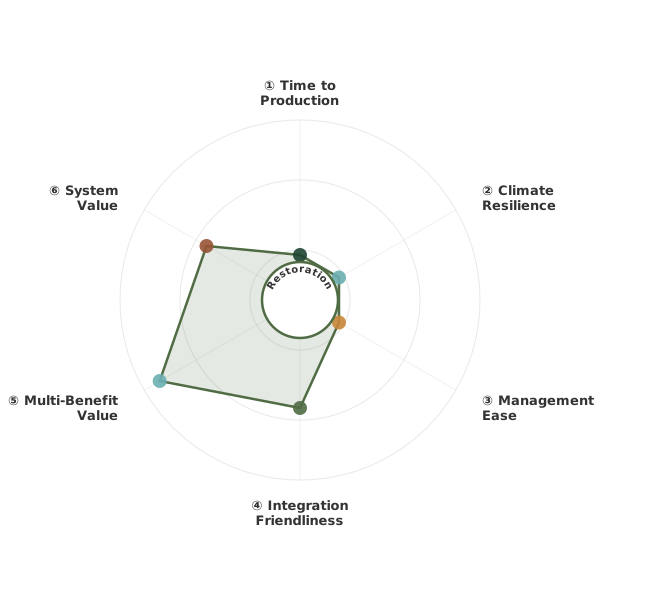
Multi-Benefit Value: Ideally Suited - Historically a source of valuable timber and nuts, the American chestnut's root system also enhances soil stability. Restoring it supports biodiversity and ecosystem function, though disease resilience is key to realizing its full potential.

Integration Friendliness: Adequate - Once blight-resistant strains are established, the American chestnut offers valuable nuts and timber. It integrates well as a woodland component, enhancing biodiversity and soil health within a regenerative landscape.

5

Economics & Value Streams

Direct harvest, system benefits, ecosystem services, and risk diversification

Comprehensive economic analysis including direct harvest value, system enhancement contributions, ecosystem services, value timeline, and risk diversification strategies.

Per-Tree Production Economics

Metric Value
Establishment Cost $15-30
Years to First Harvest 5-8 years
Annual Maintenance $5-10
Yield 30-60 lbs/year 13-27 kg/year
Market Price $2-4/lb $4-8/kg
Productive Lifespan 50-75 years
Net Annual Return* $49-$234/year

Values shown per mature tree, not per acre. In regenerative systems, trees are integrated at low densities across diverse landscapes. Establishment costs spread over the lifespan of the tree. Early years have costs but no revenue.

* Net Annual Return = (Yield × Market Price) − (Amortized Establishment Cost + Annual Maintenance). This return is realized only at/after first harvest; early years have costs but no revenue. Range shows worst case to best case scenarios.

System Enhancement Value

Beyond harvest: shade for livestock, soil building, and system benefits

Shade Value for Livestock

Cattle $50-150/head/year, Pigs $30-80/head/year (variable based on climate, livestock density, and canopy characteristics)

The American chestnut, when integrated into silvopasture systems, offers significant shade benefits for livestock. As a large, mature tree, it can create substantial canopy cover, moderating temperature extremes and reducing heat stress for cattle and pigs. This improved comfort can lead to increased feed efficiency, better weight gain, and reduced susceptibility to heat-related illnesses. The presence of mature American chestnuts, as indicated by their longevity up to 50 years and potential for much longer, suggests a stable and enduring shade source. The quantitative value of this shade is directly tied to the well-being and productivity of the livestock it shelters. Factors such as climate, the density of the chestnut stand, and the specific needs of the animals will influence the precise economic return derived from this shade.

Windbreak & Erosion Control

Variable, potential for protecting 3-5 acres per tree row, 5-15% crop yield improvement (general estimates for mature tree windbreaks)

While not explicitly detailed in the provided excerpts, mature American chestnut trees, with their substantial growth potential, can contribute to windbreak functions within an integrated farm system. Established stands can intercept wind, reducing its velocity and mitigating its erosive forces on soil. This is particularly relevant in agricultural landscapes where wind can lead to soil degradation and crop damage. By buffering wind, American chestnuts can help protect adjacent pastures and croplands, potentially improving microclimates and reducing the need for artificial windbreaks. The historical context of American chestnuts supporting large pig populations suggests their ecological robustness and capacity to thrive in landscapes, indirectly implying a role in maintaining soil stability and structure against environmental forces like wind.

Other System Contributions

The American chestnut offers a multifaceted system value beyond direct harvest and shade. Historically, its mast production was crucial for supporting vast livestock populations, as evidenced by its role in finishing millions of pigs in the 1800s. This suggests a significant contribution to soil health and nutrient cycling through animal waste. Modern efforts also explore grafting onto disease-resistant rootstock, hinting at the potential for enhanced resilience and longevity, which translates to sustained ecosystem services. Furthermore, the potential for using its wood for musical instruments indicates a high-value timber product that can diversify income streams. The resilience of the American chestnut's root system, which often sprouts after above-ground blight damage, signifies an inherent capacity for regeneration and continued ecological function, even in the face of disease.

Ecosystem Service Contributions

Environmental contributions: carbon, pollinators, wildlife, and water

  • Carbon Sequestration: American chestnuts are large, long-lived hardwood trees with significant biomass potential, allowing them to sequester substantial amounts of carbon in their wood and soil over their lifespan. Their potential longevity suggests long-term carbon storage.
  • Pollinator Support: High. American chestnuts produce abundant pollen and nectar, serving as a vital food source for a wide array of native pollinators, particularly during their flowering period.
  • Wildlife Habitat: High. The nuts (mast) provide a crucial food source for a variety of wildlife, including squirrels, deer, bears, and historically, large numbers of domestic pigs. Mature trees offer nesting sites and shelter.
  • Water Quality: Not applicable

Value Timeline: When Benefits Begin

When you'll see results: shade in years 1-5, fruit/nut harvest 3-10, timber 20+

Years 1-2

Initial establishment leading to minor soil stabilization and early microclimate modification. Limited shade provision. Potential for early root system development contributing to soil health.

Years 3-5

Increasing shade provision for livestock, contributing to improved animal comfort and productivity. Establishment of a more robust root system enhancing soil structure and mitigating erosion. Continued growth and biomass accumulation.

Years 10-20

Mature shade canopy providing significant benefits to silvopasture systems. Potential for early nut production, contributing to wildlife support and potential supplemental feed. Timber value begins to accrue. Established ecosystem services like pollinator support and wildlife habitat are fully realized.

20+ Years

Long-term, stable shade provision. Significant timber value for high-quality wood products. Continued mast production for wildlife and potential livestock finishing. Mature trees contribute significantly to carbon sequestration and landscape resilience. Potential for Grafted trees to exhibit enhanced disease resistance and longevity.

Farm Risk Reduction

How this reduces farm risk: backup income, weather protection, market hedges

  • Multiple Revenue Streams: Silvopasture shade value (livestock productivity), potential timber harvest (musical instruments, lumber), mast production (wildlife, supplemental livestock feed), ecological services (carbon sequestration, habitat).
  • Temporal Income Spread: Ongoing, continuous benefits from shade and ecosystem services, with periodic income from mast harvest and eventual timber harvest. Grafting can extend productive lifespan and mitigate disease risks.
  • Market Risk Hedge: Diversifies revenue beyond traditional crops or livestock by providing integrated benefits. The long lifespan and potential for high-value timber reduce reliance on annual market fluctuations. Resilience to disease through natural regeneration or grafting offers a hedge against ecological threats.
6

Regenerative Suitability Details

Comprehensive trait ratings for system integration assessment

Comparative ratings for this plant across key regenerative agriculture traits.

Trait Suitability Explanation
Drought Tolerance Adequate American chestnut thrives with consistent soil moisture, achievable through effective water management and mulching to enhance moisture retention for optimal growth and nut production.
Establishment Ease Not Recommended Establishing American chestnut requires patience, as seeds benefit from stratification and seedlings are initially slow. Integrating diverse groundcovers and providing a rich soil environment through compost and mulch supports their early development.
Time To Production Not Recommended Mature American chestnut trees yield nuts, but their journey to robust production is gradual. Focusing on building soil health and supporting the tree's resilience through integrated practices encourages eventual bearing.
Multi Benefit Value Ideally Suited Historically a source of valuable timber and nuts, the American chestnut's root system also enhances soil stability. Restoring it supports biodiversity and ecosystem function, though disease resilience is key to realizing its full potential.
Climate Adaptability Not Recommended While historically hardy, the American chestnut's climate adaptability is currently challenged by disease susceptibility. Prioritizing blight-resistant varieties and fostering a resilient ecosystem allows it to perform within its preferred zones.
Hardiness Zone Range Not Recommended American chestnut is historically suited to zones 4-8, but blight has significantly impacted its viability. Selecting for resilient genotypes and supporting overall ecosystem health allows for successful cultivation within these ranges.
Maintenance Intensity Adequate Focus on blight resistance and ecosystem support minimizes ongoing maintenance needs, allowing the tree to thrive with less intensive intervention once established.
Pest Disease Pressure Adequate This restoration variety's success hinges on selecting blight-resistant genotypes, thereby managing the significant disease pressure that historically plagued American chestnuts.
Integration Friendliness Adequate Once blight-resistant strains are established, the American chestnut offers valuable nuts and timber. It integrates well as a woodland component, enhancing biodiversity and soil health within a regenerative landscape.

Comparative System: Ratings compare plants within their economic category (e.g., cover crop nitrogen fixation compared to other cover crops, not to all plants). Individual farm conditions and management practices significantly influence actual performance.

7

Know the Debate

Restoring American chestnut offers significant long-term benefits for soil, biodiversity, and farm economics, but requires careful planning. Succes...

Restoring American chestnut offers significant long-term benefits for soil, biodiversity, and farm economics, but requires careful planning. Successful integration depends heavily on regional climate and historical context, with temperate regions in eastern North America showing the most promise; specific USDA zones and rainfall patterns influence tree survival and growth. Establishment can be a multi-year process, with costs ranging from $5-8 per seedling to $15-25k for larger agroforestry setups including fencing and irrigation. Ongoing labor for protecting young trees or managing grazing, alongside potential pruning, is essential for the first 3-5 years and beyond for timber production.

How long until American Chestnut yields nuts and timber?

Grafted: 5-15 yrs nuts, 15-30 yrs timber

Grafted trees mature faster, providing commercial nut yields within 5-15 years and substantial timber returns within 15-30 years. Seedlings require a longer establishment period, often taking over 15 years for significant nut production. This timeline reflects optimized conditions and variety selection.

Field: 5 yrs nuts, 40+ yrs timber

Anecdotal reports from farmers suggest meaningful nut yields can occur within 5 years, even from seedlings, while observing that timber harvests typically require considerably longer periods, often exceeding 40 years. These timelines reflect practical, on-the-ground experience across diverse farm settings.

Making Sense of the Differences

The time to see significant yields from American chestnut varies based on multiple factors, primarily the stock type (grafted vs. seedling) and site conditions. Grafted trees mature much faster, reaching commercial nut production in 5-15 years compared to 15-30 years for seedlings. Timber harvests can take 40+ years even for grafted trees. Site conditions, soil fertility, disease management of blight-resistant varieties, and diligent management during establishment significantly influence growth rates and the realization of returns. Farmers should plan for a long-term investment, understanding that initial yields from nuts appear sooner than substantial timber returns.

What is the optimal method for establishing American Chestnut?

Protect until established (1-3 years)

Young trees need reliable protection from browsing herbivores, typically using tree shelters or fencing for 1-3 years until they are resilient enough to withstand grazing pressure. This method ensures predictable growth by minimizing damage during the critical early establishment phase.

Integrate grazing early (larger stock)

Planting larger stock (6-8ft) and integrating managed grazing from day one allows animals to provide fertility and control competing vegetation. This approach, proponents argue, avoids reliance on passive protection and promotes earlier integration into the farm ecosystem.

Making Sense of the Differences

The strategy for establishing American chestnut seedlings centers on balancing protection from herbivores with early integration into the farm landscape. The conventional approach recommends fencing or tree shelters for 1-3 years to ensure young trees can establish a robust root system and grow beyond the browse line, minimizing damage. Conversely, some practitioners advocate planting larger, more resilient transplants (6-8ft) and integrating them immediately with managed grazing systems. This method suggests animals can provide fertility and control competing vegetation without requiring passive physical protection, though it carries a higher risk of browse damage if management is not precise.

8

Learn More

Why farmers use this plant and additional resources

Why Regenerative Farmers Use This Plant

The American chestnut (Castanea dentata) was once a keystone species in eastern North American forests, renowned for its rapid growth, valuable timber, and abundant, nutritious nuts. Before the devastating chestnut blight (Cryphonectria parasitica) arrived in the early 20th century, it dominated vast tracts of forest, with estimates suggesting it comprised up to 25% of the mature trees in some eastern forests. Its ability to grow to impressive sizes, with mature trees reaching heights of 80-100 feet (24-30 m) and diameters of 3-6 feet (0.9-1.8 m), highlights its long-term potential for carbon sequestration, estimated at 2-5 tons CO2e/acre/year at maturity. The development of blight-resistant hybrids and ongoing restoration efforts offer a unique opportunity to reintegrate this ecologically and economically vital tree into modern agricultural landscapes, simultaneously advancing regenerative agriculture and ecological restoration.

Integrating American chestnut into farming systems offers multifaceted benefits beyond its primary role as a nut producer. Its substantial canopy provides valuable shade regulation, creating microclimates that can benefit understory crops or livestock, and can act as an effective windbreak, protecting fields and structures. As a perennial species, it contributes to long-term soil health by developing deep root systems that improve soil structure, water infiltration, and nutrient cycling. Over decades, the accumulation of organic matter from leaf litter and root exudates significantly enhances soil organic carbon, supporting a more resilient and fertile agricultural ecosystem. The multi-decade economic returns from timber and nuts, coupled with its ecological services, make the American chestnut a valuable asset for farms focused on long-term sustainability and diversification. Measurable soil carbon increases can begin to be detected by year 5-7 as the trees mature and contribute organic matter.

The ecosystem services provided by American chestnut are substantial, particularly in its role as a habitat and food source. Its large, nutrient-rich nuts are a highly palatable and energy-rich food for a wide array of wildlife, including deer, squirrels, turkeys, bears, and humans, supporting biodiversity within and around agricultural lands. The mature forest structure it creates offers habitat for numerous bird species and beneficial insects. Furthermore, its deep root system aids in preventing soil erosion, especially on sloped terrain, and its presence can improve water quality by filtering runoff. As restoration efforts succeed and blight-resistant varieties become more widespread, the American chestnut can once again fulfill its ecological role, contributing to the overall health and resilience of the agricultural landscape.

Historically, American chestnut served as a cornerstone of forest ecosystems and rural economies across eastern North America, spanning from southern Maine to northern Georgia and west to the Mississippi River. Its resurgence through restoration programs is being embraced by farmers in regions where it once thrived. For instance, in the Appalachian region of the United States, farmers are reintroducing blight-resistant American chestnuts into silvopasture systems, integrating them with livestock grazing and timber production. In Europe, related chestnut species have long been cultivated for their nuts and timber, with farms in countries like Italy and France managing extensive chestnut groves that provide both economic returns and ecological benefits, demonstrating the long-term viability of chestnut cultivation in diverse agroforestry settings. In the UK, similar temperate regions can support chestnut species, where they can be integrated into silvopasture systems with sheep or cattle.

9

How to Integrate This Plant

Practical guidance for regenerative systems

Establishing American chestnut typically involves planting nursery-grown seedlings or grafted trees, as direct seeding can be challenging due to variable germination rates and competition from pests. For seedlings, planting is best done in early spring, after the last frost, or in early fall in milder climates. For intentional orchard or agroforestry planting, seedlings or grafted trees are planted at a spacing of 25-40 feet (7.5-12 meters) apart, depending on the desired system. For timber production, spacing can range from 20-30 feet (6-9 m) apart. For nut production in orchards or agroforestry systems, spacing of 25-40 feet (7.5-12 m) is recommended to allow for mature canopy development and light penetration. Grafted trees are often planted at a depth that places the graft union at least 2-3 inches (5-7.5 cm) above the soil line to prevent scion rooting. Planting depth for seedlings is typically 2-4 inches (5-10 cm) below the soil surface, ensuring the root collar is at or slightly above ground level.

Management during the establishment phase is critical for long-term success. Young trees require adequate moisture, with approximately 1 inch (2.5 cm) of water per week during the first 1-3 years, especially during dry periods. While American chestnut is adapted to forest soils and can scavenge nutrients effectively, initial fertilization with compost or well-rotted manure can support vigorous early growth. Protecting young trees from browsing by deer and other wildlife is essential, often requiring tree shelters or fencing. Pruning in the early years should focus on establishing a strong central leader and well-spaced scaffold branches, with ongoing canopy management to ensure adequate light penetration for any understory plantings.

For category-specific integration as a perennial agroforestry species, establishment and system design are paramount. Trees typically take 1-3 years to establish a robust root system and begin significant top growth. Full nut production can be expected between years 5-15, with full commercial yields realized between 15-30 years, depending on the variety, site conditions, and management. Grafted trees will produce nuts earlier than seedlings. Canopy management through selective pruning is crucial to maintain light penetration for intercropped species or forage in silvopasture systems, aiming for 50-60% light at the alley floor. Understory planting, such as nitrogen-fixing ground cover like clover or vetch, can be introduced by year 2-3 to build soil fertility and provide forage. For alley cropping or silvopasture, row spacing of 30-40 feet (9-12 m) is recommended to accommodate equipment and livestock. Long-term infrastructure considerations include irrigation for establishment, robust deer protection, and potentially support structures for grafted trees.

Regional adaptations are key to successful American chestnut integration. In the northeastern United States, farmers are reintroducing blight-resistant varieties into existing woodlots or establishing new orchards, often interplanting with other native species to mimic forest structure. In the Appalachian region of the United States, ongoing restoration efforts are re-establishing blight-resistant hybrids in silvopasture systems and as part of reforestation projects. In the southeastern United States, where the native species was once prevalent, restoration efforts focus on re-establishing blight-resistant varieties in forest edges and agroforestry plots, potentially intercropping with shade-tolerant cash crops during the establishment phase. In Europe, particularly in France and Italy, established chestnut agroforestry systems demonstrate successful integration with understory crops like mushrooms or herbs, and in some cases, with vineyards, showcasing the versatility of this species within diverse farming landscapes. In the UK, similar temperate regions can support chestnut species, where they can be integrated into silvopasture systems with sheep or cattle, with row spacing of 30-40 ft (9-12 m) allowing for grazing and hay production during the establishment phase.

View Full Document (Printable single-page version)