Apios americana, or groundnut, is a valuable perennial legume for regenerative agriculture, primarily functioning as a nitrogen fixer. Its ability to thrive in moist conditions without external fertilizer application directly supports soil health and reduces the need for synthetic inputs. While not explicitly detailed as a cover crop in these excerpts, its nitrogen-fixing capacity inherently contributes to soil building and fertility. The plant is noted for its edible tubers, suggesting potential as a food source within a regenerative system, and its aggressive spreading nature, similar to sunchokes, requires careful management, perhaps through containment or integration into systems where spread is beneficial. Farmer experience suggests it could be a staple crop, with ongoing domestication efforts in the US. Its integration into perennial systems is highlighted as a strategy to replace less resilient annual crops, enhancing biodiversity and buffering against climate unpredictability. Apios americana's role in supporting more resilient, lower-input farming systems is its key regenerative agricultural application.

Regenerative Quick Profile

All recommendations assume integrated, regenerative practices—not conventional inputs.

Climate & Soil Fit

Climate: Tropical Rainforest, Tropical Monsoon, Tropical Savanna, Hot Semi-Arid (Steppe), Cold Semi-Arid (Steppe), Hot Desert, Cold Desert, Humid Subtropical, Oceanic (Maritime Temperate), Hot-Summer Mediterranean, Warm-Summer Mediterranean, Monsoon-Influenced Humid Subtropical, Subtropical Highland, Hot-Summer Continental, Warm-Summer Continental, Subarctic, Monsoon-Influenced Hot-Summer Continental, Tundra

Zones: USDA 3-9, Australian Zones 1-14

Optimal Soil: Loam Soil

System Role & Functions

Primary: Nitrogen Fixer

Secondary: Cash Crop With Services, Cover Crop System

Key Benefits: Multi-benefit value, Climate adaptable, Disease Pest Resistance

Management Level

Experience: Advanced

Maintenance: Moderate maintenance - Groundnut, a nitrogen-fixing legume, thrives with minimal external inputs, its primary needs being integrated support for its climbing habit and consistent moisture retention through mulching.

Value Streams

  • Vegetable/specialty crop harvest
  • Nitrogen fixation
1

Climate Suitability Assessment

Will this plant thrive in your climate?

IDEALLY SUITED

Köppen Zone: Af (Tropical Rainforest), Am (Tropical Monsoon), Aw (Tropical Savanna), Cfa (Humid Subtropical), Cwa (Monsoon-Influenced Humid Subtropical)
USDA Zone: 7a, 8a, 9a, 10a, 11a, 12a
Australian Zone: subtropical

Groundnut thrives in regions with consistently warm temperatures, ideally between 75-85°F (24-29°C), and a long frost-free growing season of 120-150 days. These conditions are met in Köppen Cfa, Csa, Csb zones and regional zones like USDA 7b-10b, Australian subtropical, and EU Atlantic/Continental regions with favorable summers. Adequate rainfall (20-30 inches/50-75 cm) is beneficial, but supplemental irrigation is often manageable in these zones to ensure optimal pod development and nitrogen fixation, especially during dry spells. Establishment is reliable when soil temperatures reach 60°F (15°C). These zones provide the necessary heat accumulation for efficient growth, robust nitrogen fixation, and successful maturation, making groundnut a highly productive cash crop, cover crop, or nitrogen fixer with minimal management challenges beyond standard agricultural practices. Yields are consistently high, and the plant performs reliably year after year.

ADEQUATE

Köppen Zone: BSh (Hot Semi-Arid (Steppe)), Cfb (Oceanic (Maritime Temperate)), Csa (Hot-Summer Mediterranean), Csb (Warm-Summer Mediterranean), Cwb (Subtropical Highland), Dfa (Hot-Summer Continental), Dfb (Warm-Summer Continental)
USDA Zone: 5b, 6a
Australian Zone: temperate
EU Climate Region: atlantic, continental

Groundnut can be grown successfully in regions with adequate growing seasons and manageable temperature ranges, typically requiring 100-130 frost-free days and summer temperatures between 70-80°F (21-27°C). This includes Köppen Dfa, Cfa, Csa, Csb zones and regional zones such as USDA 5b-7a, Australian temperate, and EU Atlantic/Continental regions. While these zones offer sufficient heat for growth, they may experience cooler springs or autumns, potentially slowing maturation and nitrogen fixation. Supplemental irrigation is often necessary to compensate for variable rainfall, especially during dry spells common in Csa and some continental climates. The risk of early frosts in Dfa and continental zones necessitates careful planting dates and variety selection. Despite these considerations, groundnut can achieve good yields and provide valuable nitrogen fixation, making it a viable option with appropriate management and a focus on timely planting and water availability.

NOT RECOMMENDED

Köppen Zone: ET (Tundra), BSk (Cold Semi-Arid (Steppe)), BWh (Hot Desert), BWk (Cold Desert), Dfc (Subarctic), Dwa (Monsoon-Influenced Hot-Summer Continental)
USDA Zone: 2a, 3a, 3b, 4a, 5a

Groundnut is not recommended in zones with short, cool growing seasons, extreme temperature fluctuations, or insufficient heat accumulation for reliable maturation. This includes Köppen Cfb, Dfb, Dfc, Dwc, Dsa, Dsb zones and regional zones like USDA 1a-5a, and parts of EU continental regions with marginal summers. These areas often experience winter temperatures too low for survival (even as an annual, it's risky), and growing seasons are too short (under 100 days) and cool (average temps below 70°F/21°C) for optimal pod development and nitrogen fixation. In hot, dry zones (Dsa), extreme heat and lack of moisture necessitate intensive irrigation, while short seasons limit potential. In cold zones (Dfb, Dfc, Dwc), frost risk is high, and heat units are insufficient. Establishment success is often below 70%, and yields are significantly reduced, making cultivation economically questionable. Alternative nitrogen-fixing plants better adapted to these specific climatic challenges are strongly advised.

Better alternatives for these "not recommended" zones: Cowpea (heat-tolerant nitrogen fixer for hot, dry zones), Sunn Hemp (tropical nitrogen fixer adapted to hot, dry conditions), Hairy Vetch (cold-hardy annual legume for nitrogen fixation in cold zones), Winter Rye (extremely cold-hardy cover crop for biomass and soil protection)

Note: Zones listed above represent climates where this plant can produce reliably with reasonable management. Climate zones not mentioned would require intensive climate modification (greenhouses, extensive infrastructure) and are not economically viable for regenerative agriculture purposes.

2

Soil Suitability Assessment

Which soil types work best for this plant?

IDEALLY SUITED

Loam Soil

This plant thrives in these soil types without requiring amendments or remediation. Natural soil conditions support optimal growth and productivity.

ADEQUATE

Acidic Soil, Alkaline Soil, Clay Soil, Rich Soil, Rocky Soil, Sandy Soil

This plant performs acceptably in these soil types with moderate, manageable remediation such as pH adjustment, compost addition, or drainage improvement. The required amendments are practical and cost-effective for regenerative agriculture.

NOT RECOMMENDED

Desert Soil, Saline Soil, Wet Soil

Growing this plant in these soil types would require impractical remediation such as complete soil replacement, extensive amendments, or cost-prohibitive infrastructure. These conditions are not economically viable for regenerative agriculture.

Note: Soil suitability assessments focus on remediation requirements. "Ideally Suited" means the plant generally thrives without the need for substantial amendments, "Adequate" means manageable remediation (lime, compost, mulch), and "Not Recommended" means impractical soil changes would be required. Climate factors like rainfall and temperature also influence success.

3

Seasonal Considerations

Planting timing, growth duration, and harvest windows

For Apios americana, or groundnut, aim for direct seeding after the soil has warmed sufficiently, ideally reaching at least 60°F (15°C). This typically occurs well after the last expected frost. While Apios can be started indoors a few weeks before transplanting, direct sowing is often preferred to avoid disturbing its extensive root system. Establishment is key for this perennial vine, though it's grown as an annual for its tubers.

Expect a long growing season, with maturity typically reached in 90-120 days. Harvest can begin in the fall, continuing as the vines die back. If you are growing for tuber production over multiple years, allow plants to overwinter. For succession planting of tubers, consider planting new sets in early spring each year. Apios americana exhibits good heat tolerance once established, thriving throughout the summer. While it can withstand light frosts in the fall, it is sensitive to hard freezes. Season extension is generally not necessary as the harvest naturally occurs as the season cools.

4

System Role & Multi-Benefit Value

Functional roles, integration strategies, and stacked benefits

Functional Role

Total System Value

Apios americana offers significant system value beyond its direct harvest. As a nitrogen fixer, it plays a crucial role in nutrient cycling, reducing reliance on external inputs and enhancing soil health, as noted in excerpts and. This biological fertility boost supports the growth of associated crops and perennial vegetation, contributing to a more robust and resilient farm ecosystem. Its perennial habit contributes to long-term soil structure improvement and erosion control. While not explicitly mentioned for shade or windbreak, its dense growth can offer some ground cover benefits. Its value is amplified when stacked with other functions: edible tubers provide direct food value, nitrogen fixation enhances nearby plant growth, and its perennial nature contributes to biodiversity and soil carbon sequestration, creating a multi-layered system of resilience and productivity.

Integration Characteristics

Multi-Benefit Value: Ideally Suited - As a nitrogen fixer, groundnut enhances soil fertility and provides dual harvests of tubers and beans, while its vigorous vine offers valuable ground cover and habitat integration.

5

Management & Care Requirements

Integration guidance, maintenance needs, and care practices

How to Integrate This Plant

Apios americana, a perennial legume, is an excellent candidate for regenerative systems due to its nitrogen-fixing capabilities and edible tubers. It can be integrated into food forests, hedgerows, or as a ground cover in alley cropping systems to enhance soil fertility and reduce the need for synthetic fertilizers. Its ability to thrive in moist conditions makes it suitable for areas prone to erosion or waterlogging. As a nitrogen fixer, it directly supports the growth of companion plants, creating a more self-sufficient and biodiverse system. Its perennial nature aligns with the shift towards less disturbance and greater resilience, as highlighted in excerpt. Consider intercropping with plants that benefit from increased nitrogen. The groundnut can also serve as a living mulch, suppressing weeds and retaining soil moisture, further contributing to a healthier soil ecosystem.

Integration Practices & Management

Regenerative farmers integrate Apios americana, or groundnut, primarily as a resilient perennial crop, shifting away from annuals to enhance system stability. While the provided sources do not detail specific establishment methods like seeding rates or tillage practices, they highlight its nitrogen-fixing capability, indicating it can thrive without synthetic fertilizers and potentially improve soil fertility. Apios americana is noted as a legume that thrives in moist conditions and does not require fertilization. Its perennial nature suggests it can be part of a long-term strategy, replacing annual crops like potatoes and kale to buffer against climate unpredictability. The sources do not offer information on integration with grazing, termination strategies, or specific cash crop integrations. However, its ability to fix nitrogen and its perennial growth habit are key considerations for soil health and reduced input farming. The potential for Apios americana to be a staple crop, with cultivation efforts in the US, suggests its value in diverse regenerative systems.

Management Profile

Maintenance Intensity: Adequate - Groundnut, a nitrogen-fixing legume, thrives with minimal external inputs, its primary needs being integrated support for its climbing habit and consistent moisture retention through mulching.

6

Economics & Value Streams

Direct harvest, system benefits, ecosystem services, and risk diversification

Comprehensive economic analysis including direct harvest value, system enhancement contributions, ecosystem services, value timeline, and risk diversification strategies.

Vegetable & Specialty Economics

Metric Value
Seed/Transplant Cost 200-400 $/acre 494-988 $/ha
Expected Yield 2000-5000 lbs/acre 2241-5604 kg/ha
Market Price 2.00-4.00 $/lb 4-8 $/kg
Harvest/Handling Cost 600-1200 $/acre 1482-2965 $/ha
Marketing/Distribution Cost 300-600 $/acre 741-1482 $/ha
Net Annual Return* $1800-$18900/acre/year

Economics highly variable by market channel (direct vs wholesale), scale, and management. Direct marketing commands premiums but requires labor. Values shown for mid-scale market garden operations.

* Net Annual Return = (Yield × Market Price) − (Amortized Establishment Cost + Annual Maintenance). This return is realized only at/after first harvest; early years have costs but no revenue. Range shows worst case to best case scenarios.

System Enhancement Value

Beyond harvest: nitrogen fixation replacing fertilizer costs

Nitrogen Fixation Value

30-100 lbs N/acre/year = $18-100/acre fertilizer replacement (assuming $0.60/lb N)

Apios americana, commonly known as groundnut, is a legume and a primary nitrogen fixer, contributing significantly to soil fertility within integrated farm systems. As a nitrogen fixer, it has the capacity to convert atmospheric nitrogen into a plant-available form, reducing the need for synthetic nitrogen fertilizers. This biological process enriches the soil, benefiting companion crops and subsequent rotations. The quantitative range for nitrogen fixation in legumes can be substantial, typically between 30-100 lbs of nitrogen per acre per year. This biological fertility building is a cornerstone of regenerative agriculture, improving soil structure, enhancing nutrient cycling, and fostering a more resilient and self-sustaining farming ecosystem. By incorporating groundnut, farmers can decrease their reliance on costly and energy-intensive external inputs, thereby lowering operational expenses and environmental impact.

Additional Soil Building Benefits

Apios americana offers several other system benefits beyond its primary nitrogen-fixing function. As a perennial, it contributes to soil structure improvement and erosion control over time, especially when grown in systems that allow for its vining habit and tuberous root development. Knowledge base excerpts suggest it can intertwine with other plants, potentially acting as a living mulch or groundcover. It is also identified as a potential cash crop with services [KNOWLEDGE BASE EXCERPTS, Primary Function]. Its perennial nature aligns with a shift towards more climate-resilient farming systems, reducing the need for annual replanting. While not explicitly stated as a primary pollinator attractant, flowering plants in general often provide some level of support for local insect populations. The tubers themselves can also provide a food source for some wildlife, although this requires careful management in a farm setting.

Ecosystem Service Contributions

Environmental contributions: carbon, pollinators, wildlife, and water

  • Carbon Sequestration: As a perennial legume, Apios americana contributes to soil organic matter accumulation through root exudates and decomposition of plant material, enhancing carbon sequestration in the soil profile. Its vining habit also supports above-ground biomass that can contribute to carbon storage.
  • Pollinator Support: Medium. While not its primary function, flowering plants generally provide some nectar and pollen resources for local pollinators. Specific data on its attractiveness to pollinators is limited in the provided excerpts.
  • Wildlife Habitat: The tubers offer a food source, and the vining habit can provide some ground-level cover. However, its potential for aggressive spread requires careful management to prevent it from becoming a nuisance or outcompeting desired species.
  • Water Quality: Not applicable

Value Timeline: N Fixation & Production

When you'll see results: nitrogen fixation begins immediately, harvest at maturity

Years 1-2

Initial nitrogen fixation begins, contributing to soil fertility. Erosion control benefits start to accrue as the plant establishes its root system and vining structure. Potential for early, albeit smaller, tuber harvests.

Years 3-5

Established nitrogen fixation at a significant level. Improved soil structure and increased resilience. More substantial tuber harvests are expected, potentially establishing it as a marketable cash crop. Vine growth becomes more robust, offering better groundcover.

Years 10-20

Mature perennial system with significant and consistent nitrogen contribution. Enhanced soil health and biodiversity. Full productive capacity for tuber harvest, potentially supporting niche markets. Long-term soil improvement and resilience contributions.

20+ Years

Sustained, high-level ecosystem services including nitrogen fixation and soil organic matter enhancement. Continued productivity as a perennial crop, contributing to long-term farm stability and reduced input reliance.

Farm Risk Reduction

How this reduces farm risk: fertilizer cost hedge and rotation benefits

  • Multiple Revenue Streams: Cash crop revenue from tubers; reduced fertilizer costs due to nitrogen fixation; potential for sale of 'services' (e.g., cover cropping, soil improvement).
  • Temporal Income Spread: Value is provided continuously through nitrogen fixation and soil improvement, with periodic harvest of tubers. As a perennial, it offers stability beyond annual crop cycles.
  • Market Risk Hedge: Reduces reliance on volatile fertilizer markets. As a less common, niche crop, it can tap into diverse consumer demands and potentially command premium pricing. Its perennial nature offers resilience against annual crop failures due to weather or disease.
7

Regenerative Suitability Details

Comprehensive trait ratings for system integration assessment

Comparative ratings for this plant across key regenerative agriculture traits.

Trait Suitability Explanation
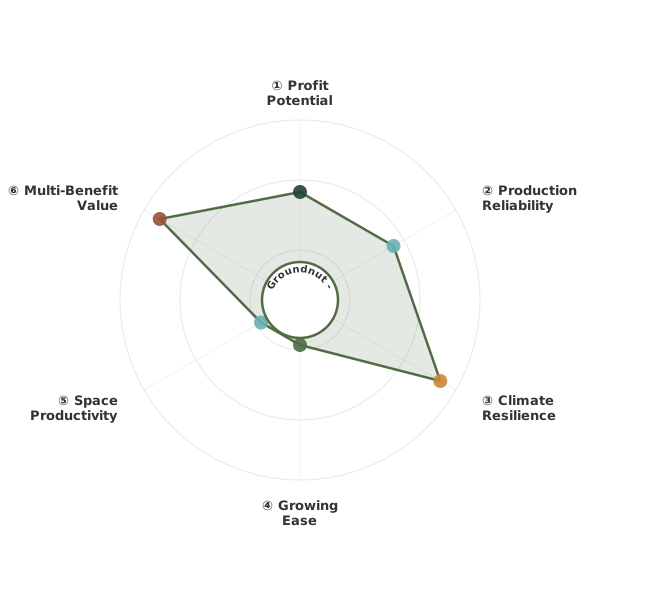
Season Extension Adequate Groundnut (Apios) is a hardy perennial vine whose tubers mature in fall, and its frost tolerance allows for extended harvests into cooler periods with careful moisture management.
Space Efficiency Not Recommended Groundnut (Apios americana) is a vining perennial that benefits from integrated support structures and can be strategically placed to provide ground cover and habitat, contributing to a diverse living mulch.
Storage Longevity Adequate Groundnut (Apios) tubers can be stored for several months in cool, dark conditions, with success enhanced by maintaining optimal soil moisture during the growing season to minimize rot.
Yield Reliability Adequate Groundnut (Apios) offers moderately reliable yields of edible tubers and beans in well-managed, moisture-retentive soils, benefiting from early season mulching to support establishment.
Establishment Ease Not Recommended Groundnut (Apios) establishment is supported by building soil fertility through compost and cover cropping, ensuring adequate moisture and minimizing weed competition with strategic mulching.
Multi Benefit Value Ideally Suited As a nitrogen fixer, groundnut enhances soil fertility and provides dual harvests of tubers and beans, while its vigorous vine offers valuable ground cover and habitat integration.
Climate Adaptability Ideally Suited Native to North America, groundnut is hardy in zones 3-9, tolerating varied moisture levels and temperatures, demonstrating resilience through its integration into diverse agroecosystems.
Maintenance Intensity Adequate Groundnut, a nitrogen-fixing legume, thrives with minimal external inputs, its primary needs being integrated support for its climbing habit and consistent moisture retention through mulching.
Disease Pest Resistance Ideally Suited Groundnut (Apios americana) exhibits strong natural resilience to most common pests and diseases, flourishing within a healthy soil ecosystem and requiring little intervention.

Comparative System: Ratings compare plants within their economic category (e.g., cover crop nitrogen fixation compared to other cover crops, not to all plants). Individual farm conditions and management practices significantly influence actual performance.

8

Learn More

Why farmers use this plant and additional resources

Why Regenerative Farmers Use This Plant

Groundnut (Arachis hypogaea), commonly known as peanut, offers significant economic and ecological advantages for regenerative farming systems, particularly as a specialty cash crop. Its high market demand and relatively short growing season, typically 100-150 days depending on variety and climate, allow for excellent revenue potential per acre. This makes it well-suited for direct-to-consumer sales, CSA shares, and specialty wholesale markets seeking unique, locally-grown produce. The ability to achieve yields of 2,000-5,000 lbs/acre (2,240-5,600 kg/ha) of unshelled nuts, with premium prices for organic or specialty varieties, positions groundnut as a valuable component in diversified farm income streams. For instance, specialty markets and direct-to-consumer sales can command premium prices, often exceeding $1,500-$3,000 per acre depending on yield and quality.

As a legume, groundnut plays a crucial role in building soil health and enhancing system resilience. Its root nodules host symbiotic bacteria (Rhizobium) that convert atmospheric nitrogen into plant-available forms, contributing 50-130 lbs N/acre (56-146 kg/ha) to the soil. This nitrogen fixation not only feeds the groundnut crop but also benefits subsequent crops in the rotation, effectively reducing the need for synthetic nitrogen fertilizers by up to 40-60%. Groundnut's moderate to extensive root system, typically reaching depths of 18-30 inches (45-75 cm) and sometimes 2-4 feet (0.6-1.2 m), helps to break up soil compaction, improve soil structure, enhance water infiltration, and improve aeration. It can also serve as a beneficial component in intercropping systems or as a preceding crop to heavy feeders, preparing the soil for subsequent cash crops.

The ecological benefits of integrating groundnut extend to supporting beneficial insect populations and improving soil organic matter. The flowering period of groundnut attracts a variety of pollinators, including bees, which can contribute to increased yields of other nearby flowering crops. By leaving behind nitrogen-rich crop residue after harvest, groundnut contributes significantly to soil organic matter, which is vital for improving soil structure, water-holding capacity, and nutrient cycling. In systems where crop residue is managed through incorporation or mulching, this contribution to soil carbon sequestration can be substantial, supporting the long-term health and productivity of the land. Its presence in crop rotations can also disrupt pest and disease cycles that affect other crops.

Groundnut has a proven track record of success in diverse agricultural landscapes. In the southeastern United States, it is a staple cash crop, often grown in rotation with cotton, corn, or soybeans, where farmers achieve yields of 3,000-4,000 lbs/acre (3,360-4,480 kg/ha) and it helps replenish soil nitrogen depleted by these crops. In Australia's dryland farming regions and Mallee region, it is cultivated in areas with sufficient summer rainfall or irrigation, often in rotation with cereals like wheat or barley, contributing to diversified income in wheat-sheep systems and benefiting from its ability to thrive in drier conditions with supplemental irrigation. In parts of India and Africa, it is a vital food security crop and a source of income, grown on smallholder farms and providing essential protein and oil, often intercropped with millets, sorghum, or pulses, maximizing land use and providing a diverse food source. In Brazil, it is integrated into crop rotations with soybeans and corn, or used as a cover crop in coffee and citrus plantations, contributing to soil health and providing an additional income stream.

9

How to Integrate This Plant

Practical guidance for regenerative systems

Establishing groundnut requires careful attention to seeding rates, depth, and timing to ensure optimal germination and stand establishment. For direct sowing, seeding rates typically range from 50-100 lbs/acre (56-112 kg/ha) when broadcast, or 30-50 lbs/acre (34-56 kg/ha) when drilled in rows. Some sources suggest 40-70 lbs/acre (45-78 kg/ha) for drilled rows. The planting depth should be shallow, between 1-2 inches (2.5-5 cm), ensuring good seed-to-soil contact for moisture uptake and allowing seedlings to emerge easily. Groundnut is sensitive to frost and cold soil, so planting should occur after the last frost date, typically in April or May in the Northern Hemisphere and October or November in the Southern Hemisphere, when soil temperatures consistently reach 15-18°C (60-65°F). Row spacing can vary from 18-36 inches (45-90 cm) depending on the desired plant density and cultivation equipment, with plants spaced 6-12 inches (15-30 cm) within the row.

Effective management of groundnut in a regenerative system focuses on biological fertility and integrated pest management. While groundnut fixes its own nitrogen, supplemental nutrients can be provided through compost application (1-2 tons/acre or 2.5-5 tonnes/ha) or by incorporating cover crop residue from legumes like vetch or clover planted in the preceding season. Incorporating compost and well-rotted manure prior to planting can significantly reduce or eliminate the need for synthetic fertilizers. For transitional phases, a balanced compost tea or a light application of a balanced organic fertilizer can be used. Supplemental phosphorus and potassium may be beneficial, ideally determined through soil testing and supplied via compost or organic amendments. Adequate soil moisture is critical, especially during flowering and pod development, requiring approximately 1 inch (2.5 cm) of water per week, either from rainfall or irrigation. Growth to maturity typically takes 100-150 days, with plants reaching a height of 1-2 feet (0.3-0.6 m) at maturity.

Pest and disease management should prioritize cultural practices such as crop rotation (a 3-4 year interval is recommended to prevent the build-up of soil-borne diseases specific to legumes), planting resistant varieties, and encouraging beneficial insects through habitat creation. Biological controls for common pests like aphids and spider mites can be employed. For diseases like early or late leaf spot, timely removal of infected foliage and maintaining healthy soil biology are key. Avoidance of soil disturbance during pod development is also important.

For category-specific integration as a specialty cash crop, groundnut's production cycle and soil stewardship are paramount. Groundnut typically requires 100-150 days from seed to harvest. To ensure a continuous harvest window for direct markets, succession planting can be employed by sowing seeds every 2-3 weeks from early spring until mid-summer, providing harvest from late summer through autumn. While direct sowing is common, starting seeds indoors in trays 2-3 weeks prior to the last frost can provide a head start in cooler climates. After the final harvest, it is crucial to manage post-harvest residue by incorporating it into the soil or following with a winter cover crop mix, such as cereal rye and hairy vetch, within 2-3 weeks to protect soil structure and add organic matter. Groundnut is an excellent crop to follow nitrogen-depleting crops like corn or small grains, and it should be rotated with non-leguminous crops to break pest and disease cycles. A 3-4 year rotation interval with non-leguminous crops is recommended to prevent the build-up of soil-borne diseases specific to legumes.

View Full Document (Printable single-page version)