While not a primary nitrogen fixer or direct forage crop in the traditional sense, *Bassia scoparia* (kochia) can play a role in regenerative systems, particularly in semi-arid regions. Its rapid germination and tolerance to dry, saline conditions make it a candidate for cover cropping, especially for suppressing weeds in no-till systems. Studies show it can be integrated into wheatgrass stands to increase forage mass. Effective management is key, as kochia's prolific seed production requires preventing seed set for one to three years to control infestations. Rotating fields into hay crops can also manage its presence. While its short seed longevity is an advantage for control, its ability to germinate in challenging conditions means vigilance is necessary. Farmer experience suggests that interseeding into established stands, after minimal tillage, can increase its density and forage production. Its dense stands have also been observed to support bird populations, indicating potential benefits for wildlife habitat.

Regenerative Quick Profile

All recommendations assume integrated, regenerative practices—not conventional inputs.

Climate & Soil Fit

Climate: Tropical Rainforest, Tropical Monsoon, Tropical Savanna, Hot Semi-Arid (Steppe), Cold Semi-Arid (Steppe), Cold Desert, Humid Subtropical, Oceanic (Maritime Temperate), Hot-Summer Mediterranean, Warm-Summer Mediterranean, Monsoon-Influenced Humid Subtropical, Subtropical Highland, Hot-Summer Continental, Warm-Summer Continental, Subarctic, Monsoon-Influenced Hot-Summer Continental

Zones: USDA 4-9, Australian Zones 3-8

Optimal Soil: Sandy Soil

System Role & Functions

Primary: Cover Crop System

Secondary: Forage Integration, Soil Remediation

Key Benefits: Easy establishment

Management Level

Experience: Beginner-Friendly

Maintenance: Moderate maintenance - This fast-growing annual tolerates challenging conditions and reseeds readily, potentially requiring management to maintain balance within the ecosystem rather than external inputs.

Value Streams

  • Forage production
  • Soil building and erosion control
  • Livestock forage value
1

Climate Suitability Assessment

Will this plant thrive in your climate?

IDEALLY SUITED

Köppen Zone: Aw (Tropical Savanna), Cfa (Humid Subtropical), Cfb (Oceanic (Maritime Temperate)), Cwa (Monsoon-Influenced Humid Subtropical)
USDA Zone: 6a, 7a, 8a, 9a, 10a
Australian Zone: temperate, subtropical
EU Climate Region: atlantic

Burning Bush thrives in climates with long growing seasons, mild winters, and adequate moisture, conditions met across numerous zones including Köppen Cfa, Cfb, and Dfb; USDA Zones 5b through 12; Australian subtropical and temperate regions; and EU Atlantic and Mediterranean climates. These environments offer 180-240 frost-free days and average annual precipitation of 30-60 inches (75-150 cm), supporting robust establishment and perennial growth. Temperatures typically range from 60-85°F (15-29°C) during the active growing season, promoting vigorous biomass accumulation for cover cropping and soil remediation. Its deep root system effectively improves soil structure and nutrient cycling. For forage integration, it provides palatable biomass for livestock. Minimal supplemental irrigation is usually required, and pest/disease pressure is generally low. These conditions allow Burning Bush to reliably fulfill its functions with high success rates, contributing significantly to regenerative agriculture practices through biomass production, soil health improvement, and potential livestock feed.

ADEQUATE

Köppen Zone: Af (Tropical Rainforest), Am (Tropical Monsoon), BSh (Hot Semi-Arid (Steppe)), Csa (Hot-Summer Mediterranean), Csb (Warm-Summer Mediterranean), Cwb (Subtropical Highland), Dfa (Hot-Summer Continental), Dfb (Warm-Summer Continental)
USDA Zone: 5a, 5b, 11a, 12a
Australian Zone: grassland
EU Climate Region: continental, mediterranean

Burning Bush performs adequately in climates with moderate growing seasons and temperatures, but may require some management interventions. This includes Köppen Dfa and Dfb zones, USDA Zones 5a-6b, Australian grassland regions, and EU continental and Mediterranean climates. These areas typically have 120-180 frost-free days and rainfall ranging from 20-40 inches (50-100 cm), with potential for dry spells or colder winters. In these zones, Burning Bush may exhibit reduced perenniality, requiring replanting or reseeding in colder areas, or supplemental irrigation during summer droughts in drier regions. Biomass production for cover cropping and soil remediation might be less consistent, and forage quality could be affected by stress. While not as consistently productive as in ideal zones, it can still provide valuable benefits for regenerative agriculture, particularly when managed proactively to mitigate environmental limitations.

NOT RECOMMENDED

Köppen Zone: ET (Tundra), BSk (Cold Semi-Arid (Steppe)), BWh (Hot Desert), BWk (Cold Desert), Dfc (Subarctic), Dwa (Monsoon-Influenced Hot-Summer Continental)
USDA Zone: 2a, 3a, 3b, 4a
Australian Zone: arid

Burning Bush is not recommended for climates with extreme temperature fluctuations, very short growing seasons, or severe drought conditions. This includes Köppen BWh, BSh, Dwa, and Dwb zones; USDA Zones 3a through 4b; Australian arid regions; and parts of EU continental zones bordering boreal climates. These regions experience prolonged periods of extreme heat or cold, insufficient rainfall (often less than 20 inches/50 cm annually), and/or very short growing seasons (less than 120 frost-free days). In hot, arid zones, its high water demand and sensitivity to heat stress make establishment and survival highly improbable without extensive, uneconomical irrigation. In cold zones, extreme winter temperatures lead to consistent winter kill, negating its perennial benefits and making its use as a cover crop or forage unreliable. Its primary functions of cover cropping, soil remediation, and forage integration are unlikely to be achieved effectively or economically in these challenging environments, making alternative species a far more practical choice.

Better alternatives for these "not recommended" zones: Hairy Vetch (Vicia villosa) (cold-hardy annual legume for nitrogen fixation and biomass in cold zones), Winter Rye (Secale cereale) (highly cold-hardy, excellent for biomass and soil protection in cold zones), Cowpea (Vigna unguiculata) (heat-tolerant legume for nitrogen fixation and forage in hot, dry zones), Saltbush (Atriplex spp.) (highly drought-tolerant native shrubs for arid regions, providing forage and soil stabilization)

Note: Zones listed above represent climates where this plant can produce reliably with reasonable management. Climate zones not mentioned would require intensive climate modification (greenhouses, extensive infrastructure) and are not economically viable for regenerative agriculture purposes.

2

Soil Suitability Assessment

Which soil types work best for this plant?

IDEALLY SUITED

Sandy Soil

This plant thrives in these soil types without requiring amendments or remediation. Natural soil conditions support optimal growth and productivity.

ADEQUATE

Alkaline Soil, Clay Soil, Desert Soil, Loam Soil, Rich Soil, Rocky Soil

This plant performs acceptably in these soil types with moderate, manageable remediation such as pH adjustment, compost addition, or drainage improvement. The required amendments are practical and cost-effective for regenerative agriculture.

NOT RECOMMENDED

Acidic Soil, Saline Soil, Wet Soil

Growing this plant in these soil types would require impractical remediation such as complete soil replacement, extensive amendments, or cost-prohibitive infrastructure. These conditions are not economically viable for regenerative agriculture.

Note: Soil suitability assessments focus on remediation requirements. "Ideally Suited" means the plant generally thrives without the need for substantial amendments, "Adequate" means manageable remediation (lime, compost, mulch), and "Not Recommended" means impractical soil changes would be required. Climate factors like rainfall and temperature also influence success.

3

Seasonal Considerations

Planting timing, growth duration, and harvest windows

Bassia scoparia, or burning bush, thrives in warm conditions and can be a valuable summer forage. For establishment, aim for planting in mid-spring after the last expected frost, when soil temperatures consistently reach around 60°F (15°C). Expect establishment within 4-6 weeks, depending on moisture and fertility.

First grazing readiness typically occurs 8-10 weeks after seeding, when plants reach about 12-18 inches tall. Implement rotational grazing, allowing 3-4 weeks of rest between grazing periods to promote vigorous regrowth. You can expect 2-3 grazing cycles within a season, with peak productivity occurring through the hottest summer months.

While Bassia scoparia is a warm-season annual, it exhibits surprising frost tolerance. This allows for continued grazing well into late fall, even after light frosts, before plants succumb to hard freezes. Regrowth patterns are strong under rotational management, making it an excellent choice for filling summer feed gaps. If harvesting for hay, aim for maturity before significant stem elongation for optimal quality.

4

System Role & Multi-Benefit Value

Functional roles, integration strategies, and stacked benefits

Functional Role

Total System Value

Burning bush offers significant system value by providing rapid ground cover and weed suppression, particularly in its first year. While direct harvest value might be limited to forage or hay, its true strength lies in ecosystem services and system enhancement. Its ability to germinate quickly across a wide temperature range and tolerate saline conditions makes it valuable for stabilizing disturbed or marginal lands, contributing to erosion control and soil health. Dense stands can support wildlife, as observed with sparrows. By outcompeting weeds and establishing rapidly, it reduces the need for external inputs and enhances soil organic matter, indirectly supporting carbon sequestration. This resilience in establishment and its role in soil stabilization contribute to farm risk diversification, especially in challenging environments.

Integration Characteristics

Multi-Benefit Value: Not Recommended - While primarily considered a weed, its rapid biomass production can contribute to ground cover, though its direct soil improvement or wildlife habitat contributions are limited.

5

Management & Care Requirements

Integration guidance, maintenance needs, and care practices

How to Integrate This Plant

Burning bush (Bassia scoparia), also known as kochia, can be integrated into regenerative systems primarily as a cover crop for its rapid germination and tolerance to challenging conditions like salinity and drought. Its primary system role is soil cover, preventing erosion and suppressing weeds, especially in its first year. Compatible practices include its use within no-till winter wheat-fallow systems, as demonstrated in Kansas, and potentially in wheatgrass stands for forage production. It can also be considered for hay production to manage infestations. Timeline to contribution is rapid; it provides ground cover and weed suppression in Year 1. Its value extends beyond direct harvest by improving soil health through rapid establishment and biomass production, contributing to carbon sequestration and potentially supporting wildlife with dense stands.

Integration Practices & Management

Regenerative farmers may integrate *Bassia scoparia* (kochia) primarily as a cover crop or forage, leveraging its rapid germination and tolerance to challenging conditions like salinity and wide pH ranges. Establishment can occur through broadcasting into existing stands, as seen with interseeding into wheatgrass. Fall sowing into no-till systems is also employed for weed suppression, including kochia itself. While specific seeding rates are not detailed, its ability to germinate quickly from shallow depths (top 0.4 inch) suggests it can establish readily. *Bassia scoparia*'s management for regenerative systems focuses on preventing prolific seed production, as infestations can be controlled by preventing seed set for one to three years. Rotating fields into hay crops is noted as highly effective. While direct integration with grazing systems is not extensively detailed in the provided sources, its use as a forage crop implies grazing potential. Termination strategies are varied; competitive winter cereals like triticale-legume mixes can establish and compete with kochia. Natural winterkill is also a factor, and prevention of seed production is key to long-term control. Competition management and understanding its rapid germination and shallow root system are important considerations for integration, particularly when aiming to suppress other weeds or integrate with cash crops. Its ability to tolerate saline conditions makes it a candidate for challenging soil types.

Management Profile

Maintenance Intensity: Adequate - This fast-growing annual tolerates challenging conditions and reseeds readily, potentially requiring management to maintain balance within the ecosystem rather than external inputs.

Sources behind this view

Community
  • Kochia (Bassia scoparia) is a drought-tolerant annual that can be used as a nurse crop to shade and protect young fruit trees, aiding their survival in arid conditions. It can also be cut for mulch an

  • Kochia (annual and perennial) offers biomass production, biofuel potential, and weed competition (especially cheatgrass). Forage kochia is a valuable perennial for rangelands. Caution is needed for li

Research
6

Economics & Value Streams

Direct harvest, system benefits, ecosystem services, and risk diversification

Comprehensive economic analysis including direct harvest value, system enhancement contributions, ecosystem services, value timeline, and risk diversification strategies.

Economics in Regenerative Systems

Metric Value
Seed Cost $10-25/acre $24-61/ha
Establishment Cost $100-200/acre $247-494/ha
Forage Yield 2-4 tons/acre/year 2-4 tons/ha/year
Annual Management Cost $40-80/acre $98-197/ha
Value/Sale Price $50-100/ton $50-100/tonne
Net Annual Return* $-180 to $260/acre/year

Values represent typical ranges for regenerative agriculture contexts. Actual results vary by region, management, and market conditions. Costs exclude land and labor.

* Net Annual Return = (Yield × Market Price) − (Amortized Establishment Cost + Annual Maintenance). This return is realized only at/after first harvest; early years have costs but no revenue. Range shows worst case to best case scenarios.

System Enhancement Value

Beyond cost recovery: soil building, nitrogen, biomass, and weed suppression

Soil Building & Weed Suppression

Burning bush offers significant value through its role in weed suppression and soil remediation. As a cover crop, it can effectively outcompete and reduce populations of problematic weeds, notably kochia. Knowledge base excerpts and emphasize its efficacy in suppressing kochia density and biomass, particularly when fall-established in no-till systems. This reduces reliance on herbicides and the need for disruptive tillage, thereby preserving soil structure and organic matter. Furthermore, the study in Utah demonstrated that interseeding forage kochia into established grass stands significantly increased forage mass and crude protein concentrations, improving stocking rates and net returns. This indicates its potential for forage integration, providing valuable livestock feed while simultaneously enhancing the productivity of existing pasture or rangeland. Its ability to thrive in less-than-ideal soil conditions, as suggested by its association with increased salinity tolerance, also points to its potential in soil remediation efforts.

Erosion Control

Variable, dependent on density and management practices; can contribute to reduced wind erosion in its establishment phase.

Burning bush (Bassia scoparia), while not a primary windbreak species, can contribute to erosion control and soil health when managed as a cover crop. Its dense growth, particularly when established in a thick stand, can help to intercept wind and reduce soil erosion. This is especially relevant in no-till systems where crop residue is left on the surface. The knowledge base highlights its ability to suppress weeds and improve soil conditions, indirectly supporting the overall health of the farming system. While not a woody perennial windbreak, its rapid establishment and biomass production can provide temporary surface protection against wind erosion, particularly in the initial years of a cover cropping program. Its role in suppressing problematic weeds like kochia also contributes to a healthier soil structure and reduced erosion potential by minimizing the need for disruptive tillage.

Ecosystem Service Contributions

Environmental contributions: carbon, pollinators, wildlife, and water

  • Carbon Sequestration: Burning bush, as an annual or short-lived perennial cover crop, contributes to carbon sequestration primarily through the incorporation of biomass into the soil. Its rapid growth and dense canopy can capture atmospheric carbon dioxide during its growing season, which is then stored in the soil organic matter when the plant decomposes. The extent of sequestration is dependent on the amount of biomass produced and its incorporation into stable soil organic matter pools over time.
  • Pollinator Support: Medium; while not a primary nectar source, its flowering period may offer some support to generalist pollinators, especially in monoculture systems where other floral resources are scarce. Specific data on its pollinator value is limited in the provided excerpts.
  • Wildlife Habitat: Burning bush can provide some habitat and food for wildlife, particularly as a forage source for livestock. Its dense growth may offer limited cover for small ground-dwelling animals. The seeds it produces could potentially be a food source for some birds, though specific wildlife interactions are not detailed in the knowledge base.
  • Water Quality: Not applicable

Value Timeline: Soil Building Process

When you'll see results: immediate soil benefits, compounding over seasons

Years 1-2

Initial weed suppression (especially kochia), soil erosion control from cover crop biomass, and potential for early forage production if managed for grazing.

Years 3-5

Established weed suppression benefits, improved soil structure and organic matter accumulation, and enhanced forage quality and quantity for livestock integration. Potential for increased stocking rates and improved economic returns from forage integration.

Years 10-20

Long-term benefits of improved soil health, continued weed pressure reduction, and sustained forage productivity. The plant's role in soil remediation may become more pronounced.

20+ Years

Sustained ecosystem services related to soil health and resilience. Continued contribution to a diversified farming system with reduced reliance on external inputs.

Farm Risk Reduction

How this reduces farm risk: lower input costs and better soil resilience

  • Multiple Revenue Streams: Forage sales/grazing leases, reduced input costs (herbicides, tillage), potential for improved crop yields in subsequent rotations due to improved soil health, and enhanced land productivity through forage integration.
  • Temporal Income Spread: Provides immediate benefits in weed suppression and soil protection within the first year of establishment. Forage production and livestock integration offer ongoing revenue streams, while soil health improvements are a long-term, compounding benefit.
  • Market Risk Hedge: Reduces reliance on single commodity markets by providing an alternative income stream through forage. Decreases vulnerability to herbicide price volatility and availability. Enhances resilience to drought and other environmental stresses through improved soil health and water infiltration.
7

Regenerative Suitability Details

Comprehensive trait ratings for system integration assessment

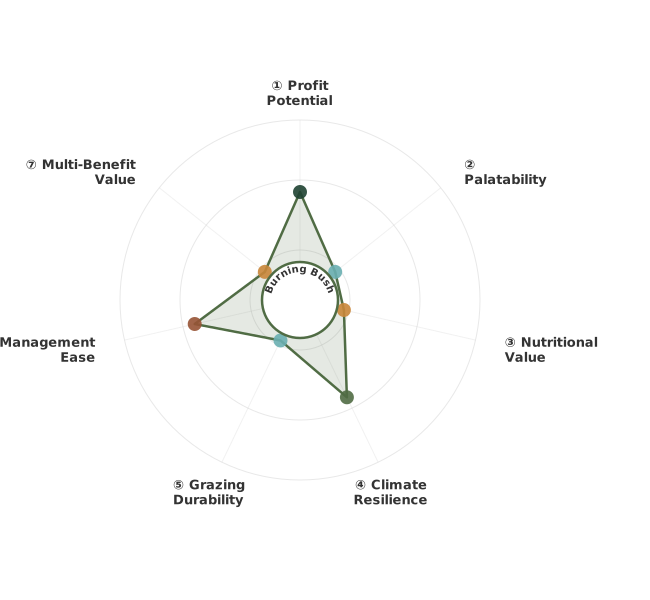
Comparative ratings for this plant across key regenerative agriculture traits.

Trait Suitability Explanation
Palatability Not Recommended Young Bassia scoparia offers temporary forage, but its palatability and nutritional value diminish significantly as it matures, best utilized before senescence.
Protein Content Not Recommended This drought-tolerant annual provides variable protein, with levels dropping considerably at maturity, making it suitable for livestock maintenance when integrated with other forage sources.
Drought Tolerance Adequate While it can endure dry spells due to its annual nature, optimal forage production relies on adequate moisture, with recovery being moderate after dry periods.
Grazing Tolerance Not Recommended Bassia scoparia exhibits poor grazing tolerance as an annual weed; its exposed growth points are vulnerable to overgrazing, making it best managed for hay production.
Establishment Ease Ideally Suited This species germinates and establishes rapidly, even in resilient soils, quickly contributing biomass and suppressing other vegetation with minimal external support.
Multi Benefit Value Not Recommended While primarily considered a weed, its rapid biomass production can contribute to ground cover, though its direct soil improvement or wildlife habitat contributions are limited.
Climate Adaptability Adequate A hardy annual (zones 3-9), it thrives in warm, dry conditions but requires careful consideration to avoid invasiveness and ensure alignment with the local climate.
Maintenance Intensity Adequate This fast-growing annual tolerates challenging conditions and reseeds readily, potentially requiring management to maintain balance within the ecosystem rather than external inputs.
Seasonal Availability Not Recommended As a warm-season annual, Bassia scoparia offers a short-duration forage window, providing limited nutritional value for extended livestock grazing periods.

Comparative System: Ratings compare plants within their economic category (e.g., cover crop nitrogen fixation compared to other cover crops, not to all plants). Individual farm conditions and management practices significantly influence actual performance.

8

Learn More

Why farmers use this plant and additional resources

Why Regenerative Farmers Use This Plant

Bassia scoparia, commonly known as Kochia or Summer Cypress, offers significant regenerative value as a highly adaptable forage and cover crop, particularly in arid and semi-arid grazing systems and drier climates. It is a fast-growing annual that can produce substantial biomass, often reaching 3-6 feet (0.9-1.8 meters) in height. Under optimal conditions and with rotational grazing management, it can support carrying capacities of 1.5-4 Animal Units per acre (3.7-10 AU/ha) during its peak growth period. Its forage quality is notable, with crude protein levels typically ranging from 14-18% at the vegetative stage, declining to 8-12% as it matures. This makes it a valuable component for livestock diets, contributing essential nutrients and supporting animal health. Under favorable conditions, it can yield 2-5 tons of dry matter per acre (4.5-11.2 metric tons/ha).

This species excels at improving soil health and structure. Its extensive root system, capable of reaching depths of 3-6 feet (0.9-1.8 meters), helps to break up soil compaction and enhance water infiltration, crucial in regions prone to drought and erosion. Bassia scoparia is also known for its nutrient scavenging capabilities, effectively capturing residual nutrients from deeper soil profiles and preventing their leaching, making them available to subsequent crops. This makes it an excellent cover crop choice, especially following cash crops that may have depleted soil fertility or left significant residue. Its rapid growth also provides excellent ground cover, suppressing weeds and reducing soil erosion from wind and water.

The ecological benefits of integrating Bassia scoparia extend to its role in supporting biodiversity and ecosystem services. While not a primary pollinator attractant, its dense growth provides habitat for beneficial insects and ground-nesting birds. The significant root biomass contributes directly to soil aggregation and water infiltration, improving the soil's capacity to absorb and retain moisture, a critical factor in drought-prone areas. By scavenging nutrients and building soil organic matter, it enhances the soil's natural fertility and reduces the need for external inputs, thereby minimizing the farm's environmental footprint. In systems where drought is a recurring challenge, its drought tolerance can be a significant advantage, ensuring a more consistent forage supply for livestock throughout the warmer months.

Farmers in regions with hot, dry summers have found Bassia scoparia to be a valuable addition to their grazing rotations and crop systems. In parts of the Australian wheat-sheep belt, it is used as a summer forage crop to provide grazing when native pastures are dormant, supporting livestock through the dry period. In the semi-arid plains of the United States, ranchers utilize it to boost carrying capacity on rangelands, often incorporating it into pasture renovation plans to improve forage diversity and resilience. In the dryland farming regions of the North American Great Plains, it is utilized as a summer forage to supplement pastures during periods of drought. Australian farmers in semi-arid zones have incorporated it into cropping rotations to improve soil structure and provide emergency fodder. In the steppe regions of Russia and Kazakhstan, its resilience to drought and heat makes it a key component of pasture improvement and livestock feed strategies. In parts of Argentina, it is used in silvopasture systems, planted between rows of trees to provide understory forage for livestock while enhancing soil health. Its adaptability allows it to be integrated into a variety of farming systems, from extensive rangelands to more intensive mixed farming operations.

9

How to Integrate This Plant

Practical guidance for regenerative systems

Establishing Bassia scoparia is straightforward, making it accessible for a wide range of producers. It can be broadcast seeded at rates of 10-25 lbs/acre (11-28 kg/ha) or drilled at 5-10 lbs/acre (5.6-11.2 kg/ha) for dense cover, or 3-5 lbs/acre (3.4-5.6 kg/ha) in rows spaced 6-24 inches (15-60 cm) apart. For best results, seeding should occur when soil temperatures are consistently above 50°F (10°C) and there is adequate soil moisture. In the Northern Hemisphere, this typically means planting from late April through July (or September to November in the Southern Hemisphere), coinciding with warmer soil temperatures and sufficient moisture for establishment. The optimal planting depth is shallow, between 0.25-0.5 inches (0.6-1.3 cm), as the seeds require light for germination and to ensure good seed-to-soil contact. It establishes rapidly, often showing significant growth within 30-45 days, and reaches maturity in 60-90 days.

Management of Bassia scoparia focuses on maximizing its forage potential and regenerative benefits. It requires relatively low water input once established, making it well-suited for arid and semi-arid environments, though 1-2 inches (2.5-5 cm) of water per week during establishment will promote vigorous growth. Fertility needs are generally low; it is an efficient nutrient scavenger, and its residue contributes organic matter back to the soil. If supplemental fertility is desired, incorporating compost or well-composted manure prior to planting is recommended, significantly reducing the need for synthetic inputs. Pest and disease pressure is typically minimal, with biological controls and healthy soil being the primary management strategies. Termination can be achieved through grazing, mowing, or natural winterkill in colder climates, with herbicide use considered only as a last resort during transitional phases.

For livestock integration, Bassia scoparia is best managed through rotational grazing. It is highly palatable to cattle and sheep when grazed at a height of 8-12 inches (20-30 cm). Animals should be introduced when the plants reach this height and moved off the stand when the forage is grazed down to 3-4 inches (8-10 cm) to allow for rapid regrowth. Rest periods of 21-45 days between grazing events are crucial for optimal recovery and sustained production during the active growing season. Fall growth can be stockpiled, providing valuable grazing for 30-90 days into the late season, with crude protein levels often remaining above 8% through early winter, though nutritional quality declines significantly as it matures and dries. Goats may browse it selectively, while cattle and sheep tend to graze it more readily.

View Full Document (Printable single-page version)