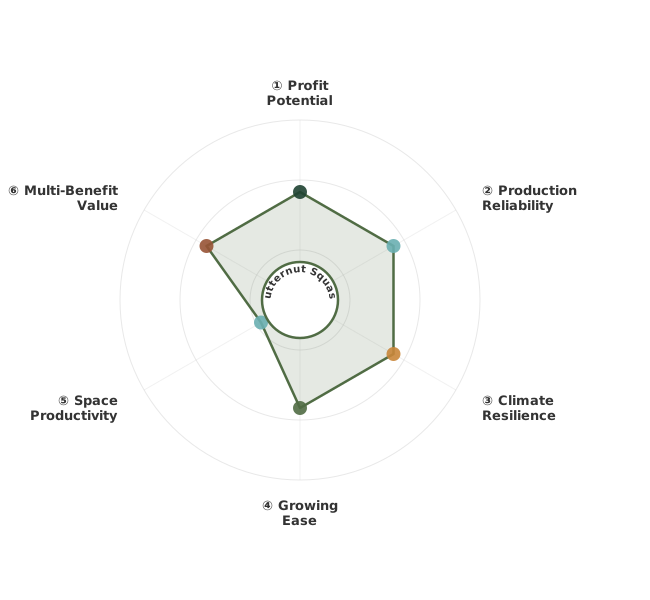
Cucurbita moschata, commonly known as butternut squash, is integrated into regenerative agriculture primarily as a food crop, with research exploring its potential benefits within specific systems. Studies indicate its use in polyculture, with trials assessing variety adaptability in diverse organic production environments. While not explicitly a nitrogen fixer or primary cover crop, its cultivation can be part of a broader strategy. For instance, research has investigated the use of hairy vetch as a cover crop to manage powdery mildew in winter squash production, suggesting indirect integration with other regenerative components. Furthermore, butternut squash has been utilized in studies evaluating water management techniques in arid irrigated agriculture, demonstrating its role in systems aiming to reduce unproductive water loss and enhance soil moisture. Farmer experience insights from the knowledge base focus on variety selection for disease resistance, particularly to Phytophthora crown rot, and considerations for seed saving due to interspecies cross-pollination risks. Its cultivation is noted for unique flavors and storage potential, contributing to diversified farm economies.

Regenerative Quick Profile

All recommendations assume integrated, regenerative practices—not conventional inputs.

Climate & Soil Fit

Climate: Tropical Rainforest, Tropical Monsoon, Tropical Savanna, Hot Semi-Arid (Steppe), Cold Semi-Arid (Steppe), Hot Desert, Cold Desert, Humid Subtropical, Oceanic (Maritime Temperate), Hot-Summer Mediterranean, Warm-Summer Mediterranean, Monsoon-Influenced Humid Subtropical, Subtropical Highland, Hot-Summer Continental, Warm-Summer Continental, Subarctic, Monsoon-Influenced Hot-Summer Continental, Tundra

Zones: USDA 5-11, Australian Zones 3-11

Optimal Soil: Loam Soil

System Role & Functions

Primary: Cash Crop With Services

Secondary: Cover Crop System, Forage Integration

Key Benefits: Storage Longevity, Disease Pest Resistance

Management Level

Experience: Beginner-Friendly

Maintenance: Moderate maintenance - Healthy soil and optimal moisture retention, supported by compost and mulch, are key to robust growth, while integrated pest management addresses potential challenges.

Value Streams

  • Vegetable/specialty crop harvest
  • Livestock forage value
1

Climate Suitability Assessment

Will this plant thrive in your climate?

IDEALLY SUITED

Köppen Zone: Cfa (Humid Subtropical), Dfa (Hot-Summer Continental)
USDA Zone: 6a, 7a, 8a
Australian Zone: temperate, subtropical
EU Climate Region: atlantic

Butternut squash thrives in climates offering long, warm growing seasons with ample rainfall, typically 180-240 frost-free days and 40-60 inches (100-150 cm) of annual precipitation. These conditions are met in Köppen zones Cfa, and regional zones USDA 5b-12, Australian subtropical and temperate, and EU Atlantic. Optimal temperatures range from 70-85°F (21-29°C) during the growing season, promoting vigorous vegetative growth and excellent fruit development. Establishment is highly reliable with minimal need for supplemental irrigation, though it can boost yields during dry spells. Frost risk is minimal, allowing for a long harvest window and maximizing yield and quality. These zones are highly suitable for cash crop production, cover cropping systems, and forage integration due to consistent performance and high productivity. Minimal management is required beyond standard agricultural practices, making it economically viable and a reliable choice for regenerative agriculture.

ADEQUATE

Köppen Zone: Aw (Tropical Savanna), BSh (Hot Semi-Arid (Steppe)), Cfb (Oceanic (Maritime Temperate)), Csa (Hot-Summer Mediterranean), Csb (Warm-Summer Mediterranean), Cwa (Monsoon-Influenced Humid Subtropical), Dfb (Warm-Summer Continental)
USDA Zone: 5a, 5b, 9a, 10a
Australian Zone: grassland
EU Climate Region: continental, mediterranean

Butternut squash can be adequately grown in climates with moderate growing seasons and temperatures, typically 120-180 frost-free days and 30-50 inches (75-125 cm) of annual precipitation, found in Köppen zones Cfb, Csa, Csb, Dfa, Dfb, and regional zones USDA 4b-5a, Australian grassland, and EU continental and Mediterranean. However, these zones present challenges such as shorter seasons, cooler summers, or dry periods. In Mediterranean climates, dry summers necessitate consistent irrigation to prevent heat stress and ensure fruit set, increasing water management needs. In cooler continental or oceanic climates, careful variety selection and planting dates are crucial to avoid frost damage and ensure maturation before early fall frosts. Yields may be reduced compared to ideal zones, and supplemental watering is often required. While not as consistently productive as in ideal zones, butternut squash can still be a viable option with careful planning and management, contributing to crop diversity and soil health.

NOT RECOMMENDED

Köppen Zone: Af (Tropical Rainforest), Am (Tropical Monsoon), ET (Tundra), BSk (Cold Semi-Arid (Steppe)), BWh (Hot Desert), BWk (Cold Desert), Cwb (Subtropical Highland), Dfc (Subarctic), Dwa (Monsoon-Influenced Hot-Summer Continental)
USDA Zone: 2a, 3a, 3b, 4a, 11a, 12a
Australian Zone: arid

Butternut squash is not recommended in climates with extreme heat and severe drought (Köppen BWh, BSh, Australian arid) or very short, cold growing seasons (USDA 3a-4a). In hot, arid regions, temperatures often exceed 100°F (38°C), inhibiting pollination and fruit set, while extreme water scarcity leads to plant stress and low yields, requiring extensive and uneconomical irrigation. In cold regions, the short growing season (90-130 days) and risk of frost prevent reliable maturation, leading to low yields and poor quality. Establishment is difficult due to rapid soil drying or insufficient heat accumulation. For these zones, alternative crops better adapted to the specific climatic challenges are recommended. For hot, dry areas, drought-tolerant legumes like cowpeas or grains like sorghum are suitable. For cold regions, shorter-maturing squash varieties, bush beans, or radishes are more appropriate choices, ensuring a higher probability of successful harvest and better economic returns.

Better alternatives for these "not recommended" zones: Cowpea (Drought and heat tolerant legume, can be grown as a cover crop or for grain.), Sorghum (Drought tolerant grain crop that thrives in hot, dry conditions.), Hardy Squash Varieties (e.g., Acorn, some Pumpkins) (Shorter maturity times and better cold tolerance.), Bush Beans (Shorter maturity and can tolerate cooler conditions.)

Note: Zones listed above represent climates where this plant can produce reliably with reasonable management. Climate zones not mentioned would require intensive climate modification (greenhouses, extensive infrastructure) and are not economically viable for regenerative agriculture purposes.

2

Soil Suitability Assessment

Which soil types work best for this plant?

IDEALLY SUITED

Loam Soil

This plant thrives in these soil types without requiring amendments or remediation. Natural soil conditions support optimal growth and productivity.

ADEQUATE

Clay Soil, Rich Soil, Sandy Soil

This plant performs acceptably in these soil types with moderate, manageable remediation such as pH adjustment, compost addition, or drainage improvement. The required amendments are practical and cost-effective for regenerative agriculture.

NOT RECOMMENDED

Acidic Soil, Alkaline Soil, Desert Soil, Rocky Soil, Saline Soil, Wet Soil

Growing this plant in these soil types would require impractical remediation such as complete soil replacement, extensive amendments, or cost-prohibitive infrastructure. These conditions are not economically viable for regenerative agriculture.

Note: Soil suitability assessments focus on remediation requirements. "Ideally Suited" means the plant generally thrives without the need for substantial amendments, "Adequate" means manageable remediation (lime, compost, mulch), and "Not Recommended" means impractical soil changes would be required. Climate factors like rainfall and temperature also influence success.

3

Seasonal Considerations

Planting timing, growth duration, and harvest windows

For butternut squash, aim to start seeds indoors about 3-4 weeks before your last expected frost date, ensuring they are well-established before transplanting outdoors. Direct seeding is best initiated once soil temperatures consistently reach at least 60°F (15°C), typically after all danger of frost has passed. This warm-season crop thrives in the heat of summer, with most varieties reaching maturity in 90-120 days.

The harvest window extends through the fall and into early winter, provided fruits are picked before a hard frost. Butternut squash stores exceptionally well, making a late summer planting possible for a fall harvest in some warmer climates. In cooler regions, focus on a single main crop planted as soon as the soil is warm enough. While not frost-tolerant, mature fruits can withstand light frosts, but it's wise to harvest them before significant cold sets in to ensure optimal storage quality. Consider season extension techniques like row covers if you're pushing the planting dates earlier or later in the season.

4

System Role & Multi-Benefit Value

Functional roles, integration strategies, and stacked benefits

Functional Role

Total System Value

Butternut squash offers significant multi-benefit stacking in regenerative agriculture systems. Its direct harvest value as a cash crop is a primary driver for its inclusion, providing immediate economic return. Beyond harvest, it contributes to system enhancement by acting as a ground cover, suppressing weeds, and improving soil structure with its root system. While not a nitrogen fixer, its rapid growth and biomass production contribute to organic matter accumulation. Its flowers provide a nectar and pollen source, supporting local pollinator populations, which in turn benefit other crops in the system. Furthermore, by diversifying the farm's income streams through a marketable product and enhancing on-farm ecosystem services like soil health and pollinator support, butternut squash contributes to overall farm resilience and risk diversification. Its inclusion in a multi-species planting, such as a food forest or alley cropping system, amplifies these benefits by creating a more robust and interconnected agroecosystem.

Integration Characteristics

Multi-Benefit Value: Adequate - Provides nutritious food and attracts beneficial pollinators, while offering significant ground cover for erosion control and enhancing soil biology.

5

Management & Care Requirements

Integration guidance, maintenance needs, and care practices

How to Integrate This Plant

Butternut squash, a non-tree cash crop with services, can be integrated into regenerative systems primarily through alley cropping and food forests, leveraging its role as a productive ground cover. Its primary function is as a cash crop, but it also offers ecosystem services. In alley cropping, it can be grown between rows of trees or shrubs, utilizing the inter-row space for annual production. In food forests, it can occupy the herbaceous layer, contributing to ground cover and nutrient cycling. While not directly providing nitrogen fixation or windbreaks, its dense foliage can suppress weeds and offer some soil protection during its growing season. Its contribution starts in Year 1 with harvest, providing immediate economic return and ground cover. Over time, its role in crop rotation and soil health maintenance within these systems becomes more significant. The multi-benefit stacking comes from its direct market value, its ability to suppress weeds and improve soil structure through its root system, and its support for pollinators during flowering.

Integration Practices & Management

Cucurbita moschata, commonly known as butternut squash, is integrated into regenerative agriculture systems primarily as a cash crop within diversified rotations. While the provided sources do not detail specific establishment methods like seeding rates, timing, or tillage practices, they highlight its role in organic production environments. Management considerations include its susceptibility to pests and diseases, such as powdery mildew and Phytophthora capsici, necessitating careful variety selection for resistance. Fertility needs are implied by its cultivation in organic systems. The knowledge base does not provide information on integrating C. moschata with grazing animals, termination strategies, or its direct use as a cover crop. However, its inclusion in variety trials across diverse regions suggests adaptability. Its distinct species classification from Cucurbita pepo and Cucurbita maxima is important for seed saving, indicating that different species can be grown in proximity with minimal cross-pollination risk. This suggests C. moschata can be a component in crop rotations, potentially following or preceding other cash crops or cover crops, though specific rotation sequences are not detailed.

Management Profile

Maintenance Intensity: Adequate - Healthy soil and optimal moisture retention, supported by compost and mulch, are key to robust growth, while integrated pest management addresses potential challenges.

6

Economics & Value Streams

Direct harvest, system benefits, ecosystem services, and risk diversification

Comprehensive economic analysis including direct harvest value, system enhancement contributions, ecosystem services, value timeline, and risk diversification strategies.

Vegetable & Specialty Economics

Metric Value
Seed/Transplant Cost 75-150 $/acre 185-370 $/ha
Expected Yield 8000-15000 lbs/acre 8966-16812 kg/ha
Market Price 0.40-0.80 $/lb 0-1 $/kg
Harvest/Handling Cost 600-1200 $/acre 1482-2965 $/ha
Marketing/Distribution Cost 300-600 $/acre 741-1482 $/ha
Net Annual Return* $1250-$11025/acre/year

Economics highly variable by market channel (direct vs wholesale), scale, and management. Direct marketing commands premiums but requires labor. Values shown for mid-scale market garden operations.

* Net Annual Return = (Yield × Market Price) − (Amortized Establishment Cost + Annual Maintenance). This return is realized only at/after first harvest; early years have costs but no revenue. Range shows worst case to best case scenarios.

System Enhancement Value

Beyond harvest: ecosystem services from regenerative cash crop practices

Ecological Service Contributions

Butternut squash (Cucurbita moschata) offers several system benefits beyond its primary function as a cash crop. As a cover crop system component, it can contribute to soil health and organic matter accumulation, particularly when residues are managed effectively. Knowledge base excerpt highlights its role in arid irrigated agriculture where organic capillary barriers (peat and hydrogels) enhanced soil moisture and evapotranspiration, leading to increased plant biomass and fruit yield. This suggests a potential for improved water use efficiency within an integrated system. Furthermore, butternut squash plants can provide habitat and forage for beneficial insects and pollinators, especially if allowed to flower. While not explicitly stated for nitrogen fixation, its inclusion in a cover crop mix, as explored in excerpt with hairy vetch, suggests an understanding of its role in broader cropping system dynamics. The plant's vigorous growth can also help suppress weeds, reducing the need for external inputs. Its potential for long-keeping qualities, as mentioned in excerpt regarding inter-species hybrids, implies it can act as a stored food resource, buffering against short-term crop failures or market fluctuations.

Ecosystem Service Contributions

Environmental contributions: carbon, pollinators, wildlife, and water

  • Carbon Sequestration: Butternut squash, as an annual crop with significant biomass production, contributes to soil organic matter when residues are incorporated, thus sequestering carbon. The extent depends on cultivation practices and residue management.
  • Pollinator Support: Medium. Cucurbita moschata produces flowers that attract pollinators. Knowledge base excerpt mentions the need for proximity to pollinators for experimental hybrids, indicating their importance for fruit set. The presence of flowers and pollen can support pollinator populations throughout their blooming period.
  • Wildlife Habitat: Low to Medium. While the mature plants and fruits can offer some limited browse for certain wildlife, and the dense foliage can provide temporary cover, butternut squash is not typically a primary habitat or food source for a wide range of wildlife compared to perennial systems or other crops.
  • Water Quality: Not applicable

Value Timeline: Production & Services

When you'll see results: varies by crop (annual harvest vs. perennial establishment)

Years 1-2

Initial soil cover and weed suppression from planting. Potential for early biomass contribution to soil organic matter if managed as a cover crop. Establishment of plant growth for potential pollinator support during the growing season.

Years 3-5

Established cash crop revenue. Continued contribution to soil organic matter if residues are managed. Potential for integration into forage systems or cover crop mixes, providing seasonal grazing or soil building benefits.

Years 10-20

Mature integration into diversified farm systems, contributing to soil health and organic matter over multiple rotations. Consistent revenue stream. Potential for seed saving and breeding adaptation if part of a participatory breeding program (excerpt).

20+ Years

Long-term enhancement of soil structure and fertility due to sustained organic matter inputs. Contributes to overall farm resilience through consistent, albeit annual, production and its role in integrated management practices.

Farm Risk Reduction

How this reduces farm risk: backup income, weather protection, market hedges

  • Multiple Revenue Streams: Direct cash crop sales, potential for value-added products (e.g., purees, soups), integration into livestock forage systems, potential for seed sales (if developing unique varieties).
  • Temporal Income Spread: Annual harvest provides immediate income. Long-keeping varieties extend marketability beyond the immediate harvest window. Integration into cover cropping or forage systems provides ongoing soil health and potential livestock feed benefits throughout the season or between main cash crops.
  • Market Risk Hedge: Diversifies farm revenue beyond a single crop. Adaptability to various organic production environments (excerpt) suggests resilience. Potential for resistance to pests like vine borers (excerpt) can reduce crop loss risk. Improved water use efficiency in arid systems (excerpt) offers a hedge against drought.
7

Regenerative Suitability Details

Comprehensive trait ratings for system integration assessment

Comparative ratings for this plant across key regenerative agriculture traits.

Trait Suitability Explanation
Season Extension Adequate Butternut and other moschata squashes store exceptionally well, providing a continuous food source from fall through winter, extending the harvest season through natural resilience.
Space Efficiency Not Recommended Vigorous moschata vines benefit from ample ground cover, contributing to soil health and biodiversity across the landscape.
Storage Longevity Ideally Suited These squashes exhibit exceptional natural storage capabilities, lasting 4-12+ months in cool, dry conditions, supporting year-round food security.
Yield Reliability Adequate Butternut squash offers dependable yields in warm climates when supported by healthy soil and managed moisture, with good storage potential mitigating frost sensitivity.
Establishment Ease Adequate Reliable germination in warm soil and vigorous vine growth allow these plants to quickly establish and effectively suppress weeds, contributing to a healthy soil surface.
Multi Benefit Value Adequate Provides nutritious food and attracts beneficial pollinators, while offering significant ground cover for erosion control and enhancing soil biology.
Climate Adaptability Adequate Tolerant of heat and partial drought, these squashes thrive across a wide range of climates, with natural resilience helping to buffer against extreme temperature fluctuations.
Maintenance Intensity Adequate Healthy soil and optimal moisture retention, supported by compost and mulch, are key to robust growth, while integrated pest management addresses potential challenges.
Disease Pest Resistance Ideally Suited Butternut and other winter squash varieties often possess inherent resistance to common challenges like powdery mildew and squash vine borers, contributing to a balanced ecosystem.

Comparative System: Ratings compare plants within their economic category (e.g., cover crop nitrogen fixation compared to other cover crops, not to all plants). Individual farm conditions and management practices significantly influence actual performance.

8

Learn More

Why farmers use this plant and additional resources

Why Regenerative Farmers Use This Plant

Cucurbita moschata, commonly known as butternut squash or winter squash, is a highly valuable specialty cash crop for regenerative agricultural systems, offering significant revenue potential per acre. Its desirable culinary qualities and long shelf life make it a consistent seller in diverse market channels, including farmers' markets, CSA shares, and specialty wholesale. With a typical growing season of 80-120 days from transplant to harvest, depending on the specific cultivar, Cucurbita moschata allows for efficient land use and can be integrated into succession planting schemes to extend the harvest window. For instance, planting early maturing varieties in late spring and following with later-maturing types in early summer can provide a continuous supply for markets from late summer through fall, maximizing income generation from a single field block. The ability to store well post-harvest further enhances its economic viability, allowing farmers to capture premium prices during the off-season. Varieties like 'Waltham' or 'Burgess' can yield between 15,000-30,000 lbs/acre (16,800-33,600 kg/ha) depending on management and environmental conditions, with a market value that can range from $0.50 to $2.00+ per pound, translating to gross revenues of $7,500 to $60,000+ per acre.

Integrating Cucurbita moschata into a regenerative farm plan offers numerous system benefits beyond direct revenue. As a member of the Cucurbitaceae family, it can play a role in pest management through thoughtful crop rotation, helping to break disease cycles of other crops. Its vigorous vine growth can also contribute to weed suppression, outcompeting many common agricultural weeds once established, and providing excellent ground cover that reduces soil erosion. While not a nitrogen fixer, its deep root system, which can extend 1-3 feet (0.3-1 meter) into the soil, aids in scavenging nutrients from lower soil profiles, breaking up soil compaction, and improving soil structure. This makes it an excellent candidate for intercropping with shallower-rooted crops or for planting after deep-rooted cover crops that have brought up nutrients. Furthermore, its large flowers can provide a valuable nectar and pollen source for pollinators, supporting biodiversity within the agricultural landscape and enhancing local pollinator activity. The substantial biomass production contributes to soil organic matter accumulation when crop residues are managed appropriately, improving soil structure, water infiltration, and retention, which reduces runoff and improves drought resilience.

The quantitative ecosystem benefits of Cucurbita moschata are often realized through its integration into diverse cropping systems. Its dense canopy significantly improves soil moisture retention by shading the soil surface, reducing evaporation losses. Research indicates that well-managed squash crops can contribute to improved soil aggregation and water infiltration rates over time. The plant's role in supporting pollinator populations is crucial for farm-level biodiversity and can positively impact the yields of other insect-pollinated crops on the farm. Post-harvest, the substantial vegetative residue, if incorporated or left to decompose, can add significant organic matter to the soil, fostering a healthier soil food web and stimulating beneficial soil microbial populations.

Regional success stories highlight the adaptability and economic potential of Cucurbita moschata. In the humid subtropical climates of the Southeastern United States (USDA Zones 7-9), it is a staple crop for many small to medium-sized farms, often grown in rotation with corn or beans, yielding 15,000-25,000 lbs/acre (16,800-28,000 kg/ha). In the Mediterranean regions of Southern Europe (Köppen Csa/Csb), farmers utilize its drought tolerance once established, often integrating it into systems with olive or grapevines, benefiting from its ability to thrive with supplemental irrigation. Australian farmers in temperate zones (Australian Zones 2-3) have found success with winter squash varieties, planting them in spring and harvesting in fall, often as a valuable cash crop following cereal grains. In Brazil's tropical and subtropical regions (Köppen Cfa/Cfb), it is a popular vegetable, often grown in smaller plots alongside other staple crops or intercropped between rows of coffee, providing ground cover and contributing to the overall biodiversity of the agroforestry system. In India's tropical and subtropical regions (e.g., parts of Uttar Pradesh and Maharashtra), it is utilized in intercropping systems with grains or pulses. In the Canadian Prairies (Canadian Zones 3b-4b), farmers often rely on early-maturing varieties and utilize transplants to ensure a harvest before the first frost. In the temperate oceanic climates of the UK (RHS Zones H5-H6), planting occurs from late April to early June, with an emphasis on selecting varieties known to perform well in cooler, wetter conditions. In the dryland farming systems of the Australian wheat belt (Australian Zones 2-3), Cucurbita moschata can be grown as a summer crop, benefiting from residual moisture from winter rains or supplemental irrigation, often following a legume cover crop.

9

How to Integrate This Plant

Practical guidance for regenerative systems

Establishing Cucurbita moschata typically involves direct seeding or transplanting, with timing dictated by local frost dates and temperature. For direct seeding, rates generally range from 1-5 lbs/acre (1.1-5.6 kg/ha), depending on seed size and desired plant density. Seeds are sown at a depth of 0.75-1.5 inches (1.9-3.8 cm) to ensure good contact with moisture. Spacing for vining varieties is crucial, with hills typically spaced 5-8 feet (1.5-2.4 meters) apart, and 2-3 seeds sown per hill, later thinned to the strongest 1-2 plants. In intensive systems, rows can be spaced 6-10 feet (1.8-3 meters) apart, with plants spaced 3-6 feet (0.9-1.8 m) apart within rows. In the Northern Hemisphere, direct seeding often occurs from mid-April to early June, once soil temperatures consistently reach 18°C (65°F). In the Southern Hemisphere, this translates to October to December. Transplanting, which can provide a 2-3 week head start, involves sowing seeds indoors 3-4 weeks before the last expected frost and transplanting seedlings when they have 2-3 true leaves. In temperate zones (e.g., USDA Zones 5-7), this typically means planting from late April to early June.

Management of Cucurbita moschata focuses on providing adequate fertility, water, and pest control within a regenerative framework. While specific water needs vary with climate and soil type, aiming for 1-2 inches (2.5-5 cm) of water per week, especially during flowering and fruit development, is generally recommended. Biological fertility is paramount; incorporating well-composted manure or plant residues from previous cover crops into the planting bed before sowing is highly effective. As Cucurbita moschata is a relatively heavy feeder, a side-dressing of compost or a balanced organic fertilizer can be beneficial during the growing season. Pest and disease management prioritizes preventative measures: selecting disease-resistant varieties, ensuring good air circulation through proper spacing, and practicing crop rotation. Beneficial insect habitat planting around the field edges can attract natural predators. Row covers can be used early in the season to protect young plants from pests like squash vine borers and cucumber beetles, with removal timed before flowering to allow for pollination.

Production Cycle and Soil Stewardship: Cucurbita moschata typically requires 80-120 days from seed to harvest, with some early varieties maturing in as little as 75 days. To ensure a continuous harvest for markets, succession planting is key. Farmers can plant new seeds or transplants every 2-3 weeks from mid-April through early July (Northern Hemisphere) or mid-October through early January (Southern Hemisphere). This schedule can provide a harvest window from late July through October (Northern) or late January through April (Southern). Before planting Cucurbita moschata, consider planting a nitrogen-fixing cover crop like crimson clover or vetch, which can be terminated via roller-crimping or mowing 2-3 weeks prior to transplanting or direct seeding. After the final harvest in late fall, it is crucial to follow with a winter cover crop mix, such as cereal rye and hairy vetch, within 2-3 weeks to protect soil structure, prevent erosion, and continue building soil organic matter. A minimum 3-year crop rotation interval is recommended to prevent the buildup of soil-borne diseases and pests specific to cucurbits. Leaving healthy vines to decompose in place or incorporating them into the soil within two weeks of harvest, followed by planting a winter cover crop mix, will protect soil structure, suppress weeds, and begin the nutrient replenishment cycle for the following season.

View Full Document (Printable single-page version)