Elaeis guineensis, commonly known as oil palm, is being explored within regenerative agricultural systems primarily as a component in agroforestry and for its potential impact on biodiversity. Studies indicate its integration into polyculture systems, such as combining it with agarwood (Aquilaria spp.), can influence carbon sequestration, with research assessing total aboveground and soil carbon stocks in such systems compared to monocultures and natural forests. While not a nitrogen fixer, its presence in diversified plantings may mediate insect herbivory and pollination, potentially supporting beneficial insect populations. However, current research also highlights significant environmental challenges associated with conventional oil palm cultivation, particularly in peatland areas. Practices like extensive drainage for plantations lead to soil subsidence and increased flood risk, rendering land unsuitable for agriculture. Greenhouse gas emissions, specifically N2O, are also a concern, with higher nitrogen fertilizer rates significantly increasing these emissions. These findings suggest that while oil palm can be part of diversified systems, careful management is crucial to mitigate negative environmental impacts, especially concerning water management and synthetic fertilizer use.

Regenerative Quick Profile

All recommendations assume integrated, regenerative practices—not conventional inputs.

Climate & Soil Fit

Climate: Tropical Rainforest, Tropical Monsoon, Tropical Savanna, Humid Subtropical, Oceanic (Maritime Temperate), Hot-Summer Mediterranean, Warm-Summer Mediterranean, Monsoon-Influenced Humid Subtropical, Subtropical Highland

Zones: USDA 10-13, Australian Zones 11-13, EU Tropical

Optimal Soil: Rich Soil

System Role & Functions

Primary: Food Forest

Secondary: Cash Crop With Services, Specialty

Key Benefits: Fast production

Management Level

Experience: Advanced

Maintenance: High maintenance - Maintaining optimal oil palm growth within a regenerative system focuses on building soil fertility through compost and mulch, alongside proactive ecosystem-based pest and disease management.

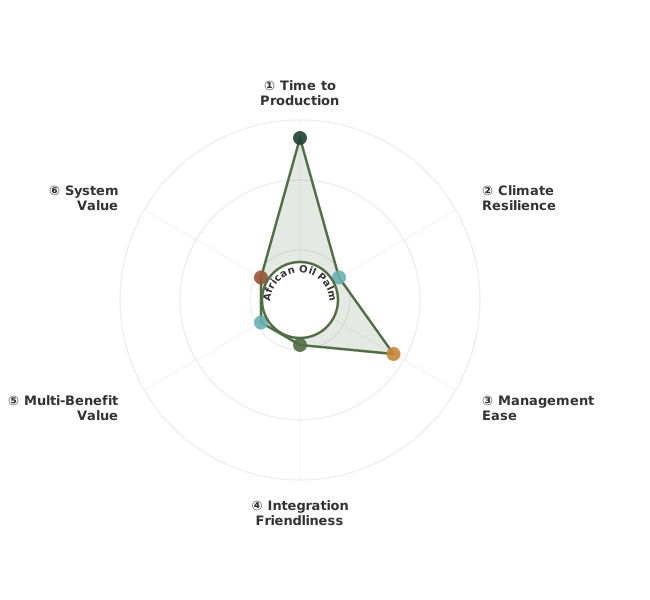
Time to Production: Fast (1-2 years) - Oil palm demonstrates rapid growth and early fruit bunch production, often yielding within 2-3 years, offering a relatively quick return on investment within a well-managed regenerative system.

Value Streams

  • Fruit/nut harvest
  • Diversifies farm income
  • Enhances biodiversity
1

Climate Suitability Assessment

Will this plant thrive in your climate?

IDEALLY SUITED

Köppen Zone: Af (Tropical Rainforest), Am (Tropical Monsoon), Aw (Tropical Savanna), Cfa (Humid Subtropical)
USDA Zone: 10a, 11a, 12a
Australian Zone: tropical

African Oil Palm thrives in consistently warm, humid tropical and subtropical climates, scoring ideally suited across Köppen zones Af, Am, and Aw, Australian tropical zones, and USDA zones 10a through 13a. These regions provide the essential high temperatures (25-30°C) and abundant rainfall (1500-3000 mm annually) for year-round growth, optimal photosynthesis, and high fruit production. The absence of frost and consistent warmth allow for rapid vegetative development and efficient fruit bunch maturation, leading to high yields and reliable harvests with minimal management intervention. Even in tropical savanna (Aw) with a short dry season, production remains high with minimal supplemental irrigation. These conditions ensure establishment success is very high, and the perennial nature of the palm allows for multi-year productivity with minimal climate-related risks.

ADEQUATE

Köppen Zone: Cwa (Monsoon-Influenced Humid Subtropical)
USDA Zone: 9a
EU Climate Region: mediterranean

African Oil Palm can be cultivated in Mediterranean climates and USDA zones 9b, achieving adequate suitability with careful management. These regions offer warm summers but may have drier periods or slightly cooler winter temperatures than ideal tropical zones. In Mediterranean climates, supplemental irrigation during the dry season is critical to ensure consistent fruit development and economic viability, as natural rainfall may be insufficient. USDA Zone 9b, with its long, warm growing season and minimal frost risk, is more conducive, but yields may still be lower than in true tropical environments due to less consistent heat and humidity. Establishment is good with proper timing and water management, and while productivity is not as high as in ideal zones, it can be economically viable with appropriate inputs and practices.

NOT RECOMMENDED

Köppen Zone: ET (Tundra), BSh (Hot Semi-Arid (Steppe)), BSk (Cold Semi-Arid (Steppe)), BWh (Hot Desert), BWk (Cold Desert), Cfb (Oceanic (Maritime Temperate)), Csa (Hot-Summer Mediterranean), Csb (Warm-Summer Mediterranean), Cwb (Subtropical Highland), Dfa (Hot-Summer Continental), Dfb (Warm-Summer Continental), Dfc (Subarctic), Dwa (Monsoon-Influenced Hot-Summer Continental)
USDA Zone: 2a, 3a, 3b, 4a, 5a, 5b, 6a, 7a, 8a
EU Climate Region: atlantic

African Oil Palm is not recommended for Köppen zone As (tropical savanna with prolonged dry season) and EU Atlantic climate regions due to significant climatic mismatches that make cultivation economically questionable. In Köppen As, extended drought periods necessitate extensive and costly irrigation infrastructure, while establishment success is compromised by water scarcity. The EU Atlantic climate lacks the consistent high temperatures and intense heat required for optimal growth and fruit development, leading to significantly reduced yields and economic viability. While technically possible in these zones, the high input costs for irrigation or the low productivity due to insufficient heat make it an ill-advised choice. Alternative, more climate-appropriate plants are recommended for these regions to ensure successful and sustainable agricultural outcomes.

Better alternatives for these "not recommended" zones: Coconut Palm (Cocos nucifera) (more drought-tolerant and adaptable to coastal tropical conditions), Date Palm (Phoenix dactylifera) (highly drought-tolerant and adapted to arid and semi-arid tropical/subtropical regions), Tamarind (Tamarindus indica) (drought-tolerant fruit tree with edible pulp, well-suited to dry tropics), Hazelnut (Corylus avellana) (well-suited to temperate climates, provides nuts for food forest), Chestnut (Castanea sativa) (tolerates cooler climates, produces edible nuts), Walnut (Juglans regia) (adapted to temperate zones, provides valuable nuts and timber)

Note: Zones listed above represent climates where this plant can produce reliably with reasonable management. Climate zones not mentioned would require intensive climate modification (greenhouses, extensive infrastructure) and are not economically viable for regenerative agriculture purposes.

2

Soil Suitability Assessment

Which soil types work best for this plant?

IDEALLY SUITED

Rich Soil

This plant thrives in these soil types without requiring amendments or remediation. Natural soil conditions support optimal growth and productivity.

ADEQUATE

Acidic Soil, Alkaline Soil, Clay Soil, Loam Soil, Sandy Soil

This plant performs acceptably in these soil types with moderate, manageable remediation such as pH adjustment, compost addition, or drainage improvement. The required amendments are practical and cost-effective for regenerative agriculture.

NOT RECOMMENDED

Desert Soil, Rocky Soil, Saline Soil, Wet Soil

Growing this plant in these soil types would require impractical remediation such as complete soil replacement, extensive amendments, or cost-prohibitive infrastructure. These conditions are not economically viable for regenerative agriculture.

Note: Soil suitability assessments focus on remediation requirements. "Ideally Suited" means the plant generally thrives without the need for substantial amendments, "Adequate" means manageable remediation (lime, compost, mulch), and "Not Recommended" means impractical soil changes would be required. Climate factors like rainfall and temperature also influence success.

3

Seasonal Considerations

Planting timing, growth duration, and harvest windows

Establishing African oil palm requires careful timing to ensure robust growth. Ideally, nursery planting occurs in the early spring, after the last expected frost, allowing young trees to establish a strong root system during the active growing season. Containerized seedlings offer greater flexibility, but bare-root stock benefits most from this early spring window.

Expect several years before your palms reach full productive potential. While initial establishment may take 2-3 years, you can anticipate a first modest harvest around year 4. Full production, where yields are significant, typically begins around year 6-7 and continues for several decades, often 25-30 years or more.

Seasonal management is crucial throughout this long lifecycle. Pruning is best undertaken during the late fall or early winter, while the trees are entering a period of reduced activity. Harvests are generally continuous throughout the warmer, wetter periods of the year, aligning with peak fruit development. Observe your trees for bloom initiation, which signals the start of the next fruiting cycle. African oil palms do not experience a true winter dormancy like temperate fruit trees; rather, growth slows in cooler, drier periods, but they remain evergreen.

4

System Role & Multi-Benefit Value

Functional roles, integration strategies, and stacked benefits

Functional Role

Total System Value

African oil palm's integration into regenerative agriculture offers a stacked benefit approach. Direct harvest value comes from its fruit, a significant source of oil. System enhancement can be observed through its contribution to canopy cover in food forests and agroforestry systems, potentially influencing microclimates and reducing understory vegetation, as seen in studies with companion trees. Ecosystem services include supporting pollinator insects, as indicated by research in mixed-species plantations, and contributing to carbon sequestration through its significant biomass. While not a primary nitrogen fixer, its perennial nature aids in soil health. Risk diversification is achieved by adding a perennial, high-value crop to the farm's portfolio, reducing reliance on annuals and offering a buffer against market or climate fluctuations. Its inclusion in diverse systems can enhance biodiversity and potentially mitigate negative impacts of monoculture, such as increased N2O emissions under high fertilization rates.

Integration Characteristics

Multi-Benefit Value: Not Recommended - While primarily cultivated for oil, integrating oil palm into diverse agroforestry systems can provide habitat and contribute to soil health through nutrient cycling, although its primary value remains as a specialized crop.

Integration Friendliness: Not Recommended - Oil palm's integration potential is enhanced when considered within the context of its specific tropical niche, focusing on landscape-level approaches that support biodiversity and soil health.

5

Management & Care Requirements

Integration guidance, maintenance needs, and care practices

How to Integrate This Plant

African oil palm (Elaeis guineensis) can be integrated into regenerative systems primarily as a component of a food forest, offering food production and potential canopy cover. Its role in nitrogen fixation is not explicitly mentioned, but it can contribute to pollinator support, as suggested by research in mixed plantations. Compatible practices include food forests and agroforestry systems, as evidenced by studies combining oil palm with agarwood. The timeline to contribution varies; while it may not offer significant canopy or ecosystem services in Year 1, it can begin contributing to pollinator support and food production within 3-5 years. Long-term, it provides substantial biomass and can contribute to carbon sequestration. Its multi-benefit stacking potential lies in its dual role as a food source and a contributor to biodiversity and ecosystem services within a complex perennial system, enhancing overall farm resilience.

Integration Practices & Management

Sources,, and focus on experiments related to biodiversity enrichment, nitrogen fertilizer impacts on N2O emissions, and soil subsidence and flood risk in peatland plantations, respectively. There is no information within these excerpts regarding specific regenerative agriculture techniques for establishing, integrating with grazing, terminating, or managing Elaeis guineensis. The knowledge base does not offer insights into its use in relation to cash crops, relay cropping, intercropping, or rotation sequences within a regenerative farming system. Consequently, the provided text does not contain sufficient information to explain how regenerative farmers integrate this plant. While coverage in our knowledge base is limited, the above represents documented uses in regenerative systems.

Management Profile

Maintenance Intensity: Not Recommended - Maintaining optimal oil palm growth within a regenerative system focuses on building soil fertility through compost and mulch, alongside proactive ecosystem-based pest and disease management.

Pest Disease Pressure: Not Recommended - Managing pests and diseases in oil palm relies on fostering a resilient ecosystem through biodiversity, healthy soil biology, and integrated pest management strategies to minimize disruption.

Time To Production: Ideally Suited - Oil palm demonstrates rapid growth and early fruit bunch production, often yielding within 2-3 years, offering a relatively quick return on investment within a well-managed regenerative system.

6

Economics & Value Streams

Direct harvest, system benefits, ecosystem services, and risk diversification

Comprehensive economic analysis including direct harvest value, system enhancement contributions, ecosystem services, value timeline, and risk diversification strategies.

Per-Tree Production Economics

Metric Value
Establishment Cost $15-30
Years to First Harvest
Annual Maintenance $10-25
Yield 200-500 lbs/year 90-226 kg/year
Market Price $0-0/lb $0-1/kg
Productive Lifespan 20-30 years
Net Annual Return* $-26 to $-10/year (negative)

Values shown per mature tree, not per acre. In regenerative systems, trees are integrated at low densities across diverse landscapes. Establishment costs spread over the lifespan of the tree. Early years have costs but no revenue.

* Net Annual Return = (Yield × Market Price) − (Amortized Establishment Cost + Annual Maintenance). This return is realized only at/after first harvest; early years have costs but no revenue. Range shows worst case to best case scenarios.

System Enhancement Value

Beyond harvest: how understory complements overstory in polyculture

Food Forest System Contributions

The African oil palm, when integrated into diverse farming systems, can offer significant ecosystem benefits beyond its primary function as a cash crop. As highlighted in, incorporating native tree species alongside oil palm monocultures can reduce canopy openness and understory vegetation cover, which in turn influences insect populations. While this specific study focused on the negative impact of reduced flower density on native trees in smaller plots, the broader implication is that managed shade and structural diversity can mediate insect-mediated ecosystem functions. Increased pollinator visitation, as observed in through phytometer yield, suggests that oil palm systems can support beneficial insect populations when managed with biodiversity in mind. Furthermore, the potential for oil palm to act as a cash crop with services indicates its role in providing economic stability while simultaneously contributing to ecological processes. The mention of specialty functions hints at potential niche markets that could further diversify farm income and enhance system resilience. The research on peatlands underscores the importance of water management and the potential for oil palm systems to contribute to carbon sequestration and reduced greenhouse gas emissions if managed sustainably, particularly through paludiculture approaches which significantly reduce the carbon footprint.

Ecosystem Service Contributions

Environmental contributions: carbon, pollinators, wildlife, and water

  • Carbon Sequestration: Oil palm plantations, particularly when managed on peatlands, have a significant but complex carbon footprint. Sustainable management practices, such as those advocated for in paludiculture, can lead to substantial carbon sequestration and storage within the biomass and soil, significantly reducing greenhouse gas emissions compared to conventional drainage-based cultivation. The potential for carbon storage is substantial given the perennial nature and high biomass production of oil palm.
  • Pollinator Support: High. As indicated in, oil palm monocultures can be enhanced by the presence of other tree species, which can increase pollinator abundances and visitation rates, positively impacting yields of other crops (phytometers). While oil palm itself may not be a primary pollinator attractant, its integration into diverse systems can support overall pollinator health and activity.
  • Wildlife Habitat: Variable. Oil palm plantations can offer some habitat and food resources for certain wildlife, especially when integrated with other native species. However, large-scale monocultures can reduce biodiversity compared to more natural forest ecosystems. The structural complexity introduced by intercropping or agroforestry systems can enhance habitat value.
  • Water Quality: Not applicable

Value Timeline: Understory Development

When you'll see results: groundcover/herbs year 1, shrubs 2-3, full layer integration 5-10

Years 1-2

Establishment of ground cover, initial soil stabilization, potential for early-stage pollinator support if intercropped with flowering species.

Years 3-5

Beginning of first harvests, establishment of moderate shade, contribution to biodiversity through canopy development, potential for increased insect activity as per.

Years 10-20

Full production capacity as a cash crop, significant canopy development providing shade and habitat, continued contribution to ecosystem services like carbon sequestration and potentially improved water regulation (depending on management).

20+ Years

Mature production systems, sustained provision of ecosystem services, potential for palmoil production to be transitioned to more sustainable practices like paludiculture for long-term carbon benefits and reduced flood risk.

Farm Risk Reduction

How multi-layer systems diversify production and income

  • Multiple Revenue Streams: Primary income from oil palm fruit/oil production, potential secondary income from specialty oil products, environmental services (e.g., carbon credits if managed sustainably on peatlands), and potential for intercropped species. The 'cash crop with services' designation highlights multi-functional value.
  • Temporal Income Spread: Provides a consistent annual harvest of oil palm fruit, with ongoing and increasing contributions from ecosystem services (carbon sequestration, biodiversity support) over the lifespan of the plantation. Long-term potential for timber value from older palms or integration with timber species.
  • Market Risk Hedge: Diversifies farm income beyond single commodity reliance, especially when integrated with other crops or livestock. The 'specialty' function suggests potential for higher-value niche markets. Sustainable management on peatlands can mitigate risks associated with soil subsidence and flooding, which are projected to impact conventional oil palm production. Reduced reliance on synthetic fertilizers, as suggested by the N2O emission research, can also hedge against fertilizer price volatility.
7

Regenerative Suitability Details

Comprehensive trait ratings for system integration assessment

Comparative ratings for this plant across key regenerative agriculture traits.

Trait Suitability Explanation
Drought Tolerance Not Recommended While oil palm has significant water needs and shallow root systems, strategic soil moisture retention through mulching and integrated cover cropping can support its growth in suitable climates, minimizing reliance on external water management.
Establishment Ease Not Recommended Achieving successful oil palm establishment requires careful attention to seed viability and providing optimal tropical conditions, though early germination can be enhanced with appropriate soil warming and moisture retention techniques.
Time To Production Ideally Suited Oil palm demonstrates rapid growth and early fruit bunch production, often yielding within 2-3 years, offering a relatively quick return on investment within a well-managed regenerative system.
Multi Benefit Value Not Recommended While primarily cultivated for oil, integrating oil palm into diverse agroforestry systems can provide habitat and contribute to soil health through nutrient cycling, although its primary value remains as a specialized crop.
Climate Adaptability Not Recommended Oil palm thrives within specific tropical and subtropical zones, requiring careful consideration of its temperature sensitivities when planning its integration into a broader landscape.
Hardiness Zone Range Not Recommended Primarily suited to tropical and subtropical regions (zones 10-11), its narrow temperature requirements limit its adaptation to cooler climates, necessitating careful site selection for successful agroforestry integration.
Maintenance Intensity Not Recommended Maintaining optimal oil palm growth within a regenerative system focuses on building soil fertility through compost and mulch, alongside proactive ecosystem-based pest and disease management.
Pest Disease Pressure Not Recommended Managing pests and diseases in oil palm relies on fostering a resilient ecosystem through biodiversity, healthy soil biology, and integrated pest management strategies to minimize disruption.
Integration Friendliness Not Recommended Oil palm's integration potential is enhanced when considered within the context of its specific tropical niche, focusing on landscape-level approaches that support biodiversity and soil health.

Comparative System: Ratings compare plants within their economic category (e.g., cover crop nitrogen fixation compared to other cover crops, not to all plants). Individual farm conditions and management practices significantly influence actual performance.

8

Learn More

Why farmers use this plant and additional resources

Why Regenerative Farmers Use This Plant

Elaeis guineensis, commonly known as the African oil palm, is a cornerstone perennial for tropical and subtropical regenerative agriculture, offering substantial long-term economic and ecological benefits. While not a nitrogen fixer, its deep root system, typically reaching 6-15+ feet (1.8-4.5+ m), contributes significantly to soil structure and water infiltration, preventing erosion in humid tropical environments. Mature oil palm plantations are recognized for their substantial carbon sequestration potential, with estimates ranging from 2-5 tons CO2e/acre/year (5-12.5 tons CO2e/ha/year), making them a vital component in climate mitigation strategies. The economic returns are also significant, with trees beginning to yield fruit bunches around 3-4 years after planting, reaching full production by 7-10 years, and continuing to produce for 25-30 years or more, providing a stable, multi-decade income stream and accumulating asset value.

Beyond direct economic output, the oil palm's dense canopy provides critical ecosystem services. It creates a significant microclimate, offering shade regulation that can benefit understory crops and livestock, and acts as an effective windbreak, protecting more delicate agricultural systems from strong winds. This multi-story system integration, where shade-tolerant crops or livestock can coexist beneath the palms, maximizes land use efficiency and biodiversity. The long-term nature of oil palm cultivation fosters a stable agricultural landscape, encouraging investment in soil health and biodiversity over decades, a stark contrast to annual cropping systems that can be more prone to soil degradation.

The quantitative ecosystem benefits of well-managed oil palm systems are considerable. The dense leaf litter and root activity contribute to building soil organic matter over time, enhancing soil fertility and water-holding capacity. While not a direct pollinator attractant in the same way as flowering cover crops, the stable environment created by the oil palm canopy can support a diverse community of beneficial insects and soil microbes. The consistent biomass production from frond fall and fruit bunch waste, when managed appropriately through composting or mulching, provides a continuous source of organic matter, fueling soil biological activity and improving nutrient cycling. The deep root systems improve soil structure and water infiltration, reducing runoff and erosion, especially in areas prone to heavy rainfall.

Regional success stories highlight the adaptability of Elaeis guineensis in diverse tropical agricultural landscapes. In Southeast Asia, vast plantations are integrated into national economies, with ongoing efforts to transition towards more sustainable and regenerative practices that enhance biodiversity and community involvement. In West Africa, smallholder farmers have long relied on oil palm for both subsistence and income, with potential for agroforestry models that incorporate other food crops and livestock. In Central and South America, oil palm is increasingly being explored within agroforestry systems, sometimes alongside cacao or other perennial crops, to diversify income and improve ecological resilience. In Australia's tropical north, careful site selection and water management are key for successful oil palm establishment.

9

How to Integrate This Plant

Practical guidance for regenerative systems

Establishing Elaeis guineensis typically begins with high-quality seedlings or tissue-cultured plantlets, which are often nursery-grown for 6-18 months before field transplanting. The optimal planting depth for young palms is generally 2-6 inches (5-15 cm), ensuring the root ball is well-covered and the plant is stable, with the base of the stem slightly above soil level for good drainage. Spacing is critical for maximizing yield and allowing for management access, with typical row spacing of 30-40 ft (9-12 m) and in-row spacing of 15-30 ft (4.5-9 m), resulting in densities of 30-70 trees/acre (75-175 trees/ha) depending on variety and management goals. Planting is best timed to coincide with the start of the rainy season, typically March-May in the Northern Hemisphere and September-November in the Southern Hemisphere, to ensure adequate moisture for establishment.

Water management is crucial during the first 1-3 years of establishment, with young palms requiring approximately 1-2 inches (2.5-5 cm) of water per week, either from rainfall or supplemental irrigation. Fertility management should prioritize biological approaches. Incorporating compost, utilizing cover crop residue (such as nitrogen-fixing legumes like Centrosema or Pueraria planted in the inter-row spaces after year 2-3), and applying well-composted manure are key strategies to build soil health and provide essential nutrients. While oil palms are heavy feeders, the goal is to reduce reliance on synthetic NPK fertilizers by fostering a robust soil biology. Mature trees can produce fruit bunches year-round, with peak production seasons varying by region and variety. Mature oil palms can reach heights of 30-60 ft (9-18 m) or more over their lifespan, with significant frond production requiring management.

Category-specific integration for Elaeis guineensis within regenerative systems centers on its role as a long-term perennial component. Establishment of a plantation typically takes 1-3 years for the palms to become well-rooted and begin significant growth. Full production, yielding economically significant amounts of fresh fruit bunches, can take anywhere from 3-10 years, with peak production occurring between years 10-20. While grafting is not typically used for oil palm, selecting high-yielding, disease-resistant varieties is crucial. Canopy management involves pruning old fronds annually to improve light penetration to the ground and facilitate harvesting, typically aiming for 50-60% light penetration to the alley floor. Understory intercropping can be initiated around year 2-3 once the palms provide some shade; nitrogen-fixing ground covers can be planted to improve soil fertility and provide biomass. In alley cropping or silvopasture designs, rows of oil palms are spaced 30-40 ft (9-12 m) apart to allow for equipment access and the cultivation of intercrops or grazing of livestock. Measurable soil carbon increases are expected by year 5-7 as the perennial root systems develop and organic matter accumulates. Long-term infrastructure considerations include initial irrigation for establishment, robust deer or browse protection for young palms, and potentially support structures in areas prone to strong winds. Regional adaptations for integrating Elaeis guineensis are diverse. In Malaysia and Indonesia, where it is a dominant crop, regenerative practices focus on intercropping with short-cycle crops in young plantations and integrating livestock like cattle or goats in mature plantations for grazing and manure. In Colombia and Ecuador, oil palm is being explored in agroforestry systems with cacao and other fruit trees, creating diversified income streams and enhancing biodiversity. In Ghana and Nigeria, smallholder farmers often integrate oil palm into mixed farming systems, intercropping with food crops like cassava and maize during the early years of the palm's growth, and utilizing its shade for understory crops as it matures. In areas with distinct dry seasons, careful water management and selection of drought-tolerant understory species are crucial for success.

View Full Document (Printable single-page version)