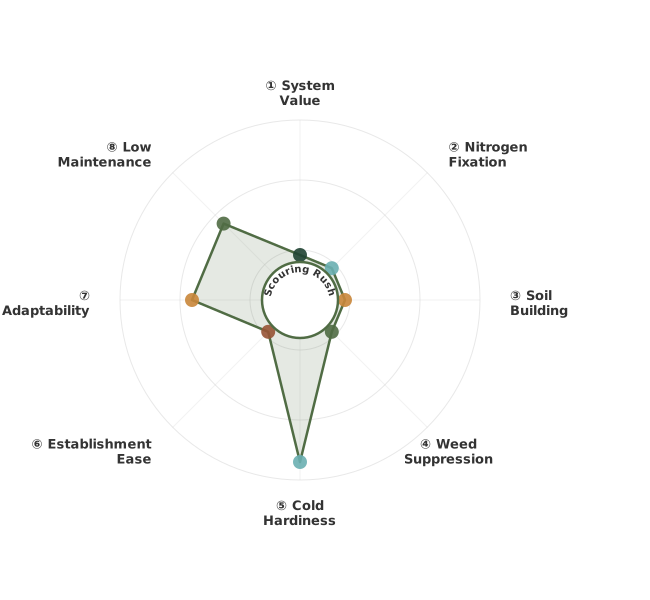
While Equisetum hyemale has limited mentions in our knowledge base, its potential for regenerative agriculture is notable. Primarily, it functions as a dynamic groundcover and soil builder. Its fibrous root system helps to bind soil, preventing erosion and improving soil structure, particularly in wet or compacted areas. This makes it a valuable component in polyculture systems, adding a resilient layer that can thrive where other plants struggle. Though not a nitrogen fixer, its ability to accumulate silica and other minerals from the soil contributes to nutrient cycling and the creation of bioavailable minerals within the ecosystem. Its presence may also support beneficial insects and pollinators. Practical farmer experiences in the knowledge base highlight its use in no-till systems to enhance soil aggregation and moisture retention. Further research and on-farm trials are needed to fully understand its integration with practices like rotational grazing and agroforestry, but its soil-stabilizing and mineral-accumulating properties offer promising avenues for regenerative land management.

Regenerative Quick Profile

All recommendations assume integrated, regenerative practices—not conventional inputs.

Climate & Soil Fit

Climate: Tropical Rainforest, Tropical Monsoon, Tropical Savanna, Hot Semi-Arid (Steppe), Cold Semi-Arid (Steppe), Hot Desert, Cold Desert, Humid Subtropical, Oceanic (Maritime Temperate), Hot-Summer Mediterranean, Warm-Summer Mediterranean, Monsoon-Influenced Humid Subtropical, Subtropical Highland, Hot-Summer Continental, Warm-Summer Continental, Subarctic, Monsoon-Influenced Hot-Summer Continental, Tundra

Zones: USDA 4-9, Australian Zones 3-6

Optimal Soil: Clay Soil

System Role & Functions

Primary: Cover Crop System

Secondary: Soil Remediation, Pollinator Support

Key Benefits: Cold Hardiness

Management Level

Experience: Advanced

Maintenance: Moderate maintenance - Requires minimal fertility management and thrives in moist conditions, spreading readily but generally self-sufficient once integrated, with occasional management to ensure balance within the system.

Value Streams

  • Cover crop (soil investment)
  • Soil building and erosion control
  • Pollinator habitat and support
1

Climate Suitability Assessment

Will this plant thrive in your climate?

IDEALLY SUITED

Köppen Zone: Af (Tropical Rainforest), Am (Tropical Monsoon), Cfa (Humid Subtropical)
USDA Zone: 6a, 7a, 8a, 9a, 10a, 11a, 12a
Australian Zone: temperate
EU Climate Region: atlantic

Scouring rush thrives in climates with consistent moisture and moderate temperatures, characterized by long growing seasons and mild winters. These conditions are met in Köppen zones Cfb and Dfb, USDA zones 4b through 10b, Australian temperate zones, and the EU Atlantic climate region. In these areas, scouring rush establishes readily, spreads effectively, and performs its functions as a cover crop, for soil remediation, and for pollinator support with minimal intervention. Its ability to tolerate a range of soil conditions and its vigorous growth make it a reliable choice for regenerative agriculture. The plant benefits from consistent precipitation (30-50 inches annually) and temperatures between 60-80°F (15-27°C) during its active growth phase. Winter survival is excellent in zones with moderate frost, and its resilience allows for multi-year establishment and coverage, contributing significantly to soil health and biodiversity. Management may be required in some areas to prevent excessive spread due to its robust nature.

ADEQUATE

Köppen Zone: Aw (Tropical Savanna), Cfb (Oceanic (Maritime Temperate)), Csa (Hot-Summer Mediterranean), Csb (Warm-Summer Mediterranean), Cwa (Monsoon-Influenced Humid Subtropical), Cwb (Subtropical Highland), Dfa (Hot-Summer Continental), Dfb (Warm-Summer Continental)
USDA Zone: 5a, 5b
Australian Zone: subtropical
EU Climate Region: continental

Scouring rush can perform adequately in climates that present some challenges but are not extreme. This includes Köppen zones Cfa, Dfa, and Dsb, USDA zones 4a, 5a, and Australian subtropical regions, as well as the EU continental climate. In these zones, the growing season is sufficient, but scouring rush may experience some stress from summer heat or require more attention to moisture. Winter survival is generally good, but extreme cold snaps or prolonged dry spells can impact its perennial nature. While it can establish and provide cover crop benefits, its growth rate and effectiveness for soil remediation might be reduced compared to ideal conditions. Supplemental irrigation may be beneficial during dry periods, and careful monitoring might be needed to manage its spread, especially in warmer, wetter areas. Despite these considerations, it remains a viable option for regenerative agriculture practices, offering benefits in soil stabilization and biomass production.

NOT RECOMMENDED

Köppen Zone: ET (Tundra), BSh (Hot Semi-Arid (Steppe)), BSk (Cold Semi-Arid (Steppe)), BWh (Hot Desert), BWk (Cold Desert), Dfc (Subarctic), Dwa (Monsoon-Influenced Hot-Summer Continental)
USDA Zone: 2a, 3a, 3b, 4a

Scouring rush is not recommended for climates characterized by extreme cold, prolonged drought, or very short growing seasons, making cultivation economically and practically unviable for regenerative agriculture. This includes Köppen zones Dfd, Dsd, and Dsa, and USDA zones 1a through 3b. In these regions, the extreme winter temperatures (below -20°F/-29°C) lead to consistent winter kill, preventing perennial establishment. The very short growing seasons and cool summer temperatures limit biomass production and the plant's ability to establish effectively. In hot, dry continental zones (Dsa), summer heat and drought stress severely inhibit growth and nitrogen fixation, requiring intensive irrigation. The risk of establishment failure is high, and the plant's functions cannot be reliably achieved. Alternative plants like Winter Rye, Hairy Vetch, or Arctic Lupine are better suited for these harsh conditions, offering more reliable cold hardiness, drought tolerance, or faster growth within limited seasons.

Better alternatives for these "not recommended" zones: Winter Rye (Extremely cold-hardy cover crop for biomass and soil protection in very cold climates.), Hairy Vetch (Cold-hardy annual legume for nitrogen fixation in short growing seasons.), Arctic Lupine (Nitrogen-fixing legume adapted to cold, short growing seasons and poor soils.)

Note: Zones listed above represent climates where this plant can produce reliably with reasonable management. Climate zones not mentioned would require intensive climate modification (greenhouses, extensive infrastructure) and are not economically viable for regenerative agriculture purposes.

2

Soil Suitability Assessment

Which soil types work best for this plant?

IDEALLY SUITED

Clay Soil

This plant thrives in these soil types without requiring amendments or remediation. Natural soil conditions support optimal growth and productivity.

ADEQUATE

Loam Soil, Rich Soil, Wet Soil

This plant performs acceptably in these soil types with moderate, manageable remediation such as pH adjustment, compost addition, or drainage improvement. The required amendments are practical and cost-effective for regenerative agriculture.

NOT RECOMMENDED

Acidic Soil, Alkaline Soil, Desert Soil, Rocky Soil, Saline Soil, Sandy Soil

Growing this plant in these soil types would require impractical remediation such as complete soil replacement, extensive amendments, or cost-prohibitive infrastructure. These conditions are not economically viable for regenerative agriculture.

Note: Soil suitability assessments focus on remediation requirements. "Ideally Suited" means the plant generally thrives without the need for substantial amendments, "Adequate" means manageable remediation (lime, compost, mulch), and "Not Recommended" means impractical soil changes would be required. Climate factors like rainfall and temperature also influence success.

3

Seasonal Considerations

Planting timing, growth duration, and harvest windows

Equisetum hyemale, or scouring rush, offers unique benefits as a cover crop, particularly for its resilience and ability to thrive in diverse conditions. For spring planting, sow after the last expected frost when soil temperatures consistently reach above 50°F (10°C). Establishment can take several weeks, but its robust nature allows for good overwinter survival in most cool-to-cold climate zones, providing valuable winter cover. In late fall, planting before the first expected frost will allow for some establishment before winter dormancy. While not typically used as a summer cover crop due to its moisture requirements, it can be planted in moist areas during the warmer months if irrigation is available. Termination timing is crucial; mow or till before it sets seed, ideally a few weeks before planting your main cash crop to prevent competition. Peak biomass is typically achieved in its second growing season, so plan for its integration accordingly. Consider frost-seeding in early spring for a less disruptive establishment method.

4

System Role & Multi-Benefit Value

Functional roles, integration strategies, and stacked benefits

Functional Role

Total System Value

Scouring rush offers significant system value beyond direct harvest, which is minimal. Its primary contribution is to ecosystem services, particularly in water management and soil health. By stabilizing banks and filtering runoff, it enhances water quality and reduces sedimentation downstream, protecting aquatic ecosystems and reducing the need for costly bank restoration. Its dense, fibrous root system is a powerful tool for erosion control, preventing soil loss on slopes and in riparian zones, thereby contributing to long-term soil carbon sequestration. While it doesn't directly support pollinators or provide significant biomass for harvest, it creates habitat for beneficial invertebrates and small wildlife in damp areas, increasing overall farm biodiversity. Its resilience in wet conditions means it can provide these services reliably where other plants might struggle, adding a layer of risk diversification for farms with waterlogged areas.

Integration Characteristics

Multi-Benefit Value: Adequate - Provides excellent erosion control and soil stabilization through its rhizomatous network and offers habitat for beneficial invertebrates, contributing to overall ecosystem resilience.

5

Management & Care Requirements

Integration guidance, maintenance needs, and care practices

How to Integrate This Plant

Scouring rush (Equisetum hyemale) can be integrated into regenerative systems primarily for its exceptional erosion control and soil stabilization capabilities, especially in wet or riparian areas. Its fibrous root system is highly effective at holding soil in place, making it a valuable component in buffer strips along waterways, drainage ditches, and on slopes prone to water runoff. While not a primary nitrogen-fixer or shade provider, its dense growth can offer some habitat for beneficial insects and small wildlife. Compatible practices include its use in constructed wetlands for water filtration, as a groundcover in food forests where moisture is abundant, or in riparian buffer zones associated with silvopasture or alley cropping systems. It begins providing significant erosion control benefits from Year 1, with its root system becoming more established and effective over time. The multi-benefit stacking comes from its role in water management, soil health, and habitat provision in otherwise challenging wet environments.

Integration Practices & Management

Information regarding the specific integration methods of *Equisetum hyemale* by regenerative farmers is limited within the provided knowledge base. The five mentions offer minimal insight into practical application concerning establishment, grazing integration, termination, or management. Consequently, detailing seeding rates, timing, companion planting, or tillage practices for its introduction is not possible based on this coverage. Similarly, the knowledge base does not elucidate how *Equisetum hyemale* is incorporated into grazing systems, such as mob or rotational grazing, nor does it specify optimal timing or rest periods for such integration. Termination strategies, including natural winterkill, grazing down, crimping, mowing, or herbicide use, are also absent from the available information. Management considerations like fertility needs, competition, and succession planning, as well as its role in cash crop systems like relay cropping, intercropping, or rotation sequences, cannot be described due to the scarcity of direct farmer experiences or insights within the knowledge base.

Management Profile

Maintenance Intensity: Adequate - Requires minimal fertility management and thrives in moist conditions, spreading readily but generally self-sufficient once integrated, with occasional management to ensure balance within the system.

6

Economics & Value Streams

Direct harvest, system benefits, ecosystem services, and risk diversification

Comprehensive economic analysis including direct harvest value, system enhancement contributions, ecosystem services, value timeline, and risk diversification strategies.

Cover Crop Investment

Metric Value
Seed Cost N/A N/A
Termination Cost 20-50 49-124
Biomass Production 2-5 4-11
N Fixation Value N/A N/A
Weed Control Savings 15-40 37-99

Cover crops are soil investments, not cash crops. Economics measured in soil health gains, input reduction, and subsequent crop performance. Values show direct costs and estimated benefits.

System Enhancement Value

Beyond cost recovery: soil building, nitrogen, biomass, and weed suppression

Soil Building & Weed Suppression

Scouring rush offers significant system value beyond direct harvest. Its key secondary function as a soil remediation agent is implied by its persistent nature and ability to thrive in various conditions, suggesting it can tolerate and potentially extract certain soil contaminants. Furthermore, as indicated in, scouring rush can serve as a valuable component in creating safe water sources for pollinators and natural pest control. The mention of it as an alternative plant in water features designed to attract dragonflies (mosquito predators) and frogs (larvae eaters) highlights its role in integrated pest management and supporting beneficial insect populations. This attraction of amphibians also indirectly contributes to rodent control by drawing in predators like frogs and potentially snakes, thus reducing damage to other garden plants. Its high silica content, while primarily noted for human health benefits, could also contribute to plant structural integrity if incorporated into compost or soil amendments. The plant's vigorous growth also means it can outcompete less desirable weeds in certain situations, acting as a natural ground cover.

Erosion Control

Variable, dependent on planting density and specific soil conditions. Potential for localized erosion control and minor wind buffering.

While not explicitly mentioned as a windbreak in the provided excerpts, scouring rush's dense, upright growth habit and its ability to spread aggressively (as noted in and) suggest potential for erosion control and a physical barrier. Its persistent nature, described as a potential weed that is difficult to eradicate, implies a robust root system capable of stabilizing soil. If planted in dense rows, scouring rush could contribute to reducing wind velocity across agricultural fields, thereby mitigating soil erosion and protecting young or vulnerable crops from wind damage. The increased soil stability from its rhizomatous spread could also enhance water infiltration and reduce surface runoff. However, its primary utility in this context would be for localized erosion control rather than broad-acre windbreak applications, given its typical wetland or damp habitat preference.

Ecosystem Service Contributions

Environmental contributions: carbon, pollinators, wildlife, and water

  • Carbon Sequestration: As a rapidly growing perennial plant with a substantial root system, scouring rush has the potential to sequester carbon in both above-ground biomass and soil. Its persistent nature suggests it can contribute to long-term soil carbon storage.
  • Pollinator Support: High. Excerpt explicitly states its use in water features that attract pollinators and beneficial insects like dragonflies, which act as natural pest control. Its presence can provide drinking water sources.
  • Wildlife Habitat: Moderate. While not a primary food source, its dense growth can provide habitat and shelter for small invertebrates and amphibians, which in turn support other wildlife. Its role in water features attracts amphibians like frogs.
  • Water Quality: Applicable in specific contexts. While not explicitly detailed as a water filter, its wetland habitat preference and dense root system suggest it can play a role in filtering water in riparian or boggy areas, absorbing nutrients and sediment.

Value Timeline: Soil Building Process

When you'll see results: immediate soil benefits, compounding over seasons

Years 1-2

Establishment of ground cover, initial erosion control, early pollinator support through water features, and potential for early soil remediation effects. Vigorous rhizome spread begins.

Years 3-5

Established ground cover providing significant erosion control. Robust pollinator support and natural pest control systems become more effective. Potential for noticeable soil improvement and remediation.

Years 10-20

Mature, dense stands contributing significantly to soil stabilization and potentially acting as a localized buffer. Continued and enhanced ecosystem services. Potential for harvesting for secondary uses (e.g., silica extraction for herbal products if scale allows).

20+ Years

Long-term soil health benefits, continued robust ecosystem services, and potential for maintaining dense, stabilizing ground cover indefinitely. Its persistent nature ensures ongoing benefits.

Farm Risk Reduction

How this reduces farm risk: lower input costs and better soil resilience

  • Multiple Revenue Streams: While direct harvest revenue is limited, potential exists for niche markets (e.g., silica extraction, herbal products). Primary value is in ecosystem services: pest control, pollinator support, erosion control, soil remediation, and indirect rodent management.
  • Temporal Income Spread: Value is largely ongoing and continuous through ecosystem services, rather than discrete harvest cycles. Its persistent growth ensures year-round benefits. Potential for periodic harvesting of biomass for secondary uses.
  • Market Risk Hedge: Reduces reliance on synthetic inputs (fertilizers, pesticides) by providing natural pest control and soil improvement. Its resilience and invasive potential (when managed) mean it can establish and provide benefits even in challenging conditions, offering a buffer against crop failure or market volatility for primary crops.
7

Regenerative Suitability Details

Comprehensive trait ratings for system integration assessment

Comparative ratings for this plant across key regenerative agriculture traits.

Trait Suitability Explanation
Cold Hardiness Ideally Suited Extremely hardy perennial, thriving in Zone 3 and below, its rhizomatous spread ensures resilient ground cover and overwintering within the integrated system.
Weed Suppression Not Recommended While spreading via rhizomes, its upright growth and gradual canopy closure offer limited weed suppression, making it most effective when integrated with other ground cover strategies.
Nitrogen Fixation Not Recommended As a non-legume, Equisetum hyemale does not fix atmospheric nitrogen, its ecological contribution focused on erosion control and biomass rather than direct soil nitrogen enrichment.
Root System Depth Not Recommended Primarily a wetland plant with shallow, rhizomatous roots, it offers minimal benefits for breaking up compaction or mining subsoil nutrients, contributing instead to surface soil structure.
Biomass Production Not Recommended Its slow growth and modest biomass production contribute to soil structure via dense rhizomes, with organic matter addition being a secondary benefit compared to more vigorous cover crops.
Establishment Ease Not Recommended Slow to establish from rhizomes, it requires specific site preparation and favorable moist, shaded conditions to integrate effectively into the living mulch or ground cover system.
Multi Benefit Value Adequate Provides excellent erosion control and soil stabilization through its rhizomatous network and offers habitat for beneficial invertebrates, contributing to overall ecosystem resilience.
Climate Adaptability Adequate Thrives in moist, shaded areas across zones 4-9, demonstrating good adaptability where consistent moisture is managed through landscape design and mulching.
Maintenance Intensity Adequate Requires minimal fertility management and thrives in moist conditions, spreading readily but generally self-sufficient once integrated, with occasional management to ensure balance within the system.

Comparative System: Ratings compare plants within their economic category (e.g., cover crop nitrogen fixation compared to other cover crops, not to all plants). Individual farm conditions and management practices significantly influence actual performance.

8

Learn More

Why farmers use this plant and additional resources

Why Regenerative Farmers Use This Plant

Equisetum hyemale, commonly known as Horsetail or Scouring Rush, offers unique regenerative benefits primarily through its exceptional nutrient scavenging capabilities, its role in soil stabilization, and its ability to improve soil structure. While it does not fix atmospheric nitrogen, its deep and extensive root system, reaching depths of 3-6 feet (0.9-1.8 meters) or more, allows it to access and cycle nutrients from lower soil profiles that are inaccessible to many other plants. This makes it invaluable for reclaiming nutrient-depleted areas or preventing nutrient leaching in sandy soils, potentially recapturing leached nutrients and reducing reliance on synthetic fertilizers. Its deep root penetration also helps to break up compacted soil layers, improving water infiltration and aeration.

The dense, fibrous root mat of Equisetum hyemale is particularly effective at binding soil particles, significantly reducing erosion from wind and water. Its root system can reduce soil loss by an estimated 70-90% on sloped terrains compared to bare soil, and can increase soil aggregation and reduce bulk density, potentially reducing runoff by 20-30% in areas where it is well-established. In systems where soil compaction is a significant challenge, such as after heavy machinery use, Equisetum hyemale can be a key component in a long-term soil rebuilding strategy.

Integrating Equisetum hyemale into regenerative systems can provide distinct advantages beyond nutrient cycling and erosion control. Its robust growth can effectively suppress weeds by outcompeting them for light, water, and nutrients, thereby reducing the need for mechanical or chemical weed control. This makes it a valuable component in living mulches or as an understory plant in orchards and vineyards. Its dense, upright growth habit can also provide habitat and foraging opportunities for beneficial insects, including predators of common agricultural pests, and offer shelter for various invertebrates. While not a primary forage crop, its hardy nature means it can persist in challenging conditions, offering ground cover where other species might fail. Its contribution to soil structure, particularly in improving water infiltration and aeration due to its deep root channels, indirectly benefits subsequent cash crops by creating a more resilient soil environment.

The decomposition of its tough, fibrous biomass contributes to soil organic matter accumulation, though this decomposition is slower than that of softer-stemmed cover crops. Its perennial nature and substantial biomass production contribute to long-term soil organic matter accumulation, especially when managed to allow for residue incorporation over time. Over a 3-5 year rotation, the continuous activity of its root system in breaking up compaction and adding organic matter can lead to a measurable increase in soil organic carbon, estimated at 0.1-0.3% annually in suitable conditions.

Farmers in various agricultural landscapes have found niche roles for Equisetum hyemale. In the UK's temperate maritime climate, it is utilized on steep banks and verges to establish ground cover, preventing costly soil erosion into waterways, and in damp pasture margins and headlands to improve drainage. In Australian dryland farming systems, its drought tolerance and deep rooting allow it to provide soil stabilization and nutrient cycling in areas with unpredictable rainfall, often in conjunction with perennial pastures, and in cooler, wetter regions, it is incorporated into perennial pasture mixes to enhance soil structure and nutrient cycling. Brazilian coffee plantations have explored its use as an understory plant in agroforestry systems, where its nutrient scavenging helps maintain soil fertility between rows of coffee trees, reducing reliance on synthetic inputs, and in humid, subtropical conditions. In the Pacific Northwest of the USA, it is used on slopes and riparian zones to prevent erosion and filter runoff, thriving in the region's consistent rainfall, and in riparian buffer strips to manage erosion and filter runoff from agricultural lands. In New Zealand's pasture systems, it can be managed to provide ground cover in areas prone to pugging by livestock, helping to stabilize the soil surface, and on steeper terrains where pasture erosion is a concern. Its ability to tolerate waterlogged conditions also makes it suitable for wetter areas within various agricultural landscapes.

9

How to Integrate This Plant

Practical guidance for regenerative systems

Equisetum hyemale is typically established from rhizomes or divisions rather than seed, as seed production can be unreliable and germination rates vary. For establishing dense stands or quicker establishment in specific zones, planting rhizome cuttings or divisions is recommended. This can be done by digging trenches and laying rhizomes horizontally, spaced about 6-12 inches (15-30 cm) apart, and covering them with 1-2 inches (2.5-5 cm) of soil. For broadcast seeding, rates typically range from 20-40 lbs/acre (22-45 kg/ha), focusing on areas where its growth habit is beneficial, such as ditches or waterways. Planting rhizome sections or divisions at a depth of 1-3 inches (2.5-7.5 cm) in well-drained to moist soil is also effective. Spacing can vary depending on the desired density, but planting divisions 12-24 inches (30-60 cm) apart is common, allowing them to spread and form a dense mat.

The ideal planting time is during the cooler, wetter periods of early spring or autumn, typically March-May or September-November in the Northern Hemisphere, and March-May or September-October in the Southern Hemisphere, coinciding with the start of the growing season and periods of consistent moisture. Adequate moisture is crucial during the initial establishment phase, with approximately 1 inch (2.5 cm) of water per week recommended until plants are well-rooted. Once established, Equisetum hyemale is a low-maintenance plant. It thrives with consistent moisture, requiring approximately 1-2 inches (2.5-5 cm) of water per week during establishment and dry periods, though it generally requires minimal supplemental watering once established.

Fertility management should prioritize biological approaches; the plant's own nutrient scavenging abilities mean it often requires little external input. If supplemental fertility is desired, incorporating compost or well-rotted manure into the soil prior to planting rhizomes is beneficial, and compost application or integration with composted manure can support its growth and the overall soil health.

Equisetum hyemale establishes relatively quickly from vegetative material, with significant spread expected within the first growing season, reaching a mature height of 2-5 feet (0.6-1.5 meters) annually, remaining evergreen in many climates. Its growth rate is moderate, with establishment typically occurring within 45-60 days. Pest and disease management is rarely an issue due to its resilience and tough cellular structure; focus on maintaining healthy soil biology and avoiding excessive synthetic inputs.

For cover crop integration, Equisetum hyemale is best utilized for its soil-binding and erosion-control properties rather than rapid biomass production for decomposition or nitrogen fixation. Termination is generally not a concern as it is a perennial and not typically grown as an annual cover crop. If it needs to be managed or removed to prepare for a specific cash crop, mechanical methods such as repeated mowing or tilling can be employed, though its rhizomatous nature makes complete eradication challenging. Natural winterkill can occur in colder climates (USDA Zones 4-5), eliminating the need for intervention. Where winterkill is not sufficient, mowing or grazing can reduce biomass and prevent seed set. Roller-crimping can be effective for terminating dense stands, typically performed at late growth stages to maximize biomass and create a mulch layer. If herbicide is considered, it should be used as a last resort during a transition phase, applied when the plant is actively growing and before it becomes overly established, always following the termination hierarchy. If termination is necessary, roller-crimping at the end of its growing season, or repeated mowing, can help manage its spread. However, in many regenerative systems, its perennial nature is valued, and it is managed as a permanent groundcover or component of a living mulch system. If it is to be terminated to plant a new crop, it should ideally be managed 4-6 weeks prior to cash crop planting to allow for decomposition and to reduce competition, though its persistent nature means some management will likely be ongoing. Its residue decomposes slowly, providing soil cover for an extended period, and can contribute to soil organic matter over longer periods or 3-5 year rotations.

View Full Document (Printable single-page version)