
Red River Gum
Insights suggest potential roles in regenerative agriculture. Studies indicate its capacity for significant carbon sequestration, with a 20-year assessment showing substantial increases in stored carbon per tree over time. This suggests a role in carbon farming initiatives. However, research also highlights that nonnative plantations of *Eucalyptus camaldulensis* may support lower species richness compared to native stands, indicating potential impacts on biodiversity within the understory. One experiment noted higher electrical conductivity in eucalyptus soil compared to fig, suggesting it might alter soil chemistry. Another study found *Eucalyptus camaldulensis* exhibited superior biomass accumulation when irrigated with sewage water, alongside other species, hinting at potential for phytoremediation of wastewater, though heavy metal accumulation varied by species. Its primary uses in regenerative systems are not explicitly detailed in these excerpts, but its biomass and carbon sequestration potential warrant consideration within broader agroforestry or carbon farming contexts, alongside careful consideration of its impact on local biodiversity. While coverage in our knowledge base is limited, the above represents documented uses in regenerative systems.
For a full botanical description see: Plants For A Future(opens in new window) (external link)
Regenerative Quick Profile
All recommendations assume integrated, regenerative practices—not conventional inputs.
Climate & Soil Fit
Climate: Tropical Rainforest, Tropical Monsoon, Tropical Savanna, Hot Semi-Arid (Steppe), Cold Semi-Arid (Steppe), Hot Desert, Cold Desert, Humid Subtropical, Oceanic (Maritime Temperate), Hot-Summer Mediterranean, Warm-Summer Mediterranean, Monsoon-Influenced Humid Subtropical, Subtropical Highland, Hot-Summer Continental, Warm-Summer Continental, Subarctic, Monsoon-Influenced Hot-Summer Continental, Tundra
Zones: USDA 7-11, Australian Zones 3-14
Optimal Soil: Loam Soil
System Role & Functions
Primary: Carbon Farming
Secondary: Phytoremediation, Windbreak
Key Benefits: Fast production, Climate adaptable, Drought tolerant
Management Level
Experience: Beginner-Friendly
Maintenance: Very low maintenance - Self-sufficient due to its rapid growth, adaptability, and drought tolerance once established. Its minimal pest issues and low labor needs integrate seamlessly into regenerative land management.
Time to Production: Fast (1-2 years) - Exhibits very fast biomass accumulation, yielding useful timber within 5-10 years. Its rapid growth supports quick returns and resource cycling within the agroforestry system.
Value Streams
- Fruit/nut harvest
Know the Debate
- Carbon sequestration varies by climate and time, from 2-5 tons CO2e/acre/yr.
- Biodiversity impacts differ: plantations can lower species richness vs. natives.
- Water demand is high, potentially lowering water tables during dry periods.
- Soil fertility effects are mixed: improved or degraded, context dependent.
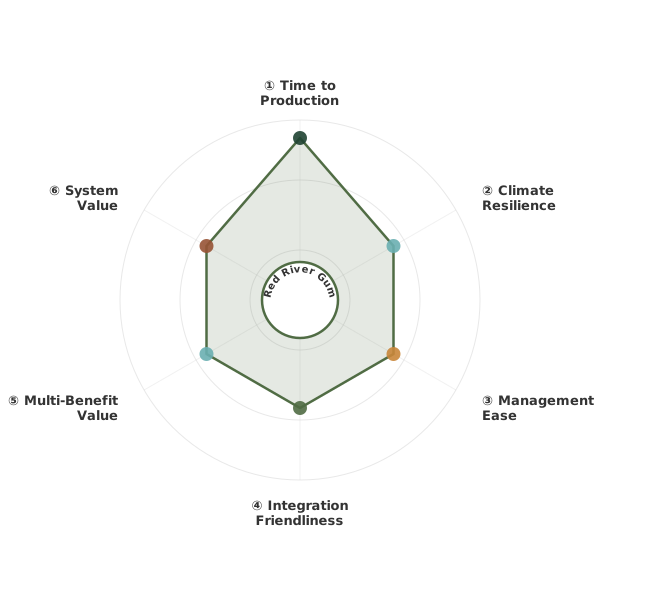
How These Traits Are Calculated
Trait dimensions are ordered clockwise starting from the top of the chart (12 o'clock position):
1. Time to Production
Years from planting to first harvestable yields
WHAT: Measures the waiting period from tree establishment to first meaningful production. Fast-producing trees yield within 2-5 years; slow producers require 8-15+ years before significant harvests.
WHY: Time to production determines cash flow timing and financial feasibility for farm businesses. Long wait times create significant opportunity costs—land and labor tied up for years without income. Fast producers allow quicker experimentation and cash flow recovery, reducing risk for new tree crop farmers.
HOW: Ratings based on years to first harvest documented in economics data. Exceptional (3.0): Production within 2-4 years (elderberry, mulberry, some nut bushes). Typical (2.0): 5-8 years (many fruit trees). Limited (1.0): 10-15+ years (hardwood timber, some nut trees like pecan, walnut).
2. Climate Resilience
Weighted: hardiness zones (50%) + drought tolerance (30%) + adaptability (20%)
WHAT: Combines temperature tolerance (hardiness zone range), water stress resilience (drought tolerance), and overall climate flexibility. Multi-decade tree investments require reliable climate matching to prevent total loss.
WHY: Wrong climate choices mean complete failure for permanent plantings. A tree that dies in year 5 from unexpected cold or prolonged drought represents catastrophic loss of 5 years' investment. Climate resilience determines geographic range and weather variability tolerance—critical as climate patterns become less predictable.
HOW: Weighted formula prioritizes hardiness zone range (50% weight) for core temperature tolerance, drought tolerance (30% weight) for water stress, and overall adaptability (20% weight) for general climate flexibility. Exceptional (3.0): Wide hardiness range (8+ zones) with strong drought tolerance. Typical (2.0): Moderate range and tolerance. Limited (1.0): Narrow climate requirements.
3. Management Ease
Weighted: establishment (40%) + low maintenance (30%) + pest resistance (30%)
WHAT: Combines establishment difficulty, ongoing maintenance requirements, and disease/pest pressure into overall management workload. Low-maintenance trees fit easily into busy farm operations without specialized expertise or intensive inputs.
WHY: Labor is the limiting factor for most diversified farms. High-maintenance trees requiring pruning expertise, disease management, and intensive pest control compete for limited time with other farm enterprises. Easy-care trees deliver production with minimal intervention, making them viable for time-constrained farmers.
HOW: Weighted formula balances establishment ease (40% weight) for startup success, inverted maintenance intensity (30% weight) for ongoing care, and inverted pest/disease pressure (30% weight) for health management. Exceptional (3.0): Easy to establish, self-sufficient growth, naturally pest-resistant. Typical (2.0): Moderate care needs. Limited (1.0): Difficult establishment, intensive maintenance, or heavy pest pressure.
4. Integration Friendliness
Compatibility with silvopasture, alley cropping, and multi-species systems
WHAT: Measures how well the tree integrates with other farm enterprises—grazing livestock, annual crops, or other perennials. Integration-friendly trees tolerate livestock browsing, don't heavily shade out crops, and coexist with diverse plantings.
WHY: Integrated tree systems (silvopasture, alley cropping, food forests) provide higher total returns per acre than monoculture plantings. Trees that work well with livestock provide shade + forage + production simultaneously. Integration flexibility allows farmers to stack enterprises and adapt to market opportunities.
HOW: Ratings based on the integration_friendliness trait documenting compatibility with grazing, cropping, and multi-species systems. Exceptional (3.0): Tolerates livestock browsing, provides livestock benefits (shade, browse), compatible with understory crops. Typical (2.0): Some integration possible with management. Limited (1.0): Requires isolation, incompatible with livestock or cropping.
5. Multi-Benefit Value
Stacked benefits beyond primary product—shade, wildlife, nitrogen, erosion control
WHAT: Measures the diversity of ecosystem services provided beyond the main harvest product. Multi-benefit trees deliver shade, windbreak, wildlife habitat, nitrogen fixation, erosion control, pollinator support, and aesthetic value simultaneously.
WHY: Single-purpose trees are economically fragile—market price swings or production failures eliminate all value. Multi-benefit trees provide resilience through diverse value streams. A nitrogen-fixing tree that produces nuts, provides shade for livestock, supports wildlife, and controls erosion delivers 4-5x the system value of a production-only tree.
HOW: Ratings based on the multi_benefit_value trait documenting service diversity. Exceptional (3.0): 4+ significant services stacked (nitrogen-fixing legume trees providing nuts + shade + wildlife + windbreak). Typical (2.0): 2-3 moderate services. Limited (1.0): Single-purpose production trees with minimal additional benefits.
6. System Value
Total ecosystem and economic value across short, medium, and long timeframes
WHAT: Synthesizes the total regenerative value delivered across multiple decades, including immediate ecosystem services (years 1-5), medium-term production value (years 5-15), and long-term system transformation (years 15-50). Captures the compounding benefits of permanent plantings.
WHY: Trees are multi-decade investments requiring patient capital. System value measures whether the total package—early ecosystem services, eventual production, and long-term legacy benefits—justifies the wait time and land commitment. High system value trees pay back investment through diverse, stacking, compounding benefits.
HOW: Scored via LLM synthesis of economics timelines, ecosystem service diversity, and long-term soil/water/carbon impacts. Exceptional (3.0): Strong early services + valuable production + transformative long-term impacts. Typical (2.0): Moderate benefits across timeframes. Limited (1.0): Long wait with limited service stacking or weak economic returns.
Ratings are based on documented performance in regenerative systems, not conventional high-input scenarios. All traits assume integrated management practices focused on soil health and ecosystem services.
5
Management & Care Requirements
Integration guidance, maintenance needs, and care practices
Management & Care Requirements
Integration guidance, maintenance needs, and care practices
How to Integrate This Plant
Red River Gum (Eucalyptus camaldulensis) can be integrated into regenerative systems primarily for its rapid growth and significant carbon sequestration potential. Its role as a carbon farmer is paramount, contributing to soil carbon enhancement and atmospheric carbon drawdown. While not a nitrogen fixer, it provides biomass for mulching and can offer shade, which is beneficial in silvopasture or agroforestry designs. Its fast growth means it starts providing value relatively quickly. Compatible practices include alley cropping, where it can be planted in wider rows with annual crops, and food forests, where it serves as a fast-growing canopy layer. It can also be used in windbreaks. Within Year 1-2, it establishes and begins carbon sequestration. By Year 5, it provides notable shade and biomass. By Year 20, it stores substantial carbon (over 400 kg per tree) and offers mature canopy benefits. The multi-benefit stacking includes carbon sequestration, biomass for mulch or bioenergy, potential for timber, and habitat creation, contributing to a more resilient and diversified farm ecosystem.
Integration Practices & Management
The provided knowledge base offers limited direct insight into how regenerative farmers practically integrate Eucalyptus camaldulensis into their systems, particularly regarding establishment, grazing integration, termination strategies, or specific management considerations. The sources focus more on the plant's ecological impacts and potential uses. For instance, details carbon storage in established plantations, noting growth rates and carbon accumulation over 20 years, but not how farmers initiated these plantations regeneratively. Source explores Eucalyptus camaldulensis as a phytoremediation tool for sodic soils, demonstrating its potential for soil improvement when combined with other amendments, yet it does not elaborate on farmer-led integration methods like seeding rates, tillage practices, or companion planting. Similarly, compares understory vegetation in native versus nonnative Eucalyptus plantations, highlighting differences in biodiversity and stability but offering no guidance on regenerative establishment or management by farmers. Consequently, specific regenerative practices such as no-till establishment, mob grazing integration, natural termination methods, or intercropping with cash crops are not detailed within this knowledge base, preventing a comprehensive explanation of farmer integration strategies.
Management Profile
Maintenance Intensity: Ideally Suited - Self-sufficient due to its rapid growth, adaptability, and drought tolerance once established. Its minimal pest issues and low labor needs integrate seamlessly into regenerative land management.
Pest Disease Pressure: Adequate - Generally resilient, with good natural defenses against pests and diseases when integrated into a healthy ecosystem. Vigilant observation supports proactive, non-chemical management strategies.
Time To Production: Ideally Suited - Exhibits very fast biomass accumulation, yielding useful timber within 5-10 years. Its rapid growth supports quick returns and resource cycling within the agroforestry system.
Sources behind this view
 Research
-
Changing the land use from degraded pasture into integrated farming systems enhance soil carbon stocks in the Cerrado biome (opens in new window)
This study found: Integrated farming systems in Brazil's Cerrado, combining trees with crops/grasses, significantly boosted soil carbon and nitrogen over 11 years, restoring soil quality in degraded pastures.
-
Eucalyptus Succession on Croplands in the Highlands of Northwestern Ethiopia: Economic Impact Analysis Using Farm Household Model (opens in new window)
This study found: The northwestern highlands of Ethiopia are characterized by severe land degradation and apparently low agricultural productivity. This situation is continuously threatening the livelihoods of smallhol
-
Carbon sequestration potential of eucalyptus-based agroforestry and cropping systems (opens in new window)
This study found: Eucalyptus-based agroforestry systems in India effectively capture carbon (up to 10 Mg C ha⁻¹ yr⁻¹), improving soil health and farmer livelihoods, but require careful water management.
-
Bund Based Agroforestry Using Eucalyptus Species: A Review (opens in new window)
This study found: Review on Eucalyptus trees planted on field borders (bunds) in agroforestry systems. Discusses crop interactions, resource competition, shading effects, and carbon sequestration benefits.
8
Know the Debate
Eucalyptus camaldulensis offers significant potential for carbon sequestration and biomass production in regenerative systems, with reported gains ...
Know the Debate
Eucalyptus camaldulensis offers significant potential for carbon sequestration and biomass production in regenerative systems, with reported gains ...
Eucalyptus camaldulensis offers significant potential for carbon sequestration and biomass production in regenerative systems, with reported gains of 2-5 tons CO2e/acre/year. However, its performance and impact vary widely. In wetter climates and with managed agroforestry systems, it can enhance soil fertility and provide valuable timber. Conversely, in drier regions or monoculture plantations, concerns arise regarding its high water demand, potential to lower soil fertility, and impact on native biodiversity and species richness within the understory. Managing this species requires careful consideration of local climate, scale, and integration strategy to harness its benefits while mitigating potential risks.
How much carbon can Eucalyptus camaldulensis sequester?
Significant sequestration (2-5 tons CO2e/acre/yr)
Mature trees can sequester 2-5 tons of CO2e per acre per year, contributing significantly to climate change mitigation through their biomass accumulation and long-term carbon storage in wood and soil.
Sources behind this view
Sources behind this view
 Videos & Podcasts
-
Integrated eucalyptus and teak agroforestry systems in Brazil's cerrado sequester up to 7 tons/ha/year of carbon, increase beef production 2.5x, reduce slaughter age, and lower methane emissions, offering significant environmental and economic advantages.

Research
-
Carbon Sequestration Potential of Commercial Agroforestry Systems in Indo-Gangetic Plains of India: Poplar and Eucalyptus-Based Agroforestry Systems (opens in new window)
This study found: This review explores how planting trees on farms, known as agroforestry, can help fight climate change and boost farmer income, especially in the Indo-Gangetic plains of India. Fast-growing trees like poplar and eucalyptus are particularly effective at capturing carbon dioxide from the atmosphere and storing it in their wood and roots. Studies show these tree systems can store over 200 tons of carbon per acre, with annual capture rates of about 10-12 tons per acre. Other trees like subabul, malabar neem, and white teak are also good options. Agroforestry is seen as a sustainable way to increase tree cover, improve the environment, and provide financial benefits to farmers.
-
Carbon sequestration potential of eucalyptus-based agroforestry and cropping systems (opens in new window)
This study found: Eucalyptus trees, especially when integrated into farming systems with crops or livestock (agroforestry), are effective at capturing carbon and helping to reduce greenhouse gases. In India, eucalyptus plantations can store significant amounts of carbon, with some studies showing rates of over 10 Mg per hectare per year. Older trees and healthy soil contribute to higher carbon storage. Agroforestry systems with eucalyptus not only store carbon in trees and soil but also improve soil health, biodiversity, and farmer livelihoods. However, eucalyptus trees use a lot of water, which has led to restrictions in some areas. Careful planning, choosing the right species, and sustainable management are key to maximizing carbon benefits while avoiding negative impacts like water depletion.
-
CARBON SEQUESTRATION POTENTIAL OF SELECTED ORNAMENTAL TREES IN ISAAC BORO PARK PORT HARCOURT (opens in new window)
This study found: Researchers studied how much carbon decorative trees in Isaac Boro Park, Port Harcourt, Nigeria, can capture. They measured tree height and trunk thickness (DBH) and used these to estimate the trees' total weight (biomass) above and below ground. Eucalyptus camaldulensis, Peltophorum pterocarpum, and Delonix regia were the tallest and had the thickest trunks. Eucalyptus camaldulensis stored the most carbon, both above and below ground. The study recommends planting these species in city green spaces to help reduce climate change impacts while also beautifying the area.
Carbon storage variable, cautious use advised
While eucalyptus stores carbon, it also has high resource demands and potential allelopathic effects that can harm soil fertility over time. Careful management and context-specific application are necessary to balance carbon gains with soil health.
Sources behind this view
Sources behind this view
Research
-
Carbon Storage and Environmental Adaptation of <i>Eucalyptus camaldulensis </i>Dehnn, in Bangladesh (opens in new window)
This study found: A study in Bangladesh tracked *Eucalyptus camaldulensis* (River Red Gum) trees for 20 years to understand their carbon storage and environmental impact. The trees grew significantly in size, with trunk diameter reaching nearly 30 cm and height over 17 meters by year 20. Over the years, these trees stored substantial amounts of carbon, with the amount per tree increasing from about 46 kg at 5 years to over 430 kg at 20 years. Annually, the trees captured between 5 and 17 kg of carbon per year. While these trees are fast-growing and help meet timber demand, they can also harm soil fertility. This is due to their chemical effects on other plants, high need for nutrients, and significant water use. The study suggests that while eucalyptus can be beneficial for carbon capture, its widespread planting in new areas should be approached with caution. Practices like adding soil amendments or planting other soil-improving plants alongside eucalyptus could help reduce negative impacts on soil health.
-
Eucalypt plantation effects on organic carbon and aggregation of three different-textured soils in Brazil (opens in new window)
This study found: A 14-year study in Brazil looked at how eucalyptus tree farms affect soil health compared to native vegetation on sandy, loamy, and clayey soils. While the tree farms didn't change the total amount of soil carbon stored deep down, they did reduce the stability of soil clumps (aggregates) in the top layer of soil. This was especially true for sandy soils, where more easily decomposable organic matter became available, suggesting a higher risk of carbon loss. Soil respiration, a measure of soil activity, was linked to soil type rather than the presence of eucalyptus. The study suggests that while eucalyptus plantations might not significantly alter total soil carbon, their impact on soil structure and organic matter decomposition, particularly in sandy soils, warrants attention. Less intensive soil preparation practices might help conserve soil carbon in these plantations.
Making Sense of the Differences
Carbon sequestration rates in Eucalyptus camaldulensis vary significantly based on climate, water availability, and competing species. In humid regions with sufficient water, it shows strong potential for carbon storage, exceeding 4 tons C/acre/year in agroforestry systems. However, in drier contexts or monoculture settings, resource demands and allelopathic effects can limit net carbon benefits and even degrade soil health. Farmers in regions with adequate rainfall and opportunities for mixed planting or agroforestry may see substantial carbon sequestration, while those in arid or resource-limited conditions should proceed with caution, monitoring soil impacts closely.
Does Eucalyptus camaldulensis impact local biodiversity?
Can reduce native species richness
Nonnative Eucalyptus plantations can support lower understory plant diversity compared to native stands, potentially impacting local ecosystems and wildlife that rely on native flora.
Sources behind this view
Sources behind this view
Research
-
Should Exotic Eucalyptus be Planted in Subtropical China: Insights from Understory Plant Diversity in Two Contrasting Eucalyptus Chronosequences. (opens in new window)
This study found: Research in southern China looked at how planting Eucalyptus trees, which are not native, affected the variety of plants growing underneath them. In one area where Eucalyptus replaced Chinese fir, the plant diversity under the trees didn't change much. However, in another area where Eucalyptus was planted on bare land, the diversity increased significantly after 24 years, with more woody plants and fewer smaller herbaceous plants compared to younger Eucalyptus stands. The study suggests that mixing Eucalyptus with native trees could help maintain biodiversity in fast-growing plantations, and Eucalyptus might be useful for restoring degraded lands.
Can support biodiversity in mixed systems
When integrated into diverse agroforestry systems or managed with a focus on understory health, Eucalyptus can coexist with or even enhance biodiversity, particularly when focusing on native species elsewhere in the landscape.
Sources behind this view
Sources behind this view
Videos & Podcasts
-
Eucalyptus trees in agroforestry systems provide deep root nutrient access, biomass for chop-and-drop, and growth hormones. They support diverse understory crops like lettuce and cauliflower.
-
Eucalyptus flammability in Australia is due to lack of wet undergrowth; maintaining a lush understory is key to fire mitigation and soil regeneration, with eucalyptus being a powerful tool for this.

Research
-
Should Exotic Eucalyptus be Planted in Subtropical China: Insights from Understory Plant Diversity in Two Contrasting Eucalyptus Chronosequences. (opens in new window)
This study found: Research in southern China looked at how planting Eucalyptus trees, which are not native, affected the variety of plants growing underneath them. In one area where Eucalyptus replaced Chinese fir, the plant diversity under the trees didn't change much. However, in another area where Eucalyptus was planted on bare land, the diversity increased significantly after 24 years, with more woody plants and fewer smaller herbaceous plants compared to younger Eucalyptus stands. The study suggests that mixing Eucalyptus with native trees could help maintain biodiversity in fast-growing plantations, and Eucalyptus might be useful for restoring degraded lands.
Making Sense of the Differences
The impact of Eucalyptus camaldulensis on biodiversity is context-dependent. While monocultures, especially on degraded land, may reduce native plant diversity, integrating eucalyptus within carefully designed agroforestry systems or maintaining a diverse understory can mitigate negative effects and potentially support beneficial species. The practice of planting mixed species or using eucalyptus as part of a broader biodiversity strategy, rather than as a sole species plantation, appears critical for fostering a more resilient ecosystem. Farmers should prioritize integrated designs and consider native species presence in their planning.
What are the soil fertility and water impacts of Eucalyptus camaldulensis?
Potential for soil degradation and water stress
Eucalyptus can harm soil fertility through allelopathic effects and high resource demands, potentially reducing aggregate stability and depleting water tables, especially in dry climates or sandy soils.
Sources behind this view
Sources behind this view
Research
-
Carbon Storage and Environmental Adaptation of <i>Eucalyptus camaldulensis </i>Dehnn, in Bangladesh (opens in new window)
This study found: A study in Bangladesh tracked *Eucalyptus camaldulensis* (River Red Gum) trees for 20 years to understand their carbon storage and environmental impact. The trees grew significantly in size, with trunk diameter reaching nearly 30 cm and height over 17 meters by year 20. Over the years, these trees stored substantial amounts of carbon, with the amount per tree increasing from about 46 kg at 5 years to over 430 kg at 20 years. Annually, the trees captured between 5 and 17 kg of carbon per year. While these trees are fast-growing and help meet timber demand, they can also harm soil fertility. This is due to their chemical effects on other plants, high need for nutrients, and significant water use. The study suggests that while eucalyptus can be beneficial for carbon capture, its widespread planting in new areas should be approached with caution. Practices like adding soil amendments or planting other soil-improving plants alongside eucalyptus could help reduce negative impacts on soil health.
-
Eucalypt plantation effects on organic carbon and aggregation of three different-textured soils in Brazil (opens in new window)
This study found: A 14-year study in Brazil looked at how eucalyptus tree farms affect soil health compared to native vegetation on sandy, loamy, and clayey soils. While the tree farms didn't change the total amount of soil carbon stored deep down, they did reduce the stability of soil clumps (aggregates) in the top layer of soil. This was especially true for sandy soils, where more easily decomposable organic matter became available, suggesting a higher risk of carbon loss. Soil respiration, a measure of soil activity, was linked to soil type rather than the presence of eucalyptus. The study suggests that while eucalyptus plantations might not significantly alter total soil carbon, their impact on soil structure and organic matter decomposition, particularly in sandy soils, warrants attention. Less intensive soil preparation practices might help conserve soil carbon in these plantations.
-
Surface and Subsurface Water Impacts of Forestry and Grassland Land Use in Paired Watersheds: Electrical Resistivity Tomography and Water Balance Analysis (opens in new window)
This study found: A three-year study in southern Brazil compared how eucalyptus plantations and grasslands affect water resources in nearby watersheds. Researchers found that during wetter periods, eucalyptus trees used significantly more water through evaporation and plant transpiration than grasslands did, resulting in less runoff from the grassland. However, during dry spells, the eucalyptus plantations drew down more underground water, lowering the water table compared to the grassland. By combining water measurements with a special imaging technique to see underground, the study provides valuable information for managing water resources sustainably, especially when considering forestry or grassland production.
Can improve soil fertility and water management when integrated
In agroforestry systems or specific soil types, eucalyptus can improve soil structure, access deep nutrients, and enhance water infiltration, especially when managed to avoid allelopathy and excess water use.
Sources behind this view
Sources behind this view
Videos & Podcasts
-
Integrated eucalyptus and teak agroforestry systems in Brazil's cerrado sequester up to 7 tons/ha/year of carbon, increase beef production 2.5x, reduce slaughter age, and lower methane emissions, offering significant environmental and economic advantages.
-
Timber processing waste (bark peelings) is mixed with cow manure to create compost, fostering biological activity for soil building. This circular economy practice supports various industries and on-farm pasture improvement.
Research
-
Carbon sequestration potential of eucalyptus-based agroforestry and cropping systems (opens in new window)
This study found: Eucalyptus trees, especially when integrated into farming systems with crops or livestock (agroforestry), are effective at capturing carbon and helping to reduce greenhouse gases. In India, eucalyptus plantations can store significant amounts of carbon, with some studies showing rates of over 10 Mg per hectare per year. Older trees and healthy soil contribute to higher carbon storage. Agroforestry systems with eucalyptus not only store carbon in trees and soil but also improve soil health, biodiversity, and farmer livelihoods. However, eucalyptus trees use a lot of water, which has led to restrictions in some areas. Careful planning, choosing the right species, and sustainable management are key to maximizing carbon benefits while avoiding negative impacts like water depletion.
-
Soil physicochemical properties under eucalyptus tree species planted in alley maize cropping agroforestry practice in Decha Woreda, Kaffa zone, southwest Ethiopia (opens in new window)
This study found: In a farming system in southwest Ethiopia that combines eucalyptus trees with corn (maize) in rows, a study looked at how the trees affected the soil. Researchers compared soil under four types of eucalyptus trees planted in rows with soil in nearby open fields. After analyzing soil samples, they found that the eucalyptus trees did not significantly change key soil health indicators like total nitrogen, phosphorus, pH, organic matter, soil moisture, or organic carbon, even with short-term tree growth. The only notable difference was in the amount of sand in the soil. This suggests that in this specific high-rainfall clay soil environment, eucalyptus trees grown for a short time in this agroforestry setup don't negatively impact the soil's basic physical and chemical properties.
Making Sense of the Differences
The impact of Eucalyptus camaldulensis on soil fertility and water management is highly context-dependent. While monocultures, especially in dry or sandy environments, can lead to soil degradation, reduced aggregate stability, and water depletion, its integration into diverse agroforestry systems in regions with adequate rainfall can offer benefits. These include accessing deeper soil nutrients, improving soil structure, and enhancing water infiltration, particularly when managed using holistic approaches like timber-lot agroforestry, syntropic farming, or by managing understory biomass. Farmers in humid regions with opportunities for mixed plantings and holistic management may find it beneficial, whereas those in arid or water-scarce areas should carefully weigh the risks of high water demand and potential soil degradation.