
Red Fescue
The available excerpts highlight its potential utility in regenerative agriculture. Primarily, it functions as a component in grassland systems, contributing to vegetation cover for erosion prevention on challenging soils, as seen in trials on ski slopes. It has been studied in crop rotations, including grass seed rotations, indicating its role in diverse cropping systems. One study suggests that continuous Festuca Rubra management may have a lower impact on nitrous oxide emissions compared to other systems. Furthermore, Festuca Rubra shows promise in phytostabilization of contaminated soils, with endophyte-inoculated varieties demonstrating a reduction in heavy metal bioavailability and improved soil microbial parameters. This suggests a role in land remediation and building soil health in degraded areas. Further research would be beneficial to fully understand its integration into broader regenerative practices like cover cropping or polyculture systems. While coverage in our knowledge base is limited, the above represents documented uses in regenerative systems.
For a full botanical description see: Wikipedia(opens in new window) (external link)
Regenerative Quick Profile
All recommendations assume integrated, regenerative practices—not conventional inputs.
Climate & Soil Fit
Climate: Tropical Rainforest, Tropical Monsoon, Tropical Savanna, Hot Semi-Arid (Steppe), Cold Semi-Arid (Steppe), Hot Desert, Cold Desert, Humid Subtropical, Oceanic (Maritime Temperate), Hot-Summer Mediterranean, Warm-Summer Mediterranean, Monsoon-Influenced Humid Subtropical, Subtropical Highland, Hot-Summer Continental, Warm-Summer Continental, Subarctic, Extreme Subarctic, Monsoon-Influenced Hot-Summer Continental, Monsoon-Influenced Warm-Summer Continental, Monsoon-Influenced Extreme Subarctic, Tundra
Zones: USDA 3-9, Australian Zones 1-12
Optimal Soil: Loam Soil
System Role & Functions
Primary: Cover Crop System
Secondary: Soil Remediation, Forage Integration
Key Benefits: Climate adaptable, Low maintenance, Cold Hardiness
Management Level
Experience: Beginner-Friendly
Maintenance: Very low maintenance - Red fescue's adaptability and natural drought tolerance minimize the need for fertility management and water management, requiring little labor due to its fine texture and low growth habit.
Value Streams
- Cover crop (soil investment)
- Soil building and erosion control
- Livestock forage value
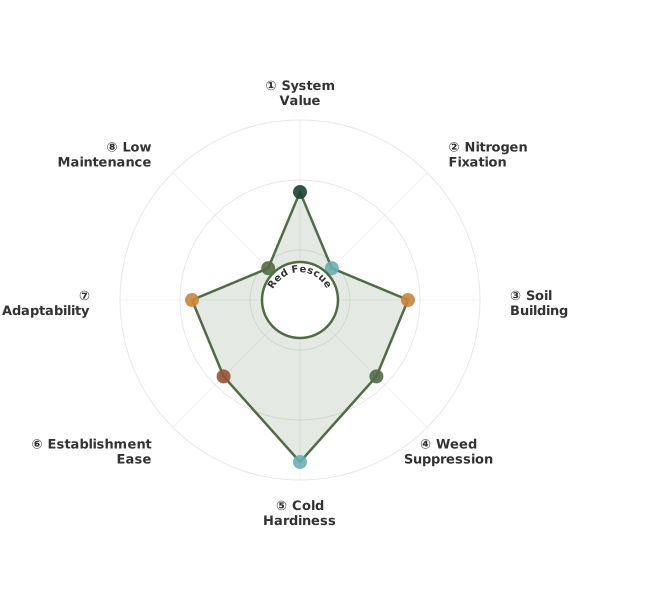
How These Traits Are Calculated
Trait dimensions are ordered clockwise starting from the top of the chart (12 o'clock position):
1. System Value
Ecosystem service stacking across nitrogen, carbon, water, biodiversity
WHAT: Synthesizes the compounding value of multiple ecosystem services delivered simultaneously—nitrogen fixation, soil organic matter building, pollinator support, erosion control, and water infiltration improvement. This is the total regenerative impact beyond single-function metrics.
WHY: The highest-value cover crops deliver 3-5 significant ecosystem services at once. A legume that fixes nitrogen, builds biomass, supports pollinators, and improves water infiltration provides $150-300/acre in combined benefits versus $30-60 for single-function covers. This service stacking is the core principle of regenerative agriculture.
HOW: Scored via LLM synthesis of economics data, timeline benefits, and trait combinations. Exceptional (3.0): 4-5 major services stacked with strong economic value ratios. Typical (2.0): 2-3 moderate services. Limited (1.0): Single-function covers with minimal service stacking. Considers seed cost relative to benefit value.
2. Nitrogen Fixation
Biological nitrogen production via legume root nodule bacteria
WHAT: Measures the ability to convert atmospheric nitrogen (N₂) into plant-available ammonia through symbiotic bacteria in root nodules. Legumes form partnerships with rhizobium bacteria that fix 60-150 lbs N/acre/year, reducing or eliminating synthetic fertilizer needs for following crops.
WHY: Nitrogen is the most expensive fertilizer input in crop production ($0.50-1.00/lb). Cover crops with exceptional nitrogen fixation can provide $60-150/acre worth of fertility while building soil organic matter. This biological process also reduces groundwater contamination from nitrogen runoff and lowers farm carbon footprint.
HOW: Ratings based on annual nitrogen fixation capacity and reliability across soil conditions. Exceptional (3.0): Legumes like hairy vetch, crimson clover, and field peas fixing >100 lbs N/acre/year. Typical (2.0): Moderate fixers like red clover at 60-100 lbs N/acre/year. Limited (1.0): Non-legumes (grasses, brassicas) with zero fixation capacity.
3. Soil Building
Weighted: biomass production (60%) + root system depth (40%)
WHAT: Combines above-ground biomass production with root depth to measure total soil organic matter contribution. Biomass provides surface organic matter, while deep roots deposit carbon at depth and break up compaction layers.
WHY: Soil organic matter is the foundation of regenerative agriculture, improving water retention, nutrient cycling, and biological activity. Each 1% increase in soil organic matter holds an additional 20,000 gallons of water per acre and represents $500-1,000 in fertility value. Deep roots access subsoil nutrients and create channels for water infiltration.
HOW: Weighted formula prioritizes biomass production (60% weight) for immediate organic matter contribution, with root depth (40% weight) for long-term soil structure. Exceptional (3.0): High-biomass crops with deep roots like cereal rye (8+ tons biomass, 5+ ft roots). Typical (2.0): Moderate on both factors. Limited (1.0): Low biomass or shallow roots.
4. Weed Suppression
Physical competition through rapid establishment and dense growth
WHAT: Measures the ability to outcompete weeds through rapid germination, aggressive early growth, and dense canopy formation. Physical smothering and light competition reduce weed pressure without herbicides.
WHY: Weed management is a major labor and cost burden for farmers. Cover crops that effectively suppress weeds reduce herbicide costs ($20-60/acre), decrease cultivation passes (fuel + labor), and provide clean seedbeds for cash crops. This is especially valuable in organic systems where herbicide options are limited.
HOW: Ratings based on germination speed, tillering density, and canopy closure timing. Exceptional (3.0): Fast-establishing, dense-tillering crops like cereal rye, oilseed radish that close canopy within 3-4 weeks. Typical (2.0): Moderate establishment and coverage. Limited (1.0): Slow-establishing or sparse crops that allow weed competition.
5. Cold Hardiness
Winter survival for fall planting and spring green manure value
WHAT: Measures tolerance to freezing temperatures and ability to survive winter conditions. Winter-hardy cover crops can be fall-planted, overwinter as living mulch, and provide early spring growth before cash crop planting.
WHY: Fall-planted winter-hardy covers extend the growing season into unused months, capturing solar energy and preventing erosion during wet periods. Spring green manure from overwintered covers provides early nitrogen and biomass. This timing flexibility is critical in cold climates with short growing seasons.
HOW: Ratings based on minimum survival temperature and winter active growth. Exceptional (3.0): Winter-hardy crops like cereal rye, hairy vetch, crimson clover surviving to -20°F with active growth in spring. Typical (2.0): Moderate cold tolerance. Limited (1.0): Warm-season crops like buckwheat, cowpea killed by first frost.
6. Establishment Ease
Germination speed, soil requirement flexibility, planting window breadth
WHAT: Measures how easily the cover crop establishes from seed, including germination speed, tolerance for variable soil conditions, and flexibility in planting timing. Easy establishment means reliable stands without intensive management.
WHY: Difficult-to-establish covers increase risk of stand failure, wasted seed costs, and reduced benefits. Easy establishment crops tolerate late planting, poor seedbed preparation, and variable moisture—critical when cover cropping windows are narrow between cash crops. Reliable establishment ensures consistent soil building and weed suppression benefits.
HOW: Ratings based on days to emergence, soil condition sensitivity, and planting window breadth. Exceptional (3.0): Fast germinators like buckwheat (3-5 days) and cereal rye (5-7 days) with wide planting windows. Typical (2.0): Moderate establishment requirements. Limited (1.0): Slow or finicky establishers requiring precise conditions.
7. Adaptability
Weighted: climate tolerance (60%) + multi-benefit versatility (40%)
WHAT: Combines climate adaptability (temperature and rainfall range) with multi-benefit versatility (diverse ecosystem services) to measure overall system flexibility. High adaptability means the cover works across farm regions and provides multiple functions.
WHY: Farmers need cover crops that work reliably across diverse fields and provide stacked benefits. Climate-adaptable covers reduce risk in variable weather, while multi-benefit crops deliver nitrogen fixation + pollinator support + forage value simultaneously. This versatility maximizes return on cover crop investment.
HOW: Weighted formula prioritizes climate tolerance (60% weight) for geographic reliability, with multi-benefit value (40% weight) for functional stacking. Exceptional (3.0): Wide climate range + multiple significant benefits. Typical (2.0): Moderate on both factors. Limited (1.0): Narrow climate range or single-function crops.
8. Low Maintenance
Inverted from maintenance intensity—low inputs mean high scores
WHAT: Measures minimal input requirements for successful cover cropping. Low-maintenance covers require no irrigation, minimal fertility, easy termination, and tolerate variable management timing.
WHY: Cover crops compete for resources with cash crops in tight rotations. Low-maintenance covers fit easily into existing systems without adding labor, equipment, or input costs. Easy termination is especially critical—covers that are difficult to kill can become weeds and delay cash crop planting.
HOW: Inverted score from maintenance intensity trait (4.0 minus raw score). Exceptional (3.0): Self-sufficient crops like cereal rye, field peas requiring no irrigation or fertility, easily terminated by mowing or winter-kill. Typical (2.0): Moderate input needs. Limited (1.0): High-maintenance crops needing irrigation, heavy fertility, or difficult termination (herbicides, multiple tillage passes).
Ratings are based on documented performance in regenerative systems, not conventional high-input scenarios. All traits assume integrated management practices focused on soil health and ecosystem services.
4
System Role & Multi-Benefit Value
Functional roles, integration strategies, and stacked benefits
System Role & Multi-Benefit Value
Functional roles, integration strategies, and stacked benefits
Functional Role
Total System Value
Red fescue offers significant multi-benefit stacking potential within regenerative farm systems. As a cover crop, its primary direct value lies in erosion control and soil stabilization, crucial for preventing topsoil loss and maintaining land integrity, as highlighted in excerpt. Beyond physical soil retention, it contributes to system enhancement by building soil organic matter and improving soil structure over time. While not a nitrogen fixer, its dense growth can outcompete weeds and provide forage. Ecosystem services include carbon sequestration in the soil and supporting microbial communities, which is enhanced when inoculated with beneficial endophytes for phytostabilization. Its resilience makes it suitable for challenging sites, contributing to risk diversification by ensuring ground cover and soil health even under stress. The overall system value is in building a more resilient and functional soil profile, reducing the need for external inputs and enhancing long-term productivity.
Integration Characteristics
Multi-Benefit Value: Adequate - Exceptional for erosion control and turf, its rhizomatous nature dramatically improves soil structure; it offers some forage and supports soil health.
Sources behind this view
 Research
-
Functional traits in cover crop mixtures: Biological nitrogen fixation and multifunctionality (opens in new window)
Mixed cover crops with diverse plant types (legumes, brassicas, grasses) offer multiple farm benefits (ecosystem services) better than single-species stands. Complementary traits enhance sustainabilit
6
Economics & Value Streams
Direct harvest, system benefits, ecosystem services, and risk diversification
Economics & Value Streams
Direct harvest, system benefits, ecosystem services, and risk diversification
Comprehensive economic analysis including direct harvest value, system enhancement contributions, ecosystem services, value timeline, and risk diversification strategies.
Cover Crop Investment
| Metric | Value |
|---|---|
| Seed Cost | $40-80/acre $99-198/ha |
| Termination Cost | 20-50 49-124 |
| Biomass Production | 2-5 4-11 |
| N Fixation Value | N/A N/A |
| Weed Control Savings | 15-40 37-99 |
Cover crops are soil investments, not cash crops. Economics measured in soil health gains, input reduction, and subsequent crop performance. Values show direct costs and estimated benefits.
System Enhancement Value
Beyond cost recovery: soil building, nitrogen, biomass, and weed suppression
Soil Building & Weed Suppression
Red fescue (Festuca rubra) offers several system benefits beyond its primary role as a cover crop and its soil remediation potential. It can be integrated as forage, as noted in its secondary function, providing grazing opportunities or material for haying in mixed systems. Knowledge base excerpt mentions continuous fescue management, suggesting its role in long-term soil health and potentially N2O emission reduction compared to other managements. Additionally, excerpt and highlight its use as a low-maintenance groundcover, especially in shaded areas, indicating its adaptability and resilience. Its creeping rhizomes allow it to form a dense sward, suppressing weeds and contributing to soil organic matter accumulation, as suggested by excerpt regarding grass seed cropping systems and soil C storage. This accumulation of organic matter enhances soil structure, water infiltration, and nutrient cycling, further contributing to overall farm system resilience.
Erosion Control
Variable, depends on slope, soil type, and establishment success. Estimated to prevent significant soil loss on vulnerable areas.
Red fescue, as a grass species, contributes to erosion prevention, particularly on sloped or disturbed soils. Knowledge base excerpt highlights that native propagation materials, including fescues, achieved 65% plant cover, which is sufficient for erosion prevention on gravelly soils. This ground cover helps to stabilize soil particles, reducing the impact of wind and water erosion. By forming a dense root system and a protective canopy of foliage, red fescue can significantly reduce soil loss, thereby protecting valuable topsoil and preventing sedimentation in waterways. This function is crucial in integrated farm systems where maintaining soil health is paramount for long-term productivity and environmental stewardship. While not a direct nitrogen fixer, its role in soil stabilization indirectly supports nutrient retention by preventing the loss of soil organic matter, which is a reservoir of nutrients.
Ecosystem Service Contributions
Environmental contributions: carbon, pollinators, wildlife, and water
- Carbon Sequestration: Red fescue contributes to carbon sequestration through the accumulation of soil organic matter via its root systems and above-ground biomass, especially when managed for cover cropping or perennial groundcover. Grass seed cropping systems, as indicated by excerpt, play a significant role in soil C storage and enhancement.
- Pollinator Support: Low. While grasses can provide some habitat and pollen/nectar for specific insect groups, red fescue is not typically considered a primary pollinator plant compared to flowering forbs.
- Wildlife Habitat: Provides ground cover and potential nesting sites for small ground-dwelling birds and insects. Its dense sward can offer refuge and foraging opportunities for certain small mammals. Its role as forage integration also contributes to food availability for grazing animals.
- Water Quality: Not applicable
Value Timeline: Soil Building Process
When you'll see results: immediate soil benefits, compounding over seasons
Years 1-2
Establishment of ground cover, initial erosion control, suppression of weeds, contribution to soil organic matter buildup, potential for early forage integration.
Years 3-5
Well-established cover for significant erosion prevention, enhanced soil structure and water infiltration, continued organic matter accumulation, reliable forage component in mixed systems.
Years 10-20
Mature soil health benefits, potential for increased resilience to drought and soil degradation, long-term soil carbon storage, consistent contribution to a stable farm ecosystem.
20+ Years
Sustained soil health and ecosystem services, potential for reduced reliance on external inputs, long-term contribution to farm resilience and biodiversity.
Farm Risk Reduction
How this reduces farm risk: lower input costs and better soil resilience
- Multiple Revenue Streams: Forage for livestock, potential for seed production (though not explicitly stated, common for fescues), ecosystem services (soil health, erosion control), potential for straw use (mentioned in excerpt as feasible without affecting soil quality).
- Temporal Income Spread: Ongoing ecosystem services (erosion control, soil health) are continuous. Forage availability is seasonal or year-round depending on management. Potential for periodic seed harvest offers a distinct income stream.
- Market Risk Hedge: Reduces reliance on monoculture systems, offering a diverse revenue and value stream. Its drought tolerance (implied by its use as a lawn alternative and groundcover in drier climates like parts of California) can buffer against weather-related risks. Its role in soil health can reduce the need for costly soil amendments and improve the resilience of other crops.
Sources behind this view
Research
-
Economics of Cover Crops (opens in new window)
Cover crops can be profitable if they produce enough biomass, offering economic benefits through grazing, reduced inputs, carbon credits, and monetization of soil services.
-
Cover Crops and Ecosystem Services: Insights from Studies in Temperate Soils (opens in new window)
Cover crops build soil organic matter (0.1-1 Mg/ha/yr), reduce erosion by up to 80%, improve soil structure, recycle nutrients, and suppress weeds. They can be grazed or hayed without harming soil or
-
Evaluating Cover Crops for Benefits, Costs and Performance within Cropping System Niches (opens in new window)
Review of cover crops highlights benefits (pest control, soil health, yield) and costs. Best species identified for different seasons/regions. Rye excels in winter, C4 grasses in summer. Legumes fix N
-
Enhancing Sustainable Farming and Climate Resilience: The Role of Cover Crops (opens in new window)
Cover crops boost soil health, fix nitrogen, suppress weeds, and sequester carbon, enhancing farm profitability and climate resilience. Addressing adoption challenges is key.