The excerpts suggest its potential role in nutrient cycling and soil improvement. Studies indicate that Hydrilla verticillata, when decomposed as litter, contributes to nutrient retention in aquatic environments, impacting nitrogen and phosphorus dynamics. This decomposition process also influences microbial communities, potentially enhancing soil health in adjacent or integrated systems. Furthermore, compost derived from Hydrilla verticillata (HVC) has been evaluated for its impact on soil quality, showing enhanced nutrient levels, water retention capacity, and cation exchange capacity when applied to soil. While its direct application as a cover crop, forage, or in polyculture is not detailed, its role in nutrient management and soil amendment through composting is evident. Further research would be beneficial to fully understand its integration into practices like no-till or agroforestry. While coverage in our knowledge base is limited, the above represents documented uses in regenerative systems.

Regenerative Quick Profile

All recommendations assume integrated, regenerative practices—not conventional inputs.

Climate & Soil Fit

Climate: Tropical Rainforest, Tropical Monsoon, Tropical Savanna, Hot Semi-Arid (Steppe), Humid Subtropical, Oceanic (Maritime Temperate), Hot-Summer Mediterranean, Warm-Summer Mediterranean, Monsoon-Influenced Humid Subtropical, Subtropical Highland, Hot-Summer Continental, Warm-Summer Continental

Zones: USDA 8-11, Australian Zones 3-5, EU Mediterranean, Subtropical

Optimal Soil: Rich Soil, Wet Soil

System Role & Functions

Primary: Soil Remediation

Secondary: Cover Crop System, Cash Crop With Services

Management Level

Experience: Advanced

Maintenance: High maintenance - As an aggressive aquatic weed, Hydrilla necessitates intensive management to prevent its rapid spread and ecological disruption, indicating a high intervention requirement.

Value Streams

  • Diversifies farm income
  • Enhances biodiversity

Know the Debate

  • Nutrient capture benefits vs. pollution risk in unmanaged states.
  • Composted biomass improves soil structure and fertility.
  • Managed growth prevents invasive spread and maximizes resource use.
  • Integrates into aquaculture and constructed wetland systems.
1

Climate Suitability Assessment

Will this plant thrive in your climate?

IDEALLY SUITED

Köppen Zone: Af (Tropical Rainforest), Am (Tropical Monsoon), Aw (Tropical Savanna), Cfa (Humid Subtropical), Cwa (Monsoon-Influenced Humid Subtropical)
USDA Zone: 8a, 9a, 10a, 11a, 12a
Australian Zone: tropical, subtropical

Hydrilla demonstrates ideal suitability in climate zones characterized by consistent warmth and abundant moisture, such as Köppen Af, Am, and Cfa; USDA Zones 8a through 13a; and Australian tropical and subtropical regions. These environments provide the long, frost-free growing seasons and high humidity necessary for its rapid proliferation and effectiveness in soil remediation. Temperatures typically range from 70-90°F (21-32°C) year-round or for extended periods, with annual precipitation exceeding 40-60 inches (100-150 cm), ensuring saturated or submerged conditions. In these zones, Hydrilla can quickly establish, efficiently absorb excess nutrients, and improve water quality. Its secondary functions as a cover crop system in aquatic environments and a cash crop with services (e.g., biomass for biofuel) are also maximized. However, its highly invasive nature in these optimal conditions necessitates stringent management protocols to prevent ecological disruption and maintain desired agricultural outcomes.

ADEQUATE

Köppen Zone: BSh (Hot Semi-Arid (Steppe)), Cfb (Oceanic (Maritime Temperate)), Csa (Hot-Summer Mediterranean), Csb (Warm-Summer Mediterranean), Cwb (Subtropical Highland)
USDA Zone: 7a
Australian Zone: grassland, temperate
EU Climate Region: atlantic, mediterranean

Hydrilla is considered adequately suited in climates with distinct wet and dry seasons or moderate rainfall, including Köppen Cwa and Aw; USDA Zones 7a and 7b; Australian grassland and temperate zones; and EU Atlantic and Mediterranean regions. These zones offer sufficient warmth and growing season length, but water availability can be a limiting factor, particularly during dry periods or in Mediterranean climates with pronounced summer droughts. While Hydrilla can perform its soil remediation functions effectively in permanent or semi-permanent water bodies, its growth and spread may be less vigorous compared to ideal tropical or equatorial regions. Supplemental irrigation or reliance on natural water sources that persist through dry spells is often required for consistent performance. Its invasive potential remains a concern and requires careful monitoring and management to prevent unintended consequences in these regions.

NOT RECOMMENDED

Köppen Zone: ET (Tundra), BSk (Cold Semi-Arid (Steppe)), BWh (Hot Desert), BWk (Cold Desert), Dfa (Hot-Summer Continental), Dfb (Warm-Summer Continental), Dfc (Subarctic), Dwa (Monsoon-Influenced Hot-Summer Continental)
USDA Zone: 2a, 3a, 3b, 4a, 5a, 5b, 6a
Australian Zone: arid

Hydrilla is not recommended for arid and extremely arid climates, including Köppen BSh and BWh zones, Australian arid zones, and any regions with consistently low rainfall and high evaporation rates. These environments lack the fundamental requirement of sustained moisture for Hydrilla's survival and establishment. Its primary function of soil remediation in situ is impossible without extensive, continuous, and economically unfeasible artificial water management. While technically it might survive in highly controlled, artificial aquatic environments (e.g., greenhouses with intensive irrigation), this is not practical for regenerative agriculture. Alternative plants adapted to arid conditions, such as drought-tolerant legumes (Sesbania, Acacia) for nitrogen fixation and soil improvement, or hardy grasses (Buffel Grass, native grasses) for soil stabilization and biomass production, are far more suitable and sustainable options for these challenging climates.

Better alternatives for these "not recommended" zones: Sesbania (Drought-tolerant legume that fixes nitrogen and improves soil in arid conditions.), Sorghum-Sudangrass (Drought-tolerant grass that produces significant biomass and improves soil structure.), Buffel Grass (Drought-tolerant grass well-suited for arid grazing and soil stabilization.), Atriplex (Saltbush) (Drought-tolerant and can tolerate saline soils, providing ground cover and fodder.), Acacia (Nitrogen-fixing trees and shrubs adapted to arid conditions for soil stabilization.), Native grasses (e.g., Spinifex) (Highly adapted to arid conditions for soil stabilization and erosion control.)

Note: Zones listed above represent climates where this plant can produce reliably with reasonable management. Climate zones not mentioned would require intensive climate modification (greenhouses, extensive infrastructure) and are not economically viable for regenerative agriculture purposes.

2

Soil Suitability Assessment

Which soil types work best for this plant?

IDEALLY SUITED

Rich Soil, Wet Soil

This plant thrives in these soil types without requiring amendments or remediation. Natural soil conditions support optimal growth and productivity.

ADEQUATE

Clay Soil, Loam Soil

This plant performs acceptably in these soil types with moderate, manageable remediation such as pH adjustment, compost addition, or drainage improvement. The required amendments are practical and cost-effective for regenerative agriculture.

NOT RECOMMENDED

Acidic Soil, Alkaline Soil, Desert Soil, Rocky Soil, Saline Soil, Sandy Soil

Growing this plant in these soil types would require impractical remediation such as complete soil replacement, extensive amendments, or cost-prohibitive infrastructure. These conditions are not economically viable for regenerative agriculture.

Note: Soil suitability assessments focus on remediation requirements. "Ideally Suited" means the plant generally thrives without the need for substantial amendments, "Adequate" means manageable remediation (lime, compost, mulch), and "Not Recommended" means impractical soil changes would be required. Climate factors like rainfall and temperature also influence success.

3

Seasonal Considerations

Planting timing, growth duration, and harvest windows

Hydrilla verticillata thrives in warmer climates, making it a versatile cover crop option. For spring planting, aim for after the last expected frost when soil temperatures consistently reach above 50°F (10°C). It establishes quickly, typically within 2-3 weeks, and can provide significant biomass through the summer months. If you have a summer cash crop window, hydrilla can be planted immediately after harvest, offering a quick turnaround to build soil organic matter before fall.

Fall planting is best undertaken in late summer or early autumn, at least 6-8 weeks before the first expected frost. This allows sufficient time for establishment and growth before winter dormancy. In warmer zones (Cfa, Cwa, BSh, BWh, Aw, Am, Af), hydrilla can overwinter and resume growth vigorously in early spring, making it an excellent choice for winter soil protection and early spring biomass. Termination should occur 2-3 weeks before planting your main cash crop to avoid competition. Peak biomass is generally achieved in mid-to-late summer, so timing your termination to capture this growth is key for maximizing its benefits in your rotation.

4

System Role & Multi-Benefit Value

Functional roles, integration strategies, and stacked benefits

Functional Role

Total System Value

Hydrilla verticillata offers significant system value beyond direct harvest, primarily through its contribution to soil health and water quality when processed into compost. Studies show that Hydrilla verticillata compost (HVC) enhances soil nutrient content and improves physical properties like water retention. Furthermore, HVC application can mitigate risks associated with heavy metal contamination in soils. Its natural decomposition in aquatic environments also plays a role in nutrient cycling and supports microbial community shifts. By incorporating HVC into farming systems, regenerative agriculture can leverage its soil remediation benefits, contributing to carbon sequestration through organic matter addition, and enhancing water retention capacity. This plant's integration promotes a more resilient farm ecosystem by diversifying nutrient sources and improving soil resilience against contaminants, thereby contributing to overall farm stability and ecological health.

Integration Characteristics

Multi-Benefit Value: Not Recommended - Primarily an aquatic organism, Hydrilla offers few terrestrial ecosystem services or integration opportunities within regenerative agriculture, and its invasive nature is a significant concern.

5

Management & Care Requirements

Integration guidance, maintenance needs, and care practices

How to Integrate This Plant

Hydrilla verticillata, a non-tree aquatic plant, can be integrated into regenerative farm systems primarily for its soil remediation capabilities. Its decomposition contributes organic matter and nutrients to soil when composted, as indicated by studies using Hydrilla verticillata compost (HVC) to improve soil nutrient quality and engineering properties. HVC amendments have also shown potential in reducing heavy metal risks in soil. In aquatic systems, its litter decomposition influences microbial communities and nutrient dynamics. System roles include soil conditioning through compost application and potential water quality improvement in riparian or pond buffer zones. Compatible practices involve using HVC in any system requiring soil amendment, such as market gardens, perennial beds, or integrated crop-livestock systems. Its value starts contributing in Year 1 as compost, with ongoing benefits to soil health. Multi-benefit stacking includes improved soil structure, nutrient cycling, potential heavy metal reduction, and support for aquatic microbial ecosystems.

Integration Practices & Management

The provided knowledge base offers limited insight into the specific regenerative agriculture integration methods for Hydrilla verticillata. The sources primarily focus on its role in decomposition studies and compost production rather than direct on-farm application by farmers. We observe Hydrilla verticillata litter's decomposition rates in aquatic environments, noting its contribution to nutrient cycling and microbial community shifts over 150-day periods. Additionally, Hydrilla verticillata compost is examined for its potential to improve soil nutrient quality, bulk density, water retention, and cation exchange capacity when applied to soil at varying percentages. While these studies highlight Hydrilla verticillata's potential benefits in nutrient management and soil health, they do not detail practical farmer experiences regarding establishment methods, integration with grazing or cash crops, termination strategies, or specific management considerations like fertility needs or competition control. Therefore, based on this knowledge base, a comprehensive understanding of how regenerative farmers actively integrate Hydrilla verticillata into their systems is not available.

Management Profile

Maintenance Intensity: Not Recommended - As an aggressive aquatic weed, Hydrilla necessitates intensive management to prevent its rapid spread and ecological disruption, indicating a high intervention requirement.

6

Economics & Value Streams

Direct harvest, system benefits, ecosystem services, and risk diversification

Comprehensive economic analysis including direct harvest value, system enhancement contributions, ecosystem services, value timeline, and risk diversification strategies.

Cover Crop Investment

Metric Value
Seed Cost N/A N/A
Termination Cost N/A N/A
Biomass Production N/A N/A
N Fixation Value N/A N/A
Weed Control Savings N/A N/A

Cover crops are soil investments, not cash crops. Economics measured in soil health gains, input reduction, and subsequent crop performance. Values show direct costs and estimated benefits.

System Enhancement Value

Beyond harvest: soil healing, contamination removal, and land restoration

Soil Remediation & Building

Hydrilla verticillata offers significant value as a soil remediation agent, primarily through its capacity for nutrient uptake. Research indicates hydrilla can contribute to stream self-purification by assimilating nutrients, with total nitrogen (TN) and total phosphorus (TP) retention efficiencies ranging from 7.2-60.14% and 9.5-55.6% respectively. This nutrient assimilation is crucial for mitigating eutrophication in aquatic environments and can translate to improved soil health when hydrilla biomass is composted and applied. Furthermore, hydrilla compost has demonstrated positive impacts on soil nutrient quality, enhancing soil nutrient value, water retention capacity, and cation exchange capacity. While it functions as a cover crop system, its primary role appears to be in actively removing excess nutrients from water bodies, thereby improving water quality and potentially reducing the need for costly nutrient management strategies in adjacent agricultural lands or downstream ecosystems. Its decomposition process also supports microbial communities, increasing species richness and diversity, which are vital for nutrient cycling and soil health.

Ecosystem Service Contributions

Environmental contributions: carbon, pollinators, wildlife, and water

  • Carbon Sequestration: Hydrilla verticillata, as a rapidly growing aquatic macrophyte, has the potential for significant carbon sequestration through biomass accumulation. Its high growth rates, as evidenced by its decay rate of 0.00436 g/day, suggest efficient uptake of atmospheric CO2. When harvested and composted, this sequestered carbon can be incorporated into agricultural soils, contributing to long-term soil organic matter enhancement.
  • Pollinator Support: Low. Hydrilla verticillata is an aquatic plant and does not typically produce flowers that are accessible or attractive to terrestrial pollinators. Its primary ecological role is not related to supporting pollinator populations.
  • Wildlife Habitat: Hydrilla can provide habitat and food sources for various aquatic organisms, including fish and invertebrates, by offering submerged structure and oxygenation. Its decomposition also supports detritivore communities, forming a base for aquatic food webs. However, its dense growth can sometimes lead to monocultures, potentially limiting habitat diversity.
  • Water Quality: High. Hydrilla verticillata is a highly effective aquatic plant for water filtration, particularly for nutrient removal (nitrogen and phosphorus) from freshwater systems. Its extensive root and shoot systems can absorb dissolved nutrients, helping to prevent eutrophication and improve water quality, as indicated by nutrient retention efficiencies in stream experiments.

Value Timeline: Soil Healing Process

When you'll see results: remediation timeline varies by contamination type

Years 1-2

Initial nutrient uptake and water quality improvement in aquatic systems. Early stages of soil conditioning if composted and applied. Beginning of microbial community enhancement in decomposition processes.

Years 3-5

Established soil remediation benefits through repeated application of hydrilla compost, leading to improved soil structure and water retention. Continued nutrient cycling support in aquatic environments.

Years 10-20

Significant long-term improvement in soil health and fertility from sustained use of hydrilla compost. Potential for hydrilla to establish as a reliable component of integrated nutrient management systems.

20+ Years

Mature benefits of enhanced soil organic matter and resilient soil structure. Contribution to a more robust and self-sustaining integrated farm ecosystem with reduced reliance on external nutrient inputs.

Farm Risk Reduction

How this reduces farm risk: future land value and production potential

  • Multiple Revenue Streams: Soil remediation services, nutrient management input (compost), potential for biomass as a cash crop (e.g., for biofuels or animal feed if processed), improved water quality leading to reduced costs for downstream users.
  • Temporal Income Spread: Ongoing nutrient remediation and water quality improvement in aquatic systems. Gradual improvement of soil health and fertility over years through compost application. Potential for periodic harvest or management of hydrilla biomass.
  • Market Risk Hedge: Reduces reliance on synthetic fertilizers by providing a source of organic nutrients through compost. Mitigates risks associated with water pollution and eutrophication. Enhances soil resilience, making the farm more adaptable to changing environmental conditions.
7

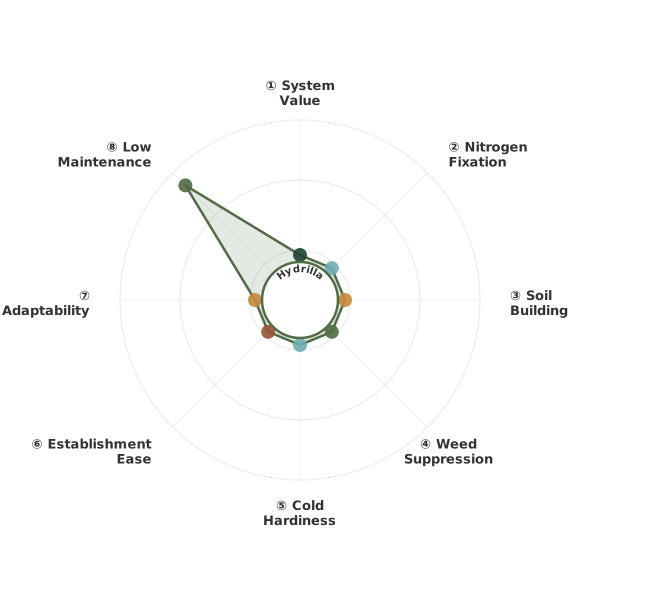
Regenerative Suitability Details

Comprehensive trait ratings for system integration assessment

Comparative ratings for this plant across key regenerative agriculture traits.

Trait Suitability Explanation
Cold Hardiness Not Recommended As an aquatic species, Hydrilla is frost-sensitive and does not contribute to the soil building functions of terrestrial cover cropping systems.
Weed Suppression Not Recommended While aggressive in aquatic environments, Hydrilla's terrestrial growth habit is unsuitable for effective weed suppression within soil cover cropping strategies.
Nitrogen Fixation Not Recommended This aquatic species is not a legume and does not contribute to nitrogen cycling; its invasive nature can negatively impact water quality.
Root System Depth Not Recommended Hydrilla's shallow, fibrous root system does not influence terrestrial soil structure or nutrient mining, offering no subsoil benefits within integrated systems.
Biomass Production Not Recommended Hydrilla's high biomass potential is confined to aquatic environments and is irrelevant for terrestrial soil building cover crops, as its terrestrial growth is minimal.
Establishment Ease Not Recommended Hydrilla establishes rapidly from fragments in specific aquatic conditions, but its slow and unreliable seed establishment limits its integration potential in regenerative terrestrial systems.
Multi Benefit Value Not Recommended Primarily an aquatic organism, Hydrilla offers few terrestrial ecosystem services or integration opportunities within regenerative agriculture, and its invasive nature is a significant concern.
Climate Adaptability Not Recommended This aquatic plant thrives in warm, still water (zones 8-11) and is highly sensitive to cold, limiting its adaptability to diverse terrestrial regenerative systems.
Maintenance Intensity Not Recommended As an aggressive aquatic weed, Hydrilla necessitates intensive management to prevent its rapid spread and ecological disruption, indicating a high intervention requirement.

Comparative System: Ratings compare plants within their economic category (e.g., cover crop nitrogen fixation compared to other cover crops, not to all plants). Individual farm conditions and management practices significantly influence actual performance.

8

Know the Debate

Hydrilla verticillata offers potential regenerative benefits in managed aquatic systems, particularly in humid and subtropical climates with ample ...

Hydrilla verticillata offers potential regenerative benefits in managed aquatic systems, particularly in humid and subtropical climates with ample water access. Its primary utility lies in nutrient cycling, where controlled growth in aquaculture ponds or constructed wetlands can sequester excess nitrogen and phosphorus, improving water quality. Harvested biomass can then be composted, enhancing soil structure, organic matter, and water retention over 3-5 years. While its dense growth can also improve water clarity and habitat, meticulous management is vital to prevent invasive spread. Integration requires consistent harvesting labor and mindful processing, typically through composting, for optimal regenerative outcomes.

Net nutrient benefit of managed Hydrilla

Nutrient capture in controlled systems

Managed Hydrilla in controlled aquaculture or constructed wetlands can effectively sequester high levels of nitrogen (11-22 kg/ha/yr) and phosphorus, reducing nutrient runoff and the need for external inputs. This nutrient capture is a primary benefit for water quality and system fertility.

Sources behind this view

Sources behind this view

Videos & Podcasts
Research
  • Hydrophytes for Sustainable Agriculture (opens in new window)

    This study found: Aquatic plants, called hydrophytes, can be a valuable tool for sustainable farming and environmental cleanup. They help achieve global goals for good health and well-being by cleaning up polluted water and land, purifying water, and storing carbon. The process of using plants to clean up contaminated sites is called phytoremediation, and it's a cheaper and more natural way to restore the environment. Certain floating plants, like water cabbage, duckweed, and water hyacinth, are particularly good at absorbing harmful heavy metals from industrial wastewater. This chapter explores how planting these water-loving plants can help reclaim polluted soils for agricultural use.

  • USE OF AQUATIC PLANTS PISTIA STRATIOTES, EICHHORNIA CRASSIPES AND SALVINIA MOLESTA AS ORGANIC FERTILIZER IN SUSTAINABLE AGRICULTURE – REVIEW (opens in new window)

    This study found: This review explores how common invasive aquatic plants like water lettuce (Pistia stratiotes), water hyacinth (Eichhornia crassipes), and salvinia (Salvinia molesta) can be used as natural fertilizers in farming. The authors point out that traditional farming often uses too many chemicals, which harms the environment and reduces soil health. They suggest that these fast-growing aquatic plants are a good ecological option to replace synthetic fertilizers and pesticides, helping to reduce pollution and improve soil fertility.

Nutrient release and pollution risk

Unmanaged decomposition of Hydrilla biomass can release nutrients rapidly, potentially causing water pollution or oxygen depletion. Its success depends on precise management to avoid negative impacts, contrasting with the predictable benefits of composted material.

Sources behind this view

Sources behind this view

Research
  • Vegetated urban streams have sufficient purification ability but high internal nutrient loadings: Microbial communities and nutrient release dynamics. (opens in new window)

    This study found: A two-year study in urban streams in northern China examined how aquatic plants (hydrophytes) affect water quality. While these plants help remove nutrients from the water, their decaying leaves and stems can release nutrients back, potentially worsening water quality. Researchers studied six different aquatic plants, including cattail and hydrilla, by placing their decaying material in bags in the streams for about five months. They found that the streams could retain between 7% and 60% of nitrogen and 10% to 55% of phosphorus, depending on the season and plant type. The plants themselves absorbed some nutrients, while sediment and microbial activity also played a role in removing nutrients. However, as the plant material decayed, it significantly increased nitrogen and phosphorus levels in the water and sediment. Different plants decayed at different rates, with hydrilla decaying the fastest. The study also observed that the breakdown of plant matter boosted the populations and activity of beneficial bacteria involved in nutrient processing, like those that remove nitrogen. While plants do help purify streams, the study concludes that managing the amount of decaying plant material, possibly by harvesting it, is important to control internal nutrient pollution.

  • REMOVAL AND LEACHING OF NUTRIENTS BY SALVIN1A MOLESTA MITCHEL AND EICHHORNIA CRASSIPES (MART.) SOLMS (opens in new window)

    This study found: Profuse growth of Eichhornia crassipes and Salvinia molesta in Singapore reservoirs required their regular manual removal as their prolonged presence can lead to deterioration in the quality of the potable water. Clearing of the reservoir catchments, together with regular removal of the weeds and dumping them away from the catchments, should, in the long term, reduce their presence in the reservoirs. Laboratory experiments showing the removal of chloride, sulphate, phosphorus and nitrate from the growing medium and the release of chloride, phosphorus and nitrate by rotting plants should convince the administrators of the benefit of proper management of the problem.

Making Sense of the Differences

The net nutrient benefit of Hydrilla hinges on its management. While controlled environments facilitate nutrient capture, unmanaged decomposition risks pollution. Composting harvested biomass ensures stable nutrient release for soil amendment, offering a more predictable and sustainable approach for regenerative systems compared to direct application.

Hydrilla biomass potential for soil amendment

Substantial biomass for soil improvement

Harvested Hydrilla provides significant biomass (5-10 tons/acre/harvest) that, when composted, enhances soil structure and fertility. This can lead to soil organic matter increases of 0.5-1.5% over 3-5 years and improved water retention.

Sources behind this view

Sources behind this view

Research
  • Addressing Water Hyacinth (Eichhornia crassipes) Problem through Composting: Exploring its Potential as a Organic Soil Amendment (opens in new window)

    This study found: Researchers found that composting water hyacinth, a problematic invasive aquatic weed, can turn it into a valuable organic soil amendment. After 14 weeks of anaerobic composting, the process produced a compost with good levels of essential plant nutrients (nitrogen, phosphorus, potassium) and organic matter, while containing very low levels of heavy metals. Although the compost was drier than the standard required, it met all other technical specifications for use in agriculture. This shows that composting is an effective way to manage water hyacinth and create a useful product for sustainable farming, improving soil health and reducing environmental impact.

  • Hydrophytes for Sustainable Agriculture (opens in new window)

    This study found: Aquatic plants, called hydrophytes, can be a valuable tool for sustainable farming and environmental cleanup. They help achieve global goals for good health and well-being by cleaning up polluted water and land, purifying water, and storing carbon. The process of using plants to clean up contaminated sites is called phytoremediation, and it's a cheaper and more natural way to restore the environment. Certain floating plants, like water cabbage, duckweed, and water hyacinth, are particularly good at absorbing harmful heavy metals from industrial wastewater. This chapter explores how planting these water-loving plants can help reclaim polluted soils for agricultural use.

Rapid decomposition and potential nutrient loss

Fresh Hydrilla decomposes rapidly (30-60 days), leading to quick nutrient release that may be lost through leaching, especially in permeable soils. This makes its direct application less stable for long-term soil building than composted material.

Sources behind this view

Sources behind this view

Research
  • Vegetated urban streams have sufficient purification ability but high internal nutrient loadings: Microbial communities and nutrient release dynamics. (opens in new window)

    This study found: A two-year study in urban streams in northern China examined how aquatic plants (hydrophytes) affect water quality. While these plants help remove nutrients from the water, their decaying leaves and stems can release nutrients back, potentially worsening water quality. Researchers studied six different aquatic plants, including cattail and hydrilla, by placing their decaying material in bags in the streams for about five months. They found that the streams could retain between 7% and 60% of nitrogen and 10% to 55% of phosphorus, depending on the season and plant type. The plants themselves absorbed some nutrients, while sediment and microbial activity also played a role in removing nutrients. However, as the plant material decayed, it significantly increased nitrogen and phosphorus levels in the water and sediment. Different plants decayed at different rates, with hydrilla decaying the fastest. The study also observed that the breakdown of plant matter boosted the populations and activity of beneficial bacteria involved in nutrient processing, like those that remove nitrogen. While plants do help purify streams, the study concludes that managing the amount of decaying plant material, possibly by harvesting it, is important to control internal nutrient pollution.

  • USE OF AQUATIC PLANTS PISTIA STRATIOTES, EICHHORNIA CRASSIPES AND SALVINIA MOLESTA AS ORGANIC FERTILIZER IN SUSTAINABLE AGRICULTURE – REVIEW (opens in new window)

    This study found: This review explores how common invasive aquatic plants like water lettuce (Pistia stratiotes), water hyacinth (Eichhornia crassipes), and salvinia (Salvinia molesta) can be used as natural fertilizers in farming. The authors point out that traditional farming often uses too many chemicals, which harms the environment and reduces soil health. They suggest that these fast-growing aquatic plants are a good ecological option to replace synthetic fertilizers and pesticides, helping to reduce pollution and improve soil fertility.

Making Sense of the Differences

The efficacy of Hydrilla biomass as a soil amendment hinges on its processing. Composting ensures a stable organic matter source with slow nutrient release, leading to measurable soil improvements over several years. Direct application of fresh biomass offers faster nutrient cycling but risks nutrient loss and requires careful timing, especially in permeable soils, making composted Hydrilla the more predictable choice for regenerative soil building.

9

Learn More

Why farmers use this plant and additional resources

Why Regenerative Farmers Use This Plant

Hydrilla verticillata, while often considered an invasive aquatic weed, presents unique opportunities within specific regenerative aquatic farming systems. Its exceptional growth rate and ability to rapidly accumulate biomass make it a powerful tool for nutrient cycling and water quality improvement in controlled environments. In systems designed for its containment and utilization, Hydrilla can sequester excess nutrients, particularly nitrogen and phosphorus, from aquaculture effluent or agricultural runoff. This nutrient uptake can significantly reduce the risk of eutrophication in downstream water bodies, acting as a biological filter. For instance, in integrated aquaculture-pond systems in Southeast Asia, Hydrilla can absorb up to 70% of dissolved inorganic nitrogen from fish pond water within a single growing season, thereby reducing the need for costly external nutrient inputs or advanced wastewater treatment. In aquaculture or pond systems, managed Hydrilla can absorb upwards of 10-20 lbs of nitrogen per acre per year (11-22 kg/ha), effectively reducing the need for external nutrient amendments. This nutrient scavenging capacity is crucial for maintaining healthy aquatic ecosystems and can reduce the reliance on costly nutrient management interventions. Controlled Hydrilla growth in aquaculture ponds can help process waste, improving water conditions for fish and reducing the need for water exchange, thereby conserving water resources and energy.

Beyond nutrient management, the rapid biomass production of Hydrilla can be harnessed for soil amendment and energy generation. When harvested and composted, its substantial organic matter can be incorporated into agricultural soils, improving soil structure, water-holding capacity, and microbial activity. This decomposition process releases nutrients slowly, feeding soil biology and supporting crop growth over extended periods, contributing to soil organic matter increases of 0.5-1.5% over a 3-5 year rotation. In regions where Hydrilla is managed, harvested biomass can be anaerobically digested to produce biogas, a renewable energy source, or used as a feedstock for biochar production, further sequestering carbon. The sheer volume of growth, often exceeding 10-15 tons of fresh weight per acre per season in optimal conditions, offers a significant and renewable resource for these applications. Its rapid decomposition rate, typically within 30-60 days under favorable conditions, means that the captured nutrients are readily available for subsequent plant growth or can be harvested and composted for use on terrestrial fields. This rapid nutrient cycling is a cornerstone of regenerative practices, minimizing nutrient loss and maximizing resource utilization within the farm system.

The ecological benefits of strategically managed Hydrilla extend to water clarity and oxygenation. Its dense canopy can shade out nuisance algae blooms, leading to clearer water and improved light penetration for beneficial submerged aquatic vegetation. While dense stands can sometimes deplete dissolved oxygen at night through respiration, managed harvesting and controlled stocking densities can mitigate this risk, often leading to net positive oxygen production during daylight hours through photosynthesis. In systems designed for its control, such as constructed wetlands or biofiltration ponds, Hydrilla plays a crucial role in removing pollutants and enhancing water quality for irrigation or recreational use, supporting a healthier aquatic environment. Its dense growth also provides habitat and food for certain aquatic invertebrates and fish, contributing to the overall biodiversity of managed aquatic ecosystems and enhancing biodiversity within the agricultural landscape. The extensive root system also plays a crucial role in binding sediments, preventing erosion in waterways and pond edges, contributing to improved water clarity and reduced turbidity.

The integration of Hydrilla verticillata into regenerative systems is primarily focused on its role as a functional component of water management and nutrient cycling. Its ability to rapidly accumulate biomass can be utilized to sequester carbon in aquatic sediments, contributing to long-term soil organic matter enhancement within the aquatic environment. While not a nitrogen-fixing legume, its efficient nutrient scavenging capabilities can significantly reduce the reliance on synthetic fertilizers for crops grown in proximity to managed water bodies, potentially saving farmers $50-$150 per acre annually depending on the level of nutrient reduction achieved. Its dense growth also offers a competitive advantage against less desirable aquatic weeds when managed appropriately, though careful monitoring is essential to prevent unwanted expansion. The ecological benefits of managed Hydrilla extend to supporting beneficial insect populations and potentially acting as a food source for certain waterfowl or livestock in carefully controlled environments. By integrating Hydrilla into a system where its growth is contained and its biomass is utilized, farmers can transform a potential nuisance into a valuable resource for nutrient management, soil building, and ecological enhancement, reducing the overall environmental footprint of their operations.

Regional successes in utilizing Hydrilla's biomass are emerging, particularly in areas with high nutrient loads. In the Philippines, some tilapia farms are integrating Hydrilla cultivation in adjacent ponds to treat effluent, reducing nutrient discharge and providing a source of organic material for local vegetable farms. In parts of Florida, USA, research is exploring the use of harvested Hydrilla as a soil conditioner for sandy agricultural lands, improving their water retention and fertility. While not traditionally a cover crop in terrestrial agriculture, its role in aquatic regenerative systems is analogous to terrestrial cover crops, providing rapid biomass and nutrient cycling benefits. In the rice paddies of Southeast Asia, controlled Hydrilla growth can help manage nutrient levels and provide habitat for beneficial aquatic organisms. In the aquaculture ponds of the southern United States, carefully managed Hydrilla beds are used to absorb excess nutrients from fish waste, improving water quality and fish health. Similarly, in Australian irrigation channels and farm dams, its ability to stabilize banks and filter water is being explored as a sustainable water management tool, reducing sediment loads and nutrient runoff into downstream ecosystems. In the rice-growing regions of Asia, farmers have historically managed aquatic vegetation, including Hydrilla, through manual weeding and controlled water levels to optimize crop growth and nutrient availability. In the aquaculture operations of the southeastern United States, Hydrilla is often managed through periodic harvesting to maintain optimal water quality for fish production, with harvested material sometimes used as a nutrient-rich compost. In Australian irrigation systems, efforts are focused on containment and selective removal to prevent it from clogging channels while utilizing its sediment-binding properties along pond edges. In parts of Southeast Asia, where flooded rice paddies are common, research is exploring the use of Hydrilla as a nutrient-scavenging cover crop during fallow periods to improve water quality before the next planting. In the southern United States, some aquaculturists are experimenting with controlled Hydrilla cultivation in effluent ponds to reduce nutrient loads before water is discharged or reused, demonstrating its potential in a variety of humid and subtropical agricultural settings. In tropical regions like Brazil, where aquaculture and flooded agriculture are prevalent, Hydrilla can be a valuable tool for nutrient management in ponds and canals, provided its spread is carefully contained through regular harvesting.

10

How to Integrate This Plant

Practical guidance for regenerative systems

Integrating Hydrilla verticillata into regenerative systems requires careful planning and management due to its aggressive growth potential. Establishment in controlled aquatic environments typically involves introducing healthy plant fragments or turions into suitable water bodies. While precise seeding rates are not applicable, a common method is to introduce approximately 1-2 pounds (0.45-0.9 kg) of healthy plant material per 100 square feet (9.3 sq m) of water surface area, or 0.5-1 kg per 10 square meters. For controlled environments like ponds or aquaculture systems, fragments can be distributed at a density of approximately 1-2 lbs per 100 square feet (0.5-1 kg per 10 square meters) to achieve rapid coverage. Planting depth is less critical than ensuring fragments are anchored or allowed to float and establish, with ideal planting depths ranging from 0.5 to 5 feet (0.15 to 1.5 meters). The ideal timing for introduction is during warmer months, typically from April to September in the Northern Hemisphere and October to March in the Southern Hemisphere, when water temperatures are between 20-30°C (68-86°F) to promote rapid initial growth. Establishment is rapid, with new growth visible within weeks under optimal conditions, typically 2-4 weeks after introduction, with dense coverage often achieved within 30-60 days under ideal conditions.

Management of Hydrilla is paramount to prevent uncontrolled spread and for its successful integration as a regenerative tool. Regular harvesting is the primary method of control and utilization. In systems designed for nutrient removal, harvesting can occur every 4-8 weeks, yielding significant biomass. For example, in a managed pond, harvesting can yield 5-10 tons of fresh biomass per acre (11-22 metric tons/hectare) per harvest cycle. Harvesting should ideally occur before the plant sets seed or produces excessive turions to limit its reproductive potential outside the desired area. The harvested biomass can be composted and applied to terrestrial fields, contributing valuable organic matter and nutrients. Hydrilla typically reaches peak biomass within 60-90 days of establishment in optimal growing seasons. Water quality parameters, such as dissolved oxygen and nutrient levels, should be monitored to ensure the Hydrilla stand is not causing detrimental effects. While Hydrilla is highly efficient at scavenging nutrients, it does not fix atmospheric nitrogen. Its growth is primarily fueled by dissolved nutrients in the water.

For category-specific integration as a nutrient biofilter or biomass producer, termination and residue management are critical. The primary "termination" method for Hydrilla is harvesting. This harvested biomass can then be managed through composting, anaerobic digestion, or direct application to agricultural fields as a soil amendment. If composted, the material breaks down over 60-90 days, releasing nutrients slowly into the soil. If used as a green manure, it can be incorporated into the soil and will decompose within 30-60 days, releasing its scavenged nutrients. In systems that are subsequently drained, natural desiccation and decomposition will occur, but this should be managed to avoid excessive nutrient leaching. The decomposition timeline for harvested biomass can vary, but composted material typically breaks down over several months, releasing nutrients slowly. Nitrogen credits from harvested and composted Hydrilla are difficult to quantify precisely as it is not a legume, but its organic matter contribution will improve soil fertility over time. Seed management is not a concern as Hydrilla primarily reproduces vegetatively. Preventing its escape into natural waterways is the highest priority, often achieved through physical barriers and strict harvesting protocols. Relay or inter-seeding is not applicable to this aquatic species. Natural winterkill can significantly reduce or eliminate stands in regions with freezing temperatures, providing a form of biological termination. Where winterkill is insufficient or in warmer climates, mechanical harvesting serves as the primary method to reduce biomass and remove nutrients from the system. This harvesting should ideally take place when the plant is actively growing and nutrient-rich, typically in mid-summer, to maximize nutrient removal. The goal is to prevent Hydrilla from going to seed or producing excessive turions, thereby controlling its spread.

Regional adaptations for Hydrilla integration focus on its use in aquaculture effluent treatment and constructed wetlands. In the aquaculture systems of Southeast Asia, Hydrilla is often grown in settling ponds or constructed wetlands adjacent to fish ponds to absorb excess nutrients, with harvested biomass used as fertilizer for rice paddies or vegetable gardens. In parts of the United States, particularly Florida, Hydrilla is managed in canals and lakes for water flow control and nutrient remediation, with harvested material sometimes being explored for biofuel production or as a component in compost. In Australia, research into its use in constructed wetlands for treating agricultural runoff is ongoing, aiming to improve water quality before it enters sensitive river systems. In the aquaculture systems of Southeast Asia, Hydrilla is often grown in settling ponds or constructed wetlands adjacent to fish ponds to absorb excess nutrients, with harvested biomass used as fertilizer for rice paddies or vegetable gardens. In parts of the United States, particularly Florida, Hydrilla is managed in canals and lakes for water flow control and nutrient remediation, with harvested material sometimes being explored for biofuel production or as a component in compost. In Australia, research into its use in constructed wetlands for treating agricultural runoff is ongoing, aiming to improve water quality before it enters sensitive river systems. In the humid subtropical regions of the southeastern United States, it can be managed in drainage ditches or retention ponds to capture runoff nutrients. In parts of Australia with extensive irrigation systems or rice cultivation, controlled Hydrilla growth could be explored in fallow periods to improve water quality.

View Full Document (Printable single-page version)