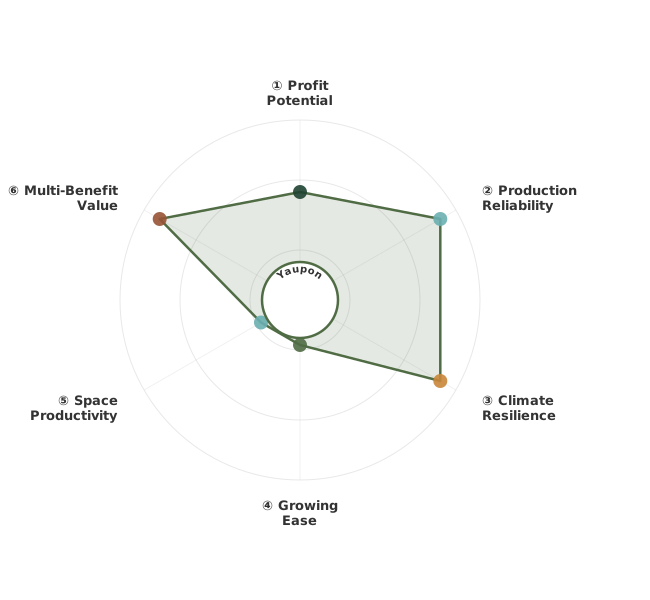
While the knowledge base provides limited coverage of Ilex vomitoria (Yopon) in regenerative agriculture, historical accounts suggest a notable use as a stimulating beverage, with sailors consuming it for energy. This energetic property might translate to potential applications in regenerative systems, perhaps as a component in functional food or beverage crops within polycultures. The historical context also highlights its indigenous use, suggesting a deep-rooted relationship with local ecosystems. Further research is needed to explore its specific roles as a cover crop, forage, or nitrogen fixer. However, its historical consumption implies a resilience and adaptability that could be beneficial in diverse agricultural settings. The knowledge base does not provide direct insights into its integration with practices like rotational grazing or no-till, nor does it detail farmer experiences with its cultivation within regenerative frameworks. Its potential for soil building or carbon sequestration remains unexplored in this context. Future investigations could clarify its utility and benefits for regenerative farmers.

Regenerative Quick Profile

All recommendations assume integrated, regenerative practices—not conventional inputs.

Climate & Soil Fit

Climate: Tropical Rainforest, Tropical Monsoon, Tropical Savanna, Hot Semi-Arid (Steppe), Cold Semi-Arid (Steppe), Hot Desert, Cold Desert, Humid Subtropical, Oceanic (Maritime Temperate), Hot-Summer Mediterranean, Warm-Summer Mediterranean, Monsoon-Influenced Humid Subtropical, Subtropical Highland, Hot-Summer Continental, Warm-Summer Continental, Subarctic, Monsoon-Influenced Hot-Summer Continental, Tundra

Zones: USDA 6-10, Australian Zones 3-8

System Role & Functions

Primary: Specialty

Secondary: Food Forest, Cash Crop With Services

Key Benefits: Multi-benefit value, Climate adaptable, Low maintenance

Management Level

Experience: Advanced

Maintenance: Very low maintenance - Once established, Yaupon holly requires minimal intervention, naturally managing its fertility through nutrient cycling and moisture retention with mulching.

Value Streams

  • Vegetable/specialty crop harvest
  • Diversifies farm income
  • Enhances biodiversity
1

Climate Suitability Assessment

Will this plant thrive in your climate?

IDEALLY SUITED

Köppen Zone: Af (Tropical Rainforest), Am (Tropical Monsoon), Aw (Tropical Savanna), Cfa (Humid Subtropical), Cwa (Monsoon-Influenced Humid Subtropical)
USDA Zone: 8a, 9a, 10a, 11a, 12a
Australian Zone: subtropical

Yaupon exhibits ideal suitability across a broad range of climates, primarily those with warm to hot summers and mild winters, including Köppen Cfa, USDA zones 6b through 10b, and Australian subtropical regions. These zones provide ample growing degree days and sufficient rainfall (typically 30-60 inches annually) to support vigorous evergreen growth and abundant berry production. The mild winters, with minimal to no hard freezes (USDA 6b and warmer, Köppen Cfa), ensure high establishment success rates and excellent plant survival. Yaupon's natural drought tolerance once established is a significant advantage in these regions, reducing the need for extensive irrigation. Its adaptability to various soil types further enhances its performance, making it a reliable specialty crop, food forest component, or cash crop with minimal management inputs. The long growing seasons allow for consistent berry ripening and harvesting, maximizing its economic and ecological potential.

ADEQUATE

Köppen Zone: BSh (Hot Semi-Arid (Steppe)), Cfb (Oceanic (Maritime Temperate)), Csa (Hot-Summer Mediterranean), Csb (Warm-Summer Mediterranean), Cwb (Subtropical Highland)
USDA Zone: 7a
Australian Zone: temperate
EU Climate Region: atlantic

Yaupon is adequately suited to climates with moderate temperatures and sufficient moisture, but may require some management considerations. This includes Köppen Cfb, Csa, and Csb zones, as well as USDA zones 5b through 6a, and Australian temperate regions. In these areas, Yaupon can establish and grow, but may experience reduced berry production or slightly less vigorous growth compared to ideal zones. Colder winters in USDA 5b-6a might necessitate some winter protection or careful site selection to prevent dieback. Mediterranean climates (Csa, Csb) with dry summers will require supplemental irrigation to ensure consistent berry yield and plant health. While not as consistently productive as in ideal zones, Yaupon can still be a viable option, offering its evergreen foliage and potential for berry harvest with standard horticultural practices and attention to water management during dry periods.

NOT RECOMMENDED

Köppen Zone: ET (Tundra), BSk (Cold Semi-Arid (Steppe)), BWh (Hot Desert), BWk (Cold Desert), Dfa (Hot-Summer Continental), Dfb (Warm-Summer Continental), Dfc (Subarctic), Dwa (Monsoon-Influenced Hot-Summer Continental)
USDA Zone: 2a, 3a, 3b, 4a, 5a, 5b, 6a
EU Climate Region: continental

Yaupon is not recommended for climates characterized by extreme winter cold or very short growing seasons, encompassing Köppen Dfa, Dfb, Dwa, and Dwb zones, USDA zones 3a through 5a, and EU continental regions. These zones experience winter temperatures far below Yaupon's cold hardiness threshold, leading to high risk of winter kill and unreliable perennial survival. For instance, USDA zones 3a-5a experience winter lows ranging from -40°F to -15°F (-40°C to -26°C), which are lethal to Yaupon. Similarly, EU continental climates often have harsh winters that prevent consistent establishment and growth. While summers in some of these zones might be warm, the overwhelming risk of winter mortality makes Yaupon an economically and practically unviable choice. Alternative, cold-hardy species are better suited for these challenging environments.

Better alternatives for these "not recommended" zones: Serviceberry (Amelanchier spp.) (Native to North America, tolerates cold winters and provides edible berries.), Elderberry (Sambucus spp.) (Hardy shrub with edible berries, adaptable to various conditions.), Aronia (Aronia melanocarpa) (Extremely cold-hardy shrub with highly nutritious berries.)

Note: Zones listed above represent climates where this plant can produce reliably with reasonable management. Climate zones not mentioned would require intensive climate modification (greenhouses, extensive infrastructure) and are not economically viable for regenerative agriculture purposes.

2

Soil Suitability Assessment

Which soil types work best for this plant?

ADEQUATE

Acidic Soil, Alkaline Soil, Clay Soil, Desert Soil, Loam Soil, Rich Soil, Rocky Soil, Sandy Soil

This plant performs acceptably in these soil types with moderate, manageable remediation such as pH adjustment, compost addition, or drainage improvement. The required amendments are practical and cost-effective for regenerative agriculture.

NOT RECOMMENDED

Saline Soil, Wet Soil

Growing this plant in these soil types would require impractical remediation such as complete soil replacement, extensive amendments, or cost-prohibitive infrastructure. These conditions are not economically viable for regenerative agriculture.

Note: Soil suitability assessments focus on remediation requirements. "Ideally Suited" means the plant generally thrives without the need for substantial amendments, "Adequate" means manageable remediation (lime, compost, mulch), and "Not Recommended" means impractical soil changes would be required. Climate factors like rainfall and temperature also influence success.

3

Seasonal Considerations

Planting timing, growth duration, and harvest windows

Establishing yaupon holly requires careful timing to ensure robust growth. For nursery stock, containerized trees can be planted throughout the active growing season, while bare-root specimens are best transplanted during the late fall or early spring dormancy, immediately after the ground thaws and before new growth begins. Expect a few years for establishment, with trees typically reaching their first significant harvest potential within 3-5 years, and full production within 7-10 years. Yaupon is a long-lived species, capable of decades of productive harvest.

Seasonal management centers around its natural rhythms. Pruning is most effectively done during the dormant season, typically in late winter or very early spring, before sap flow intensifies. This encourages vigorous new growth for the upcoming season. Harvest of berries, the primary production goal for many, occurs in the fall and early winter, after they have fully ripened and before severe winter weather sets in. Yaupon naturally enters a period of winter dormancy, signaling its need for rest and preparing for the next cycle of growth.

4

System Role & Multi-Benefit Value

Functional roles, integration strategies, and stacked benefits

Functional Role

Total System Value

Yaupon's integration into regenerative agriculture offers significant multi-benefit stacking. Its direct harvest value lies in its leaves, historically used for a stimulating beverage, providing a niche market product and reducing reliance on external inputs. As a plant, it enhances the system by supporting pollinator populations, which are crucial for adjacent crops. Its dense growth can offer minor windbreak effects and contribute to soil stabilization. Ecosystem services include carbon sequestration as it matures and provides habitat for wildlife. The historical context reveals its potential as a risk diversification tool, offering a locally produced alternative to imported goods, thereby increasing farm autonomy and resilience. By incorporating yaupon, farms can diversify their income streams, improve ecological functions, and strengthen their overall sustainability.

Integration Characteristics

Multi-Benefit Value: Ideally Suited - This adaptable native provides critical habitat and abundant winter food for wildlife, enhancing biodiversity and ecological functions within the landscape.

5

Management & Care Requirements

Integration guidance, maintenance needs, and care practices

How to Integrate This Plant

Yaupon (Ilex vomitoria) can be integrated into regenerative farm systems primarily as a source of specialty products and for its ecological benefits. Its primary system role is as a producer of a caffeine-rich beverage, offering a unique, locally sourced alternative to imported teas, as noted by its historical use. It can also function as a pollinator support species due to its flowers and provide habitat. Compatible practices include food forests, hedgerows, and mixed shrub plantings within silvopasture systems. It can also be incorporated into alley cropping systems as a component of the understory or inter-row plantings. Yaupon begins providing value in Year 1 through establishment and potential early foraging by pollinators. By Year 5, it will contribute more significantly to pollinator support and habitat, with continued growth. By Year 20, it will be a mature, productive component of the system. The multi-benefit stacking includes direct harvest value from its leaves, soil health improvement through root systems, and support for beneficial insects and pollinators, enhancing overall farm biodiversity and resilience.

Integration Practices & Management

The provided knowledge base offers limited insight into the specific methods regenerative farmers use to integrate *Ilex vomitoria* (Yopon). While its historical significance and use as a stimulant are noted, detailed information regarding establishment techniques such as seeding rates, optimal timing, companion planting, or tillage practices is absent. Similarly, the knowledge base does not elaborate on its integration with grazing systems, including mob grazing, rotational patterns, grazing timing, or rest periods. Termination strategies, fertility requirements, competition management, and succession planning for *Ilex vomitoria* within regenerative systems are also not discussed. Furthermore, its application in cash crop systems through relay cropping, intercropping, or rotation sequences is not covered. The available mentions focus on the plant's historical context and the etymology of its scientific name, rather than practical, on-farm regenerative agricultural integration.

Management Profile

Maintenance Intensity: Ideally Suited - Once established, Yaupon holly requires minimal intervention, naturally managing its fertility through nutrient cycling and moisture retention with mulching.

6

Economics & Value Streams

Direct harvest, system benefits, ecosystem services, and risk diversification

Comprehensive economic analysis including direct harvest value, system enhancement contributions, ecosystem services, value timeline, and risk diversification strategies.

Vegetable & Specialty Economics

Metric Value
Seed/Transplant Cost 200-400 $/acre 494-988 $/ha
Expected Yield 500-1000 lbs/acre 560-1120 kg/ha
Market Price 2.00-4.00 $/lb 4-8 $/kg
Harvest/Handling Cost 300-600 $/acre 741-1482 $/ha
Marketing/Distribution Cost 150-300 $/acre 370-741 $/ha
Net Annual Return* $-300 to $3350/acre/year

Economics highly variable by market channel (direct vs wholesale), scale, and management. Direct marketing commands premiums but requires labor. Values shown for mid-scale market garden operations.

* Net Annual Return = (Yield × Market Price) − (Amortized Establishment Cost + Annual Maintenance). This return is realized only at/after first harvest; early years have costs but no revenue. Range shows worst case to best case scenarios.

System Enhancement Value

Beyond harvest: limited system integration for niche specialty products

System Contributions

Yaupon Holly presents several significant system benefits beyond direct harvest. It is recognized as a native plant with potential for bioregional beverage production, offering a local alternative to imported teas. Its high ORAC value (antioxidant capacity) is also noted, suggesting potential health benefits contributing to the overall nutritional value of integrated farm products. Yaupon's tolerance to various conditions makes it a resilient component in polyculture systems. Historically, its unchecked growth was associated with the removal of natural checks like deep-rooted native grasses and ruminant grazing pressure, highlighting its role in maintaining ecological balance when integrated thoughtfully. It can also serve as a food source for wildlife, with its berries providing sustenance, and its dense foliage offering habitat and nesting opportunities. Its historical use and potential for natural decaffeination through breeding further expand its value in diverse farm systems.

Erosion Control (if applicable)

Variable, depends on planting density and configuration. Potential for 5-15% crop yield improvement in protected areas.

While not explicitly mentioned as a windbreak in the provided excerpts, Yaupon Holly (Ilex vomitoria) is described as a native shrub in the southeastern US that tolerates various conditions. As a dense, multi-stemmed shrub, it has the potential to contribute to windbreak and erosion control functions, particularly when planted in hedgerows or field borders. Its growth habit could help slow surface runoff, reduce soil erosion, and provide a physical barrier against wind. This is especially relevant in agricultural landscapes where wind can cause significant soil loss and damage to crops. The deep root systems of native grasses, which historically kept Yaupon in balance, suggest a robust root structure that can further stabilize soil. As a component of an integrated farm system, Yaupon could contribute to microclimate regulation and soil health on field edges, complementing other windbreak species.

Ecosystem Service Contributions

Environmental contributions: carbon, pollinators, wildlife, and water

  • Carbon Sequestration: Yaupon Holly is a woody shrub with a dense growth habit and potentially extensive root systems, suggesting a moderate to good capacity for carbon sequestration in both above-ground biomass and soil organic matter over time. Its perennial nature contributes to long-term carbon storage.
  • Pollinator Support: Low to Medium. While not primarily known as a major pollinator attractant, its flowers can provide a nectar and pollen source for native bees and other beneficial insects, particularly in early spring or late fall depending on the cultivar and region. Its value is likely secondary to dedicated pollinator plants.
  • Wildlife Habitat: High. Yaupon berries are a valuable food source for numerous bird species, especially during winter. Its dense foliage provides shelter, nesting sites, and protection from predators for various wildlife, including small mammals and birds. This makes it an excellent component for enhancing biodiversity within an agricultural landscape.
  • Water Quality: Not applicable

Value Timeline: Specialty Product Development

When you'll see results: varies widely by specialty product type

Years 1-2

Establishment of plant, potential for initial soil stabilization and minor windbreak effect if planted densely. Early forage for wildlife. Beginnings of aesthetic value in landscaping contexts.

Years 3-5

Increased biomass development, more significant windbreak and erosion control benefits. First small harvests of leaves for tea substitution or sale. Established wildlife habitat and food source. Development of 'cash crop with services' potential.

Years 10-20

Mature plant growth providing substantial ecosystem services. Consistent production of leaves for specialty tea markets. Significant contribution to food forest systems. Established role in biodiversity enhancement and carbon sequestration.

20+ Years

Long-term establishment of mature Yaupon stands contributing significantly to perennial ecosystem services. Potential for coppicing or other management for sustained yield of biomass. Maximized carbon storage and habitat provision.

Farm Risk Reduction

How this reduces farm risk: premium pricing but niche market dependency

  • Multiple Revenue Streams: Specialty tea production (fresh or dried leaves), ornamental sales (as landscaping plant), value-added products (e.g., tinctures, extracts), ecological services (erosion control, habitat provision), potential for bioregional beverage market.
  • Temporal Income Spread: Ongoing ecosystem services (habitat, erosion control) provide continuous value. Harvest for tea can be managed seasonally, with potential for multiple harvests or staggered processing. Ornamental sales can occur at various times of the year.
  • Market Risk Hedge: Yaupon offers a hedge against volatile commodity markets by providing a niche specialty product. Its drought and pest tolerance make it resilient to certain environmental stresses. Its native status reduces reliance on imported inputs and potentially leverages local markets and consumer interest in regional products, as highlighted by the 'locally grown tea' niche.
7

Regenerative Suitability Details

Comprehensive trait ratings for system integration assessment

Comparative ratings for this plant across key regenerative agriculture traits.

Trait Suitability Explanation
Season Extension Adequate As an evergreen, Yaupon holly contributes to year-round ecosystem function, with its persistent berries providing vital winter forage for wildlife.
Space Efficiency Not Recommended Yaupon holly is a robust shrub that integrates well into diverse landscape designs, offering ecological benefits rather than focused food production.
Storage Longevity Not Recommended Harvested Yaupon holly leaves can be air-dried for extended use, preserving their value for botanical preparations.
Yield Reliability Ideally Suited Yaupon holly thrives across a wide range of conditions, demonstrating resilience and consistent biomass production for ecological services.
Establishment Ease Not Recommended While seed propagation requires patience and specific conditions to mimic natural stratification, Yaupon holly establishes readily from established plants, contributing to landscape resilience.
Multi Benefit Value Ideally Suited This adaptable native provides critical habitat and abundant winter food for wildlife, enhancing biodiversity and ecological functions within the landscape.
Climate Adaptability Ideally Suited Yaupon holly naturally thrives across a broad climatic range, demonstrating inherent resilience to varying temperatures and moisture levels without requiring external inputs.
Maintenance Intensity Ideally Suited Once established, Yaupon holly requires minimal intervention, naturally managing its fertility through nutrient cycling and moisture retention with mulching.
Disease Pest Resistance Ideally Suited Yaupon holly's inherent hardiness allows it to thrive within a healthy ecosystem, naturally resisting pests and diseases without the need for external interventions.

Comparative System: Ratings compare plants within their economic category (e.g., cover crop nitrogen fixation compared to other cover crops, not to all plants). Individual farm conditions and management practices significantly influence actual performance.

8

Learn More

Why farmers use this plant and additional resources

Why Regenerative Farmers Use This Plant

Ilex vomitoria, commonly known as Yaupon Holly, is a highly adaptable and resilient native shrub or small tree offering significant value in regenerative agriculture systems, particularly as a specialty cash crop and a component of diversified farm income streams. Its evergreen nature and tolerance to a wide range of soil conditions, from sandy loams to heavier clays, make it a robust choice for various landscapes.

Economic Value: Yaupon Holly is prized for its unique caffeine-containing leaves, which can be harvested and processed into a popular herbal tea, often referred to as "black drink" or "cohoba," or marketed as "American Green Tea." This offers high-value revenue per acre potential, especially when targeting direct-to-consumer markets, farmers' markets, CSAs, and specialty food retailers. Successful growers report revenue potential that can be competitive with other specialty crops. The relatively short time to first harvest, often within 2-3 years for significant leaf production, and its continuous growth habit allow for efficient succession harvesting throughout the growing season, maximizing economic returns. Its market appeal is further enhanced by its historical significance and its positioning as a sustainable, naturally caffeinated beverage alternative. Beyond direct revenue, its berries can be harvested for the beverage industry and ornamental branches for the floral trade.

Ecological Benefits: Integrating Yaupon Holly into a regenerative farm plan provides multiple system benefits beyond direct revenue. As a native plant, it supports local biodiversity by offering habitat and food sources for wildlife, including birds that consume its berries. Its deep root system, which can extend 6-15+ feet (1.8-4.5+ m) in mature specimens, contributes to soil health by improving structure, increasing water infiltration, and sequestering carbon deep within the soil profile. This makes it an excellent candidate for use in agroforestry systems, hedgerows, or as a component in silvopasture designs, where it can act as a living mulch, suppressing weeds and reducing erosion while providing shade and forage diversity for livestock. Its resilience to drought once established also reduces reliance on supplemental irrigation, aligning with water conservation goals.

Quantitative Ecosystem Contributions: While not a nitrogen fixer, its dense foliage contributes significant organic matter to the soil surface when pruned or naturally shed, feeding soil microbial communities and enhancing soil organic matter content over time. Its flowers, though small, provide a nectar source for early-season pollinators, including bees and butterflies, and its berries are a crucial late-season food source for birds and other wildlife, supporting healthy ecosystem dynamics and avian biodiversity, particularly during winter months. Improved water infiltration due to its root structure also helps mitigate runoff and nutrient loss, protecting downstream water quality. Its extensive root system enhances soil organic matter accumulation, improving water infiltration and retention, which is crucial for drought resilience. The plant's ability to thrive in marginal conditions means it can be established on land less suitable for traditional row crops, thereby increasing the overall productive and ecological footprint of the farm.

System Integration: As a component of hedgerows or windbreaks, it effectively suppresses wind erosion and can reduce the need for costly fencing. Its dense growth habit can act as a living mulch, suppressing weeds and reducing the need for mechanical cultivation or herbicide use. In silvopasture systems, it can provide shade and browse for livestock while contributing to the overall ecological health of the pasture. Its ability to thrive in a variety of soil conditions, including sandy and marginal lands, makes it a versatile choice for farms looking to diversify income while improving overall farm resilience.

Sources behind this view

Community
  • Yaupon (Ilex vomitorium) is identified as a multi-use native shrub for biochar, firewood, and stakes. Its leaves provide a free, caffeinated, antioxidant-rich alternative to coffee and Yerba Mate, wit

  • Yaupon holly (Ilex vomitorium) is identified as a useful native plant for biochar, firewood, and stakes. Its leaves are a free source of caffeine and antioxidants, suitable for making tea similar to Y

9

How to Integrate This Plant

Practical guidance for regenerative systems

Establishing Yaupon Holly can be achieved through several methods, offering flexibility for different farm operations.

Propagation and Planting:

  • Direct Seeding: For establishing dense ground cover or hedgerows, a rate of 1-2 lbs per acre (1.1-2.2 kg/ha) is typically recommended for broadcast sowing, with seeds planted at a depth of 0.25-0.5 inches (0.6-1.3 cm). However, due to its slow germination, starting with nursery-grown seedlings or rooted cuttings is often preferred for faster establishment and more predictable results.
  • Transplants/Cuttings: For commercial leaf production, landscaping, or faster establishment, nursery-grown transplants or rooted cuttings are preferred.
  • Spacing: Transplants are typically spaced 6-12 feet (1.8-3.6 m) apart, depending on the desired density and management goals. For commercial leaf production or dense hedgerows, closer spacing might be employed, with plants set 4-6 feet (1.2-1.8 m) apart in rows 8-10 feet (2.4-3 m) apart. For ornamental purposes, spacing can range from 6-10 feet (1.8-3 m) or more.
  • Planting Depth: Ensure the root ball is fully covered, with the top of the root ball level with the surrounding soil surface.
  • Planting Time: The optimal planting time is typically in early spring, from March to May in the Northern Hemisphere, or September to November in the Southern Hemisphere, allowing plants to establish before extreme temperatures.

Management Practices:

  • Watering: While established plants are drought-tolerant, providing 1 inch (2.5 cm) of water per week during the first year and during prolonged dry spells will significantly enhance growth and yield.
  • Fertility: Fertility is best managed through biological approaches. Incorporating compost and well-rotted manure into the planting area at establishment, and mulching with organic matter annually, will provide sustained nutrient release. As the plant matures, its extensive root system effectively scavenges nutrients from the soil, reducing the need for external inputs. Utilizing cover crop residue from preceding crops and leveraging rotational grazing if livestock are present are primary strategies.
  • Pruning: Pruning is a key management practice for leaf harvest, typically occurring from late spring through summer. Plants can reach a mature height of 15-25 feet (4.5-7.5 m) but are often maintained at a more manageable 4-8 feet (1.2-2.4 m) for harvesting. Pruning for aesthetic purposes or to manage berry production can be timed for late winter or early spring.
  • Pest and Disease Management: Pest and disease issues are generally minimal, with a focus on maintaining plant vigor through good cultural practices and promoting beneficial insect populations. Integrated pest management (IPM) strategies focus on attracting beneficial insects through companion planting or habitat creation, and maintaining plant health through proper watering and fertility. Biological controls are the primary method of management should any issues arise. Resistant varieties, if available, should be prioritized.

Specialty Cash Crop Production:

  • Production Cycle: From transplanting, significant leaf harvest can typically begin within 2-3 years, with full production achieved by year 5. From seed, plants may take 3-5 years to reach a marketable size for berry or ornamental harvest, while nursery transplants can yield within 1-3 years. Harvestable leaf material can be collected from established plants annually, typically from spring through fall.
  • Succession Harvesting: Succession harvesting of leaves can occur throughout the growing season, from late spring until early autumn, with the intensity of harvest adjusted based on plant vigor and market demand. Managing harvest timing can extend the usable leaf collection period.
  • Soil Stewardship: Following the final harvest in autumn, it is beneficial to follow with a cover crop of crimson clover or hairy vetch in areas where leaf litter is managed, or to allow natural leaf drop to contribute to soil organic matter. Following harvest, especially if significant ground disturbance occurs, a winter cover crop such as cereal rye or oats can protect the soil and prevent erosion. A low-growing cover crop mix, such as a blend of annual ryegrass and crimson clover, can protect the soil during winter and add organic matter.
  • Crop Rotation: Crop rotation is less critical for Yaupon Holly itself, as it is a perennial, but it should be rotated with annual crops in the broader farm system to prevent soilborne disease buildup. Crop rotation intervals of 3-5 years are beneficial to break any potential pest or disease cycles, though Yaupon Holly's perennial nature means it occupies the land for extended periods.

Regional Adaptations:

  • Southeastern United States: Thrives in humid subtropical regions (USDA Zones 7-9) with ample rainfall, often integrated into existing agricultural landscapes or established as dedicated tea plantations.
  • Temperate Zones: In USDA Zones 3-6, careful site selection and potentially some winter protection for very young plants may be necessary, but it performs well in mixed shrub borders and windbreaks.
  • Australia: Adaptable to semi-arid conditions (Australian Zones 2-3), suitable for integration into dryland farming systems, offering a unique niche product and contributing to soil stabilization and habitat creation. In wetter coastal areas (Zones 3-4), it can be used in more intensive horticultural settings.
  • South America: Can be incorporated into agroforestry systems alongside coffee or cacao plantations in Brazil, providing shade, biodiversity, and a supplementary income stream, where its root system also aids in soil stabilization.
  • Europe: Its ability to tolerate a range of conditions allows for its inclusion in temperate regions, where it can be a valuable addition to mixed farming operations seeking to diversify income and enhance ecological services. In the UK, its tolerance to oceanic climates (RHS H5-H7) allows for successful cultivation, often in ornamental plantings, but its potential for specialty crop production is also being explored.
View Full Document (Printable single-page version)