
Common Walnut
Juglans regia, or English walnut, is integrated into regenerative systems primarily as a component of agroforestry, specifically alley cropping and temperate arable systems. Studies show its presence near crop rows significantly increases soil organic carbon (SOC) and nutrient concentrations, largely due to leaf litter input. This also boosts populations of soil macro-detritivores, contributing to nutrient cycling. In one study, green manures used with walnut trees improved soil water content and nutrient levels (organic C, total N, available P). While not a nitrogen fixer, its contribution to soil organic matter and impact on soil biota are significant regenerative benefits. However, farmers should be aware of its allelopathic effects; juglone, a chemical produced by walnut trees, can inhibit or harm susceptible neighboring plants, particularly fruit trees, within a certain radius. Planting multiple cultivars is also recommended to mitigate disease risk. The knowledge base indicates potential for reduced crop yield immediately adjacent to tree rows, suggesting careful placement is necessary for optimal integration.
For a full botanical description see: Plants For A Future(opens in new window) (external link)
Regenerative Quick Profile
All recommendations assume integrated, regenerative practices—not conventional inputs.
Climate & Soil Fit
Climate: Tropical Rainforest, Tropical Monsoon, Tropical Savanna, Hot Semi-Arid (Steppe), Cold Semi-Arid (Steppe), Hot Desert, Cold Desert, Humid Subtropical, Oceanic (Maritime Temperate), Hot-Summer Mediterranean, Warm-Summer Mediterranean, Monsoon-Influenced Humid Subtropical, Subtropical Highland, Hot-Summer Continental, Warm-Summer Continental, Subarctic, Monsoon-Influenced Hot-Summer Continental, Tundra
Zones: USDA 7-9, Australian Zones 3-11
Optimal Soil: Loam Soil
System Role & Functions
Primary: Food Forest
Secondary: Cash Crop With Services, Timber With Food
Key Benefits: Multi-benefit value
Management Level
Experience: Intermediate
Maintenance: Moderate maintenance - System integration involves moderate pruning and fostering natural pest deterrence through biodiversity; healthy soil and mulching support optimal nut production and tree vitality.
Time to Production: Slow (5+ years) - English walnuts offer a long-term investment, providing initial nuts in 5-8 years and full production in 10-15 years, establishing it as a foundational element for sustained ecological and economic returns.
Value Streams
- Fruit/nut harvest
- Diversifies farm income
- Enhances biodiversity
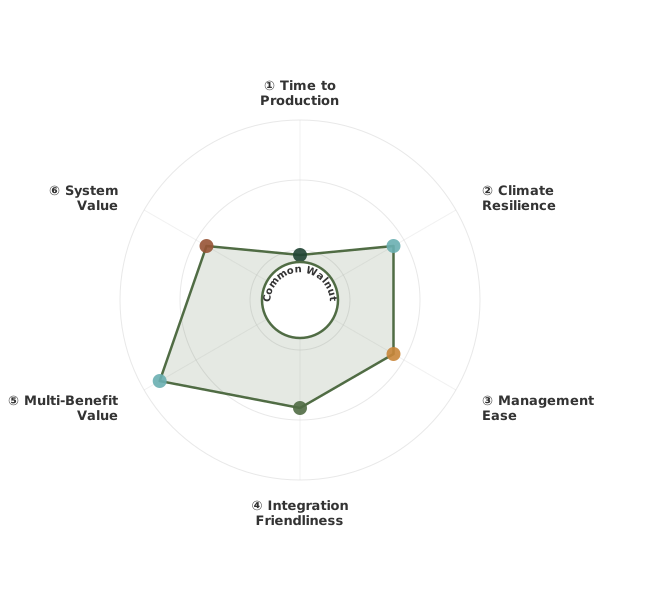
How These Traits Are Calculated
Trait dimensions are ordered clockwise starting from the top of the chart (12 o'clock position):
1. Time to Production
Years from planting to first harvestable yields
WHAT: Measures the waiting period from tree establishment to first meaningful production. Fast-producing trees yield within 2-5 years; slow producers require 8-15+ years before significant harvests.
WHY: Time to production determines cash flow timing and financial feasibility for farm businesses. Long wait times create significant opportunity costs—land and labor tied up for years without income. Fast producers allow quicker experimentation and cash flow recovery, reducing risk for new tree crop farmers.
HOW: Ratings based on years to first harvest documented in economics data. Exceptional (3.0): Production within 2-4 years (elderberry, mulberry, some nut bushes). Typical (2.0): 5-8 years (many fruit trees). Limited (1.0): 10-15+ years (hardwood timber, some nut trees like pecan, walnut).
2. Climate Resilience
Weighted: hardiness zones (50%) + drought tolerance (30%) + adaptability (20%)
WHAT: Combines temperature tolerance (hardiness zone range), water stress resilience (drought tolerance), and overall climate flexibility. Multi-decade tree investments require reliable climate matching to prevent total loss.
WHY: Wrong climate choices mean complete failure for permanent plantings. A tree that dies in year 5 from unexpected cold or prolonged drought represents catastrophic loss of 5 years' investment. Climate resilience determines geographic range and weather variability tolerance—critical as climate patterns become less predictable.
HOW: Weighted formula prioritizes hardiness zone range (50% weight) for core temperature tolerance, drought tolerance (30% weight) for water stress, and overall adaptability (20% weight) for general climate flexibility. Exceptional (3.0): Wide hardiness range (8+ zones) with strong drought tolerance. Typical (2.0): Moderate range and tolerance. Limited (1.0): Narrow climate requirements.
3. Management Ease
Weighted: establishment (40%) + low maintenance (30%) + pest resistance (30%)
WHAT: Combines establishment difficulty, ongoing maintenance requirements, and disease/pest pressure into overall management workload. Low-maintenance trees fit easily into busy farm operations without specialized expertise or intensive inputs.
WHY: Labor is the limiting factor for most diversified farms. High-maintenance trees requiring pruning expertise, disease management, and intensive pest control compete for limited time with other farm enterprises. Easy-care trees deliver production with minimal intervention, making them viable for time-constrained farmers.
HOW: Weighted formula balances establishment ease (40% weight) for startup success, inverted maintenance intensity (30% weight) for ongoing care, and inverted pest/disease pressure (30% weight) for health management. Exceptional (3.0): Easy to establish, self-sufficient growth, naturally pest-resistant. Typical (2.0): Moderate care needs. Limited (1.0): Difficult establishment, intensive maintenance, or heavy pest pressure.
4. Integration Friendliness
Compatibility with silvopasture, alley cropping, and multi-species systems
WHAT: Measures how well the tree integrates with other farm enterprises—grazing livestock, annual crops, or other perennials. Integration-friendly trees tolerate livestock browsing, don't heavily shade out crops, and coexist with diverse plantings.
WHY: Integrated tree systems (silvopasture, alley cropping, food forests) provide higher total returns per acre than monoculture plantings. Trees that work well with livestock provide shade + forage + production simultaneously. Integration flexibility allows farmers to stack enterprises and adapt to market opportunities.
HOW: Ratings based on the integration_friendliness trait documenting compatibility with grazing, cropping, and multi-species systems. Exceptional (3.0): Tolerates livestock browsing, provides livestock benefits (shade, browse), compatible with understory crops. Typical (2.0): Some integration possible with management. Limited (1.0): Requires isolation, incompatible with livestock or cropping.
5. Multi-Benefit Value
Stacked benefits beyond primary product—shade, wildlife, nitrogen, erosion control
WHAT: Measures the diversity of ecosystem services provided beyond the main harvest product. Multi-benefit trees deliver shade, windbreak, wildlife habitat, nitrogen fixation, erosion control, pollinator support, and aesthetic value simultaneously.
WHY: Single-purpose trees are economically fragile—market price swings or production failures eliminate all value. Multi-benefit trees provide resilience through diverse value streams. A nitrogen-fixing tree that produces nuts, provides shade for livestock, supports wildlife, and controls erosion delivers 4-5x the system value of a production-only tree.
HOW: Ratings based on the multi_benefit_value trait documenting service diversity. Exceptional (3.0): 4+ significant services stacked (nitrogen-fixing legume trees providing nuts + shade + wildlife + windbreak). Typical (2.0): 2-3 moderate services. Limited (1.0): Single-purpose production trees with minimal additional benefits.
6. System Value
Total ecosystem and economic value across short, medium, and long timeframes
WHAT: Synthesizes the total regenerative value delivered across multiple decades, including immediate ecosystem services (years 1-5), medium-term production value (years 5-15), and long-term system transformation (years 15-50). Captures the compounding benefits of permanent plantings.
WHY: Trees are multi-decade investments requiring patient capital. System value measures whether the total package—early ecosystem services, eventual production, and long-term legacy benefits—justifies the wait time and land commitment. High system value trees pay back investment through diverse, stacking, compounding benefits.
HOW: Scored via LLM synthesis of economics timelines, ecosystem service diversity, and long-term soil/water/carbon impacts. Exceptional (3.0): Strong early services + valuable production + transformative long-term impacts. Typical (2.0): Moderate benefits across timeframes. Limited (1.0): Long wait with limited service stacking or weak economic returns.
Ratings are based on documented performance in regenerative systems, not conventional high-input scenarios. All traits assume integrated management practices focused on soil health and ecosystem services.
6
Economics & Value Streams
Direct harvest, system benefits, ecosystem services, and risk diversification
Economics & Value Streams
Direct harvest, system benefits, ecosystem services, and risk diversification
Comprehensive economic analysis including direct harvest value, system enhancement contributions, ecosystem services, value timeline, and risk diversification strategies.
Per-Tree Production Economics
| Metric | Value |
|---|---|
| Establishment Cost | $25-50 |
| Years to First Harvest | 7-10 years |
| Annual Maintenance | $10-20 |
| Yield | 40-80 lbs/year 18-36 kg/year |
| Market Price | $2-5/lb $5-11/kg |
| Productive Lifespan | 50-100 years |
| Net Annual Return* | $59-$389/year |
Values shown per mature tree, not per acre. In regenerative systems, trees are integrated at low densities across diverse landscapes. Establishment costs spread over the lifespan of the tree. Early years have costs but no revenue.
* Net Annual Return = (Yield × Market Price) − (Amortized Establishment Cost + Annual Maintenance). This return is realized only at/after first harvest; early years have costs but no revenue. Range shows worst case to best case scenarios.
System Enhancement Value
Beyond harvest: how understory complements overstory in polyculture
Food Forest System Contributions
Soil organic carbon and nutrient enhancement through decomposition and green manure integration. Biochar potential from shells. Wildlife habitat and mast production. Microclimate buffering and yield stability.
Walnut trees offer several system benefits beyond direct harvest. They contribute to soil health through the decomposition of organic matter, as noted in studies incorporating green manures that enhance soil properties and microbial activity (Excerpt). Walnut shells can be processed into biochar, a soil amendment that improves water retention and nutrient availability (Excerpt). The trees also provide habitat and food sources for wildlife, with nuts serving as mast for various species. While not a primary pollinator plant, their flowers can offer some pollen to early-season pollinators. Walnut trees, particularly in agroforestry systems, have been shown to buffer crop microclimates and increase yield stability, acting as a climate change adaptation strategy by reducing heat and drought stress (Excerpt). Their ability to tolerate drought once established also contributes to farm resilience. The development of a robust root system can also aid in soil stabilization.
Nitrogen Fixation (if legume)
Common walnut (*Juglans regia*) is not a nitrogen-fixing species. Therefore, it does not contribute to nitrogen fixation through symbiotic relationships with bacteria. However, the decomposition of walnut leaves and other organic matter can contribute to soil organic carbon and nutrient cycling. Studies on green manures in walnut orchards (Excerpt) highlight the importance of incorporating nitrogen-rich materials like hairy vetch to improve soil properties and support walnut tree growth. This suggests that while the walnut itself doesn't fix nitrogen, it can be integrated into systems that enhance soil fertility through other means, such as cover cropping or composting, which indirectly benefit the overall nitrogen status of the soil. The use of compost and manure for fertilization is also mentioned (Excerpt).
Groundcover & Erosion Control
Mature common walnut (*Juglans regia*) trees, when planted in rows or as part of a hedgerow system, can function as effective windbreaks. Their substantial size and dense canopy structure, especially when mature, can significantly reduce wind speed across agricultural fields. This reduction in wind can mitigate soil erosion by preventing wind from carrying away topsoil, a critical benefit in exposed agricultural landscapes. Furthermore, windbreaks can protect crops from physical damage, reduce evapotranspiration rates from both crops and soil, and create a more favorable microclimate for plant growth, potentially leading to increased yields. The allelopathic nature of walnuts (juglone) would necessitate careful consideration of what is planted immediately downwind of the windbreak to avoid negative impacts.
Ecosystem Service Contributions
Environmental contributions: carbon, pollinators, wildlife, and water
- Carbon Sequestration: Common walnut (*Juglans regia*) is a long-lived hardwood species with a substantial biomass potential, indicating significant carbon sequestration capacity in its trunk, branches, roots, and the soil it influences. Mature trees can store considerable amounts of carbon over their lifespan.
- Pollinator Support: Low. Walnuts are monoecious and dichogamous, relying on wind for pollination. While their catkins may offer some pollen, they are not a primary source of nectar or pollen for most bee species. Overlapping bloom periods are important for nut production, not for pollinator support.
- Wildlife Habitat: High. Walnut trees provide valuable wildlife habitat. The nuts are a significant food source (mast) for a variety of mammals and birds. The mature canopy offers nesting sites and shelter for arboreal wildlife.
- Water Quality: Not applicable
Value Timeline: Understory Development
When you'll see results: groundcover/herbs year 1, shrubs 2-3, full layer integration 5-10
Years 1-2
Initial soil stabilization and erosion control from root establishment. Minimal shade contribution. Potential for early green manure benefits if interplanted.
Years 3-5
First modest nut harvests may begin (Excerpt). Noticeable shade development. Continued soil improvement from leaf litter. Establishment of allelopathic effects may require careful understory management.
Years 10-20
Full nut production potential and significant shade. Timber value begins to accrue. Established windbreak and microclimate buffering effects become pronounced (Excerpt).
20+ Years
Mature nut production, substantial timber value. Maximum ecosystem service provision including significant carbon sequestration, wildlife habitat, and microclimate regulation.
Farm Risk Reduction
How multi-layer systems diversify production and income
- Multiple Revenue Streams: Nuts (cash crop), Timber (long-term asset), potential for by-product utilization (shells for biochar), ecosystem services (microclimate buffering, soil health).
- Temporal Income Spread: Annual income from nut harvests, with a long-term investment in timber value. Ongoing ecosystem services are provided continuously. Risk is spread across immediate cash flow and future asset appreciation.
- Market Risk Hedge: Diversifies income streams away from single-crop reliance. Drought tolerance in established trees (Excerpt) and microclimate buffering (Excerpt) reduce climate-related yield risk. Timber provides a long-term, stable asset less susceptible to short-term market volatility compared to annual crops.
Sources behind this view
 Videos & Podcasts
-
Agroforestry ROI varies by crop (e.g., black currants faster than nuts). Manage herbicide drift via buffers. Black walnut juglone requires careful species pairing. Wildlife damage (deer, beavers) need
 Community
-
Nut production insights: terraces for collection, soil building via organic matter and diverse grazing (hogs, cattle, sheep, goats). Market potential exists with value-adding; commercial chestnuts and
Read more (opens in new window) permies.com -
Develop nut groves with terraces, swales, and grazing for soil building. Focus on value-added processing (dehulling, pelletizing, oil extraction) for retail markets. Plant extra trees for wildlife and
Read more (opens in new window) permies.com
 Research
-
<i>Juglans regia</i> (walnut) in temperate arable agroforestry systems: effects on soil characteristics, arthropod diversity and crop yield (opens in new window)
Walnut trees in temperate farm fields increased soil organic matter and nutrients, boosted ground-dwelling insects, but reduced crop yields and altered crop quality near the trees.
8
Learn More
Why farmers use this plant and additional resources
Learn More
Why farmers use this plant and additional resources
Why Regenerative Farmers Use This Plant
Juglans regia, the common or English walnut, is a cornerstone perennial species for regenerative agriculture, offering multifaceted benefits that extend far beyond its valuable timber and nut production. As a mature tree, it is a significant carbon sink, capable of sequestering an estimated 2-5 tons of CO2e per acre per year through its extensive root systems and woody biomass accumulation. This sequestration is a critical component of climate change mitigation strategies within agricultural landscapes. Furthermore, its large, spreading canopy provides invaluable shade regulation, moderating soil temperatures and reducing water evaporation, which is particularly beneficial in warmer climates or during summer months. This microclimate creation also supports a diverse understory ecosystem, fostering biodiversity and enhancing soil health. The long-term economic returns from high-quality walnut timber and nuts, coupled with the asset value appreciation of established trees, make Juglans regia a robust investment for multi-decade farm planning.
Integrating Juglans regia into agroforestry systems unlocks a cascade of ecological services. Its deep taproot system, often reaching 6-15+ feet (1.8-4.5+ m) at maturity, effectively mines nutrients from lower soil profiles, making them available to shallower-rooted companion plants and improving overall soil fertility. This nutrient cycling reduces reliance on external inputs. The tree's structure also offers significant windbreak value, protecting crops and livestock from harsh winds, thereby reducing erosion and improving growing conditions. In silvopasture systems, the shade provided by mature walnut trees can create comfortable resting areas for livestock and allow for the cultivation of shade-tolerant forage species, enhancing pasture quality and resilience. The long-term nature of tree establishment means it builds soil organic matter over decades, contributing to improved soil structure, water infiltration, and microbial activity.
Beyond direct production and microclimate benefits, Juglans regia actively contributes to ecosystem health. Its flowers provide a nectar and pollen source for a variety of pollinators, including bees and other beneficial insects, during its blooming period. The presence of mature trees creates habitat for birds and other wildlife, increasing on-farm biodiversity. The leaf litter decomposition contributes organic matter to the soil, supporting a thriving soil food web and enhancing the soil's capacity to retain moisture and resist compaction. Over time, the extensive root system stabilizes soil, significantly reducing erosion risks from wind and water, and improving the overall hydrological function of the landscape.
Juglans regia has a proven track record in diverse regenerative farming systems globally. In the Mediterranean regions of Europe, it's traditionally integrated into olive groves and vineyards, providing shade and timber while diversifying farm income. In California's Central Valley, large-scale walnut orchards are increasingly incorporating cover cropping and reduced tillage practices to enhance soil health and water efficiency. Australian farmers are exploring its use in drier regions as part of agroforestry blocks to provide shade for livestock and improve pasture productivity. In parts of South America, it's being considered for integration into coffee and cocoa plantations to create multi-story systems that enhance biodiversity and provide shade for sensitive crops.
Sources behind this view
Research
-
<i>Juglans regia</i> (walnut) in temperate arable agroforestry systems: effects on soil characteristics, arthropod diversity and crop yield (opens in new window)
Walnut trees in temperate farm fields increased soil organic matter and nutrients, boosted ground-dwelling insects, but reduced crop yields and altered crop quality near the trees.
-
Animal wastes as fertilizers enhance growth of young walnut trees under soil drought conditions (opens in new window)
Animal waste fertilizer improved walnut trees' drought tolerance by enhancing soil carbon, nutrient uptake, and water use efficiency, shifting growth from elongation to thickening.
-
Organic Fertilization for Sustainable Agriculture (opens in new window)
In Tunisia, an agroforestry system with walnut trees and cereals using 5 kg/tree of organic fertilizer improved soil structure, reduced compaction, increased organic matter by 58%, and boosted yields