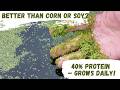
Available data suggests potential as a biostimulant and a subject for beneficial microbial interactions. One study highlights its aqueous extract as a biostimulant, effectively counteracting saline stress in olive plants by enhancing photosynthetic activity and overall plant functionality. Research also indicates that bacteria, specifically from the phylum Armatimonadota, can significantly promote duckweed proliferation, suggesting a symbiotic relationship that could be leveraged in regenerative systems to boost biomass for other applications. Although not explicitly mentioned as a primary regenerative use like cover cropping or nitrogen fixation in these excerpts, its biostimulant properties and interaction with plant growth-promoting bacteria hint at its utility in enhancing crop resilience and potentially improving soil health indirectly. Further research is needed to fully explore its integration into broader regenerative practices such as integrated livestock-plant systems or as a component in nutrient cycling strategies. While coverage in our knowledge base is limited, the above represents documented uses in regenerative systems.

Regenerative Quick Profile

All recommendations assume integrated, regenerative practices—not conventional inputs.

Climate & Soil Fit

Climate: Tropical Rainforest, Tropical Monsoon, Tropical Savanna, Hot Semi-Arid (Steppe), Cold Semi-Arid (Steppe), Hot Desert, Cold Desert, Humid Subtropical, Oceanic (Maritime Temperate), Hot-Summer Mediterranean, Warm-Summer Mediterranean, Monsoon-Influenced Humid Subtropical, Subtropical Highland, Hot-Summer Continental, Warm-Summer Continental, Subarctic, Monsoon-Influenced Hot-Summer Continental

Zones: USDA 3-11, Australian Zones 1-8

Optimal Soil: Rich Soil, Wet Soil

System Role & Functions

Primary: Cash Crop With Services

Secondary: Specialty, Forage Integration

Key Benefits: Climate adaptable, Easy establishment

Management Level

Experience: Beginner-Friendly

Maintenance: High maintenance - Its prolific growth can be managed through strategic integration, allowing for biomass harvesting for compost or mulch, thus enriching soil fertility.

Value Streams

  • Cash crop production
  • Livestock forage value
1

Climate Suitability Assessment

Will this plant thrive in your climate?

IDEALLY SUITED

Köppen Zone: Af (Tropical Rainforest), Am (Tropical Monsoon), Aw (Tropical Savanna), Cfa (Humid Subtropical), Cwa (Monsoon-Influenced Humid Subtropical)
USDA Zone: 6a, 7a, 8a, 9a, 10a, 11a, 12a
Australian Zone: Zone 4, Zone 5, tropical, subtropical
EU Climate Region: atlantic

Common Duckweed thrives in consistently warm and moist environments, performing optimally in tropical, subtropical, and humid temperate climates. These zones, including Köppen Af, Am, Aw, Cfa, Cwa, and regional USDA zones 7a through 13a, Australian Zones 4, 5, subtropical, and tropical, and EU Atlantic regions, provide the necessary conditions for rapid and continuous growth. Temperatures ideally range from 60-85°F (15-29°C), with ample water availability (natural rainfall of 30-60 inches/75-150 cm annually or easily supplemented). The long growing seasons, often year-round in tropical and subtropical areas, allow for multiple harvests and high biomass production. Minimal management is required beyond ensuring adequate water and nutrient levels. Establishment is highly reliable, and the plant exhibits excellent resilience and productivity. These conditions support duckweed as a highly valuable cash crop with services, contributing significantly to nutrient cycling and biomass generation with minimal input costs.

ADEQUATE

Köppen Zone: BSh (Hot Semi-Arid (Steppe)), Cfb (Oceanic (Maritime Temperate)), Csa (Hot-Summer Mediterranean), Csb (Warm-Summer Mediterranean), Cwb (Subtropical Highland), Dfa (Hot-Summer Continental), Dfb (Warm-Summer Continental)
USDA Zone: 5a, 5b
Australian Zone: Zone 3, temperate
EU Climate Region: continental, mediterranean

Common Duckweed can be successfully cultivated in regions with distinct seasons, including warm summers and cooler winters, or those with significant dry periods. These include Köppen Am, Aw, As, Cfa, Cfb, Csa, Csb, Cwa, Cwb, Dfa, Dfb, Dwa, Dwb, and regional USDA zones 5b through 6b, Australian Zones 3, temperate, and EU Continental and Mediterranean regions. While growth may not be continuous year-round, substantial biomass can be produced during the warmer, wetter months. Challenges in these zones include potential winter kill requiring annual re-establishment, or the need for supplemental irrigation during dry summers or periods, which can increase operational costs. Yields may be reduced by 10-25% compared to ideal zones due to these seasonal limitations. However, with proper timing of planting and water management, duckweed remains a viable option for cash crop production and its associated services.

NOT RECOMMENDED

Köppen Zone: ET (Tundra), BSk (Cold Semi-Arid (Steppe)), BWh (Hot Desert), BWk (Cold Desert), Dfc (Subarctic), Dwa (Monsoon-Influenced Hot-Summer Continental)
USDA Zone: 2a, 3a, 3b, 4a
EU Climate Region: alpine

Common Duckweed is not recommended for cultivation in climates characterized by extreme cold, very short growing seasons, or prolonged periods of extreme heat and drought without substantial intervention. This includes Köppen Dfc, Dfd, ET, EF, and regional USDA zones 1a through 5a, Australian Zones not specified but implied to be colder, and EU Alpine regions. In cold climates, the short growing season and freezing temperatures prevent establishment and survival, leading to guaranteed winter kill and negligible biomass production. In hot, arid regions, while it can grow with irrigation, the water demands are exceptionally high, making it economically unviable compared to more drought-tolerant options. The risk of crop failure due to extreme temperatures or water scarcity is high, and establishment success is significantly reduced. For these zones, alternative aquatic plants or more cold-hardy, drought-tolerant species are better suited for regenerative agriculture practices.

Better alternatives for these "not recommended" zones: Algae (various species) (can grow in cooler waters and have faster life cycles, some tolerate extreme cold), Watercress (tolerates cooler water and can be grown in nutrient-rich, flowing systems), Hairy Vetch (cold-hardy annual legume for nitrogen fixation in colder regions), Cattails (Typha spp.) (can tolerate cold and wet conditions, though not a floating plant)

Note: Zones listed above represent climates where this plant can produce reliably with reasonable management. Climate zones not mentioned would require intensive climate modification (greenhouses, extensive infrastructure) and are not economically viable for regenerative agriculture purposes.

2

Soil Suitability Assessment

Which soil types work best for this plant?

IDEALLY SUITED

Rich Soil, Wet Soil

This plant thrives in these soil types without requiring amendments or remediation. Natural soil conditions support optimal growth and productivity.

ADEQUATE

Clay Soil, Loam Soil

This plant performs acceptably in these soil types with moderate, manageable remediation such as pH adjustment, compost addition, or drainage improvement. The required amendments are practical and cost-effective for regenerative agriculture.

NOT RECOMMENDED

Acidic Soil, Alkaline Soil, Desert Soil, Rocky Soil, Saline Soil, Sandy Soil

Growing this plant in these soil types would require impractical remediation such as complete soil replacement, extensive amendments, or cost-prohibitive infrastructure. These conditions are not economically viable for regenerative agriculture.

Note: Soil suitability assessments focus on remediation requirements. "Ideally Suited" means the plant generally thrives without the need for substantial amendments, "Adequate" means manageable remediation (lime, compost, mulch), and "Not Recommended" means impractical soil changes would be required. Climate factors like rainfall and temperature also influence success.

3

Seasonal Considerations

Planting timing, growth duration, and harvest windows

Establishing your Lemna minor is a multi-year commitment, beginning with planting nursery stock during the dormant season, ideally in early spring as the soil becomes workable but before active growth commences. Both bare-root and containerized plants thrive when planted at this time. Expect about 2-3 years for initial establishment, with the first meaningful harvest typically occurring in year 3 or 4. Full production, where yields are consistent and robust, will be achieved by year 5-7 and can continue for several decades.

Throughout the year, observe the plant's natural rhythms. Pruning, if necessary for shaping or to manage density, is best performed during the winter dormancy period, before new growth begins. Harvests can occur throughout the active growing season, whenever biomass accumulates. Lemna minor will experience a period of reduced growth or dormancy during cooler months, especially in climates with distinct winters, but will readily resume vigorous growth as temperatures warm in spring. Monitor water levels and nutrient availability during the summer months to maximize biomass accumulation.

4

System Role & Multi-Benefit Value

Functional roles, integration strategies, and stacked benefits

Functional Role

Total System Value

The total system value of common duckweed lies in its remarkable capacity for rapid biomass production and nutrient assimilation. It serves as a direct harvest for animal feed, particularly for poultry and waterfowl, offering a protein-rich supplement. Beyond direct harvest, duckweed significantly enhances farm systems by acting as a powerful bio-filter, absorbing excess nitrogen and phosphorus from wastewater or runoff, thereby improving water quality. This nutrient capture contributes to ecosystem services by preventing eutrophication and potentially sequestering carbon in its biomass. Its rapid growth cycle allows for near-continuous harvesting, providing a reliable resource. Risk diversification is achieved through its role in nutrient management, reducing reliance on external inputs and creating a more resilient, closed-loop system. Duckweed's ability to thrive in diverse water conditions makes it a versatile component for integrated farming operations.

Integration Characteristics

Multi-Benefit Value: Adequate - This aquatic plant actively cycles nutrients, detoxifies water, and serves as a valuable food source within the aquatic food web.

Sources behind this view

Videos & Podcasts
5

Management & Care Requirements

Integration guidance, maintenance needs, and care practices

How to Integrate This Plant

Common duckweed (Lemna minor) is a fast-growing aquatic plant with significant potential in regenerative systems, primarily as a nutrient-rich biomass for animal feed or compost enhancement. Its rapid growth makes it ideal for on-farm nutrient cycling, especially in systems with water bodies or constructed wetlands. Duckweed can be integrated into systems utilizing livestock manure for fertility, converting waste into a valuable resource. It can be harvested and fed directly to poultry or waterfowl, or composted to enrich soil. While not a direct component of silvopasture or food forests in the traditional sense, its ability to absorb excess nutrients from water makes it a valuable tool for managing water quality around livestock areas. It begins providing value almost immediately upon establishment, with rapid biomass accumulation within weeks. Its multi-benefit stacking lies in its efficient nutrient capture and conversion, improving water quality, providing a consistent feed source, and contributing to a closed-loop nutrient economy.

Integration Practices & Management

The provided knowledge base offers limited direct insights into the specific methods regenerative farmers use to integrate Lemna minor (duckweed). While one source highlights the potential of a Lemna minor aqueous extract as a biostimulant to mitigate saline stress in olive plants, it does not detail field establishment or management practices for duckweed itself within a regenerative farming system. Another study examines bacterial colonization of Lemna minor, but this is a laboratory context rather than a farm application. The remaining sources discuss broader regenerative agriculture concepts, livestock integration, and soil contamination, without mentioning Lemna minor. Consequently, information on establishment methods (seeding rate, timing, tillage), integration with grazing, termination strategies, or management considerations for Lemna minor in regenerative agriculture is not available within this dataset. Practical farmer experiences and specific integration with cash crops are also absent. Therefore, based on these sources, the 'how' of integrating Lemna minor into regenerative agriculture remains largely undocumented.

Management Profile

Maintenance Intensity: Not Recommended - Its prolific growth can be managed through strategic integration, allowing for biomass harvesting for compost or mulch, thus enriching soil fertility.

6

Regenerative Suitability Details

Comprehensive trait ratings for system integration assessment

Comparative ratings for this plant across key regenerative agriculture traits.

Trait Suitability Explanation
Establishment Ease Ideally Suited Rapidly colonizes and integrates into aquatic systems, quickly forming a living mulch that enhances nutrient cycling and water clarity.
Multi Benefit Value Adequate This aquatic plant actively cycles nutrients, detoxifies water, and serves as a valuable food source within the aquatic food web.
Climate Adaptability Ideally Suited Thrives across diverse climates (zones 3-11) by efficiently utilizing available water and solar energy, demonstrating remarkable resilience.
Maintenance Intensity Not Recommended Its prolific growth can be managed through strategic integration, allowing for biomass harvesting for compost or mulch, thus enriching soil fertility.

Comparative System: Ratings compare plants within their economic category (e.g., cover crop nitrogen fixation compared to other cover crops, not to all plants). Individual farm conditions and management practices significantly influence actual performance.

7

Learn More

Why farmers use this plant and additional resources

Why Regenerative Farmers Use This Plant

Lemna minor, commonly known as common duckweed, offers significant regenerative value, particularly in aquatic and semi-aquatic systems. Its rapid growth rate and prolific biomass production make it an exceptional tool for nutrient cycling and water purification. In a single growing season, duckweed can capture excess nutrients, such as nitrogen and phosphorus, from water bodies, thereby mitigating eutrophication and improving water quality. A dense mat of duckweed can absorb up to 90% of available nitrogen and phosphorus within a few days of introduction to nutrient-rich wastewater or agricultural runoff. Studies indicate yields of up to 20-40 tons of fresh weight per acre (45-90 metric tons/ha) under optimal conditions, with some sources suggesting a single square meter can produce up to 20 grams of dry biomass per day. This nutrient scavenging capacity is crucial for managing effluent from livestock operations, polishing water from irrigation return flows, and preventing nutrient pollution downstream.

Beyond its direct nutrient management capabilities, Lemna minor serves as a crucial component in integrated pest management and biodiversity enhancement strategies. Its extensive root system, though fine, helps to stabilize pond bottoms and can contribute to the overall organic matter content of aquatic sediments over time, reducing turbidity. Its dense cover provides habitat and shelter for a variety of aquatic invertebrates, which in turn serve as food sources for fish, amphibians, and beneficial insects. In systems where fish are raised, duckweed can be a valuable supplementary feed, providing a readily available source of protein (often ranging from 15-40% dry weight). Its presence can also help to shade out less desirable aquatic weeds, reducing competition for resources. For farmers seeking to create more resilient ecosystems, incorporating duckweed into constructed wetlands or farm ponds can significantly boost local biodiversity and create a more balanced aquatic environment. The dense canopy formed by duckweed can also provide shade, moderating water temperatures and creating a more hospitable environment for fish and invertebrates.

The ecological benefits of Lemna minor extend to its role in bioremediation and potential for biomass production. As it rapidly accumulates nutrients and organic compounds, it effectively removes pollutants from water, including heavy metals. Harvested duckweed can then be processed into valuable compost, animal feed, or even biogas through anaerobic digestion, creating a closed-loop nutrient cycle. For instance, in a well-managed aquaculture system, duckweed biomass can offer a significant renewable resource. This harvested biomass, rich in proteins and minerals, can be incorporated into compost piles, accelerating decomposition and producing a nutrient-dense soil amendment, diverting nutrients from potential pollution pathways and recycling them back into agricultural production.

Regional success stories highlight the adaptability and utility of Lemna minor. In the rice paddies of Southeast Asia, it naturally colonizes and helps to recycle nutrients, and is traditionally cultivated and fed to livestock. In the humid subtropical regions of the Southern USA, it is effectively used in constructed wetlands to treat runoff from poultry farms and crop fields, with harvests occurring throughout the spring and summer months. In European agricultural landscapes, particularly in areas with intensive livestock farming, duckweed ponds are increasingly employed to treat manure lagoon effluent, reducing the environmental impact of nutrient losses. In the Netherlands, it is integrated into wastewater treatment systems, providing a cost-effective method for nutrient removal and producing biomass for biogas production. In Australian dryland farming regions, its potential for wastewater treatment in constructed wetlands and farm dams for water harvesting and recycling is being explored, leveraging its ability to thrive in nutrient-rich conditions. In Brazilian coffee plantations, it can be integrated into drainage canals to manage nutrient runoff from fertilization. Farmers in Europe have experimented with using harvested duckweed as a high-protein feed supplement for poultry and aquaculture, reducing reliance on conventional feed sources.

Sources behind this view

Videos & Podcasts
Research
8

How to Integrate This Plant

Practical guidance for regenerative systems

Establishing Lemna minor is typically straightforward, relying on its natural buoyancy and rapid reproduction through vegetative budding. For intentional cultivation, seeding rates are not applicable in the traditional sense; instead, inoculation is key. A small starter culture, representing approximately 1-5% of the water surface area, or a few grams per square meter (approximately 0.002 lbs/sq ft), is sufficient to initiate rapid colonization under favorable conditions. This can be as simple as scooping a handful of duckweed from an existing population and spreading it across the desired area. Planting depth is irrelevant as the plant floats on the water's surface. Spacing is also not a factor; the plant will naturally colonize available surface area. Establishment is rapid, with significant coverage often achieved within 7-14 days.

Management of Lemna minor focuses on controlling its growth and harvesting its biomass. Water quality parameters are crucial; it thrives in water with high nutrient loads but can be sensitive to extreme pH levels or toxic contaminants. While it tolerates a wide range of temperatures from 5-35°C (41-95°F), optimal growth occurs in warmer conditions, with ideal water temperatures between 15-30°C (59-86°F). Excessive shading or nutrient-poor conditions will limit its proliferation. Biological fertility is inherent to its function, as it directly utilizes dissolved nutrients. Harvest frequency depends on the desired outcome and nutrient load; typically, harvesting can occur every 7-21 days during peak growing seasons to prevent overpopulation and to collect biomass. Mechanical removal using fine nets or skimmers is the most common method. Overpopulation can lead to oxygen depletion if the mat becomes too dense, so monitoring and periodic harvesting are essential. Sustainable harvest rates should aim to remove a portion of the biomass regularly, ensuring the population remains healthy and continues its nutrient uptake function.

Ecological integration of Lemna minor is most effective in constructed wetlands, farm ponds, riparian buffer zones, and wastewater treatment systems. It is a low-input perennial that requires minimal management once established, primarily involving harvesting. Its ability to float on the surface means it does not compete with submerged or emergent aquatic plants for substrate, allowing for polyculture in diverse aquatic habitats. In silvopasture systems with water features, it can contribute to water purification and provide a supplemental food source for livestock that access the water. Propagation is primarily vegetative through fragmentation, and while it can spread rapidly, containment is usually managed through harvesting rather than active prevention. Management intensity is very low, primarily involving periodic harvesting to remove accumulated biomass and nutrients.

Regional adaptations for Lemna minor are broad due to its widespread natural distribution. In the humid subtropical climates of the southern United States, it can be cultivated year-round in farm ponds and aquaculture systems, providing a consistent source of feed and water purification. In temperate European regions, its growth is most vigorous during spring and summer, with harvests timed to coincide with peak nutrient loads from agricultural runoff. In Australian dryland farming systems, its application in constructed wetlands for water harvesting and recycling is being explored, leveraging its ability to thrive in nutrient-rich, albeit sometimes limited, water resources. In tropical regions such as Southeast Asia, it is a common component of integrated rice-fish farming systems, where it helps manage water quality and provides feed for fish. Its ability to survive colder winters in temperate zones is often through overwintering as turions or in deeper, unfrozen water bodies, with rapid regrowth occurring as temperatures rise in spring.

View Full Document (Printable single-page version)