
Lead Tree
Leucaena leucocephala, or Subabul, is utilized in regenerative agriculture primarily as a green manure and a component in agroforestry systems, contributing to soil health and fertility. Studies indicate its use in a rice-wheat cropping rotation, where its biomass, when incorporated as green manure, significantly enriches soil organic carbon (SOC) and NaOCl-resistant carbon, especially when combined with farmyard manure and biofertilizers. This nitrogen-fixing capability enhances soil building, a key regenerative benefit. Furthermore, Leucaena leucocephala biomass rates have been evaluated in semi-arid regions to assess their impact on crop productivity, suggesting its role in enhancing soil moisture content when integrated with water harvesting techniques like tied contours and infiltration pits. Research also highlights its root architecture, contributing to carbon sequestration, though specific comparisons with other trees like Kadam and Malabar neem show distinct root densities in topsoil layers. While the knowledge base doesn't detail specific farmer experiences or integration with practices like rotational grazing or no-till, its documented use in green manuring and agroforestry implies a role in polyculture systems and nitrogen fixation, supporting broader regenerative goals.
For a full botanical description see: Plants For A Future(opens in new window) (external link)
Regenerative Quick Profile
All recommendations assume integrated, regenerative practices—not conventional inputs.
Climate & Soil Fit
Climate: Tropical Rainforest, Tropical Monsoon, Tropical Savanna, Hot Semi-Arid (Steppe), Cold Semi-Arid (Steppe), Hot Desert, Cold Desert, Humid Subtropical, Oceanic (Maritime Temperate), Hot-Summer Mediterranean, Warm-Summer Mediterranean, Monsoon-Influenced Humid Subtropical, Subtropical Highland, Hot-Summer Continental, Warm-Summer Continental, Subarctic, Monsoon-Influenced Hot-Summer Continental, Tundra
Zones: USDA 9-11, Australian Zones 11-14, EU Mediterranean, Subtropical
Optimal Soil: Loam Soil
System Role & Functions
Primary: Nitrogen Fixer
Secondary: Food Forest, Silvopasture
Key Benefits: Multi-benefit value, Nitrogen Fixation, Root System Depth
Management Level
Experience: Beginner-Friendly
Maintenance: Moderate maintenance - This nitrogen-fixing tree thrives with natural soil fertility and adequate moisture retention, necessitating thoughtful planting site selection in cooler regions to ensure its integration into the system.
Value Streams
- Nitrogen fixation
Know the Debate
- Highly beneficial for soil fertility and forage in tropical regions.
- Aggressive growth raises concerns about invasive spread in some areas.
- Benefits depend on careful site selection and management.
- Dual role requires balancing ecological risk with agricultural gain.
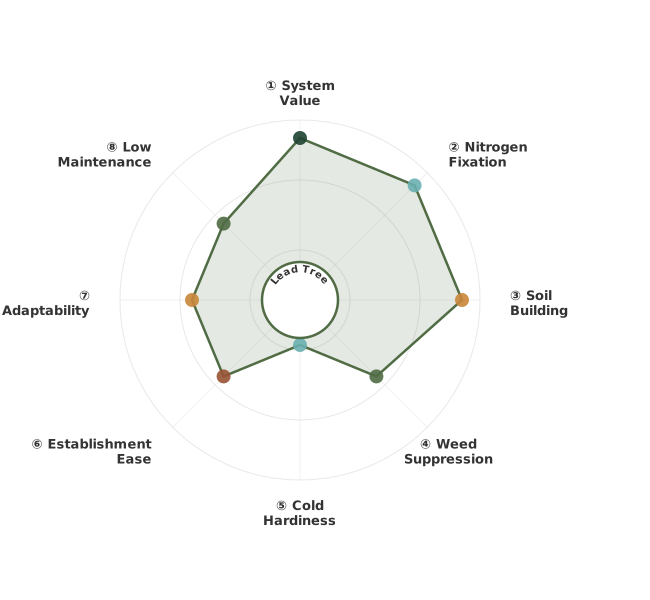
How These Traits Are Calculated
Trait dimensions are ordered clockwise starting from the top of the chart (12 o'clock position):
1. System Value
Ecosystem service stacking across nitrogen, carbon, water, biodiversity
WHAT: Synthesizes the compounding value of multiple ecosystem services delivered simultaneously—nitrogen fixation, soil organic matter building, pollinator support, erosion control, and water infiltration improvement. This is the total regenerative impact beyond single-function metrics.
WHY: The highest-value cover crops deliver 3-5 significant ecosystem services at once. A legume that fixes nitrogen, builds biomass, supports pollinators, and improves water infiltration provides $150-300/acre in combined benefits versus $30-60 for single-function covers. This service stacking is the core principle of regenerative agriculture.
HOW: Scored via LLM synthesis of economics data, timeline benefits, and trait combinations. Exceptional (3.0): 4-5 major services stacked with strong economic value ratios. Typical (2.0): 2-3 moderate services. Limited (1.0): Single-function covers with minimal service stacking. Considers seed cost relative to benefit value.
2. Nitrogen Fixation
Biological nitrogen production via legume root nodule bacteria
WHAT: Measures the ability to convert atmospheric nitrogen (N₂) into plant-available ammonia through symbiotic bacteria in root nodules. Legumes form partnerships with rhizobium bacteria that fix 60-150 lbs N/acre/year, reducing or eliminating synthetic fertilizer needs for following crops.
WHY: Nitrogen is the most expensive fertilizer input in crop production ($0.50-1.00/lb). Cover crops with exceptional nitrogen fixation can provide $60-150/acre worth of fertility while building soil organic matter. This biological process also reduces groundwater contamination from nitrogen runoff and lowers farm carbon footprint.
HOW: Ratings based on annual nitrogen fixation capacity and reliability across soil conditions. Exceptional (3.0): Legumes like hairy vetch, crimson clover, and field peas fixing >100 lbs N/acre/year. Typical (2.0): Moderate fixers like red clover at 60-100 lbs N/acre/year. Limited (1.0): Non-legumes (grasses, brassicas) with zero fixation capacity.
3. Soil Building
Weighted: biomass production (60%) + root system depth (40%)
WHAT: Combines above-ground biomass production with root depth to measure total soil organic matter contribution. Biomass provides surface organic matter, while deep roots deposit carbon at depth and break up compaction layers.
WHY: Soil organic matter is the foundation of regenerative agriculture, improving water retention, nutrient cycling, and biological activity. Each 1% increase in soil organic matter holds an additional 20,000 gallons of water per acre and represents $500-1,000 in fertility value. Deep roots access subsoil nutrients and create channels for water infiltration.
HOW: Weighted formula prioritizes biomass production (60% weight) for immediate organic matter contribution, with root depth (40% weight) for long-term soil structure. Exceptional (3.0): High-biomass crops with deep roots like cereal rye (8+ tons biomass, 5+ ft roots). Typical (2.0): Moderate on both factors. Limited (1.0): Low biomass or shallow roots.
4. Weed Suppression
Physical competition through rapid establishment and dense growth
WHAT: Measures the ability to outcompete weeds through rapid germination, aggressive early growth, and dense canopy formation. Physical smothering and light competition reduce weed pressure without herbicides.
WHY: Weed management is a major labor and cost burden for farmers. Cover crops that effectively suppress weeds reduce herbicide costs ($20-60/acre), decrease cultivation passes (fuel + labor), and provide clean seedbeds for cash crops. This is especially valuable in organic systems where herbicide options are limited.
HOW: Ratings based on germination speed, tillering density, and canopy closure timing. Exceptional (3.0): Fast-establishing, dense-tillering crops like cereal rye, oilseed radish that close canopy within 3-4 weeks. Typical (2.0): Moderate establishment and coverage. Limited (1.0): Slow-establishing or sparse crops that allow weed competition.
5. Cold Hardiness
Winter survival for fall planting and spring green manure value
WHAT: Measures tolerance to freezing temperatures and ability to survive winter conditions. Winter-hardy cover crops can be fall-planted, overwinter as living mulch, and provide early spring growth before cash crop planting.
WHY: Fall-planted winter-hardy covers extend the growing season into unused months, capturing solar energy and preventing erosion during wet periods. Spring green manure from overwintered covers provides early nitrogen and biomass. This timing flexibility is critical in cold climates with short growing seasons.
HOW: Ratings based on minimum survival temperature and winter active growth. Exceptional (3.0): Winter-hardy crops like cereal rye, hairy vetch, crimson clover surviving to -20°F with active growth in spring. Typical (2.0): Moderate cold tolerance. Limited (1.0): Warm-season crops like buckwheat, cowpea killed by first frost.
6. Establishment Ease
Germination speed, soil requirement flexibility, planting window breadth
WHAT: Measures how easily the cover crop establishes from seed, including germination speed, tolerance for variable soil conditions, and flexibility in planting timing. Easy establishment means reliable stands without intensive management.
WHY: Difficult-to-establish covers increase risk of stand failure, wasted seed costs, and reduced benefits. Easy establishment crops tolerate late planting, poor seedbed preparation, and variable moisture—critical when cover cropping windows are narrow between cash crops. Reliable establishment ensures consistent soil building and weed suppression benefits.
HOW: Ratings based on days to emergence, soil condition sensitivity, and planting window breadth. Exceptional (3.0): Fast germinators like buckwheat (3-5 days) and cereal rye (5-7 days) with wide planting windows. Typical (2.0): Moderate establishment requirements. Limited (1.0): Slow or finicky establishers requiring precise conditions.
7. Adaptability
Weighted: climate tolerance (60%) + multi-benefit versatility (40%)
WHAT: Combines climate adaptability (temperature and rainfall range) with multi-benefit versatility (diverse ecosystem services) to measure overall system flexibility. High adaptability means the cover works across farm regions and provides multiple functions.
WHY: Farmers need cover crops that work reliably across diverse fields and provide stacked benefits. Climate-adaptable covers reduce risk in variable weather, while multi-benefit crops deliver nitrogen fixation + pollinator support + forage value simultaneously. This versatility maximizes return on cover crop investment.
HOW: Weighted formula prioritizes climate tolerance (60% weight) for geographic reliability, with multi-benefit value (40% weight) for functional stacking. Exceptional (3.0): Wide climate range + multiple significant benefits. Typical (2.0): Moderate on both factors. Limited (1.0): Narrow climate range or single-function crops.
8. Low Maintenance
Inverted from maintenance intensity—low inputs mean high scores
WHAT: Measures minimal input requirements for successful cover cropping. Low-maintenance covers require no irrigation, minimal fertility, easy termination, and tolerate variable management timing.
WHY: Cover crops compete for resources with cash crops in tight rotations. Low-maintenance covers fit easily into existing systems without adding labor, equipment, or input costs. Easy termination is especially critical—covers that are difficult to kill can become weeds and delay cash crop planting.
HOW: Inverted score from maintenance intensity trait (4.0 minus raw score). Exceptional (3.0): Self-sufficient crops like cereal rye, field peas requiring no irrigation or fertility, easily terminated by mowing or winter-kill. Typical (2.0): Moderate input needs. Limited (1.0): High-maintenance crops needing irrigation, heavy fertility, or difficult termination (herbicides, multiple tillage passes).
Ratings are based on documented performance in regenerative systems, not conventional high-input scenarios. All traits assume integrated management practices focused on soil health and ecosystem services.
5
Management & Care Requirements
Integration guidance, maintenance needs, and care practices
Management & Care Requirements
Integration guidance, maintenance needs, and care practices
How to Integrate This Plant
Leucaena leucocephala, a fast-growing leguminous tree, is a valuable asset for regenerative systems primarily due to its nitrogen-fixing capabilities. It can be integrated into alley cropping systems, where it's planted in rows with crops grown in the alleys, providing nitrogen and biomass for mulch. In silvopasture, it can offer shade and forage for livestock, while its deep root system aids in soil stabilization and water infiltration, particularly in semi-arid regions. As a component of food forests or hedgerows, it contributes to biodiversity and soil health. Year 1-2 contributions include initial nitrogen fixation and biomass production. By Year 5, its canopy provides noticeable shade and significant nitrogen input. By Year 10-20, it becomes a substantial source of biomass for soil organic matter enhancement and can act as a windbreak. The total system value is amplified by its role in soil carbon sequestration and its potential as a fodder source, creating a multi-benefit asset.
Integration Practices & Management
Sources indicate *Leucaena leucocephala* is integrated into regenerative agriculture primarily as a green manure crop and a component in agroforestry systems. In a rice-wheat rotation, it was used as a green manure for wheat, contributing to soil organic carbon (SOC) stabilization. In semi-arid regions, *Leucaena leucocephala* biomass was evaluated alongside rainwater harvesting techniques to enhance sorghum productivity, suggesting its role in improving soil moisture and crop yields. Studies on root architecture in semi-arid Central India highlight its distinct root system, contributing to carbon sequestration within the topsoil. While specific details on establishment methods, grazing integration, or termination strategies are not provided in these excerpts, the plant's use as a green manure and its biomass contribution to soil productivity demonstrate its integration into cropping systems for fertility and soil health benefits. Further research would be needed to detail its management in grazing contexts or specific termination protocols.
Management Profile
Maintenance Intensity: Adequate - This nitrogen-fixing tree thrives with natural soil fertility and adequate moisture retention, necessitating thoughtful planting site selection in cooler regions to ensure its integration into the system.
Sources behind this view
 Community
-
Leucaena leucocephala is a highly invasive, nitrogen-fixing tree in tropical regions like Hawaii, useful as livestock feed but difficult to control. Its roots and leaves offer soil benefits, but its a
Read more (opens in new window) permies.com
 Research
-
Soil organic carbon and total nitrogen under Leucaena leucocephala pastures in Queensland (opens in new window)
This study found: Leucaena pastures in Queensland significantly increased soil carbon and nitrogen over native pastures and cropped land. Established leucaena pastures could offset cattle GHG emissions through carbon s
-
Legume-Grass Intercropping in Indonesian Pastures: A Systematic Review on Soil and Forage Nutritional Improvements (opens in new window)
This study found: Mixing legumes with grasses in Indonesian pastures boosts forage yield (up to 65%) and protein (up to 50%), improves soil organic matter, and reduces erosion. Challenges include inoculation needs and
-
Management of tree fodder banks for quality forage production and carbon sequestration in humid tropical cropping systems – An overview (opens in new window)
This study found: Growing fodder trees like Leucaena, moringa, and gliricidia in humid tropical farms provides nutritious animal feed, reduces costs, and sequesters carbon. Proper management maximizes benefits and mini
-
Leucaena leucocephala plantations can increase soil organic carbon storage by increasing labile fractions without reducing stability in dry-hot valley savannas (opens in new window)
This study found: Leucaena leucocephala tree plantations in dry savannas increased soil carbon by boosting easily decomposable fractions without reducing long-term stability, especially in older stands.
6
Economics & Value Streams
Direct harvest, system benefits, ecosystem services, and risk diversification
Economics & Value Streams
Direct harvest, system benefits, ecosystem services, and risk diversification
Comprehensive economic analysis including direct harvest value, system enhancement contributions, ecosystem services, value timeline, and risk diversification strategies.
Cover Crop Investment
| Metric | Value |
|---|---|
| Seed Cost | $15-30/acre $37-74/ha |
| Termination Cost | 20-50 49-124 |
| Biomass Production | 3-8 7-18 |
| N Fixation Value | 100-200 112-224 |
| Weed Control Savings | 15-40 37-99 |
Cover crops are soil investments, not cash crops. Economics measured in soil health gains, input reduction, and subsequent crop performance. Values show direct costs and estimated benefits.
System Enhancement Value
Beyond harvest: nitrogen fixation replacing fertilizer costs
Nitrogen Fixation Value
50-150 lbs N/acre/year = $48-135/acre fertilizer replacement (variable based on specific conditions and economic valuation of nitrogen)
As a prominent legume, Leucaena leucocephala is a highly effective nitrogen fixer, a fact consistently highlighted across the knowledge base excerpts. This biological process significantly enhances soil fertility, reducing the reliance on synthetic nitrogen fertilizers. The nitrogen fixed by Leucaena is incorporated into the soil organic matter, becoming available to companion crops or subsequent rotations. This contributes to a more sustainable and cost-effective nutrient management strategy. In rice-wheat systems, for example, green manuring with Leucaena has shown to enrich soil organic carbon and improve nutrient availability. The ability of Leucaena to fix substantial amounts of nitrogen means it directly contributes to the nutrient budget of the integrated farm, supporting the growth of other plants within the system and improving overall soil health and structure. This natural fertilization process is a cornerstone of regenerative agriculture, promoting long-term soil productivity.
Additional Soil Building Benefits
Beyond its primary roles, Leucaena leucocephala offers a suite of 'other system benefits' integral to its value in integrated farms. Its biomass production, noted in, can be utilized for mulch, compost, or even as a feedstock for bioenergy, contributing to on-farm nutrient cycling and resource utilization. As a component of food forests and silvopasture, it provides fodder for livestock, creating a multi-functional plant. Its rapid growth and resilience when cut back make it a reliable source of organic matter. The species' role in soil improvement, including de-compaction and enhanced water retention through biochar and compost integration, further bolsters soil health. The presence of Leucaena also supports biodiversity by offering habitat and potentially food sources for wildlife, contributing to the ecological complexity and resilience of the farm landscape.
Erosion Control
Protects 3-5 acres per tree row, 5-15% crop yield improvement (variable based on wind intensity, row spacing, and crop type)
Leucaena leucocephala is recognized for its utility as a windbreak, a crucial function in integrated farming systems, especially in exposed or arid environments. Dense plantings of Leucaena can effectively reduce wind speed, thereby mitigating soil erosion and protecting delicate crops from wind damage. This protection can lead to improved microclimates for surrounding vegetation and reduce desiccation. By creating sheltered zones, windbreaks enhance the survivability and productivity of other plants, particularly during vulnerable early growth stages. Furthermore, windbreaks can help conserve soil moisture by reducing evaporation rates. The establishment of Leucaena as a windbreak is a long-term investment that contributes to the overall stability and resilience of the farm ecosystem, safeguarding against the detrimental effects of strong winds and contributing to a more favorable growing environment for a variety of agricultural enterprises.
Ecosystem Service Contributions
Environmental contributions: carbon, pollinators, wildlife, and water
- Carbon Sequestration: Leucaena leucocephala is a fast-growing tree with significant biomass production potential, indicating a good capacity for carbon sequestration in both its woody biomass and root systems. Its contribution to soil organic carbon stabilization, as seen in studies involving green manuring, further enhances its carbon sequestration value.
- Pollinator Support: Medium. Leucaena can produce flowers that attract some pollinators, though it is not typically a primary nectar source for most commercial bee operations. Its contribution is more indirect through supporting a healthier overall farm ecosystem.
- Wildlife Habitat: Moderate. Leucaena can provide browse for some wildlife and nesting sites in its branches. Its dense growth can offer shelter and microhabitats within the farm landscape.
- Water Quality: Not applicable
Value Timeline: N Fixation & Production
When you'll see results: nitrogen fixation begins immediately, harvest at maturity
Years 1-2
Erosion control, initial soil improvement (nitrogen fixation begins), basic shade provision, biomass production for mulch/compost.
Years 3-5
Established shade for livestock and other plants, significant nitrogen contribution, increased biomass for fodder and fuel, potential for early timber harvest in some contexts.
Years 10-20
Mature shade canopy, full nitrogen fixation potential, substantial biomass for various uses, significant contribution to soil organic matter, established windbreak effectiveness.
20+ Years
Long-term stable soil fertility, mature timber production potential, fully realized ecosystem services (shade, windbreak, habitat), continued contribution to farm resilience.
Farm Risk Reduction
How this reduces farm risk: fertilizer cost hedge and rotation benefits
- Multiple Revenue Streams: Fodder, timber, biomass (mulch, compost, potential bioenergy), fertilizer replacement (nitrogen fixation), shade services for livestock, soil improvement services.
- Temporal Income Spread: Ongoing ecosystem services (shade, nitrogen fixation, windbreak) and soil building from year 1 onwards, with periodic biomass harvests and eventual timber production offering a long-term income stream.
- Market Risk Hedge: Drought tolerance reduces risk in arid/semi-arid climates. Provides internal farm inputs (fertilizer, fodder) reducing reliance on external markets. Diverse uses (fodder, timber, biomass) hedge against price volatility in any single commodity. Enhances resilience to climate variability.
Sources behind this view
Research
-
Soil organic carbon and total nitrogen under Leucaena leucocephala pastures in Queensland (opens in new window)
This study found: Leucaena pastures in Queensland significantly increased soil carbon and nitrogen over native pastures and cropped land. Established leucaena pastures could offset cattle GHG emissions through carbon s
8
Know the Debate
Leucaena leucocephala offers significant regenerative benefits, particularly in tropical and subtropical climates, for soil fertility, carbon seque...
Know the Debate
Leucaena leucocephala offers significant regenerative benefits, particularly in tropical and subtropical climates, for soil fertility, carbon seque...
Leucaena leucocephala offers significant regenerative benefits, particularly in tropical and subtropical climates, for soil fertility, carbon sequestration, and livestock nutrition. However, its aggressive growth demands careful management to prevent invasive spread, especially in regions with less extreme climates or sensitive native ecosystems. The trade-off between its positive attributes and potential ecological risks is a key consideration for its implementation, requiring site-specific evaluation and judicious use.
Is Leucaena's benefit worth the invasive risk?
Highly beneficial for soil and forage
Leucaena significantly improves soil organic matter, nitrogen content, and water infiltration, providing highly nutritious forage for livestock and sequestering carbon. Its biomass enriches the soil, reducing fertilizer needs and improving soil structure for crop or pasture productivity.
Sources behind this view
Sources behind this view
 Videos & Podcasts
-
Compares key nitrogen-fixing trees (Black Locust, Honeyloust, Alder, Mosquite, Tagasaste) by climate suitability, nitrogen contribution (lbs/acre/yr), forage value (% protein/sugar), and extra benefits like shade and wood, guiding species selection for silvopasture.
Research
-
Soil organic carbon and total nitrogen under Leucaena leucocephala pastures in Queensland (opens in new window)
This study found: A study in Queensland, Australia, found that planting pastures with Leucaena leucocephala (a legume tree) significantly boosted soil carbon and nitrogen levels compared to native pastures or land that was continuously cropped. Over several years, these leucaena pastures added hundreds of kilograms of carbon and nitrogen per hectare to the topsoil each year. The research suggests that the leucaena's ability to fix nitrogen helped improve soil carbon storage, especially when compared to grass-only pastures where nitrogen might be limiting. Interestingly, carbon accumulation was even higher closer to the leucaena trees. The study also looked at greenhouse gas balances, finding that well-established leucaena pastures (over 20 years old) could offset emissions from grazing cattle through their carbon sequestration, but older, less productive pastures struggled to do so.
-
Soil organic carbon fractions and aggregation of a tropical Alfisol as affected by plant residues (opens in new window)
This study found: A study on a tropical soil in Nigeria looked at how different plant materials, like leaves and stalks, affected soil health over a short period. Applying Leucaena leucocephala (a nitrogen-fixing shrub) at a rate of 20 tons per hectare significantly boosted soil organic matter, including both easily available and stable forms. Other beneficial plant materials included Guinea grass and Siam weed, which also improved soil structure and the formation of stable soil clumps. The research suggests that incorporating these specific plant residues can quickly improve the quality and structure of fragile tropical soils, with Leucaena leucocephala showing the most promising short-term results.
-
Management of tree fodder banks for quality forage production and carbon sequestration in humid tropical cropping systems – An overview (opens in new window)
This study found: This review looks at how to best manage trees grown for animal feed in humid tropical farming areas, particularly in South India. For small farmers, livestock are important for food and income, but they often struggle with a lack of good quality feed and high costs. Growing trees that produce nutritious leaves, like Leucaena, mulberry, kadamba, calliandra, agathi, moringa, and gliricidia, can provide a cheaper and more accessible source of animal feed, especially during dry spells. These trees can be planted in rows alongside crops to make the most of limited land. By managing these 'fodder banks' properly, farmers can increase the amount of feed produced, improve its quality, and also help store carbon from the atmosphere, while reducing competition with their main crops. The review summarizes research on how to establish and manage these trees for both animal nutrition and environmental benefits.
Potential invasive risk outweighing benefits
Leucaena leucocephala is identified as one of the world's worst invasive species, posing significant risks to native plant communities and potentially disrupting ecosystems due to its aggressive growth and adaptability.
Sources behind this view
Sources behind this view
Research
-
Evolution of the Defense Compounds Against Biotic Stressors in the Invasive Plant Species Leucaena leucocephala (opens in new window)
This study found: Leucaena leucocephala (Lam.) de Wit is listed in the world’s 100 worst alien invasive species because of the risks it poses to native plant communities. Life history traits, such as high growth and reproductive rates, and a high capacity to adapt to different environmental conditions may contribute to its invasive properties. Biotic stressors, such as herbivores, pathogens, and competing plant species are known to exert significant selective pressure on the plant’s survival, distribution, and abundance. L. leucocephala has been reported to contain several compounds involved in the defense functions against these biotic stressors. A large amount of L-mimosine, a non-protein amino acid, was found in all plant parts of L. leucocephala, including its flowers. L-Mimosine is toxic to herbivorous mammals and insects, parasitic nematodes, pathogenic fungi, and neighboring competing plant species by inactivating various essential enzymes and blocking DNA replication, and/or inducing oxidative stress conditions. Several flavonoids, polyphenolic compounds, and/or derivatives of benzoic and cinnamic acids are toxic to parasitic nematodes, pathogenic fungi and bacteria, and competing plant species by disrupting plasma membrane structures and functions, and various metabolic processes. These compounds may represent the invasive traits of L. leucocephala that have undergone natural selection during the evolution of the species. They may contribute to the defense functions against the biotic stressors, and increase its survival, distribution, and abundance in the introduced ranges. This is the first review to focus on the compounds involved in the defense functions against biotic stressors.
Making Sense of the Differences
The performance of Leucaena leucocephala depends heavily on the specific ecosystem and management. In managed systems and areas with less sensitive native flora, it offers substantial soil fertility and forage benefits. However, in regions with suitable climates and ecological niches, it can become invasive, outcompeting native species. Successful implementation requires careful site selection, proactive management to prevent seed spread, use of non-invasive cultivars where available, and awareness of regional invasive species lists.
9
Learn More
Why farmers use this plant and additional resources
Learn More
Why farmers use this plant and additional resources
Why Regenerative Farmers Use This Plant
Leucaena leucocephala, commonly known as white leadtree or ipil-ipil, is a remarkable nitrogen-fixing legume tree that offers profound benefits for regenerative agriculture systems, particularly in tropical and subtropical regions.
Its primary regenerative value lies in its exceptional ability to fix atmospheric nitrogen. Through a symbiotic relationship with Rhizobium bacteria in its root nodules, Leucaena can fix an estimated 100-200 lbs of nitrogen per acre (112-224 kg/ha) annually, depending on soil conditions and plant density. This significantly reduces or eliminates the need for synthetic nitrogen fertilizers, thereby lowering input costs for farmers and potentially offsetting fertilizer expenses by $50-$100 per acre or more.
Beyond nitrogen, Leucaena produces substantial biomass, with mature plants yielding 5-15 tons of dry matter per acre (11-34 metric tons/ha) annually. When managed appropriately, this biomass enriches the soil with organic matter upon decomposition, significantly boosting soil organic matter content over 3-5 year rotations, often by 0.5-1.5% annually in well-managed systems. This enhanced soil organic matter improves soil aggregation, water holding capacity, and nutrient cycling.
Its deep taproot system, reaching depths of 6-25+ feet (1.8-7.5+ m), not only scavenges nutrients from lower soil profiles but also improves soil structure, enhances water infiltration (potentially increasing rates by 20-50% in established areas), and sequesters carbon deep within the soil profile over its lifespan. The deep roots also break up compacted soil layers, leading to improved aeration.
Integrating Leucaena leucocephala into farming systems offers a cascade of ecosystem services:
- Weed Suppression: As a cover crop or living mulch, it provides excellent weed suppression, outcompeting many annual weeds and reducing the need for mechanical or chemical weed control.
- Erosion Control: Its dense canopy and deep root system serve as a potent erosion control agent, protecting valuable topsoil from wind and water damage, particularly on sloped land. Studies have shown up to a 30% increase in water infiltration rates compared to bare soil.
- Livestock Forage: In silvopasture systems or as a fodder shrub, Leucaena is a highly nutritious forage for livestock, offering protein-rich fodder with crude protein levels often ranging from 15-25%. This dual-purpose use allows for integrated crop-livestock systems, enhancing farm resilience and reducing reliance on external feed inputs.
- Biodiversity Support: Its prolific flowering attracts a diverse array of pollinators, including bees and butterflies, contributing to local biodiversity and supporting adjacent crops that rely on insect pollination. The presence of Leucaena can also support a more robust and diverse soil microbial community, enhancing nutrient availability and disease suppression.
Leucaena leucocephala has demonstrated success across various global agricultural landscapes:
- Brazil: Widely used in coffee plantations as an interplanted shade tree and nitrogen fixer, improving soil fertility and providing a microclimate conducive to coffee growth, while also serving as a protein source for livestock grazing between rows. Also used in sugarcane plantations.
- Australia: Farmers in dryland wheat-sheep systems incorporate Leucaena into pastures and shelterbelts, providing essential protein for grazing animals during dry periods and improving soil health. It is often established with autumn rains and managed as a fodder shrub.
- Southeast Asia: A cornerstone species for fodder production, fuelwood, and soil improvement in agroforestry systems, often integrated into smallholder farming practices, including rice-based farming during the fallow season.
- India: Utilized for its dual purpose of fodder and soil enrichment in semi-arid regions.
- United States: Employed in silvopasture systems and as a component of diversified crop rotations in Florida and Hawaii to enhance soil health and livestock nutrition. Can be grown as an annual cover crop or forage in warmer southern regions.
- Central America: Commonly used in coffee shade systems and pasture improvement, with management focused on pruning and controlled grazing.
- Tropical Africa: Widely used in alley cropping systems, where it is pruned regularly to provide mulch and nitrogen for intercropped food crops like maize and cassava.
Sources behind this view
Research
-
Soil organic carbon and total nitrogen under Leucaena leucocephala pastures in Queensland (opens in new window)
This study found: Leucaena pastures in Queensland significantly increased soil carbon and nitrogen over native pastures and cropped land. Established leucaena pastures could offset cattle GHG emissions through carbon s