Available data suggests its potential role in regenerative agriculture, particularly concerning soil health. One study explored the impact of lemon balm land use on soil physicochemical and biochemical properties in semi-arid regions, indicating its influence on soil attributes like electrical conductivity. Another experiment investigated the interaction between lemon balm yield and phosphorus availability, showing that combining reduced phosphorus fertilization with Purple Nonsulfur Bacteria inoculation enhanced phosphorus availability and potentially lemon balm yield. These findings hint at lemon balm's utility in systems aiming to reduce synthetic inputs and improve soil nutrient cycling. Although not explicitly stated as a primary use like cover cropping or nitrogen fixation in these excerpts, its integration with beneficial microbes and its observed effects on soil properties suggest it could function as a component in polyculture systems or as a plant that supports soil biological activity. Further research is needed to fully elucidate its broader applications and benefits within diverse regenerative farming contexts. While coverage in our knowledge base is limited, the above represents documented uses in regenerative systems.

Regenerative Quick Profile

All recommendations assume integrated, regenerative practices—not conventional inputs.

Climate & Soil Fit

Climate: Tropical Rainforest, Tropical Monsoon, Tropical Savanna, Hot Semi-Arid (Steppe), Cold Semi-Arid (Steppe), Hot Desert, Cold Desert, Humid Subtropical, Oceanic (Maritime Temperate), Hot-Summer Mediterranean, Warm-Summer Mediterranean, Monsoon-Influenced Humid Subtropical, Subtropical Highland, Hot-Summer Continental, Warm-Summer Continental, Subarctic, Monsoon-Influenced Hot-Summer Continental, Tundra

Zones: USDA 4-9, Australian Zones 3-11

Optimal Soil: Loam Soil

System Role & Functions

Primary: Cash Crop With Services

Secondary: Specialty, Soil Remediation

Management Level

Experience: Beginner-Friendly

Maintenance: Moderate maintenance - Once established, lemon balm is a vigorous perennial that largely sustains itself. Its integration into the system requires minimal intervention, with occasional divisions supporting its vitality.

Value Streams

  • Cash crop production
1

Climate Suitability Assessment

Will this plant thrive in your climate?

IDEALLY SUITED

Köppen Zone: Cfa (Humid Subtropical), Cfb (Oceanic (Maritime Temperate)), Csb (Warm-Summer Mediterranean), Dfa (Hot-Summer Continental), Dfb (Warm-Summer Continental)
USDA Zone: 5a, 5b, 6a, 6b, 7a, 7b, 8a, 8b
Australian Zone: temperate, subtropical
EU Climate Region: atlantic

Lemon balm thrives in regions with mild winters and warm, humid summers, characterized by consistent rainfall (30-50 inches annually) and frost-free periods of 180-240 days. These conditions are met in Köppen Cfa and Cfb zones, USDA zones 6b-10b, Australian subtropical and temperate zones, and EU Atlantic regions. Optimal growth occurs with average temperatures between 60-75°F (15-24°C), with tolerance for higher summer temperatures up to 85°F (29°C) if moisture is adequate. Establishment is reliable in spring or fall, with plants readily overwintering and exhibiting vigorous perennial growth. Minimal management is required, focusing on harvesting and occasional watering during prolonged dry spells. Yields are high, with multiple harvests possible per season, and essential oil content is maximized. These zones offer the most reliable and economically viable cultivation for lemon balm as a cash crop.

ADEQUATE

Köppen Zone: Csa (Hot-Summer Mediterranean), Cwa (Monsoon-Influenced Humid Subtropical), Cwb (Subtropical Highland)
USDA Zone: 4b, 9a, 9b, 10a, 10b
EU Climate Region: continental

Lemon balm can be successfully cultivated in regions with moderate temperature fluctuations and varying rainfall patterns, provided some management adjustments are made. This includes Köppen Csa, Csb, Dfa, Dfb zones, USDA zones 5b-6a and 10a-10b, and EU continental regions. These areas typically have growing seasons of 120-180 days, but may experience summer heat stress or winter cold that impacts perennial survival and yield. Supplemental irrigation is often necessary during dry periods (especially in Csa/Csb zones), and winter protection or variety selection might be needed in colder continental climates (Dfa/Dfb). Yields are generally good but may be reduced by 10-20% compared to ideal zones, and stand persistence might be shorter (2-4 years). Economic viability is maintained with standard agricultural practices and moderate input costs.

NOT RECOMMENDED

Köppen Zone: Af (Tropical Rainforest), Am (Tropical Monsoon), Aw (Tropical Savanna), ET (Tundra), BSh (Hot Semi-Arid (Steppe)), BSk (Cold Semi-Arid (Steppe)), BWh (Hot Desert), BWk (Cold Desert), Dfc (Subarctic), Dwa (Monsoon-Influenced Hot-Summer Continental)
USDA Zone: 2a, 3a, 3b, 4a, 11a, 11b, 12a, 12b

Lemon balm is not recommended for cultivation in regions with extreme temperature variations, particularly very cold winters or excessively hot and dry summers, making economic viability questionable despite technical possibility. Köppen Dwa and Dwb zones, and USDA zones 3a-5a, fall into this category. In extremely cold zones (USDA 3a-5a, Köppen Dwb), winter kill is almost certain, limiting its use to a short-season annual with very low yields. In monsoon-influenced continental climates (Köppen Dwa), extreme winter cold and potentially short, hot growing seasons hinder reliable perennial establishment and productivity. Establishment success rates drop below 70% due to harsh conditions. Intensive management, frequent replanting, or specialized infrastructure would be required, significantly increasing costs and reducing profitability. Alternative plants better adapted to these specific challenging conditions are strongly advised for regenerative agriculture purposes.

Note: Zones listed above represent climates where this plant can produce reliably with reasonable management. Climate zones not mentioned would require intensive climate modification (greenhouses, extensive infrastructure) and are not economically viable for regenerative agriculture purposes.

2

Soil Suitability Assessment

Which soil types work best for this plant?

IDEALLY SUITED

Loam Soil

This plant thrives in these soil types without requiring amendments or remediation. Natural soil conditions support optimal growth and productivity.

ADEQUATE

Clay Soil, Rich Soil, Rocky Soil, Sandy Soil

This plant performs acceptably in these soil types with moderate, manageable remediation such as pH adjustment, compost addition, or drainage improvement. The required amendments are practical and cost-effective for regenerative agriculture.

NOT RECOMMENDED

Acidic Soil, Alkaline Soil, Desert Soil, Saline Soil, Wet Soil

Growing this plant in these soil types would require impractical remediation such as complete soil replacement, extensive amendments, or cost-prohibitive infrastructure. These conditions are not economically viable for regenerative agriculture.

Note: Soil suitability assessments focus on remediation requirements. "Ideally Suited" means the plant generally thrives without the need for substantial amendments, "Adequate" means manageable remediation (lime, compost, mulch), and "Not Recommended" means impractical soil changes would be required. Climate factors like rainfall and temperature also influence success.

3

Seasonal Considerations

Planting timing, growth duration, and harvest windows

Lemon balm offers a versatile cover cropping option across a range of temperate climates. For spring planting, aim for early spring, once the soil can be worked and the risk of hard frost has passed. It tolerates light frosts, allowing for a window shortly after the last expected frost. In the fall, it’s best to plant lemon balm in late summer to early fall, ensuring at least four to six weeks of growth before the first hard frost arrives. This allows for good establishment before winter dormancy.

Lemon balm typically establishes within two to three weeks under favorable conditions. It demonstrates good overwinter survival in zones Cfa, Cfb, Dfa, and Dfb, providing valuable winter cover. Termination in spring should occur when the plant is actively growing but before it competes with your main cash crop, typically a few weeks prior to planting. Peak biomass is usually achieved in late spring to early summer. While not a typical warm-season cover, it can serve as a summer cover if managed appropriately, offering soil protection. Frost-seeding in late winter or early spring is also a viable strategy to leverage its resilience and early-season growth potential.

4

System Role & Multi-Benefit Value

Functional roles, integration strategies, and stacked benefits

Functional Role

Total System Value

Lemon balm offers a multi-layered contribution to farm system resilience. Its direct harvest value comes from its use in culinary applications, herbal teas, and medicinal products. Beyond this, it significantly enhances the farm ecosystem by supporting pollinator populations, which are crucial for the productivity of many other crops. Studies suggest potential soil benefits, indicating a role in improving soil physicochemical properties, thus contributing to soil health and function. As a diverse plant within a system, it increases overall biodiversity, attracting beneficial insects and potentially wildlife. This diversification of farm output and ecological functions mitigates risks associated with monoculture farming, such as pest outbreaks or market fluctuations, thereby bolstering the farm's overall resilience and sustainability.

Integration Characteristics

Multi-Benefit Value: Adequate - Lemon balm is an excellent pollinator attractor and provides medicinal/culinary benefits, while also contributing moderate soil health through its biomass and ground cover.

5

Management & Care Requirements

Integration guidance, maintenance needs, and care practices

How to Integrate This Plant

Lemon balm (Melissa officinalis) can be integrated into regenerative systems primarily as a cash crop with ecosystem services. Its functions include pollinator support due to its nectar-rich flowers and potential soil improvement. It is compatible with practices like alley cropping and food forests, where it can be interplanted with trees or other crops. In Year 1, it provides ground cover and begins attracting pollinators. By Year 3-5, it establishes well, offering consistent harvest potential and significant pollinator benefits. The total system value extends beyond direct harvest through its role in attracting beneficial insects, potentially improving soil health (as suggested by studies on soil physicochemical properties), and adding to crop diversity, which enhances farm resilience. It can also be a component in perennial polycultures, contributing to a more robust and diverse farm ecosystem.

Integration Practices & Management

The provided knowledge base offers limited insight into the specific regenerative agriculture integration methods for Melissa officinalis (lemon balm). While two sources mention its presence in agricultural contexts, they do not detail establishment techniques like seeding rates, timing, companion planting, or tillage practices. Similarly, the sources do not describe how lemon balm is integrated with grazing systems, including mob grazing, rotational setups, or specific grazing and rest periods. Termination strategies, such as natural winterkill, grazing, crimping, mowing, or herbicide use, are also not discussed. Management considerations like fertility needs, competition control, or succession planning are absent from the knowledge base. Furthermore, its integration with cash crops through relay cropping, intercropping, or rotation sequences is not elaborated upon. One study investigates the impact of Melissa officinalis land use on soil properties, and another examines its yield response to phosphorus fertilization and microbial inoculation. Beyond these findings, practical farmer experiences and specific integration insights are not available within this limited textual coverage.

Management Profile

Maintenance Intensity: Adequate - Once established, lemon balm is a vigorous perennial that largely sustains itself. Its integration into the system requires minimal intervention, with occasional divisions supporting its vitality.

6

Economics & Value Streams

Direct harvest, system benefits, ecosystem services, and risk diversification

Comprehensive economic analysis including direct harvest value, system enhancement contributions, ecosystem services, value timeline, and risk diversification strategies.

Cover Crop Investment

Metric Value
Seed Cost $25-50/acre $62-124/ha
Termination Cost 10-30 25-74
Biomass Production 1.5-3.0 3-7
N Fixation Value N/A N/A
Weed Control Savings 15-40 37-99

Cover crops are soil investments, not cash crops. Economics measured in soil health gains, input reduction, and subsequent crop performance. Values show direct costs and estimated benefits.

System Enhancement Value

Beyond harvest: ecosystem services from regenerative cash crop practices

Ecological Service Contributions

Lemon balm offers significant value beyond its primary cash crop function, particularly concerning ecosystem services. It is a notable bee attractant, which is crucial for supporting pollinator populations essential for many agricultural crops. The knowledge base also highlights its role in soil remediation, suggesting it can improve soil physicochemical and biochemical properties, potentially increasing organic matter and enzyme activity. Furthermore, its inclusion in hugelkultur systems indicates its capacity to contribute to soil building and moisture retention. The aggressive spreading nature, while a management challenge, also points to its resilience and ability to form dense ground cover, which can suppress weeds and improve soil structure. Research suggests that Purple Nonsulfur Bacteria (PNSB) can enhance lemon balm's growth and nutrient uptake, and that lemon balm can improve soil P availability, indicating a synergistic relationship with beneficial soil microbes that enhances overall soil health and fertility.

Erosion Control (if applicable)

Variable, depends on planting density and integration into layered systems. Potential for 5-15% crop yield improvement in adjacent areas due to reduced wind stress.

While lemon balm is not typically considered a primary windbreak species due to its herbaceous nature and relatively low stature, its potential for dense ground cover and its inclusion in hugelkultur systems suggests a role in microclimate moderation. When planted in sufficient density or as part of a layered planting system, it can contribute to reducing wind velocity at ground level, thus mitigating soil erosion. This is particularly relevant in agricultural landscapes where wind can cause significant topsoil loss and damage to more sensitive crops. Its ability to form a dense mat, as implied by its aggressive spreading tendencies, means that established patches can help stabilize soil surfaces, especially on slopes or exposed areas. The soil remediation function also suggests it can improve soil structure, making it more resistant to wind erosion.

Ecosystem Service Contributions

Environmental contributions: carbon, pollinators, wildlife, and water

  • Carbon Sequestration: Moderate potential due to its herbaceous growth habit and relatively fast growth cycle. Its contribution to soil organic matter through root exudates and decomposition in integrated systems can enhance long-term soil carbon storage.
  • Pollinator Support: High. Explicitly mentioned as a bee attractant, making it valuable for supporting local pollinator populations crucial for farm biodiversity and crop yields.
  • Wildlife Habitat: Limited direct habitat provision, but its role as a pollinator attractant indirectly supports insect populations. Dense growth may offer some minor ground cover for small invertebrates.
  • Water Quality: Not applicable

Value Timeline: Production & Services

When you'll see results: varies by crop (annual harvest vs. perennial establishment)

Years 1-2

Establishment of ground cover, initial pollinator support, potential for early soil structure improvement and erosion control, beginning of aggressive spread management.

Years 3-5

First harvest revenue, established pollinator attraction, noticeable contribution to soil remediation and organic matter accumulation, potential for windbreak effect in dense plantings.

Years 10-20

Mature soil health benefits, consistent cash crop revenue, significant contribution to farm biodiversity through pollinator support, established ground cover for erosion control.

20+ Years

Long-term contributions to soil fertility and structure, sustained pollinator support, potential for integration into mature agroforestry or permaculture systems with ongoing benefits.

Farm Risk Reduction

How this reduces farm risk: backup income, weather protection, market hedges

  • Multiple Revenue Streams: Cash crop sales (fresh and dried leaves), essential oil production, potential for plant sales, ecosystem service provision (pollinator support, soil health).
  • Temporal Income Spread: Continuous provision of ecosystem services (pollinator support, soil improvement) throughout the growing season, with harvestable products available annually. Value extends beyond immediate harvest through soil building.
  • Market Risk Hedge: Reduces reliance on a single commodity by offering multiple product streams and integrating valuable ecosystem services. Its resilience and potential for self-propagation (if managed) can offer a buffer against market fluctuations and input costs. Its role in soil remediation can also reduce the need for external soil amendments.
7

Regenerative Suitability Details

Comprehensive trait ratings for system integration assessment

Comparative ratings for this plant across key regenerative agriculture traits.

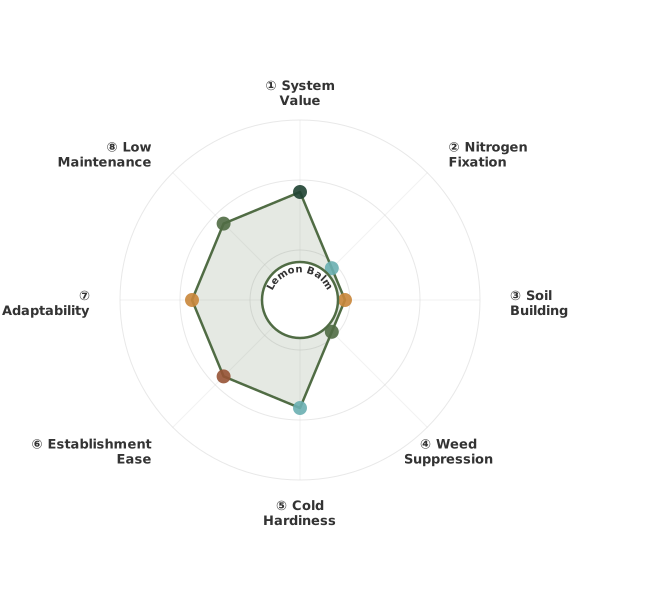
Trait Suitability Explanation
Cold Hardiness Adequate Lemon balm offers reliable ground cover in cooler climates (Zone 4-5), actively growing in fall and spring. Its resilience supports ecosystem function even through challenging winters.
Weed Suppression Not Recommended While lemon balm has a spreading habit, its canopy is relatively open, allowing for other plants to establish. Integrating it within a diverse planting scheme can enhance overall weed management.
Nitrogen Fixation Not Recommended As a non-legume, lemon balm does not contribute to nitrogen fixation. Its value lies in other ecosystem services, supporting a balanced soil biology.
Root System Depth Not Recommended Lemon balm's primarily shallow, fibrous root system enhances surface soil structure and nutrient cycling without deep soil disturbance.
Biomass Production Not Recommended Lemon balm contributes fine stems and leaves that readily decompose, slowly building soil organic matter and supporting soil life.
Establishment Ease Adequate Lemon balm establishes reliably from cuttings or seed with minimal soil preparation, quickly contributing to ground cover and ecosystem function.
Multi Benefit Value Adequate Lemon balm is an excellent pollinator attractor and provides medicinal/culinary benefits, while also contributing moderate soil health through its biomass and ground cover.
Climate Adaptability Adequate Thriving in zones 4-9, lemon balm adapts to varied conditions, showcasing its role in diverse regional ecosystems. It flourishes with consistent moisture, supported by good moisture retention practices.
Maintenance Intensity Adequate Once established, lemon balm is a vigorous perennial that largely sustains itself. Its integration into the system requires minimal intervention, with occasional divisions supporting its vitality.

Comparative System: Ratings compare plants within their economic category (e.g., cover crop nitrogen fixation compared to other cover crops, not to all plants). Individual farm conditions and management practices significantly influence actual performance.

8

Learn More

Why farmers use this plant and additional resources

Why Regenerative Farmers Use This Plant

Lemon balm (Melissa officinalis) is a valuable perennial herb for regenerative agriculture systems, primarily for its significant contributions to biodiversity and its role in integrated pest management. While not a nitrogen fixer, its dense foliage and extensive root system make it an excellent choice for erosion control, particularly on slopes or in areas prone to soil disturbance. Its biomass production, while moderate compared to some cover crops, decomposes effectively, contributing organic matter to the soil. In a 3-5 year rotation, the consistent presence of lemon balm can improve soil structure and water infiltration, laying the groundwork for more robust cash crop yields.

Integrating lemon balm into diverse farming systems offers multiple synergistic benefits. It is a highly attractive plant for a wide array of beneficial insects, including pollinators like bees and hoverflies, as well as predatory insects that help control common agricultural pests. This natural pest control reduces the reliance on synthetic pesticides, aligning with regenerative principles. Its aromatic foliage is known to deter certain common agricultural pests, offering a degree of natural pest management for neighboring cash crops. Lemon balm can be used as a companion plant in vegetable gardens, intercropped with brassicas or tomatoes, where its scent is believed to deter certain pests. Its presence can also enhance the growth and flavor of neighboring herbs and vegetables through allelopathic interactions or by attracting beneficials.

The quantitative ecosystem benefits of lemon balm are primarily seen in its support for beneficial insect populations and pollination services. Studies have shown that flowering lemon balm can attract a significant number of pollinator visits per flower, contributing to the overall health of the agroecosystem. A single flowering lemon balm plant can attract hundreds of bee visits per day during its blooming period. By providing a consistent nectar and pollen source from late spring through summer, it supports the life cycles of many beneficial arthropods, leading to increased populations of natural enemies of common crop pests. This enhanced biodiversity contributes to a more resilient and self-regulating farming system, reducing the need for external inputs and fostering a healthier soil microbiome. The root system of lemon balm, typically reaching depths of 1-2 feet (30-60 cm), helps to break up soil compaction and improve water infiltration, contributing to better soil health and reducing runoff.

Lemon balm has found success in various regional farming contexts. In European herb gardens and small-scale organic farms, it is often interplanted with vegetables to deter pests and attract pollinators. In the UK, it's frequently incorporated into mixed borders and hedgerows, providing habitat and forage for beneficial insects year-round. In North American permaculture systems, it's used in perennial polycultures and food forests to enhance biodiversity and provide medicinal and culinary yields. In Australian market gardens and organic orchards, its resilience in temperate zones makes it a reliable component for creating insectary plantings and strategically planted around fruit trees to enhance pollination and deter certain insect pests. In South American coffee plantations, it can be integrated into shade-grown systems or as a ground cover in inter-row areas to enhance biodiversity and support beneficial insects.

9

How to Integrate This Plant

Practical guidance for regenerative systems

Establishing lemon balm can be achieved through seed or cuttings. For broadcast seeding, rates typically range from 1 to 2 pounds per acre (1.1 to 2.2 kg/ha). When drilling or for managed stands, slightly lower rates of 0.5 to 1 lb/acre (0.55 to 1.1 kg/ha) can be used. Seeds should be planted at a shallow depth of 0.125 to 0.25 inches (3 to 6 mm), as they require light to germinate. Spacing can vary depending on the desired density; for managed stands, rows are often planted 12 to 18 inches (30 to 45 cm) apart with plants spaced 6 to 10 inches (15 to 25 cm) within rows to allow for airflow and ease of harvesting. In the Northern Hemisphere, the ideal sowing times are early spring (March-April) or early autumn (September-October) to allow the plant to establish before extreme temperatures. For the Southern Hemisphere, this translates to planting from September to October or March to April. Lemon balm typically establishes within 30-45 days.

Once established, lemon balm is relatively low-maintenance. It prefers moist, well-drained soil and benefits from about 0.5 to 1 inch (1.3 to 2.5 cm) of water per week, especially during dry periods and establishment. While it can tolerate some drought once mature, optimal growth occurs with adequate water. Fertility needs are generally low; it thrives in well-drained soils and benefits from the organic matter provided by compost or well-rotted manure incorporated in the spring or at planting. Synthetic fertilizers are rarely necessary and can even reduce the aromatic quality of the plant. Lemon balm typically reaches a mature height of 2 to 3 feet (0.6 to 0.9 meters) within its first growing season, with flowering occurring in the summer months, often beginning in its second year.

As a component of a regenerative system, lemon balm's termination and residue management are straightforward due to its perennial nature and moderate biomass. If it needs to be removed or managed to favor a cash crop, mowing or cutting the plant back to a few inches above the soil line in late spring or early summer is effective. This practice encourages new growth and prevents excessive seed set. The mowed material can be left as a mulch to decompose, adding organic matter and retaining soil moisture. For situations where complete removal is necessary, mechanical methods like tilling can be employed, though this is a more disruptive approach. If lemon balm is allowed to volunteer, its dense root system will continue to improve soil structure and prevent erosion. For systems where it is used as a living mulch, pruning and allowing the cut material to decompose in situ is the preferred method. If termination is required before planting a new crop, it can be mowed down 2-3 weeks prior to planting to allow for initial decomposition. The residue typically breaks down within 30-60 days, releasing nutrients and improving soil structure. Seed management is generally not a concern, as it does not readily reseed aggressively in most climates, but vigilance may be needed in very mild regions to prevent unwanted spread.

Regional adaptations for lemon balm integration are varied. In the Pacific Northwest of the USA, farmers often interplant lemon balm with berries or in orchard understories to attract pollinators and beneficial insects, with minimal management required beyond occasional mowing. In the UK, it's commonly grown in herb gardens and mixed borders, where its presence supports local biodiversity and provides a culinary and medicinal resource. In warmer climates like Australia, while it can thrive, ensuring adequate moisture or planting in areas with higher rainfall is crucial for optimal growth and its ecological benefits. Its ability to naturalize in many temperate regions makes it a resilient choice for long-term soil health and ecosystem services. In the Midwestern United States, it can be established in spring or early fall, providing pollinator support throughout the warmer months and contributing to soil health in diverse crop rotations. In Australian temperate zones, it thrives as a component of insectary plantings or in perennial systems, providing habitat and pest deterrence with its resilience to varying rainfall patterns.

View Full Document (Printable single-page version)