Oregano
Insights reveal its potential in regenerative systems. It's integrated into polyculture systems, specifically as an intercropping plant in vineyards, alongside grapevines and thyme, to influence topsoil properties. While this study noted reduced soil nutrient content and moisture, a slight increasing trend in particulate organic carbon stocks was observed. Oregano is also utilized in nurseries for propagating aromatic and medicinal plants, contributing to biodiversity within these specialized systems. In poultry farming, dried oregano mass added to bedding showed a live weight advantage in chickens. For dairy sheep, dried Greek oregano leaves as a feed additive improved animal health and milk yield. Research also explored the bio-herbicidal potential of oregano essential oils in organic farming to manage weed populations. Although not explicitly a nitrogen fixer or primary forage in this knowledge base, its use in polyculture, as a feed additive, and in bio-herbicidal applications suggests varied roles in enhancing farm resilience and animal productivity within regenerative frameworks. While coverage in our knowledge base is limited, the above represents documented uses in regenerative systems.
For a full botanical description see: Plants For A Future↗(opens in new window) (external link)
Regenerative Quick Profile
All recommendations assume integrated, regenerative practices—not conventional inputs.
Climate & Soil Fit
Climate: Tropical Rainforest, Tropical Monsoon, Tropical Savanna, Hot Semi-Arid (Steppe), Cold Semi-Arid (Steppe), Hot Desert, Cold Desert, Humid Subtropical, Oceanic (Maritime Temperate), Hot-Summer Mediterranean, Warm-Summer Mediterranean, Monsoon-Influenced Humid Subtropical, Subtropical Highland, Hot-Summer Continental, Warm-Summer Continental, Subarctic, Monsoon-Influenced Hot-Summer Continental, Tundra
Zones: USDA 4-10, Australian Zones 3-9
Optimal Soil: Loam Soil
System Role & Functions
Primary: Cash Crop With Services
Secondary: Forage Integration, Specialty
Key Benefits: Multi-benefit value, Climate adaptable, Low maintenance
Management Level
Experience: Beginner-Friendly
Maintenance: Very low maintenance - A hardy perennial, oregano thrives with good drainage and moisture retention, requiring minimal fertility management and exhibiting natural pest resistance for low-impact system integration.
Value Streams
- Vegetable/specialty crop harvest
- Livestock forage value
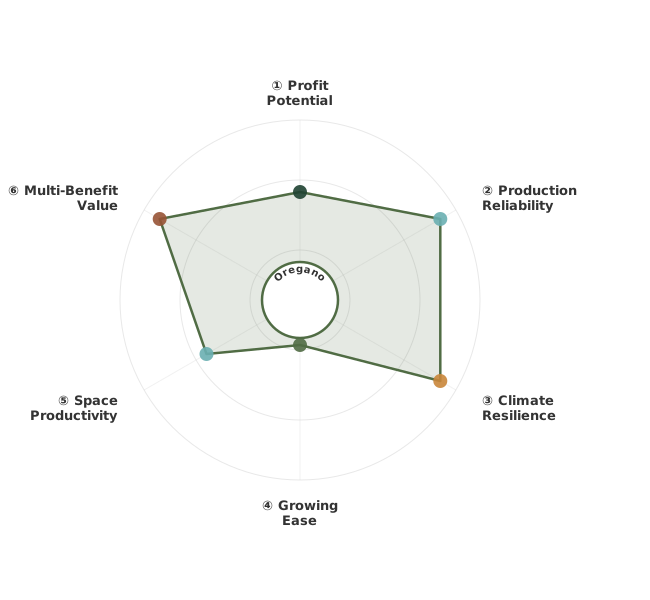
Regenerative Trait Ratings
How These Traits Are Calculated
Trait dimensions are ordered clockwise starting from the top of the chart (12 o'clock position):
1. Profit Potential
Net returns per acre from yield, pricing, input costs, and labor efficiency
WHAT: Synthesizes gross revenue potential, input costs, labor requirements, and storage/marketing advantages into net profitability per acre. Captures the complete economic picture from planting to sale.
WHY: Not all vegetables are equally profitable. High-value crops with efficient production can return $10,000-30,000/acre versus $2,000-5,000/acre for lower-value options. Profit potential guides crop selection for maximum return on limited land and determines viable scale for farm businesses.
HOW: Scored via LLM synthesis of economics data (yields, prices, costs), storage advantages (season extension, value-added potential), and labor intensity. Exceptional (3.0): High yields × premium prices with moderate inputs and good storage (garlic, high-value salad greens). Typical (2.0): Moderate returns (tomatoes, squash). Limited (1.0): Low yields, commodity pricing, or intensive labor requirements (low-value greens).
2. Production Reliability
Weighted: yield consistency (60%) + disease/pest resistance (40%)
WHAT: Combines yield reliability (harvest consistency year-to-year) with disease and pest resistance to measure predictable production. Reliable vegetables deliver consistent harvests without catastrophic failures from pests or weather.
WHY: Market commitments and CSA subscriptions require dependable production. Unreliable crops that fail in bad years or require intensive pest management create cash flow gaps and customer dissatisfaction. Reliable producers allow confident planning and reduce input costs from emergency pest interventions.
HOW: Weighted formula prioritizes yield reliability (60% weight) for overall consistency, with disease/pest resistance (40% weight) to prevent total failures. Exceptional (3.0): Consistent yields across variable seasons with strong natural pest resistance. Typical (2.0): Generally reliable with some pest/weather sensitivity. Limited (1.0): Highly variable yields or severe pest vulnerability requiring intensive management.
3. Climate Resilience
Temperature and rainfall tolerance across diverse growing conditions
WHAT: Measures the breadth of climatic conditions where the vegetable produces successfully—temperature extremes, humidity ranges, and rainfall variability. Climate-resilient crops work across diverse regions and weather patterns.
WHY: Climate variability is increasing—unexpected heat waves, cold snaps, or drought periods can wipe out entire vegetable harvests. Resilient crops provide insurance against weather uncertainty and allow geographic expansion for market growth. This is especially critical for direct-market farmers who can't easily substitute crops mid-season.
HOW: Ratings based on the climate_adaptability trait documenting temperature tolerance and geographic range. Exceptional (3.0): Grows successfully in diverse climates (cold to hot, humid to dry) with wide hardiness zone range. Typical (2.0): Moderate climate flexibility. Limited (1.0): Narrow climate requirements (tropical-only, cool-season-only, humidity-sensitive).
4. Growing Ease
Weighted: establishment ease (50%) + low maintenance requirements (50%)
WHAT: Combines establishment difficulty (germination, transplanting) with ongoing maintenance needs (watering, fertilizing, pest management) to measure total labor requirements. Easy crops grow reliably with minimal intervention.
WHY: Labor is the primary cost for small-scale vegetable production. Easy-care crops allow farmers to manage more production area with the same labor, improving profitability. Difficult crops requiring constant attention, precise timing, or specialized skills reduce overall farm productivity and increase risk.
HOW: Weighted formula balances establishment ease (50% weight) for reliable startup and inverted maintenance intensity (50% weight) for ongoing care. Exceptional (3.0): Direct-seeded or easy transplants with minimal water/fertility/pest needs. Typical (2.0): Moderate care requirements. Limited (1.0): Difficult establishment or intensive ongoing management (daily watering, heavy feeding, constant pest monitoring).
5. Space Productivity
Weighted: yield per square foot (60%) + season extension potential (40%)
WHAT: Combines spatial productivity (yield per square foot) with temporal productivity (extended harvest windows from succession planting or season extension). Maximizes production from limited growing area.
WHY: Land is the primary constraint for vegetable farmers—especially those near urban markets. Space-efficient crops delivering high yields in small areas improve per-acre profitability dramatically. Season extension (spring tunnels, fall protection) adds bonus production windows when competing supply is limited and prices are higher.
HOW: Weighted formula prioritizes space efficiency (60% weight) for core yield per area, with season extension potential (40% weight) for bonus production opportunities. Exceptional (3.0): High yields per square foot (10,000+ lbs/acre equivalents) with season extension options. Typical (2.0): Moderate yields and extension potential. Limited (1.0): Low yields or crops unsuitable for season extension.
6. Multi-Benefit Value
Ecosystem services beyond harvest—pollinator support, nitrogen fixing, pest habitat
WHAT: Measures ecosystem services provided beyond harvestable yield. Multi-benefit vegetables contribute to farm ecology through nitrogen fixation (legumes), pollinator support (flowering crops), beneficial insect habitat, soil building, or erosion control.
WHY: Cash crops can either extract from farm ecosystems or contribute to them. Vegetables with strong multi-benefit value build soil fertility, support pollinators needed for fruit/vine crops, and create habitat for pest predators—reducing external input needs. Nitrogen-fixing vegetables (beans, peas) provide $40-80/acre worth of fertility for following crops.
HOW: Ratings based on the multi_benefit_value trait documenting service contributions. Exceptional (3.0): Significant ecosystem services (nitrogen fixation, heavy pollinator support, soil building, pest habitat). Typical (2.0): Some ecosystem contributions. Limited (1.0): Single-purpose cash crops with minimal farm ecology benefits.
Ratings are based on documented performance in regenerative systems, not conventional high-input scenarios. All traits assume integrated management practices focused on soil health and ecosystem services.
1
Climate Suitability Assessment
Will this plant thrive in your climate?
Climate Suitability Assessment
Will this plant thrive in your climate?
Köppen Zone: Cfa (Humid Subtropical), Cfb (Oceanic (Maritime Temperate)), Csa (Hot-Summer Mediterranean), Csb (Warm-Summer Mediterranean), Cwa (Monsoon-Influenced Humid Subtropical)
USDA Zone: 6a, 7a, 8a, 9a, 10a
Australian Zone: temperate
EU Climate Region: atlantic
Oregano performs optimally in climates with mild winters and warm, dry to moderately moist summers, characterized by 120-180 frost-free days and average summer temperatures between 70-85°F (21-29°C). These conditions are met in Köppen zones Cfb, Csa, Csb, and regional zones like USDA 7a-9b, Australian temperate, and EU Atlantic. Good drainage is crucial, especially in regions with higher rainfall, to prevent root rot. The plant thrives with ample sunlight and can tolerate some drought once established, though supplemental irrigation can boost yields and quality in drier periods. Essential oil concentration is typically highest under these conditions, leading to premium product quality. Perennial stands are long-lived, often persisting for 5-10 years with minimal management beyond occasional pruning and weed control. Establishment is generally high (>85%) with proper soil preparation and timing, typically in spring or early autumn. This suitability ensures reliable, high-quality harvests with low input costs.
Köppen Zone: Af (Tropical Rainforest), Am (Tropical Monsoon), Aw (Tropical Savanna), BSh (Hot Semi-Arid (Steppe)), BSk (Cold Semi-Arid (Steppe)), BWk (Cold Desert), Cwb (Subtropical Highland), Dfa (Hot-Summer Continental), Dfb (Warm-Summer Continental)
USDA Zone: 5a, 5b, 11a, 12a
Australian Zone: subtropical
EU Climate Region: continental
Oregano can be successfully cultivated in climates that offer a reasonable growing season but may present some challenges, such as moderate winter cold, higher summer humidity, or occasional dry spells. These conditions are found in Köppen zones Cfa, Dfb, and regional zones like USDA 5b-6b, 10a-10b, Australian subtropical, and EU continental. While yields and essential oil quality might be slightly reduced compared to ideal zones, the plant remains economically viable. Key management considerations include ensuring good drainage, managing potential disease pressure from humidity (in Cfa/subtropical), and providing supplemental irrigation during dry periods (in 10a/10b). Winter survival can be variable in Dfb and continental zones, potentially requiring some protection or leading to reduced stand longevity. Establishment success is good (70-85%) with appropriate timing and soil preparation, but yields may be 10-20% lower than in ideal climates. Overall, these zones offer a good balance of feasibility and productivity with standard agricultural practices.
Köppen Zone: ET (Tundra), BWh (Hot Desert), Dfc (Subarctic), Dwa (Monsoon-Influenced Hot-Summer Continental)
USDA Zone: 2a, 3a, 3b, 4a
Oregano is not recommended for cultivation in climates with extreme winter cold, very short growing seasons, or prolonged periods of excessive heat and humidity that significantly compromise its survival and productivity. This includes Köppen zones Dfa, Dwa, Dwb, and regional zones like USDA 3a-5a, Australian arid/semi-arid (though not explicitly listed, implied by extreme cold/heat), and EU Boreal (implied by extreme cold). In cold zones, winter kill is highly probable due to temperatures dropping below -10°F (-23°C), making perennial establishment unreliable and forcing annual replanting. In hot, humid zones, disease pressure increases, and in very hot, dry zones, heat stress and water demands become prohibitive. Establishment success is typically below 70%, and yields are significantly reduced, often to a single harvest or less. The high risk of crop failure and the need for intensive, costly interventions (e.g., artificial protection, extensive irrigation) make it economically unviable. Alternative herbs better adapted to these harsh conditions are strongly advised.
Note: Zones listed above represent climates where this plant can produce reliably with reasonable management. Climate zones not mentioned would require intensive climate modification (greenhouses, extensive infrastructure) and are not economically viable for regenerative agriculture purposes.
2
Soil Suitability Assessment
Which soil types work best for this plant?
Soil Suitability Assessment
Which soil types work best for this plant?
Loam Soil
This plant thrives in these soil types without requiring amendments or remediation. Natural soil conditions support optimal growth and productivity.
Clay Soil, Rich Soil, Rocky Soil, Sandy Soil
This plant performs acceptably in these soil types with moderate, manageable remediation such as pH adjustment, compost addition, or drainage improvement. The required amendments are practical and cost-effective for regenerative agriculture.
Acidic Soil, Alkaline Soil, Desert Soil, Saline Soil, Wet Soil
Growing this plant in these soil types would require impractical remediation such as complete soil replacement, extensive amendments, or cost-prohibitive infrastructure. These conditions are not economically viable for regenerative agriculture.
Note: Soil suitability assessments focus on remediation requirements. "Ideally Suited" means the plant generally thrives without the need for substantial amendments, "Adequate" means manageable remediation (lime, compost, mulch), and "Not Recommended" means impractical soil changes would be required. Climate factors like rainfall and temperature also influence success.
3
Seasonal Considerations
Planting timing, growth duration, and harvest windows
Seasonal Considerations
Planting timing, growth duration, and harvest windows
For oregano, plan to start seeds indoors in early spring, about 6-8 weeks before your last expected frost. Transplant seedlings into the garden once all danger of frost has passed and soil temperatures consistently reach 60°F (15°C). Direct seeding is also an option once the soil warms sufficiently, typically a few weeks after the last frost. Oregano is relatively slow to establish, taking approximately 60-75 days from transplanting to reach a good harvestable size.
You can begin light harvesting of leaves once plants are well-established, continuing throughout the summer and into fall. For a more substantial harvest, wait until plants are mature. Oregano thrives in warm weather but can tolerate some cool conditions, making it ideal for a long growing season. Consider a mid-summer succession planting for a continuous supply. As fall approaches, you can harvest heavily before the first expected frost. While oregano is perennial in many climates, treating it as an annual allows for flexible planting and predictable yields within a single growing season, especially in colder zones where winter survival might be uncertain.
4
System Role & Multi-Benefit Value
Functional roles, integration strategies, and stacked benefits
System Role & Multi-Benefit Value
Functional roles, integration strategies, and stacked benefits
Functional Role
Total System Value
Oregano offers multi-faceted value in regenerative systems, extending beyond its direct harvest as a culinary herb or medicinal plant. Its integration can enhance existing agricultural landscapes by supporting crucial ecosystem services. Studies show its potential as a feed additive for poultry and sheep, leading to improved weight gain and milk yield, respectively (,). This animal integration creates a feedback loop, where a harvested crop can improve livestock productivity. Furthermore, its flowering habit supports pollinators, contributing to biodiversity and the health of adjacent crops. While study indicated a reduction in soil moisture and nutrients when interplanted in a vineyard, this highlights the importance of careful system design and management rather than a lack of benefit. In appropriate contexts, oregano can contribute to soil cover and potentially attract beneficial insects. Risk diversification is achieved through its multiple revenue streams (direct sale, animal feed additive) and its resilience in dry, sunny conditions, making it a valuable component for whole-farm stability.
Integration Characteristics
Multi-Benefit Value: Ideally Suited - This plant significantly enhances biodiversity by attracting pollinators and beneficial insects, while also offering culinary and medicinal benefits and contributing to drought resilience.
5
Management & Care Requirements
Integration guidance, maintenance needs, and care practices
Management & Care Requirements
Integration guidance, maintenance needs, and care practices
How to Integrate This Plant
Oregano (Origanum vulgare) can be integrated into regenerative systems primarily as a cash crop with significant service provision. Its roles include potential soil health enhancement (though study noted reduced nutrient content and moisture in a vineyard setting, this could be managed through system design), pollinator support due to its aromatic flowers, and as a beneficial additive to animal feed. Compatible practices include alley cropping within vineyards or orchards, and potentially as a component in perennial polycultures or food forests, especially in drier, sunny locations. It can also be cultivated in hedgerows or as a cover crop in specific rotations. Propagation from cuttings is recommended for true-to-type flavor and quality. Oregano begins providing value in Year 1 through its harvest and pollinator attraction. By Year 3-5, its ground cover can contribute to soil structure, and its role in animal feed becomes more established. The multi-benefit stacking includes direct harvest income, improved animal health and productivity (studies and), and ecosystem services like pollinator support. Its ability to thrive in less fertile conditions also makes it suitable for marginal areas, diversifying farm income and resilience.
Integration Practices & Management
The provided knowledge base offers limited direct insights into the specific regenerative agriculture integration methods for *Origanum vulgare*. While several sources highlight its cultivation and use, they do not detail establishment techniques like seeding rates, precise timing, or no-till versus minimal tillage practices. Companion planting is alluded to, with *Origanum vulgare* being integrated into vineyards alongside thyme and its use in a nursery setting alongside other aromatic herbs. Information on integration with grazing systems, including mob grazing, rotational systems, timing, or rest periods, is absent. Similarly, termination strategies such as natural winterkill, grazing down, crimping, mowing, or herbicide termination are not discussed. Management considerations like fertility needs, competition management, or succession planning are also not detailed within these sources. The knowledge base does not provide practical farmer experiences on these specific integration aspects. What is evident is *Origanum vulgare*'s role in organic farming systems, including its use in diversifying plant rows in vineyards, its bio-herbicidal potential, and as an additive in poultry bedding, suggesting its value within broader organic production cycles.
Management Profile
Maintenance Intensity: Ideally Suited - A hardy perennial, oregano thrives with good drainage and moisture retention, requiring minimal fertility management and exhibiting natural pest resistance for low-impact system integration.
6
Economics & Value Streams
Direct harvest, system benefits, ecosystem services, and risk diversification
Economics & Value Streams
Direct harvest, system benefits, ecosystem services, and risk diversification
Comprehensive economic analysis including direct harvest value, system enhancement contributions, ecosystem services, value timeline, and risk diversification strategies.
Vegetable & Specialty Economics
| Metric | Value |
|---|---|
| Seed/Transplant Cost | 100-200 $/acre 247-494 $/ha |
| Expected Yield | 1000-2000 lbs/acre 1120-2241 kg/ha |
| Market Price | 3.00-6.00 $/lb 6-13 $/kg |
| Harvest/Handling Cost | 400-800 $/acre 988-1976 $/ha |
| Marketing/Distribution Cost | 200-400 $/acre 494-988 $/ha |
| Net Annual Return* | $1600-$11300/acre/year |
Economics highly variable by market channel (direct vs wholesale), scale, and management. Direct marketing commands premiums but requires labor. Values shown for mid-scale market garden operations.
* Net Annual Return = (Yield × Market Price) − (Amortized Establishment Cost + Annual Maintenance). This return is realized only at/after first harvest; early years have costs but no revenue. Range shows worst case to best case scenarios.
System Enhancement Value
Beyond harvest: ecosystem services from regenerative cash crop practices
Ecological Service Contributions
Oregano (Origanum vulgare) offers significant system value beyond its primary function as a cash crop. Its inclusion in vineyard underplantings, as studied in, demonstrates a capacity to influence soil microbial communities, promoting arbuscular mycorrhizal fungi and potential nitrification. This suggests a role in improving soil health and nutrient cycling within the agroecosystem. Furthermore, oregano essential oils have shown bio-herbicidal potential, as evidenced by their efficacy in controlling weed germination in chamomile crops. This capacity to act as a natural herbicide can reduce reliance on synthetic chemicals, thereby lowering input costs and environmental impact. The plant's growth habit, described as sprawling and rhizomatous, coupled with its drought tolerance, suggests it can contribute to ground cover, potentially reducing soil erosion, particularly in more exposed areas. Its aromatic nature and attractive flowers also contribute to biodiversity by supporting pollinator populations, a crucial element in integrated farm systems for crop production and ecosystem health.
Ecosystem Service Contributions
Environmental contributions: carbon, pollinators, wildlife, and water
- Carbon Sequestration: As a perennial herb, oregano contributes to soil carbon sequestration through root biomass and organic matter accumulation. Its dense growth can also enhance surface litter, further aiding carbon storage in the topsoil.
- Pollinator Support: High. Oregano produces abundant small flowers (white to purple-pink) that are attractive to a variety of pollinators, including bees, contributing to biodiversity and pollination services within the farm system.
- Wildlife Habitat: Provides limited direct habitat for larger wildlife, but its flowers and foliage can support insect populations, which in turn can be a food source for birds and other small animals. The ground cover may offer some shelter for beneficial insects.
- Water Quality: Not applicable
Value Timeline: Production & Services
When you'll see results: varies by crop (annual harvest vs. perennial establishment)
Years 1-2
Establishment of ground cover, initial contributions to soil microbial health, and potential for early-stage bio-herbicidal activity. First harvest of aromatic material for cash crop or internal use.
Years 3-5
Established perennial growth providing more consistent ground cover and soil health benefits. Increased yield for cash crop revenue. Enhanced pollinator support as plants mature. Potential for increased biomass contributing to soil organic matter.
Years 10-20
Mature, robust perennial stands offering significant contributions to soil structure and microbial activity. Consistent cash crop revenue. Ongoing ecosystem services like pollinator support and potential for reduced erosion.
20+ Years
Long-term, stable perennial ground cover with sustained contributions to soil health and biodiversity. Continued cash crop revenue, with potential for reduced management input as the stand matures.
Farm Risk Reduction
How this reduces farm risk: backup income, weather protection, market hedges
- Multiple Revenue Streams: ['Cash crop sales (fresh or dried oregano)', 'Value-added products (essential oils, culinary blends)', 'Potential for bio-herbicidal applications', 'Ecosystem services value (soil health, pollinator support)']
- Temporal Income Spread: Provides ongoing ecosystem services (soil health, pollination) from establishment onwards, alongside annual or multi-year harvests of the cash crop. Its perennial nature ensures consistent presence and value over many years, unlike annual crops.
- Market Risk Hedge: Drought tolerance provides a hedge against water scarcity. Its utility as a natural herbicide reduces reliance on external chemical inputs, mitigating price volatility and supply chain risks. Diversification into niche markets (specialty herbs) can also buffer against fluctuations in commodity crop prices.
7
Regenerative Suitability Details
Comprehensive trait ratings for system integration assessment
Regenerative Suitability Details
Comprehensive trait ratings for system integration assessment
Comparative ratings for this plant across key regenerative agriculture traits.
| Trait | Suitability | Explanation |
|---|---|---|
| Season Extension | Adequate | As a hardy perennial, oregano's harvest can be extended into fall, and it thrives within unheated tunnels, contributing to year-round plant system productivity. |
| Space Efficiency | Adequate | This spreading perennial herb offers a consistent yield of flavorful leaves, integrating well into diverse planting arrangements and maximizing ecological function within its footprint. |
| Storage Longevity | Not Recommended | While fresh oregano offers immediate use, its dried form provides exceptional long-term storage, supporting resilient food systems and reducing waste. |
| Yield Reliability | Ideally Suited | Oregano reliably produces consistent aromatic foliage across diverse soils and variable weather, showcasing its resilience and ability to contribute to stable ecosystem output. |
| Establishment Ease | Adequate | Initiating oregano is straightforward with warmth and good drainage; its moderate early vigor establishes well with minimal soil disturbance and tolerates periods of dryness. |
| Multi Benefit Value | Ideally Suited | This plant significantly enhances biodiversity by attracting pollinators and beneficial insects, while also offering culinary and medicinal benefits and contributing to drought resilience. |
| Climate Adaptability | Ideally Suited | Highly hardy across a wide range of zones, oregano thrives in heat, drought, and moderate cold, demonstrating its capacity to adapt and contribute to resilient agroecosystems. |
| Maintenance Intensity | Ideally Suited | A hardy perennial, oregano thrives with good drainage and moisture retention, requiring minimal fertility management and exhibiting natural pest resistance for low-impact system integration. |
| Disease Pest Resistance | Ideally Suited | Oregano's inherent resistance to pests and diseases allows it to thrive with minimal intervention in well-drained soils, making it a dependable component of healthy plant communities. |
Comparative System: Ratings compare plants within their economic category (e.g., cover crop nitrogen fixation compared to other cover crops, not to all plants). Individual farm conditions and management practices significantly influence actual performance.
8
Learn More
Why farmers use this plant and additional resources
Learn More
Why farmers use this plant and additional resources
Why Regenerative Farmers Use This Plant
Origanum vulgare, commonly known as oregano, is a high-value specialty cash crop that can significantly enhance revenue streams in regenerative agriculture systems. Its aromatic leaves are sought after by culinary, medicinal, and cosmetic markets, commanding premium prices. With a relatively short days-to-harvest window, typically 60-90 days from transplant, oregano offers excellent potential for succession planting. This allows farmers to achieve multiple harvests within a single growing season, maximizing land productivity and providing a consistent supply to meet market demand from late spring through fall. For instance, a well-managed acre of oregano can yield between 2,000 to 5,000 lbs (900 to 2,270 kg) of dried herb annually, depending on variety and growing conditions, with prices for dried organic oregano often ranging from $5 to $15 per pound ($11 to $33 per kg). Its compact growth habit and ability to thrive in well-drained soils make it suitable for intensive bed systems, further boosting revenue per acre. The perennial nature of established plants reduces annual establishment costs and provides a consistent yield over multiple years.
Integrating oregano into diversified farm income streams provides resilience and reduces reliance on single commodity markets. It acts as a valuable component in crop rotations, offering a non-host period for many common agricultural pests and diseases. Furthermore, its fragrant foliage can deter certain pests from neighboring crops, acting as a natural repellent. As an aromatic herb, it also attracts a variety of beneficial insects and pollinators, contributing to the overall ecological health of the farm ecosystem. Companion planting with oregano can enhance the growth and flavor of other vegetables, creating synergistic relationships that improve yields and reduce the need for external inputs. The quantitative ecosystem benefits are notable: its flowers are a rich nectar source, attracting an average of 15-25 bee visits per minute during peak bloom, and supporting populations of other beneficial insects like ladybugs and predatory wasps that help manage aphid populations.
Beyond its direct market value, oregano contributes positively to soil health and biodiversity. Its deep root system, typically reaching 6-18 inches (15-45 cm), helps to improve soil structure and water infiltration. While not a nitrogen fixer, it efficiently scavenges nutrients from the soil, making them available to subsequent crops. The dense foliage can also provide effective ground cover, suppressing weeds and reducing soil erosion, especially when managed with practices like mulching or intercropping. The substantial biomass produced by established plants, typically reaching 1-2 feet (0.3-0.6 m) in height, contributes significantly to soil organic matter when residues are incorporated or left as mulch. This organic matter enhancement leads to improved soil water-holding capacity, often increasing infiltration rates by 20-30% over time. These improvements in soil health and biodiversity create a more resilient and self-sustaining agricultural landscape.
Across the globe, oregano has found success in various regenerative farming contexts. In Mediterranean regions, it is a staple crop grown in low-input systems, often relying on natural rainfall and minimal soil disturbance, integrated into olive groves and vineyards. Farmers in the United States, particularly in states like California, Oregon, and parts of the Northeast, cultivate it for both fresh and dried markets, often integrating it into diversified vegetable farms, herb gardens, and mixed perennial plantings. In Australia, it is grown in various climates, from temperate to semi-arid zones, demonstrating its resilience and adaptability, often as a specialty crop alongside other herbs and vegetables in dryland farming systems. In Brazil, it can be used as a beneficial understory plant in coffee plantations or integrated into agroforestry systems.
Sources behind this view
-
PROFITABILITY OF OREGANO FARMING (ORIGANUM VULGARE L.) IN HILLY REGIONS OF INDIA: A COMPREHENSIVE REVIEW (opens in new window)
Review of oregano (Origanum vulgare L.) highlights its medicinal benefits (antimicrobial, antioxidant) and culinary uses as a flavor enhancer. Covers cultivation in India's hilly regions.
-
Diversifying Grapevines With Aromatic Plants Changes the Soil Habitat, Microbial Community Composition and Functions Toward More Efficient Substrate Use and Nutrient Allocation (opens in new window)
Planting oregano and thyme between grapevines in a vineyard showed a trend towards increasing soil organic matter and promoting beneficial root fungi, improving soil biodiversity and function over thr
9
How to Integrate This Plant
Practical guidance for regenerative systems
How to Integrate This Plant
Practical guidance for regenerative systems
Establishing oregano can be achieved through direct seeding, transplanting seedlings, or vegetative propagation. For direct seeding, a rate of 0.5-1 lb per acre (0.56-1.12 kg/ha) is typically recommended, with seeds sown at a shallow depth of 0.125-0.25 inches (3-6 mm). Planting depth is critical to ensure germination, as the seeds require light. Transplants offer a faster route to harvest, with seedlings spaced 12-18 inches (30-45 cm) apart in rows that are 18-24 inches (45-60 cm) apart. This spacing allows for adequate airflow and room for plant growth. In the Northern Hemisphere, direct seeding is often done in early spring (March-April) or late summer (August-September), while transplanting can occur after the last frost. In the Southern Hemisphere, these timings are reversed, with seeding in September-October and transplanting in October-November. Vegetative propagation through cuttings or division of established plants is also highly effective and can be done in spring or early autumn.
Once established, oregano requires moderate management. While it is drought-tolerant, consistent moisture, around 0.5-1 inch (1.3-2.5 cm) of water per week, is ideal for optimal growth and yield, especially during the initial establishment phase and during dry periods. Fertility management should prioritize biological approaches. Incorporating well-composted organic matter into the soil prior to planting or side-dressing with compost annually will provide sustained nutrient release. As oregano is not a heavy feeder and does not fix nitrogen, it is efficient at scavenging nutrients from the soil. Pest and disease management should focus on preventative measures: ensuring good air circulation through proper spacing, using disease-resistant varieties, avoiding overhead watering late in the day to prevent fungal issues, and encouraging beneficial insect populations.
For category-specific integration as a specialty cash crop, oregano's production cycle and soil stewardship are key. From seed or transplant, it typically reaches harvest maturity in 60-90 days. For a continuous supply of fresh leaves, succession planting can be implemented by sowing seeds or transplanting new plants every 3-4 weeks from spring through early summer, or by starting new batches of seedlings every 4-6 weeks, allowing for a continuous harvest from early summer through early autumn. Direct sowing can be done in spring for a late summer/early autumn harvest. After the final harvest in autumn, the plant residue can be lightly incorporated into the soil or left as mulch, followed by a winter cover crop such as crimson clover, hairy vetch, or a blend of cereal rye and hairy vetch to protect and enrich the soil, scavenge residual nutrients, and add organic matter. Planting oregano after a legume cover crop like peas or beans can provide a natural nitrogen boost. A minimum 2-3 year crop rotation interval with non-related crops (e.g., not other members of the Lamiaceae family) is recommended to break potential pest and disease cycles naturally. Post-harvest residue management involves chopping and incorporating plant material into the soil, followed by the immediate establishment of a cover crop to maximize soil recovery and biological activity.
Regional adaptations highlight oregano's versatility. In the Mediterranean basin and Southern Europe, it is often intercropped with perennial fruit trees like olives and grapes, benefiting from dappled shade and contributing to ground cover, grown in terraced fields with minimal irrigation. In the UK, farmers may grow it in dedicated herb beds or as part of a mixed perennial planting, often harvesting in late summer and autumn. In the humid continental climate of the Midwestern United States, oregano can be grown in raised beds or well-drained plots, often following a nitrogen-fixing cover crop like clover, and harvested for both fresh and dried markets. In the dryland farming regions of Australia, it can be established with autumn rains and managed with minimal irrigation, providing a valuable cash crop in areas where other crops struggle. In parts of South America, particularly Argentina and Brazil, it is cultivated in mixed herb farms, agroforestry systems, or as a specialty crop in regions with suitable temperate microclimates, contributing to diversified farm income and biodiversity.