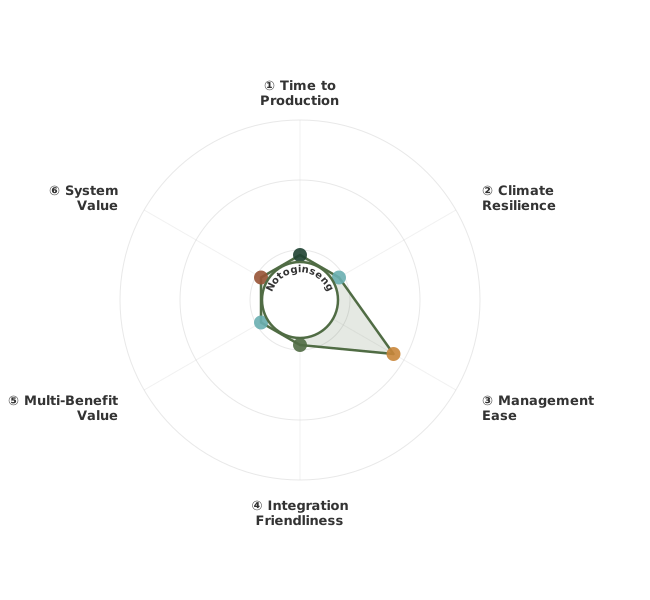
Available insights suggest its potential integration within agroforestry models. Studies indicate its cultivation under pine forests, highlighting its role as a potential polyculture layer in such systems. Research exploring soil management practices relevant to regenerative agriculture shows that optimizing soil moisture, particularly between 80-85% field capacity, can enhance photosynthetic rates and biomass accumulation. Furthermore, the application of exogenous humic acid has demonstrated improvements in soil nitrate-nitrogen levels and beneficial bacterial abundance, suggesting a soil-building capacity. The plant's interaction with soil microbial communities is also noted, with certain treatments impacting bacterial richness. While not explicitly a nitrogen fixer or forage crop based on these excerpts, its inclusion in agroforestry systems and its positive influence on soil health metrics offer avenues for regenerative integration. Further research is needed to fully understand its broader regenerative applications and benefits. While coverage in our knowledge base is limited, the above represents documented uses in regenerative systems.

Regenerative Quick Profile

All recommendations assume integrated, regenerative practices—not conventional inputs.

Climate & Soil Fit

Climate: Tropical Rainforest, Tropical Monsoon, Tropical Savanna, Hot Semi-Arid (Steppe), Cold Semi-Arid (Steppe), Hot Desert, Cold Desert, Humid Subtropical, Oceanic (Maritime Temperate), Hot-Summer Mediterranean, Warm-Summer Mediterranean, Monsoon-Influenced Humid Subtropical, Subtropical Highland, Hot-Summer Continental, Warm-Summer Continental, Subarctic, Monsoon-Influenced Hot-Summer Continental, Tundra

Zones: USDA 5-7, Australian Zones 3-4, EU Atlantic, Continental, Oceanic

Optimal Soil: Rich Soil

System Role & Functions

Primary: Specialty

Secondary: Cash Crop With Services, Food Forest

Management Level

Experience: Advanced

Maintenance: High maintenance - Maintaining Notoginseng involves fostering a healthy soil ecosystem through compost and mulch, while natural pest and disease resistance is supported by diverse plantings and good soil biology.

Time to Production: Slow (5+ years) - Allowing 3-5 years for root development fosters a resilient, mature plant, aligning with regenerative principles of patience and system building for long-term yields.

Value Streams

  • Fruit/nut harvest
  • Diversifies farm income
  • Enhances biodiversity
1

Climate Suitability Assessment

Will this plant thrive in your climate?

IDEALLY SUITED

Köppen Zone: Cfa (Humid Subtropical), Csb (Warm-Summer Mediterranean), Dfb (Warm-Summer Continental)
USDA Zone: 6a, 7a, 8a

Notoginseng thrives in USDA Zones 7a-8b, which provide a long, warm growing season (approximately 180-240 frost-free days) and mild winters with minimal risk of extreme cold. Temperatures during the growing season typically range from 65-80°F (18-27°C), ideal for its vegetative growth and root development. Adequate natural precipitation (30-50 inches/75-125 cm annually) is generally sufficient, though supplemental irrigation may be beneficial during occasional dry spells. These conditions promote vigorous growth, high yields of quality roots, and excellent perennial stand establishment and persistence, often for many years. Minimal management is required beyond site preparation, shade provision (if natural canopy is insufficient), and disease monitoring. The economic viability is high due to reliable production and low input costs, making these zones the most favorable for commercial cultivation of Notoginseng.

ADEQUATE

Köppen Zone: Cfb (Oceanic (Maritime Temperate)), Csa (Hot-Summer Mediterranean), Cwa (Monsoon-Influenced Humid Subtropical), Cwb (Subtropical Highland), Dfa (Hot-Summer Continental)
USDA Zone: 5a, 5b, 9a
Australian Zone: temperate
EU Climate Region: atlantic

Notoginseng can be cultivated with moderate success in USDA Zones 5b-6b, 9a-9b, Australian temperate zones, and EU Atlantic climate regions. These areas offer growing seasons of 140-180 frost-free days and winter temperatures that are generally manageable, though occasional supplemental protection or careful site selection may be needed in the colder end of this range (USDA 5b-6b). In warmer zones (USDA 9a-9b), managing summer heat stress through shade and consistent irrigation becomes critical, as temperatures exceeding 85°F (29°C) can reduce growth and yield. Rainfall patterns may also necessitate supplemental watering. While yields may be lower and stand establishment slightly less reliable than in 'ideally suited' zones, these regions can still support economically viable production with appropriate management practices, including disease control and careful attention to moisture and temperature fluctuations.

NOT RECOMMENDED

Köppen Zone: Af (Tropical Rainforest), Am (Tropical Monsoon), Aw (Tropical Savanna), ET (Tundra), BSh (Hot Semi-Arid (Steppe)), BSk (Cold Semi-Arid (Steppe)), BWh (Hot Desert), BWk (Cold Desert), Dfc (Subarctic), Dwa (Monsoon-Influenced Hot-Summer Continental)
USDA Zone: 2a, 3a, 3b, 4a, 10a, 11a, 12a

Notoginseng is not recommended for USDA Zones 3a-5a, Köppen Dfb, and other similarly cold or short-season climates due to extreme winter temperatures and insufficient growing season length. Winter lows of -15°F (-26°C) and below, common in these zones, lead to high probabilities of winter kill, rendering perennial cultivation unreliable and economically unfeasible. The short growing season (typically less than 120 frost-free days) prevents the plant from reaching maturity and developing substantial root systems. While technically possible to attempt cultivation as an annual with extensive protection, the success rate is low (<50%), and the required inputs (greenhouses, intensive heating, irrigation, pest control) far outweigh any potential yield. These conditions are fundamentally incompatible with Notoginseng's perennial life cycle and its need for a temperate climate with specific soil moisture and temperature profiles, making alternative, better-adapted species a far more practical choice.

Better alternatives for these "not recommended" zones: American Ginseng (Panax quinquefolius) (More cold-hardy and adaptable to temperate climates, offering a better chance of survival and production in marginal zones.), Rhodiola (Rhodiola rosea) (A hardy medicinal herb adapted to colder climates, capable of thriving in USDA Zones 3-7.), Valerian (Valeriana officinalis) (A robust perennial herb that tolerates cooler climates and wet conditions, suitable for many of the 'not recommended' zones.), Ostrich Fern (Matteuccia struthiopteris) (A shade-tolerant fern that thrives in cool, moist conditions and is native to many of these colder regions, with edible fiddleheads.)

Note: Zones listed above represent climates where this plant can produce reliably with reasonable management. Climate zones not mentioned would require intensive climate modification (greenhouses, extensive infrastructure) and are not economically viable for regenerative agriculture purposes.

2

Soil Suitability Assessment

Which soil types work best for this plant?

IDEALLY SUITED

Rich Soil

This plant thrives in these soil types without requiring amendments or remediation. Natural soil conditions support optimal growth and productivity.

ADEQUATE

Acidic Soil, Clay Soil, Loam Soil, Sandy Soil

This plant performs acceptably in these soil types with moderate, manageable remediation such as pH adjustment, compost addition, or drainage improvement. The required amendments are practical and cost-effective for regenerative agriculture.

NOT RECOMMENDED

Alkaline Soil, Desert Soil, Rocky Soil, Saline Soil, Wet Soil

Growing this plant in these soil types would require impractical remediation such as complete soil replacement, extensive amendments, or cost-prohibitive infrastructure. These conditions are not economically viable for regenerative agriculture.

Note: Soil suitability assessments focus on remediation requirements. "Ideally Suited" means the plant generally thrives without the need for substantial amendments, "Adequate" means manageable remediation (lime, compost, mulch), and "Not Recommended" means impractical soil changes would be required. Climate factors like rainfall and temperature also influence success.

3

Seasonal Considerations

Planting timing, growth duration, and harvest windows

Establishing Panax pseudoginseng notoginseng requires careful timing to align with its perennial lifecycle. For nursery transplants, the ideal planting season is during the dormant period, typically in early spring before active growth begins, or in late fall after leaf drop. Bare-root stock should be planted only when fully dormant, while containerized trees offer more flexibility, allowing planting throughout the active growing season, provided adequate moisture is maintained.

Expect a significant establishment phase, with trees reaching a stable, productive state over several years. The first meaningful harvest usually occurs after several years of growth, with full production potential realized over a decade or more. These trees are long-lived, capable of productive lifespans extending for decades.

Seasonal management focuses on supporting this long-term growth. Pruning is best performed during the dormant season, typically in late fall or very early spring before sap flow intensifies. The harvest window for the valuable root is generally in the fall, after the plant has senesced. Bloom timing is in late spring to early summer, preceding fruit development. Winter dormancy is a critical period for root regeneration and storage, requiring protection from extreme cold and moisture fluctuations.

4

System Role & Multi-Benefit Value

Functional roles, integration strategies, and stacked benefits

Functional Role

Total System Value

Notoginseng offers significant multi-benefit stacking potential within regenerative agriculture. Its direct harvest value as a specialty medicinal herb is a primary economic driver. System enhancement comes from its role in agroforestry systems, benefiting from and contributing to the microclimate created by companion trees like pines, as noted in excerpts and. It can improve soil structure and nutrient cycling, especially when combined with practices like humic acid application which boosted nitrate-nitrogen and beneficial bacteria. Ecosystem services include potential support for beneficial soil microbial communities, as indicated by changes in bacterial richness with nematicide treatments and humic acid use, indirectly contributing to soil carbon sequestration and overall soil health. Risk diversification is achieved by adding a high-value, niche crop to the farm's portfolio, reducing reliance on commodity crops and increasing resilience against market fluctuations and environmental stressors.

Integration Characteristics

Multi-Benefit Value: Not Recommended - While primarily a medicinal crop, integrating Notoginseng into diverse plantings can contribute to soil health and biodiversity, enhancing its overall system value.

Integration Friendliness: Not Recommended - Integrating Notoginseng is best achieved by mimicking its native woodland environment through shade provision and building a rich soil profile, allowing it to contribute to a complex, healthy ecosystem.

5

Management & Care Requirements

Integration guidance, maintenance needs, and care practices

How to Integrate This Plant

Notoginseng, a non-tree specialty crop, can be integrated into regenerative systems primarily through agroforestry and understory cultivation. Its primary function is specialty harvest, but it can enhance system resilience. In silvopasture or alley cropping systems with pines (as mentioned in excerpts and), notoginseng can occupy the understory, benefiting from partial shade and potentially improved soil conditions. Compatible practices include food forests and intercropping within suitable tree systems. Year 1-2: establishment and initial soil improvement. Year 3-5: begins to provide harvestable roots and significant contributions to soil health and potentially beneficial microbial communities (as seen with humic acid application in). Year 10+: continued harvest and maturation, contributing to long-term soil structure and biodiversity. Beyond direct harvest, notoginseng can contribute to erosion control in sloped areas and support beneficial soil microbes, enhancing overall farm ecosystem health and diversifying income streams.

Integration Practices & Management

The provided knowledge base offers limited direct insights into the specific regenerative agriculture integration methods for Panax pseudoginseng notoginseng, also known as Sanqi. The sources focus primarily on cultivation under forest settings and the impact of specific inputs like soil moisture, allyl isothiocyanate (AITC), and humic acid on plant growth and soil health. For example, one study highlights optimal soil moisture levels (80-85% field capacity) for biomass and photosynthetic rates, while also noting that lower moisture (50-55% FC) can increase saponin content. Another study demonstrates AITC's efficacy in controlling root-knot nematodes and improving seedling survival in consecutively cultivated soil, suggesting a role in soil remediation. Humic acid application at a moderate concentration (4 ml/L) is shown to enhance Sanqi yield and soil nitrate levels, alongside influencing soil microbial communities. While these studies touch upon soil health and cultivation practices, they do not detail establishment methods, integration with grazing, termination strategies, or comprehensive rotation sequences as typically employed in broader regenerative farming systems. The knowledge base does not include practical farmer experiences or insights regarding these specific integration techniques.

Management Profile

Maintenance Intensity: Not Recommended - Maintaining Notoginseng involves fostering a healthy soil ecosystem through compost and mulch, while natural pest and disease resistance is supported by diverse plantings and good soil biology.

Pest Disease Pressure: Not Recommended - Promoting robust soil biology and appropriate moisture retention through compost and mulching are key to building Notoginseng's natural resilience against root rots and fungal issues.

Time To Production: Not Recommended - Allowing 3-5 years for root development fosters a resilient, mature plant, aligning with regenerative principles of patience and system building for long-term yields.

Sources behind this view

Research
6

Economics & Value Streams

Direct harvest, system benefits, ecosystem services, and risk diversification

Comprehensive economic analysis including direct harvest value, system enhancement contributions, ecosystem services, value timeline, and risk diversification strategies.

Per-Tree Production Economics

Metric Value
Establishment Cost $50-100
Years to First Harvest 3-5 years
Annual Maintenance $15-30
Yield 0-0 lbs/year 0-0 kg/year
Market Price $100-300/lb $220-661/kg
Productive Lifespan 5-10 years
Net Annual Return* $-50 to $-20/year (negative)

Values shown per mature tree, not per acre. In regenerative systems, trees are integrated at low densities across diverse landscapes. Establishment costs spread over the lifespan of the tree. Early years have costs but no revenue.

* Net Annual Return = (Yield × Market Price) − (Amortized Establishment Cost + Annual Maintenance). This return is realized only at/after first harvest; early years have costs but no revenue. Range shows worst case to best case scenarios.

System Enhancement Value

Beyond harvest: limited system integration for niche specialty products

System Contributions

Notoginseng cultivation, especially in agroforestry settings, offers several other system benefits. The research in excerpt demonstrates that optimal soil moisture management (80-85% FC) is crucial for balancing notoginseng yield, saponin content, and disease resistance, highlighting the plant's sensitivity to water management, which can inform broader farm-level water use strategies. Furthermore, practices aimed at improving notoginseng health, such as humic acid application (excerpt) and AITC fumigation (excerpt), have been shown to positively impact soil microbial communities, increasing beneficial bacteria while reducing harmful ones, and improving soil organic matter and nutrient levels. This soil remediation and enhancement contribute to the long-term health and fertility of the entire farm ecosystem, creating a more resilient soil biome that can support a wider range of plants and potentially reduce the incidence of soil-borne diseases in subsequent crops. The protection afforded by the forest canopy also contributes to biodiversity.

Nitrogen Fixation (if legume)

Variable, dependent on associated flora and soil management practices. Potential for indirect improvement in soil nitrogen availability through enhanced microbial activity and nutrient cycling.

While notoginseng itself is not a nitrogen-fixing legume, its cultivation often occurs in association with other plants or within soil environments that are managed for improved fertility. Excerpt highlights the positive impact of exogenous humic acid on soil nitrate-nitrogen levels when applied to notoginseng roots. Furthermore, the study in excerpt observed significant increases in total nitrogen in consecutively cultivated soil treated with allyl isothiocyanate (AITC), suggesting that practices supporting notoginseng health can indirectly bolster soil nitrogen content. The complex microbial community interactions promoted by treatments like humic acid (excerpt) can enhance nutrient cycling, including nitrogen availability. Therefore, while notoginseng doesn't fix nitrogen directly, its cultivation practices can contribute to a more robust nitrogen cycle within the farm system, potentially reducing the need for synthetic nitrogen inputs for other crops or pasture.

Erosion Control (if applicable)

The cultivation of notoginseng, particularly when integrated into agroforestry systems as described in excerpt, often involves planting under tree canopies. This implies a context where notoginseng benefits from, and can contribute to, a more sheltered environment. While notoginseng itself is a low-growing herb and not a primary windbreak species, its presence within an established agroforestry system, which inherently provides windbreak functions through its tree component, enhances the overall system's resilience. The root system of notoginseng, combined with the surrounding vegetation, can contribute to soil stabilization and erosion control on slopes, which are often managed under forest or semi-forested conditions for notoginseng production. This makes it a valuable component in systems designed to mitigate wind and water erosion, particularly in areas prone to soil degradation. The established canopy under which it grows provides the primary windbreak effect, with notoginseng contributing to ground cover and soil health within that protected zone.

Ecosystem Service Contributions

Environmental contributions: carbon, pollinators, wildlife, and water

  • Carbon Sequestration: Notoginseng, as an understory herb cultivated within agroforestry systems, contributes to carbon sequestration primarily through the biomass of its roots and the soil organic matter it helps to build and maintain. The associated tree canopy in agroforestry systems is the dominant factor in carbon storage.
  • Pollinator Support: Low. While notoginseng flowers, it is not typically recognized as a primary pollinator attractant for agricultural purposes. Its cultivation context in shaded, often less biodiverse understories, further limits its role.
  • Wildlife Habitat: Limited. As an understory herb, notoginseng provides minimal direct habitat or food resources for most wildlife compared to other agroforestry components like fruit trees or shrubs. Its primary value is in the ecosystem services it supports or benefits from within its cultivation environment.
  • Water Quality: Not applicable

Value Timeline: Specialty Product Development

When you'll see results: varies widely by specialty product type

Years 1-2

Establishment of ground cover, contributing to soil stabilization and modest erosion control within the cultivated area. Early stages of soil health improvement through microbial community enhancement and organic matter building, as influenced by management practices.

Years 3-5

Increased contribution to soil health and nutrient cycling. Potential for early harvest of some roots, providing an initial income stream. As part of an agroforestry system, shade provision for understory or livestock begins to become more established.

Years 10-20

Mature notoginseng root production, yielding significant harvest revenue. Established agroforestry system provides consistent shade and windbreak benefits. Significant contribution to soil organic matter and microbial diversity, enhancing overall farm resilience.

20+ Years

Sustained high-value root production. Mature agroforestry system provides substantial ecosystem services (carbon sequestration, habitat, water regulation). Potential for intergenerational management of the system, with long-term soil health benefits.

Farm Risk Reduction

How this reduces farm risk: premium pricing but niche market dependency

  • Multiple Revenue Streams: High-value specialty crop harvest (notoginseng roots), potential for secondary product development (e.g., saponin extracts), integrated livestock income (if in silvopasture), and enhanced yields/reduced inputs for other crops due to improved soil health.
  • Temporal Income Spread: Value is spread through long-term investment in a perennial crop with a multi-year maturation cycle, complemented by ongoing ecosystem services that provide continuous, albeit less directly quantifiable, benefits. Income from harvests occurs periodically, while services are continuous.
  • Market Risk Hedge: Diversifies income away from commodity crops into a high-value niche market. The resilience of agroforestry systems to climate variability (drought, extreme weather) inherent in notoginseng cultivation provides a hedge against market volatility and environmental shocks. Improved soil health reduces reliance on external inputs, mitigating input price fluctuations.
7

Regenerative Suitability Details

Comprehensive trait ratings for system integration assessment

Comparative ratings for this plant across key regenerative agriculture traits.

Trait Suitability Explanation
Drought Tolerance Not Recommended Notoginseng thrives in environments with consistent soil moisture and dappled shade, necessitating proactive water management and mulching to maintain optimal conditions.
Establishment Ease Not Recommended Establishing Notoginseng requires careful attention to soil health and shade, with slow, deliberate growth that benefits from robust soil preparation and ongoing fertility management.
Time To Production Not Recommended Allowing 3-5 years for root development fosters a resilient, mature plant, aligning with regenerative principles of patience and system building for long-term yields.
Multi Benefit Value Not Recommended While primarily a medicinal crop, integrating Notoginseng into diverse plantings can contribute to soil health and biodiversity, enhancing its overall system value.
Climate Adaptability Not Recommended Notoginseng flourishes in cool, moist, and shaded microclimates, suggesting its suitability for specific agroforestry systems or areas with natural shade cover.
Hardiness Zone Range Not Recommended Its preference for cool, shaded conditions indicates a need to replicate its native habitat through careful site selection and the implementation of protective canopy layers.
Maintenance Intensity Not Recommended Maintaining Notoginseng involves fostering a healthy soil ecosystem through compost and mulch, while natural pest and disease resistance is supported by diverse plantings and good soil biology.
Pest Disease Pressure Not Recommended Promoting robust soil biology and appropriate moisture retention through compost and mulching are key to building Notoginseng's natural resilience against root rots and fungal issues.
Integration Friendliness Not Recommended Integrating Notoginseng is best achieved by mimicking its native woodland environment through shade provision and building a rich soil profile, allowing it to contribute to a complex, healthy ecosystem.

Comparative System: Ratings compare plants within their economic category (e.g., cover crop nitrogen fixation compared to other cover crops, not to all plants). Individual farm conditions and management practices significantly influence actual performance.

8

Learn More

Why farmers use this plant and additional resources

Why Regenerative Farmers Use This Plant

Panax pseudoginseng notoginseng, commonly known as Notoginseng or San Qi (also Tianqi), is a valuable perennial herb with significant potential in regenerative agriculture systems, particularly for its medicinal properties and its role in diversified farming landscapes. While not a typical annual cash crop, its long-term establishment and unique growth cycle offer multi-decade economic returns and asset value accumulation. At maturity, Notoginseng contributes to carbon sequestration, with perennial roots and above-ground biomass accumulating organic matter in the soil. Established plants are estimated to sequester 2-4 tons CO2e/acre/year through root and biomass development. Its deep root system, typically reaching 2-4 feet (0.6-1.2 meters) or more, aids in soil structure improvement, nutrient cycling, and preventing erosion. The plant's value lies in its slow growth and the high market price for its dried root, making it an ideal candidate for niche agroforestry or specialized perennial cropping systems where patience and long-term planning are rewarded.

Integrating Panax pseudoginseng notoginseng into a regenerative system provides numerous ecological benefits beyond direct economic returns. As a perennial, it offers consistent ground cover, reducing soil erosion and improving water infiltration over many years. Its presence can enhance biodiversity by providing habitat and potential food sources for beneficial insects and soil microbes. In a multi-story cropping system, it can be integrated beneath taller trees or in shaded areas, optimizing land use. While it does not fix nitrogen, its deep root system can scavenge nutrients from lower soil profiles, bringing them to the surface through decomposition, thus contributing to nutrient cycling within the farm ecosystem. Its long lifespan means it establishes a stable presence, contributing to the overall resilience and health of the agricultural landscape.

The ecosystem services provided by Panax pseudoginseng notoginseng are substantial. Its extensive root system effectively binds soil, preventing nutrient and topsoil loss. By improving soil structure, it increases the capacity for water retention and reduces runoff, a critical benefit in regions prone to heavy rainfall or drought. Its perennial nature supports a stable soil microbiome, and its root exudates can foster beneficial fungal networks. The plant's longevity and deep root penetration contribute to long-term soil organic matter accumulation, enhancing soil fertility and water-holding capacity over decades. By reducing the need for annual soil disturbance, Sanqi cultivation supports a healthier, more robust soil ecosystem. Its canopy, while not dense, provides partial shade and can contribute to microclimate regulation within a diverse farming landscape.

Regional success examples for Panax pseudoginseng notoginseng are primarily found in East Asia, where it has been cultivated for centuries. In China, it is a cornerstone of traditional medicine and is grown in specialized perennial plots, often integrated into diversified farming systems in mountainous or hilly regions like Yunnan and Guangxi provinces. Farmers in regions with suitable temperate climates, such as parts of Japan and Korea, have also successfully incorporated it into their agricultural practices, often in shaded understories or on terraced slopes. While less common in Western agricultural systems, its potential for niche markets and high-value medicinal herb production makes it an attractive option for farmers in regions with USDA zones 5-8, seeking to diversify income streams and enhance the ecological function of their land.

9

How to Integrate This Plant

Practical guidance for regenerative systems

Establishing Panax pseudoginseng notoginseng requires careful attention to its specific needs, particularly regarding light, moisture, and soil conditions, as well as a longer establishment period. Propagation is typically done through seeds, which require stratification, or through division of rhizomes. For seed propagation, sowing can occur in late autumn or early spring, mimicking natural conditions. Seeds should be planted at a depth of 0.25-0.5 inches (0.6-1.3 cm) in well-drained, humus-rich soil. Direct seeding in the field is generally low due to cost and viability, often around 1-2 lbs/acre (1.1-2.2 kg/ha).

Management practices for Notoginseng focus on creating an environment that mimics its native forest understory. It thrives in partial to full shade, making it ideal for intercropping under established trees or in areas with filtered sunlight. Consistent moisture is crucial, especially during establishment and dry periods, requiring approximately 1 inch (2.5 cm) of water per week, ideally provided through irrigation or consistent rainfall, delivered through drip irrigation to avoid waterlogging. Fertility should be managed biologically, emphasizing compost incorporation and the use of well-rotted manure to build soil organic matter and provide slow-release nutrients. Cover crop residues, such as those from buckwheat or clover grown in adjacent areas, can also be incorporated. While Notoginseng does not fix nitrogen itself, companion species or surrounding nitrogen-fixing ground covers like certain clovers or low-growing legumes can support its nutrient needs.

As a perennial agroforestry species, Panax pseudoginseng notoginseng is best integrated into multi-story systems or as a specialized perennial crop. Establishment requires 1-3 years for plants to become well-rooted and resilient. Full production, referring to the harvestable root, is typically achieved between 5-7 years, with full production potential realized between 5-8 years. If planting as a perennial crop, consider rows spaced 2-3 feet (0.6-0.9 meters) apart to allow for careful hand-weeding and harvesting. Optimal spacing in the field for young plants is 12-18 inches (30-45 cm) apart, with rows spaced 2-3 feet (0.6-0.9 meters) apart to allow for cultivation and harvesting. Ideal planting depth for rhizome divisions or seedlings is 3-5 inches (7.5-12.5 cm), ensuring the buds or growing points are covered. This initial establishment phase can take 1-3 years before plants are robust enough for their intended system.

In an alley cropping system, it can be planted in the understory of fruit or nut trees, provided sufficient shade is available. For silvopasture applications, careful management of livestock is essential to prevent grazing damage, especially during the establishment phase. Intercropping with nitrogen-fixing ground covers, such as creeping thyme or certain low-growing clovers, can be beneficial at year 2-3 to enhance soil fertility and suppress weeds. Long-term infrastructure considerations include protection from browsing animals (deer fencing is often necessary), establishing reliable irrigation for the initial years, and ensuring adequate shade, either through natural forest cover or strategically planted taller trees. Measurable soil carbon increases are expected by year 5-7 as the perennial root systems develop and contribute to soil organic matter. Pest and disease management should prioritize cultural practices and biological controls, such as ensuring good air circulation and using resistant varieties, with chemical interventions considered only as a last resort. Plants typically reach a mature height of 1-2 feet (0.3-0.6 meters).

Regional adaptations for Panax pseudoginseng notoginseng cultivation are tied to its temperate climate needs. In temperate regions of North America (e.g., Pacific Northwest or Appalachian foothills in USDA Zones 5-8), it can be cultivated in shaded forest gardens or under the canopy of deciduous trees. In Europe, similar conditions in regions like the UK or France (RHS zones H4-H6) can support its growth, often in woodland edges or specialized herb gardens. In Australia, cooler, higher-rainfall areas in Tasmania or Victoria (Australian zones 3-4) would be most suitable, again requiring protection from intense sun. In South America, regions with similar temperate and humid conditions, such as parts of southern Brazil or Chile, might be explored for its cultivation, always prioritizing sites with consistent shade and well-drained soils.

View Full Document (Printable single-page version)