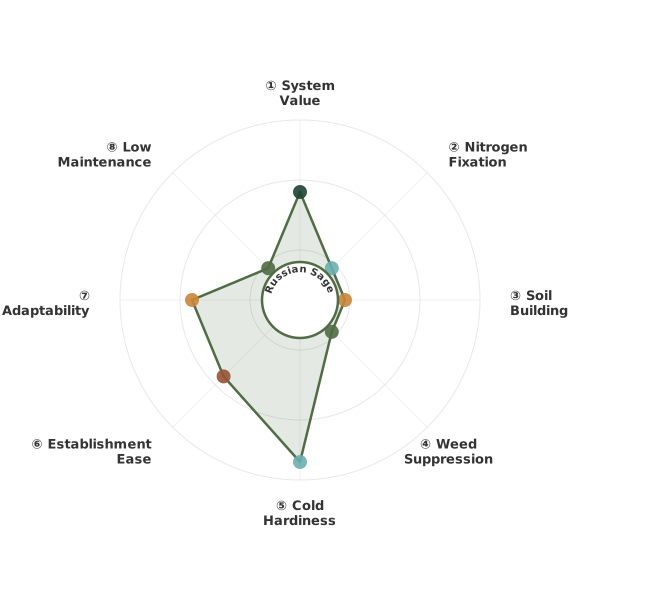
While Perovskia atriplicifolia has limited mentions in our knowledge base, its potential within regenerative agriculture is notable. Primarily, it functions as a valuable component in polyculture systems, contributing to biodiversity and resilience. Its deep root system offers significant soil-building benefits, improving soil structure and potentially aiding in carbon sequestration. Furthermore, Perovskia is recognized for its exceptional pollinator support, attracting a wide array of beneficial insects crucial for ecosystem health and crop production. Although not a nitrogen fixer, its role in enhancing the overall farm ecosystem is significant. Direct mentions of integration with specific regenerative practices like rotational grazing or no-till are scarce in the current knowledge base. Farmer experiences highlight its drought tolerance and low maintenance, making it a practical choice for challenging sites. Further research and observation are needed to fully elucidate its contributions to nitrogen cycling and soil organic matter enhancement in diverse regenerative contexts.

Regenerative Quick Profile

All recommendations assume integrated, regenerative practices—not conventional inputs.

Climate & Soil Fit

Climate: Tropical Rainforest, Tropical Monsoon, Tropical Savanna, Hot Semi-Arid (Steppe), Cold Semi-Arid (Steppe), Hot Desert, Cold Desert, Humid Subtropical, Oceanic (Maritime Temperate), Hot-Summer Mediterranean, Warm-Summer Mediterranean, Monsoon-Influenced Humid Subtropical, Subtropical Highland, Hot-Summer Continental, Warm-Summer Continental, Subarctic, Monsoon-Influenced Hot-Summer Continental, Tundra

Zones: USDA 4-9, Australian Zones 3-9

Optimal Soil: Sandy Soil

System Role & Functions

Primary: Pollinator Support

Secondary: Cover Crop System, Cash Crop With Services

Key Benefits: Low maintenance, Cold Hardiness

Management Level

Experience: Beginner-Friendly

Maintenance: Very low maintenance - This drought-tolerant perennial thrives in full sun and well-drained soil, requiring minimal intervention beyond natural fertility management and water management.

Value Streams

  • Diversifies farm income
  • Enhances biodiversity
1

Climate Suitability Assessment

Will this plant thrive in your climate?

IDEALLY SUITED

Köppen Zone: BSh (Hot Semi-Arid (Steppe)), BWh (Hot Desert), Cfa (Humid Subtropical), Csa (Hot-Summer Mediterranean), Csb (Warm-Summer Mediterranean)
USDA Zone: 6a, 7a, 8a, 9a, 10a, 11a, 12a
Australian Zone: temperate
EU Climate Region: atlantic

Russian Sage performs exceptionally well in climates offering mild winters and warm, but not excessively hot, summers, with adequate moisture. This includes Köppen Cfb (Oceanic), Dfb (Humid Continental - cooler summers), and regional zones like USDA 6-8, Australian Temperate, and EU Atlantic. These regions provide 150-200+ frost-free days, with average summer temperatures between 70-85°F (21-29°C) and winter lows generally above 0°F (-18°C). The consistent moisture and moderate temperatures promote robust perennial growth, excellent flowering, and reliable overwintering. Minimal management is required beyond ensuring good drainage, which is crucial to prevent root rot, especially in areas with higher rainfall. These conditions allow Russian Sage to reach its full potential for pollinator support and aesthetic value, with minimal risk of winter kill or heat stress.

ADEQUATE

Köppen Zone: Aw (Tropical Savanna), BSk (Cold Semi-Arid (Steppe)), BWk (Cold Desert), Cfb (Oceanic (Maritime Temperate)), Cwa (Monsoon-Influenced Humid Subtropical), Cwb (Subtropical Highland), Dfa (Hot-Summer Continental), Dfb (Warm-Summer Continental)
USDA Zone: 5a, 5b
Australian Zone: grassland, subtropical
EU Climate Region: continental

Russian Sage is adequately suited to climates with a wider range of conditions, including those with hot summers, mild winters, or moderate rainfall variability. This encompasses Köppen Cfa (Humid Subtropical), Csa/Csb (Mediterranean), Dfa/Dsb (Continental), and regional zones such as USDA 5, 9-10, Australian Grassland/Subtropical, and EU Continental. These zones may experience higher summer temperatures (up to 90°F/32°C or more), occasional drought, or more pronounced winter cold (down to 0°F/-18°C). While generally successful, performance can be limited by heat stress, increased susceptibility to fungal diseases in humid conditions, or potential winter dieback. Ensuring excellent drainage is paramount in humid areas, and supplemental watering may be beneficial during prolonged dry spells. In colder continental regions, selecting hardier cultivars or providing some winter protection can improve perennial survival. Yields and vigor may be slightly reduced compared to ideal zones, but it remains a viable and beneficial plant.

NOT RECOMMENDED

Köppen Zone: Af (Tropical Rainforest), Am (Tropical Monsoon), ET (Tundra), Dfc (Subarctic), Dwa (Monsoon-Influenced Hot-Summer Continental)
USDA Zone: 2a, 3a, 3b, 4a

Russian Sage is not recommended for climates with extreme winter cold or prolonged, intense summer heat coupled with aridity. This includes Köppen BSk (Cold Semi-Arid), Dsa (Continental Mediterranean - hot/dry summers), and regional zones like USDA 3-4, and parts of EU Boreal. These zones experience winter lows well below 0°F (-18°C), leading to guaranteed winter kill, or extended periods of extreme heat (over 95°F/35°C) with insufficient moisture, causing severe stress and reduced vigor. While it might technically survive as an annual in some of these areas, its perennial nature and optimal performance are compromised. The economic viability is questionable due to the high risk of failure and the need for intensive management, such as significant winter protection or extensive irrigation. Alternative plants better adapted to these harsh conditions are recommended for reliable establishment and performance.

Better alternatives for these "not recommended" zones: Lavender (Lavandula spp.) (Drought-tolerant, thrives in well-drained soils, and tolerates a range of temperatures.), Yarrow (Achillea spp.) (Extremely drought-tolerant, hardy, and adaptable to various soil conditions.), Coneflower (Echinacea spp.) (Drought-tolerant perennial that performs well in full sun and well-drained soils.), Hairy Vetch (Cold-hardy annual legume for nitrogen fixation in cold zones.), Winter Rye (Extremely cold-hardy cover crop for biomass and soil protection.)

Note: Zones listed above represent climates where this plant can produce reliably with reasonable management. Climate zones not mentioned would require intensive climate modification (greenhouses, extensive infrastructure) and are not economically viable for regenerative agriculture purposes.

2

Soil Suitability Assessment

Which soil types work best for this plant?

IDEALLY SUITED

Sandy Soil

This plant thrives in these soil types without requiring amendments or remediation. Natural soil conditions support optimal growth and productivity.

ADEQUATE

Clay Soil, Desert Soil, Loam Soil, Rich Soil, Rocky Soil

This plant performs acceptably in these soil types with moderate, manageable remediation such as pH adjustment, compost addition, or drainage improvement. The required amendments are practical and cost-effective for regenerative agriculture.

NOT RECOMMENDED

Acidic Soil, Alkaline Soil, Saline Soil, Wet Soil

Growing this plant in these soil types would require impractical remediation such as complete soil replacement, extensive amendments, or cost-prohibitive infrastructure. These conditions are not economically viable for regenerative agriculture.

Note: Soil suitability assessments focus on remediation requirements. "Ideally Suited" means the plant generally thrives without the need for substantial amendments, "Adequate" means manageable remediation (lime, compost, mulch), and "Not Recommended" means impractical soil changes would be required. Climate factors like rainfall and temperature also influence success.

3

Seasonal Considerations

Planting timing, growth duration, and harvest windows

Perovskia atriplicifolia offers flexible timing for regenerative systems. For spring planting, sow after the last expected frost, allowing it ample time to establish before summer cash crops. It generally takes a few weeks to show significant growth. In warmer climates, late spring or early summer planting can also be effective, though it may require supplemental irrigation during establishment.

Fall planting is a strong option, aiming for sowing a few weeks before the first expected frost. This allows for early establishment before winter dormancy. Perovskia exhibits good overwinter survival in many of the listed climate zones, acting as a robust winter cover. Peak biomass is typically reached in mid-summer of its second year, so plan termination accordingly, ensuring it’s well before planting your next cash crop. Avoid planting it too late in the fall if quick soil building is the primary goal, as it needs some root development before severe cold. Its frost tolerance makes it a candidate for early spring frost-seeding in some regions, though establishment will be slower.

4

System Role & Multi-Benefit Value

Functional roles, integration strategies, and stacked benefits

Functional Role

Total System Value

Russian sage offers significant system value primarily through ecosystem services, with a strong emphasis on pollinator support. As a late-blooming perennial, it provides a vital nectar and pollen source for bees, butterflies, and other beneficial insects when many other plants have finished flowering. This late-season boost is critical for overwintering pollinators, directly enhancing the pollination services available to adjacent crops and the overall farm ecosystem. While not typically a direct harvest crop, its presence enhances the functional biodiversity of the farm. By attracting and supporting pollinators, it indirectly contributes to increased yields of insect-pollinated crops. Its drought tolerance and adaptability also make it useful for stabilizing soil and preventing erosion in less-managed areas or buffer zones. This plant's contribution is primarily in bolstering farm resilience through enhanced ecological processes and risk diversification by supporting a healthy insectary.

Integration Characteristics

Multi-Benefit Value: Adequate - Exceptional pollinator attractor, especially for bees, and provides ornamental value; its drought tolerance aligns with water-wise land management.

5

Management & Care Requirements

Integration guidance, maintenance needs, and care practices

How to Integrate This Plant

Russian sage (Perovskia atriplicifolia) is valuable in regenerative systems primarily for its exceptional pollinator support. It acts as a late-season nectar source, crucial for sustaining bee populations and other beneficial insects before winter. Integrating it into farm landscapes, particularly along field edges, in hedgerows, or as a component in perennial polycultures, directly enhances biodiversity and pest control services. It is well-suited for practices like alley cropping, where it can be planted between rows of crops or trees, or within food forests and silvopasture systems to provide habitat and forage for pollinators. Its drought tolerance also makes it a resilient choice for erosion control on slopes or in buffer zones. Russian sage begins providing significant pollinator support in Year 1, with its perennial nature ensuring consistent contributions for many years thereafter. Its value is stacked by providing crucial ecosystem services that support the productivity and resilience of other farm components, rather than direct harvest.

Integration Practices & Management

While the provided knowledge base has limited direct information on the specific integration methods of Perovskia atriplicifolia in regenerative agriculture, existing mentions suggest its potential role. Establishment methods are not detailed, but its hardy nature implies adaptability. Integration with grazing is not explicitly covered, though its perennial growth habit could lend itself to rotational or mob grazing systems, contingent on palatability and livestock tolerance. Termination strategies are similarly absent from the knowledge base, but natural winterkill or management through grazing down are plausible given its life cycle. Management considerations, such as fertility needs and competition, are not specified. Its integration with cash crops, whether through relay cropping, intercropping, or inclusion in rotation sequences, is also not elaborated upon in the available text. The limited knowledge base coverage means practical farmer experiences and detailed insights into the 'how' of integrating Perovskia atriplicifolia remain largely undocumented within these sources.

Management Profile

Maintenance Intensity: Ideally Suited - This drought-tolerant perennial thrives in full sun and well-drained soil, requiring minimal intervention beyond natural fertility management and water management.

6

Economics & Value Streams

Direct harvest, system benefits, ecosystem services, and risk diversification

Comprehensive economic analysis including direct harvest value, system enhancement contributions, ecosystem services, value timeline, and risk diversification strategies.

Cover Crop Investment

Metric Value
Seed Cost $15-30/acre $37-74/ha
Termination Cost 20-50 49-124
Biomass Production 2-5 4-11
N Fixation Value N/A N/A
Weed Control Savings 10-30 25-74

Cover crops are soil investments, not cash crops. Economics measured in soil health gains, input reduction, and subsequent crop performance. Values show direct costs and estimated benefits.

System Enhancement Value

Beyond harvest: pollination services for your crops and ecosystem

Pollination Service Provision

Russian sage (*Perovskia atriplicifolia*) offers significant system value primarily through its robust pollinator support, as highlighted in the knowledge base excerpts. It is identified as a bee-attractive, low-water landscape plant suitable for supporting a high number of bees with minimal water, earning it a place on lists of prime pollinator-friendly species. Its long blooming period, extending through summer and fall, provides a crucial nectar and pollen source for a variety of pollinators, including bees. This consistent floral resource can enhance the reproductive success of beneficial insects, which in turn can improve pollination services for other crops on the farm. Furthermore, the knowledge base mentions that sedum's hollow stems provide habitat for beneficial insects, suggesting that while not explicitly stated for Russian sage, similar structural benefits might be conferred by its dried stems if left standing over winter, contributing to habitat for overwintering insects. Its drought tolerance and low maintenance requirements also reduce resource inputs for the farm.

Ecosystem Service Contributions

Environmental contributions: carbon, pollinators, wildlife, and water

  • Carbon Sequestration: As a herbaceous perennial, Russian sage sequesters carbon primarily in its root system and above-ground biomass. Its growth rate and perennial nature contribute to ongoing soil organic matter accumulation.
  • Pollinator Support: High. Russian sage is consistently identified as a highly attractive plant for bees, offering a valuable and prolonged nectar and pollen source throughout summer and fall, crucial for supporting pollinator populations.
  • Wildlife Habitat: Primarily offers habitat and food resources for pollinators. Dried stems may provide overwintering habitat for some beneficial insects.
  • Water Quality: Not applicable

Value Timeline: Bloom & Establishment

When you'll see results: annuals bloom year 1, perennials mature 2-3 years

Years 1-2

Initial establishment of pollinator support services. Reduced water and maintenance inputs become apparent. Potential for early habitat provision for beneficial insects if stems are managed appropriately.

Years 3-5

Established pollinator support with consistent and abundant flowering. Continued and enhanced habitat provision. The plant's drought tolerance becomes a significant asset, reducing irrigation needs and contributing to farm resilience during dry periods.

Years 10-20

Mature, highly effective pollinator support system. Significant contribution to biodiversity on the farm. Long-term reduction in maintenance and resource inputs, solidifying its role in a resilient farming system.

20+ Years

Sustained and robust pollinator support. Potential for the plant to self-seed or spread, increasing its coverage and ecosystem service provision. Continued low-maintenance operation, contributing to long-term farm stability.

Farm Risk Reduction

How pollinator support reduces crop failure risk

  • Multiple Revenue Streams: Pollinator support services (indirectly increasing crop yields), potential cash crop for cut flowers or dried arrangements, ornamental value for landscape markets.
  • Temporal Income Spread: Ongoing, season-long pollinator support from summer through fall. Low maintenance requirements spread labor over time. Potential for multiple harvests or product utilization from cut flowers.
  • Market Risk Hedge: Reduces reliance on single income streams by providing essential ecosystem services that boost other crop productivity. Its drought tolerance offers resilience against water scarcity. Diversifies farm offerings beyond traditional row crops.
7

Regenerative Suitability Details

Comprehensive trait ratings for system integration assessment

Comparative ratings for this plant across key regenerative agriculture traits.

Trait Suitability Explanation
Cold Hardiness Ideally Suited Russian sage is exceptionally hardy (Zone 4-5), providing reliable overwintering structure and contributing to soil health over the long term.
Weed Suppression Not Recommended As a woody perennial with an open growth habit, Russian sage offers limited competitive weed suppression, but its presence can be integrated into integrated pest and weed management strategies.
Nitrogen Fixation Not Recommended Russian sage is a non-legume ornamental shrub that contributes to ecosystem function through its drought tolerance and aesthetic appeal, rather than nitrogen fixation.
Root System Depth Not Recommended Russian sage possesses a woody, somewhat shallow root system, primarily benefiting surface soil structure and moisture retention rather than deep soil improvement.
Biomass Production Not Recommended Russian sage is a woody perennial herb with limited biomass production, offering fine stems and leaves that contribute modestly to soil organic matter when allowed to decompose in place.
Establishment Ease Adequate Establishes well from seed or cuttings, tolerating dry conditions once established, and benefits from well-drained soil and standard preparation to support healthy soil ecosystems.
Multi Benefit Value Adequate Exceptional pollinator attractor, especially for bees, and provides ornamental value; its drought tolerance aligns with water-wise land management.
Climate Adaptability Adequate Russian sage is hardy to zone 4, tolerating heat and drought, thriving in well-drained soil and demonstrating good regional adaptation to varied climatic conditions.
Maintenance Intensity Ideally Suited This drought-tolerant perennial thrives in full sun and well-drained soil, requiring minimal intervention beyond natural fertility management and water management.

Comparative System: Ratings compare plants within their economic category (e.g., cover crop nitrogen fixation compared to other cover crops, not to all plants). Individual farm conditions and management practices significantly influence actual performance.

8

Learn More

Why farmers use this plant and additional resources

Why Regenerative Farmers Use This Plant

Perovskia atriplicifolia, commonly known as Russian Sage, offers significant regenerative benefits when integrated into agricultural systems, particularly as a perennial component in hedgerows, windbreaks, pollinator strips, or as a component in mixed pastures and shelterbelts. While not a nitrogen-fixing legume, its deep and extensive root system, reaching depths of 12-24 inches (30-60 cm) or more, and capable of reaching 2-4 feet (0.6-1.2 meters) or even 4-6 feet (1.2-1.8 meters), excels at scavenging nutrients from lower soil profiles, making them available to shallower-rooted cash crops through decomposition and root exudates, or preventing leaching. This nutrient cycling capacity reduces the reliance on synthetic fertilizers, potentially saving farmers $20-50 per acre annually in fertilizer costs by making existing soil nutrients more available and reducing reliance on synthetic inputs by an estimated 20-30% over time as soil biology improves.

Its robust biomass production contributes substantially to soil organic matter. Mature plants can produce 2-4 lbs (0.9-1.8 kg) of dry matter per plant annually, with above-ground biomass decomposing over 60-90 days or 80-90% over 12-18 months, enriching the soil organic matter content. Over a 3-5 year rotation, this continuous addition of organic material enhances soil structure, water-holding capacity, and nutrient availability for subsequent crops, improving soil resilience and fertility. This can increase soil carbon sequestration by 0.5-1.5 tons of CO2e per acre per year, depending on management.

Beyond its soil-building capabilities, Russian Sage provides crucial ecosystem services. It is an exceptional plant for supporting biodiversity, attracting a wide array of pollinators including bees, butterflies, hoverflies, and beneficial insects with its abundant, long-lasting blooms from mid-summer to fall. This prolonged bloom period (typically July to October) provides a critical nectar and pollen source, a vital period for many beneficial insect populations. This increased presence of beneficial insects can lead to natural pest control for adjacent cash crops, reducing the need for costly and environmentally damaging interventions. Its dense, shrubby growth habit makes it an excellent choice for erosion control on slopes and in areas prone to dry conditions or wind damage, protecting fields from wind damage and reducing soil loss. In systems where it's integrated, Russian Sage can also serve as a living mulch, suppressing weed growth in its vicinity and reducing the need for cultivation or herbicides.

The quantitative ecosystem benefits are substantial. Its dense flowering attracts an average of 15-25 pollinator visits per square foot per hour during peak bloom. This increased pollinator activity can lead to improved fruit set and yield in nearby flowering crops. The habitat provided by Russian Sage plantings supports populations of predatory insects such as ladybugs and lacewings, contributing to natural pest management. By improving soil structure and increasing organic matter, Russian Sage enhances water infiltration and retention, reducing runoff and improving water quality downstream. These cumulative effects contribute to a more stable and productive agricultural ecosystem.

Farmers in various regions are finding success with Russian Sage. In the Mediterranean climate of southern France, it's used in vineyard edges to attract pollinators and improve soil structure on slopes. Australian dryland farmers have incorporated it into mixed pastures and shelterbelts to provide habitat for beneficial insects, reduce wind erosion in wheat-sheep systems, and combat erosion in semi-arid regions. In the humid continental climates of the US Midwest, it's planted in buffer strips along waterways and field edges to intercept runoff and support local biodiversity, contributing to a more resilient agricultural landscape, and is used in pollinator strips in corn and soybean rotations. In the UK, it is often used in wildflower meadows and hedgerows, flowering from July to October, providing late-season nectar for pollinators, and is incorporated into field margins to enhance biodiversity. In Brazilian coffee plantations, it can be integrated into intercropping systems or used as a hardy ornamental border, contributing to biodiversity and soil health, and can be used as an understory plant in shaded areas or along pathways. In North American prairie systems, it is valued for its low water requirements and its role in supporting native pollinator populations within agroforestry designs. Its adaptability makes it a versatile tool for enhancing ecological function across diverse farming contexts.

9

How to Integrate This Plant

Practical guidance for regenerative systems

Establishing Perovskia atriplicifolia is typically achieved through seed or cuttings. For seeding, rates of 0.5-1 lb/acre (0.56-1.12 kg/ha) are common for broadcast applications aiming for a dense stand or ground cover, though rates of 2-5 lbs/acre (2.2-5.6 kg/ha) are also used when sown for ground cover or biomass. Planting depth should be shallow, around 0.125-0.25 inches (3-6 mm), as the seeds require light to germinate. Spacing can vary widely depending on the intended use; for solid ground cover, broadcast seeding is effective, while for individual plants, hedgerows, or windbreaks, spacing of 18-36 inches (45-90 cm) or 2-4 feet (0.6-1.2 meters) or 3-5 feet (0.9-1.5 meters) apart is appropriate.

In the Northern Hemisphere, sowing is best done in early spring (March-April) after the last frost, or in early fall (September-October) to allow establishment before winter. Late summer sowing (August-September) is also recommended to allow for establishment before extreme temperatures. In the Southern Hemisphere, this translates to September-October for spring planting and March-April for fall planting, or September to November for spring sowing and February-March for late summer sowing.

Once established, Russian Sage is remarkably low-maintenance. It requires minimal water, thriving on about 1 inch (2.5 cm) of rainfall per month once mature, and requiring minimal supplemental water beyond 1 inch (2.5 cm) per week during its first year. It is highly drought-tolerant, making it ideal for arid or semi-arid regions. Fertility needs are low; it performs well in nutrient-poor soils and does not require supplemental fertilization, especially when integrated into systems with existing organic matter cycling. If supplemental fertility is needed during a transitional phase, a light application of balanced organic fertilizer or compost or well-rotted manure integrated into the soil during establishment can be considered. Biological fertility is key.

Growth is typically vigorous, reaching a mature height of 3-5 feet (0.9-1.5 m) within its first growing season or within the first year, with a spread of 3-4 feet (0.9-1.2 m). It establishes relatively quickly in its first year, reaching mature height within 2-3 years, with flowering beginning in its first or second year. Pest and disease issues are rare, with its primary defense being its aromatic foliage and hardy nature. Biological control is the preferred method for any minor pest issues, often supported by the beneficial insects it attracts. If pruning is necessary for shaping or to encourage bushier growth, it is best done in late winter or early spring before new growth begins. This pruning material can be composted or used as mulch.

As a perennial, Perovskia atriplicifolia is not typically "terminated" in the same way as annual cover crops. Instead, its integration focuses on long-term management. If a farmer wishes to remove a stand, mechanical removal of the root system is the most effective method, though this is rarely necessary given its beneficial role. For systems aiming for maximum soil organic matter contribution, allowing the above-ground biomass to decompose in place over winter is ideal. If termination is necessary, it should follow the regenerative hierarchy. Natural winterkill can occur in colder climates (below USDA Zone 4), eliminating the need for intervention. Where winterkill is not reliable, mowing or grazing can be employed to reduce biomass before the next crop. For more complete termination, roller-crimping at the appropriate growth stage, ideally before seed set, can effectively terminate the plant and create a mulch layer. Herbicide use should be considered only as a last resort during a transition phase, and always applied with careful consideration of its impact on soil biology and surrounding ecosystems.

View Full Document (Printable single-page version)