Timothy grass (Phleum pratense L.) is primarily utilized as a forage crop in regenerative agriculture systems, particularly for livestock. It is a key component in cool-season pasture mixtures, often overseeded to improve soil health and stimulate microbial activity. Studies indicate that continuous timothy stands exhibit high soil health scores, demonstrating its soil-building potential. It plays a role in enhancing soil organic matter, increasing soil pH, and improving nutrient availability, as evidenced by increased soil organic carbon and phosphorus levels with manure application. While not a nitrogen fixer itself, it is often integrated into polyculture systems with legumes. Farmer experiences highlight its use in direct-feeding systems where hay bales are unrolled in pastures, simultaneously providing forage for cattle and enriching the soil with manure, thereby contributing to carbon sequestration and reducing waste. Its integration into diverse cropping systems is a testament to its value in promoting long-term soil health and fertility.

Regenerative Quick Profile

All recommendations assume integrated, regenerative practices—not conventional inputs.

Climate & Soil Fit

Climate: Tropical Rainforest, Tropical Monsoon, Tropical Savanna, Hot Semi-Arid (Steppe), Cold Semi-Arid (Steppe), Hot Desert, Cold Desert, Humid Subtropical, Oceanic (Maritime Temperate), Hot-Summer Mediterranean, Warm-Summer Mediterranean, Monsoon-Influenced Humid Subtropical, Subtropical Highland, Hot-Summer Continental, Warm-Summer Continental, Subarctic, Monsoon-Influenced Hot-Summer Continental, Tundra

Zones: USDA 3-6, Australian Zones 3-5

Optimal Soil: Loam Soil

System Role & Functions

Primary: Forage Integration

Secondary: Cover Crop System, Cash Crop With Services

Key Benefits: Palatability

Management Level

Experience: Beginner-Friendly

Maintenance: Moderate maintenance - As a cool-season grass, timothy grass flourishes with optimal moisture management and a healthy soil ecosystem, requiring less intensive intervention in suitable environments.

Value Streams

  • Forage production
  • Diversifies farm income
  • Enhances biodiversity
1

Climate Suitability Assessment

Will this plant thrive in your climate?

IDEALLY SUITED

Köppen Zone: Cfb (Oceanic (Maritime Temperate)), Dfa (Hot-Summer Continental), Dfb (Warm-Summer Continental)
USDA Zone: 3a, 3b, 4a, 5a, 5b, 6a
Australian Zone: temperate
EU Climate Region: atlantic

Timothy Grass thrives in climates with mild winters and cool to moderate summers, characterized by consistent moisture. This includes Köppen Cfb zones and EU Atlantic regions, as well as USDA zones 5b-7b and Australian temperate zones. These environments provide 150-200+ frost-free days, with optimal temperatures for growth ranging from 60-75°F (15-24°C). Reliable spring and fall establishment is possible when soil temperatures reach 45-50°F (7-10°C). Consistent rainfall (30-50 inches/75-125 cm annually) supports vigorous vegetative growth and high forage yields, typically 3-5 tons/acre (7-12 tons/ha) per year. Perennial stands are long-lived, often persisting for 3-5 years with minimal management beyond appropriate grazing or harvesting. Winter survival is excellent, with plants tolerating temperatures down to -20°F (-29°C) when protected by snow cover. Minimal supplemental irrigation is usually needed, keeping input costs low and making it a highly productive and economically viable forage option.

ADEQUATE

Köppen Zone: BSk (Cold Semi-Arid (Steppe)), Cfa (Humid Subtropical), Csb (Warm-Summer Mediterranean), Cwa (Monsoon-Influenced Humid Subtropical), Cwb (Subtropical Highland), Dfc (Subarctic), Dwa (Monsoon-Influenced Hot-Summer Continental)
USDA Zone: 2a, 7a, 8a

Timothy Grass can be successfully grown in climates with adequate growing seasons and manageable temperature extremes, such as Köppen Dfb zones, USDA zones 4a-4b and 7a-8b, and EU Atlantic regions with cooler summers. These zones typically offer 120-180 frost-free days, but may experience colder winters or warmer summers than ideal. Winter survival in USDA zones 4a-4b requires careful management and good snow cover, as temperatures can drop to -25°F (-32°C), posing a risk of winter kill. In USDA zones 7a-8b, summer heat can stress the plant, potentially reducing yields and stand longevity, making supplemental irrigation beneficial. Forage yields are generally good but may be 10-20% lower than in 'ideally suited' zones due to shorter optimal growth periods or heat stress. Establishment is reliable with proper timing, and stand persistence can be 2-4 years with appropriate management. Costs are moderate, involving standard cultivation and potentially some irrigation.

NOT RECOMMENDED

Köppen Zone: Af (Tropical Rainforest), Am (Tropical Monsoon), Aw (Tropical Savanna), ET (Tundra), BSh (Hot Semi-Arid (Steppe)), BWh (Hot Desert), BWk (Cold Desert), Csa (Hot-Summer Mediterranean)
USDA Zone: 9a, 10a, 11a, 12a

Timothy Grass is not recommended for climates with extreme winter cold or prolonged, intense summer heat, specifically Köppen BSh, USDA zones 3a-3b and 9a-9b. In USDA zones 3a-3b, winter temperatures can plummet below -30°F (-34°C), leading to near-certain winter kill and making perennial stands unsustainable. The short growing season further limits productivity, rendering it economically unviable. In USDA zones 9a-9b, prolonged summer heat exceeding 85°F (29°C) causes severe stress, drastically reducing yields, nitrogen fixation (if applicable), and stand persistence to a single season at best. Water requirements increase significantly, necessitating intensive irrigation. Establishment success is low (<60%) due to challenging environmental conditions. While technically possible to grow as an annual with significant intervention, it is not economically or practically feasible for regenerative agriculture purposes in these zones, making alternative, better-adapted species essential.

Better alternatives for these "not recommended" zones: Hairy Vetch (More cold-hardy annual legume for nitrogen fixation and biomass in short seasons.), Winter Rye (Extremely cold-hardy cover crop for biomass and soil protection.), Smooth Brome (More cold-tolerant perennial grass for forage.), Bermudagrass (Heat-tolerant perennial grass for forage in warmer zones.), Sorghum-Sudangrass (Fast-growing annual forage adapted to heat and drought.), Cowpea (Heat-tolerant legume for forage and nitrogen fixation.)

Note: Zones listed above represent climates where this plant can produce reliably with reasonable management. Climate zones not mentioned would require intensive climate modification (greenhouses, extensive infrastructure) and are not economically viable for regenerative agriculture purposes.

2

Soil Suitability Assessment

Which soil types work best for this plant?

IDEALLY SUITED

Loam Soil

This plant thrives in these soil types without requiring amendments or remediation. Natural soil conditions support optimal growth and productivity.

ADEQUATE

Clay Soil, Rich Soil, Rocky Soil, Sandy Soil

This plant performs acceptably in these soil types with moderate, manageable remediation such as pH adjustment, compost addition, or drainage improvement. The required amendments are practical and cost-effective for regenerative agriculture.

NOT RECOMMENDED

Acidic Soil, Alkaline Soil, Desert Soil, Saline Soil, Wet Soil

Growing this plant in these soil types would require impractical remediation such as complete soil replacement, extensive amendments, or cost-prohibitive infrastructure. These conditions are not economically viable for regenerative agriculture.

Note: Soil suitability assessments focus on remediation requirements. "Ideally Suited" means the plant generally thrives without the need for substantial amendments, "Adequate" means manageable remediation (lime, compost, mulch), and "Not Recommended" means impractical soil changes would be required. Climate factors like rainfall and temperature also influence success.

3

Seasonal Considerations

Planting timing, growth duration, and harvest windows

Timothy grass thrives in cool, moist climates, making it an excellent choice for Cfb and Dfb zones. For establishment, aim for early spring seeding, allowing roughly 6-8 weeks for the grass to develop a robust root system before the first grazing or cutting. Alternatively, a late summer seeding can also be successful, provided there's sufficient moisture and time for establishment before winter dormancy.

Once established, timothy is ready for its first grazing or cutting approximately 4-6 weeks after emergence in spring. Implement rotational grazing, allowing 3-4 weeks of rest between grazing events to ensure plant recovery and consistent regrowth. Depending on your rotation and fertility management, you can typically achieve two to three hay cuttings per season, with peak productivity occurring during the warmer, wetter months of summer. Timothy exhibits good frost tolerance, allowing for continued grazing well into late fall, before winter dormancy sets in. Regrowth slows significantly as temperatures cool, and the plant will enter dormancy with the onset of freezing temperatures, conserving energy for the following spring's growth.

4

System Role & Multi-Benefit Value

Functional roles, integration strategies, and stacked benefits

Functional Role

Total System Value

Timothy grass offers significant multi-benefit stacking potential within regenerative agricultural systems. Its direct harvest value comes from providing high-quality forage for cattle and other grazing animals, as indicated by its inclusion in pasture mixtures and its role in long-term studies on manure application. Beyond forage, its dense, fibrous root system significantly enhances soil health by improving structure, increasing water infiltration, and contributing to soil organic matter over time. This leads to improved soil fertility and reduced erosion. As a perennial, it provides a stable ground cover, supporting biodiversity and providing habitat for beneficial insects. Its inclusion in pasture systems can reduce the need for synthetic fertilizers and improve nutrient cycling, especially when integrated with animal manure. The long-term persistence of timothy grass, as demonstrated in a 130-year study, ensures a continuous supply of ecosystem services, contributing to farm resilience by diversifying forage options and enhancing soil's ability to withstand environmental stresses.

Integration Characteristics

Multi-Benefit Value: Adequate - A valuable forage grass, particularly for hay, timothy grass contributes to ground cover and integrates seamlessly into diverse, regenerative pasture systems for enhanced ecosystem function.

5

Management & Care Requirements

Integration guidance, maintenance needs, and care practices

How to Integrate This Plant

Timothy grass (Phleum pratense) is a valuable cool-season perennial grass primarily integrated into regenerative systems as a forage for livestock, contributing to soil health and pasture productivity. Its primary functions include forage production for grazing animals and improving soil structure. It is highly compatible with mob grazing systems where its dense root system and biomass help protect soil from compaction and improve water infiltration. Overseeding pastures with timothy, as mentioned in excerpt, is a direct practice for enhancing existing grasslands. Within a year of establishment, timothy begins providing significant forage. By year 3-5, it establishes a robust perennial stand, contributing substantially to soil organic matter and reducing erosion. Its long-term value, extending beyond 10 years, lies in its persistent contribution to soil health, carbon sequestration, and providing a stable, high-quality forage base that supports diverse animal grazing, thus enhancing overall farm resilience and reducing reliance on external inputs.

Integration Practices & Management

Timothy grass (Phleum pratense) is integrated into regenerative agriculture systems primarily as a component of pasture mixes and for soil health improvement. Establishment often involves overseeding into existing pastures with a cool-season mixture, as seen with 'Maximum Performance Forage Seed' which includes climax Timothy at 4%. While specific seeding rates and timing are not detailed for Timothy alone, it is typically part of a broader cool-season mix. Minimal tillage or no-till methods are implied in regenerative practices like unrolling hay bales directly in pastures for grazing, which simultaneously enriches the soil. Integration with grazing is a key aspect. While sources do not specify unique grazing strategies for Timothy, it is part of pasture systems where cattle feed on unrolled bales. Long-term studies have assessed the impact of beef cattle manure application on timothy fields, demonstrating positive effects on soil properties like pH, soil organic carbon, and nutrient levels with increasing manure rates. Termination strategies are varied. Natural winterkill or termination through grazing down are common in pasture systems. One study notes continuous timothy alongside warm-season grasses exhibited high soil health scores. Management considerations include fertility needs, with manure application showing benefits. Competition management and succession planning, especially in relation to cash crops, are not detailed for Timothy within this knowledge base. Limited information exists on Timothy's direct integration with cash crops through relay or intercropping. The provided sources focus on its role in pasture management and soil health studies, with a notable 130-year study highlighting its contribution to high soil health scores.

Management Profile

Maintenance Intensity: Adequate - As a cool-season grass, timothy grass flourishes with optimal moisture management and a healthy soil ecosystem, requiring less intensive intervention in suitable environments.

6

Economics & Value Streams

Direct harvest, system benefits, ecosystem services, and risk diversification

Comprehensive economic analysis including direct harvest value, system enhancement contributions, ecosystem services, value timeline, and risk diversification strategies.

Economics in Regenerative Systems

Metric Value
Seed Cost $20-40/acre $49-98/ha
Establishment Cost $150-300/acre $370-741/ha
Forage Yield 3-6 tons/acre/year 3-6 tons/ha/year
Annual Management Cost $50-100/acre $123-247/ha
Value/Sale Price $90-160/ton $90-160/tonne
Net Annual Return* $-130 to $760/acre/year

Values represent typical ranges for regenerative agriculture contexts. Actual results vary by region, management, and market conditions. Costs exclude land and labor.

* Net Annual Return = (Yield × Market Price) − (Amortized Establishment Cost + Annual Maintenance). This return is realized only at/after first harvest; early years have costs but no revenue. Range shows worst case to best case scenarios.

System Enhancement Value

Beyond harvest: livestock nutrition, soil building, and pasture improvement

Livestock Nutrition & Soil Building

Timothy grass, as a perennial forage and cover crop, significantly contributes to soil health and farm system resilience. Its root system helps to bind soil, preventing erosion, particularly on slopes or in areas prone to wind and water disturbance. As a component of pasture mixes, it provides high-quality forage for livestock, reducing the need for purchased feed. Excerpt highlights timothy hay as a viable winter feed for rabbits, demonstrating its versatility across different livestock types. Furthermore, the practice of unrolling hay bales containing timothy grass directly into pastures enriches the soil with organic matter and introduces a seed bank, promoting future growth and biodiversity. This biomass decomposition feeds soil microbes and earthworms, fostering humus formation and reducing reliance on synthetic fertilizers. Its role as a cover crop helps suppress weeds, improve soil structure, and retain moisture, creating a more robust and self-sustaining farm ecosystem. The integration of timothy into cover crop systems also aids in managing wet conditions by improving soil percolation.

Ecosystem Service Contributions

Environmental contributions: carbon, pollinators, wildlife, and water

  • Carbon Sequestration: Perennial grasses like timothy, with their extensive root systems, are effective at sequestering atmospheric carbon into the soil organic matter, especially when managed in a no-till or reduced-till system. The continuous root growth and decomposition of above-ground biomass contribute to long-term carbon storage.
  • Pollinator Support: Low. While grasses can provide some pollen and nectar, they are not primary pollinator attractors compared to flowering forbs and legumes. Their main contribution is indirect, by supporting a healthier overall farm ecosystem.
  • Wildlife Habitat: Medium. Timothy grass provides valuable forage and habitat for various grazing animals, including livestock and wildlife. Its dense growth can offer shelter and nesting opportunities for small ground-dwelling animals and birds. As part of a pasture mix, it contributes to a diverse food source.
  • Water Quality: Not applicable

Value Timeline: Forage Establishment & Production

When you'll see results: annuals year 1, perennial establishment 1-2, peak 3-10

Years 1-2

Erosion control and soil binding through root development. Initial forage production for grazing or hay. Contribution to soil organic matter through decomposition if managed as a cover crop.

Years 3-5

Established root systems provide more robust soil structure and improved water infiltration. Consistent forage production for livestock. Increased soil organic matter accumulation. Potential for increased biodiversity as other plants establish within the timothy stand.

Years 10-20

Mature perennial stand offering consistent and high-quality forage. Significant contribution to soil health and carbon sequestration. Potential for reduced reliance on external inputs like fertilizers and pesticides. Can contribute to a more resilient pasture system.

20+ Years

Long-term soil health benefits, including improved water holding capacity and nutrient cycling. Continued contribution to carbon sequestration. Potential for the stand to become a stable component of a diverse farm ecosystem, offering ongoing ecological services.

Farm Risk Reduction

How this reduces farm risk: feed cost reduction and livestock performance

  • Multiple Revenue Streams: Forage for livestock (hay, grazing), potential for sale as seed, ecosystem services (soil health improvement, carbon sequestration).
  • Temporal Income Spread: Timothy provides value throughout the growing season as forage and continues to offer soil benefits year-round through its perennial nature and root system. Hay is typically harvested and stored for off-season use, spreading value temporally.
  • Market Risk Hedge: Reduces reliance on annual crops, offering a stable forage source for livestock. Improves soil health, which can lead to greater resilience against drought and other environmental stresses. Diversifies farm revenue streams beyond primary cash crops or livestock sales.
7

Regenerative Suitability Details

Comprehensive trait ratings for system integration assessment

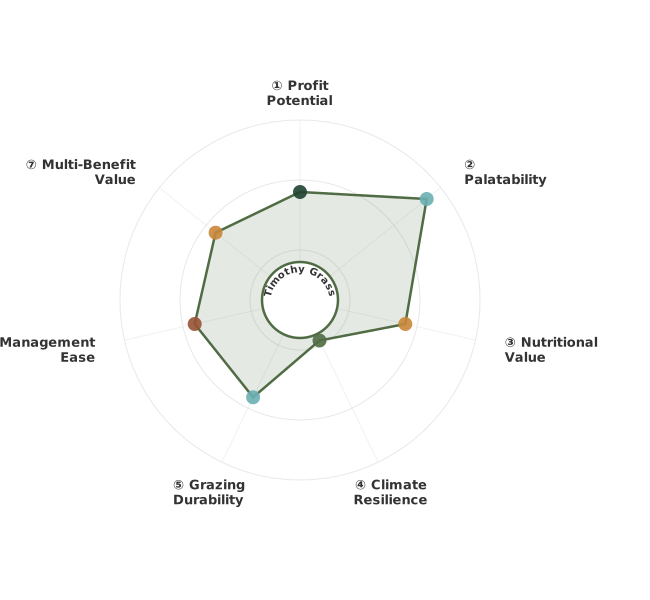
Comparative ratings for this plant across key regenerative agriculture traits.

Trait Suitability Explanation
Palatability Ideally Suited Timothy grass is highly palatable, providing excellent intake and nutritional value that animals actively seek for superior grazing and nutrient cycling.
Protein Content Adequate Harvested young, timothy grass offers moderate protein (12-16%), supporting livestock health and soil fertility. Protein levels naturally adjust with maturity, influencing nutrient return to the soil.
Drought Tolerance Not Recommended Timothy grass thrives with consistent moisture management and benefits from mulching to enhance soil moisture retention, as its shallower root system is less resilient to prolonged dry periods.
Grazing Tolerance Adequate Moderate grazing tolerance allows for 2-3 rotational grazing cycles with adequate rest, promoting robust regrowth and maintaining stand health through balanced ecosystem interaction.
Establishment Ease Adequate Establishes readily with good seed-to-soil contact and effective moisture management, quickly providing ground cover to suppress weeds and enhance soil health.
Multi Benefit Value Adequate A valuable forage grass, particularly for hay, timothy grass contributes to ground cover and integrates seamlessly into diverse, regenerative pasture systems for enhanced ecosystem function.
Climate Adaptability Adequate Thriving in cooler, moist climates (zones 3-6), timothy grass contributes to seasonal forage availability when managed within its preferred environmental parameters.
Maintenance Intensity Adequate As a cool-season grass, timothy grass flourishes with optimal moisture management and a healthy soil ecosystem, requiring less intensive intervention in suitable environments.
Seasonal Availability Adequate Providing 5-7 months of quality forage, timothy grass is a key component of cool-season pasture systems, contributing to livestock nutrition and soil health during its active growing period.

Comparative System: Ratings compare plants within their economic category (e.g., cover crop nitrogen fixation compared to other cover crops, not to all plants). Individual farm conditions and management practices significantly influence actual performance.

8

Learn More

Why farmers use this plant and additional resources

Why Regenerative Farmers Use This Plant

Timothy grass is a cornerstone perennial forage species in regenerative agriculture, celebrated for its resilience, palatability, and contribution to livestock health and soil building. It is particularly valued for its high palatability and nutritional quality, making it an excellent choice for livestock integration.

Forage Quality and Livestock Performance: Under well-managed rotational grazing systems, timothy can support significant carrying capacities, often ranging from 2-3 Animal Units (AU) per acre (approximately 5-7 AU per hectare) during its peak growing season. Its forage quality is characterized by a good balance of digestible carbohydrates and moderate crude protein levels, typically ranging from 14-18% protein at the vegetative stage, which declines to 8-10% as it matures. This makes it a reliable source of energy and nutrients for grazing cattle, sheep, and horses, contributing to healthy weight gain and milk production. In beef cattle, this can manifest as increased daily weight gain, averaging 2.0-2.5 lbs/day (0.9-1.1 kg/day) during peak growth periods.

Soil Health and Ecosystem Services: Beyond its direct forage value, timothy grass plays a crucial role in building soil health. Its fibrous root system, which can reach depths of 12-36 inches (30-90 cm), effectively binds soil particles, significantly improving soil structure, reducing erosion from wind and water, and enhancing water infiltration rates. This improved soil health translates to increased resilience against drought and a greater capacity to cycle nutrients. Its dense growth habit effectively suppresses weeds, reducing the need for costly interventions, and provides excellent ground cover, minimizing soil erosion. The consistent ground cover provided by timothy reduces the need for intensive soil disturbance, preserving soil structure and the habitat for earthworms and other beneficial soil organisms. While not a nitrogen fixer, its presence supports a diverse insect community, including pollinators and beneficial predators, by providing habitat and pollen/nectar sources during its flowering period.

Extending the Grazing Season: Timothy's growth pattern allows for strategic stockpiling of fall growth, where ungrazed plants accumulate biomass that can provide valuable forage well into winter. This stockpiled forage can extend the grazing season by 60-90 days in suitable climates, reducing reliance on stored feeds like hay and thereby lowering winter feeding costs for livestock producers. This extension of the grazing period is a key economic and ecological benefit, allowing livestock to harvest forage directly from the pasture for longer.

Global Integration: Timothy grass has a proven track record in regenerative systems across the globe.

  • In North America, particularly in the northern United States and Canada, it is a dominant forage grass in hay production and pasture systems, valued for its winter hardiness and suitability for cool-season grazing. It is a staple in dairy and beef operations across the Northern United States and Canada, often found in hay meadows and pasture mixes.
  • In the United Kingdom and Northern Europe, it is a staple in dairy and beef pastures, contributing to high-quality silage and grazing. It is a key component of grassland systems, valued for its performance in cooler, wetter climates and often sown in mixtures with ryegrass and fescue for balanced seasonal production.
  • In Australia, farmers in cooler, higher rainfall regions (Zones 2-3) utilize timothy in mixed pastures for sheep and cattle, appreciating its persistence and palatability in temperate environments. Its integration into Australian pasture systems is primarily in cooler, higher rainfall areas like Tasmania and Victoria, where it provides high-quality forage for sheep and cattle.
  • In New Zealand's temperate regions, it is a key component of dairy pastures, contributing to high milk yields and is also a valuable component of dairy and sheep pastures, particularly in areas with higher rainfall and cooler summers.
9

How to Integrate This Plant

Practical guidance for regenerative systems

Establishing timothy grass typically involves seeding at rates that vary depending on the method and desired stand density.

Seeding and Establishment:

  • Seeding Rates: For broadcast seeding, rates of 50-100 lbs/acre (56-112 kg/ha) are common. When drilled into a prepared seedbed, lower rates of 30-50 lbs/acre (34-56 kg/ha) can be sufficient.
  • Planting Depth: The optimal planting depth is shallow, between 0.25-0.5 inches (0.6-1.3 cm), to ensure good seed-to-soil contact and emergence.
  • Planting Windows:
  • Northern Hemisphere: Late summer (August-September) or early spring (March-April) are ideal planting windows, allowing the grass to establish before extreme heat or cold.
  • Southern Hemisphere: Late summer (February-March) or early spring (September-October) are the equivalent optimal planting periods.
  • Moisture and Time to Establishment: Adequate moisture is critical during establishment, with approximately 1 inch (2.5 cm) of water per week recommended until the plants are well-rooted. Timothy grass typically establishes within 30-45 days under favorable conditions. Ensuring a firm seedbed and adequate moisture is critical for successful germination.

Management and Fertility:

  • Growth and Height: Once established, timothy grass typically reaches a harvestable height of 3-5 feet (0.9-1.5 m) at maturity during the growing season.
  • Water Requirements: While it has moderate drought tolerance, 1 inch (2.5 cm) of water per week during active growth periods will yield the best results.
  • Fertility Management: Fertility management should prioritize biological approaches. Incorporating compost, utilizing the residue from previous cover crops, or integrating animal manures are excellent starting points. While timothy does not fix nitrogen, it efficiently utilizes available nutrients. As transitional inputs, minimal synthetic nitrogen may be used to boost early growth, but the goal is to build soil health that supports the grass naturally. Synthetic inputs should only be considered as a transitional tool while building soil biology, as timothy can significantly reduce the need for external fertilizers when managed regeneratively.
  • Pest and Disease Management: Pest and disease management should focus on cultural practices such as proper grazing rotation, maintaining plant vigor, and selecting disease-resistant varieties. Chemical interventions should be considered a last resort during transitional phases.

Livestock Integration and Grazing:

  • Carrying Capacity: In grazing systems, timothy grass excels when managed with a focus on rotational or adaptive multi-paddock grazing. It supports excellent carrying capacity, often 2-3 AU/acre (5-7 AU/ha).
  • Grazing Timing and Residuals: The optimal grazing timing is when plants reach 8-12 inches (20-30 cm) tall, and the residual height after grazing should be maintained at 3-4 inches (8-10 cm) to promote vigorous regrowth. This grazing intensity promotes vigorous regrowth and maintains forage quality.
  • Rest Periods: Following grazing, a rest period of 45-60 days is crucial for optimal recovery and root replenishment, particularly during the active growing season.
  • Fall Stockpiling: Timothy is highly palatable to cattle and sheep, and its fall growth can be effectively stockpiled for winter grazing, potentially providing 60-90 additional grazing days. This strategy helps maintain crude protein levels above 10% into the late season in suitable climates.

Regional Adaptations:

  • In the Midwestern United States, it is often included in pasture mixes with legumes like red clover or alfalfa, sown in late summer after small grain harvest.
  • In New Zealand's temperate regions, it is a key component of dairy pastures, contributing to high milk yields.
  • In Northern European agricultural systems, timothy is a staple for hay production and rotational grazing, often sown in mixtures with ryegrass and fescue for balanced seasonal production.
  • Its integration into Australian pasture systems is primarily in cooler, higher rainfall areas like Tasmania and Victoria, where it provides high-quality forage for sheep and cattle.
  • In the United Kingdom, it is commonly sown in ley systems with clovers for dairy and beef production, often established in early spring.
  • In the Canadian Prairies, it is a key component of pasture mixes, sown in early spring after the risk of hard frost has passed, and is valued for its cold tolerance.
  • In temperate regions of the United States, it is frequently incorporated into hay mixes or used in pasture renovations, often established in late summer or early spring, benefiting from the region's distinct growing seasons.
View Full Document (Printable single-page version)