
Black Pepper
Existing studies highlight its potential as a component within diverse agroecosystems. Excerpt demonstrates its integration in a polyculture system where *Centrosema pubescens* ground cover significantly improved soil nutrient content (P, K, Ca, Mg) and moisture, benefiting pepper plant health. This suggests black pepper can thrive in systems that prioritize soil building. Furthermore, excerpt places black pepper within a high-density multispecies cropping system alongside arecanut, banana, citrus, and other spices. This study also explored reduced fertilizer doses combined with biomass recycling, indicating black pepper’s suitability for nutrient-efficient farming practices. Excerpt shows its inclusion in Integrated Crop Management (ICM) packages, incorporating biofertilizers and biological disease management, which reduced disease incidence. Excerpt notes soil conditions conducive to biological activity in its rhizosphere. While not a nitrogen fixer itself, black pepper appears to benefit from and contribute to soil health in systems employing cover crops, polyculture, and integrated nutrient management, aligning with regenerative principles. While coverage in our knowledge base is limited, the above represents documented uses in regenerative systems.
For a full botanical description see: Wikipedia(opens in new window) (external link)
Regenerative Quick Profile
All recommendations assume integrated, regenerative practices—not conventional inputs.
Climate & Soil Fit
Climate: Tropical Rainforest, Tropical Monsoon, Tropical Savanna, Humid Subtropical, Oceanic (Maritime Temperate), Hot-Summer Mediterranean, Warm-Summer Mediterranean, Monsoon-Influenced Humid Subtropical, Subtropical Highland
Zones: USDA 10-13, Australian Zones 12-14
Optimal Soil: Rich Soil
System Role & Functions
Primary: Cash Crop With Services
Secondary: Cover Crop System, Specialty
Key Benefits: Storage Longevity
Management Level
Experience: Advanced
Maintenance: High maintenance - Maintaining black pepper involves ensuring optimal soil moisture through thoughtful water management and adequate organic matter, alongside providing structural support.
Value Streams
- Vegetable/specialty crop harvest
Know the Debate
- Intensive labor needs vary by system and establishment.
- Returns take 3-7 years; intercropping provides interim income.
- Ideal climate is warm/humid; cooler zones require adaptation.
- Perennial crop offers long-term income and soil benefits.
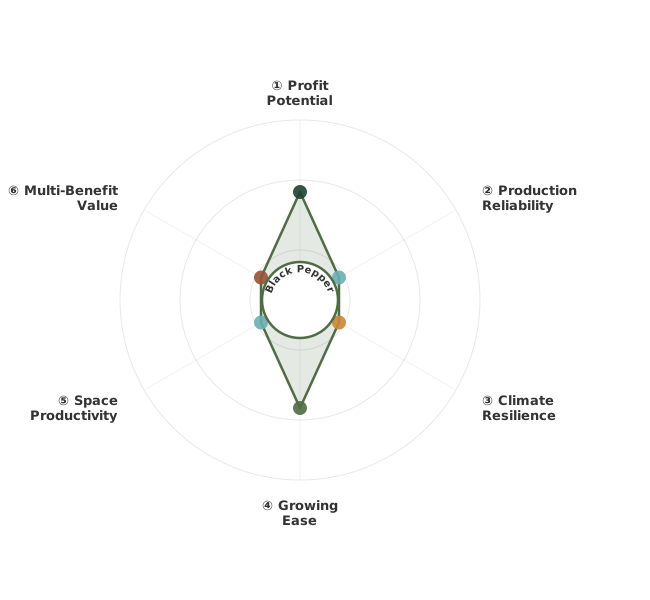
How These Traits Are Calculated
Trait dimensions are ordered clockwise starting from the top of the chart (12 o'clock position):
1. Profit Potential
Net returns per acre from yield, pricing, input costs, and labor efficiency
WHAT: Synthesizes gross revenue potential, input costs, labor requirements, and storage/marketing advantages into net profitability per acre. Captures the complete economic picture from planting to sale.
WHY: Not all vegetables are equally profitable. High-value crops with efficient production can return $10,000-30,000/acre versus $2,000-5,000/acre for lower-value options. Profit potential guides crop selection for maximum return on limited land and determines viable scale for farm businesses.
HOW: Scored via LLM synthesis of economics data (yields, prices, costs), storage advantages (season extension, value-added potential), and labor intensity. Exceptional (3.0): High yields × premium prices with moderate inputs and good storage (garlic, high-value salad greens). Typical (2.0): Moderate returns (tomatoes, squash). Limited (1.0): Low yields, commodity pricing, or intensive labor requirements (low-value greens).
2. Production Reliability
Weighted: yield consistency (60%) + disease/pest resistance (40%)
WHAT: Combines yield reliability (harvest consistency year-to-year) with disease and pest resistance to measure predictable production. Reliable vegetables deliver consistent harvests without catastrophic failures from pests or weather.
WHY: Market commitments and CSA subscriptions require dependable production. Unreliable crops that fail in bad years or require intensive pest management create cash flow gaps and customer dissatisfaction. Reliable producers allow confident planning and reduce input costs from emergency pest interventions.
HOW: Weighted formula prioritizes yield reliability (60% weight) for overall consistency, with disease/pest resistance (40% weight) to prevent total failures. Exceptional (3.0): Consistent yields across variable seasons with strong natural pest resistance. Typical (2.0): Generally reliable with some pest/weather sensitivity. Limited (1.0): Highly variable yields or severe pest vulnerability requiring intensive management.
3. Climate Resilience
Temperature and rainfall tolerance across diverse growing conditions
WHAT: Measures the breadth of climatic conditions where the vegetable produces successfully—temperature extremes, humidity ranges, and rainfall variability. Climate-resilient crops work across diverse regions and weather patterns.
WHY: Climate variability is increasing—unexpected heat waves, cold snaps, or drought periods can wipe out entire vegetable harvests. Resilient crops provide insurance against weather uncertainty and allow geographic expansion for market growth. This is especially critical for direct-market farmers who can't easily substitute crops mid-season.
HOW: Ratings based on the climate_adaptability trait documenting temperature tolerance and geographic range. Exceptional (3.0): Grows successfully in diverse climates (cold to hot, humid to dry) with wide hardiness zone range. Typical (2.0): Moderate climate flexibility. Limited (1.0): Narrow climate requirements (tropical-only, cool-season-only, humidity-sensitive).
4. Growing Ease
Weighted: establishment ease (50%) + low maintenance requirements (50%)
WHAT: Combines establishment difficulty (germination, transplanting) with ongoing maintenance needs (watering, fertilizing, pest management) to measure total labor requirements. Easy crops grow reliably with minimal intervention.
WHY: Labor is the primary cost for small-scale vegetable production. Easy-care crops allow farmers to manage more production area with the same labor, improving profitability. Difficult crops requiring constant attention, precise timing, or specialized skills reduce overall farm productivity and increase risk.
HOW: Weighted formula balances establishment ease (50% weight) for reliable startup and inverted maintenance intensity (50% weight) for ongoing care. Exceptional (3.0): Direct-seeded or easy transplants with minimal water/fertility/pest needs. Typical (2.0): Moderate care requirements. Limited (1.0): Difficult establishment or intensive ongoing management (daily watering, heavy feeding, constant pest monitoring).
5. Space Productivity
Weighted: yield per square foot (60%) + season extension potential (40%)
WHAT: Combines spatial productivity (yield per square foot) with temporal productivity (extended harvest windows from succession planting or season extension). Maximizes production from limited growing area.
WHY: Land is the primary constraint for vegetable farmers—especially those near urban markets. Space-efficient crops delivering high yields in small areas improve per-acre profitability dramatically. Season extension (spring tunnels, fall protection) adds bonus production windows when competing supply is limited and prices are higher.
HOW: Weighted formula prioritizes space efficiency (60% weight) for core yield per area, with season extension potential (40% weight) for bonus production opportunities. Exceptional (3.0): High yields per square foot (10,000+ lbs/acre equivalents) with season extension options. Typical (2.0): Moderate yields and extension potential. Limited (1.0): Low yields or crops unsuitable for season extension.
6. Multi-Benefit Value
Ecosystem services beyond harvest—pollinator support, nitrogen fixing, pest habitat
WHAT: Measures ecosystem services provided beyond harvestable yield. Multi-benefit vegetables contribute to farm ecology through nitrogen fixation (legumes), pollinator support (flowering crops), beneficial insect habitat, soil building, or erosion control.
WHY: Cash crops can either extract from farm ecosystems or contribute to them. Vegetables with strong multi-benefit value build soil fertility, support pollinators needed for fruit/vine crops, and create habitat for pest predators—reducing external input needs. Nitrogen-fixing vegetables (beans, peas) provide $40-80/acre worth of fertility for following crops.
HOW: Ratings based on the multi_benefit_value trait documenting service contributions. Exceptional (3.0): Significant ecosystem services (nitrogen fixation, heavy pollinator support, soil building, pest habitat). Typical (2.0): Some ecosystem contributions. Limited (1.0): Single-purpose cash crops with minimal farm ecology benefits.
Ratings are based on documented performance in regenerative systems, not conventional high-input scenarios. All traits assume integrated management practices focused on soil health and ecosystem services.
5
Management & Care Requirements
Integration guidance, maintenance needs, and care practices
Management & Care Requirements
Integration guidance, maintenance needs, and care practices
How to Integrate This Plant
Black pepper (Piper nigrum) can be integrated as a valuable cash crop with ecosystem services in a regenerative system. Its primary role is as a cash crop, but it also enhances soil health, particularly when intercropped or used as ground cover. Compatible practices include alley cropping and food forests, where it can be grown alongside other species, potentially benefiting from or providing support to them. While not a nitrogen fixer or a primary windbreak, its dense foliage can offer some microclimate regulation and erosion control on slopes. It thrives in well-drained soils and can benefit from practices that improve soil organic matter and nutrient cycling, such as the use of ground cover like Centrosema pubescens, which has been shown to increase soil nutrient availability and plant chlorophyll content. Year 1-2: Establishment and initial growth. Year 3-5: Production begins, contributing to harvest income and potentially influencing microclimate. Year 10+: Mature plants provide consistent harvest and enhance soil structure and biodiversity.
Integration Practices & Management
The provided knowledge base offers limited direct insights into the specific regenerative agriculture practices for integrating Piper nigrum, often referred to as black pepper. The sources focus more on the benefits of certain practices on black pepper cultivation rather than detailing the methods farmers use to establish and manage it regeneratively. However, we can infer some integration strategies. Source discusses an Integrated Crop Management (ICM) package for black pepper that includes soil-test-based fertilizer application, micronutrients, and biofertilizers, suggesting a focus on soil health and reduced chemical inputs. Source evaluates black pepper within a high-density multispecies cropping system alongside arecanut, banana, citrus, and clove or nutmeg, with varying fertilizer doses combined with vermicompost from recycled biomass. This highlights intercropping and nutrient cycling as potential integration methods. Source compares black pepper agroecosystems with *Centrosema pubescens* ground cover versus natural vegetation, finding that the former improved soil temperature, moisture, and nutrient content (P, K, Ca, Mg), and enhanced pepper plant chlorophyll. This points towards the use of cover crops for soil improvement and competition management. Direct information on establishment, grazing integration, termination strategies, or detailed succession planning for Piper nigrum within regenerative systems is not present in this knowledge base.
Management Profile
Maintenance Intensity: Not Recommended - Maintaining black pepper involves ensuring optimal soil moisture through thoughtful water management and adequate organic matter, alongside providing structural support.
Sources behind this view
 Research
-
EVALUATION OF AN INTEGRATED CROP MANAGEMENT PACKAGE FOR BLACK PEPPER: A FRONTLINE DEMONSTRATION (opens in new window)
This study found: Integrated Crop Management for black pepper in India reduced diseases by over 70%, increased yield by 45%, and improved profitability, highlighting the need for farmer training.
6
Economics & Value Streams
Direct harvest, system benefits, ecosystem services, and risk diversification
Economics & Value Streams
Direct harvest, system benefits, ecosystem services, and risk diversification
Comprehensive economic analysis including direct harvest value, system enhancement contributions, ecosystem services, value timeline, and risk diversification strategies.
Vegetable & Specialty Economics
| Metric | Value |
|---|---|
| Seed/Transplant Cost | 500-1000 $/acre 1235-2471 $/ha |
| Expected Yield | 500-1000 lbs/acre 560-1120 kg/ha |
| Market Price | 5.00-10.00 $/lb 11-22 $/kg |
| Harvest/Handling Cost | 800-1600 $/acre 1976-3953 $/ha |
| Marketing/Distribution Cost | 400-800 $/acre 988-1976 $/ha |
| Net Annual Return* | $-900 to $8300/acre/year |
Economics highly variable by market channel (direct vs wholesale), scale, and management. Direct marketing commands premiums but requires labor. Values shown for mid-scale market garden operations.
* Net Annual Return = (Yield × Market Price) − (Amortized Establishment Cost + Annual Maintenance). This return is realized only at/after first harvest; early years have costs but no revenue. Range shows worst case to best case scenarios.
System Enhancement Value
Beyond harvest: ecosystem services from regenerative cash crop practices
Ecological Service Contributions
Black pepper's integration into diverse cropping systems offers several valuable system benefits. As a secondary function, it acts as a cover crop system and specialty crop, contributing to soil health and biodiversity. Excerpt highlights how *Centrosema pubescens* ground cover, integrated with pepper, significantly increased soil P, K, Ca, and Mg content, and maintained stable soil temperature and moisture. This suggests that black pepper systems, when managed with appropriate ground cover, can actively improve soil fertility and water management. Furthermore, the presence of aphids on pepper plants, as noted in excerpt, is viewed as a potential benefit by attracting predatory insects, contributing to natural pest control within the agroecosystem. The improved soil health indicators, including pH stability and nutrient availability in integrated management packages, demonstrate a direct positive impact on the farm's biological and chemical functioning. Its inclusion in multispecies cropping models also fosters a more robust and resilient agricultural landscape.
Erosion Control (if applicable)
Variable, depends on integration with taller species for windbreak effect.
While black pepper (Piper nigrum) itself is a vine and not typically planted for windbreak purposes, its integration into multi-story cropping systems, as suggested by excerpts and, can indirectly contribute to a more resilient farm structure. In these systems, black pepper often grows on stakes or trees, and the overall canopy created by a diverse planting can offer some degree of wind buffering. This is particularly relevant in tropical and subtropical regions where windstorms can be a significant threat to crop production. The presence of other taller species in an integrated system, with black pepper as an understory or mid-story component, can create a more complex microclimate that reduces wind speed at ground level, thereby minimizing soil erosion and physical damage to more sensitive crops. The enhanced soil health observed in systems with black pepper, such as improved nutrient availability, also contributes to stronger plant structures that are better equipped to withstand wind stress.
Ecosystem Service Contributions
Environmental contributions: carbon, pollinators, wildlife, and water
- Carbon Sequestration: Black pepper, being a perennial vine, has the potential for significant carbon sequestration over its lifespan, particularly when established in multi-story or agroforestry systems. Its woody perennial nature means it stores carbon in its biomass (stems, roots) and contributes to soil organic carbon through leaf litter and root turnover. The rate of sequestration will depend on the density of planting, management practices, and the lifespan of the plants.
- Pollinator Support: Low. While some flowering plants in an integrated system might attract pollinators, black pepper itself is primarily wind-pollinated and does not offer significant nectar or pollen resources for most beneficial insects.
- Wildlife Habitat: Low to Medium. Black pepper plants themselves offer limited direct habitat for wildlife, primarily providing some cover. However, when integrated into diverse agroforestry or multi-species cropping systems (as seen in excerpts and), it contributes to a more complex habitat structure, supporting a wider range of insects, birds, and other fauna through the presence of associated plants and the overall ecosystem complexity.
- Water Quality: Not applicable
Value Timeline: Production & Services
When you'll see results: varies by crop (annual harvest vs. perennial establishment)
Years 1-2
Establishment of ground cover benefits (if intercropped with legumes like *Centrosema pubescens*), initial soil improvement (nutrient availability, moisture retention) from associated cover crops and plant litter, potential for early aphid attraction for beneficial insects.
Years 3-5
First significant harvest of black pepper, contributing to direct income. Continued soil health improvements. Established canopy provides some microclimate regulation and potential for wind buffering if integrated with taller species. Increased biomass contribution to soil organic matter.
Years 10-20
Mature production of black pepper, yielding consistent cash flow. Significant contributions to soil carbon sequestration and improved soil structure. Established multi-story system provides robust ecosystem services including enhanced biodiversity and resilience. Sustained soil fertility and water management benefits.
20+ Years
Long-term, stable cash crop production. Mature agroforestry system components (if trees are integrated) may offer additional value. Continued and potentially enhanced ecosystem services such as carbon storage, soil health maintenance, and biodiversity support. Potential for plant regeneration and long-term farm productivity.
Farm Risk Reduction
How this reduces farm risk: backup income, weather protection, market hedges
- Multiple Revenue Streams: Direct cash crop revenue from black pepper harvest, potential for sale of associated cover crops or other companion plants in a diversified system, improved soil health leading to higher yields and resilience of other crops, reduced input costs due to biofertilizers and improved soil fertility.
- Temporal Income Spread: Provides an annual harvest income stream from black pepper, while concurrently delivering ongoing ecosystem services (soil health, carbon sequestration) that contribute to long-term farm sustainability and resilience. The perennial nature of black pepper ensures value beyond a single growing season.
- Market Risk Hedge: Diversifies farm income away from single-commodity reliance. As a specialty crop, black pepper can offer premium pricing. Its integration into systems that improve soil health and reduce reliance on synthetic inputs hedges against volatile fertilizer prices and environmental regulations. Improved soil and plant resilience can mitigate risks associated with climate variability (e.g., drought, erratic rainfall).
Sources behind this view
Research
-
A modified alley cropping system of agroforestry in South Andaman Islands: an analysis of production potential and economic benefit (opens in new window)
This study found: A 7-year agroforestry study in South Andaman showed a modified alley cropping system with Gliricidia trees, black pepper, corn, and okra became over 4 times more profitable by year 3, driven by increa
-
EVALUATION OF AN INTEGRATED CROP MANAGEMENT PACKAGE FOR BLACK PEPPER: A FRONTLINE DEMONSTRATION (opens in new window)
This study found: Integrated Crop Management for black pepper in India reduced diseases by over 70%, increased yield by 45%, and improved profitability, highlighting the need for farmer training.
8
Know the Debate
Black pepper, a high-value perennial cash crop, offers long-term income and ecological benefits like soil building and biodiversity enhancement whe...
Know the Debate
Black pepper, a high-value perennial cash crop, offers long-term income and ecological benefits like soil building and biodiversity enhancement whe...
Black pepper, a high-value perennial cash crop, offers long-term income and ecological benefits like soil building and biodiversity enhancement when integrated into agroforestry or diversified systems. However, its cultivation is not universally simple. Management intensity can vary significantly depending on scale and climate, ranging from moderate in established tropical systems to highly labor-intensive when requiring trellising, pest control, and climate adaptation in cooler regions. The establishment period requires patience, with initial harvests taking 3-4 years and full production up to 5-7 years, making diverse income strategies or interim cropping essential for early financial viability. Furthermore, while the crop prefers warm, humid climates, successful cultivation in cooler or drier regions is possible but demands specific adaptations like greenhouses and careful variety selection, impacting labor and capital investments.
How intensive is black pepper cultivation?
Moderate intensity in diversified systems
In established tropical agroforestry or polyculture systems with natural shade and support structures, management intensity may be moderate. Cover crops, biomass recycling, and natural predation help manage fertility and pests, reducing external inputs and labor.
Sources behind this view
Sources behind this view
Research
-
Assessing temperature-based adaptation limits to climate change of temperate perennial fruit crops. (opens in new window)
This study found: A global study looked at how changing temperatures due to climate change will affect where five key fruit crops – apples, cherries, almonds, olives, and grapes – can be grown. These perennial trees need specific winter cold periods to produce fruit. The research used climate models to predict future growing areas. By the end of the century, under a high-emission scenario, growing areas in the Southern Hemisphere could shrink by over 40%, while areas in the Northern Hemisphere might expand significantly. A lower-emission scenario shows smaller but still notable shifts. Essentially, suitable growing regions are moving towards the poles. For the Southern Hemisphere, there's less room to move to higher latitudes. Farmers and breeders can adapt by selecting or developing varieties that need less winter chill, choosing appropriate cultivars, and using techniques like shade netting, sprinklers for cooling, and precise irrigation to manage heat stress.
-
LAND EVALUATION FOR THE CULTIVATION OF GINGER, PEPPER AND MAIZE AT THE DEPARTMENT OF SOIL SCIENC FARMS, JOSEPH SAAWUAN TARKA UNIVERSITY, MAKURDI. (opens in new window)
This study found: A soil study at Joseph Saawuan Tarka University in Makurdi evaluated land suitability for growing ginger, pepper, and corn. Researchers dug soil pits and analyzed samples, finding that the soils had low nutrient levels, including very low organic matter (less than 0.5%) and nitrogen. The soil textures varied from sandy loam to clay. Based on the analysis, one area was highly suitable for pepper, another was still highly suitable but less so for ginger, and a third was moderately suitable for corn. The study recommends adding organic matter and mineral fertilizers to improve soil fertility and advises against bush burning. It also suggests choosing crops that can adapt to temperature variations.
High intensity in less ideal conditions
Traditional cultivation and adaptation for cooler climates often require significant labor for trellising, pruning, shade creation, and pest management. This is especially true for new plantings or when attempting to grow in regions outside its optimal climate, increasing time and resource demands.
Sources behind this view
Sources behind this view
 Videos & Podcasts
-
Recommends Hungarian Hot Wax peppers and chilies for cooler climates; aubergines and other peppers require more heat. Greenhouse conditions significantly improve yield. Emphasizes choosing thriving crops over borderline ones.
-
Growing peppers and aubergines in cooler climates requires significant heat; greenhouse conditions are superior. Hungarian Hot Wax is recommended for cooler areas. Harvesting green is advised when heat is insufficient for ripening.
-
Late September review shows aubergines finishing due to cool summer; peppers, especially Hungarian Hot Wax, are yielding edible fruit (green or red). Fragile pepper stems require support. Greenhouse conditions improve yield.
Making Sense of the Differences
The intensity of black pepper cultivation varies significantly based on farm scale, existing infrastructure, climate, and desired management approach. Established agroforestry systems in ideal tropical climates may feature moderate labor needs due to mature support structures and natural shade. However, operations in cooler or drier climates, or those starting new plantings without mature infrastructure, often face high labor demands for trellising, pruning, shade, and pest management. Farmers should assess their local context and available resources to determine the realistic labor commitment.
How long until black pepper yields a significant return?
Long-term establishment with interim crops
Black pepper vines take 3-4 years to begin yielding and 5-7 years for full production, requiring patience. Intercropping with faster-maturing crops like ginger or turmeric during establishment provides essential interim income.
Sources behind this view
Sources behind this view
Videos & Podcasts
-
Mitigates tomato crop risk in humid mountain climates by interplanting with high-value crops like turmeric, ginger, or squash for insurance, market diversification, and soil health, leveraging the sun's energy for continuous productivity.

Research
-
Assessing temperature-based adaptation limits to climate change of temperate perennial fruit crops. (opens in new window)
This study found: A global study looked at how changing temperatures due to climate change will affect where five key fruit crops – apples, cherries, almonds, olives, and grapes – can be grown. These perennial trees need specific winter cold periods to produce fruit. The research used climate models to predict future growing areas. By the end of the century, under a high-emission scenario, growing areas in the Southern Hemisphere could shrink by over 40%, while areas in the Northern Hemisphere might expand significantly. A lower-emission scenario shows smaller but still notable shifts. Essentially, suitable growing regions are moving towards the poles. For the Southern Hemisphere, there's less room to move to higher latitudes. Farmers and breeders can adapt by selecting or developing varieties that need less winter chill, choosing appropriate cultivars, and using techniques like shade netting, sprinklers for cooling, and precise irrigation to manage heat stress.
Long-term investment in perennial income
As a perennial crop, black pepper represents a long-term investment with a productive lifespan of 15-20 years or more, complementing other enterprises and offering stable, albeit delayed, revenue.
Sources behind this view
Sources behind this view
Research
-
Assessing temperature-based adaptation limits to climate change of temperate perennial fruit crops. (opens in new window)
This study found: A global study looked at how changing temperatures due to climate change will affect where five key fruit crops – apples, cherries, almonds, olives, and grapes – can be grown. These perennial trees need specific winter cold periods to produce fruit. The research used climate models to predict future growing areas. By the end of the century, under a high-emission scenario, growing areas in the Southern Hemisphere could shrink by over 40%, while areas in the Northern Hemisphere might expand significantly. A lower-emission scenario shows smaller but still notable shifts. Essentially, suitable growing regions are moving towards the poles. For the Southern Hemisphere, there's less room to move to higher latitudes. Farmers and breeders can adapt by selecting or developing varieties that need less winter chill, choosing appropriate cultivars, and using techniques like shade netting, sprinklers for cooling, and precise irrigation to manage heat stress.
Making Sense of the Differences
The timeline for significant financial return from black pepper is primarily driven by the crop's long establishment period. While vines yield initial harvests in 3-4 years, reaching full production can take 5-7 years, with a productive lifespan of 15-20+ years. To mitigate the financial gap during establishment, intercropping with faster-maturing crops like ginger, turmeric, or certain shade-tolerant vegetables is a common strategy. This dual approach allows for early income generation while the pepper vines mature, ensuring economic viability.
What are the ideal growing conditions for black pepper?
Optimal tropical to subtropical conditions
Ideal black pepper cultivation requires warm temperatures (20-30°C), high humidity, consistent rainfall (10-100 inches annually or irrigation), and fertile, well-drained soil. It benefits from companion planting, especially with shade trees and legumes.
Sources behind this view
Sources behind this view
Research
-
LAND EVALUATION FOR THE CULTIVATION OF GINGER, PEPPER AND MAIZE AT THE DEPARTMENT OF SOIL SCIENC FARMS, JOSEPH SAAWUAN TARKA UNIVERSITY, MAKURDI. (opens in new window)
This study found: A soil study at Joseph Saawuan Tarka University in Makurdi evaluated land suitability for growing ginger, pepper, and corn. Researchers dug soil pits and analyzed samples, finding that the soils had low nutrient levels, including very low organic matter (less than 0.5%) and nitrogen. The soil textures varied from sandy loam to clay. Based on the analysis, one area was highly suitable for pepper, another was still highly suitable but less so for ginger, and a third was moderately suitable for corn. The study recommends adding organic matter and mineral fertilizers to improve soil fertility and advises against bush burning. It also suggests choosing crops that can adapt to temperature variations.
-
Integrating soil, plant and microclimate variables for optimizing resource use and yield of greenhouse grown pepper in a rainforest environment (opens in new window)
This study found: This study looked at how different watering and fertilizer levels affect bell and habanero peppers grown in a greenhouse in a tropical climate. Researchers monitored the greenhouse's internal weather (like temperature, humidity, and light) and measured how much water the plants used (evapotranspiration). They found that the way water and nutrients were delivered significantly impacted how well the plants grew and produced fruit. For habanero peppers, the best results came from using 100 kg of NPK fertilizer per hectare combined with watering to 70% of the soil's capacity. Bell peppers did best with slightly less fertilizer (60 kg/ha) but still at 70% soil moisture. Using the highest fertilizer and watering levels also led to good yields. The study also found strong links between weather conditions and pepper yield, and developed a computer model that can predict yields based on these factors. The findings suggest that carefully managing irrigation and fertilizer, and using technology like sensors and predictive models, can significantly improve pepper production and resource efficiency in greenhouses.
-
Spore abundance and morphological root modifications of arbuscular mycorrhizal fungi-infected black pepper (<em>Piper nigrum</em> L) plants in reddish brown latesolic soil of Matale in Sri Lanka (opens in new window)
This study found: In Sri Lanka, a study looked at beneficial soil fungi (arbuscular mycorrhizae or AM) in black pepper plants grown in a specific type of soil. The soil had decent levels of nitrogen and organic matter, which are good for soil life, though phosphorus and potassium levels varied. The researchers found a high number of fungal spores in the soil, ranging from 1600 to 9000 per kilogram. Most of the black pepper roots (about 95%) were infected by these beneficial fungi, showing structures like arbuscules and vesicles. The observed fungal features suggest they belong to common groups like Glomus fungi, which are known to help plants grow.
Adaptation to marginal climates with intervention
In cooler or drier climates, success requires significant adaptation measures like greenhouses, season extension techniques, careful variety selection (e.g., Hungarian Hot Wax for cooler areas), and frost protection (covers, overwintering indoors).
Sources behind this view
Sources behind this view
Videos & Podcasts
-
Experiment with 'play plants' outside their normal range by trying them at least three times in different locations and conditions. Limit these to 5% of production. Successes include pawpaws and Taylor Asian pears; peaches failed due to extreme cold (-38°F) in this region.

-
Peppers are warm-weather crops requiring frost protection; covering them with buckets creates a beneficial greenhouse effect. Planting multiple varieties like Jimmy Nardellos, Big Reds, and California Wonders is recommended for a good harvest.
-
Overwintering pepper plants can yield earlier fruit, especially in mild climates where they can be kept in the field. For commercial growers in cold climates, digging and storing plants indoors is often not cost-effective due to space, labor, and disease risks, though specific cost-benefit analyses are lacking.
-
Choosing seeds for regional production depends heavily on climate, especially humidity. Hot, humid-loving crops (tomatoes, peppers) have protected seeds, while naked-seeded crops (cilantro, lettuce) prefer dry climates. Podded crops (beans, brassicas) are more adaptable.
Research
-
Assessing temperature-based adaptation limits to climate change of temperate perennial fruit crops. (opens in new window)
This study found: A global study looked at how changing temperatures due to climate change will affect where five key fruit crops – apples, cherries, almonds, olives, and grapes – can be grown. These perennial trees need specific winter cold periods to produce fruit. The research used climate models to predict future growing areas. By the end of the century, under a high-emission scenario, growing areas in the Southern Hemisphere could shrink by over 40%, while areas in the Northern Hemisphere might expand significantly. A lower-emission scenario shows smaller but still notable shifts. Essentially, suitable growing regions are moving towards the poles. For the Southern Hemisphere, there's less room to move to higher latitudes. Farmers and breeders can adapt by selecting or developing varieties that need less winter chill, choosing appropriate cultivars, and using techniques like shade netting, sprinklers for cooling, and precise irrigation to manage heat stress.
 From the Web
-
Cold climate farming (Zone 5a or lower) faces challenges from temperature fluctuations and short growing seasons. Focus on cool-season crops like brassicas and lettuce, and use season extension techniques like hoop houses for warm-season crops. Specific planting intervals and crop suitability are detailed.
-
Plant peppers after soil and air warm in spring (night temps >50-55°F), spacing 18-24 inches apart. Ensure well-drained soil, consistent moisture, and use starter/side-dressing fertilizer. Manage aphids and prevent tobacco mosaic disease.
Making Sense of the Differences
Black pepper thrives in tropical and subtropical climates with consistent warmth, humidity, and plentiful rainfall, benefiting from fertile, well-drained soil and companion planting. However, successful cultivation in cooler or drier regions is achievable but necessitates significant adaptation measures. These include using protected environments like greenhouses or hoop houses, selecting heat-tolerant varieties, employing frost protection, and managing watering meticulously. These adaptations can increase labor and capital investment, so farmers in marginal climates must carefully consider these factors against their economic objectives and resource availability.