
Khejri
Available data highlights its significant role in regenerative agriculture, particularly in arid and semi-arid regions. Its primary use appears to be as a key component in agroforestry systems, contributing to soil health and carbon sequestration. Studies indicate that P. cineraria positively influences soil organic carbon (SOC) due to its deep root system and substantial biomass production, facilitating organic matter accumulation and enhancing carbon sequestration potential compared to non-forested areas. Leaf litterfall from P. cineraria also contributes to soil nutrient and organic carbon pools, with litter accumulation observed at distances of several meters from the tree. While not explicitly stated as a nitrogen fixer in these excerpts, its integration into agroforestry systems, as seen in studies comparing it with other trees like Azadirachta indica, suggests its value in polyculture layers. Farmer experiences are not detailed in these specific excerpts, but the focus on carbon storage in soil and plant organs, alongside its benefits for soil fertility, underscores its importance in building resilient agricultural systems. While coverage in our knowledge base is limited, the above represents documented uses in regenerative systems.
For a full botanical description see: Wikipedia(opens in new window) (external link)
Regenerative Quick Profile
All recommendations assume integrated, regenerative practices—not conventional inputs.
Climate & Soil Fit
Climate: Tropical Rainforest, Tropical Monsoon, Tropical Savanna, Hot Semi-Arid (Steppe), Cold Semi-Arid (Steppe), Hot Desert, Cold Desert, Humid Subtropical, Oceanic (Maritime Temperate), Hot-Summer Mediterranean, Warm-Summer Mediterranean, Monsoon-Influenced Humid Subtropical, Subtropical Highland, Hot-Summer Continental, Warm-Summer Continental, Subarctic, Monsoon-Influenced Hot-Summer Continental, Tundra
Zones: USDA 8-11, Australian Zones 4-8, EU Mediterranean, Subtropical
Optimal Soil: Sandy Soil
System Role & Functions
Primary: Food Forest
Secondary: Nitrogen Fixer, Specialty
Key Benefits: Multi-benefit value, Drought tolerant, Integration-friendly
Management Level
Experience: Advanced
Maintenance: Very low maintenance - Once established, Prosopis cineraria thrives with minimal intervention, naturally managing its moisture needs and contributing to soil fertility through its inherent biological processes.
Time to Production: Slow (5+ years) - As a slow-growing species, Prosopis cineraria yields edible pods and leaves significantly after 5-8 years, with full maturity taking longer, indicating its role in long-term ecosystem development rather than rapid returns.
Value Streams
- Fruit/nut harvest
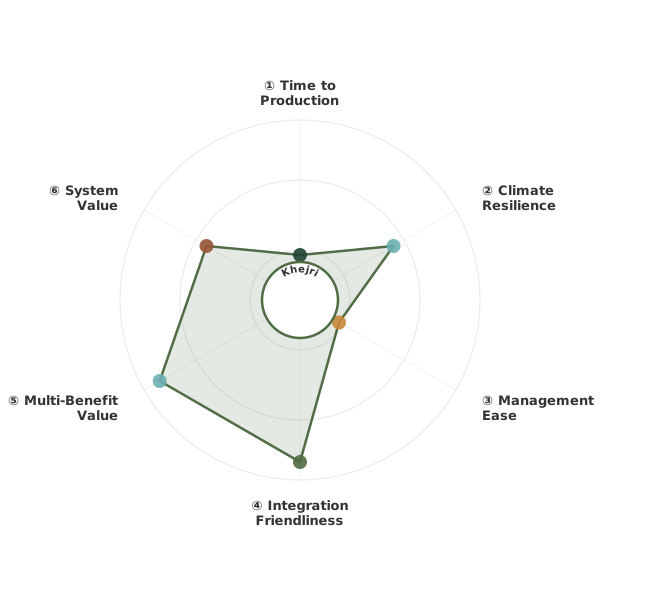
How These Traits Are Calculated
Trait dimensions are ordered clockwise starting from the top of the chart (12 o'clock position):
1. Time to Production
Years from planting to first harvestable yields
WHAT: Measures the waiting period from tree establishment to first meaningful production. Fast-producing trees yield within 2-5 years; slow producers require 8-15+ years before significant harvests.
WHY: Time to production determines cash flow timing and financial feasibility for farm businesses. Long wait times create significant opportunity costs—land and labor tied up for years without income. Fast producers allow quicker experimentation and cash flow recovery, reducing risk for new tree crop farmers.
HOW: Ratings based on years to first harvest documented in economics data. Exceptional (3.0): Production within 2-4 years (elderberry, mulberry, some nut bushes). Typical (2.0): 5-8 years (many fruit trees). Limited (1.0): 10-15+ years (hardwood timber, some nut trees like pecan, walnut).
2. Climate Resilience
Weighted: hardiness zones (50%) + drought tolerance (30%) + adaptability (20%)
WHAT: Combines temperature tolerance (hardiness zone range), water stress resilience (drought tolerance), and overall climate flexibility. Multi-decade tree investments require reliable climate matching to prevent total loss.
WHY: Wrong climate choices mean complete failure for permanent plantings. A tree that dies in year 5 from unexpected cold or prolonged drought represents catastrophic loss of 5 years' investment. Climate resilience determines geographic range and weather variability tolerance—critical as climate patterns become less predictable.
HOW: Weighted formula prioritizes hardiness zone range (50% weight) for core temperature tolerance, drought tolerance (30% weight) for water stress, and overall adaptability (20% weight) for general climate flexibility. Exceptional (3.0): Wide hardiness range (8+ zones) with strong drought tolerance. Typical (2.0): Moderate range and tolerance. Limited (1.0): Narrow climate requirements.
3. Management Ease
Weighted: establishment (40%) + low maintenance (30%) + pest resistance (30%)
WHAT: Combines establishment difficulty, ongoing maintenance requirements, and disease/pest pressure into overall management workload. Low-maintenance trees fit easily into busy farm operations without specialized expertise or intensive inputs.
WHY: Labor is the limiting factor for most diversified farms. High-maintenance trees requiring pruning expertise, disease management, and intensive pest control compete for limited time with other farm enterprises. Easy-care trees deliver production with minimal intervention, making them viable for time-constrained farmers.
HOW: Weighted formula balances establishment ease (40% weight) for startup success, inverted maintenance intensity (30% weight) for ongoing care, and inverted pest/disease pressure (30% weight) for health management. Exceptional (3.0): Easy to establish, self-sufficient growth, naturally pest-resistant. Typical (2.0): Moderate care needs. Limited (1.0): Difficult establishment, intensive maintenance, or heavy pest pressure.
4. Integration Friendliness
Compatibility with silvopasture, alley cropping, and multi-species systems
WHAT: Measures how well the tree integrates with other farm enterprises—grazing livestock, annual crops, or other perennials. Integration-friendly trees tolerate livestock browsing, don't heavily shade out crops, and coexist with diverse plantings.
WHY: Integrated tree systems (silvopasture, alley cropping, food forests) provide higher total returns per acre than monoculture plantings. Trees that work well with livestock provide shade + forage + production simultaneously. Integration flexibility allows farmers to stack enterprises and adapt to market opportunities.
HOW: Ratings based on the integration_friendliness trait documenting compatibility with grazing, cropping, and multi-species systems. Exceptional (3.0): Tolerates livestock browsing, provides livestock benefits (shade, browse), compatible with understory crops. Typical (2.0): Some integration possible with management. Limited (1.0): Requires isolation, incompatible with livestock or cropping.
5. Multi-Benefit Value
Stacked benefits beyond primary product—shade, wildlife, nitrogen, erosion control
WHAT: Measures the diversity of ecosystem services provided beyond the main harvest product. Multi-benefit trees deliver shade, windbreak, wildlife habitat, nitrogen fixation, erosion control, pollinator support, and aesthetic value simultaneously.
WHY: Single-purpose trees are economically fragile—market price swings or production failures eliminate all value. Multi-benefit trees provide resilience through diverse value streams. A nitrogen-fixing tree that produces nuts, provides shade for livestock, supports wildlife, and controls erosion delivers 4-5x the system value of a production-only tree.
HOW: Ratings based on the multi_benefit_value trait documenting service diversity. Exceptional (3.0): 4+ significant services stacked (nitrogen-fixing legume trees providing nuts + shade + wildlife + windbreak). Typical (2.0): 2-3 moderate services. Limited (1.0): Single-purpose production trees with minimal additional benefits.
6. System Value
Total ecosystem and economic value across short, medium, and long timeframes
WHAT: Synthesizes the total regenerative value delivered across multiple decades, including immediate ecosystem services (years 1-5), medium-term production value (years 5-15), and long-term system transformation (years 15-50). Captures the compounding benefits of permanent plantings.
WHY: Trees are multi-decade investments requiring patient capital. System value measures whether the total package—early ecosystem services, eventual production, and long-term legacy benefits—justifies the wait time and land commitment. High system value trees pay back investment through diverse, stacking, compounding benefits.
HOW: Scored via LLM synthesis of economics timelines, ecosystem service diversity, and long-term soil/water/carbon impacts. Exceptional (3.0): Strong early services + valuable production + transformative long-term impacts. Typical (2.0): Moderate benefits across timeframes. Limited (1.0): Long wait with limited service stacking or weak economic returns.
Ratings are based on documented performance in regenerative systems, not conventional high-input scenarios. All traits assume integrated management practices focused on soil health and ecosystem services.
6
Economics & Value Streams
Direct harvest, system benefits, ecosystem services, and risk diversification
Economics & Value Streams
Direct harvest, system benefits, ecosystem services, and risk diversification
Comprehensive economic analysis including direct harvest value, system enhancement contributions, ecosystem services, value timeline, and risk diversification strategies.
Per-Tree Production Economics
| Metric | Value |
|---|---|
| Establishment Cost | $5-15 |
| Years to First Harvest | 5-8 years |
| Annual Maintenance | $2-5 |
| Yield | 30-60 lbs/year 13-27 kg/year |
| Market Price | $0-0/lb $0-1/kg |
| Productive Lifespan | 30-50 years |
| Net Annual Return* | $-5 to $-2/year (negative) |
Values shown per mature tree, not per acre. In regenerative systems, trees are integrated at low densities across diverse landscapes. Establishment costs spread over the lifespan of the tree. Early years have costs but no revenue.
* Net Annual Return = (Yield × Market Price) − (Amortized Establishment Cost + Annual Maintenance). This return is realized only at/after first harvest; early years have costs but no revenue. Range shows worst case to best case scenarios.
System Enhancement Value
Beyond harvest: how understory complements overstory in polyculture
Food Forest System Contributions
Beyond direct agricultural and environmental services, Khejri offers a multitude of other system benefits. Its edible leaves ('Loong') and dried pods ('sangar' or 'sangri') are highly nutritious and palatable forage for various livestock, especially during dry seasons when other green fodder is scarce, acting as a vital feed source and famine food. Medicinally, various parts of the plant have traditional uses, offering potential for local health solutions. The wood is a valuable resource for fuel, charcoal, fencing, and construction materials for houses and agricultural implements, contributing to rural livelihoods and reducing reliance on external inputs. Furthermore, its association with arbuscular mycorrhizal fungi (AMF) in arid ecosystems, as indicated in research, enhances its drought tolerance and nutrient uptake, supporting overall ecosystem health and resilience.
Nitrogen Fixation (if legume)
56-168 kg N/ha/year (based on general legume ranges), translating to an estimated fertilizer replacement value of $48-135/acre/year (using conservative nitrogen fertilizer costs).
As a legume, Prosopis cineraria is a significant nitrogen fixer, contributing substantially to soil fertility. It enhances the availability of nitrogen for companion crops, reducing the need for synthetic nitrogen fertilizers. The decomposition of its leaf litter and other organic matter further enriches the soil with nutrients and improves soil structure. Studies, such as the one in Haryana, India, demonstrate that tree plantations, including P. cineraria, significantly increase soil organic carbon, available nitrogen, phosphorus, and potassium compared to fields without trees. This nitrogen fixation, coupled with nutrient cycling from litterfall, creates a more fertile and resilient soil ecosystem, directly benefiting crop yields and reducing input costs.
Groundcover & Erosion Control
Protects areas up to 2-5 times the height of the trees, potentially leading to 5-15% crop yield improvement in protected zones.
The Khejri tree's robust and deep root system not only anchors it firmly but also plays a critical role in soil stabilization and erosion control, particularly in sandy or degraded areas. It acts as an effective windbreak, protecting agricultural fields from harsh desert winds. This protection mitigates soil erosion, prevents sand dune encroachment, and reduces physical damage to crops. By buffering wind speeds, it creates a more favorable microclimate for associated crops, potentially leading to increased yields and reduced crop losses. The knowledge base highlights its ability to stabilize sandy soils and prevent dune erosion, making it invaluable for maintaining arable land in arid environments.
Ecosystem Service Contributions
Environmental contributions: carbon, pollinators, wildlife, and water
- Carbon Sequestration: Prosopis cineraria is a hardy desert tree with a deep root system, indicating significant potential for long-term carbon sequestration in both biomass and soil organic matter, particularly in arid degraded lands.
- Pollinator Support: Low to Medium. While not primarily known as a major pollinator attractor, flowering trees can provide some nectar and pollen resources for local insect populations.
- Wildlife Habitat: Provides browse (leaves, pods) for various livestock and wildlife, and its woody structure offers shelter. Its deep root system also supports soil microfauna.
- Water Quality: Not applicable
Value Timeline: Understory Development
When you'll see results: groundcover/herbs year 1, shrubs 2-3, full layer integration 5-10
Years 1-2
Initial nitrogen fixation begins, some soil stabilization and erosion control, early shade development.
Years 3-5
Established nitrogen fixation, noticeable windbreak effect, increased shade benefits for livestock and crops, first fodder/pod yield from lopping.
Years 10-20
Mature shade canopy providing significant microclimate regulation, substantial fodder and food production, ongoing soil improvement, potential for early timber use.
20+ Years
Full mature tree benefits including significant carbon sequestration, robust ecosystem services, high-value timber and fuel potential, long-term resilience benefits.
Farm Risk Reduction
How multi-layer systems diversify production and income
- Multiple Revenue Streams: Fodder (leaves, pods), food (pods as vegetable/famine food), fuelwood, charcoal, timber, fencing materials, medicinal uses, soil fertility enhancement (reduced input costs).
- Temporal Income Spread: Ongoing ecosystem services (nitrogen fixation, shade, windbreak) year-round, with periodic harvests of fodder, food, and eventually timber. Value is continuous and punctuated by product availability.
- Market Risk Hedge: Drought tolerance provides resilience against climate variability. Diverse products (fodder, fuel, food) reduce reliance on single commodity markets. Enhanced soil fertility reduces dependence on costly external inputs like fertilizers.
Sources behind this view
 Community
-
Khejri (Prosopis cineraria) provides significant agricultural benefits, including nitrogen fixation, soil improvement, windbreaks, and shade. It's a key source of nutritious fodder (leaves and pods) f
Read more (opens in new window) permies.com
8
Learn More
Why farmers use this plant and additional resources
Learn More
Why farmers use this plant and additional resources
Why Regenerative Farmers Use This Plant
Prosopis cineraria, commonly known as Khejri or Ghaf, is a cornerstone species for arid and semi-arid regenerative agriculture, offering profound ecological and economic benefits over its multi-decade lifespan. This hardy perennial tree is renowned for its exceptional drought tolerance and its ability to thrive in nutrient-poor soils, making it ideal for marginal lands. Its deep taproot system, capable of reaching depths of 15-50+ feet (4.5-15+ m), allows it to access scarce groundwater, greatly improving soil structure and water infiltration, and enabling it to anchor the soil, preventing erosion in fragile desert ecosystems.
At maturity, Prosopis cineraria can sequester an estimated 2-5 tons of CO2e per acre per year, contributing significantly to climate change mitigation. While not a legume, its extensive root system profoundly improves soil structure, enhancing water infiltration and retention in arid soils. The leaf litter and fallen pods contribute organic matter, slowly building soil organic carbon over time, with measurable soil carbon increases typically observed by year 5-7 of establishment. Its presence can also foster a more diverse and stable agroecosystem, attracting beneficial insects and pollinators that contribute to pest control and pollination services for any associated crops.
The tree's dense canopy provides essential shade regulation, creating microclimates that can support a diversity of understory vegetation and beneficial insects, and offers significant windbreak value, protecting crops and livestock from harsh desert winds. Its canopy services extend beyond shade, influencing local hydrology by intercepting rainfall and reducing runoff, thereby enhancing soil moisture infiltration. The microclimate created by the tree can also support a more diverse understory of drought-tolerant herbs, shrubs, and even some perennial grasses, fostering a more complex and resilient agroecosystem.
Economic returns are realized through its valuable timber, fuelwood, fodder for livestock, and medicinal uses, accumulating asset value over many decades. Years to first production for fodder and fuelwood can be as early as 3-5 years, with significant biomass accumulation and full economic potential realized between 10-20 years. This slow but steady growth ensures a sustainable and increasing asset base for farmers, providing resilience against economic shocks and contributing to generational wealth.
Prosopis cineraria has a long history of successful integration in diverse farming systems across its native range and beyond. In the arid regions of India, it is a keystone species in traditional agroforestry systems, often intercropped with millets and pulses. Farmers in the Sahel region of Africa have utilized it extensively in afforestation and land restoration projects, integrating it into village woodlots and livestock grazing areas. In parts of the Middle East, its resilience in sandy soils makes it a valuable component of desert greening initiatives and rangeland management. Its adaptability to saline soils also opens opportunities for use in coastal arid zones where other vegetation struggles to survive. In Australia's dryland farming areas, it is increasingly recognized for its potential in windbreaks and for soil improvement in marginal lands.
Sources behind this view
Community
-
Khejri (Prosopis cineraria) provides significant agricultural benefits, including nitrogen fixation, soil improvement, windbreaks, and shade. It's a key source of nutritious fodder (leaves and pods) f
Read more (opens in new window) permies.com -
Khejri (Prosopis cineraria) thrives in dry climates and various soils, requiring minimal rainfall. It propagates via root suckers or seeds (needing scarification/soaking). Nursery plants are best for
Read more (opens in new window) permies.com
 Research
-
Impact of Prosopis cineraria on Soil organic carbon: Implication for arid agroforestry with a case study of Sardarshahar, Rajasthan (opens in new window)
Native Khejri trees (Prosopis cineraria) in arid Rajasthan boost soil organic carbon and improve soil health, supporting sustainable agroforestry.