
Velvet Mesquite
Available excerpts highlight its significant potential in regenerative agriculture, particularly for arid environments. It is primarily utilized as a nitrogen-fixing pioneer species, enriching soil and supporting the growth of other plants. Its extensive root system is a key regenerative benefit, stabilizing land, preventing erosion, and accessing deep water reserves, thereby improving water infiltration and retention. This drought tolerance makes it ideal for challenging climates. The edible seed pods offer a valuable dual-purpose resource, serving as forage for livestock and a food source for wildlife, thus supporting biodiversity. Research also investigates its role in brush management to enhance native grass production. While specific integration details like polyculture or agroforestry are implied by its pioneer and shade-providing roles near water sources, direct mentions of practices like rotational grazing or no-till are absent in this knowledge base. The observed seedling resilience even under dry conditions suggests a robust performance in challenging regenerative systems. While coverage in our knowledge base is limited, the above represents documented uses in regenerative systems.
For a full botanical description see: Wikipedia(opens in new window) (external link)
Regenerative Quick Profile
All recommendations assume integrated, regenerative practices—not conventional inputs.
Climate & Soil Fit
Climate: Tropical Rainforest, Tropical Monsoon, Tropical Savanna, Hot Semi-Arid (Steppe), Cold Semi-Arid (Steppe), Hot Desert, Cold Desert, Humid Subtropical, Oceanic (Maritime Temperate), Hot-Summer Mediterranean, Warm-Summer Mediterranean, Monsoon-Influenced Humid Subtropical, Subtropical Highland, Hot-Summer Continental, Warm-Summer Continental, Subarctic, Monsoon-Influenced Hot-Summer Continental, Tundra
Zones: USDA 8-11, Australian Zones 3-6, EU Mediterranean, Semi-arid
Optimal Soil: Sandy Soil
System Role & Functions
Primary: Nitrogen Fixer
Secondary: Silvopasture, Food Forest
Key Benefits: Multi-benefit value, Climate adaptable, Low maintenance
Management Level
Experience: Beginner-Friendly
Maintenance: Very low maintenance - This species is highly drought-tolerant and thrives with minimal intervention, requiring no supplemental water management or fertility management after establishment within its adapted climate.
Value Streams
- Nitrogen fixation
Know the Debate
- Native legume valuable in arid lands
- Potential invasive in new regions
- Benefits: nitrogen fixation, fodder, soil building
- Context determines native vs. invasive role
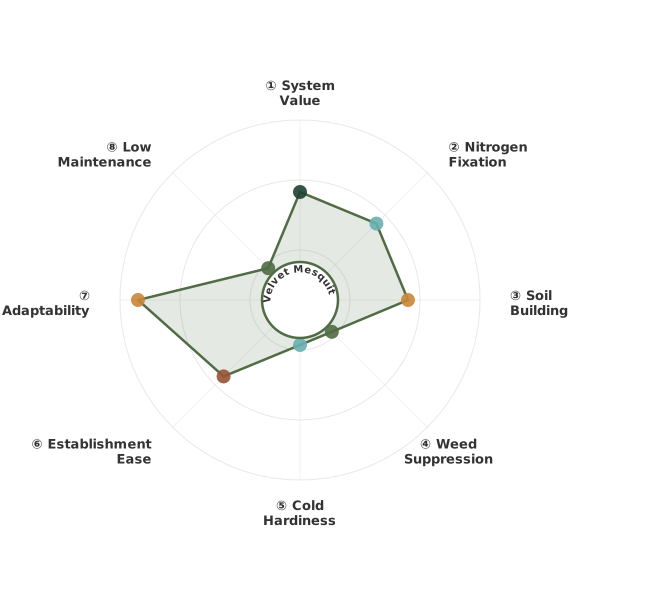
How These Traits Are Calculated
Trait dimensions are ordered clockwise starting from the top of the chart (12 o'clock position):
1. System Value
Ecosystem service stacking across nitrogen, carbon, water, biodiversity
WHAT: Synthesizes the compounding value of multiple ecosystem services delivered simultaneously—nitrogen fixation, soil organic matter building, pollinator support, erosion control, and water infiltration improvement. This is the total regenerative impact beyond single-function metrics.
WHY: The highest-value cover crops deliver 3-5 significant ecosystem services at once. A legume that fixes nitrogen, builds biomass, supports pollinators, and improves water infiltration provides $150-300/acre in combined benefits versus $30-60 for single-function covers. This service stacking is the core principle of regenerative agriculture.
HOW: Scored via LLM synthesis of economics data, timeline benefits, and trait combinations. Exceptional (3.0): 4-5 major services stacked with strong economic value ratios. Typical (2.0): 2-3 moderate services. Limited (1.0): Single-function covers with minimal service stacking. Considers seed cost relative to benefit value.
2. Nitrogen Fixation
Biological nitrogen production via legume root nodule bacteria
WHAT: Measures the ability to convert atmospheric nitrogen (N₂) into plant-available ammonia through symbiotic bacteria in root nodules. Legumes form partnerships with rhizobium bacteria that fix 60-150 lbs N/acre/year, reducing or eliminating synthetic fertilizer needs for following crops.
WHY: Nitrogen is the most expensive fertilizer input in crop production ($0.50-1.00/lb). Cover crops with exceptional nitrogen fixation can provide $60-150/acre worth of fertility while building soil organic matter. This biological process also reduces groundwater contamination from nitrogen runoff and lowers farm carbon footprint.
HOW: Ratings based on annual nitrogen fixation capacity and reliability across soil conditions. Exceptional (3.0): Legumes like hairy vetch, crimson clover, and field peas fixing >100 lbs N/acre/year. Typical (2.0): Moderate fixers like red clover at 60-100 lbs N/acre/year. Limited (1.0): Non-legumes (grasses, brassicas) with zero fixation capacity.
3. Soil Building
Weighted: biomass production (60%) + root system depth (40%)
WHAT: Combines above-ground biomass production with root depth to measure total soil organic matter contribution. Biomass provides surface organic matter, while deep roots deposit carbon at depth and break up compaction layers.
WHY: Soil organic matter is the foundation of regenerative agriculture, improving water retention, nutrient cycling, and biological activity. Each 1% increase in soil organic matter holds an additional 20,000 gallons of water per acre and represents $500-1,000 in fertility value. Deep roots access subsoil nutrients and create channels for water infiltration.
HOW: Weighted formula prioritizes biomass production (60% weight) for immediate organic matter contribution, with root depth (40% weight) for long-term soil structure. Exceptional (3.0): High-biomass crops with deep roots like cereal rye (8+ tons biomass, 5+ ft roots). Typical (2.0): Moderate on both factors. Limited (1.0): Low biomass or shallow roots.
4. Weed Suppression
Physical competition through rapid establishment and dense growth
WHAT: Measures the ability to outcompete weeds through rapid germination, aggressive early growth, and dense canopy formation. Physical smothering and light competition reduce weed pressure without herbicides.
WHY: Weed management is a major labor and cost burden for farmers. Cover crops that effectively suppress weeds reduce herbicide costs ($20-60/acre), decrease cultivation passes (fuel + labor), and provide clean seedbeds for cash crops. This is especially valuable in organic systems where herbicide options are limited.
HOW: Ratings based on germination speed, tillering density, and canopy closure timing. Exceptional (3.0): Fast-establishing, dense-tillering crops like cereal rye, oilseed radish that close canopy within 3-4 weeks. Typical (2.0): Moderate establishment and coverage. Limited (1.0): Slow-establishing or sparse crops that allow weed competition.
5. Cold Hardiness
Winter survival for fall planting and spring green manure value
WHAT: Measures tolerance to freezing temperatures and ability to survive winter conditions. Winter-hardy cover crops can be fall-planted, overwinter as living mulch, and provide early spring growth before cash crop planting.
WHY: Fall-planted winter-hardy covers extend the growing season into unused months, capturing solar energy and preventing erosion during wet periods. Spring green manure from overwintered covers provides early nitrogen and biomass. This timing flexibility is critical in cold climates with short growing seasons.
HOW: Ratings based on minimum survival temperature and winter active growth. Exceptional (3.0): Winter-hardy crops like cereal rye, hairy vetch, crimson clover surviving to -20°F with active growth in spring. Typical (2.0): Moderate cold tolerance. Limited (1.0): Warm-season crops like buckwheat, cowpea killed by first frost.
6. Establishment Ease
Germination speed, soil requirement flexibility, planting window breadth
WHAT: Measures how easily the cover crop establishes from seed, including germination speed, tolerance for variable soil conditions, and flexibility in planting timing. Easy establishment means reliable stands without intensive management.
WHY: Difficult-to-establish covers increase risk of stand failure, wasted seed costs, and reduced benefits. Easy establishment crops tolerate late planting, poor seedbed preparation, and variable moisture—critical when cover cropping windows are narrow between cash crops. Reliable establishment ensures consistent soil building and weed suppression benefits.
HOW: Ratings based on days to emergence, soil condition sensitivity, and planting window breadth. Exceptional (3.0): Fast germinators like buckwheat (3-5 days) and cereal rye (5-7 days) with wide planting windows. Typical (2.0): Moderate establishment requirements. Limited (1.0): Slow or finicky establishers requiring precise conditions.
7. Adaptability
Weighted: climate tolerance (60%) + multi-benefit versatility (40%)
WHAT: Combines climate adaptability (temperature and rainfall range) with multi-benefit versatility (diverse ecosystem services) to measure overall system flexibility. High adaptability means the cover works across farm regions and provides multiple functions.
WHY: Farmers need cover crops that work reliably across diverse fields and provide stacked benefits. Climate-adaptable covers reduce risk in variable weather, while multi-benefit crops deliver nitrogen fixation + pollinator support + forage value simultaneously. This versatility maximizes return on cover crop investment.
HOW: Weighted formula prioritizes climate tolerance (60% weight) for geographic reliability, with multi-benefit value (40% weight) for functional stacking. Exceptional (3.0): Wide climate range + multiple significant benefits. Typical (2.0): Moderate on both factors. Limited (1.0): Narrow climate range or single-function crops.
8. Low Maintenance
Inverted from maintenance intensity—low inputs mean high scores
WHAT: Measures minimal input requirements for successful cover cropping. Low-maintenance covers require no irrigation, minimal fertility, easy termination, and tolerate variable management timing.
WHY: Cover crops compete for resources with cash crops in tight rotations. Low-maintenance covers fit easily into existing systems without adding labor, equipment, or input costs. Easy termination is especially critical—covers that are difficult to kill can become weeds and delay cash crop planting.
HOW: Inverted score from maintenance intensity trait (4.0 minus raw score). Exceptional (3.0): Self-sufficient crops like cereal rye, field peas requiring no irrigation or fertility, easily terminated by mowing or winter-kill. Typical (2.0): Moderate input needs. Limited (1.0): High-maintenance crops needing irrigation, heavy fertility, or difficult termination (herbicides, multiple tillage passes).
Ratings are based on documented performance in regenerative systems, not conventional high-input scenarios. All traits assume integrated management practices focused on soil health and ecosystem services.
8
Know the Debate
Prosopis velutina, or velvet mesquite, is a deep-rooted, nitrogen-fixing legume tree offering significant benefits for arid and semi-arid regenerat...
Know the Debate
Prosopis velutina, or velvet mesquite, is a deep-rooted, nitrogen-fixing legume tree offering significant benefits for arid and semi-arid regenerat...
Prosopis velutina, or velvet mesquite, is a deep-rooted, nitrogen-fixing legume tree offering significant benefits for arid and semi-arid regenerative systems. Its primary value lies in soil stabilization, erosion control, and drought resilience, with edible pods providing dual-purpose forage. However, its aggressive growth and spread have led to debates about whether it functions more as a beneficial native species or a problematic invasive, depending heavily on the installation context. Understanding its ecological role and operational requirements is crucial for successful integration.
Is Prosopis Velutina beneficial or invasive?
Beneficial Native Pioneer
Viewed as a keystone species in its native arid regions, Prosopis velutina is crucial for soil stabilization, nitrogen fixation, and providing fodder with its edible pods. Practitioners highlight its drought tolerance and deep root system as essential for land restoration and building resilient ecosystems.
Sources behind this view
Sources behind this view
 Videos & Podcasts
-
Prosopis (mesquite) is a vital, hardy pioneer legume tree for desert environments, fixing nitrogen, providing shade, and building organic matter to initiate ecological recovery on damaged land.
-
Recommends Velvet mesquite for nitrogen fixation and drought tolerance in arid areas. Also suggests wolfberry for soil stabilization and saltbush for erosion control and salinity reduction, planted strategically around mesquite.
-
Compares key nitrogen-fixing trees (Black Locust, Honeyloust, Alder, Mosquite, Tagasaste) by climate suitability, nitrogen contribution (lbs/acre/yr), forage value (% protein/sugar), and extra benefits like shade and wood, guiding species selection for silvopasture.
 Research
-
Utilization of Fodder Trees and Shrubs in the Arid and Semiarid Zones of West Asia and North Africa (opens in new window)
This study found: Fodder trees and shrubs (FTS) have been used for animal feed in dry regions for decades, with significant planting in West Asia and North Africa (WANA) covering about a million hectares. Common types include cacti, saltbushes, and wattles. These plants are valuable because they can survive drought, provide feed reserves during tough times, and reach water deeper in the soil than grasses. They are also much more productive than open rangelands. Planting FTS improves soil health by adding organic matter, boosting beneficial soil microbes, and stabilizing soil structure. Their leaves and branches also help protect the land from wind and reduce soil erosion and desertification. However, expanding their use is limited by high costs for farmers, lack of secure land ownership, and insufficient knowledge about how to plant, manage, and use them properly. More research and support are needed to make them more affordable and accessible, and to integrate them better with other farming practices.
Problematic Invasive Species
In certain environments, Prosopis velutina is considered an invasive species that can disrupt native ecosystems, alter hydrology, and outcompete other vegetation. Research indicates its spread may be influenced by rainfall patterns and its establishment capabilities even in dry conditions.
Sources behind this view
Sources behind this view
Research
-
Impact of Prosopis velutina Wooton on the Composition and Diversity of Native Woody Species in a Semi-Arid Zone along the Molopo River, South Africa (opens in new window)
This study found: Invasive alien species represent one of the main threats to biodiversity and species extinction. This is the case for the genus Prosopis, among which Prosopis velutina is the most invasive and common tree species along the Molopo River in the North-West Province, impacting native plant communities. However, its impact on the composition and diversity of native woody species remains poorly investigated in the area. Thus, this study aimed to assess the impact of P. velutina on native woody plant composition and diversity across three sites along the Molopo River. At each site, five quadrats of 20 × 20 m2 were randomly established in invaded and adjacent uninvaded stands. A comparative methodological approach was adopted, and the woody plants in invaded and uninvaded stands with similar site conditions were sampled. The results showed that native woody species density differed significantly (p < 0.05) between invaded and uninvaded stands, except for Bray sites, where there was a marginal difference (p = 0.6). The overall native woody species density decreased by 79.7% in the invaded stand. However, non-metric multidimensional scaling (nMDS) and analysis of similarity (ANOSIM) indicated significant differences in native tree composition between invaded and uninvaded stands at all sites. In all three sites, all ecological indices had significantly lower values in invaded stands compared to uninvaded stands. The decrease in all ecological indices in invaded over uninvaded stands indicated that P. velutina invasion reduced the diversity of native woody plant species. Due to the incessant spread of P. velutina, it may become a long-term dominant species with an increasing impact on the native vegetation. Therefore, the findings of this study call for urgent management and appropriate control measures against the ongoing spread of this invader within the riparian zones of the Molopo River in North-West Province.
-
The impact of rainfall variability on selected soil properties and ecophysiological traits in Prosopis juliflora invaded plots. (opens in new window)
This study found: This study used rainout shelters to simulate different rainfall amounts (low, normal, and high) over a year to see how the invasive tree Prosopis juliflora (mesquite) responded. The results showed that when there was more rain, the mesquite grew better, produced more plant material, and had higher rates of photosynthesis. Less rain caused drought stress, which slowed down growth and plant functions. Soil moisture and nutrient availability were also highest with more rain. The study found that mesquite is well-adapted to changing rainfall patterns. While it thrives in wet conditions, it can also tolerate dry spells, suggesting it could spread into drier areas. Changes in monsoon patterns, like less overall rain but more intense downpours, could make this invasive tree even more successful.
-
Vegetation‐Hydrology Models: Implications for Management of Prosopis Velutina (Velvet Mesquite) Riparian Ecosystems (opens in new window)
This study found: Prosopis velutina (velvet mesquite) forests are one of many types of aridland riparian ecosystems that are threatened by groundwater pumping and other types of water development. Empirical models developed using both hydrological and vegetational data sets have potential uses in the management of these threatened ecosystems. To this end, we developed models for Prosopis velutina stands across a xeric—to—mesic moisture gradient. The models expressed canopy height, basal area, leaf area index, vegetation volume, and leaflet area as functions of plant water potential, and they expressed plant water potential and riparian stand structure as functions of water table depth. These data indicated that stand structure was strongly related to water availability. Management applications of the models include the ability (1) to identify minimum water—table depths for riparian stand maintenance and (2) to detect stressful hydrological conditions, via water potential measurements, before the onset of structural degradation.
Context-Dependent Ecological Role
The ecological impact of Prosopis velutina is context-specific, functioning as a beneficial native in its original arid habitats but potentially invasive elsewhere. Its establishment success in dry conditions also suggests significant adaptability, requiring careful consideration of its placement and management.
Sources behind this view
Sources behind this view
Research
-
Trait responses of a grassland shrub invader to altered moisture regimes (opens in new window)
This study found: Researchers studied how mesquite seedlings (<jats:italic>Prosopis velutina</jats:italic>) establish under different watering conditions. They tested seedlings with normal, reduced (65% less), and increased (65% more) water. Even with significantly less water, the mesquite seeds germinated well (72%) and the young plants survived. The study found that the physical characteristics of the plant, like root size, root volume, and leaf length, were most important for the seedlings to get established, rather than their physiological functions. While drier conditions slowed down the mesquite's growth, it didn't stop them from establishing early. This suggests that some invasive shrubs can start growing even when rainfall is below average, which is important for understanding invasion patterns.
-
Prosopis Species—An Invasive Species and a Potential Source of Browse for Livestock in Semi-Arid Areas of South Africa (opens in new window)
This study found: Globally, there have been differing views on whether the proliferation of invasive species will be of benefit as a livestock feed source or it will have detrimental effects on the ecosystem. The infestation of invasive plants such as Prosopis species does not only affect the groundwater levels but also threatens the grazing capacity and species richness of most of the semi-arid areas around South Africa. Though Prosopis is invasive, it is however of good nutritive value and can serve as an alternative source of protein and minerals for livestock during the dry season. Bush encroachment by browsable invasive species can be controlled through biological methods by using organisms such as livestock. The utilisation of Prosopis through browse benefits livestock production and at the same time reduces its spread, thereby preventing possible environmental harm that may arise. Although several studies have been carried out globally on the assessment of the Prosopis species’ nutritive value and also on the threat of this invasive species to the environment, there is a need to update the state of knowledge on this species, particularly in the context of the semi-arid areas of South Africa where the dry season is characterised by less herbage of poor quality. It is therefore critical to understand whether Prosopis is a beneficial invader, or a detriment that needs to be eradicated. This review will contribute knowledge towards finding practical solutions to controlling Prosopis species and whether utilising Prosopis as a feed source will limit its spread and result in a vegetation structure where Prosopis becomes part of the ecosystem with limited detrimental impact. This means that the several components of the species such as nutritive value and the negative impact associated with this plant species along with the means to control its spreading must be well understood to recognise the plant species’ vital contribution to the ecosystem.
Making Sense of the Differences
The role of Prosopis velutina (velvet mesquite) is strongly dependent on its geographic and ecological context. While highly valued as a native species in its natural arid range for soil building, nitrogen fixation, and fodder, it can function as a problematic invasive in other regions. Its ability to establish readily, even in dry conditions, and potential to expand with changing rainfall patterns means that careful site assessment and management are crucial. Understanding whether it is native and beneficial or introduced and invasive is key to managing its impact and leveraging its regenerative potential.