While Callery pear (*Pyrus calleryana*) has limited mention in our knowledge base regarding direct regenerative uses, insights suggest potential roles. Excerpt highlights its use as a rootstock for European pears, indicating its adaptability and disease resistance, which are valuable traits in perennial systems. Avoiding over-fertilization is noted as crucial for disease management, aligning with regenerative principles of soil health and reduced inputs. However, excerpts,, and strongly caution against its cultivation, classifying it as an invasive species in Illinois. Its rapid spread, displacement of native species, and alteration of habitats are significant environmental threats. The knowledge base indicates that it readily produces seeds dispersed by birds, leading to widespread naturalization. Due to its invasive nature, the knowledge base does not support its use as a cover crop, forage, or polyculture element within regenerative systems. Instead, management focuses on removal rather than integration.

Regenerative Quick Profile

All recommendations assume integrated, regenerative practices—not conventional inputs.

Climate & Soil Fit

Climate: Tropical Rainforest, Tropical Monsoon, Tropical Savanna, Hot Semi-Arid (Steppe), Cold Semi-Arid (Steppe), Hot Desert, Cold Desert, Humid Subtropical, Oceanic (Maritime Temperate), Hot-Summer Mediterranean, Warm-Summer Mediterranean, Monsoon-Influenced Humid Subtropical, Subtropical Highland, Hot-Summer Continental, Warm-Summer Continental, Subarctic, Monsoon-Influenced Hot-Summer Continental

Zones: USDA 4-8, Australian Zones 3-7

Optimal Soil: Loam Soil

System Role & Functions

Primary: Specialty

Key Benefits: Climate adaptable, Wide zone range, Low maintenance

Management Level

Experience: Beginner-Friendly

Maintenance: Very low maintenance - Its inherent hardiness and disease resistance mean Callery pear thrives with minimal intervention, integrating seamlessly into established regenerative systems by leveraging natural resilience.

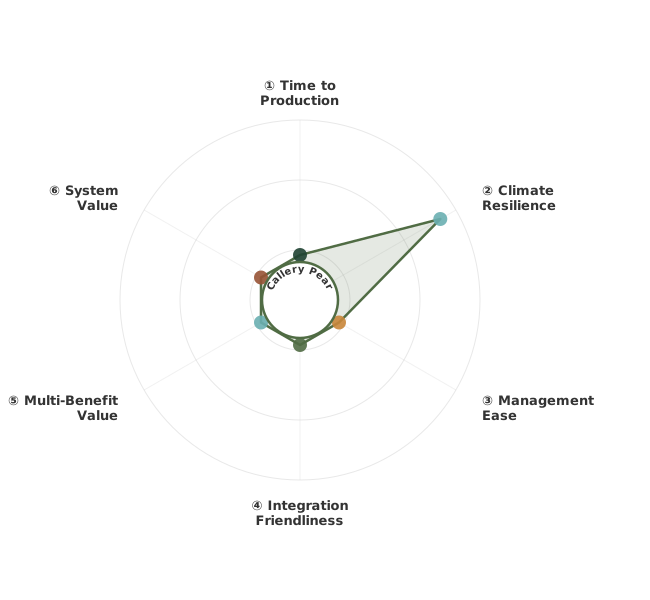
Time to Production: Slow (5+ years) - Primarily valued for its ornamental qualities, Callery pear's fruit production is secondary and slow, making it less suited for systems prioritizing rapid food yields.

Value Streams

  • Fruit/nut harvest

Know the Debate

  • Callery pear offers long-term carbon sequestration and windbreak benefits.
  • It is also an aggressive invasive species displacing natives.
  • Management must prevent spread, prioritize suited climates, or use alternatives.
1

Climate Suitability Assessment

Will this plant thrive in your climate?

IDEALLY SUITED

Köppen Zone: Cfa (Humid Subtropical), Csa (Hot-Summer Mediterranean), Csb (Warm-Summer Mediterranean), Cwa (Monsoon-Influenced Humid Subtropical), Dfa (Hot-Summer Continental), Dfb (Warm-Summer Continental)
USDA Zone: 6a, 7a, 8a, 9a, 10a

Callery Pear performs optimally in regions with mild winters and long, warm growing seasons, characterized by USDA zones 7a-8b, and Köppen zones Cfa. These conditions provide sufficient winter chilling for reliable fruit set and extended periods for vegetative growth and fruit maturation, typically yielding 2-3 harvestable crops annually. Establishment success is high (>85%) with minimal management beyond addressing its significant invasive potential. Minimal protection is required, and multi-year productivity is generally reliable, though susceptible to fire blight in humid conditions. The primary concern in these zones is its aggressive invasive nature, outcompeting native flora and altering ecosystem structure, necessitating strict control measures and careful site selection. While it can produce fruit, its ecological impact often outweighs its agricultural benefit in these highly suitable climates.

ADEQUATE

Köppen Zone: Af (Tropical Rainforest), Am (Tropical Monsoon), Aw (Tropical Savanna), BSk (Cold Semi-Arid (Steppe)), Cfb (Oceanic (Maritime Temperate)), Cwb (Subtropical Highland)
USDA Zone: 5a, 5b, 11a, 12a
Australian Zone: temperate, subtropical
EU Climate Region: atlantic, continental

Callery Pear is adequately suited to regions with moderate temperature fluctuations and a balanced growing season, encompassing USDA zones 5b-6b and 9a-10b, Köppen zones Cfb, Dfa, Dfb, Australian subtropical and temperate zones, and EU Atlantic and continental regions. These areas offer a reasonable chance of perennial survival and some fruit production, though consistency may vary. Growing seasons are generally sufficient (150-200 frost-free days), but winter cold in some zones (e.g., 5b, 6a) can cause dieback, and summer heat in others (e.g., 9a-10b) can lead to stress and reduced fruit quality without supplemental irrigation. Establishment success ranges from 70-85% with proper timing. Standard management is required, including monitoring for invasive spread, which is a moderate to high concern in these zones. Economically viable with normal inputs, but fruit yield and quality can be inconsistent, and its invasive tendencies necessitate careful consideration and management.

NOT RECOMMENDED

Köppen Zone: ET (Tundra), BSh (Hot Semi-Arid (Steppe)), BWh (Hot Desert), BWk (Cold Desert), Dfc (Subarctic), Dwa (Monsoon-Influenced Hot-Summer Continental)
USDA Zone: 2a, 3a, 3b, 4a

Callery Pear is not recommended for cultivation in zones with extreme temperature variations or very short growing seasons, including USDA zones 3a-5a, Köppen zones Csa, Csb, Dwa, Dwb, and the Australian subtropical and EU continental regions. In cold zones (USDA 3a-5a, Köppen Dwb), extreme winter temperatures (-40°F to -15°F) cause consistent winter kill, preventing perennial survival and any meaningful fruit production, making it technically possible only as a risky annual. In Mediterranean and dry continental zones (Köppen Csa, Csb, Dwa), hot, dry summers and insufficient winter chilling lead to poor establishment (<70% success), unreliable fruiting, and increased susceptibility to stress, requiring intensive irrigation and management. Invasive potential remains a concern even in less suitable climates. The high management costs, unreliable productivity, and ecological risks (invasiveness) make it an economically and practically questionable choice, with superior alternatives available for specialty fruit production in these challenging environments.

Better alternatives for these "not recommended" zones: Haskap (Lonicera caerulea) (extremely cold-hardy berry, thrives in Zone 3), Aronia (Aronia melanocarpa) (cold-hardy shrub with edible berries, tolerates harsh conditions), Fig (Ficus carica) (drought-tolerant fruit tree adapted to Mediterranean climates, provides edible fruit), Pomegranate (Punica granatum) (highly drought-tolerant, thrives in hot, dry conditions, produces edible fruit)

Note: Zones listed above represent climates where this plant can produce reliably with reasonable management. Climate zones not mentioned would require intensive climate modification (greenhouses, extensive infrastructure) and are not economically viable for regenerative agriculture purposes.

2

Soil Suitability Assessment

Which soil types work best for this plant?

IDEALLY SUITED

Loam Soil

This plant thrives in these soil types without requiring amendments or remediation. Natural soil conditions support optimal growth and productivity.

ADEQUATE

Clay Soil, Rich Soil, Rocky Soil, Sandy Soil

This plant performs acceptably in these soil types with moderate, manageable remediation such as pH adjustment, compost addition, or drainage improvement. The required amendments are practical and cost-effective for regenerative agriculture.

NOT RECOMMENDED

Acidic Soil, Alkaline Soil, Desert Soil, Saline Soil, Wet Soil

Growing this plant in these soil types would require impractical remediation such as complete soil replacement, extensive amendments, or cost-prohibitive infrastructure. These conditions are not economically viable for regenerative agriculture.

Note: Soil suitability assessments focus on remediation requirements. "Ideally Suited" means the plant generally thrives without the need for substantial amendments, "Adequate" means manageable remediation (lime, compost, mulch), and "Not Recommended" means impractical soil changes would be required. Climate factors like rainfall and temperature also influence success.

3

Seasonal Considerations

Planting timing, growth duration, and harvest windows

Establishing callery pear trees is best achieved during their dormant season, typically in late fall or early spring before new growth begins. For bare-root stock, planting in late fall allows roots to establish before winter, while early spring planting is ideal after the ground thaws and before bud break. Container-grown trees offer more flexibility and can be planted throughout the active growing season, though watering needs will be higher.

Expect a patient journey with this perennial. Full establishment, where the tree can withstand typical stresses and begin vigorous growth, usually takes two to three years. While ornamental varieties are not primarily grown for fruit, if producing for fruit, expect a first small harvest in four to seven years, with full production taking closer to seven to ten years. These trees are long-lived, offering decades of productivity.

Seasonal management focuses on supporting this multi-year growth. Pruning is best undertaken during the dormant season, late winter or early spring before sap flow intensifies, to shape the tree and remove any crossing branches. Bloom occurs in early spring, a spectacular display followed by fruit set if pollination is adequate. The harvest season for fruit, if applicable, is typically in the fall, before the onset of winter dormancy. Observing the tree’s winter dormancy is crucial, as it signals readiness for the next growth cycle.

4

System Role & Multi-Benefit Value

Functional roles, integration strategies, and stacked benefits

Functional Role

Total System Value

The multi-benefit analysis for Callery pear in regenerative systems is complex due to its classification as an invasive species in many areas (Excerpt 2). While it was initially introduced for its ornamental value and disease resistance (Excerpt 4), its aggressive naturalization and displacement of native species pose significant ecological threats. Its ability to cross-pollinate with other pear trees can lead to the production of viable seeds dispersed by birds, exacerbating its spread (Excerpt 4). Direct harvest value is limited by its unpleasant odor and tendency to produce small, often unpalatable fruit. System enhancement could theoretically include providing habitat or acting as a hardy nurse plant, but this is overshadowed by its invasive nature. Ecosystem services are also negated by its negative impact on native biodiversity and habitat. Risk diversification is minimal, as its invasive potential represents a significant farm and landscape risk. Therefore, integration should be approached with extreme caution, prioritizing its use as a rootstock for cultivated varieties or in highly contained settings, if at all.

Integration Characteristics

Multi-Benefit Value: Not Recommended - While offering ornamental appeal, its potential invasiveness limits broader ecosystem contributions; focus on enhancing soil health through compost and mulch integration.

Integration Friendliness: Not Recommended - Due to its potential invasiveness and primary use as rootstock, careful consideration of its ecological role is needed for integration, prioritizing native alternatives where possible.

5

Management & Care Requirements

Integration guidance, maintenance needs, and care practices

How to Integrate This Plant

Callery pear, despite its invasive potential and regulatory status in some regions, can theoretically be integrated into specific regenerative systems with extreme caution and careful management. Its primary roles would be as a component in a multi-strata planting for wildlife habitat or as a potential rootstock for more desirable pear varieties, leveraging its disease resistance (Excerpt 1). Compatible practices would be limited to highly controlled environments like food forests or hedgerows where its spread can be meticulously managed to prevent invasiveness. Direct integration into silvopasture or alley cropping is risky due to its invasive tendencies. The timeline to contribution for direct benefits like fruit would be moderate, with significant contributions from established trees. Multi-benefit stacking would focus on its potential to support wildlife and act as a hardy nurse plant, but this must be weighed against its significant ecological risks. Its value is primarily as a potential rootstock or a highly managed component for specific ecological functions, rather than a primary production species.

Integration Practices & Management

The provided knowledge base offers limited insight into how regenerative farmers integrate Pyrus calleryana (Callery pear). The sources primarily address its use as rootstock for European pears and its status as an invasive species in Illinois, where it is now regulated and illegal to plant. Information on regenerative agricultural practices such as establishment methods, integration with grazing, termination strategies, or management considerations for Pyrus calleryana is absent. The sources do not detail seeding rates, timing, companion planting, tillage practices, mob grazing, rotational systems, rest periods, natural winterkill, crimping, mowing, fertility needs, competition management, succession planning, relay cropping, intercropping, or rotation sequences. Consequently, the knowledge base does not offer practical farmer experiences or insights regarding the integration of Pyrus calleryana into regenerative farming systems. The focus remains on its potential as rootstock and its invasive nature, rather than its role in regenerative agriculture.

Management Profile

Maintenance Intensity: Ideally Suited - Its inherent hardiness and disease resistance mean Callery pear thrives with minimal intervention, integrating seamlessly into established regenerative systems by leveraging natural resilience.

Pest Disease Pressure: Ideally Suited - Callery pear exhibits exceptional resilience to pests and diseases, thriving in varied environments with minimal external support due to its robust natural defenses.

Time To Production: Not Recommended - Primarily valued for its ornamental qualities, Callery pear's fruit production is secondary and slow, making it less suited for systems prioritizing rapid food yields.

6

Economics & Value Streams

Direct harvest, system benefits, ecosystem services, and risk diversification

Comprehensive economic analysis including direct harvest value, system enhancement contributions, ecosystem services, value timeline, and risk diversification strategies.

Per-Tree Production Economics

Metric Value
Establishment Cost $15-25
Years to First Harvest 4-6 years
Annual Maintenance $5-10
Yield 40-80 lbs/year 18-36 kg/year
Market Price $0-1/lb $1-2/kg
Productive Lifespan 20-30 years
Net Annual Return* $-11 to $74/year

Values shown per mature tree, not per acre. In regenerative systems, trees are integrated at low densities across diverse landscapes. Establishment costs spread over the lifespan of the tree. Early years have costs but no revenue.

* Net Annual Return = (Yield × Market Price) − (Amortized Establishment Cost + Annual Maintenance). This return is realized only at/after first harvest; early years have costs but no revenue. Range shows worst case to best case scenarios.

System Enhancement Value

Beyond harvest: limited system integration for niche specialty products

System Contributions

While Callery pear (Pyrus calleryana) is primarily recognized for its role as a rootstock for European and Asian pears, its historical and potential medicinal uses offer a system benefit beyond direct harvest. Ancient texts suggest pears possess astringent and binding qualities, useful for treating intestinal discharges and in poultices. Gerard noted their utility for dysentery and bloody flux, as well as cooling and binding properties for wounds. Culpepper further supported their use for wounds and digestive issues. Historically, wild pears were even considered capable of neutralizing mushroom poisoning when boiled together. In an integrated system, these properties could translate to on-farm applications for animal health, potentially reducing reliance on external veterinary products, or for use in natural wound care for livestock. Furthermore, Callery pear's prolific fruiting, even if not for direct human consumption, can provide a food source for wildlife, contributing to biodiversity within the farm ecosystem.

Ecosystem Service Contributions

Environmental contributions: carbon, pollinators, wildlife, and water

  • Carbon Sequestration: As a woody perennial, Callery pear sequesters carbon in its biomass (trunk, branches, roots) and contributes to soil organic matter over time. Its growth rate and longevity will determine the extent of carbon storage.
  • Pollinator Support: Medium. Callery pears produce flowers that can attract pollinators, although their primary value is often as a rootstock and not for fruit production for human consumption. The abundant flowers can provide a nectar and pollen source, especially in early spring.
  • Wildlife Habitat: Moderate. The small, often unpalatable fruits can serve as a food source for birds and small mammals. Mature trees provide nesting and roosting sites. However, its invasive potential in some regions can negatively impact native wildlife by outcompeting native flora.
  • Water Quality: Not applicable

Value Timeline: Specialty Product Development

When you'll see results: varies widely by specialty product type

Years 1-2

Establishment of root system for potential grafting; minor soil stabilization; initial flowering for pollinators and wildlife.

Years 3-5

Development of a more robust rootstock for pear grafting; increased flowering and fruit production for wildlife; potential medicinal applications from leaves or fruit if harvested.

Years 10-20

Mature tree providing substantial pollinator support and wildlife habitat; potential for significant carbon sequestration; established root structure for robust pear tree growth.

20+ Years

Continued long-term ecosystem services (carbon sequestration, wildlife habitat); potential for use of mature wood if managed, though not a primary timber species.

Farm Risk Reduction

How this reduces farm risk: premium pricing but niche market dependency

  • Multiple Revenue Streams: Rootstock for high-value fruit production (European and Asian pears); potential for on-farm medicinal applications; wildlife support services; potential for sale as ornamental (though increasingly restricted due to invasive status).
  • Temporal Income Spread: Value is spread through ongoing ecosystem services (pollinator support, wildlife habitat, carbon sequestration) and the potential for future harvest of grafted fruit. Rootstock value is realized over the long term as grafted trees mature.
  • Market Risk Hedge: Diversifies farm revenue by supporting the production of specialty fruits. Its hardiness and use as a rootstock can mitigate risks associated with less resilient pear varieties. Its potential medicinal uses offer an alternative, localized value stream. However, its invasive status in some regions presents a significant regulatory and ecological risk that must be managed.
7

Regenerative Suitability Details

Comprehensive trait ratings for system integration assessment

Comparative ratings for this plant across key regenerative agriculture traits.

Trait Suitability Explanation
Drought Tolerance Adequate Callery pear demonstrates moderate resilience to dry periods, thriving with thoughtful water management and mulching to enhance soil moisture retention and overall plant vitality.
Establishment Ease Adequate This species readily establishes, demonstrating good early vigor and adapting to diverse soil conditions and moisture regimes through proactive fertility management.
Time To Production Not Recommended Primarily valued for its ornamental qualities, Callery pear's fruit production is secondary and slow, making it less suited for systems prioritizing rapid food yields.
Multi Benefit Value Not Recommended While offering ornamental appeal, its potential invasiveness limits broader ecosystem contributions; focus on enhancing soil health through compost and mulch integration.
Climate Adaptability Ideally Suited Highly adaptable across a broad range of climates, Callery pear thrives in various soil conditions and exhibits strong natural resilience, minimizing the need for external interventions.
Hardiness Zone Range Ideally Suited Exceptionally resilient across zones 4-9, this species integrates well into diverse landscapes by tolerating a wide spectrum of soil and climatic conditions.
Maintenance Intensity Ideally Suited Its inherent hardiness and disease resistance mean Callery pear thrives with minimal intervention, integrating seamlessly into established regenerative systems by leveraging natural resilience.
Pest Disease Pressure Ideally Suited Callery pear exhibits exceptional resilience to pests and diseases, thriving in varied environments with minimal external support due to its robust natural defenses.
Integration Friendliness Not Recommended Due to its potential invasiveness and primary use as rootstock, careful consideration of its ecological role is needed for integration, prioritizing native alternatives where possible.

Comparative System: Ratings compare plants within their economic category (e.g., cover crop nitrogen fixation compared to other cover crops, not to all plants). Individual farm conditions and management practices significantly influence actual performance.

8

Know the Debate

The Callery pear's role in regenerative agriculture is highly debated, presenting a stark contrast between its potential as a resilient, long-term ...

The Callery pear's role in regenerative agriculture is highly debated, presenting a stark contrast between its potential as a resilient, long-term asset and its proven status as an aggressive invasive species. While some perspectives highlight its adaptability to various climates, deep root systems for soil health, and utility as a windbreak or biomass producer, others emphasize its ecological destructiveness, outcompeting native species and degrading habitats, particularly when wild or unmanaged. Effective integration, if pursued, hinges on rigorous site selection, climate suitability, and meticulous management to prevent its invasive spread, often favoring grafted varieties or specific agroforestry applications over widespread planting.

Can Callery pear be used regeneratively?

Potential asset for soil & carbon (managed)

When managed carefully, Pyrus calleryana can offer significant long-term benefits including carbon sequestration, improved soil health through deep root systems, and effective windbreak services. Its resilience to varied conditions and potential for biomass production makes it a strategic choice for certain agroforestry and silvopasture applications.

Sources behind this view

Sources behind this view

Videos & Podcasts
  • Select broadly adapted perennials like mulberry and false indigo for climate resilience. Increase crop diversity and build soil organic matter with rainwater harvesting to create a robust system against changing weather patterns.
    Thumbnail for Edible Perennials and Broadscale Permaculture
  • Chill hour requirements are shifting, favoring lower-chill varieties in milder climates. Wind events necessitate windbreaks and attention to graft union strength and trellis capacity; attempt to straighten uprooted trees. Organic orchards face pest, disease, vertebrate, and weed pressures. Strategies include soil pathogen management, airflow, winter sanitation, insect monitoring, fencing for deer, and pre-establishment weed control with mulches/cover crops. Diversification and choosing adapted crops are key for long-term resilience.

    Thumbnail for Webinar: Building Resilience With Perennial Based Production Systems
Research
  • Assessing temperature-based adaptation limits to climate change of temperate perennial fruit crops. (opens in new window)

    This study found: A global study looked at how changing temperatures due to climate change will affect where five key fruit crops – apples, cherries, almonds, olives, and grapes – can be grown. These perennial trees need specific winter cold periods to produce fruit. The research used climate models to predict future growing areas. By the end of the century, under a high-emission scenario, growing areas in the Southern Hemisphere could shrink by over 40%, while areas in the Northern Hemisphere might expand significantly. A lower-emission scenario shows smaller but still notable shifts. Essentially, suitable growing regions are moving towards the poles. For the Southern Hemisphere, there's less room to move to higher latitudes. Farmers and breeders can adapt by selecting or developing varieties that need less winter chill, choosing appropriate cultivars, and using techniques like shade netting, sprinklers for cooling, and precise irrigation to manage heat stress.

From the Web
  • Cultivating Asian pears requires specific handling due to their delicate skin, early blooming, and heavy fruiting, necessitating hand thinning. Rootstock selection and regional climate significantly impact disease resistance, particularly to fire blight and Pseudomonas.

Aggressive invasive species (unmanaged)

Callery pear is highly invasive, with prolific seeding and rapid spread displacing native vegetation and degrading habitats. Its aggressive nature makes it a significant ecological threat, rendering it unsuitable for integration into most regenerative systems due to its destructive impact on biodiversity and ecosystem function.

Sources behind this view

Sources behind this view

Videos & Podcasts
  • Chill hour requirements are shifting, favoring lower-chill varieties in milder climates. Wind events necessitate windbreaks and attention to graft union strength and trellis capacity; attempt to straighten uprooted trees. Organic orchards face pest, disease, vertebrate, and weed pressures. Strategies include soil pathogen management, airflow, winter sanitation, insect monitoring, fencing for deer, and pre-establishment weed control with mulches/cover crops. Diversification and choosing adapted crops are key for long-term resilience.

    Thumbnail for Webinar: Building Resilience With Perennial Based Production Systems
  • Advises against planting apples in frost pockets due to late frost damage; recommends nitrogen-fixing goji berries, nut trees (hazelnuts), mulberries, elderberries, and kiwis for specific microclimates and soil conditions in a permaculture orchard setting.

    Thumbnail for The Orchard Plan to Feed (yet to exist) grand Children
Research
  • Modeling the Potential Distribution Patterns of the Invasive Plant Species Phytolacca americana in China in Response to Climate Change (opens in new window)

    This study found: Phytolacca americana, introduced to China in the 20th century for its medicinal properties, has posed a significant ecological and agricultural challenge. Its prolific fruit production, high reproductive coefficient, adaptability, and toxic roots and fruits have led to the formation of monoculture communities, reducing native species diversity and posing threats to agriculture, human and animal health, and local ecosystems. Understanding its potential distribution patterns at a regional scale and its response to climate change is essential for effective monitoring, management, and control. In this study, we utilized the Maxent model to simulate potential habitat areas of P. americana across three timeframes (current, 2050s, and 2070s) under three climate change scenarios (SSP126, SSP245, and SSP585). Leveraging data from 556 P. americana sites across China, we employed ROC curves to assess the prediction accuracy. Our findings highlight key environmental factors influencing P. americana’s geographical distribution, including the driest month’s precipitation, the coldest month’s minimum temperature, the wettest month’s precipitation, isothermality, and temperature annual range. Under current climate conditions, P. americana potentially inhabits 280.26 × 10⁴ km2 in China, with a concentration in 27 provinces and cities within the Yangtze River basin and its southern regions. While future climate change scenarios do not drastically alter the total suitable area, the proportions of high and low-suitability areas decrease over time, shifting towards moderate suitability. Specifically, in the SSP126 scenario, the centroid of the predicted suitable area shifts northeastward and then southwestward. In contrast, in the SSP245 and SSP585 scenarios, the centroid shifts northward.

  • Alternative Hosts of ‘<i>Candidatus</i> Phytoplasma pruni’ Identified Through Surveys and Vector Gut Content Analysis (opens in new window)

    This study found: A three-year study in the U.S. Pacific Northwest looked at what other plants can carry the X-disease pathogen that harms cherries and stone fruits. Researchers found 21 different plant species, including common weeds like dandelions, mallows, and clovers, can host the pathogen. These plants were also found in the stomachs of the leafhoppers that spread the disease. While the pathogen levels in these 'alternative hosts' were usually low, they were present throughout the growing season. The study suggests that managing these weeds around orchards, along with removing infected trees, can help slow the spread of X-disease.

Making Sense of the Differences

The dichotomy between Pyrus calleryana's potential as a resilient agroforestry asset and its documented invasive status presents a significant decision challenge. Its utility hinges on extremely careful site selection, favoring regions where it is not invasive and can be managed for specific benefits like windbreaks or biomass, possibly with grafted varieties. Regions with suitable climates and adequate rainfall may see successful integration if rigorous management prevents escape and spread, focusing on controlled environments like silvopasture or windbreaks. However, in many temperate and humid regions where it has naturalized aggressively, its use is actively discouraged due to severe ecological damage. Farmers must prioritize native alternatives or carefully assess local invasiveness status and containment feasibility before considering Callery pear integration.

9

Learn More

Why farmers use this plant and additional resources

Why Regenerative Farmers Use This Plant

Pyrus calleryana, commonly known as the Callery pear or Bradford pear, offers significant long-term ecological and economic benefits within regenerative agriculture systems, particularly when managed for its perennial value. While often recognized for its ornamental qualities, its woody structure and deep root system contribute substantially to soil health and ecosystem services. At maturity, these trees can sequester an estimated 2-5 tons of CO2e per acre annually, playing a vital role in climate change mitigation. Their robust perennial nature means they establish a lasting presence, contributing to multi-decade economic returns through biomass production, potential fruit harvesting (though often requiring grafting for desirable fruit), and by providing essential habitat and microclimate regulation. The accumulation of asset value through tree growth and ecosystem services makes Pyrus calleryana a strategic choice for long-term farm resilience.

Beyond direct carbon sequestration, Pyrus calleryana provides critical canopy services that enhance farm biodiversity and productivity. The dense foliage offers valuable shade regulation, moderating soil temperatures and reducing water evaporation, which is particularly beneficial for understory crops or livestock during hot periods. As a windbreak, mature stands can significantly reduce wind speeds across fields, protecting soil from erosion and mitigating crop damage. This windbreak effect can reduce wind speed by up to 50% for a distance of 10-20 times their height, contributing to a more stable microclimate, fostering a more favorable environment for beneficial insects and pollinators. The structural integrity of these trees, with root systems extending 6-15+ feet (1.8-4.5+ m) deep, actively combats soil erosion and improves water infiltration, enhancing watershed health and reducing runoff.

The integration of Pyrus calleryana into multi-story farming systems unlocks synergistic benefits. While not a nitrogen fixer, its biomass contributes organic matter to the soil upon leaf drop, feeding soil microbial communities and enhancing soil structure over time. Its presence can support a diverse understory of beneficial plants and insects, contributing to natural pest control mechanisms. By providing habitat and food sources, these trees bolster populations of pollinators and beneficial arthropods, which are crucial for the health of surrounding agricultural ecosystems. The long-term, stable presence of these trees also contributes to increased biodiversity across the farm landscape, creating a more resilient and self-sustaining agroecosystem. While the fruit of the wild Callery pear is small and often astringent, it can serve as a valuable late-season food source for wildlife, supporting local ecosystems.

The long-term economic returns are realized not just through potential grafted fruit production but also through the reduction of losses from wind damage, improved water management, and the creation of a more stable, biodiverse farming environment that requires fewer external inputs over time. Their asset value as mature trees contributes to land equity and provides a sustainable legacy for future generations.

10

How to Integrate This Plant

Practical guidance for regenerative systems

Establishing Pyrus calleryana for regenerative agriculture purposes involves thoughtful planning to maximize its long-term benefits.

Planting: Consider starting with bare-root saplings or grafted trees, typically planted in early spring or late fall when dormant. For windbreak or hedgerow applications, planting density can range from one tree every 10-20 ft (3-6 m) in single rows, or double rows spaced 8-12 ft (2.4-3.6 m) apart with trees staggered at 10-20 ft (3-6 m) intervals to maximize density. For alley cropping or silvopasture, rows should be 30-40 ft (9-12 m) apart to allow for equipment access and intercropping. Seeding directly is less common for Pyrus calleryana as it often results in variable fruit quality and longer time to maturity; however, if undertaken for rootstock or wilder applications, seed should be sown at a depth of 0.5-1 inch (1.3-2.5 cm) in a prepared seedbed.

The optimal planting depth is crucial, ensuring the graft union (if applicable) remains above the soil line, generally 1-2 inches (2.5-5 cm) deeper than it was in the nursery. For container-grown trees, plant at the same depth as they were in the container. The root flare should be at or slightly above soil level, with adequate space for root expansion.

Establishment Phase (Years 1-3): Consistent moisture is key, with approximately 1 inch (2.5 cm) of water per week, either from rainfall or irrigation, being ideal, especially during dry periods. Initial soil preparation and the use of compost or well-rotted manure can significantly accelerate establishment. Deer and browse protection, such as tree guards, are often necessary during the first 3-5 years to prevent damage to young trees.

Management Practices: Management practices focus on fostering robust, long-term growth and ecosystem integration. While Callery pears are relatively low-maintenance once established, annual pruning can be beneficial to shape the tree, remove dead or diseased wood, and manage canopy density for light penetration if intercropping is planned. For grafted trees, pruning is essential for fruit production. Pruning is essential for developing a strong structure, encouraging light penetration for understory plants, and managing canopy size. Annual pruning to remove crossing branches, deadwood, and to establish a central leader is recommended.

Fertility should be guided by biological principles: incorporate compost annually around the base of the tree, and consider planting nitrogen-fixing ground cover like clover or vetch beneath the canopy by year 2-3 to enhance soil fertility and provide forage.

Category-Specific Integration: Trees typically reach 15-30 ft (4.5-9 m) in height at full maturity, which can take 5-15 years depending on conditions and rootstock. First fruit production, if grafted to desirable varieties, may occur around year 4-8, with full production realized by year 10-15. In alley cropping systems, rows spaced 30-40 ft (9-12 m) apart allow for intercropping of annuals or grazing livestock in the alleys during the establishment and pre-production phases. Within 2-3 years of establishment, nitrogen-fixing ground covers can be planted beneath the canopy. Measurable soil carbon increases are generally observed by year 5-7 as the tree's root system develops and biomass accumulates. Long-term infrastructure considerations include establishing efficient irrigation for the initial establishment years and robust physical protection against wildlife damage.

Regional Adaptations: Regional success stories highlight the adaptability of Pyrus calleryana. In the humid subtropical regions of the Southeastern United States (USDA Zones 7-8), it has been utilized in agroforestry systems for windbreaks and habitat corridors, establishing within 2-3 years and providing significant wind protection by year 5. In temperate European climates (RHS H5-H7), its resilience to cold and variable weather makes it suitable for hedgerows and silvopasture designs, offering shade and shelter for livestock. In parts of Australia with similar temperate oceanic climates (Zones 2-3), its drought tolerance once established makes it a valuable component in dryland farming systems for erosion control and soil improvement, and for revegetation projects and shelterbelts in drier agricultural regions. In the corn and soybean belts of the US Midwest, Pyrus calleryana can be incorporated into windbreaks or buffer strips along field edges, providing habitat and reducing wind erosion, with establishment timed for early spring. In regions with colder winters, such as parts of Canada (Zones 3a-5a), their cold hardiness makes them a viable option for windbreaks in grain farming systems, requiring careful site selection to avoid frost pockets during establishment. In Brazilian coffee agroforestry systems, Pyrus calleryana can be planted as a shade tree component, offering dappled light to coffee plants and contributing to the overall biodiversity of the system, with establishment timed to coincide with the rainy season. In regions with more intensive agriculture, such as parts of Brazil, it can be incorporated into agroforestry systems to provide shade and wind protection for coffee or other sensitive crops.

View Full Document (Printable single-page version)