Regenerative Quick Profile

All recommendations assume integrated, regenerative practices—not conventional inputs.

Climate & Soil Fit

Climate: Tropical Rainforest, Tropical Monsoon, Tropical Savanna, Hot Semi-Arid (Steppe), Cold Semi-Arid (Steppe), Hot Desert, Cold Desert, Humid Subtropical, Oceanic (Maritime Temperate), Hot-Summer Mediterranean, Warm-Summer Mediterranean, Monsoon-Influenced Humid Subtropical, Subtropical Highland, Hot-Summer Continental, Warm-Summer Continental, Subarctic, Monsoon-Influenced Hot-Summer Continental, Tundra

Zones: USDA 4-8, Australian Zones 3-5

Optimal Soil: Acidic Soil

System Role & Functions

Primary: Cash Crop With Services

Secondary: Pollinator Support, Soil Remediation

Key Benefits: Multi-benefit value, Climate adaptable

Management Level

Experience: Advanced

Maintenance: Moderate maintenance - System integration through consistent mulching and robust soil fertility management supports healthy growth, requiring ongoing observation for beneficial insect activity and natural disease suppression.

Value Streams

  • Vegetable/specialty crop harvest
  • Pollinator habitat and support
1

Climate Suitability Assessment

Will this plant thrive in your climate?

IDEALLY SUITED

Köppen Zone: Cfa (Humid Subtropical), Dfb (Warm-Summer Continental)
USDA Zone: 6a, 7a, 8a, 9a
Australian Zone: subtropical

Rabbiteye blueberries perform exceptionally well in climates characterized by hot, humid summers and mild winters, with a long growing season and adequate rainfall (40-60 inches annually). These conditions are met in Köppen Cfa zones, USDA zones 6b through 9b, Australian subtropical regions, and parts of USDA 10a/10b and Australian temperate zones where conditions align. Optimal temperatures during the growing season promote vigorous vegetative growth and fruit development, leading to high yields and excellent fruit quality. Minimal winter protection is required, and establishment success is very high (>85%). The primary functions of cash crop and pollinator support are reliably met. Soil acidity and excellent drainage are paramount for success, but with these met, multi-year productivity is assured with standard management practices. These zones offer the most economically viable and least management-intensive environments for rabbiteye blueberry cultivation.

ADEQUATE

Köppen Zone: Cfb (Oceanic (Maritime Temperate)), Csa (Hot-Summer Mediterranean), Csb (Warm-Summer Mediterranean), Cwa (Monsoon-Influenced Humid Subtropical), Cwb (Subtropical Highland), Dfa (Hot-Summer Continental)
USDA Zone: 5b, 10a
Australian Zone: temperate
EU Climate Region: atlantic

Rabbiteye blueberries can be grown successfully in climates with adequate growing seasons and manageable temperature extremes, though some limitations exist. This includes Köppen Cfb zones, USDA zones 5b-6a and 10a-10b, and Australian temperate regions. While these zones generally provide sufficient warmth and moisture, they may experience slightly cooler summers impacting ripening speed, or require supplemental irrigation during dry periods. Winter chilling may be insufficient in the warmer end of this range (USDA 10a/10b), potentially reducing fruit set. Establishment success is good (70-85%) with proper timing and variety selection. Standard management, including ensuring acidic, well-drained soils and supplemental watering, is necessary. Yields may be slightly lower than in 'ideally suited' zones, and stand persistence might be reduced without careful management. These zones offer economically viable production with normal inputs and standard management.

NOT RECOMMENDED

Köppen Zone: Af (Tropical Rainforest), Am (Tropical Monsoon), Aw (Tropical Savanna), ET (Tundra), BSh (Hot Semi-Arid (Steppe)), BSk (Cold Semi-Arid (Steppe)), BWh (Hot Desert), BWk (Cold Desert), Dfc (Subarctic), Dwa (Monsoon-Influenced Hot-Summer Continental)
USDA Zone: 2a, 3a, 3b, 4a, 5a, 11a, 12a
EU Climate Region: continental

Cultivation of rabbiteye blueberries is not recommended in climates with extreme winter cold, very short growing seasons, or prolonged summer drought. This includes Köppen Csa, Csb, Dfa, Dfb, Dwa, Dwb zones, USDA zones 3a-5a, and EU continental regions. In cold zones (USDA 3a-5a, EU continental), winter temperatures (-15°F/-26°C and below) cause severe damage or mortality, making perennial survival highly improbable and establishment risky (<70% success). In dry Mediterranean climates (Köppen Csa/Csb), summer drought necessitates extensive and costly irrigation infrastructure, and heat stress can reduce yields by 30-50%. The growing season in many of these zones is also too short for adequate fruit development. High management costs, unreliable yields, and low establishment success make these zones economically and practically unviable for rabbiteye blueberries. Alternative, more cold-hardy or drought-tolerant berry crops are strongly advised.

Better alternatives for these "not recommended" zones: Elderberry (cold-hardy shrub with edible berries, more tolerant of winter extremes), Aronia (Chokeberry) (extremely cold-hardy and adaptable berry crop), Serviceberry (native shrub with edible berries, very cold-tolerant), Fig (drought-tolerant fruit crop adapted to Mediterranean climates)

Note: Zones listed above represent climates where this plant can produce reliably with reasonable management. Climate zones not mentioned would require intensive climate modification (greenhouses, extensive infrastructure) and are not economically viable for regenerative agriculture purposes.

2

Soil Suitability Assessment

Which soil types work best for this plant?

IDEALLY SUITED

Acidic Soil

This plant thrives in these soil types without requiring amendments or remediation. Natural soil conditions support optimal growth and productivity.

ADEQUATE

Clay Soil, Loam Soil, Rich Soil, Rocky Soil, Sandy Soil

This plant performs acceptably in these soil types with moderate, manageable remediation such as pH adjustment, compost addition, or drainage improvement. The required amendments are practical and cost-effective for regenerative agriculture.

NOT RECOMMENDED

Alkaline Soil, Desert Soil, Saline Soil, Wet Soil

Growing this plant in these soil types would require impractical remediation such as complete soil replacement, extensive amendments, or cost-prohibitive infrastructure. These conditions are not economically viable for regenerative agriculture.

Note: Soil suitability assessments focus on remediation requirements. "Ideally Suited" means the plant generally thrives without the need for substantial amendments, "Adequate" means manageable remediation (lime, compost, mulch), and "Not Recommended" means impractical soil changes would be required. Climate factors like rainfall and temperature also influence success.

3

Seasonal Considerations

Planting timing, growth duration, and harvest windows

For highbush blueberries, successful establishment is key. Begin by starting seeds indoors in late winter, aiming for transplanting outdoors after the last expected frost when soil temperatures consistently reach at least 60°F (15°C). Direct seeding is generally not recommended for this perennial fruit. Blueberries require several years before reaching full production, so patience is a virtue.

As plants mature, expect a significant harvest window spanning the mid to late summer months. While not an annual in the typical sense, understanding its perennial cycle is crucial for consistent yields. Blueberries exhibit good cold tolerance, allowing them to overwinter effectively in your climate zones, entering dormancy during the cooler periods. They prefer to be protected from extreme heat during their establishment phase. There are no practical succession planting intervals for blueberries due to their perennial nature. Focus on providing optimal conditions for long-term health and fruit production.

4

System Role & Multi-Benefit Value

Functional roles, integration strategies, and stacked benefits

Functional Role

Integration Characteristics

Multi-Benefit Value: Ideally Suited - This plant serves as a valuable food source and habitat for beneficial wildlife, while its presence contributes to ground cover and soil health in an integrated system.

5

Economics & Value Streams

Direct harvest, system benefits, ecosystem services, and risk diversification

Comprehensive economic analysis including direct harvest value, system enhancement contributions, ecosystem services, value timeline, and risk diversification strategies.

Per-Tree Production Economics

Metric Value
Establishment Cost
Years to First Harvest
Annual Maintenance
Yield
Market Price
Productive Lifespan
Net Annual Return* $-500 to $18500/acre/year

Values shown per mature tree, not per acre. In regenerative systems, trees are integrated at low densities across diverse landscapes. Establishment costs spread over the lifespan of the tree. Early years have costs but no revenue.

* Net Annual Return = (Yield × Market Price) − (Amortized Establishment Cost + Annual Maintenance). This return is realized only at/after first harvest; early years have costs but no revenue. Range shows worst case to best case scenarios.

System Enhancement Value

Beyond harvest: ecosystem services from regenerative cash crop practices

Ecological Service Contributions

Highbush blueberries contribute significantly to farm system value beyond their primary role as a cash crop. Their cultivation in acidic soils, as highlighted by, can indirectly support soil remediation by encouraging specific microbial communities and improving soil structure when organic amendments are used. The practice of using amendments like biochar and compost directly enhances soil organic matter, nutrient availability (Total N, P, K), and microbial activity, contributing to overall soil health and reducing the need for synthetic inputs. Furthermore, blueberries can indirectly support pollinator populations. While one study found that herbaceous floral enhancements did not directly increase wild bee abundance on blueberry flowers, these enhancements did attract greater bee abundance and species richness compared to controls, including more floral specialists. This suggests that the presence of blueberry patches within a diversified farm landscape, especially when integrated with other flowering plants, can contribute to a more robust pollinator community, which benefits other crops on the farm through enhanced pollination services. The acidic soil requirement can also be a niche benefit, allowing for cultivation on land less suitable for other crops.

Ecosystem Service Contributions

Environmental contributions: carbon, pollinators, wildlife, and water

  • Carbon Sequestration: Highbush blueberries are perennial woody shrubs with a moderate growth rate. Their root systems and above-ground biomass contribute to soil organic matter accumulation over time, thus sequestering carbon. The rate of sequestration is dependent on management practices, soil type, and climate, but as a perennial, it offers a consistent, albeit moderate, carbon sink compared to annual crops.
  • Pollinator Support: Medium. While blueberry flowers themselves attract pollinators, the primary benefit may be indirect. Enhancements around blueberry plantings can increase overall bee abundance and species richness, benefiting other crops. The extended bloom period of some blueberry varieties can also provide a food source for pollinators during a critical time.
  • Wildlife Habitat: Moderate. Blueberry bushes provide some cover and nesting sites for small birds and insects. The fruit is also a food source for various wildlife, including birds and small mammals, though this can also present a challenge for commercial harvest. Their perennial nature contributes to habitat stability.
  • Water Quality: Not applicable

Value Timeline: Production & Services

When you'll see results: varies by crop (annual harvest vs. perennial establishment)

Years 1-2

Initial establishment of plants, potential for early erosion control on slopes. Soil amendment applications begin to improve soil structure and microbial activity.

Years 3-5

First significant harvests of blueberries begin, establishing a new income stream. Soil health improvements from amendments become more pronounced. Establishment of consistent pollinator attraction if integrated with other plantings.

Years 10-20

Mature blueberry bushes achieve full production, providing consistent cash crop revenue. Established perennial system contributes to ongoing soil carbon sequestration and habitat provision. Reduced need for intensive soil management due to improved soil health.

20+ Years

Long-term, stable cash crop production. Continued ecosystem service provision (soil health, carbon sequestration, potential for wildlife support). Potential for plant replacement or rejuvenation to maintain productivity and system benefits.

Farm Risk Reduction

How this reduces farm risk: backup income, weather protection, market hedges

  • Multiple Revenue Streams: Primary income from fresh or processed blueberry sales. Potential for value-added products (jams, juices). Indirect economic benefits from enhanced pollination of other farm crops. Reduced input costs over time due to improved soil health.
  • Temporal Income Spread: Annual harvest revenue from a perennial crop. Ongoing ecosystem services (soil health, pollinator support) provide continuous, non-harvest-related value. Diversification of income streams beyond annual crops.
  • Market Risk Hedge: Introduces a perennial cash crop, diversifying farm revenue away from annual market fluctuations. Blueberries can be processed if fresh market demand is low. Their specific soil pH requirements can create a niche market and reduce competition from generalist crops. Improved soil health contributes to drought resilience and reduced reliance on external inputs.
6

Regenerative Suitability Details

Comprehensive trait ratings for system integration assessment

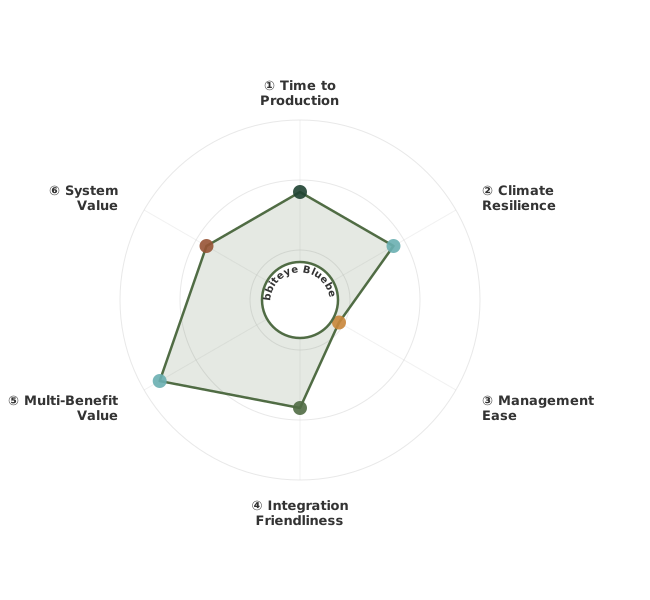
Comparative ratings for this plant across key regenerative agriculture traits.

Trait Suitability Explanation
Season Extension Adequate This hardy perennial shrub contributes to extended harvest windows, with its perennial nature ensuring continued fruiting potential year after year.
Space Efficiency Not Recommended As a substantial shrub, highbush blueberries establish a strong perennial presence, best integrated into dedicated zones within a diverse agroecosystem that accommodates their soil and spatial needs.
Storage Longevity Adequate Freshly harvested berries offer a short-term bounty, with quality best preserved for longer durations through methods like freezing or other preservation techniques.
Yield Reliability Adequate This crop offers reliable yields when supported by thriving soil biology and consistent moisture management, though extreme weather events can influence harvest outcomes.
Establishment Ease Not Recommended Establishing highbush blueberries benefits from nurturing soil health and moisture retention, as young plants thrive in living soil rich in organic matter and consistent moisture.
Multi Benefit Value Ideally Suited This plant serves as a valuable food source and habitat for beneficial wildlife, while its presence contributes to ground cover and soil health in an integrated system.
Climate Adaptability Ideally Suited Rabbiteye Blueberry's documented heat and drought tolerance, along with a lower chilling requirement, make it exceptionally well-suited for warmer climates and resilient to water scarcity.
Maintenance Intensity Adequate System integration through consistent mulching and robust soil fertility management supports healthy growth, requiring ongoing observation for beneficial insect activity and natural disease suppression.
Disease Pest Resistance Adequate While possessing moderate resilience, this plant benefits from a biodiverse system that encourages beneficial predators and promotes healthy soil, which are key to mitigating disease and pest pressures.

Comparative System: Ratings compare plants within their economic category (e.g., cover crop nitrogen fixation compared to other cover crops, not to all plants). Individual farm conditions and management practices significantly influence actual performance.

7

Learn More

Why farmers use this plant and additional resources

Why Regenerative Farmers Use This Plant

Southern blueberry (Vaccinium tenellum or Vaccinium virgatum) is a cornerstone for regenerative systems in warmer temperate and subtropical regions, offering significant long-term ecological and economic benefits as a perennial agroforestry species. Its lower chilling requirement and enhanced heat and drought tolerance make it suitable for climates with milder winters and a wider range of soil types compared to many highbush varieties.

At maturity, these perennial shrubs are capable of sequestering an estimated 2-5 tons of CO2e per acre per year, contributing directly to climate change mitigation and long-term carbon drawdown. Their extensive root systems, often reaching depths of 3-6 feet (0.9-1.8 m), enhance soil structure, improve water infiltration, reduce runoff, and scavenge nutrients effectively. Once established, southern blueberries provide a consistent harvest of nutrient-dense berries, with mature plants yielding 5-15 lbs (2.3-6.8 kg) of high-value fruit per plant annually. This offers a multi-decade economic return and accumulates asset value for the farm, as well-term lifespan can easily exceed 20-30 years.

Integrating southern blueberry into farm systems provides numerous ecological services. As a component of multi-story cropping or agroforestry systems, they can form a mid-story layer, creating microclimates beneficial for understory crops or livestock. Their canopy provides shade regulation, crucial for managing heat stress in companion plants or animals, and can act as a windbreak, reducing soil erosion and protecting more delicate plants. In hedgerow or silvopasture designs, they contribute to habitat for beneficial insects and pollinators, and their dense growth habit can suppress weeds.

The quantitative ecosystem benefits are substantial. Mature bushes provide critical habitat and food sources for a variety of native pollinators, with individual plants supporting hundreds of bee visits during their flowering period. Their presence can increase beneficial insect populations that aid in natural pest control for surrounding crops. The decomposition of their leaf litter and root exudates contributes to soil organic matter accumulation, fostering a healthier soil microbiome. The extensive root systems contribute significantly to soil organic matter accumulation, with measurable increases in soil carbon often observed within 5-7 years of establishment. This improved soil structure leads to enhanced water holding capacity and reduced runoff, mitigating erosion and improving water quality downstream.

Southern blueberry has demonstrated success in various regional farm systems. In the southeastern United States, it is a staple in both commercial and backyard cultivation, often integrated into mixed orchards, permaculture designs, and silvopasture systems with poultry or small ruminants. Farmers in Australia's warmer coastal regions and temperate areas are exploring its use in agroforestry systems for its drought tolerance and fruit production, integrating it into orchards and mixed-species hedgerows. In parts of South America, particularly Brazil, its adaptability to varying soil conditions makes it a candidate for diversification in fruit production landscapes and an understory crop in coffee and cacao agroforestry systems. European farmers in southern France, Italy, and Portugal are exploring its potential in agroforestry systems, leveraging its heat tolerance and lower chilling needs. South Africa also benefits from its adaptability, contributing to soil health and providing a high-value crop.

8

How to Integrate This Plant

Practical guidance for regenerative systems

Establishing southern blueberry typically involves planting nursery-grown bushes, though propagation from cuttings is also common.

Planting:

  • Timing: Plant bare-root or containerized bushes in late winter or early spring, from February to April in the Northern Hemisphere and August to October in the Southern Hemisphere, after the last frost and to allow roots to establish before summer heat.
  • Depth: The ideal planting depth is to ensure the root ball is covered with 1-2 inches (2.5-5 cm) of soil, with the top of the root ball level with or slightly above the surrounding soil surface. Ensure the crown is not buried.
  • Spacing: Spacing between plants is generally recommended at 4-6 feet (1.2-1.8 m) in rows 8-12 feet (2.4-3.6 m) apart. For alley cropping or silvopasture systems, rows can be spaced 10-25 feet (3-7.5 m) apart, depending on the dominant tree species and management needs, to allow for grazing animals or equipment access.

Establishment Care:

  • Watering: Water management is critical during the establishment phase, requiring approximately 1 inch (2.5 cm) of water per week, either from rainfall or irrigation, for the first 1-2 years.
  • Soil: While southern blueberries prefer acidic soils (pH 4.5-5.5), they are more tolerant of a wider range (4.5-6.5) than highbush varieties. Regenerative practices emphasize building and maintaining this through organic matter amendments like peat moss, composted pine bark, sulfur, compost, and well-rotted manure. In regions with very wet soils, such as the southeastern US, planting in raised beds is recommended to ensure excellent drainage.
  • Fertility: Prioritize fertility through biological sources such as compost application, incorporation of cover crop residue, and mulching with organic matter (e.g., pine needles, wood chips). Compost and manure provide slow-release nutrients and beneficial microbes.

Growth and Production:

  • Establishment Timeline: Initial growth can be slow, with plants taking 1-3 years to establish and begin producing fruit. Full production levels are typically reached between 3-7 years, with significant fruit production by year 3-5 and full commercial yields by year 5-10.
  • Mature Size: Mature plants typically reach a height of 4-8 feet (1.2-2.4 m) and widths of 4-5 feet (1.2-1.5 m).
  • Pruning: Pruning is essential for fruit production and plant health. Start with light pruning in the first 1-2 years to shape the plant, followed by annual dormant pruning to remove old wood, thin crowded branches, and maintain light penetration into the canopy.

Long-Term Integration and Management:

  • Agroforestry Systems: In perennial tree or agroforestry systems, southern blueberry is typically integrated as a mid-story or understory component. Planting nitrogen-fixing ground cover, such as clover or vetch, beneath the blueberry canopy at year 2-3 can further enhance soil fertility and provide forage for livestock.
  • Pest and Disease Management: Focus on cultural practices like proper spacing for air circulation, maintaining plant health, and encouraging beneficial insect populations.
  • Wildlife Protection: Long-term infrastructure considerations include establishing a reliable irrigation system for at least the first 2-3 years, and implementing deer or browse protection, such as fencing or individual plant guards, as these plants are highly palatable to wildlife.
  • Soil Carbon: Measurable soil carbon increases can be observed by year 5-7 as the root systems develop and organic matter accumulates.
View Full Document (Printable single-page version)