Red Mangrove
Available excerpts highlight its significant potential within regenerative agriculture. Primarily, its role centers on ecosystem restoration and soil health. Studies indicate that preserved Rhizophora mangle stands contribute substantially to soil carbon sequestration, holding up to 283 Mg C ha⁻¹ in preserved areas compared to degraded sites. This suggests a powerful capacity for soil building and carbon drawdown, a key regenerative goal. The plant's intricate root system, developing from both a taproot and adventitious roots, anchors it firmly and likely aids in soil stabilization and nutrient cycling in coastal and estuarine environments. While not explicitly detailed as a cover crop or nitrogen fixer in these excerpts, its presence in diverse mangrove ecosystems, even in polluted soils, suggests resilience and a capacity to thrive where other plants might struggle. Its unique adaptation to freshwater conditions inland hints at broader applicability beyond traditional coastal zones. Further research is needed to fully understand its integration into specific regenerative systems like polyculture or agroforestry, but its soil-building and carbon sequestration capabilities are promising. While coverage in our knowledge base is limited, the above represents documented uses in regenerative systems.
For a full botanical description see: Wikipedia↗(opens in new window) (external link)
Regenerative Quick Profile
All recommendations assume integrated, regenerative practices—not conventional inputs.
Climate & Soil Fit
Climate: Tropical Rainforest, Tropical Monsoon, Tropical Savanna, Humid Subtropical, Oceanic (Maritime Temperate), Hot-Summer Mediterranean, Warm-Summer Mediterranean, Monsoon-Influenced Humid Subtropical, Subtropical Highland
Zones: USDA 9-11, Australian Zones 11-12, EU Mediterranean, Subtropical
Optimal Soil: Saline Soil, Wet Soil
System Role & Functions
Primary: Riparian
Secondary: Soil Remediation, Food Forest
Key Benefits: Multi-benefit value, Easy establishment, Low maintenance
Management Level
Experience: Beginner-Friendly
Maintenance: Very low maintenance - Rhizophora mangle is naturally adapted to thrive in its salt-tolerant, coastal environment, requiring no external fertility management or water management interventions.
Value Streams
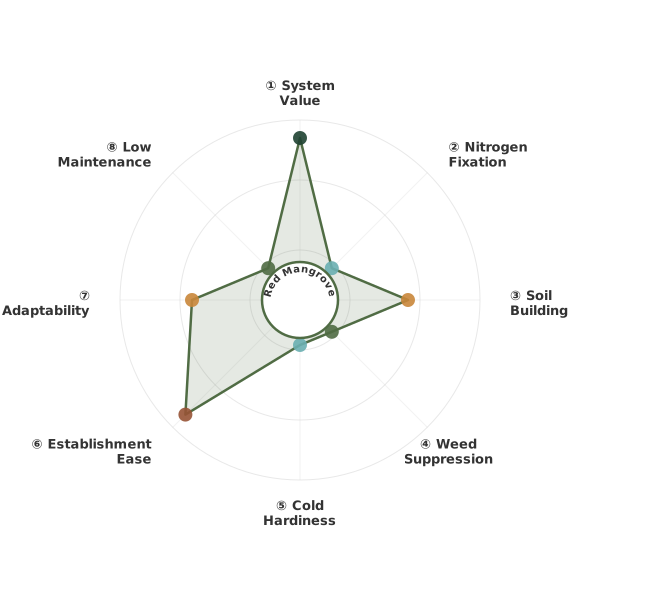
Regenerative Trait Ratings
How These Traits Are Calculated
Trait dimensions are ordered clockwise starting from the top of the chart (12 o'clock position):
1. System Value
Ecosystem service stacking across nitrogen, carbon, water, biodiversity
WHAT: Synthesizes the compounding value of multiple ecosystem services delivered simultaneously—nitrogen fixation, soil organic matter building, pollinator support, erosion control, and water infiltration improvement. This is the total regenerative impact beyond single-function metrics.
WHY: The highest-value cover crops deliver 3-5 significant ecosystem services at once. A legume that fixes nitrogen, builds biomass, supports pollinators, and improves water infiltration provides $150-300/acre in combined benefits versus $30-60 for single-function covers. This service stacking is the core principle of regenerative agriculture.
HOW: Scored via LLM synthesis of economics data, timeline benefits, and trait combinations. Exceptional (3.0): 4-5 major services stacked with strong economic value ratios. Typical (2.0): 2-3 moderate services. Limited (1.0): Single-function covers with minimal service stacking. Considers seed cost relative to benefit value.
2. Nitrogen Fixation
Biological nitrogen production via legume root nodule bacteria
WHAT: Measures the ability to convert atmospheric nitrogen (N₂) into plant-available ammonia through symbiotic bacteria in root nodules. Legumes form partnerships with rhizobium bacteria that fix 60-150 lbs N/acre/year, reducing or eliminating synthetic fertilizer needs for following crops.
WHY: Nitrogen is the most expensive fertilizer input in crop production ($0.50-1.00/lb). Cover crops with exceptional nitrogen fixation can provide $60-150/acre worth of fertility while building soil organic matter. This biological process also reduces groundwater contamination from nitrogen runoff and lowers farm carbon footprint.
HOW: Ratings based on annual nitrogen fixation capacity and reliability across soil conditions. Exceptional (3.0): Legumes like hairy vetch, crimson clover, and field peas fixing >100 lbs N/acre/year. Typical (2.0): Moderate fixers like red clover at 60-100 lbs N/acre/year. Limited (1.0): Non-legumes (grasses, brassicas) with zero fixation capacity.
3. Soil Building
Weighted: biomass production (60%) + root system depth (40%)
WHAT: Combines above-ground biomass production with root depth to measure total soil organic matter contribution. Biomass provides surface organic matter, while deep roots deposit carbon at depth and break up compaction layers.
WHY: Soil organic matter is the foundation of regenerative agriculture, improving water retention, nutrient cycling, and biological activity. Each 1% increase in soil organic matter holds an additional 20,000 gallons of water per acre and represents $500-1,000 in fertility value. Deep roots access subsoil nutrients and create channels for water infiltration.
HOW: Weighted formula prioritizes biomass production (60% weight) for immediate organic matter contribution, with root depth (40% weight) for long-term soil structure. Exceptional (3.0): High-biomass crops with deep roots like cereal rye (8+ tons biomass, 5+ ft roots). Typical (2.0): Moderate on both factors. Limited (1.0): Low biomass or shallow roots.
4. Weed Suppression
Physical competition through rapid establishment and dense growth
WHAT: Measures the ability to outcompete weeds through rapid germination, aggressive early growth, and dense canopy formation. Physical smothering and light competition reduce weed pressure without herbicides.
WHY: Weed management is a major labor and cost burden for farmers. Cover crops that effectively suppress weeds reduce herbicide costs ($20-60/acre), decrease cultivation passes (fuel + labor), and provide clean seedbeds for cash crops. This is especially valuable in organic systems where herbicide options are limited.
HOW: Ratings based on germination speed, tillering density, and canopy closure timing. Exceptional (3.0): Fast-establishing, dense-tillering crops like cereal rye, oilseed radish that close canopy within 3-4 weeks. Typical (2.0): Moderate establishment and coverage. Limited (1.0): Slow-establishing or sparse crops that allow weed competition.
5. Cold Hardiness
Winter survival for fall planting and spring green manure value
WHAT: Measures tolerance to freezing temperatures and ability to survive winter conditions. Winter-hardy cover crops can be fall-planted, overwinter as living mulch, and provide early spring growth before cash crop planting.
WHY: Fall-planted winter-hardy covers extend the growing season into unused months, capturing solar energy and preventing erosion during wet periods. Spring green manure from overwintered covers provides early nitrogen and biomass. This timing flexibility is critical in cold climates with short growing seasons.
HOW: Ratings based on minimum survival temperature and winter active growth. Exceptional (3.0): Winter-hardy crops like cereal rye, hairy vetch, crimson clover surviving to -20°F with active growth in spring. Typical (2.0): Moderate cold tolerance. Limited (1.0): Warm-season crops like buckwheat, cowpea killed by first frost.
6. Establishment Ease
Germination speed, soil requirement flexibility, planting window breadth
WHAT: Measures how easily the cover crop establishes from seed, including germination speed, tolerance for variable soil conditions, and flexibility in planting timing. Easy establishment means reliable stands without intensive management.
WHY: Difficult-to-establish covers increase risk of stand failure, wasted seed costs, and reduced benefits. Easy establishment crops tolerate late planting, poor seedbed preparation, and variable moisture—critical when cover cropping windows are narrow between cash crops. Reliable establishment ensures consistent soil building and weed suppression benefits.
HOW: Ratings based on days to emergence, soil condition sensitivity, and planting window breadth. Exceptional (3.0): Fast germinators like buckwheat (3-5 days) and cereal rye (5-7 days) with wide planting windows. Typical (2.0): Moderate establishment requirements. Limited (1.0): Slow or finicky establishers requiring precise conditions.
7. Adaptability
Weighted: climate tolerance (60%) + multi-benefit versatility (40%)
WHAT: Combines climate adaptability (temperature and rainfall range) with multi-benefit versatility (diverse ecosystem services) to measure overall system flexibility. High adaptability means the cover works across farm regions and provides multiple functions.
WHY: Farmers need cover crops that work reliably across diverse fields and provide stacked benefits. Climate-adaptable covers reduce risk in variable weather, while multi-benefit crops deliver nitrogen fixation + pollinator support + forage value simultaneously. This versatility maximizes return on cover crop investment.
HOW: Weighted formula prioritizes climate tolerance (60% weight) for geographic reliability, with multi-benefit value (40% weight) for functional stacking. Exceptional (3.0): Wide climate range + multiple significant benefits. Typical (2.0): Moderate on both factors. Limited (1.0): Narrow climate range or single-function crops.
8. Low Maintenance
Inverted from maintenance intensity—low inputs mean high scores
WHAT: Measures minimal input requirements for successful cover cropping. Low-maintenance covers require no irrigation, minimal fertility, easy termination, and tolerate variable management timing.
WHY: Cover crops compete for resources with cash crops in tight rotations. Low-maintenance covers fit easily into existing systems without adding labor, equipment, or input costs. Easy termination is especially critical—covers that are difficult to kill can become weeds and delay cash crop planting.
HOW: Inverted score from maintenance intensity trait (4.0 minus raw score). Exceptional (3.0): Self-sufficient crops like cereal rye, field peas requiring no irrigation or fertility, easily terminated by mowing or winter-kill. Typical (2.0): Moderate input needs. Limited (1.0): High-maintenance crops needing irrigation, heavy fertility, or difficult termination (herbicides, multiple tillage passes).
Ratings are based on documented performance in regenerative systems, not conventional high-input scenarios. All traits assume integrated management practices focused on soil health and ecosystem services.
1
Climate Suitability Assessment
Will this plant thrive in your climate?
Climate Suitability Assessment
Will this plant thrive in your climate?
Köppen Zone: Af (Tropical Rainforest), Am (Tropical Monsoon), Cfa (Humid Subtropical)
USDA Zone: 9a, 10a, 11a, 12a
Australian Zone: Zone 5, tropical, subtropical
Red Mangrove thrives in consistently warm and humid environments with abundant rainfall, performing optimally in Köppen Am, Aw, and Cfa zones, USDA zones 9a through 13a, Australian Zones 5, subtropical, temperate, and tropical regions, and EU Mediterranean (coastal fringe with irrigation). These conditions provide the high temperatures (consistently above 18°C) and ample moisture (often exceeding 2000 mm annually) necessary for vigorous growth and reliable establishment. Its primary riparian function is exceptionally well-served, leading to effective coastal stabilization, sediment trapping, and habitat creation. Secondary functions like soil remediation and food forest integration are also highly successful due to rapid biomass production and resilience. Establishment success rates are consistently above 90%, with minimal protection or management required. Multi-year productivity is guaranteed, with dense stands forming quickly and contributing significantly to ecosystem health and regenerative agriculture goals. These zones represent the plant's natural habitat, where it flourishes with minimal intervention.
Köppen Zone: Aw (Tropical Savanna), Cfb (Oceanic (Maritime Temperate)), Cwa (Monsoon-Influenced Humid Subtropical)
USDA Zone: 8a
Australian Zone: Zone 3, Zone 4, temperate
EU Climate Region: atlantic
Red Mangrove can perform adequately in Köppen As and Cfa zones, USDA zones 8a-8b, Australian Zones 3 and 4, and EU Atlantic regions. These climates offer a balance of warmth and moisture, but may include distinct dry seasons or cooler periods that require careful site selection and management. While establishment success is good (70-85%), growth rates may be slower than in ideal tropical conditions. Its riparian function is generally met, especially in coastal or estuarine areas with salinity, but supplemental watering might be needed during dry spells. Soil remediation and food forest applications are feasible but may yield less biomass or require longer establishment times. Standard management practices, such as ensuring access to brackish water or providing occasional irrigation, are sufficient. Economic viability is maintained through its ecological services, though yields might be slightly reduced compared to optimal zones.
Köppen Zone: ET (Tundra), BSh (Hot Semi-Arid (Steppe)), BSk (Cold Semi-Arid (Steppe)), BWh (Hot Desert), BWk (Cold Desert), Csa (Hot-Summer Mediterranean), Csb (Warm-Summer Mediterranean), Cwb (Subtropical Highland), Dfa (Hot-Summer Continental), Dfb (Warm-Summer Continental), Dfc (Subarctic), Dwa (Monsoon-Influenced Hot-Summer Continental)
USDA Zone: 2a, 3a, 3b, 4a, 5a, 5b, 6a, 7a
EU Climate Region: mediterranean
Red Mangrove is not recommended for Köppen Cwa and Cwb zones, USDA zones 7a-7b, and EU Mediterranean regions due to significant climatic limitations that make cultivation economically and practically questionable. In cooler zones (USDA 7a-7b), winter temperatures are too low, causing consistent frost damage and preventing perennial survival, rendering it a risky annual at best. In drier or cooler subtropical highland zones (Cwb) and those with dry winters (Cwa), prolonged periods of low rainfall and insufficient warmth severely hinder establishment and growth. Its high water demand and sensitivity to frost are not met, making its primary riparian function unreliable and its secondary functions unachievable. Establishment success drops below 70%, and high management costs for protection and irrigation would be required, often without guaranteed returns. Alternative plants better suited to these specific challenging conditions are recommended for riparian stabilization and soil remediation.
Note: Zones listed above represent climates where this plant can produce reliably with reasonable management. Climate zones not mentioned would require intensive climate modification (greenhouses, extensive infrastructure) and are not economically viable for regenerative agriculture purposes.
2
Soil Suitability Assessment
Which soil types work best for this plant?
Soil Suitability Assessment
Which soil types work best for this plant?
Saline Soil, Wet Soil
This plant thrives in these soil types without requiring amendments or remediation. Natural soil conditions support optimal growth and productivity.
Alkaline Soil, Clay Soil, Loam Soil, Rich Soil, Sandy Soil
This plant performs acceptably in these soil types with moderate, manageable remediation such as pH adjustment, compost addition, or drainage improvement. The required amendments are practical and cost-effective for regenerative agriculture.
Acidic Soil, Desert Soil, Rocky Soil
Growing this plant in these soil types would require impractical remediation such as complete soil replacement, extensive amendments, or cost-prohibitive infrastructure. These conditions are not economically viable for regenerative agriculture.
Note: Soil suitability assessments focus on remediation requirements. "Ideally Suited" means the plant generally thrives without the need for substantial amendments, "Adequate" means manageable remediation (lime, compost, mulch), and "Not Recommended" means impractical soil changes would be required. Climate factors like rainfall and temperature also influence success.
3
Seasonal Considerations
Planting timing, growth duration, and harvest windows
Seasonal Considerations
Planting timing, growth duration, and harvest windows
Establishing red and black mangroves requires careful timing to leverage their active growth phases. For nursery stock, planting is best initiated in early spring, after the last expected frost, allowing young trees to establish roots during the warmer months. This holds true for both bare-root and containerized seedlings, ensuring they don't face early season stress.
Expect a few years for initial establishment, typically 2-4 years, before trees begin their productive cycle. The first meaningful harvests may be seen around year 5-7, with full production ramping up by year 10-15. These resilient trees can remain productive for several decades.
Seasonal management focuses on supporting this long-term growth. While mangroves are evergreen and don't experience a true winter dormancy in warmer climates, pruning is best performed in late fall or early winter, before the onset of the main growing season. This encourages vigorous new growth as temperatures warm. Bloom and fruit development typically occur during the warmer, wetter months of summer and early fall. Avoid heavy interventions during peak growing periods to allow energy to go into fruit and seed production.
4
System Role & Multi-Benefit Value
Functional roles, integration strategies, and stacked benefits
System Role & Multi-Benefit Value
Functional roles, integration strategies, and stacked benefits
Functional Role
Total System Value
Red mangrove offers significant whole-farm resilience by enhancing ecosystem services and diversifying system functions. Its primary value lies in its riparian role, providing robust erosion control and water filtration, protecting valuable agricultural land from coastal or riverine impacts. The extensive root systems, as noted in excerpt, are crucial for stabilizing shorelines. Furthermore, mangrove ecosystems are known for their high carbon sequestration potential, with excerpt demonstrating substantial soil carbon stocks in preserved Rhizophora mangle stands, contributing directly to climate change mitigation. While direct harvest value is limited for typical farms, the plant's contribution to system enhancement is profound. It creates complex habitats for fish and invertebrates, supporting local biodiversity and potentially providing buffer zones that protect other agricultural components from environmental stressors. This ecological enhancement, combined with its role in water management and carbon storage, diversifies farm risk by building a more robust and self-sustaining ecosystem.
Integration Characteristics
Multi-Benefit Value: Ideally Suited - Rhizophora mangle serves as a critical ecosystem engineer, enhancing shoreline stability, filtering water, sequestering carbon, and providing vital habitat within coastal regenerative systems.
5
Management & Care Requirements
Integration guidance, maintenance needs, and care practices
Management & Care Requirements
Integration guidance, maintenance needs, and care practices
How to Integrate This Plant
Red mangrove (Rhizophora mangle) is primarily a riparian plant, making it ideal for stabilizing shorelines, preventing erosion, and filtering water runoff in coastal or estuarine farm systems. Its dense prop root system offers exceptional erosion control, particularly in areas prone to tidal influence or flooding. While not a direct food crop for livestock, its presence creates habitat and can enhance the overall ecological health of adjacent pastures or silvopasture systems. Compatible practices include establishing mangrove buffer zones along waterways, integrating into coastal food forests, or using them in constructed wetlands for water treatment. The timeline to contribution is long-term; expect significant erosion control and habitat benefits from Year 5 onwards, with full maturity and maximum ecosystem service provision by Year 20+. The multi-benefit stacking includes substantial carbon sequestration in its biomass and sediments (as seen in excerpt), improved water quality through filtration, and habitat creation for wildlife, contributing to farm resilience by protecting infrastructure and enhancing biodiversity.
Integration Practices & Management
While the provided sources discuss Rhizophora mangle (red mangrove) in diverse ecological contexts, they offer limited direct information on its integration into regenerative agriculture practices by farmers. The knowledge base highlights Rhizophora mangle's unique adaptations, such as its freshwater tolerance in landlocked ecosystems and its vital role in coastal nutrient cycling and soil stabilization through its extensive prop root system. Sources also detail its self-planting propagules, 'sea pencils,' which embed in the substrate to establish new growth. Furthermore, studies indicate Rhizophora mangle's significant contribution to soil carbon sequestration, with preserved stands showing substantially higher carbon stocks compared to degraded areas. The plant is also identified as a component of mangrove floristic diversity in various zones. However, specific regenerative farming techniques regarding establishment methods, integration with grazing, termination strategies, fertility needs, competition management, succession planning, or integration with cash crops are not detailed within this knowledge base.
Management Profile
Maintenance Intensity: Ideally Suited - Rhizophora mangle is naturally adapted to thrive in its salt-tolerant, coastal environment, requiring no external fertility management or water management interventions.
6
Economics & Value Streams
Direct harvest, system benefits, ecosystem services, and risk diversification
Economics & Value Streams
Direct harvest, system benefits, ecosystem services, and risk diversification
Comprehensive economic analysis including direct harvest value, system enhancement contributions, ecosystem services, value timeline, and risk diversification strategies.
Cover Crop Investment
| Metric | Value |
|---|---|
| Seed Cost | N/A N/A |
| Termination Cost | N/A N/A |
| Biomass Production | N/A N/A |
| N Fixation Value | N/A N/A |
| Weed Control Savings | N/A N/A |
Cover crops are soil investments, not cash crops. Economics measured in soil health gains, input reduction, and subsequent crop performance. Values show direct costs and estimated benefits.
System Enhancement Value
Beyond harvest: shade for livestock, soil building, and system benefits
Windbreak & Erosion Control
While not explicitly detailed as a windbreak in the provided excerpts, the dense, skirt-like root structure of Rhizophora mangle (red mangrove) inherently provides significant soil stabilization and can act as a natural barrier against coastal erosion and wind-driven wave action. This stabilization is crucial in riparian and coastal agricultural systems, preventing soil loss in areas prone to inundation and storm surges. By anchoring itself firmly in the substrate with its prop and adventitious roots, it creates a robust buffer zone that can protect adjacent agricultural lands from the direct impact of winds and the erosive forces of water. This protective function is particularly valuable in coastal farming where land is often at sea level or slightly above, making it vulnerable to extreme weather events. The dense foliage also offers a degree of shading, though its primary role is not that of a shade tree in typical agricultural contexts.
Other System Contributions
Red mangroves (Rhizophora mangle) offer substantial soil remediation capabilities, particularly in areas impacted by hydrocarbon pollution. Their extensive root systems can help stabilize sediments and potentially absorb or metabolize certain pollutants, improving soil quality over time. The complex root structures also create valuable habitat for a variety of aquatic and semi-aquatic species, contributing to biodiversity within the farm system. As mentioned in excerpt, these ecosystems can act as 'time capsules' for past environments, indicating their role in preserving ecological history. Furthermore, their unique adaptation to freshwater conditions in isolated inland areas suggests a resilience that could be leveraged in diverse agricultural landscapes. The 'sea pencil' propagules are a testament to their efficient natural regeneration, contributing to the self-sustaining nature of these systems.
Ecosystem Service Contributions
Environmental contributions: carbon, pollinators, wildlife, and water
- Carbon Sequestration: Red mangrove stands, particularly in preserved areas, are significant carbon sinks. Studies show substantial soil carbon stocks, with preserved Rhizophora mangle stands storing up to 283 Mg C ha⁻¹ in the top meter layer, compared to degraded areas storing only 12 Mg C ha⁻¹. This highlights their potent capacity for long-term carbon sequestration in estuarine and coastal soils.
- Pollinator Support: Low. While mangroves provide habitat, their primary ecological role is not directly linked to supporting a diverse range of agricultural pollinators through nectar or pollen production.
- Wildlife Habitat: High. The dense prop and adventitious root systems of red mangroves create complex underwater and intertidal habitats, providing shelter, breeding grounds, and foraging opportunities for fish, crustaceans, and other marine life. They also support terrestrial wildlife, as seen in the 'time capsule' ecosystem described in excerpt, which included trapped turtles and fish.
- Water Quality: High. Mangrove root systems act as natural filters, trapping sediments, nutrients, and pollutants from agricultural runoff before they reach open water bodies. This improves water quality and can protect downstream aquatic ecosystems.
Value Timeline: When Benefits Begin
When you'll see results: which benefits come early vs. long-term
Years 1-2
Initial soil stabilization and erosion control from established prop roots. Establishment of basic habitat structure for small aquatic organisms. Beginning of sediment trapping and water filtration.
Years 3-5
Increased density of root systems leading to more robust erosion control and improved water filtration. Development of more complex habitat for a wider range of aquatic wildlife. Potential for early signs of soil remediation in polluted areas.
Years 10-20
Mature mangrove stands exhibiting significant carbon sequestration potential, as indicated by high soil carbon stocks. Substantial contribution to biodiversity and robust habitat provision. Effective buffering against coastal erosion and storm surge.
20+ Years
Long-term ecosystem services including significant carbon storage, high biodiversity support, and continued water quality improvement. Potential for genetic divergence and adaptation in isolated populations, offering unique ecological value. Timber harvest potential might be considered in very mature stands, though their primary value is ecological.
Farm Risk Reduction
How this reduces farm risk: backup income, weather protection, market hedges
- Multiple Revenue Streams: Ecological services (carbon sequestration, water filtration, habitat provision), soil remediation, coastal protection, potential for biomass or timber harvest (long-term), potential for specialized aquaculture within mangrove systems.
- Temporal Income Spread: Ongoing and continuous provision of ecosystem services (carbon sequestration, water filtration, habitat) from establishment onwards. Soil remediation benefits accrue over time. Timber or biomass value is a long-term prospect. This creates a value stream that is not solely dependent on annual harvests.
- Market Risk Hedge: Red mangroves hedge farm risk by providing critical ecosystem services that enhance resilience to environmental stressors like coastal erosion, storm damage, and water pollution. Their role in soil remediation can improve land quality for agriculture. The continuous provision of ecological services offers a stable, non-market value that underpins the farm's overall productivity and sustainability, reducing reliance on single-crop or single-market revenue streams.
7
Regenerative Suitability Details
Comprehensive trait ratings for system integration assessment
Regenerative Suitability Details
Comprehensive trait ratings for system integration assessment
Comparative ratings for this plant across key regenerative agriculture traits.
| Trait | Suitability | Explanation |
|---|---|---|
| Cold Hardiness | Not Recommended | As a strictly tropical/subtropical species, Rhizophora mangle is best integrated into systems within its natural climate zones, where its natural resilience contributes to ecosystem health. |
| Weed Suppression | Not Recommended | Rhizophora mangle thrives in saline intertidal zones, where its dense root structure naturally manages its environment and supports ecosystem function. |
| Nitrogen Fixation | Not Recommended | Rhizophora mangle, adapted to saline conditions, does not engage in atmospheric nitrogen fixation, relying on nutrient cycling within its native, specialized ecosystem. |
| Root System Depth | Ideally Suited | The complex prop root system of Rhizophora mangle enhances intertidal soil structure and stability, promoting healthy sediment dynamics and moisture retention. |
| Biomass Production | Not Recommended | In its intertidal habitat, Rhizophora mangle's substantial woody biomass contributes to long-term carbon sequestration and nutrient cycling as it decomposes. |
| Establishment Ease | Ideally Suited | Rhizophora mangle propagules establish readily in their native saline intertidal zones, rapidly contributing to ecosystem function with minimal site preparation. |
| Multi Benefit Value | Ideally Suited | Rhizophora mangle serves as a critical ecosystem engineer, enhancing shoreline stability, filtering water, sequestering carbon, and providing vital habitat within coastal regenerative systems. |
| Climate Adaptability | Not Recommended | Rhizophora mangle is highly adapted to tropical and subtropical saline coastlines, thriving within its specialized niche and contributing to coastal ecosystem resilience. |
| Maintenance Intensity | Ideally Suited | Rhizophora mangle is naturally adapted to thrive in its salt-tolerant, coastal environment, requiring no external fertility management or water management interventions. |
Comparative System: Ratings compare plants within their economic category (e.g., cover crop nitrogen fixation compared to other cover crops, not to all plants). Individual farm conditions and management practices significantly influence actual performance.
8
Learn More
Why farmers use this plant and additional resources
Learn More
Why farmers use this plant and additional resources
Why Regenerative Farmers Use This Plant
Rhizophora mangle, commonly known as the red mangrove, is a cornerstone species for coastal regenerative agriculture and ecosystem restoration. While not a traditional cover crop for arable land, its role in stabilizing shorelines, filtering water, sequestering carbon, and building land is critical for farms situated in estuarine and coastal zones.
Coastal Protection and Land Building: Red mangroves excel at trapping sediment with their dense, prop root systems, which can extend 15-30 feet (4.5-9 meters) or more into the substrate. This process effectively builds new land over time, increasing soil accretion and expanding usable agricultural area. Their natural root structures act as a robust buffer against storm surges, wave action, and erosion, protecting valuable agricultural land and infrastructure from inundation and salinization. This significantly reduces the need for costly artificial sea defenses and mitigates the risk of saltwater intrusion into freshwater agricultural systems.
Water Quality Improvement: Mangroves are exceptionally effective at filtering pollutants from water runoff, including excess nutrients and sediments from agricultural fields. This filtration capacity improves water quality for downstream ecosystems and potentially for irrigation, preventing eutrophication of coastal waters. The complex root structures also create anaerobic conditions in the soil, which can aid in the breakdown of certain pollutants and the retention of nutrients.
Carbon Sequestration: Mangrove forests are among the most effective ecosystems for sequestering atmospheric carbon dioxide, storing it in their biomass and sediments for centuries. This contributes directly to building soil organic matter in coastal areas, enhancing their resilience and productivity, and contributing to climate change mitigation efforts. Studies indicate they can store significantly more carbon per unit area than terrestrial forests.
Biodiversity and Habitat Enhancement: As a key component of mangrove ecosystems, Rhizophora mangle supports a rich biodiversity. Its dense root systems serve as critical nursery grounds and habitat for a vast array of marine and terrestrial life, including fish, invertebrates, and numerous bird species. This ecological enhancement can lead to increased productivity in adjacent aquaculture operations, support sustainable fisheries, and offer opportunities for ecotourism. The organic matter contributed by leaf litter and decaying root material fuels a rich detrital food web, supporting a diverse community of invertebrates and fish.
Regional Success Examples:
- Caribbean: Smallholder farms utilize mangrove restoration to protect land from hurricanes and improve fish stocks in adjacent lagoons, creating integrated farming systems. Communities are replanting mangroves on degraded coastlines to restore natural storm defenses and support fisheries recovery.
- Southeast Asia:
- Philippines: Farmers plant mangrove belts around rice paddies to protect against storm surges and saltwater intrusion, creating a natural barrier that also supports local fisheries. Mangrove forests are being restored as a natural buffer against typhoons.
- Vietnam: Farmers integrate mangrove belts around rice paddies for protection and to provide habitat for fish and shrimp during the off-season, diversifying income streams.
- Indonesia: Mangroves are integrated into coastal defense systems to protect villages and rice paddies from erosion and storm surges.
- General: Integrated mangrove-shrimp farming systems show promise in increasing overall productivity and environmental resilience. Aquaculture operations incorporate mangrove buffers to enhance water quality and provide shade, leading to healthier yields.
- Australia:
- Queensland: Mangrove restoration projects help stabilize shorelines adjacent to sugarcane farms, reducing sediment runoff and protecting agricultural land from erosion. Efforts focus on restoring mangrove fringes in areas impacted by development or climate change.
- Western Australia: Efforts are underway to establish mangroves in areas affected by altered hydrology to improve coastal resilience and biodiversity.
- USA (Florida):
- Coastal ranches establish mangrove fringes to protect pastures from tidal flooding and erosion while supporting local wildlife.
- Mangroves are crucial for maintaining the integrity of freshwater lens systems, preventing saltwater contamination of groundwater used for irrigation.
- They are a key component of Everglades restoration projects and coastal buffer zones protecting agricultural areas from saltwater intrusion.
- India and Bangladesh (Sundarbans): Mangroves are vital for protecting agricultural lands from cyclones and tidal surges, supporting both rice cultivation and extensive aquaculture.
- Ecuador: Communities re-establish mangroves to protect shrimp farms from erosion and improve water quality, demonstrating their role in sustainable aquaculture.
- Brazil (Coastal): Rhizophora mangle is integrated into shrimp farming ponds to improve water quality and provide shade, enhancing the health and growth rates of shrimp.
9
How to Integrate This Plant
Practical guidance for regenerative systems
How to Integrate This Plant
Practical guidance for regenerative systems
Establishment:
- Method: Planting propagules (viviparous seedlings) or seeds directly into suitable intertidal zones. Propagules are collected from mature trees and can be planted directly into mudflats or silty sand. Seedlings can also be raised in nurseries and then transplanted.
- Planting Depth: Optimal planting depth is generally 4-8 inches (10-20 cm), ensuring the base of the propagule is firmly anchored in the substrate. The hypocotyl (embryonic stem) should be partially buried to ensure stability against tidal action.
- Spacing: Spacing can vary significantly depending on the desired outcome:
- Dense plantings: 0.5-1 meter (1.5-3 feet) apart for rapid shoreline stabilization and biomass accumulation.
- Wider spacing: 1-3 meters (3-10 feet) apart, or 2-3 meters (6-10 feet) for more dispersed growth and habitat development.
- This translates to approximately 1,200 to 4,800 propagules per acre (3,000 to 12,000 per hectare) for denser plantings.
- Timing: Planting is best timed with the onset of the rainy season or periods of consistent tidal influence (stable high tides) to maximize establishment success and ensure adequate moisture. This typically aligns with local wet seasons in tropical and subtropical regions.
Management:
- Water Needs: These trees are adapted to brackish or saltwater and require regular tidal inundation. They do not require fresh water beyond what is provided by rainfall and tidal inundation. While highly tolerant of saline conditions, excessive salinity without adequate freshwater flushing can hinder establishment.
- Fertility: Fertility needs are met through the natural nutrient cycling within the estuarine environment, supplemented by sediment deposition and decomposition of organic matter from leaf litter and root exudates. Adjacent land management practices should aim to minimize runoff of synthetic fertilizers and pesticides, which can harm mangrove health and associated biodiversity. Their growth can be enhanced by the natural deposition of nutrient-rich sediments from upstream.
- Growth Timeline: Growth is relatively slow but steady. Young trees establish a root system within the first 1-2 years. Significant canopy development and shoreline stabilization typically occur over 3-5 years, with trees reaching heights of 10-20 feet (3-6 meters) within 5-10 years, and mature heights of 15-50 feet (5-15 meters) over time, depending on species and site conditions.
- Pest and Disease Management: In natural mangrove environments, pest and disease management is rarely a concern, as the ecosystem has evolved robust defenses. Healthy mangrove stands are resistant to most threats.
Category-Specific Integration:
- Role: Coastal buffer, land builder, ecological enhancer, shoreline stabilization, water quality improvement, habitat creation.
- Termination: Not applicable, as Rhizophora mangle is a perennial tree intended for permanent establishment. The focus is on facilitating its growth and ecological services.
- Biomass Decomposition: A continuous process with year-round leaf litter fall, providing a steady supply of organic matter to the detrital food web.
- Nutrient Cycling: Nitrogen is cycled within the ecosystem through decomposition and microbial activity, supporting the mangrove's growth and the productivity of associated species.
- Seed Management: While natural seed dispersal occurs, active planting of propagules is the most effective method for establishment. Ensuring healthy propagules are sourced and planted, and preventing their dislodgement by wave action or grazing animals during the initial establishment phase is crucial.
- Relay or Inter-seeding: Not applicable to this species.
- Goal: To allow the mangrove to establish and expand naturally, forming dense stands that provide maximum ecological services. This involves protecting the planted areas from direct human disturbance and allowing natural processes to take their course.