Available data suggests its potential utility in regenerative agriculture. Primarily, it appears to function as a component in cropping systems, notably integrated with pigeonpea in a no-till system aimed at conservation agriculture. Castor cake, a byproduct of castor bean oil extraction, is utilized as an organic manure, contributing nitrogen to cropping sequences and potentially enhancing soil fertility and crop yields in organic farming. Furthermore, research indicates *Ricinus communis* possesses phytoremediation capabilities, with studies showing its ability to extract heavy metals like copper and cadmium from polluted soils, thus aiding in soil improvement. Its rhizosphere has also demonstrated a capacity to reduce chromium contamination compared to bare soil. While not explicitly stated as a cover crop or forage in these excerpts, its integration into no-till and organic farming systems highlights its role in soil building and potentially nutrient cycling. Further research would be beneficial to fully understand its broader applications in regenerative systems. While coverage in our knowledge base is limited, the above represents documented uses in regenerative systems.

Regenerative Quick Profile

All recommendations assume integrated, regenerative practices—not conventional inputs.

Climate & Soil Fit

Climate: Tropical Rainforest, Tropical Monsoon, Tropical Savanna, Hot Semi-Arid (Steppe), Cold Semi-Arid (Steppe), Hot Desert, Cold Desert, Humid Subtropical, Oceanic (Maritime Temperate), Hot-Summer Mediterranean, Warm-Summer Mediterranean, Monsoon-Influenced Humid Subtropical, Subtropical Highland, Hot-Summer Continental, Warm-Summer Continental, Subarctic, Monsoon-Influenced Hot-Summer Continental, Tundra

Zones: USDA 9-11, Australian Zones 11-14, EU Mediterranean, Subtropical

Optimal Soil: Loam Soil

System Role & Functions

Primary: Soil Remediation

Secondary: Cash Crop With Services, Cover Crop System

Key Benefits: Easy establishment, Weed Suppression, Biomass Production

Management Level

Experience: Beginner-Friendly

Maintenance: High maintenance - Its rapid growth cycle and prolific biomass production contribute to system fertility and soil health, requiring careful crop rotation and residue management within an integrated system.

Value Streams

  • Diversifies farm income
  • Enhances biodiversity

Know the Debate

  • High biomass potential for soil organic matter
  • Effective in nutrient scavenging and remediation
  • Extreme toxicity requires strict containment measures
1

Climate Suitability Assessment

Will this plant thrive in your climate?

IDEALLY SUITED

Köppen Zone: Af (Tropical Rainforest), Am (Tropical Monsoon), Aw (Tropical Savanna), Cfa (Humid Subtropical), Cwa (Monsoon-Influenced Humid Subtropical)
USDA Zone: 8a, 9a, 10a, 11a, 12a
Australian Zone: tropical, subtropical

Castor bean thrives in consistently warm to hot climates with long growing seasons, typically requiring 120-180 frost-free days and temperatures between 60-85°F (15-29°C) for optimal growth. These conditions are met in Köppen zones Cfa and Aw, USDA Zones 8a through 13a, Australian subtropical and tropical zones, and parts of the EU Mediterranean and Atlantic regions where summers are warm. In these zones, castor bean can often grow as an annual with high yields or even as a perennial, providing continuous benefits for soil remediation, biomass production, and cash cropping. Adequate rainfall (30-50 inches/75-125 cm annually) is beneficial, but the plant exhibits some drought tolerance. Its rapid growth and large biomass contribute significantly to soil organic matter and nutrient cycling. Establishment is generally reliable, and minimal management is required beyond ensuring adequate moisture during establishment and potentially during prolonged dry spells in otherwise suitable regions.

ADEQUATE

Köppen Zone: BSh (Hot Semi-Arid (Steppe)), BWh (Hot Desert), Cfb (Oceanic (Maritime Temperate)), Csa (Hot-Summer Mediterranean), Csb (Warm-Summer Mediterranean), Cwb (Subtropical Highland)
USDA Zone: 7a
Australian Zone: grassland, temperate
EU Climate Region: atlantic, mediterranean

Castor bean can be grown successfully in regions with adequate growing seasons and moderate temperatures, though yields and perennial behavior may be limited compared to ideal zones. This includes Köppen zones Cfa, Cwa, and Aw, USDA Zones 7a-7b, Australian grassland and temperate zones, and EU Atlantic and Mediterranean regions. These areas typically have 90-140 frost-free days and temperatures that are warm enough during the summer months for annual growth. However, cooler summer temperatures in some Atlantic regions or dry summers in Mediterranean and grassland zones may necessitate supplemental irrigation to achieve optimal growth and soil remediation benefits. While it generally functions as an annual in these zones, careful management of water and timing of planting can maximize its effectiveness. Yields might be 10-20% lower than in ideal climates, and stand persistence is unlikely without favorable microclimates.

NOT RECOMMENDED

Köppen Zone: ET (Tundra), BSk (Cold Semi-Arid (Steppe)), BWk (Cold Desert), Dfa (Hot-Summer Continental), Dfb (Warm-Summer Continental), Dfc (Subarctic), Dwa (Monsoon-Influenced Hot-Summer Continental)
USDA Zone: 2a, 3a, 3b, 4a, 5a, 5b, 6a
Australian Zone: arid

Castor bean is not recommended for cultivation in arid and extreme desert climates (Köppen BSh, BWh; Australian arid zones) due to insufficient rainfall and extreme heat. These zones typically receive less than 20 inches (50 cm) of rainfall annually, and prolonged periods of temperatures exceeding 90°F (32°C) severely stress the plant, drastically reducing growth, yield, and oil production. While technically possible with extensive irrigation infrastructure and intensive management, the economic viability for its intended functions (soil remediation, cash crop) is very low. Establishment success is poor due to rapid soil drying and heat stress. Alternative drought-tolerant and heat-adapted plants are far better suited for these challenging environments, offering more reliable benefits for soil health and agricultural productivity with significantly lower input requirements.

Better alternatives for these "not recommended" zones: Cowpea (Highly drought and heat-tolerant legume, fixes nitrogen, and can be used as a cover crop or for grain.), Sorghum (Drought-tolerant grain crop that can also provide biomass and improve soil structure.), Millet (Another drought-tolerant grain crop suitable for arid conditions, offering biomass and soil cover.), Native drought-tolerant grasses and shrubs (Adapted to extreme arid conditions for soil stabilization and minimal biomass, providing ecosystem services.)

Note: Zones listed above represent climates where this plant can produce reliably with reasonable management. Climate zones not mentioned would require intensive climate modification (greenhouses, extensive infrastructure) and are not economically viable for regenerative agriculture purposes.

2

Soil Suitability Assessment

Which soil types work best for this plant?

IDEALLY SUITED

Loam Soil

This plant thrives in these soil types without requiring amendments or remediation. Natural soil conditions support optimal growth and productivity.

ADEQUATE

Clay Soil, Rich Soil, Sandy Soil

This plant performs acceptably in these soil types with moderate, manageable remediation such as pH adjustment, compost addition, or drainage improvement. The required amendments are practical and cost-effective for regenerative agriculture.

NOT RECOMMENDED

Acidic Soil, Alkaline Soil, Desert Soil, Rocky Soil, Saline Soil, Wet Soil

Growing this plant in these soil types would require impractical remediation such as complete soil replacement, extensive amendments, or cost-prohibitive infrastructure. These conditions are not economically viable for regenerative agriculture.

Note: Soil suitability assessments focus on remediation requirements. "Ideally Suited" means the plant generally thrives without the need for substantial amendments, "Adequate" means manageable remediation (lime, compost, mulch), and "Not Recommended" means impractical soil changes would be required. Climate factors like rainfall and temperature also influence success.

3

Seasonal Considerations

Planting timing, growth duration, and harvest windows

Ricinus communis, a vigorous warm-season annual, thrives in warmer climates (Cfa, Cwa, BSh, BWh, Aw) and offers unique cover cropping opportunities. For spring planting, wait until all danger of frost has passed and soil temperatures consistently reach 60°F (15°C). This allows for rapid establishment, typically within a few weeks, and significant biomass accumulation throughout the warm months.

If aiming for fall cover, plant Ricinus communis after your primary cash crop has been harvested and well before the first expected frost. It will establish before cold weather sets in, but its overwinter survival is unlikely in cooler regions within its climate zone range. Termination should occur in late fall or early spring, well in advance of your next cash crop seeding to prevent unwanted volunteer growth. Peak biomass is achieved during the hottest part of the summer. While not a typical winter cover crop, its rapid growth makes it an excellent summer cover to suppress weeds and build organic matter between spring and fall cash crops. Frost seeding is not recommended due to its warm-season nature and sensitivity to cold.

4

System Role & Multi-Benefit Value

Functional roles, integration strategies, and stacked benefits

Functional Role

Total System Value

Castor bean offers significant system value primarily through its capacity for soil remediation, as evidenced by its ability to reduce chromium levels in contaminated soils (Excerpt 2). While direct harvest value is not the focus in this context, its use as a component in conservation agriculture (Excerpt 1) suggests benefits in soil health and potentially biomass production. Its dense growth can contribute to erosion control and, over time, to soil organic matter enhancement. Ecosystem services include the crucial remediation of heavy metal-polluted sites, making land usable for other purposes. Although not a primary pollinator plant, its presence can support certain insect populations. Risk diversification is achieved by incorporating a plant with specialized remediation capabilities, allowing farmers to address specific environmental challenges and improve land resilience, thereby increasing the overall robustness of the farming system.

Integration Characteristics

Multi-Benefit Value: Not Recommended - Primarily valued for its oil, its significant biomass contribution to soil organic matter is a key ecological service when integrated thoughtfully into system design.

5

Management & Care Requirements

Integration guidance, maintenance needs, and care practices

How to Integrate This Plant

Castor bean's primary function in regenerative systems is soil remediation, particularly in handling heavy metal contamination like chromium (Excerpt 2). It can be integrated into systems through practices that allow for its specific growth requirements and potential toxicity management. While not explicitly mentioned, its dense growth could offer temporary erosion control and potentially act as a windbreak in its early stages. Its role as a soil improver, especially in degraded or contaminated soils, makes it a candidate for inclusion in restoration-focused agroforestry or alley cropping systems, where it can be managed to prevent seed spread. The timeline to contribution begins immediately for soil remediation, with its potential for biomass production increasing in subsequent years. The multi-benefit stacking goes beyond direct harvest; it involves remediating contaminated land, potentially improving soil structure and microbial communities, and creating a foundation for more diverse plantings.

Integration Practices & Management

The provided knowledge base offers limited insight into the specific methods regenerative farmers use to integrate Ricinus communis (castor bean). While castor bean is mentioned in contexts related to cropping systems and soil amendments, detailed practices for its establishment, management, or termination within a regenerative framework are not elaborated upon. Source notes a castor bean-pigeonpea cropping system under conservation agriculture, indicating its use in rotation with other crops, but does not detail establishment or management. Source highlights the use of castor cake derived from Ricinus communis as an organic manure, demonstrating its role in fertility management within an organic farming system, but this pertains to a processed byproduct rather than direct plant integration. Source examines chromium speciation in the rhizosphere of castor bean, focusing on phytoremediation potential rather than agricultural integration strategies. Therefore, the knowledge base does not provide practical farmer experiences or specific guidance on establishment, grazing integration, termination, or comprehensive management considerations for Ricinus communis in regenerative agriculture.

Management Profile

Maintenance Intensity: Not Recommended - Its rapid growth cycle and prolific biomass production contribute to system fertility and soil health, requiring careful crop rotation and residue management within an integrated system.

6

Economics & Value Streams

Direct harvest, system benefits, ecosystem services, and risk diversification

Comprehensive economic analysis including direct harvest value, system enhancement contributions, ecosystem services, value timeline, and risk diversification strategies.

Cover Crop Investment

Metric Value
Seed Cost $25-50/acre $62-124/ha
Termination Cost 20-40 49-99
Biomass Production 2-5 4-11
N Fixation Value N/A N/A
Weed Control Savings 15-30 37-74

Cover crops are soil investments, not cash crops. Economics measured in soil health gains, input reduction, and subsequent crop performance. Values show direct costs and estimated benefits.

System Enhancement Value

Beyond harvest: soil healing, contamination removal, and land restoration

Soil Remediation & Building

Castor bean offers significant soil remediation and improvement benefits within an integrated farm system. Research indicates its participation in cropping systems that enhance soil enzyme activities (dehydrogenase, urease, acid phosphatase, alkaline phosphatase) and increase soil organic carbon (OC) by up to 34%. Furthermore, it has demonstrated the ability to reduce soil chromium concentrations, particularly in the rhizosphere, potentially through mycorrhizostabilization mechanisms. This suggests a role in phytoremediation of contaminated soils. Its inclusion as a cover crop or in intercropping systems, as seen in a pigeonpea-castor bean rotation and a planned food forest, contributes to improving nutrient availability (nitrogen, phosphorus, and potassium) and reducing greenhouse gas emissions (CO2, N2O, CH4) compared to conventional tillage. Castor cake derived from castor bean has also been shown to be an effective organic manure, contributing to higher crop yields and net returns in organic farming systems.

Erosion Control

Variable, dependent on planting density and integration strategy. Potential for 5-15% crop yield improvement in protected areas.

While castor bean is not a primary windbreak species, its use as a cover crop and in intercropping systems, as suggested by its inclusion in a pigeonpea-castor bean cropping system and planned use in a food forest, can contribute to soil stabilization and microclimate moderation. In these contexts, it can help reduce wind erosion by providing ground cover and improving soil structure over time. The increased soil organic carbon (OC) observed in conservation agriculture systems involving castor bean directly contributes to better soil aggregation, which enhances its resistance to wind and water erosion. This improved soil structure, coupled with the physical presence of the plant, can offer a degree of protection to adjacent areas or sensitive crops, especially in the initial stages of establishing more permanent windbreaks or in areas prone to soil degradation. The anchoring of residues in CA systems further emphasizes the role of such crops in building soil resilience against wind forces.

Ecosystem Service Contributions

Environmental contributions: carbon, pollinators, wildlife, and water

  • Carbon Sequestration: Castor bean contributes to carbon sequestration through the increase of soil organic carbon (OC) in systems utilizing it as a cover crop or in conservation agriculture practices, as evidenced by a 34% increase in OC over conventional tillage. Its biomass also sequesters atmospheric carbon, which can be incorporated into the soil upon decomposition.
  • Pollinator Support: Low. While castor bean flowers, it is primarily wind-pollinated and not a significant attractant for most managed pollinators.
  • Wildlife Habitat: Low. While the plant itself may offer some incidental cover, it is not a primary source of food or nesting material for most wildlife. Its seeds are highly toxic.
  • Water Quality: Not applicable

Value Timeline: Soil Healing Process

When you'll see results: remediation timeline varies by contamination type

Years 1-2

Initial soil structure improvement, organic matter addition through residue incorporation, early stages of soil remediation (e.g., chromium sequestration), and potential reduction in wind erosion due to ground cover.

Years 3-5

Established soil health benefits including increased soil organic carbon, enhanced enzyme activities, and noticeable improvements in nutrient availability. Potential for early cash crop harvest if managed as such.

Years 10-20

Mature soil remediation capabilities, significant contribution to soil organic matter, and sustained improvements in soil health and resilience. Potential for consistent cash crop revenue if integrated into a multi-year rotation or perennial system.

20+ Years

Long-term soil health and contaminant remediation, contributing to a more robust and resilient farm ecosystem. Continued benefits from improved soil structure and nutrient cycling.

Farm Risk Reduction

How this reduces farm risk: future land value and production potential

  • Multiple Revenue Streams: Cash crop revenue (castor bean seeds/oil), organic fertilizer (castor cake), soil remediation services (potential economic value for contaminated land), and indirect benefits from improved soil health leading to higher yields of other crops.
  • Temporal Income Spread: Annual harvest of castor bean seeds for cash crop or cake production, coupled with ongoing soil improvement services that provide value over multiple years and contribute to the long-term productivity of the farm.
  • Market Risk Hedge: Reduces reliance on single commodity markets by offering an alternative income stream. Its role in improving soil health can mitigate risks associated with declining soil fertility and increase resilience to environmental stressors, thereby hedging against yield losses in other crops.
7

Regenerative Suitability Details

Comprehensive trait ratings for system integration assessment

Comparative ratings for this plant across key regenerative agriculture traits.

Trait Suitability Explanation
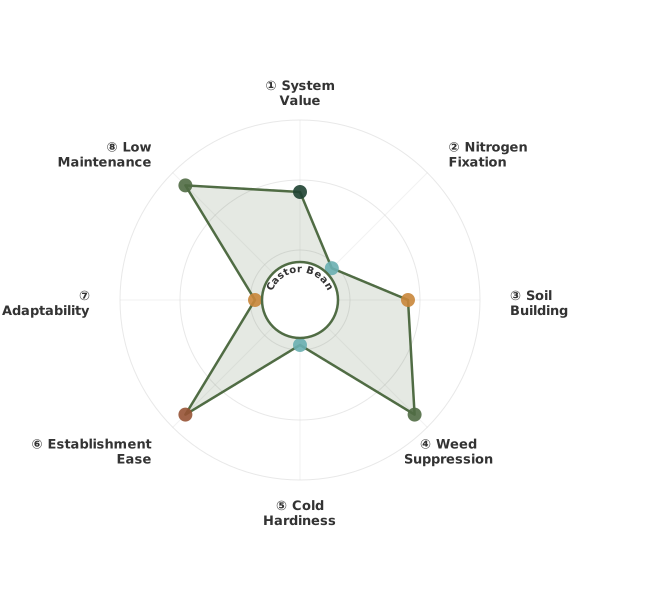
Cold Hardiness Not Recommended This annual thrives in warmer seasons, contributing to rapid summer biomass accumulation and soil organic matter enhancement. Its frost sensitivity means it's managed as a seasonal component of the soil building cycle.
Weed Suppression Ideally Suited Rapid growth and dense foliage quickly establish a protective canopy, outcompeting weeds and contributing significant organic matter to the soil surface.
Nitrogen Fixation Not Recommended While not a nitrogen fixer, this plant efficiently scavenges existing soil nutrients, contributing to overall soil fertility through its rapid growth and biomass deposition.
Root System Depth Adequate Its substantial taproot penetrates the soil, improving aeration, breaking up compaction, and accessing deeper nutrient reserves, thereby enhancing soil structure and health.
Biomass Production Ideally Suited This fast-growing annual generates substantial biomass, which, upon decomposition, significantly enriches soil organic matter and improves soil structure.
Establishment Ease Ideally Suited Germinates and grows rapidly in warm conditions, quickly establishing ground cover and suppressing weeds with minimal reliance on external amendments.
Multi Benefit Value Not Recommended Primarily valued for its oil, its significant biomass contribution to soil organic matter is a key ecological service when integrated thoughtfully into system design.
Climate Adaptability Not Recommended Prefers warm, drier conditions and is sensitive to frost, indicating its optimal use in specific seasonal rotations or as a component in systems designed for warmer climates.
Maintenance Intensity Not Recommended Its rapid growth cycle and prolific biomass production contribute to system fertility and soil health, requiring careful crop rotation and residue management within an integrated system.

Comparative System: Ratings compare plants within their economic category (e.g., cover crop nitrogen fixation compared to other cover crops, not to all plants). Individual farm conditions and management practices significantly influence actual performance.

8

Know the Debate

Castor bean offers significant regenerative benefits, primarily for biomass production and soil improvement. Its potential to scavenge nutrients, e...

Castor bean offers significant regenerative benefits, primarily for biomass production and soil improvement. Its potential to scavenge nutrients, enhance soil organic matter, and even remediate heavy metals is well-documented, making it a tool for building soil health. However, its extreme toxicity presents a major management challenge, requiring rigorous safety protocols and containment strategies. Understanding the trade-offs between these benefits and risks is crucial for its responsible integration into regenerative systems.

Is castor bean safe for use in regenerative systems?

Beneficial for soil, but requires strict containment

Castor bean proves valuable for boosting soil organic matter and remediating heavy metals, with its byproducts acting as effective organic manure. However, its extreme toxicity necessitates rigorous containment measures, making it suitable for experienced managers prioritizing soil health.

Sources behind this view

Sources behind this view

Research
  • Individual and combined inoculation of plant growth-promoting endophytic bacteria enhance Ricinus communis L. to remediate Cu/Cd polluted soil. (opens in new window)

    This study found: Researchers studied how planting castor beans (Ricinus communis L.) with specific beneficial soil bacteria could help clean up soils contaminated with copper (Cu) and cadmium (Cd). They found that inoculating castor plants with certain combinations of these bacteria significantly increased the plants' ability to absorb the heavy metals. The bacteria also boosted the activity of helpful enzymes in the soil around the roots and increased levels of organic acids and dissolved organic carbon, making the metals more available for the plants to take up. Some bacteria were able to live in the soil around the castor roots. The study also showed that the plants developed better resistance to the heavy metals by activating certain metabolic pathways and producing protective compounds in their roots, which helped store the metals.

Toxicity poses risks contrary to regenerative safety principles

The inherently high toxicity of castor bean to humans and livestock creates significant management risks. The intensive containment required may conflict with the regenerative ethos of working with natural systems and minimizing external control, raising questions about its overall suitability.

Making Sense of the Differences

The core of the debate lies in balancing castor bean's proven capacity for soil improvement, nutrient scavenging, and phytoremediation against its inherent toxicity. While its benefits for soil health are significant, particularly in polluted or compacted soils, the strict containment protocols necessary for safe handling—especially on farms with livestock or children—are paramount. Farmers must assess their operational capacity for rigorous risk management. Those with extensive experience in bio-intensive management or with land sufficiently isolated may find it a viable tool, while others may deem the safety precautions too demanding.

9

Learn More

Why farmers use this plant and additional resources

Why Regenerative Farmers Use This Plant

Castor bean (Ricinus communis) offers significant regenerative benefits when integrated into diverse farming systems, primarily as a biomass producer and soil improver. While not a nitrogen-fixer, its rapid growth and substantial biomass contribute significantly to soil organic matter. Under optimal conditions, it can produce between 5,000 to 15,000 lbs/acre (5,600 to 16,800 kg/ha) of dry matter, or 10-20 tons of green matter per acre (22-44 metric tons/ha), within a single growing season. This substantial organic input decomposes over 60-90 days, depending on climate and soil microbial activity, releasing nutrients scavenged from deeper soil profiles. Its extensive root system, reaching depths of 3-6 feet (0.9-1.8 m), helps to break up soil compaction and improve water infiltration, making it a valuable tool for soil health restoration. This nutrient-scavenging capacity can reduce the reliance on synthetic fertilizers, potentially saving farmers $40-80 per acre annually by recapturing leached nitrates and phosphates.

Beyond its direct soil-building capacity, castor bean excels in weed suppression. Its dense canopy shades out competitive weeds, reducing the need for mechanical cultivation or herbicide applications, thus preserving soil structure and beneficial soil organisms. This weed suppression effect is particularly pronounced when planted at higher densities or as part of a polyculture. The dense foliage also provides excellent ground cover, suppressing weeds by outcompeting them for light, water, and nutrients, significantly reducing the need for mechanical or chemical weed control compared to bare fallow periods. In rotations, castor bean can be strategically placed to follow nutrient-depleted crops, helping to scavenge residual nutrients and prevent their leaching, thereby reducing overall fertilizer requirements for subsequent cash crops. For example, in regions with high rainfall, it can intercept excess nitrates, preventing their loss into waterways.

The ecological services provided by castor bean extend to supporting beneficial insects and improving water management. Its large, showy flowers, though not primarily nectar producers for honeybees, can attract a variety of pollinators and beneficial insects, including hoverflies and predatory wasps, which can help control pest populations in adjacent crops. The dense growth can also provide habitat for beneficial insects. The substantial biomass residue left after termination acts as a protective mulch, reducing soil erosion from wind and rain, and increasing water retention in the topsoil. This improved water infiltration and retention can lead to more resilient cropping systems, especially in areas prone to drought. Over a 3-5 year rotation, consistent use of castor bean as a cover crop can lead to measurable improvements in soil aggregation, water infiltration (by up to 15-25%), and aeration, contributing to long-term soil organic matter accumulation.

Castor bean has demonstrated success in various regenerative contexts globally. In the dryland farming systems of Australia, it is used as a fallow crop to build soil moisture and organic matter, with residue left to protect the soil surface. In Brazilian coffee plantations, it is often grown as a shade tree or intercrop, contributing biomass and improving soil structure without competing heavily for resources. Farmers in parts of India utilize castor bean in intercropping systems with pulses and cereals, benefiting from its weed suppression and soil conditioning properties, while also potentially harvesting the seeds for oil production. In the southern United States, it is sometimes used as a summer cover crop in rotation with small grains, adding significant organic matter before winter. In Mediterranean climates, it can be grown during the warmer, drier periods to scavenge nutrients and improve soil structure. In Kenyan agricultural systems, it is sometimes used as a component in intercropping systems with maize, providing shade and improving soil cover.

10

How to Integrate This Plant

Practical guidance for regenerative systems

Establishment Methods:

  • Seeding Rates: Broadcast: 50-100 lbs/acre (56-112 kg/ha). Drilled: 20-50 lbs/acre (22-56 kg/ha).
  • Planting Depth: 0.5 to 1.5 inches (1.3 to 3.8 cm), or 0.75-1.5 inches (1.9-3.8 cm) for optimal germination.
  • Spacing: Rows: 12-36 inches (30-91 cm). Within row: 6-12 inches (15-30 cm) for dense cover, or 12-24 inches (30-60 cm) for larger individual plants.
  • Timing: Northern Hemisphere: April-June (after last frost, soil consistently above 60°F/15.5°C). Southern Hemisphere: September-November (or October-December).

Management Practices:

  • Water Needs: Aim for approximately 1 to 2 inches (2.5-5 cm) of water per week, either from rainfall or irrigation, during establishment and active growth. Established plants show some drought tolerance.
  • Fertility: Prioritize compost, aged manure, and cover crop residue. Castor bean is a nutrient scavenger, reducing reliance on synthetic inputs. Supplemental synthetic fertilizers are generally not required in well-managed regenerative systems and should only be considered as a transitional input while building soil biological activity.
  • Growth Timeline: Establishment: 2-4 weeks. Maturity (flowering and seed set): 90-150 days.
  • Plant Height at Maturity: 3-10 feet (0.9-3 m), or even taller (4-10 feet or 1.2-3 m) in optimal conditions, depending on variety and conditions.
  • Pest/Disease Management: Focus on healthy soil and diverse rotations to build plant resilience. Monitor for spider mites and whiteflies; encourage beneficial insects. Avoid monocultures. Biological controls and habitat for beneficial insects are the first line of defense.

Category-specific Integration (Cover Crop & Green Manure):

  • Termination and Residue Management: Follow the Termination Hierarchy. Natural winterkill is the preferred method in regions experiencing hard frosts (temperatures drop below 20°F/-6.7°C). In milder climates, grazing by livestock (sheep or cattle) can effectively reduce biomass and incorporate residue into the soil through hoof action, ideally occurring when plants are mature but before significant seed set. Mechanical termination methods like roller-crimping are highly effective, ideally performed at the late flowering or early seed set stage to maximize biomass and ensure effective termination. This method creates a dense mulch mat that suppresses weeds and conserves soil moisture. Herbicide termination should be considered a last resort, used only during a transition phase when other regenerative methods are not feasible, and applied according to label instructions and local regulations, always before seed set. Residue decomposition typically takes 30-60 days, releasing scavenged nutrients.

Regional Adaptations:

  • US Midwest: Plant as a summer cover crop after small grains (July), terminate by frost, follow with winter cover crop or direct spring planting.
  • Southern Europe (Mediterranean): Sow in late spring, roller-crimp in early autumn, leaving residue for winter soil protection. Can be grown during warmer, drier periods.
  • Australian Drylands: Interseed into stubble in late spring or early summer, relying on sporadic rainfall for establishment, and terminating it before the next cash crop. Can be sown with autumn rains in dryland farming regions.
  • Africa (e.g., Kenya): Integrate into agroforestry or use as boundary crop for biomass and soil improvement. Can be used as a component in intercropping systems with maize.
  • Southern United States: Utilize as a summer cover crop in rotations with cotton or soybeans, terminating it before planting the main crop. Can be planted after early-season cash crops to produce biomass.
  • India: Used in fallow periods between cash crops to improve soil fertility and prevent erosion. Integrated into intercropping systems with pulses and cereals.
  • Brazil: Integrated into intercropping systems with corn or sugarcane. Explored in coffee and sugarcane plantations as a biomass-generating cover.
View Full Document (Printable single-page version)