The provided excerpts offer some insights. It's not explicitly mentioned as a primary cover crop, nitrogen fixer, or forage in these texts. However, studies indicate its potential for use in organic systems, with organic practices influencing polyphenol content and soluble solids. Research has also explored extracting valuable compounds like phytosterols and tocopherols from blackberry pomace, suggesting potential for waste stream valorization within a circular agricultural economy. Furthermore, studies on detecting plant pathogens in blackberry nursery stock highlight the importance of integrated pest management strategies within cultivation systems. While direct applications in regenerative practices like agroforestry or rotational grazing aren't detailed, the plant's presence in organic trials and the investigation of its biochemical composition hint at its potential role in diverse, sustainable farming approaches. While coverage in our knowledge base is limited, the above represents documented uses in regenerative systems.

Regenerative Quick Profile

All recommendations assume integrated, regenerative practices—not conventional inputs.

Climate & Soil Fit

Climate: Tropical Rainforest, Tropical Monsoon, Tropical Savanna, Hot Semi-Arid (Steppe), Cold Semi-Arid (Steppe), Hot Desert, Cold Desert, Humid Subtropical, Oceanic (Maritime Temperate), Hot-Summer Mediterranean, Warm-Summer Mediterranean, Monsoon-Influenced Humid Subtropical, Subtropical Highland, Hot-Summer Continental, Warm-Summer Continental, Subarctic, Monsoon-Influenced Hot-Summer Continental, Tundra

Zones: USDA 5-9, Australian Zones 3-7

Optimal Soil: Loam Soil

System Role & Functions

Primary: Cash Crop With Services

Secondary: Specialty, Pollinator Support

Key Benefits: Multi-benefit value

Management Level

Experience: Beginner-Friendly

Maintenance: Moderate maintenance - Managing blackberry growth through pruning integrates them into the farm ecosystem, and their need for fertility is met through ongoing compost applications and robust soil biology.

Value Streams

  • Vegetable/specialty crop harvest
  • Pollinator habitat and support
1

Climate Suitability Assessment

Will this plant thrive in your climate?

IDEALLY SUITED

Köppen Zone: Cfa (Humid Subtropical), Csa (Hot-Summer Mediterranean), Csb (Warm-Summer Mediterranean)
USDA Zone: 6a, 7a, 8a, 9a
Australian Zone: temperate
EU Climate Region: atlantic

Blackberries perform exceptionally well in climates with distinct seasons, providing adequate chilling hours for dormancy and a sufficiently long, warm growing season for fruit development. These conditions are met in Köppen zones Cfa and Cfb, USDA zones 6a through 8b, and Australian temperate regions, as well as the EU Atlantic climate. These zones typically experience mild winters with minimal frost damage to canes and warm to hot summers (70-85°F/21-29°C) that are ideal for ripening fruit. Rainfall is generally adequate (30-50 inches/75-125 cm annually), supporting vigorous growth without excessive irrigation needs, though supplemental watering may be beneficial during dry spells. Establishment is highly successful, and perennial survival is reliable, leading to consistent, high yields of high-quality berries. Minimal management is required beyond pruning and pest/disease monitoring, making them a highly productive cash crop with services.

ADEQUATE

Köppen Zone: Cfb (Oceanic (Maritime Temperate)), Cwa (Monsoon-Influenced Humid Subtropical), Cwb (Subtropical Highland), Dfa (Hot-Summer Continental), Dfb (Warm-Summer Continental)
USDA Zone: 5a, 5b, 10a, 11a
Australian Zone: subtropical
EU Climate Region: continental

Blackberries can be successfully cultivated in climates that offer a balance of chilling and growing season length, but may require additional management. This includes Köppen zones Csa and Csb, USDA zones 5a, 5b, 9a, and 9b, Australian subtropical regions, and the EU continental climate. These zones often present challenges such as hot, dry summers (requiring irrigation of 15-30 inches/38-75 cm annually) or cold winters where cane damage can occur, necessitating winter protection (mounding, covering) for some varieties. While chilling hours are generally sufficient, extreme heat can reduce fruit quality and yield by 10-20%. Establishment is good (70-85%) with proper timing and care. Economic viability is maintained with standard inputs and management, but yields may be less consistent than in 'ideally suited' zones. Variety selection is crucial to match specific microclimates and mitigate potential risks.

NOT RECOMMENDED

Köppen Zone: Af (Tropical Rainforest), Am (Tropical Monsoon), Aw (Tropical Savanna), ET (Tundra), BSh (Hot Semi-Arid (Steppe)), BSk (Cold Semi-Arid (Steppe)), BWh (Hot Desert), BWk (Cold Desert), Dfc (Subarctic), Dwa (Monsoon-Influenced Hot-Summer Continental)
USDA Zone: 2a, 3a, 3b, 4a, 12a

Blackberries are not recommended in climates with extreme winter cold (below -15°F/-26°C) or insufficient chilling hours coupled with prolonged extreme heat. This includes Köppen zones Dfa, Dwa, and Dwb, USDA zones 3a through 4b, 10a, and 10b, and potentially parts of Australian subtropical and EU continental regions depending on specific microclimates. In cold zones, winter kill of canes is highly probable, making perennial survival unreliable and yields minimal or non-existent without extensive, impractical protection. The short growing seasons in very cold regions also prevent adequate fruit maturation. In hot, low-chill zones, insufficient winter chilling leads to poor fruit set, while extreme summer heat causes severe plant stress, reducing yields by 50-70% and increasing water demand significantly (40-50 inches/100-125 cm annually). Establishment success drops below 70%, and management costs become prohibitive due to the need for intensive protection and irrigation. Alternative berry crops better adapted to these extreme conditions are recommended.

Better alternatives for these "not recommended" zones: Raspberry (primocane-fruiting varieties) (Can produce fruit on first-year canes, offering some yield potential before winter kill in cold zones.), Elderberry (Extremely cold-hardy and adaptable shrub that can produce fruit even after cane dieback.), Aronia Berry (Very cold-hardy and resilient, tolerates harsh conditions and provides nutritious berries.), Honeyberry (Haskap) (Extremely cold-hardy berry that ripens early in short growing seasons.), Dragon Fruit (Pitaya) (Cactus that thrives in hot climates and requires minimal chilling, suitable for low-chill, hot zones.)

Note: Zones listed above represent climates where this plant can produce reliably with reasonable management. Climate zones not mentioned would require intensive climate modification (greenhouses, extensive infrastructure) and are not economically viable for regenerative agriculture purposes.

2

Soil Suitability Assessment

Which soil types work best for this plant?

IDEALLY SUITED

Loam Soil

This plant thrives in these soil types without requiring amendments or remediation. Natural soil conditions support optimal growth and productivity.

ADEQUATE

Clay Soil, Rich Soil, Rocky Soil, Sandy Soil

This plant performs acceptably in these soil types with moderate, manageable remediation such as pH adjustment, compost addition, or drainage improvement. The required amendments are practical and cost-effective for regenerative agriculture.

NOT RECOMMENDED

Acidic Soil, Alkaline Soil, Desert Soil, Saline Soil, Wet Soil

Growing this plant in these soil types would require impractical remediation such as complete soil replacement, extensive amendments, or cost-prohibitive infrastructure. These conditions are not economically viable for regenerative agriculture.

Note: Soil suitability assessments focus on remediation requirements. "Ideally Suited" means the plant generally thrives without the need for substantial amendments, "Adequate" means manageable remediation (lime, compost, mulch), and "Not Recommended" means impractical soil changes would be required. Climate factors like rainfall and temperature also influence success.

3

Seasonal Considerations

Planting timing, growth duration, and harvest windows

Blackberry, a perennial bramble, requires a longer-term perspective than true annuals. For optimal establishment, consider planting dormant bare-root stock in early spring, well before the last expected frost. Once the soil has warmed to at least 50°F (10°C), you can also successfully transplant container-grown plants. Direct seeding is generally not recommended for blackberry production due to slow germination and establishment.

Plants typically take two to three years to reach full fruiting maturity. The primary harvest window occurs throughout the summer season, extending into early fall depending on the variety and your specific climate. While not a candidate for succession planting in the traditional annual sense, pruning and management practices in late winter or early spring will significantly impact the following summer's yield. Blackberries exhibit good cold tolerance, allowing them to survive winter dormancy. They thrive in the heat of summer but may require consistent moisture during prolonged dry spells. Fall planting of dormant stock is also a viable option in milder climates, giving plants a head start on root development before winter sets in.

4

System Role & Multi-Benefit Value

Functional roles, integration strategies, and stacked benefits

Functional Role

Total System Value

Blackberry integration offers a multi-layered approach to farm resilience. The direct harvest value as a cash crop is significant, providing a marketable fruit. System enhancement comes through their role in supporting pollinators, crucial for adjacent crops and wild ecosystems. Their root systems aid in soil stabilization, mitigating erosion, especially on sloped terrain. Ecosystem services include providing habitat and food for wildlife, and contributing to biodiversity. While not a nitrogen fixer or major carbon sequesterer, their perennial nature and soil-binding abilities contribute to long-term soil health and carbon storage. Risk diversification is achieved through the added income stream from a high-value fruit crop, which can buffer against fluctuations in other farm enterprises. The presence of blackberries also diversifies the farm's ecological functions, making the overall system more robust and adaptable to environmental changes.

Integration Characteristics

Multi-Benefit Value: Ideally Suited - These plants offer a bounty of food for wildlife, create vital habitat, and help stabilize soil, while their thorny structure can deter certain pests and provide natural protection.

5

Management & Care Requirements

Integration guidance, maintenance needs, and care practices

How to Integrate This Plant

Blackberry (Rubus fruticosus) can be integrated into regenerative systems primarily as a cash crop offering significant ecosystem services. Its roles include providing pollinator support with early to mid-season blooms, contributing to erosion control on slopes, and acting as a component in food forests or hedgerows. Compatible practices include alley cropping, where rows of blackberries can be planted between larger trees or crops, and food forests, where they occupy the shrub layer. Blackberries can also be incorporated into silvopasture systems, provided livestock are managed to prevent overgrazing. Contribution to the system begins with establishment, with fruit production typically starting in Year 2-3. By Year 5, established plants offer substantial fruit yields and habitat value. Beyond direct harvest, blackberries enhance system resilience by supporting beneficial insects, improving soil structure, and offering a diversified income stream. Their dense growth can also serve as a minor windbreak and habitat for wildlife.

Integration Practices & Management

Extraction methods for bioactive compounds, and disease detection in nursery stock. There is no information detailing establishment techniques such as seeding rates, timing, companion planting, or tillage practices. Similarly, the sources do not address integration with grazing animals, including mob grazing, rotational systems, or specific timing and rest periods for Rubus fruticosus. Termination strategies, fertility needs, competition management, succession planning, or its role in cash crop systems like relay cropping, intercropping, or rotation sequences are also not discussed. The available studies primarily investigate the plant's composition and cultivation under different agricultural systems, rather than its functional role within a regenerative farming system. Therefore, practical farmer experiences and detailed management considerations for regenerative integration are not present in this knowledge base. While coverage in our knowledge base is limited, the above represents documented uses in regenerative systems. While coverage in our knowledge base is limited, the above represents documented uses in regenerative systems.

Management Profile

Maintenance Intensity: Adequate - Managing blackberry growth through pruning integrates them into the farm ecosystem, and their need for fertility is met through ongoing compost applications and robust soil biology.

Sources behind this view

Community
  • Integrate blackberries for soil stabilization and harvest; use goats and pigs for clearing. Design safe river access by creating steps and floating platforms, viewing challenges as design opportunitie

6

Economics & Value Streams

Direct harvest, system benefits, ecosystem services, and risk diversification

Comprehensive economic analysis including direct harvest value, system enhancement contributions, ecosystem services, value timeline, and risk diversification strategies.

Vegetable & Specialty Economics

Metric Value
Seed/Transplant Cost 800-1600 $/acre 1976-3953 $/ha
Expected Yield 2000-5000 lbs/acre 2241-5604 kg/ha
Market Price 2.00-4.00 $/lb 4-8 $/kg
Harvest/Handling Cost 1000-2000 $/acre 2471-4942 $/ha
Marketing/Distribution Cost 500-1000 $/acre 1235-2471 $/ha
Net Annual Return* $-600 to $17700/acre/year

Economics highly variable by market channel (direct vs wholesale), scale, and management. Direct marketing commands premiums but requires labor. Values shown for mid-scale market garden operations.

* Net Annual Return = (Yield × Market Price) − (Amortized Establishment Cost + Annual Maintenance). This return is realized only at/after first harvest; early years have costs but no revenue. Range shows worst case to best case scenarios.

System Enhancement Value

Beyond harvest: ecosystem services from regenerative cash crop practices

Ecological Service Contributions

Blackberries (Rubus fruticosus) offer significant value beyond direct fruit harvest, particularly in supporting biodiversity and providing medicinal resources. Their flowers provide an important nectar and pollen source for pollinators, contributing to overall ecosystem health and supporting the pollination of other crops within the integrated farm system. As indicated in the knowledge base, various parts of the blackberry plant, including leaves and roots, possess medicinal properties, such as tannins for stomach upsets and sore throats, and are used for treating diarrhea and inflammation. This dual-use potential for food and medicine adds a layer of resilience and economic diversification. Furthermore, the dense brambles can provide habitat and shelter for beneficial insects and small wildlife.

Erosion Control (if applicable)

Variable, dependent on density and scale of planting. Potential for minor soil stabilization and localized wind reduction.

Blackberry brambles, particularly established and dense stands, can offer a degree of windbreak and erosion control. Their dense, multi-stemmed growth habit and extensive root systems help to stabilize soil, reducing runoff and wind erosion, especially on slopes or exposed areas. While not as structurally robust as trees, a well-managed blackberry hedgerow can intercept wind, creating a microclimate beneficial to adjacent crops or pastures. This can lead to reduced soil loss, improved moisture retention, and potentially higher yields for sensitive crops planted nearby by mitigating wind damage and desiccation. The thorny varieties, though less common in commercial production, would offer more significant physical barriers.

Ecosystem Service Contributions

Environmental contributions: carbon, pollinators, wildlife, and water

  • Carbon Sequestration: Blackberries are perennial shrubs with a woody growth habit and extensive root systems, contributing to moderate carbon sequestration in biomass and soil. Their growth rate and persistence in various climates allow for ongoing carbon storage.
  • Pollinator Support: High. Blackberry flowers are a significant source of nectar and pollen for a wide range of pollinators, including bees and other beneficial insects, crucial for farm-level pollination services.
  • Wildlife Habitat: Provides moderate habitat and food sources. The dense brambles offer shelter for small wildlife, and the fruit is a food source for birds and mammals. Leaves and stems can also be browsed by some animals.
  • Water Quality: Not applicable

Value Timeline: Production & Services

When you'll see results: varies by crop (annual harvest vs. perennial establishment)

Years 1-2

Initial establishment of plants, beginning to provide minor erosion control and early pollinator support. Potential for limited medicinal use of leaves.

Years 3-5

Increased fruit production for cash crop and specialty markets. Established pollinator support. More significant soil stabilization and windbreak effects. Medicinal uses of fruit, leaf, and root become more accessible.

Years 10-20

Mature blackberry stands providing consistent fruit yields, robust pollinator support, and optimized windbreak/erosion control. Potential for increased biomass for soil organic matter contribution.

20+ Years

Long-term, sustained production of fruit and ecosystem services. Potential for managing older stands for biomass or replanting cycles, ensuring continuous soil health benefits.

Farm Risk Reduction

How this reduces farm risk: backup income, weather protection, market hedges

  • Multiple Revenue Streams: Direct fruit sales (fresh, processed), specialty product sales (e.g., jams, juices), medicinal uses (leaves, roots for tinctures or traditional remedies), ecosystem services (pollinator support value).
  • Temporal Income Spread: Annual harvest of fruit, with ongoing and continuous provision of pollinator support and soil stabilization services throughout the plant's perennial life cycle.
  • Market Risk Hedge: Diversifies income beyond a single commodity. Provides a drought-tolerant option in some climates. Medicinal uses offer an alternative value stream less susceptible to agricultural market fluctuations. Supports beneficial insect populations, which can indirectly reduce pest pressure on other crops.
7

Regenerative Suitability Details

Comprehensive trait ratings for system integration assessment

Comparative ratings for this plant across key regenerative agriculture traits.

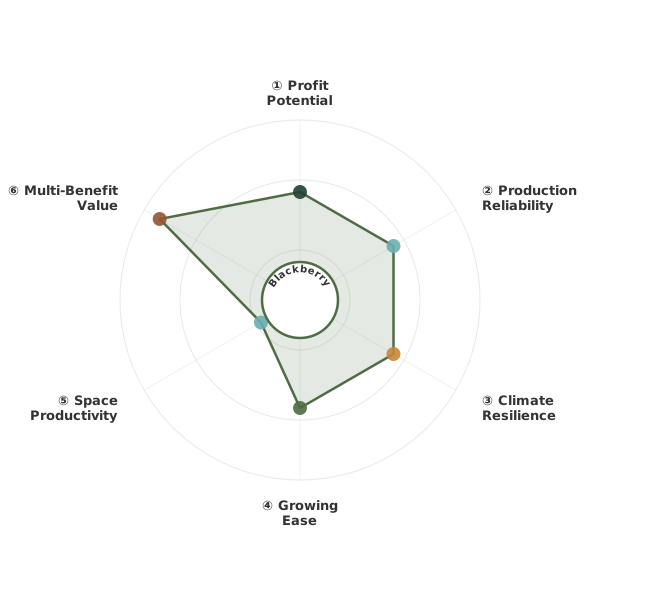
Trait Suitability Explanation
Season Extension Adequate As hardy perennials, blackberries contribute to extended harvest windows by offering fruit into early fall, a phenomenon supported by the microclimate created through regenerative practices.
Space Efficiency Not Recommended Thorny brambles, blackberries require thoughtful spatial planning to integrate into the landscape, where their vigorous growth can contribute to ground cover and habitat creation.
Storage Longevity Not Recommended Blackberries thrive when consumed fresh, their delicate nature best appreciated immediately following harvest, highlighting the importance of proximity to consumption in a regenerative system.
Yield Reliability Adequate With a focus on building soil health through compost and mulch, blackberries offer reliable yields, their productivity enhanced by integrated pest management and supportive structures.
Establishment Ease Adequate Blackberries readily establish from vegetative propagation, rapidly developing into robust plants that contribute to ground cover and suppress weed competition through their vigorous growth.
Multi Benefit Value Ideally Suited These plants offer a bounty of food for wildlife, create vital habitat, and help stabilize soil, while their thorny structure can deter certain pests and provide natural protection.
Climate Adaptability Adequate Adaptable to a range of conditions, blackberries benefit from strategic water management and mulching to maintain optimal moisture, while good drainage is crucial for plant health.
Maintenance Intensity Adequate Managing blackberry growth through pruning integrates them into the farm ecosystem, and their need for fertility is met through ongoing compost applications and robust soil biology.
Disease Pest Resistance Adequate Blackberries possess moderate natural resistance, and their resilience is further supported by a healthy soil ecosystem, promoting vigorous growth that can outcompete common challenges.

Comparative System: Ratings compare plants within their economic category (e.g., cover crop nitrogen fixation compared to other cover crops, not to all plants). Individual farm conditions and management practices significantly influence actual performance.

8

Learn More

Why farmers use this plant and additional resources

Why Regenerative Farmers Use This Plant

Rubus fruticosus presents a compelling case for integration into regenerative agriculture, particularly as a specialty cash crop. Its high-value fruit commands attention in direct-to-consumer markets, including farmers' markets, CSA shares, and farm stands, often fetching premium prices due to its freshness and superior flavor compared to conventionally shipped produce. Well-managed blackberry plantings can yield between 3,000-15,000 lbs/acre (3,360-16,800 kg/ha) of marketable fruit annually, depending on variety, management, and growing conditions.

The relatively short time from planting to first substantial harvest, typically 1-2 years for full production, and a long fruiting season from mid-summer through fall depending on variety and climate, offers a consistent revenue stream. Varieties can be selected for staggered ripening, enabling a continuous harvest window of 4-8 weeks, maximizing market presence and revenue generation. With a long productive lifespan of 10-15+ years, they represent an attractive perennial investment.

Beyond direct fruit sales, blackberries contribute significantly to ecosystem health and farm resilience. Their dense, thorny growth habit makes them an excellent natural deterrent for livestock and a formidable barrier against encroaching weeds, reducing the need for mechanical cultivation or synthetic herbicides. When managed as hedgerows or border plantings, Rubus fruticosus provides critical habitat and food sources for a variety of beneficial insects, including pollinators and predatory insects that help manage pest populations in adjacent crops.

The extensive root system, which can reach depths of 3-6 feet (0.9-1.8 meters) or more in mature plants, aids in soil stabilization, preventing erosion on slopes and improving water infiltration. As a perennial, they reduce the need for annual soil disturbance associated with annual cropping, thereby preserving soil organic matter and microbial life. Their presence can also act as a natural barrier, deterring livestock from overgrazing sensitive areas or acting as a living fence.

The ecological services provided by Rubus fruticosus extend to supporting biodiversity and improving soil health. Flowering blackberry bushes attract a wide array of pollinators, including bees, butterflies, and hoverflies, with individual plants potentially supporting hundreds of beneficial insect visits per day during peak bloom. This increased pollinator activity can have positive spillover effects on adjacent crops, enhancing their fruit set and yield. The fruit itself is a vital food source for birds and small mammals, integrating the plant into the wider farm ecosystem. As the plant decomposes, its woody material and leaf litter contribute organic matter to the soil, enhancing soil structure and fertility over time, reducing reliance on external inputs. This natural nutrient cycling, coupled with the plant's ability to scavenge nutrients from deeper soil profiles, contributes to a more self-sustaining and resilient agricultural landscape, reducing the overall ecological footprint of the farm.

Regional adaptations for Rubus fruticosus are diverse. In the Pacific Northwest of the United States, large-scale commercial operations and smaller diversified farms alike cultivate blackberries for fresh market and processing, benefiting from the region's ideal climate. In the United Kingdom, heritage varieties are maintained in traditional orchards and hedgerows, contributing to local biodiversity and providing fruit for artisanal products. Australian farmers in cooler regions are increasingly exploring blackberry cultivation for specialty markets, integrating them into mixed farming systems. In parts of South America, such as Chile, blackberry production is a growing sector, often found in smaller holdings that supply local and regional markets. In Canada, selecting cold-hardy varieties and providing winter protection may be necessary, with integration into farm-gate sales and U-pick operations being common. In South Africa, particularly in the Western Cape, blackberries are grown commercially, often alongside other berries, for both domestic consumption and export. In New Zealand, blackberry cultivation is often found on smaller lifestyle blocks and farms, integrated into mixed cropping systems and sold through local markets. In parts of Europe, such as France and Germany, traditional hedgerows often feature wild and cultivated blackberries, demonstrating their long-standing role in rural landscapes and food systems.

9

How to Integrate This Plant

Practical guidance for regenerative systems

Establishing Rubus fruticosus typically involves planting dormant canes or bare-root plants in early spring, after the last frost but before significant new growth begins, or in fall in milder climates. Seeding is not a common method for commercial fruit production as it does not reliably produce true-to-type fruit and takes significantly longer to establish. For transplants, spacing is crucial for optimal growth and harvest access, generally ranging from 4-8 feet (1.2-2.4 meters) between plants within a row, with row spacing of 8-12 feet (2.4-3.6 meters). This allows for adequate air circulation and ease of management, typically requiring 200-500 plants per acre (500-1200 plants/ha). For hedgerow applications, spacing can be slightly closer, around 3-5 feet (0.9-1.5 meters) apart.

Planting depth is critical; for bare-root canes, ensure the root crown is just at or slightly below soil level, typically 1-2 inches (2.5-5 cm) for bare-root stock, with roots spread out in the planting hole. For plug plants, follow the nursery's specific depth recommendations, usually planting at the same depth as they were in their container. The optimal planting time is during the dormant season, typically late autumn or early spring, from March to May in the Northern Hemisphere and September to November in the Southern Hemisphere, to allow roots to establish before summer heat. Successful establishment requires well-drained soil and adequate moisture, especially during the first growing season.

Management practices for Rubus fruticosus focus on promoting healthy cane growth, fruit production, and disease prevention. Brambles are vigorous growers and benefit greatly from training on trellises or wires, which supports the canes, improves fruit exposure to sunlight, and facilitates harvesting. Pruning is essential to manage plant size, remove old fruiting wood, and encourage new cane growth. Floricanes (second-year canes) produce fruit and should be removed after harvest, while primocanes (first-year canes) develop and will bear fruit the following season. Dormant pruning in late winter removes old floricanes and thin, weak primocanes, while summer pruning can help manage primocane growth and encourage branching.

Blackberries require consistent moisture, especially during establishment and fruit development, aiming for approximately 1-2 inches (2.5-5 cm) of water per week, ideally supplied through drip irrigation to conserve water and minimize foliar diseases. Fertility should be guided by biological principles: incorporate well-rotted compost or aged manure in the planting year, and rely on cover crop residue and mulching in subsequent years. Supplemental nitrogen can be provided by intercropping with legumes or by applying compost tea.

The production cycle for Rubus fruticosus requires careful planning. Most primocane-fruiting (fall-bearing) varieties can produce a crop in their first year if planted early, with full production typically achieved in the second or third year. Floricane-fruiting (summer-bearing) varieties will bear fruit on second-year canes, meaning the first significant harvest occurs in the second year. Succession planting isn't applicable in the same way as annual vegetables, but staggered planting of different varieties with varying ripening times can extend the harvest season.

Pest and disease management prioritizes preventative cultural practices such as choosing resistant varieties, ensuring good air circulation through pruning and spacing, and maintaining soil health. Biological controls, such as encouraging beneficial insects that prey on common pests like aphids, are preferred over chemical interventions. Integrated Pest Management (IPM) strategies focus on sanitation, pruning out diseased canes, encouraging beneficial insects, and using resistant varieties.

Following the final harvest and pruning in late fall, it is beneficial to manage crop residue by removing diseased canes and incorporating healthy material into the soil or composting it. A winter cover crop mix, such as a blend of cereal rye and hairy vetch, can be sown within 2-4 weeks of final harvest to protect soil, suppress weeds, and add organic matter and nitrogen. A minimum 3-year crop rotation interval with non-related crops is recommended to break potential pest and disease cycles specific to brambles.

View Full Document (Printable single-page version)