Regenerative Quick Profile

All recommendations assume integrated, regenerative practices—not conventional inputs.

Climate & Soil Fit

Climate: Tropical Rainforest, Tropical Monsoon, Tropical Savanna, Hot Semi-Arid (Steppe), Cold Semi-Arid (Steppe), Hot Desert, Cold Desert, Humid Subtropical, Oceanic (Maritime Temperate), Hot-Summer Mediterranean, Warm-Summer Mediterranean, Monsoon-Influenced Humid Subtropical, Subtropical Highland, Hot-Summer Continental, Warm-Summer Continental, Subarctic, Monsoon-Influenced Hot-Summer Continental, Tundra

Zones: USDA 10-11, Australian Zones 11-13, EU Mediterranean, Subtropical

Optimal Soil: Loam Soil

System Role & Functions

Primary: Food Forest

Secondary: Cash Crop With Services, Specialty

Key Benefits: Climate adaptable, Integration-friendly

Management Level

Experience: Advanced

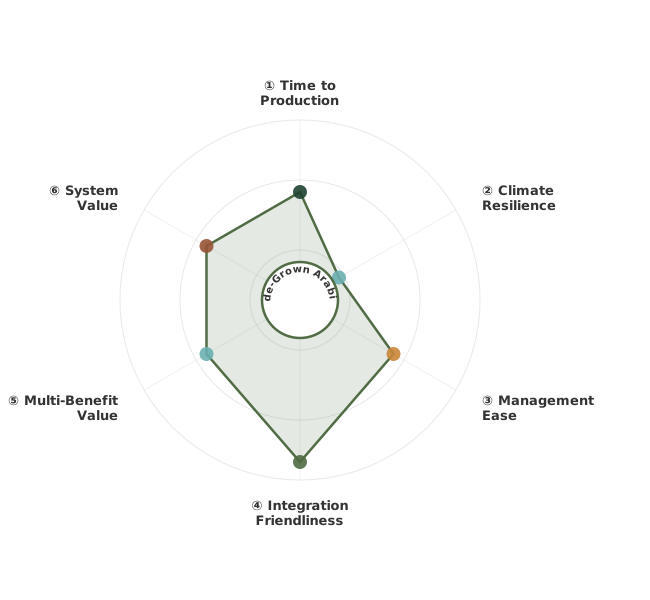
Maintenance: Moderate maintenance - While benefiting from shade, this system involves complex integration, requiring management of canopy trees, ground cover, and coffee, thus maintaining a typical maintenance need.

Time to Production: Moderate (2-5 years) - Arabica coffee plants begin to contribute meaningfully to the harvest within 3-5 years, reaching peak productivity around 5-7 years, representing a moderate investment period for a highly valued crop.

Value Streams

  • Fruit/nut harvest
  • Diversifies farm income
  • Enhances biodiversity
1

Climate Suitability Assessment

Will this plant thrive in your climate?

IDEALLY SUITED

Köppen Zone: Af (Tropical Rainforest), Am (Tropical Monsoon), Cfa (Humid Subtropical)
USDA Zone: 8a, 9a, 10a, 11a, 12a
Australian Zone: tropical, subtropical

Shade-grown Arabica coffee thrives in tropical and subtropical climates with consistent warm temperatures, ideally between 65-75°F (18-24°C) for optimal growth and fruit development. These conditions are met in Köppen zones Aw and Am, USDA zones 9a through 13a, and Australian tropical and subtropical regions. These zones typically offer ample rainfall during a distinct wet season, which is crucial for plant vigor and bean filling. While a dry season is beneficial for bean maturation and flavor development, supplemental irrigation is often necessary during these periods to ensure consistent yields and quality. The presence of shade trees is paramount in these regions to protect coffee plants from intense solar radiation, prevent heat stress, and maintain optimal microclimatic conditions, thereby enhancing bean quality and plant longevity. These environments allow for reliable, multi-year production with minimal need for artificial climate modification, making them the most economically viable for Arabica coffee cultivation.

ADEQUATE

Köppen Zone: Aw (Tropical Savanna), Cfb (Oceanic (Maritime Temperate)), Csb (Warm-Summer Mediterranean), Cwa (Monsoon-Influenced Humid Subtropical), Cwb (Subtropical Highland)
USDA Zone: 6a, 7a

Arabica coffee can be grown in USDA zones 8a and 8b, offering a longer frost-free period and generally warm temperatures that are conducive to growth, though not always optimal for fruit maturation. These zones experience winter lows that are manageable for coffee plants, but occasional light frosts can still pose a risk, necessitating careful site selection and potentially some form of winter protection or microclimate management. While rainfall may be sufficient during parts of the year, supplemental irrigation is often required, especially during drier periods, to ensure consistent moisture levels critical for bean development and plant health. Shade management is still essential to mitigate the effects of warmer summer temperatures and prevent sun scorch. Production in these zones may be less consistent or yield slightly lower quality beans compared to ideal tropical regions, but it can be economically viable for specialty markets with careful planning and management practices.

NOT RECOMMENDED

Köppen Zone: ET (Tundra), BSh (Hot Semi-Arid (Steppe)), BSk (Cold Semi-Arid (Steppe)), BWh (Hot Desert), BWk (Cold Desert), Csa (Hot-Summer Mediterranean), Dfa (Hot-Summer Continental), Dfb (Warm-Summer Continental), Dfc (Subarctic), Dwa (Monsoon-Influenced Hot-Summer Continental)
USDA Zone: 2a, 3a, 3b, 4a, 5a, 5b
Australian Zone: temperate
EU Climate Region: atlantic, mediterranean

Shade-grown Arabica coffee is not recommended for Köppen zones Cfa and Cfb, USDA zones 6a through 7b, Australian temperate regions, and EU Atlantic and Mediterranean climate regions due to significant climatic limitations. These zones experience temperatures that are either too cold, with frequent frosts and insufficient growing season length (Köppen Cfb, USDA 6a-7b, Australian temperate, EU Atlantic), or too hot and dry during critical growth periods (Köppen Cfa, EU Mediterranean). In colder zones, winter kill is a high probability, and the cumulative heat units are insufficient for proper fruit maturation, leading to low yields and poor quality. In hotter, drier zones, extreme summer heat and drought stress the plants severely, requiring extensive and costly irrigation and shade infrastructure that is often economically unviable. Establishment success is risky, and consistent, high-quality production is highly improbable without significant, often impractical, climate modification. Alternative plants better suited to these specific climatic conditions are recommended for food forest and regenerative agriculture applications.

Better alternatives for these "not recommended" zones: Pawpaw (Asimina triloba) (Native to Eastern North America, tolerates a wider range of temperatures and can be grown in food forests.), Persimmon (Diospyros spp.) (Many varieties are cold-hardy and can produce fruit in these zones, fitting a food forest system.), Fig (Ficus carica) (Can be grown in warmer parts of Cfa with some winter protection, offering a sweet fruit crop.), Hardy Kiwi (Actinidia arguta) (Vigorous vine that can tolerate cold winters and produce fruit.), Serviceberry (Amelanchier spp.) (Native shrub/small tree with edible berries, very cold-hardy.), Elderberry (Sambucus spp.) (Tolerates cold and provides edible berries and flowers.), Feijoa (Acca sellowiana) (Tolerates cooler temperatures and produces edible fruit.), Nashi Pear (Pyrus pyrifolia) (Many varieties are well-suited to temperate climates and can be integrated into food forests.), Chestnut (Castanea spp.) (Produces nuts and can tolerate cooler climates.), Hazelnut (Corylus avellana) (Well-adapted to Atlantic climates and provides edible nuts.), Blackcurrant (Ribes nigrum) (Thrives in cooler, moist conditions and produces valuable berries.), Gooseberry (Ribes uva-crispa) (Another berry suitable for cooler, humid European climates.), Olive (Olea europaea) (Iconic Mediterranean crop that thrives in hot, dry summers.), Almond (Prunus dulcis) (Requires a Mediterranean climate and is well-suited for dry conditions.), Citrus (Citrus spp.) (Many varieties do well in Mediterranean climates with some winter protection.)

Note: Zones listed above represent climates where this plant can produce reliably with reasonable management. Climate zones not mentioned would require intensive climate modification (greenhouses, extensive infrastructure) and are not economically viable for regenerative agriculture purposes.

2

Soil Suitability Assessment

Which soil types work best for this plant?

IDEALLY SUITED

Loam Soil

This plant thrives in these soil types without requiring amendments or remediation. Natural soil conditions support optimal growth and productivity.

ADEQUATE

Acidic Soil, Clay Soil, Rich Soil, Rocky Soil, Sandy Soil

This plant performs acceptably in these soil types with moderate, manageable remediation such as pH adjustment, compost addition, or drainage improvement. The required amendments are practical and cost-effective for regenerative agriculture.

NOT RECOMMENDED

Alkaline Soil, Desert Soil, Saline Soil, Wet Soil

Growing this plant in these soil types would require impractical remediation such as complete soil replacement, extensive amendments, or cost-prohibitive infrastructure. These conditions are not economically viable for regenerative agriculture.

Note: Soil suitability assessments focus on remediation requirements. "Ideally Suited" means the plant generally thrives without the need for substantial amendments, "Adequate" means manageable remediation (lime, compost, mulch), and "Not Recommended" means impractical soil changes would be required. Climate factors like rainfall and temperature also influence success.

3

Seasonal Considerations

Planting timing, growth duration, and harvest windows

Establishing your coffee trees is a multi-year journey. Begin planting nursery stock during the active growing season, after the last expected frost, when plants are vigorous and ready to establish quickly. Container-grown trees offer flexibility and can be planted throughout the warmer months, while bare-root options are best planted in early spring while still dormant.

Expect your coffee trees to take several years to fully establish, typically three to five, before yielding their first significant harvest. Full production will gradually increase over the subsequent few years, with trees remaining productive for decades under good management.

Seasonal management is key. Pruning is best performed during the dormant season, typically in late fall or winter, to shape the tree and encourage vigorous new growth. Coffee blooms often appear in spring, following periods of adequate rainfall. The harvest season usually commences in fall and can extend into winter, depending on the specific variety and local climate. While coffee plants don't experience a harsh winter dormancy like some temperate fruit trees, cooler temperatures and reduced rainfall in winter signal a period of reduced activity, allowing the plant to prepare for the next growing and fruiting cycle.

4

System Role & Multi-Benefit Value

Functional roles, integration strategies, and stacked benefits

Functional Role

Integration Characteristics

Multi-Benefit Value: Adequate - Offers a valuable cash crop alongside ecosystem services such as shade and habitat provision, while actively contributing to biodiversity through pollinator attraction.

Integration Friendliness: Ideally Suited - This variety is THE model for tropical agroforestry, designed for multi-story systems, directly rewarding regenerative practices, making it exceptionally friendly for integration.

5

Economics & Value Streams

Direct harvest, system benefits, ecosystem services, and risk diversification

Comprehensive economic analysis including direct harvest value, system enhancement contributions, ecosystem services, value timeline, and risk diversification strategies.

Per-Tree Production Economics

Metric Value
Establishment Cost $5-10
Years to First Harvest 3-4 years
Annual Maintenance $3-7
Yield 1-3 lbs/year 0-1 kg/year
Market Price $3-6/lb $6-13/kg
Productive Lifespan 15-25 years
Net Annual Return* $-4 to $14/year

Values shown per mature tree, not per acre. In regenerative systems, trees are integrated at low densities across diverse landscapes. Establishment costs spread over the lifespan of the tree. Early years have costs but no revenue.

* Net Annual Return = (Yield × Market Price) − (Amortized Establishment Cost + Annual Maintenance). This return is realized only at/after first harvest; early years have costs but no revenue. Range shows worst case to best case scenarios.

System Enhancement Value

Beyond harvest: how understory complements overstory in polyculture

Food Forest System Contributions

Coffee plants, particularly *Coffea arabica*, offer several other system benefits beyond direct harvest. Their flowers are self-fertile and typically bloom during the rainy season, attracting pollinators. While not explicitly detailed as a primary pollinator species in the provided excerpts, the presence of flowering coffee plants within an integrated system can contribute to overall pollinator diversity and abundance. Furthermore, the cultivation of coffee, especially in agroforestry settings with diverse companion species, can create valuable habitat for wildlife. The knowledge base mentions the use of organic compost from bean processing by-products, indicating potential for nutrient cycling and waste stream valorization. The deep root systems of established coffee plants can also contribute to soil structure improvement and water infiltration, especially on slopes, thus reducing runoff and erosion. The characteristic high-altitude growing conditions of *C. arabica* suggest its suitability for areas that might otherwise be challenging for conventional agriculture, potentially contributing to land use diversification.

Nitrogen Fixation (if legume)

As *Coffea arabica* itself is not a nitrogen-fixing legume, it does not directly contribute to nitrogen fixation. However, its integration into agroforestry systems, as indicated by the knowledge base, often involves companion planting with nitrogen-fixing species like *Erythrina poeppigiana*. These associated leguminous trees and shrubs, when incorporated into a food forest system with coffee, can significantly enhance soil fertility by fixing atmospheric nitrogen. The nitrogen fixed by these species becomes available to the coffee plants and other surrounding vegetation through decomposition of leaf litter and root exudates. This reduces the reliance on synthetic nitrogen fertilizers, thereby lowering input costs and environmental impact. The presence of these nitrogen-fixing species can also support a more robust and diverse soil microbial community, further improving nutrient cycling and overall soil health within the integrated system.

Groundcover & Erosion Control

In integrated farm systems, particularly those in exposed locations, *Coffea arabica* can contribute to windbreak functionality when planted in hedgerows or as part of a multi-strata agroforestry system. While not as dense as dedicated windbreak species, the canopy and root structure of mature coffee plants, especially when combined with taller agroforestry species often co-planted with coffee, can intercept wind flow. This interception can reduce wind speed at ground level, thereby mitigating soil erosion and minimizing physical damage to more sensitive crops or livestock within the protected area. The presence of a windbreak effect can lead to improved microclimates, reducing desiccation and temperature extremes, which can enhance the growth and yield of interplanted crops. The effectiveness would be proportional to the density and configuration of the coffee planting within the overall farm design.

Ecosystem Service Contributions

Environmental contributions: carbon, pollinators, wildlife, and water

  • Carbon Sequestration: Established *Coffea arabica* plantations, especially when managed organically and integrated into agroforestry systems, can sequester significant amounts of carbon in both aboveground biomass and soil organic carbon (SOC). Studies indicate that organic management with litter return can increase SOC in the topsoil, and the application of organic compost can lead to substantial SOC accumulation. While native vegetation typically holds the highest carbon stocks, coffee cultivation shows subtle losses that can be offset by improved management practices.
  • Pollinator Support: Medium. Coffee flowers are self-fertile but can attract pollinators. In a food forest system with diverse flowering plants, coffee contributes to the overall floral resources available to a wider range of pollinators.
  • Wildlife Habitat: Moderate. Mature coffee plants, especially in agroforestry systems with shade trees, provide cover and potential nesting sites. The surrounding vegetation and understory associated with coffee cultivation can support various insect, bird, and small mammal species.
  • Water Quality: Not applicable

Value Timeline: Understory Development

When you'll see results: groundcover/herbs year 1, shrubs 2-3, full layer integration 5-10

Years 1-2

Establishment of ground cover, initial soil stabilization, and potential early contributions to microclimate modification (if part of a larger agroforestry system). Early stages of potential pollinator attraction.

Years 3-5

First significant harvests of specialty coffee beans. Established shade canopy (if integrated with shade trees) begins to provide consistent microclimate regulation. Nitrogen contribution from companion leguminous species becomes more pronounced.

Years 10-20

Full production of high-quality coffee beans. Mature agroforestry system provides substantial shade, windbreak effects, and enhanced habitat. Significant soil organic carbon accumulation and improved soil structure.

20+ Years

Long-term stability of ecosystem services. Continued high-quality coffee production. Potential for diversification into other products from associated agroforestry species (e.g., timber, fruits). Mature and resilient integrated farm system.

Farm Risk Reduction

How multi-layer systems diversify production and income

  • Multiple Revenue Streams: Specialty coffee beans, potential for value-added products (e.g., cascara tea), biomass for compost, associated agroforestry products (if applicable).
  • Temporal Income Spread: Annual harvest of coffee beans, ongoing ecosystem services (carbon sequestration, habitat, soil health) that provide continuous value, potential for long-term timber or fruit harvests from associated species.
  • Market Risk Hedge: Diversifies farm revenue beyond a single commodity. Specialty coffee markets can offer premium pricing, reducing reliance on volatile commodity markets. Agroforestry integration enhances resilience to climate variability (e.g., drought, extreme heat) through improved microclimates and soil health.
6

Regenerative Suitability Details

Comprehensive trait ratings for system integration assessment

Comparative ratings for this plant across key regenerative agriculture traits.

Trait Suitability Explanation
Drought Tolerance Not Recommended Arabica coffee possesses a shallow root system, necessitating consistent moisture through effective water management and mulching; its production is significantly impacted by prolonged dry periods, making it unsuitable for areas lacking robust moisture retention strategies.
Establishment Ease Not Recommended Arabica coffee requires careful site selection and management to thrive, benefiting from microclimates that offer protection and optimized conditions for robust seedling development.
Time To Production Adequate Arabica coffee plants begin to contribute meaningfully to the harvest within 3-5 years, reaching peak productivity around 5-7 years, representing a moderate investment period for a highly valued crop.
Multi Benefit Value Adequate Offers a valuable cash crop alongside ecosystem services such as shade and habitat provision, while actively contributing to biodiversity through pollinator attraction.
Climate Adaptability Ideally Suited Shade-grown systems create a more stable microclimate, buffering against temperature extremes and supporting robust growth, making this variety more adaptable than standard Arabica.
Hardiness Zone Range Not Recommended Arabica coffee thrives in specific subtropical highland ecologies (zones 10-11), necessitating precise climate management to mitigate risks from frost and extreme heat, thereby defining its optimal cultivation zones.
Maintenance Intensity Adequate While benefiting from shade, this system involves complex integration, requiring management of canopy trees, ground cover, and coffee, thus maintaining a typical maintenance need.
Pest Disease Pressure Not Recommended Arabica coffee is susceptible to certain pests and diseases, with robust health supported by optimal growing conditions and integrated pest management strategies that leverage biodiversity and soil health.
Integration Friendliness Ideally Suited This variety is THE model for tropical agroforestry, designed for multi-story systems, directly rewarding regenerative practices, making it exceptionally friendly for integration.

Comparative System: Ratings compare plants within their economic category (e.g., cover crop nitrogen fixation compared to other cover crops, not to all plants). Individual farm conditions and management practices significantly influence actual performance.

7

Learn More

Why farmers use this plant and additional resources

Why Regenerative Farmers Use This Plant

Coffee, when cultivated within a regenerative agroforestry system, represents a cornerstone of truly sustainable land management, offering long-term ecological and economic resilience. As a perennial tree, it establishes a deep root system, typically reaching 6-15+ feet (1.8-4.5+ m) over its productive lifespan, which can span 20-30 years or more. This extensive root network is crucial for soil stabilization, preventing erosion on slopes common in coffee-growing regions. Traditional shade-grown coffee systems are inherently regenerative, with coffee shrubs (Coffea arabica or Coffea canephora) flourishing under the protective canopy of diverse, nitrogen-fixing shade trees. These systems are designed for multi-decade economic returns, with coffee trees beginning to yield commercially within 3-5 years and reaching full production by year 5-10, continuing to produce for 20-30+ years.

Mature coffee agroforestry systems can sequester an estimated 2-5 tons of CO2e per acre per year (5-12.5 tons CO2e/ha/year), contributing significantly to climate change mitigation. The perennial nature of coffee ensures consistent ground cover, minimizing soil disturbance and fostering a stable soil microbiome, which is fundamental to regenerative agriculture. The multi-story canopy provides essential shade regulation, preventing overheating of coffee plants and the soil, while also acting as a vital windbreak, protecting delicate coffee cherries and reducing soil erosion. The asset value of a well-established coffee agroforestry farm accumulates over decades, offering long-term economic security and ecological resilience.

Beyond its direct economic output, coffee integrated into agroforestry systems provides a wealth of ecosystem services. The diverse shade tree species, often leguminous, actively fix atmospheric nitrogen, enriching the soil and reducing the need for external fertilization. This biological nitrogen input can range from 50-150 lbs/acre (56-168 kg/ha) annually, depending on the tree species and stand density. The deep root systems of mature coffee plants and their associated shade trees enhance soil structure and water infiltration, making the system more resilient to drought and heavy rainfall. Furthermore, these diverse canopies create microclimates that support a rich biodiversity of beneficial insects, birds, and pollinators, contributing to natural pest control and overall ecosystem health. The biomass produced by pruning shade trees and coffee plants can be returned to the soil as mulch, further building soil organic matter and improving nutrient cycling.

The integration of coffee into a regenerative framework amplifies its ecological benefits. By mimicking natural forest structures, these systems foster a complex web of life. Shade trees provide habitat and food sources for numerous bird species, which can help with seed dispersal and insect control. The understory, often managed with low-growing, nitrogen-fixing ground covers or beneficial herbs, further enhances soil health and can provide supplementary income streams or forage for livestock in silvopasture designs. The long-term commitment to perennial coffee cultivation and its associated agroforestry components means that soil carbon sequestration is not a temporary benefit but a continuous process, with measurable soil organic matter increases often observed by year 5-7 of establishment.

The economic returns from well-managed, shade-grown coffee are substantial and sustainable over decades. While initial establishment requires investment, coffee trees typically begin bearing fruit within 3-5 years, with full commercial production achieved by year 5-10. This gradual ramp-up allows for diversification of income streams through intercropping or silvopasture during the establishment phase. The market increasingly values shade-grown, ethically produced coffee, with heritage varieties like Gesha commanding premium prices, often ranging from $50-200+ per pound ($110-440+/kg). This premium reflects not only the superior quality of the bean but also the ecological and social benefits inherent in regenerative agroforestry systems, offering farmers a pathway to consistent, multi-decade income and building a valuable, living asset.

Coffee agroforestry systems have a proven track record of success across diverse tropical and subtropical regions. In the highlands of Central America, traditional shade-grown coffee farms are renowned for their high-quality beans and biodiversity. Brazilian coffee plantations, particularly those transitioning to more diversified shade systems, are demonstrating significant improvements in soil health and resilience. In East Africa, smallholder farmers are increasingly adopting agroforestry practices to enhance coffee yields and diversify their income through fruit trees and other intercrops. In Indonesia, coffee is often intercropped with spices like cloves and nutmeg, creating complex and resilient farming systems that provide multiple income streams. These systems are not just about producing coffee; they are about building resilient landscapes, fostering biodiversity, and ensuring the long-term economic viability of farming communities.

8

How to Integrate This Plant

Practical guidance for regenerative systems

Establishing coffee as a perennial agroforestry species involves careful planning and a long-term perspective for successful integration. Coffee is typically propagated from seed or cuttings, with seedlings often started in nurseries for 6-12 months before transplanting. For traditional coffee plantations, rows are often spaced 8-10 feet (2.4-3 m) apart, with plants within the row at 4-6 feet (1.2-1.8 m), allowing for a density of approximately 800-1200 plants per acre (2000-3000 plants/ha). Spacing can vary; for example, in a system aiming for a dense canopy, spacing might be closer, while in alley cropping designs, wider rows of 10-15 ft (3-4.5 m) might be employed to allow for equipment access or grazing. Planting depth for seedlings should ensure the root ball is fully covered, typically around 2-4 inches (5-10 cm) deep for seedlings, protecting the young root system and ensuring stability. Planting is best timed with the onset of the rainy season, typically March-May in the Northern Hemisphere and September-November in the Southern Hemisphere, to ensure adequate moisture for establishment.

Management of coffee in an agroforestry system focuses on fostering a healthy, productive ecosystem over decades. Young coffee plants require consistent moisture, ideally around 1 inch (2.5 cm) of water per week during their first 1-3 years, which may necessitate irrigation in drier periods. As the trees mature, annual pruning is essential to manage canopy size, promote air circulation, and optimize light penetration for understory crops or for the coffee plant itself, typically aiming for 40-60% light penetration to the forest floor. Fertility is primarily managed through biological means: incorporating compost, the decomposition of shade tree leaf litter, planting nitrogen-fixing cover crops beneath the canopy, and applying compost or well-rotted manure. Coffee plants are perennial, with a growth timeline that sees them establish over 1-3 years and reach full production between 3-15 years, depending on the variety and management. Pest and disease management prioritizes biological controls, such as encouraging beneficial insects and maintaining plant diversity, alongside cultural practices like proper pruning to improve air circulation and reduce disease incidence. Chemical interventions are a last resort, used only during transitional phases to address severe outbreaks while working towards more resilient biological solutions.

Category-specific integration for coffee as a perennial agroforestry species emphasizes system design and long-term establishment. Trees typically reach establishment within 1-3 years and full production can take 3-15 years, depending on variety and management. Rootstock or grafting considerations can be important for disease resistance and accelerated fruiting, although coffee is often grown on its own roots. Canopy management involves annual pruning to maintain desired height, shape, and light penetration for understory crops. Intercropping understory design can include planting nitrogen-fixing ground covers like Desmodium or Crotalaria from year 2-3, or integrating shade-tolerant vegetables and medicinal herbs. In alley cropping or silvopasture designs, coffee rows might be integrated with rows of larger nitrogen-fixing trees (e.g., Erythrina, Inga) spaced 15-40 ft (4.5-12 m) apart to allow for grazing or equipment access. Measurable soil carbon increases are expected by year 5-7 as the perennial system matures. Long-term infrastructure includes reliable irrigation for establishment years, robust fencing for browse protection, and potentially trellising or support for certain shade tree species.

Regional adaptations for coffee agroforestry are diverse. In the Colombian Andes, coffee is often intercropped with plantains and various fruit trees, creating a complex, multi-layered system that provides continuous income and enhances biodiversity. In Indonesian coffee plantations, traditional shade trees like Albizia and Leucaena are used to provide dappled shade, improving bean quality and protecting against soil erosion. In Brazilian coffee regions, farmers are increasingly experimenting with integrating native timber species and fruit trees into their coffee farms, enhancing carbon sequestration and providing additional income streams, with some silvopasture systems intercropping coffee with fast-growing trees for timber and livestock forage. In East African coffee-growing areas, shade is often provided by indigenous trees, creating habitats for endemic bird species and supporting a rich insect fauna, with integration of fruit trees like bananas and avocados creating polycultures that diversify income and enhance food security. In Indian coffee estates, intercropping with spices like cardamom and pepper, alongside nitrogen-fixing trees, creates complex agroecosystems that optimize land use and soil health. In Vietnam's Central Highlands, coffee is increasingly being integrated into agroforestry models with fruit trees and timber species to improve soil health and diversify income.

View Full Document (Printable single-page version)