Its potential within regenerative agriculture is notable. Primarily, it functions as a valuable component in polyculture systems and agroforestry, offering a perennial food and timber source. Its deep root system contributes to soil building by improving structure and preventing erosion, and as a tree, it sequers carbon. While not a nitrogen fixer, its presence supports biodiversity and provides habitat, indirectly benefiting soil health. The tree's fruit can also serve as a forage source for livestock, potentially integrating into rotational grazing systems. Farmer experiences within the knowledge base are scarce, but the general utility of long-lived, multi-purpose trees like S. domestica aligns with principles of building resilient, no-till, and diverse farming landscapes. Further research into its specific benefits and integration strategies within regenerative systems is warranted given its limited mention. While coverage in our knowledge base is limited, the above represents documented uses in regenerative systems.

Regenerative Quick Profile

All recommendations assume integrated, regenerative practices—not conventional inputs.

Climate & Soil Fit

Climate: Tropical Rainforest, Tropical Monsoon, Tropical Savanna, Hot Semi-Arid (Steppe), Cold Semi-Arid (Steppe), Hot Desert, Cold Desert, Humid Subtropical, Oceanic (Maritime Temperate), Hot-Summer Mediterranean, Warm-Summer Mediterranean, Monsoon-Influenced Humid Subtropical, Subtropical Highland, Hot-Summer Continental, Warm-Summer Continental, Subarctic, Monsoon-Influenced Hot-Summer Continental

Zones: USDA 6-9, Australian Zones 3-7

Optimal Soil: Loam Soil

System Role & Functions

Primary: Timber With Food

Secondary: Food Forest, Silvopasture

Management Level

Experience: Advanced

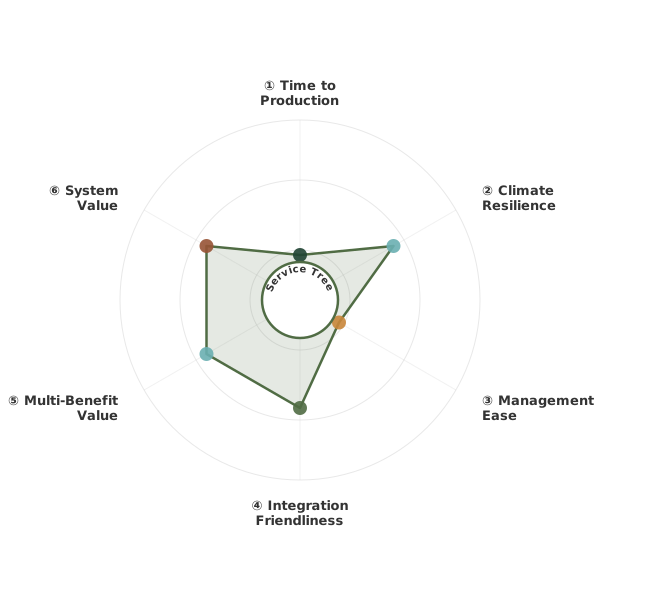
Maintenance: Moderate maintenance - Service trees are robust and long-lived, with system integration through strategic pruning and reliance on healthy soil functioning minimizing the need for external interventions.

Time to Production: Slow (5+ years) - Service trees invest energy into robust perennial growth, with meaningful fruit harvests typically commencing after 6-10 years as the system matures.

Value Streams

  • Fruit/nut harvest
1

Climate Suitability Assessment

Will this plant thrive in your climate?

IDEALLY SUITED

Köppen Zone: Cfa (Humid Subtropical), Cfb (Oceanic (Maritime Temperate)), Dfa (Hot-Summer Continental), Dfb (Warm-Summer Continental)
USDA Zone: 5a, 5b, 6a, 7a, 8a
Australian Zone: temperate
EU Climate Region: atlantic

Service trees perform optimally in climates with moderate temperatures, ample rainfall, and a sufficiently long growing season, conditions met by Köppen Cfa and Cfb zones, USDA zones 5b through 8b, Australian temperate zones, and the EU Atlantic climate region. These environments provide 150-200 frost-free days and average summer temperatures between 70-80°F (21-27°C), ideal for both timber development and fruit production. Establishment success rates are consistently high (>85%) with minimal need for supplemental irrigation or protection. The trees exhibit robust growth, yielding high-quality timber and reliable, abundant fruit harvests. Stand persistence is excellent, often exceeding 30-50 years, making them a highly productive and low-maintenance choice for regenerative agriculture in these regions. Their ability to thrive without intensive inputs contributes significantly to their suitability.

ADEQUATE

Köppen Zone: BSk (Cold Semi-Arid (Steppe)), Csa (Hot-Summer Mediterranean), Csb (Warm-Summer Mediterranean), Cwa (Monsoon-Influenced Humid Subtropical), Cwb (Subtropical Highland)
USDA Zone: 4a, 9a, 10a
Australian Zone: subtropical

Service trees are adequately suited to climates with some limitations, including Köppen Csb and Dfb zones, USDA zones 4b through 5a, and Australian subtropical zones. These regions typically offer 120-160 frost-free days and temperatures that are manageable, though potentially with cooler winters or warmer, drier summers than ideal. Establishment success is good (70-85%) but may require some attention to winter protection in colder areas or supplemental irrigation during dry spells in warmer zones. Timber growth may be slower, and fruit yields can be more variable, potentially reduced by 10-20% compared to ideal conditions. Stand persistence is good but might be slightly reduced without optimal management. These zones represent a viable, though not optimal, environment for Service trees, requiring moderate inputs for consistent productivity.

NOT RECOMMENDED

Köppen Zone: Af (Tropical Rainforest), Am (Tropical Monsoon), Aw (Tropical Savanna), ET (Tundra), BSh (Hot Semi-Arid (Steppe)), BWh (Hot Desert), BWk (Cold Desert), Dfc (Subarctic), Dwa (Monsoon-Influenced Hot-Summer Continental)
USDA Zone: 2a, 3a, 3b, 11a, 12a

Service trees are not recommended for climates with extreme winter cold or prolonged, intense summer heat and drought, encompassing Köppen BSh (though not explicitly listed, implied by extreme heat/dryness), USDA zones 3a through 4a and 10a through 10b, and Australian subtropical zones (where heat/humidity can be challenging). These zones experience winter lows below -20°F (-29°C) or summer highs consistently above 90°F (32°C) with low humidity, leading to severe stress. Establishment success drops below 70%, with high risks of winter kill or heat-induced failure. Timber production is severely hampered, and fruit yields are unreliable or non-existent. Intensive management, including significant irrigation, shade structures, and frequent replanting, would be necessary, making cultivation economically and practically unviable. Alternative plants better adapted to these specific harsh conditions are strongly advised.

Better alternatives for these "not recommended" zones: Serviceberry (Amelanchier spp.) (Some native varieties are more cold-hardy and can provide food, though timber is not a primary function.), Hawthorn (Crataegus spp.) (Generally more cold-hardy and can provide food (haw), with some species yielding usable wood.), Elderberry (Sambucus spp.) (Cold-hardy shrub that produces edible berries and can be coppiced for biomass.), Fig (Ficus carica) (Well-adapted to hot climates, produces abundant fruit, and can be managed for biomass.)

Note: Zones listed above represent climates where this plant can produce reliably with reasonable management. Climate zones not mentioned would require intensive climate modification (greenhouses, extensive infrastructure) and are not economically viable for regenerative agriculture purposes.

2

Soil Suitability Assessment

Which soil types work best for this plant?

IDEALLY SUITED

Loam Soil

This plant thrives in these soil types without requiring amendments or remediation. Natural soil conditions support optimal growth and productivity.

ADEQUATE

Clay Soil, Rich Soil, Rocky Soil, Sandy Soil

This plant performs acceptably in these soil types with moderate, manageable remediation such as pH adjustment, compost addition, or drainage improvement. The required amendments are practical and cost-effective for regenerative agriculture.

NOT RECOMMENDED

Acidic Soil, Alkaline Soil, Desert Soil, Saline Soil, Wet Soil

Growing this plant in these soil types would require impractical remediation such as complete soil replacement, extensive amendments, or cost-prohibitive infrastructure. These conditions are not economically viable for regenerative agriculture.

Note: Soil suitability assessments focus on remediation requirements. "Ideally Suited" means the plant generally thrives without the need for substantial amendments, "Adequate" means manageable remediation (lime, compost, mulch), and "Not Recommended" means impractical soil changes would be required. Climate factors like rainfall and temperature also influence success.

3

Seasonal Considerations

Planting timing, growth duration, and harvest windows

For establishing your Sorbus domestica, the ideal planting window is during its dormant season, typically in late fall after leaf drop or early spring before bud break. This minimizes transplant shock, allowing the root system to establish before the demands of active growth. Bare-root trees are best planted during this dormant period, while containerized plants offer more flexibility, though early spring planting is still generally preferred.

Expect your young service trees to take several years for full establishment, usually around 3-5 years, before they begin to yield fruit. You can anticipate the first significant harvest between 5 and 8 years post-planting, with trees reaching full production capacity within 10-15 years. These trees are long-lived, offering productive harvests for many decades.

Seasonal management is key. Pruning should be undertaken during the dormant season, after the risk of severe cold has passed but before sap flow becomes vigorous. This encourages strong structural growth and fruit production. Bloom typically occurs in late spring, followed by fruit development through the summer. Harvest of the unique, apple-like fruit usually takes place in early to mid-fall, after the first light frosts have sweetened them. Throughout winter, the trees will enter a period of deep dormancy, preparing for the next growing cycle.

4

System Role & Multi-Benefit Value

Functional roles, integration strategies, and stacked benefits

Functional Role

Total System Value

The service tree offers a compelling multi-benefit profile for regenerative agriculture, extending beyond its direct harvest value of edible fruit and durable timber. As a long-lived tree, it enhances system resilience by contributing to soil health through its root system, aiding in erosion control and potentially improving soil structure over time. Its canopy provides valuable shade for livestock in silvopasture settings and habitat for beneficial insects and birds, supporting overall farm biodiversity. The fruit crop also serves as a food source for wildlife, contributing to the farm's ecological web. By diversifying income streams through timber and fruit, and by providing essential ecosystem services like carbon sequestration and habitat provision, the service tree reduces reliance on external inputs and mitigates risks associated with monoculture systems. This stacked benefit approach significantly bolsters the farm's ecological and economic sustainability.

Integration Characteristics

Multi-Benefit Value: Adequate - Valued for its unique, long-storing fruit and timber, this tree supports biodiversity by attracting pollinators and providing wildlife food as part of a diverse ecosystem.

Integration Friendliness: Adequate - Offering edible fruit and contributing to ecosystem health, this tree has moderate integration potential, best suited for perennial polyculture designs where its slower establishment is valued.

5

Management & Care Requirements

Integration guidance, maintenance needs, and care practices

How to Integrate This Plant

Service tree (Sorbus domestica) is a valuable addition to regenerative farm systems, primarily serving as a timber and food-producing tree. Its roles include providing edible fruit for human consumption and wildlife, and its timber can be used for high-quality woodworking. It can be integrated into silvopasture systems, offering shade and browse for animals while producing fruit. In alley cropping systems, it can be planted in wider alleys with annual crops, or as part of a food forest design, interplanted with other fruit and nut trees, shrubs, and herbaceous perennials. Service trees contribute to erosion control with their root systems and can act as a minor windbreak. Early contributions in Year 1-2 are minimal, focusing on establishment. By Year 5-10, it begins producing fruit and its canopy offers some shade. By Year 20+, it provides significant timber value and substantial fruit yields, enhancing the farm's ecological complexity and economic diversity.

Integration Practices & Management

Information regarding the specific integration of Sorbus domestica (Service Tree) within regenerative agriculture systems is limited within the provided knowledge base. The available sources do not detail its establishment methods, such as precise seeding rates, optimal timing, companion planting strategies, or specific tillage practices (no-till vs. minimal tillage). Similarly, practical insights into its integration with grazing, including mob grazing, rotational systems, grazing timing, or necessary rest periods, are not elaborated upon. Termination strategies, whether through natural winterkill, grazing down, crimping, mowing, or herbicide use, are also absent from the knowledge base. Management considerations like fertility needs, competition management, and succession planning for Sorbus domestica in regenerative contexts are not discussed. Furthermore, its integration with cash crops through relay cropping, intercropping, or rotation sequences is not documented. Consequently, specific farmer experiences and practical guidance on how regenerative farmers currently integrate Sorbus domestica into their operations cannot be extracted from the provided text.

Management Profile

Maintenance Intensity: Adequate - Service trees are robust and long-lived, with system integration through strategic pruning and reliance on healthy soil functioning minimizing the need for external interventions.

Pest Disease Pressure: Adequate - Generally hardy, this species benefits from a resilient ecosystem that supports beneficial insects and soil microbes, reducing reliance on interventions for scab and fire blight.

Time To Production: Not Recommended - Service trees invest energy into robust perennial growth, with meaningful fruit harvests typically commencing after 6-10 years as the system matures.

6

Economics & Value Streams

Direct harvest, system benefits, ecosystem services, and risk diversification

Comprehensive economic analysis including direct harvest value, system enhancement contributions, ecosystem services, value timeline, and risk diversification strategies.

Per-Tree Production Economics

Metric Value
Establishment Cost $15-25
Years to First Harvest 5-7 years
Annual Maintenance $5-10
Yield 30-60 lbs/year 13-27 kg/year
Market Price $1-2/lb $2-4/kg
Productive Lifespan 20-30 years
Net Annual Return* $18-$114/year

Values shown per mature tree, not per acre. In regenerative systems, trees are integrated at low densities across diverse landscapes. Establishment costs spread over the lifespan of the tree. Early years have costs but no revenue.

* Net Annual Return = (Yield × Market Price) − (Amortized Establishment Cost + Annual Maintenance). This return is realized only at/after first harvest; early years have costs but no revenue. Range shows worst case to best case scenarios.

System Enhancement Value

Beyond harvest: shade for livestock, soil building, and system benefits

Shade Value

Cattle $50-150/head/year, Pigs $30-80/head/year (variable by climate, density, canopy)

Service trees, when integrated into silvopasture systems, offer significant shade benefits to livestock. As a mature tree with a substantial canopy, Sorbus domestica can provide crucial relief from solar radiation, particularly in hotter climates. This shade is essential for animal welfare, reducing heat stress, which can lead to improved feed conversion, reduced water intake, and higher milk production in dairy animals. The presence of shade trees also encourages livestock to spend more time grazing in paddocks where they are located, leading to more even pasture utilization and reduced soil compaction in heavily trafficked areas. The quantitative value of shade is highly variable, dependent on factors such as the density of planting, the maturity of the trees, the specific livestock species, and the prevailing climate. However, the provision of thermal comfort is a direct and measurable benefit that contributes to overall farm productivity and animal health.

Nitrogen Fixation

Windbreak & Erosion Control

Variable, depends on planting density and tree maturity; contributes to reduced erosion and improved microclimate.

While not explicitly mentioned as a primary function in the provided excerpts, mature service trees, particularly when planted in rows or clusters, can contribute to windbreak effects within an integrated farm system. Their robust structure and moderate to large size offer a physical barrier to wind, which can be beneficial for protecting crops, soil, and livestock. Reduced wind speed can mitigate soil erosion by preventing the displacement of topsoil, especially in conjunction with mulching as recommended in excerpt. For crops, a windbreak can reduce physical damage, decrease water loss through transpiration, and potentially improve microclimates for growth. For livestock, it offers shelter from harsh winds, reducing energy expenditure required for thermoregulation and improving comfort. The precise area protected and yield improvements are highly site-specific and dependent on the density and height of the tree planting.

Other System Contributions

Beyond direct timber and food, Sorbus domestica offers substantial system benefits. Its secondary function as a food forest component implies its role in creating a multi-layered, resilient agroecosystem. The tree's bletting fruit process, as described in excerpt, provides a food source for wildlife, and potentially for livestock if managed appropriately. The recommendation to plant comfrey around the tree in excerpt suggests a potential for nutrient cycling and soil improvement, as comfrey is known for its ability to draw nutrients from deeper soil layers. Furthermore, the propagation methods detailed in excerpt, such as ground layering, highlight the potential for creating self-rooted, potentially more resilient trees, contributing to long-term farm stability. The protection measures recommended in excerpt (fencing, mulching) also indicate the importance of integrating trees into a managed landscape, where they can contribute to soil health and biodiversity.

Ecosystem Service Contributions

Environmental contributions: carbon, pollinators, wildlife, and water

  • Carbon Sequestration: As a long-lived hardwood tree, Sorbus domestica has significant potential for carbon sequestration in its biomass (trunk, branches, roots) and contributes to soil carbon through leaf litter and root decomposition. Its growth rate will influence the rate of sequestration over time.
  • Pollinator Support: High. Service trees are known to flower, providing pollen and nectar resources for a range of pollinators during their blooming period, contributing to biodiversity and supporting other crops or plants within the farm system.
  • Wildlife Habitat: Moderate to High. The bletting fruits provide a food source for various wildlife. The tree structure itself can offer nesting sites and shelter for birds and other arboreal animals. Its integration into food forests and silvopasture further enhances habitat complexity.
  • Water Quality: Not applicable

Value Timeline: When Benefits Begin

When you'll see results: which benefits come early vs. long-term

Years 1-2

Establishment of young trees, initial soil stabilization through mulching and root development. Minor contributions to microclimate regulation. Planting protection measures are active.

Years 3-5

Beginnings of fruit production (may require several years), potential for early shade development for smaller livestock or understory plants. Increased soil health benefits from leaf litter and root activity. Propagation via layering (excerpt) may yield rooted plants ready for planting.

Years 10-20

Mature fruit production, significant shade provision for livestock, contributing to reduced heat stress. Timber value begins to accrue as the tree grows in girth and height. Established windbreak effects may become noticeable.

20+ Years

Full timber potential realized with harvest options. Substantial contribution to ecosystem services (carbon sequestration, wildlife habitat). Continued and maximized shade and windbreak benefits. Potential for ongoing fruit production over many decades.

Farm Risk Reduction

How this reduces farm risk: backup income, weather protection, market hedges

  • Multiple Revenue Streams: Timber sales, fruit sales (fresh, processed products like marmalade, cider, eau-de-vie), payments for ecosystem services (e.g., carbon credits, biodiversity enhancement), value from livestock shade and shelter.
  • Temporal Income Spread: Provides immediate benefits through soil stabilization and microclimate regulation, followed by annual food production, and culminating in long-term timber revenue. Ecosystem services are ongoing.
  • Market Risk Hedge: Diversifies revenue away from single commodity crops. Fruit products offer value-added potential and market alternatives. As a hardy tree, it can offer resilience to certain climate stresses. Timber provides a long-term, stable asset.
7

Regenerative Suitability Details

Comprehensive trait ratings for system integration assessment

Comparative ratings for this plant across key regenerative agriculture traits.

Trait Suitability Explanation
Drought Tolerance Adequate Service trees are reasonably drought-tolerant once established, with healthy soil biology and mulching supporting optimal moisture retention for vigorous growth and fruit development.
Establishment Ease Not Recommended This species benefits from a well-prepared seedbed and patient nurturing of seedlings, with soil health and consistent soil moisture aiding their establishment.
Time To Production Not Recommended Service trees invest energy into robust perennial growth, with meaningful fruit harvests typically commencing after 6-10 years as the system matures.
Multi Benefit Value Adequate Valued for its unique, long-storing fruit and timber, this tree supports biodiversity by attracting pollinators and providing wildlife food as part of a diverse ecosystem.
Climate Adaptability Adequate Hardy to zone 5, this tree thrives in milder climates and benefits from well-managed soil moisture, with practices like mulching and cover cropping mitigating susceptibility to stresses in warmer, humid conditions.
Hardiness Zone Range Adequate Adapting well to zones 5-8, it exhibits moderate cold tolerance and benefits from milder winters for optimal fruit yield, supported by healthy soil and minimal disturbance.
Maintenance Intensity Adequate Service trees are robust and long-lived, with system integration through strategic pruning and reliance on healthy soil functioning minimizing the need for external interventions.
Pest Disease Pressure Adequate Generally hardy, this species benefits from a resilient ecosystem that supports beneficial insects and soil microbes, reducing reliance on interventions for scab and fire blight.
Integration Friendliness Adequate Offering edible fruit and contributing to ecosystem health, this tree has moderate integration potential, best suited for perennial polyculture designs where its slower establishment is valued.

Comparative System: Ratings compare plants within their economic category (e.g., cover crop nitrogen fixation compared to other cover crops, not to all plants). Individual farm conditions and management practices significantly influence actual performance.

8

Learn More

Why farmers use this plant and additional resources

Why Regenerative Farmers Use This Plant

Sorbus domestica, commonly known as the Service Tree, offers a robust and long-term contribution to regenerative agriculture systems, primarily as a productive agroforestry species. Unlike annual crops, its value accrues over decades. Mature trees, typically reaching full fruit production between 10-20 years, can sequester an estimated 2-5 tons of CO2e per acre annually, contributing significantly to climate change mitigation. Its substantial canopy provides essential ecosystem services, offering shade regulation for sensitive understory crops or livestock, acting as a valuable windbreak that reduces soil erosion and moisture loss, and creating microclimates that can support a greater diversity of beneficial insects and soil microbes. The economic returns from its unique, long-storing fruit, alongside the accumulating asset value of the tree itself, make it a cornerstone for multi-decade farm planning and resilience.

Integrating Sorbus domestica into a farm landscape provides multiple layers of benefit. As a long-lived perennial, it builds soil structure and organic matter over time, with measurable soil carbon increases often observed by year 5-7 of establishment as the root system develops and organic matter accumulates. Its deep root system, reaching 6-25+ feet (2-7.5+ meters) at maturity, helps to break up compacted soils, improve water infiltration, and access nutrients from deeper soil profiles, reducing runoff, erosion, and reliance on external inputs. The tree's presence can also support beneficial insect populations by providing habitat and nectar sources during its flowering period, contributing to natural pest control for surrounding crops. In silvopasture systems, its shade can create cooler grazing areas for livestock during hot months, improving animal welfare and productivity. The leaf litter contributes to soil organic matter, creating a more fertile and biologically active soil environment.

The ecosystem services provided by established Service Trees are substantial and enduring. Their extensive root systems enhance soil aggregation, leading to improved water holding capacity and reduced reliance on irrigation once established. The canopy structure supports a diverse array of birds and beneficial insects, acting as a natural buffer against pest outbreaks. Furthermore, the Service Tree's ability to thrive in marginal or less fertile soils, while simultaneously improving soil health through organic matter input from leaf litter and root exudates, makes it an ideal candidate for land restoration and enhancing overall farm biodiversity. Its long lifespan ensures these benefits are available for generations of farmers.

Sorbus domestica has a long history of cultivation across Europe and parts of Asia, demonstrating its adaptability to various temperate agricultural settings. It has been successfully grown in Mediterranean regions for its fruit and timber, and in Central European orchards for centuries. In modern regenerative systems, it is increasingly valued in alley cropping designs alongside grains or vegetables, or as part of mixed-species hedgerows and windbreaks in diverse farm landscapes. Its resilience and low input requirements make it particularly suitable for regions seeking to reduce chemical dependency and enhance the long-term sustainability of their agricultural operations.

9

How to Integrate This Plant

Practical guidance for regenerative systems

Establishing Sorbus domestica typically involves planting nursery-grown saplings or grafted trees, as direct seeding can be slow and less predictable due to dormancy requirements. Saplings are generally planted in the dormant season, from late autumn through early spring, depending on the region's climate. For instance, in Northern Hemisphere temperate zones, planting is best done between October and March, while in the Southern Hemisphere, this translates to April through September.

Spacing for individual trees in an orchard setting is typically 20-30 feet (6-9 meters) apart to allow for mature canopy spread and air circulation. For alley cropping or silvopasture designs, rows are often spaced 30-40 feet (9-12 meters) apart to accommodate equipment access and grazing animals. For hedgerows or windbreaks, spacing can be closer, around 10-15 feet (3-4.5 meters). Planting depth should match the depth of the root ball, ensuring the graft union (if present) remains above the soil line. Protection from browsing animals, such as deer or rabbits, is crucial during the first 3-5 years of establishment, often requiring tree guards or fencing.

Management of Sorbus domestica focuses on long-term health and productivity. Young trees require consistent moisture, aiming for approximately 1 inch (2.5 cm) of water per week during the first 2-3 years, especially in drier climates. As the tree matures, its water needs decrease, becoming more drought-tolerant. Initial fertility can be supported by incorporating compost around the planting site. Fertility management should prioritize biological approaches: incorporating compost around the base of young trees, allowing leaf litter to decompose in situ, and potentially planting nitrogen-fixing ground cover beneath the canopy at year 2-3, such as clover or vetch, which can be managed through mowing or grazing.

Pruning is essential for tree health, shaping, and fruit production. Annual pruning during the dormant season helps maintain a strong central leader or open vase structure, removes crossing or diseased branches, and manages canopy density for optimal light penetration to the understory. This canopy management also helps ensure adequate light penetration for any understory crops or ground cover. Trees typically reach first fruit production between 5-10 years after planting, with full production occurring between 10-20 years, yielding 100-300+ lbs (45-135+ kg) of fruit per mature tree depending on variety and conditions.

For category-specific integration as a perennial agroforestry species, establishment and system design are paramount. Service Trees are best established from well-rooted saplings or grafted trees. Years to establishment for a robust tree are typically 1-3 years, with significant fruit production beginning between years 5-10 and full production by year 10-20. Canopy management involves annual pruning to maintain a desired shape, often a central leader or open vase structure, ensuring 50-60% light penetration to the understory. Understory design can include planting nitrogen-fixing ground cover, such as clover or vetch, beneath the canopy by year 2-3 to enhance soil fertility and provide forage if silvopasture is practiced. For alley cropping or silvopasture spacing, rows should be 30-40 ft (9-12 m) apart to allow for equipment access and grazing. Long-term infrastructure considerations include initial irrigation for establishment years, robust deer and browse protection (e.g., tree guards or fencing), and potentially support structures for young trees if grafted onto vigorous or dwarfing rootstock.

Regional adaptations for Sorbus domestica involve understanding local climate nuances and soil types. In the Mediterranean basin, it can be integrated into olive groves or vineyards, benefiting from existing infrastructure and microclimate. In Central Europe, it fits well into mixed orchards alongside apples and pears, with row spacing adapted to local agricultural practices. In Australia, it can be adapted to temperate regions with sufficient rainfall or supplemental irrigation, potentially fitting into mixed cropping systems or as a specimen tree in larger farm properties, and can be integrated into dryland farming systems as part of windbreaks or shelterbelts, requiring careful selection of drought-tolerant rootstock and establishment with autumn rains. In North America, its suitability across USDA Zones 4-8 means it can be integrated into diverse farming systems from the northeastern United States to the Pacific Northwest, fitting into orchard systems, as part of windbreaks or silvopasture systems, or as part of riparian buffer plantings. In the UK and continental Europe, where it is native, it integrates well into traditional orchards and hedgerows, often benefiting from the temperate oceanic or humid continental climates. In South America, it is suitable for regions with temperate climates, such as in Argentina. Careful variety selection based on local chilling requirements and disease resistance is key for successful establishment in any region.

View Full Document (Printable single-page version)