Lamb's Ears
While knowledge base coverage for Stachys byzantina (Lamb's Ears) in regenerative agriculture is limited, available data suggests potential as a ground cover and pollinator support species. Excerpt indicates its presence in rangeland ecosystems, where it was studied alongside other species for its impact on soil. Although not explicitly detailed as a primary regenerative use, its inclusion in this comparison suggests it contributes to soil organic matter (SOM) content and supports microbial populations and enzymatic activity within rangeland systems. Excerpt highlights its attractiveness to bees when flowering, pointing to a role in supporting pollinator populations, a key component of biodiverse agricultural systems. Further research would be needed to fully elucidate its specific applications as a cover crop, forage, or in polyculture systems within regenerative frameworks, and to understand its integration with practices like rotational grazing or agroforestry.
For a full botanical description see: Wikipedia↗(opens in new window) (external link)
Regenerative Quick Profile
All recommendations assume integrated, regenerative practices—not conventional inputs.
Climate & Soil Fit
Climate: Tropical Rainforest, Tropical Monsoon, Tropical Savanna, Hot Semi-Arid (Steppe), Cold Semi-Arid (Steppe), Hot Desert, Cold Desert, Humid Subtropical, Oceanic (Maritime Temperate), Hot-Summer Mediterranean, Warm-Summer Mediterranean, Monsoon-Influenced Humid Subtropical, Subtropical Highland, Hot-Summer Continental, Warm-Summer Continental, Subarctic, Monsoon-Influenced Hot-Summer Continental, Tundra
Zones: USDA 4-8, Australian Zones 3-5
Optimal Soil: Sandy Soil
System Role & Functions
Primary: Pollinator Support
Secondary: Cover Crop System
Key Benefits: Low maintenance
Management Level
Experience: Beginner-Friendly
Maintenance: Very low maintenance - This drought-tolerant perennial requires minimal intervention, thriving in various soil conditions and contributing to the system without the need for supplemental fertility or extensive water management.
Value Streams
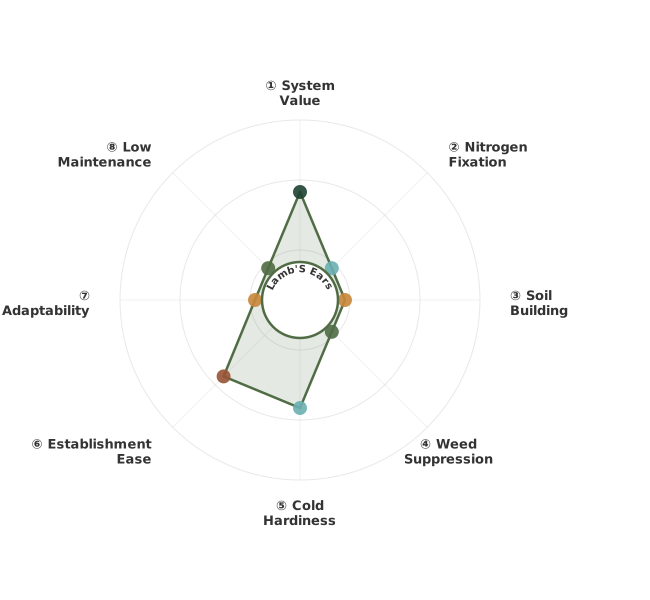
Regenerative Trait Ratings
How These Traits Are Calculated
Trait dimensions are ordered clockwise starting from the top of the chart (12 o'clock position):
1. System Value
Ecosystem service stacking across nitrogen, carbon, water, biodiversity
WHAT: Synthesizes the compounding value of multiple ecosystem services delivered simultaneously—nitrogen fixation, soil organic matter building, pollinator support, erosion control, and water infiltration improvement. This is the total regenerative impact beyond single-function metrics.
WHY: The highest-value cover crops deliver 3-5 significant ecosystem services at once. A legume that fixes nitrogen, builds biomass, supports pollinators, and improves water infiltration provides $150-300/acre in combined benefits versus $30-60 for single-function covers. This service stacking is the core principle of regenerative agriculture.
HOW: Scored via LLM synthesis of economics data, timeline benefits, and trait combinations. Exceptional (3.0): 4-5 major services stacked with strong economic value ratios. Typical (2.0): 2-3 moderate services. Limited (1.0): Single-function covers with minimal service stacking. Considers seed cost relative to benefit value.
2. Nitrogen Fixation
Biological nitrogen production via legume root nodule bacteria
WHAT: Measures the ability to convert atmospheric nitrogen (N₂) into plant-available ammonia through symbiotic bacteria in root nodules. Legumes form partnerships with rhizobium bacteria that fix 60-150 lbs N/acre/year, reducing or eliminating synthetic fertilizer needs for following crops.
WHY: Nitrogen is the most expensive fertilizer input in crop production ($0.50-1.00/lb). Cover crops with exceptional nitrogen fixation can provide $60-150/acre worth of fertility while building soil organic matter. This biological process also reduces groundwater contamination from nitrogen runoff and lowers farm carbon footprint.
HOW: Ratings based on annual nitrogen fixation capacity and reliability across soil conditions. Exceptional (3.0): Legumes like hairy vetch, crimson clover, and field peas fixing >100 lbs N/acre/year. Typical (2.0): Moderate fixers like red clover at 60-100 lbs N/acre/year. Limited (1.0): Non-legumes (grasses, brassicas) with zero fixation capacity.
3. Soil Building
Weighted: biomass production (60%) + root system depth (40%)
WHAT: Combines above-ground biomass production with root depth to measure total soil organic matter contribution. Biomass provides surface organic matter, while deep roots deposit carbon at depth and break up compaction layers.
WHY: Soil organic matter is the foundation of regenerative agriculture, improving water retention, nutrient cycling, and biological activity. Each 1% increase in soil organic matter holds an additional 20,000 gallons of water per acre and represents $500-1,000 in fertility value. Deep roots access subsoil nutrients and create channels for water infiltration.
HOW: Weighted formula prioritizes biomass production (60% weight) for immediate organic matter contribution, with root depth (40% weight) for long-term soil structure. Exceptional (3.0): High-biomass crops with deep roots like cereal rye (8+ tons biomass, 5+ ft roots). Typical (2.0): Moderate on both factors. Limited (1.0): Low biomass or shallow roots.
4. Weed Suppression
Physical competition through rapid establishment and dense growth
WHAT: Measures the ability to outcompete weeds through rapid germination, aggressive early growth, and dense canopy formation. Physical smothering and light competition reduce weed pressure without herbicides.
WHY: Weed management is a major labor and cost burden for farmers. Cover crops that effectively suppress weeds reduce herbicide costs ($20-60/acre), decrease cultivation passes (fuel + labor), and provide clean seedbeds for cash crops. This is especially valuable in organic systems where herbicide options are limited.
HOW: Ratings based on germination speed, tillering density, and canopy closure timing. Exceptional (3.0): Fast-establishing, dense-tillering crops like cereal rye, oilseed radish that close canopy within 3-4 weeks. Typical (2.0): Moderate establishment and coverage. Limited (1.0): Slow-establishing or sparse crops that allow weed competition.
5. Cold Hardiness
Winter survival for fall planting and spring green manure value
WHAT: Measures tolerance to freezing temperatures and ability to survive winter conditions. Winter-hardy cover crops can be fall-planted, overwinter as living mulch, and provide early spring growth before cash crop planting.
WHY: Fall-planted winter-hardy covers extend the growing season into unused months, capturing solar energy and preventing erosion during wet periods. Spring green manure from overwintered covers provides early nitrogen and biomass. This timing flexibility is critical in cold climates with short growing seasons.
HOW: Ratings based on minimum survival temperature and winter active growth. Exceptional (3.0): Winter-hardy crops like cereal rye, hairy vetch, crimson clover surviving to -20°F with active growth in spring. Typical (2.0): Moderate cold tolerance. Limited (1.0): Warm-season crops like buckwheat, cowpea killed by first frost.
6. Establishment Ease
Germination speed, soil requirement flexibility, planting window breadth
WHAT: Measures how easily the cover crop establishes from seed, including germination speed, tolerance for variable soil conditions, and flexibility in planting timing. Easy establishment means reliable stands without intensive management.
WHY: Difficult-to-establish covers increase risk of stand failure, wasted seed costs, and reduced benefits. Easy establishment crops tolerate late planting, poor seedbed preparation, and variable moisture—critical when cover cropping windows are narrow between cash crops. Reliable establishment ensures consistent soil building and weed suppression benefits.
HOW: Ratings based on days to emergence, soil condition sensitivity, and planting window breadth. Exceptional (3.0): Fast germinators like buckwheat (3-5 days) and cereal rye (5-7 days) with wide planting windows. Typical (2.0): Moderate establishment requirements. Limited (1.0): Slow or finicky establishers requiring precise conditions.
7. Adaptability
Weighted: climate tolerance (60%) + multi-benefit versatility (40%)
WHAT: Combines climate adaptability (temperature and rainfall range) with multi-benefit versatility (diverse ecosystem services) to measure overall system flexibility. High adaptability means the cover works across farm regions and provides multiple functions.
WHY: Farmers need cover crops that work reliably across diverse fields and provide stacked benefits. Climate-adaptable covers reduce risk in variable weather, while multi-benefit crops deliver nitrogen fixation + pollinator support + forage value simultaneously. This versatility maximizes return on cover crop investment.
HOW: Weighted formula prioritizes climate tolerance (60% weight) for geographic reliability, with multi-benefit value (40% weight) for functional stacking. Exceptional (3.0): Wide climate range + multiple significant benefits. Typical (2.0): Moderate on both factors. Limited (1.0): Narrow climate range or single-function crops.
8. Low Maintenance
Inverted from maintenance intensity—low inputs mean high scores
WHAT: Measures minimal input requirements for successful cover cropping. Low-maintenance covers require no irrigation, minimal fertility, easy termination, and tolerate variable management timing.
WHY: Cover crops compete for resources with cash crops in tight rotations. Low-maintenance covers fit easily into existing systems without adding labor, equipment, or input costs. Easy termination is especially critical—covers that are difficult to kill can become weeds and delay cash crop planting.
HOW: Inverted score from maintenance intensity trait (4.0 minus raw score). Exceptional (3.0): Self-sufficient crops like cereal rye, field peas requiring no irrigation or fertility, easily terminated by mowing or winter-kill. Typical (2.0): Moderate input needs. Limited (1.0): High-maintenance crops needing irrigation, heavy fertility, or difficult termination (herbicides, multiple tillage passes).
Ratings are based on documented performance in regenerative systems, not conventional high-input scenarios. All traits assume integrated management practices focused on soil health and ecosystem services.
1
Climate Suitability Assessment
Will this plant thrive in your climate?
Climate Suitability Assessment
Will this plant thrive in your climate?
Köppen Zone: Af (Tropical Rainforest), Am (Tropical Monsoon), Aw (Tropical Savanna), Cfa (Humid Subtropical), Cfb (Oceanic (Maritime Temperate)), Cwa (Monsoon-Influenced Humid Subtropical)
USDA Zone: 6a, 7a, 8a, 9a, 10a, 11a, 12a
Australian Zone: temperate
EU Climate Region: atlantic
Lamb's Ears thrives in climates with mild winters and a long, favorable growing season, characterized by temperatures generally between 60-75°F (15-24°C) during its active growth period. These conditions are met in Köppen zones Cfb, and regional zones like USDA 7a-10b, Australian temperate, and EU Atlantic. In these areas, establishment is highly successful, often exceeding 85%, with minimal need for specialized management beyond ensuring well-drained soil. The plant reliably provides excellent pollinator support and functions effectively as a cover crop, with perennial stands persisting for multiple years. Consistent rainfall or easily managed irrigation supports its growth, and it exhibits excellent resistance to common pests and diseases, contributing to its high score and suitability for regenerative agriculture practices in these regions.
Köppen Zone: BSh (Hot Semi-Arid (Steppe)), BSk (Cold Semi-Arid (Steppe)), Csa (Hot-Summer Mediterranean), Csb (Warm-Summer Mediterranean), Cwb (Subtropical Highland), Dfa (Hot-Summer Continental), Dfb (Warm-Summer Continental)
USDA Zone: 5a, 5b
Australian Zone: subtropical
EU Climate Region: continental
Lamb's Ears performs adequately in climates that offer a sufficient growing season but may present some challenges, such as moderate summer heat, higher humidity, or slightly colder winters. This includes Köppen zones Cfa, Csb, Dfa, and Dfb, as well as USDA zones 5b-6b, Australian subtropical, and EU continental regions. Establishment success is good (70-85%) with proper timing, but performance might be slightly reduced compared to ideal zones. Summer temperatures above 85°F (29°C) or high humidity can increase the risk of fungal issues, requiring good air circulation and well-drained soil. Winter survival can be variable in the colder extremes, potentially leading to a shorter lifespan or requiring some winter protection. Supplemental irrigation may be needed during dry spells, and yields for cover cropping or pollinator support are good but not optimal. Standard management practices are generally sufficient.
Köppen Zone: ET (Tundra), BWh (Hot Desert), BWk (Cold Desert), Dfc (Subarctic), Dwa (Monsoon-Influenced Hot-Summer Continental)
USDA Zone: 2a, 3a, 3b, 4a
Lamb's Ears is not recommended for climates with extreme temperature fluctuations, particularly prolonged hot, dry summers or very cold winters, making cultivation economically and practically questionable. This includes Köppen zones Csa, and regional zones like USDA 3a-5a, where extreme cold (-40 to -15°F) leads to high winter kill rates and short growing seasons, making perennial survival unlikely and establishment risky (<70%). In hot, dry Mediterranean climates (Csa), intense summer heat and drought stress severely limit growth, reduce pollinator attraction, and necessitate extensive irrigation, increasing management costs significantly. While technically possible, the plant's performance is unreliable, and its primary functions are poorly met. Alternative plants better adapted to these specific harsh conditions are recommended, such as drought-tolerant species for hot, dry areas and cold-hardy cover crops for frigid regions, which offer more reliable and cost-effective solutions for regenerative agriculture.
Note: Zones listed above represent climates where this plant can produce reliably with reasonable management. Climate zones not mentioned would require intensive climate modification (greenhouses, extensive infrastructure) and are not economically viable for regenerative agriculture purposes.
2
Soil Suitability Assessment
Which soil types work best for this plant?
Soil Suitability Assessment
Which soil types work best for this plant?
Sandy Soil
This plant thrives in these soil types without requiring amendments or remediation. Natural soil conditions support optimal growth and productivity.
Clay Soil, Desert Soil, Loam Soil, Rich Soil, Rocky Soil
This plant performs acceptably in these soil types with moderate, manageable remediation such as pH adjustment, compost addition, or drainage improvement. The required amendments are practical and cost-effective for regenerative agriculture.
Acidic Soil, Alkaline Soil, Saline Soil, Wet Soil
Growing this plant in these soil types would require impractical remediation such as complete soil replacement, extensive amendments, or cost-prohibitive infrastructure. These conditions are not economically viable for regenerative agriculture.
Note: Soil suitability assessments focus on remediation requirements. "Ideally Suited" means the plant generally thrives without the need for substantial amendments, "Adequate" means manageable remediation (lime, compost, mulch), and "Not Recommended" means impractical soil changes would be required. Climate factors like rainfall and temperature also influence success.
3
Seasonal Considerations
Planting timing, growth duration, and harvest windows
Seasonal Considerations
Planting timing, growth duration, and harvest windows
Stachys Byzantina, or Lamb's Ears, offers versatile cover cropping potential across a range of temperate climates. For spring planting, aim for after the danger of hard frost has passed, allowing its frost tolerance to contribute to early season soil protection. It establishes relatively quickly, typically within a few weeks, and can provide good ground cover through the summer months.
Fall planting, ideally before the first expected hard frost, allows Lamb's Ears to establish a root system and some top growth before winter dormancy. Its overwinter survival is good in many of the listed zones, providing valuable winter cover. Termination in the spring should occur several weeks before planting your main cash crop to allow for decomposition and nutrient release. Peak biomass is generally achieved in late spring to early summer, making it an excellent candidate for a spring-planted cover that can be terminated to prepare for a summer cash crop, or as a fall-planted cover to overwinter. While less common, if ample moisture is available and temperatures are moderate, it could potentially be used as a summer cover, though its water needs should be considered. Frost-seeding in early spring can also be an effective method for establishing this hardy plant.
4
System Role & Multi-Benefit Value
Functional roles, integration strategies, and stacked benefits
System Role & Multi-Benefit Value
Functional roles, integration strategies, and stacked benefits
Functional Role
Total System Value
Lamb's ears offers significant system value beyond its direct use as a pollinator attractant. By supporting bees and other pollinators, it enhances the reproductive success of surrounding crops and flowering plants, contributing to overall farm productivity and biodiversity. Its dense foliage helps in soil surface stabilization, reducing erosion and improving water infiltration, especially in its early years. In established systems, it contributes to the soil organic matter pool as it senesces. While it doesn't offer direct harvest value in the traditional sense, its role in a complex, resilient farm ecosystem is crucial. It diversifies the plant community, making the system less susceptible to pests and diseases, and provides habitat for beneficial insects. This multi-layered benefit stacking, from pollinator support to soil health, enhances the farm's ecological functioning and long-term viability.
Integration Characteristics
Multi-Benefit Value: Not Recommended - Beyond its ornamental appeal, its foliage can provide habitat for beneficial insects and contribute to surface organic matter accumulation.
5
Management & Care Requirements
Integration guidance, maintenance needs, and care practices
Management & Care Requirements
Integration guidance, maintenance needs, and care practices
How to Integrate This Plant
Lamb's ears (Stachys byzantina) can be integrated into regenerative systems primarily for pollinator support, as noted by its attractiveness to bees when flowering. Its low-growing, spreading habit makes it suitable for ground cover in food forests or as an understory plant in silvopasture systems, where it can help suppress weeds and improve soil surface microclimates. While not a primary nitrogen fixer or shade provider, its contribution lies in enhancing biodiversity and supporting beneficial insect populations, which indirectly benefits crop and livestock health. It can be incorporated into perennial polycultures or as a border plant in alley cropping systems. Its value begins in Year 1 with ground cover and pollinator attraction, with continued benefits in subsequent years through its resilience and contribution to a diverse farm ecosystem.
Integration Practices & Management
The provided knowledge base offers limited insight into the specific regenerative agriculture integration methods for Stachys byzantina (Lamb's ears). Source mentions Stachys byzantina as one of three rangeland covers studied in a semi-arid ecosystem, established 30 years prior, in comparison to forest cover. This study focused on soil organic matter, microbial populations, and nutrient pools under different vegetation types, but did not detail the establishment or ongoing management practices of the Stachys byzantina rangeland. Source identifies Stachys byzantina as a perennial flower suitable for oceanic climates, noting its soft leaves and attractiveness to bees when flowering. It highlights ease of care and long flowering periods, alongside other perennial flowers, but does not address its role in regenerative farming systems such as grazing integration, termination strategies, fertility needs, competition management, or integration with cash crops. Therefore, specific details on how regenerative farmers establish, manage, or terminate Stachys byzantina within their systems, or its role in grazing or cash crop rotations, cannot be determined from these sources.
Management Profile
Maintenance Intensity: Ideally Suited - This drought-tolerant perennial requires minimal intervention, thriving in various soil conditions and contributing to the system without the need for supplemental fertility or extensive water management.
6
Economics & Value Streams
Direct harvest, system benefits, ecosystem services, and risk diversification
Economics & Value Streams
Direct harvest, system benefits, ecosystem services, and risk diversification
Comprehensive economic analysis including direct harvest value, system enhancement contributions, ecosystem services, value timeline, and risk diversification strategies.
Cover Crop Investment
| Metric | Value |
|---|---|
| Seed Cost | $15-30/acre $37-74/ha |
| Termination Cost | 20-50 49-124 |
| Biomass Production | 1.5-3.0 3-7 |
| N Fixation Value | N/A N/A |
| Weed Control Savings | 10-30 25-74 |
Cover crops are soil investments, not cash crops. Economics measured in soil health gains, input reduction, and subsequent crop performance. Values show direct costs and estimated benefits.
System Enhancement Value
Beyond harvest: pollination services for your crops and ecosystem
Pollination Service Provision
Provides nesting material and floral resources for bees, contributing to broader ecosystem health. Drought-tolerant cover crop benefits soil moisture and structure.
Lamb's ears offers significant value as a pollinator support plant. Its flowers are attractive to bees, as noted in, and the European wool carder bee (*Anthidium manicatum*) specifically utilizes its fibers for nest building, as detailed in. This dual role of providing nectar/pollen resources and nesting material makes it a valuable habitat component for beneficial insects. Furthermore, its fuzzy, silver foliage, as described in and, provides excellent drought tolerance by reflecting sunlight and reducing water evaporation, a critical trait for resilience in arid or semi-arid climates. This makes it an effective cover crop in such environments, helping to maintain soil cover and suppress weeds, potentially contributing to improved soil organic matter over time, as suggested by a comparative study in where *Stachys byzantina* was included in rangeland covers.
Erosion Control (if applicable)
Variable, dependent on planting density and scale. Potential for 5-10% reduction in wind speed within immediate vicinity.
Lamb's ears, with its dense, fuzzy foliage, can contribute to windbreak systems by reducing wind speed and thus mitigating soil erosion. The hairy leaves, as noted in and, help reflect sunlight and can provide insulation, suggesting a role in microclimate regulation within a farm system. While not a primary windbreak species like trees, a dense planting of lamb's ears could offer incremental protection, especially at a smaller scale or as a component of a larger, diversified windbreak. This can lead to reduced desiccation of adjacent crops and potentially improve soil moisture retention by decreasing evaporative demand. The plant's drought tolerance (mentioned in) further enhances its utility in drier areas where wind erosion is a concern, as it can maintain ground cover even under stressful conditions. The overall effect is a more stable microenvironment, benefiting soil health and potentially improving the performance of neighboring plants.
Ecosystem Service Contributions
Environmental contributions: carbon, pollinators, wildlife, and water
- Carbon Sequestration: Moderate potential for carbon sequestration, primarily through above-ground biomass and contribution to soil organic matter when used as a cover crop. Its perennial nature allows for continuous carbon storage.
- Pollinator Support: High. Directly supports bees by providing floral resources and nesting materials (fibers for wool carder bees).
- Wildlife Habitat: Provides foraging resources for bees and potentially shelter for small invertebrates.
- Water Quality: Not applicable
Value Timeline: Bloom & Establishment
When you'll see results: annuals bloom year 1, perennials mature 2-3 years
Years 1-2
Initial establishment as a cover crop, providing erosion control and beginning pollinator support. Early benefits from drought tolerance and reduced water evaporation.
Years 3-5
Established cover crop with enhanced soil stabilization. Significant pollinator attraction and fiber provision. Potential for improved soil structure and moisture retention.
Years 10-20
Mature perennial cover crop contributing to long-term soil health. Consistent pollinator support and habitat provision. Sustained microclimate regulation benefits.
20+ Years
Long-term soil improvement, stable pollinator populations, and continued resilience benefits in arid or semi-arid conditions.
Farm Risk Reduction
How pollinator support reduces crop failure risk
- Multiple Revenue Streams: Pollinator support services, cover cropping benefits (soil health, erosion control), potential for niche horticultural sales (ornamental value), material for biopesticides or fiber-based crafts (if developed).
- Temporal Income Spread: Ongoing ecosystem services (pollinator support, soil stabilization) provide continuous value, complemented by potential intermittent horticultural sales.
- Market Risk Hedge: Drought tolerance enhances resilience against water scarcity. Supports beneficial insect populations, reducing reliance on external pest management. Diversifies farm output beyond traditional crops.
Sources behind this view
-
Economics of Cover Crops (opens in new window)
Cover crops can be profitable if they produce enough biomass, offering economic benefits through grazing, reduced inputs, carbon credits, and monetization of soil services.
-
Cover Crops and Ecosystem Services: Insights from Studies in Temperate Soils (opens in new window)
Cover crops build soil organic matter (0.1-1 Mg/ha/yr), reduce erosion by up to 80%, improve soil structure, recycle nutrients, and suppress weeds. They can be grazed or hayed without harming soil or
-
Cover crop and soil quality interactions in agroecosystems (opens in new window)
Cover crops protect soil from erosion and build soil organic matter, improving soil health and nutrient cycling. Legumes fix nitrogen, and some offer natural weed control, contributing to environmenta
-
Enhancing Sustainable Farming and Climate Resilience: The Role of Cover Crops (opens in new window)
Cover crops boost soil health, fix nitrogen, suppress weeds, and sequester carbon, enhancing farm profitability and climate resilience. Addressing adoption challenges is key.
7
Regenerative Suitability Details
Comprehensive trait ratings for system integration assessment
Regenerative Suitability Details
Comprehensive trait ratings for system integration assessment
Comparative ratings for this plant across key regenerative agriculture traits.
| Trait | Suitability | Explanation |
|---|---|---|
| Cold Hardiness | Adequate | A perennial, it offers resilient winter foliage cover in milder climates and contributes to soil structure year-round, especially in Zone 6 and above. |
| Weed Suppression | Not Recommended | Its dense, fuzzy foliage can help shade the soil surface, slightly reducing weed emergence and conserving soil moisture in an integrated planting. |
| Nitrogen Fixation | Not Recommended | As a non-legume, Stachys byzantina does not contribute to nitrogen fixation but thrives within systems that support overall soil fertility through other means. |
| Root System Depth | Not Recommended | This plant's fibrous, shallow root system contributes to surface soil aggregation and can improve aeration in the upper soil layers. |
| Biomass Production | Not Recommended | While producing limited biomass, its foliage contributes to surface organic matter as it decomposes, supporting soil life and moisture retention. |
| Establishment Ease | Adequate | Readily propagates, establishing quickly to provide ground cover and contributing to soil surface protection with moderate early vigor. |
| Multi Benefit Value | Not Recommended | Beyond its ornamental appeal, its foliage can provide habitat for beneficial insects and contribute to surface organic matter accumulation. |
| Climate Adaptability | Adequate | Adapts well to heat and drought once established, its fuzzy foliage helps it thrive in drier conditions and well-drained soils, minimizing water management needs. |
| Maintenance Intensity | Ideally Suited | This drought-tolerant perennial requires minimal intervention, thriving in various soil conditions and contributing to the system without the need for supplemental fertility or extensive water management. |
Comparative System: Ratings compare plants within their economic category (e.g., cover crop nitrogen fixation compared to other cover crops, not to all plants). Individual farm conditions and management practices significantly influence actual performance.
8
Learn More
Why farmers use this plant and additional resources
Learn More
Why farmers use this plant and additional resources
Why Regenerative Farmers Use This Plant
Lamb's Ears (Stachys byzantina) offers significant regenerative benefits when integrated into agricultural systems, primarily as a low-growing, drought-tolerant groundcover, a component of diverse perennial systems, and an attractive addition to pollinator habitats. While not a nitrogen-fixing legume, its dense, mat-forming growth habit is exceptional at suppressing weeds, effectively outcompeting annual and biennial weeds by reducing light penetration and nutrient availability to emerging seedlings. This weed suppression can reduce the need for costly and ecologically disruptive herbicides, saving farmers an estimated $40-$80 per acre annually in weed control expenses. Its persistent ground cover also plays a crucial role in erosion control, protecting valuable topsoil from wind and water displacement, particularly on slopes or during fallow periods. Over a 3-5 year rotation, the consistent organic matter input from its biomass decomposition contributes to a gradual increase in soil organic matter content, enhancing soil health and resilience.
Beyond weed suppression and erosion control, Stachys byzantina serves as an excellent living mulch in perennial cropping systems like orchards and vineyards. It can reduce soil compaction from heavy machinery and create a more hospitable environment for beneficial soil microbes. Its dense foliage provides habitat and foraging opportunities for beneficial insects, including predatory beetles and ground spiders, which can aid in natural pest management of common agricultural pests. While it does not fix nitrogen, its extensive root system can scavenge residual nutrients from deeper soil profiles, making them available to shallow-rooted cash crops through residue decomposition. This nutrient cycling capacity further reduces reliance on external fertilizer inputs.
The contribution of Stachys byzantina to soil organic matter is a key long-term benefit. As its leaves and stems decompose, they release carbon and nutrients back into the soil. While specific carbon sequestration rates for Lamb's Ear are not as extensively documented as for some annual cover crops, its perennial nature ensures consistent biomass input year after year. This continuous organic matter addition improves soil aggregation, aeration, and water infiltration, leading to more resilient and productive soils. Farmers have observed improved soil water holding capacity, often reducing irrigation needs by 10-15% in systems where Lamb's Ear is used as a living mulch.
The quantitative ecosystem benefits of Stachys byzantina are most evident in its role as a pollinator attractant and soil binder. While specific data on pollinator visits per flower can vary, its consistent blooming period throughout the summer months provides a reliable nectar source. Its dense mat of foliage significantly reduces soil disturbance from wind and rain, contributing to improved water infiltration rates and reduced sediment loss. Its fibrous root system helps to bind soil particles, improving soil structure and water infiltration, especially in areas prone to surface runoff.
Regional adaptations for Stachys byzantina highlight its versatility. In the UK, it is often used in mixed perennial borders, as a ground cover in fruit orchards, and in wildflower meadows or on field edges, where its drought tolerance is a significant advantage during dry spells and it supports local insect populations. In parts of the Mediterranean basin and Southern Europe, it can be incorporated into vineyard understories and olive groves, providing erosion control and suppressing weeds without requiring intensive cultivation, tolerating heat and drought. In Australia, its resilience to dry conditions makes it a suitable choice for low-input ground cover in established olive groves, semi-arid pasture systems, around tree lines to prevent soil degradation, or in perennial pasture mixes on marginal land, where it can tolerate grazing pressure (though not a primary forage crop) and provide a consistent forage base for livestock during dry spells. In California, USA, it is often used as a drought-tolerant ground cover in vineyards and olive groves, planted in the fall to establish before the dry summer. In the Pacific Northwest, USA, it is employed in berry farms and nurseries as a living mulch. In the humid subtropical climates of the southeastern United States, it can be integrated into ornamental landscapes and as a living mulch in fruit production. In South Africa, its resilience to dry conditions makes it a suitable choice for erosion control on slopes in wine regions or as a decorative ground cover in orchards, where it can be integrated into a broader silvopasture system with minimal intervention. In Brazilian coffee plantations, it could serve as an understory plant in less intensively managed areas, contributing to soil cover and biodiversity. In the United States, it is often incorporated into permaculture designs and farm borders in various regions, from the arid Southwest to the humid Midwest, valued for its resilience and minimal water requirements once established.
9
How to Integrate This Plant
Practical guidance for regenerative systems
How to Integrate This Plant
Practical guidance for regenerative systems
Establishing Stachys byzantina is typically achieved through vegetative propagation (division or cuttings) or seed. For seed, broadcast seeding rates range from 0.5-1 lb/acre (0.56-1.12 kg/ha), sown at a shallow depth of 0.125-0.25 inches (0.3-0.6 cm) to ensure good germination. Direct seeding is less common for this species in agricultural settings due to slower establishment and potential variability.
Optimal planting times vary globally to allow for establishment before extreme temperatures:
- Northern Hemisphere: Early spring (March-May) or early autumn (August-September).
- Southern Hemisphere: Late winter (August-September) or early spring (February-March).
For faster establishment and to ensure genetic uniformity, vegetative propagation through division of existing clumps or stem cuttings is highly effective. Divisions or nursery-grown seedlings should be planted with crowns just at the soil surface, spaced 12-18 inches (30-45 cm) apart, allowing them to spread and fill in over time to form a dense mat. For larger-scale ground cover, denser seeding or closer plug spacing can accelerate coverage.
Once established, Stachys byzantina is remarkably low-maintenance and drought-tolerant, requiring minimal supplemental water, typically around 0.5-1 inch (1.3-2.5 cm) per week during prolonged dry spells, especially in the establishment phase if rainfall is insufficient. Fertility needs are minimal; it thrives in average to poor, well-drained soils and does not require significant nutrient inputs. In fact, excessive nitrogen can lead to weaker, leggy growth. Biological sources of fertility, such as incorporating compost or allowing for the decomposition of its own biomass, are sufficient.
Growth is generally steady, with plants reaching a mature height of 1-2 feet (0.3-0.6 m) including flower spikes, and a spread of 2-3 feet (0.6-0.9 m) within 1-2 years, depending on conditions. Pest and disease issues are rare due to its fuzzy foliage, which deters many common pests. If disease does occur, improving air circulation through judicious pruning and ensuring proper drainage are the primary regenerative approaches.
As a cover crop or living mulch, Stachys byzantina's primary role is soil protection and weed suppression rather than nitrogen fixation or significant biomass production for rapid decomposition. Its termination is generally straightforward due to its perennial nature and relatively low biomass, though it is rarely necessary if used as a permanent groundcover or border plant. If a more definitive termination is required, mechanical methods are preferred. Mowing or grazing can reduce its height and biomass, followed by tilling if necessary, though this should be minimized to preserve soil structure. Crimping is not typically effective for this species due to its low, spreading habit. If a transition away from Stachys byzantina is required and regenerative methods are exhausted, herbicide can be used as a last resort, applied according to label instructions during active growth. Its biomass decomposition is slow compared to annual cover crops, meaning nitrogen release is gradual. Seed management is important; while it can produce seeds, vegetative spread is its primary mode of reproduction, and preventing unwanted spread to adjacent crops is usually managed through physical barriers or careful mowing. For systems where it might become overly aggressive, grazing by livestock can help manage its biomass and prevent excessive spread. If seed production is undesirable, flowering stems can be removed before seed set. In orchards or vineyards, it can be managed with periodic mowing to maintain a desired height and prevent it from climbing or shading young trees.