Saltcedar
While knowledge base coverage for Tamarix ramosissima in regenerative agriculture is limited, available excerpts highlight its role in desert ecosystem soil health. Studies indicate its fine roots are concentrated in the upper soil layers (10-20 cm), contributing to soil organic carbon accumulation and seasonal soil biota dynamics across various depths. Tamarix ramosissima is noted as a dominant species in Tugai forests and desert ecosystems, suggesting its resilience and potential for soil stabilization in arid environments. Research also examines its nutrient stoichiometry (carbon, nitrogen, phosphorus) within the plant-soil-microbial system, though it appears to have lower leaf, stem, and root nitrogen and phosphorus concentrations compared to some other desert species studied. Its integration into regenerative systems likely focuses on its capacity to improve soil structure and carbon sequestration in challenging arid landscapes, particularly where other vegetation struggles. Further research is needed to fully understand its specific applications as a cover crop, forage, or polyculture component within diverse regenerative farming practices.
For a full botanical description see: Plants For A Future↗(opens in new window) (external link)
Regenerative Quick Profile
All recommendations assume integrated, regenerative practices—not conventional inputs.
Climate & Soil Fit
Climate: Tropical Rainforest, Tropical Monsoon, Tropical Savanna, Hot Semi-Arid (Steppe), Cold Semi-Arid (Steppe), Hot Desert, Cold Desert, Humid Subtropical, Oceanic (Maritime Temperate), Hot-Summer Mediterranean, Warm-Summer Mediterranean, Monsoon-Influenced Humid Subtropical, Subtropical Highland, Hot-Summer Continental, Warm-Summer Continental
Zones: USDA 3-9, Australian Zones 1-14
Optimal Soil: Sandy Soil
System Role & Functions
Primary: Cover Crop System
Secondary: Soil Remediation, Cash Crop With Services
Key Benefits: Climate adaptable, Easy establishment, Low maintenance
Management Level
Experience: Beginner-Friendly
Maintenance: Very low maintenance - This species thrives in arid, saline soils with minimal intervention, showcasing a high degree of natural resilience and low integration needs.
Value Streams
- Cover crop (soil investment)
- Soil building and erosion control
Know the Debate
- Reclaims saline soils, stabilizes banks, builds organic matter.
- Can be invasive, outcompeting natives, consuming water.
- Ecological benefits vs. invasive threat depends on context.
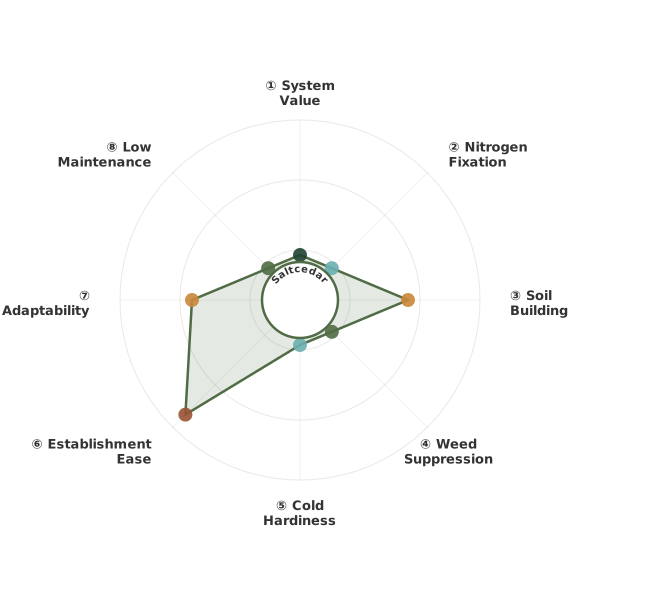
Regenerative Trait Ratings
How These Traits Are Calculated
Trait dimensions are ordered clockwise starting from the top of the chart (12 o'clock position):
1. System Value
Ecosystem service stacking across nitrogen, carbon, water, biodiversity
WHAT: Synthesizes the compounding value of multiple ecosystem services delivered simultaneously—nitrogen fixation, soil organic matter building, pollinator support, erosion control, and water infiltration improvement. This is the total regenerative impact beyond single-function metrics.
WHY: The highest-value cover crops deliver 3-5 significant ecosystem services at once. A legume that fixes nitrogen, builds biomass, supports pollinators, and improves water infiltration provides $150-300/acre in combined benefits versus $30-60 for single-function covers. This service stacking is the core principle of regenerative agriculture.
HOW: Scored via LLM synthesis of economics data, timeline benefits, and trait combinations. Exceptional (3.0): 4-5 major services stacked with strong economic value ratios. Typical (2.0): 2-3 moderate services. Limited (1.0): Single-function covers with minimal service stacking. Considers seed cost relative to benefit value.
2. Nitrogen Fixation
Biological nitrogen production via legume root nodule bacteria
WHAT: Measures the ability to convert atmospheric nitrogen (N₂) into plant-available ammonia through symbiotic bacteria in root nodules. Legumes form partnerships with rhizobium bacteria that fix 60-150 lbs N/acre/year, reducing or eliminating synthetic fertilizer needs for following crops.
WHY: Nitrogen is the most expensive fertilizer input in crop production ($0.50-1.00/lb). Cover crops with exceptional nitrogen fixation can provide $60-150/acre worth of fertility while building soil organic matter. This biological process also reduces groundwater contamination from nitrogen runoff and lowers farm carbon footprint.
HOW: Ratings based on annual nitrogen fixation capacity and reliability across soil conditions. Exceptional (3.0): Legumes like hairy vetch, crimson clover, and field peas fixing >100 lbs N/acre/year. Typical (2.0): Moderate fixers like red clover at 60-100 lbs N/acre/year. Limited (1.0): Non-legumes (grasses, brassicas) with zero fixation capacity.
3. Soil Building
Weighted: biomass production (60%) + root system depth (40%)
WHAT: Combines above-ground biomass production with root depth to measure total soil organic matter contribution. Biomass provides surface organic matter, while deep roots deposit carbon at depth and break up compaction layers.
WHY: Soil organic matter is the foundation of regenerative agriculture, improving water retention, nutrient cycling, and biological activity. Each 1% increase in soil organic matter holds an additional 20,000 gallons of water per acre and represents $500-1,000 in fertility value. Deep roots access subsoil nutrients and create channels for water infiltration.
HOW: Weighted formula prioritizes biomass production (60% weight) for immediate organic matter contribution, with root depth (40% weight) for long-term soil structure. Exceptional (3.0): High-biomass crops with deep roots like cereal rye (8+ tons biomass, 5+ ft roots). Typical (2.0): Moderate on both factors. Limited (1.0): Low biomass or shallow roots.
4. Weed Suppression
Physical competition through rapid establishment and dense growth
WHAT: Measures the ability to outcompete weeds through rapid germination, aggressive early growth, and dense canopy formation. Physical smothering and light competition reduce weed pressure without herbicides.
WHY: Weed management is a major labor and cost burden for farmers. Cover crops that effectively suppress weeds reduce herbicide costs ($20-60/acre), decrease cultivation passes (fuel + labor), and provide clean seedbeds for cash crops. This is especially valuable in organic systems where herbicide options are limited.
HOW: Ratings based on germination speed, tillering density, and canopy closure timing. Exceptional (3.0): Fast-establishing, dense-tillering crops like cereal rye, oilseed radish that close canopy within 3-4 weeks. Typical (2.0): Moderate establishment and coverage. Limited (1.0): Slow-establishing or sparse crops that allow weed competition.
5. Cold Hardiness
Winter survival for fall planting and spring green manure value
WHAT: Measures tolerance to freezing temperatures and ability to survive winter conditions. Winter-hardy cover crops can be fall-planted, overwinter as living mulch, and provide early spring growth before cash crop planting.
WHY: Fall-planted winter-hardy covers extend the growing season into unused months, capturing solar energy and preventing erosion during wet periods. Spring green manure from overwintered covers provides early nitrogen and biomass. This timing flexibility is critical in cold climates with short growing seasons.
HOW: Ratings based on minimum survival temperature and winter active growth. Exceptional (3.0): Winter-hardy crops like cereal rye, hairy vetch, crimson clover surviving to -20°F with active growth in spring. Typical (2.0): Moderate cold tolerance. Limited (1.0): Warm-season crops like buckwheat, cowpea killed by first frost.
6. Establishment Ease
Germination speed, soil requirement flexibility, planting window breadth
WHAT: Measures how easily the cover crop establishes from seed, including germination speed, tolerance for variable soil conditions, and flexibility in planting timing. Easy establishment means reliable stands without intensive management.
WHY: Difficult-to-establish covers increase risk of stand failure, wasted seed costs, and reduced benefits. Easy establishment crops tolerate late planting, poor seedbed preparation, and variable moisture—critical when cover cropping windows are narrow between cash crops. Reliable establishment ensures consistent soil building and weed suppression benefits.
HOW: Ratings based on days to emergence, soil condition sensitivity, and planting window breadth. Exceptional (3.0): Fast germinators like buckwheat (3-5 days) and cereal rye (5-7 days) with wide planting windows. Typical (2.0): Moderate establishment requirements. Limited (1.0): Slow or finicky establishers requiring precise conditions.
7. Adaptability
Weighted: climate tolerance (60%) + multi-benefit versatility (40%)
WHAT: Combines climate adaptability (temperature and rainfall range) with multi-benefit versatility (diverse ecosystem services) to measure overall system flexibility. High adaptability means the cover works across farm regions and provides multiple functions.
WHY: Farmers need cover crops that work reliably across diverse fields and provide stacked benefits. Climate-adaptable covers reduce risk in variable weather, while multi-benefit crops deliver nitrogen fixation + pollinator support + forage value simultaneously. This versatility maximizes return on cover crop investment.
HOW: Weighted formula prioritizes climate tolerance (60% weight) for geographic reliability, with multi-benefit value (40% weight) for functional stacking. Exceptional (3.0): Wide climate range + multiple significant benefits. Typical (2.0): Moderate on both factors. Limited (1.0): Narrow climate range or single-function crops.
8. Low Maintenance
Inverted from maintenance intensity—low inputs mean high scores
WHAT: Measures minimal input requirements for successful cover cropping. Low-maintenance covers require no irrigation, minimal fertility, easy termination, and tolerate variable management timing.
WHY: Cover crops compete for resources with cash crops in tight rotations. Low-maintenance covers fit easily into existing systems without adding labor, equipment, or input costs. Easy termination is especially critical—covers that are difficult to kill can become weeds and delay cash crop planting.
HOW: Inverted score from maintenance intensity trait (4.0 minus raw score). Exceptional (3.0): Self-sufficient crops like cereal rye, field peas requiring no irrigation or fertility, easily terminated by mowing or winter-kill. Typical (2.0): Moderate input needs. Limited (1.0): High-maintenance crops needing irrigation, heavy fertility, or difficult termination (herbicides, multiple tillage passes).
Ratings are based on documented performance in regenerative systems, not conventional high-input scenarios. All traits assume integrated management practices focused on soil health and ecosystem services.
1
Climate Suitability Assessment
Will this plant thrive in your climate?
Climate Suitability Assessment
Will this plant thrive in your climate?
Köppen Zone: Aw (Tropical Savanna), BSh (Hot Semi-Arid (Steppe)), BWh (Hot Desert), Cfa (Humid Subtropical), Csa (Hot-Summer Mediterranean), Csb (Warm-Summer Mediterranean), Cwa (Monsoon-Influenced Humid Subtropical)
USDA Zone: 6a, 7a, 8a, 9a, 10a, 11a, 12a
Tropical savanna climates, with their distinct dry seasons and warm temperatures, are highly suitable for Saltcedar's drought tolerance and growth habits.
Köppen Zone: Af (Tropical Rainforest), Am (Tropical Monsoon), BSk (Cold Semi-Arid (Steppe)), BWk (Cold Desert), Cfb (Oceanic (Maritime Temperate)), Cwb (Subtropical Highland), Dfa (Hot-Summer Continental), Dfb (Warm-Summer Continental)
USDA Zone: 4a, 5a, 5b
While Saltcedar can survive in tropical rainforest climates, the high rainfall and humidity may not be optimal for its preferred arid to semi-arid conditions. It can still provide cover and remediation benefits.
Köppen Zone: ET (Tundra), Dfc (Subarctic), Dwa (Monsoon-Influenced Hot-Summer Continental)
USDA Zone: 2a, 3a, 3b
Australian Zone: arid, Zone 1, Zone 2, Zone 3, grassland, temperate, subtropical
EU Climate Region: atlantic, continental, mediterranean
Saltcedar (Tamarix spp.) is rated 'not_recommended' across all assessed climate zones (Köppen BWh, BWk, BSk, Cfa, Cfb, Csa, Csb, Dfa, Dfb, Dwa, Dwb, Dwc, Dwd, H; USDA Zones 1-12; Australian Zones 1-3, arid, grassland, subtropical, temperate; EU Climate Regions atlantic, continental, mediterranean) primarily due to its highly invasive nature. While it can tolerate a wide range of conditions from extreme heat and drought (BWh, arid zones) to cold winters (BWk, D zones, USDA 1-4), its aggressive spread poses a severe ecological threat to native plant communities, water resources, and biodiversity, especially in riparian and disturbed areas. Its primary function as a cover crop system is fundamentally undermined by its potential to become a problematic weed. In arid and semi-arid regions, it can deplete water resources, while in humid and temperate zones, it can displace native flora. The risk of ecological damage far outweighs any potential benefits for regenerative agriculture. Therefore, alternative plants that fulfill similar functions without invasive tendencies are strongly advised for all these regions.
Note: Zones listed above represent climates where this plant can produce reliably with reasonable management. Climate zones not mentioned would require intensive climate modification (greenhouses, extensive infrastructure) and are not economically viable for regenerative agriculture purposes.
2
Soil Suitability Assessment
Which soil types work best for this plant?
Soil Suitability Assessment
Which soil types work best for this plant?
Sandy Soil
This plant thrives in these soil types without requiring amendments or remediation. Natural soil conditions support optimal growth and productivity.
Alkaline Soil, Clay Soil, Desert Soil, Loam Soil, Rich Soil, Rocky Soil, Saline Soil
This plant performs acceptably in these soil types with moderate, manageable remediation such as pH adjustment, compost addition, or drainage improvement. The required amendments are practical and cost-effective for regenerative agriculture.
Acidic Soil, Wet Soil
Growing this plant in these soil types would require impractical remediation such as complete soil replacement, extensive amendments, or cost-prohibitive infrastructure. These conditions are not economically viable for regenerative agriculture.
Note: Soil suitability assessments focus on remediation requirements. "Ideally Suited" means the plant generally thrives without the need for substantial amendments, "Adequate" means manageable remediation (lime, compost, mulch), and "Not Recommended" means impractical soil changes would be required. Climate factors like rainfall and temperature also influence success.
3
Seasonal Considerations
Planting timing, growth duration, and harvest windows
Seasonal Considerations
Planting timing, growth duration, and harvest windows
Tamarix ramosissima offers flexible cover cropping options across a wide range of climates. For spring planting, aim for early spring, once the risk of hard frost has passed and soil temperatures reach approximately 50°F (10°C). This allows for robust establishment before the heat of summer. Fall planting should occur mid-fall, at least 4-6 weeks before the first expected hard frost, allowing sufficient time for root development and some top growth before winter dormancy. While it can tolerate some summer heat, it's less commonly used as a dedicated summer cover crop unless irrigation is available.
Establishment typically takes 2-4 weeks, with peak biomass achieved later in the season. In colder zones, Tamarix exhibits good overwinter survival, entering dormancy and resuming growth in early spring. Termination should be planned carefully, ideally 2-3 weeks before planting your main cash crop to allow for decomposition and nutrient release. This timing is crucial to avoid competition. Consider Tamarix as a winter cover in milder climates, where it will remain green and actively growing, or as a spring cover to build biomass and suppress weeds before a summer cash crop. Frost-seeding in late winter or very early spring is also a viable option in suitable regions.
4
System Role & Multi-Benefit Value
Functional roles, integration strategies, and stacked benefits
System Role & Multi-Benefit Value
Functional roles, integration strategies, and stacked benefits
Functional Role
Total System Value
Saltcedar's value in regenerative agriculture lies in its ability to enhance ecosystem services, particularly in arid and saline environments. While direct harvest value is limited, its primary contribution is through system enhancement. The extensive fine root system significantly improves soil organic carbon and soil structure, contributing to erosion control and water infiltration, as indicated by studies in desert ecosystems. This benefit starts from Year 1 and grows as the plant establishes. Its role as a cover crop in challenging soils helps build soil health and resilience. Furthermore, its presence can contribute to biodiversity by providing habitat, although it's not typically a primary pollinator or wildlife support species. In terms of risk diversification, its hardiness in marginal conditions means it can provide stability where other crops might fail, maintaining a level of ground cover and soil protection. Its ability to thrive in saline conditions also opens up opportunities for land reclamation and use of otherwise unproductive areas, adding a unique dimension to whole-farm resilience.
Integration Characteristics
Multi-Benefit Value: Not Recommended - This species' primary value is often ornamental, with limited direct contributions to soil health, pollinator support, or wildlife habitat within a regenerative system.
5
Management & Care Requirements
Integration guidance, maintenance needs, and care practices
Management & Care Requirements
Integration guidance, maintenance needs, and care practices
How to Integrate This Plant
Saltcedar (Tamarix ramosissima), a non-tree shrub, can be integrated into regenerative systems primarily for its robust root system's soil-building capabilities and its potential role in arid land restoration. Its primary function is as a component of a cover crop system, especially in challenging, saline, or arid environments where other species may struggle. The extensive fine root biomass, particularly in the 10-20 cm soil layer, contributes significantly to soil organic carbon (SOC) sequestration and soil structure improvement, aiding in erosion control. While not a nitrogen fixer, its deep root system can help cycle nutrients and improve water infiltration. It can be used in hedgerows or as part of a multi-species buffer strip to stabilize soil and provide habitat. It can also be considered in silvopasture systems in arid regions where its drought tolerance is advantageous, though palatability for livestock would need careful consideration. Its contribution to soil health begins in Year 1, with significant SOC and structural benefits becoming more apparent by Year 3-5 as the root system matures and establishes.
Integration Practices & Management
The provided knowledge base offers limited direct insight into how regenerative farmers integrate *Tamarix ramosissima* into their practices. The sources focus primarily on ecological studies of *Tamarix ramosissima* within its natural desert and riverine ecosystems, rather than on its deliberate integration into regenerative agricultural systems. For instance, studies (,) highlight its presence and ecological role alongside other dominant species like *Alhagi sparsifolia*, *Reaumuria soongorica*, and *Populus euphratica*, and note its distribution in relation to soil organic carbon and groundwater levels. Another source () details soil biota dynamics in a *Tamarix ramosissima*-dominated desert ecosystem. While these studies establish *Tamarix ramosissima*'s resilience and its impact on soil characteristics within its native habitat, they do not describe specific regenerative farming techniques such as seeding rates, companion planting, mob grazing, termination strategies, or integration with cash crops. Consequently, practical farmer experiences and management considerations for its integration within a regenerative agricultural framework are not detailed in this knowledge base.
Management Profile
Maintenance Intensity: Ideally Suited - This species thrives in arid, saline soils with minimal intervention, showcasing a high degree of natural resilience and low integration needs.
6
Economics & Value Streams
Direct harvest, system benefits, ecosystem services, and risk diversification
Economics & Value Streams
Direct harvest, system benefits, ecosystem services, and risk diversification
Comprehensive economic analysis including direct harvest value, system enhancement contributions, ecosystem services, value timeline, and risk diversification strategies.
Cover Crop Investment
| Metric | Value |
|---|---|
| Seed Cost | $20-50/acre $49-124/ha |
| Termination Cost | 25-75 62-185 |
| Biomass Production | 5-15 11-34 |
| N Fixation Value | N/A N/A |
| Weed Control Savings | 10-30 25-74 |
Cover crops are soil investments, not cash crops. Economics measured in soil health gains, input reduction, and subsequent crop performance. Values show direct costs and estimated benefits.
System Enhancement Value
Beyond cost recovery: soil building, nitrogen, biomass, and weed suppression
Soil Building & Weed Suppression
Saltcedar's primary system value, beyond its potential as a cash crop, lies in its remarkable soil remediation capabilities and its role in enhancing soil health within integrated farm systems. The knowledge base indicates positive correlations between saltcedar's root development and soil organic carbon (SOC). Its extensive root system, even in arid conditions, contributes to SOC formation and soil structure improvement. Furthermore, its ability to tolerate saline conditions suggests potential for phytoremediation, drawing excess salts from the soil profile. The plant's influence on soil biota is also notable, with studies showing correlations between bacterial and fungal diversity and soil properties influenced by saltcedar. This microbial activity is crucial for nutrient cycling and overall soil fertility. While not explicitly stated as a pollinator attractant, its flowering period may offer some support to local insect populations. Its hardy nature also provides habitat for certain wildlife species in arid environments.
Erosion Control
Variable, dependent on planting density and configuration. Potential for protecting 3-5 acres per effective tree row. Crop yield improvements in protected areas can range from 5-15%.
While Tamarix ramosissima (saltcedar) is not a nitrogen fixer, its dense growth habit, particularly when managed in a system, can offer significant windbreak and erosion control benefits. Studies in desert ecosystems, such as those mentioned in the knowledge base, highlight the importance of root systems in soil stabilization. The fine root biomass of saltcedar, concentrated in the 10-20 cm soil layer, can bind soil particles, reducing wind erosion of topsoil, a critical concern in arid and semi-arid regions. This root development also contributes to the overall soil organic carbon (SOC) accumulation, as indicated by positive correlations between fine root biomass and SOC. By creating a physical barrier against wind, saltcedar can protect adjacent crops or pastures from desiccation and physical damage, leading to improved soil moisture retention and potentially higher yields in the leeward areas. The plant's tolerance to saline conditions, as implied by its presence in desert ecosystems with varying salt content, makes it a resilient choice for challenging environments where other vegetation may struggle.
Ecosystem Service Contributions
Environmental contributions: carbon, pollinators, wildlife, and water
- Carbon Sequestration: Saltcedar contributes to carbon sequestration through the accumulation of soil organic carbon (SOC), particularly in the top 0-30 cm soil layer, as indicated by research in desert ecosystems. Its fine root biomass also plays a role in this process, with positive correlations found between root development and SOC.
- Pollinator Support: Low, as direct evidence of significant pollinator attraction is not provided in the knowledge base.
- Wildlife Habitat: Provides habitat and potential browse in arid and semi-arid environments due to its hardy, shrubby growth form and root systems that stabilize soil.
- Water Quality: Not applicable
Value Timeline: Soil Building Process
When you'll see results: immediate soil benefits, compounding over seasons
Years 1-2
Initial soil stabilization and erosion control benefits begin as the root system establishes. Minor contributions to SOC accumulation. Potential for early-stage biomass production for research or niche markets.
Years 3-5
Established windbreak and erosion control functions become more pronounced. Significant contributions to SOC and soil structure improvement. Potential for initial harvest as a cash crop with services, if managed for that purpose. Soil biota enhancement begins to manifest.
Years 10-20
Mature windbreak and erosion control effectiveness. Substantial SOC sequestration and soil health improvements. Full potential as a cash crop with services, offering consistent yields and market access. Established benefits to soil microbial communities.
20+ Years
Long-term soil remediation and stabilization. Continued significant contributions to ecosystem services like carbon sequestration and soil health. Potential for sustained biomass production and market value as a mature system component.
Farm Risk Reduction
How this reduces farm risk: lower input costs and better soil resilience
- Multiple Revenue Streams: Biomass for niche markets (e.g., biofuels, construction materials, animal fodder), soil remediation services, potential carbon credits, and the indirect economic benefits of increased resilience in adjacent agricultural systems.
- Temporal Income Spread: Ongoing ecosystem services (soil health, erosion control) provide continuous value, while biomass harvest offers periodic income. This contrasts with short-term annual crops, spreading financial returns over time.
- Market Risk Hedge: Saltcedar's tolerance to harsh conditions (salinity, drought) makes it a resilient option, reducing risks associated with climate variability. Diversifying income streams beyond traditional crops mitigates market volatility. Its role in soil health indirectly enhances the productivity and resilience of other farm enterprises.
7
Regenerative Suitability Details
Comprehensive trait ratings for system integration assessment
Regenerative Suitability Details
Comprehensive trait ratings for system integration assessment
Comparative ratings for this plant across key regenerative agriculture traits.
| Trait | Suitability | Explanation |
|---|---|---|
| Cold Hardiness | Not Recommended | This woody shrub is frost-sensitive and its limited ground cover does not contribute to soil building or ecosystem integration. |
| Weed Suppression | Not Recommended | This species aggressively colonizes, outcompeting native vegetation and disrupting the ecological balance without enhancing soil health or structure. |
| Nitrogen Fixation | Not Recommended | As a woody, non-leguminous shrub, this species does not contribute to nitrogen cycling for soil building. |
| Root System Depth | Ideally Suited | Its deep, aggressive root system aids in soil stabilization and nutrient acquisition, particularly in challenging landscapes. |
| Biomass Production | Not Recommended | This woody shrub produces biomass that decomposes slowly, offering limited rapid soil building benefits and presenting potential ecological concerns within the system. |
| Establishment Ease | Ideally Suited | This species readily establishes in harsh, disturbed sites, demonstrating high drought tolerance and aggressive growth suitable for challenging conditions. |
| Multi Benefit Value | Not Recommended | This species' primary value is often ornamental, with limited direct contributions to soil health, pollinator support, or wildlife habitat within a regenerative system. |
| Climate Adaptability | Ideally Suited | This species exhibits exceptional tolerance to drought, salinity, and wide temperature fluctuations, adapting to a broad range of environmental conditions. |
| Maintenance Intensity | Ideally Suited | This species thrives in arid, saline soils with minimal intervention, showcasing a high degree of natural resilience and low integration needs. |
Comparative System: Ratings compare plants within their economic category (e.g., cover crop nitrogen fixation compared to other cover crops, not to all plants). Individual farm conditions and management practices significantly influence actual performance.
8
Know the Debate
Tamarix ramosissima (salt cedar) presents a complex case in regenerative agriculture, offering valuable utility for reclaiming degraded, saline soi...
Know the Debate
Tamarix ramosissima (salt cedar) presents a complex case in regenerative agriculture, offering valuable utility for reclaiming degraded, saline soi...
Tamarix ramosissima (salt cedar) presents a complex case in regenerative agriculture, offering valuable utility for reclaiming degraded, saline soils and providing robust biomass for soil organic matter. Its ability to thrive where other plants cannot makes it a potent tool for erosion control and land stabilization in arid and semi-arid regions. However, its aggressive, invasive nature and high water demands pose significant ecological risks if not managed cautiously and strategically within appropriate contexts.
Is Tamarix a regenerative tool or an invasive threat?
Soil reclamation & stabilization tool
Studies show Tamarix effectively improves soil structure, sequesters carbon, and aids in reclaiming saline and alkaline lands due to its deep, extensive root system and tolerance to harsh conditions. Its biomass contributes to soil organic matter, making it valuable for revegetating degraded arid environments.
Sources behind this view
-
Managing salt buildup in Arizona's naturally salty soils requires careful compost use, frequent soil testing, controlled watering cycles (drip irrigation) to flush salts, and building organic matter with amendments like leonardite.
-
A North Dakota cash grain farm transitioned to no-till and cover crops (especially cereal rye) over five years to combat salinity and wind erosion. The strategy focuses on using plant transpiration to draw down salts and build soil carbon, contrasting with detrimental evaporation from tillage. This approach led to improved yields and soil health.
-
The Effect of Soil Organic Matter, Electrical Conductivity and Acidity on the Soil's Carbon Sequestration Ability Via Two Species of Tamarisk (<i>Tamarix</i> Spp.) (opens in new window)
This study found: This study investigated how soil properties and two types of salt cedar trees (<jats:italic>Tamarix kotschyi</jats:italic> and <jats:italic>Tamarix aphylla</jats:italic>) influence the soil's ability to store carbon. Researchers found that soils with <jats:italic>Tamarix kotschyi</jats:italic> were more acidic and had higher levels of organic matter, which is crucial for carbon storage. The top layer of soil (0-15 cm) showed more carbon storage than deeper layers, although it held less moisture. The study concluded that soil acidity and organic matter are key factors for carbon capture, and <jats:italic>Tamarix kotschyi</jats:italic> was particularly effective at storing carbon in the topsoil.
-
Effects of Variation in Plantations on Soil Microbial Community Composition in the Middle Yellow River Floodplain. (opens in new window)
This study found: Research in China's Yellow River floodplain found that planting Tamarix (salt cedar) shrubs improved soil health and boosted beneficial soil microbes. Within the shrub areas, especially in larger patches, soils had more fungi, bacteria, and helpful root fungi (arbuscular mycorrhizal fungi) compared to areas outside the shrubs. The study also showed that larger Tamarix patches led to greater increases in soil organic matter, nitrogen, and phosphorus. Soil organic matter was identified as the main factor influencing the types of microbes present. The researchers concluded that Tamarix plantations are a promising approach for restoring degraded floodplain soils by improving nutrient levels and microbial activity.
Ecological threat and invasive species
Tamarix is highly invasive, outcompeting native vegetation, drastically altering soil chemistry, and consuming excessive water at the expense of native ecosystems. It poses a significant ecological threat, particularly in Western US riparian areas where it displaces native flora and fauna.
Sources behind this view
-
Impact of soil salinity, sodicity, and irrigation water salinity on crop production and coping mechanism in areas of dryland farming (opens in new window)
This study found: Farming in dry areas often struggles with salty soil and irrigation water, which makes it hard for crops to grow. High salt levels prevent plants from taking up water, stress them, and affect nutrient uptake, leading to lower yields. Farmers are using several strategies to combat this: more efficient watering methods like drip irrigation, using soil amendments like gypsum to improve soil structure, planting salt-tolerant grasses, and rotating crops. Combining these techniques with smart irrigation timing and soil conservation practices can help create sustainable farms that use resources better, improve soil, and grow more food. Understanding local conditions and educating farmers about these solutions are key to success.
Making Sense of the Differences
The debate hinges on scale, context, and management intent. In severely degraded, saline lands, Tamarix can be a valuable pioneer species for stabilization and initial soil improvement where other plants fail. However, its invasive potential, high water use, and tendency to alter soil chemistry necessitate careful site selection, integrated weed management, and potential containment strategies to prevent negative ecological impacts, especially in regions with intact native ecosystems.
9
Learn More
Why farmers use this plant and additional resources
Learn More
Why farmers use this plant and additional resources
Why Regenerative Farmers Use This Plant
Tamarix ramosissima, commonly known as salt cedar or tamarisk, offers significant benefits in regenerative agriculture systems, particularly in challenging or degraded environments. While not a nitrogen fixer, its remarkable tolerance to saline and alkaline soils makes it invaluable for reclaiming marginal lands and establishing vegetation where other species struggle.
Soil Stabilization and Erosion Control: Its most prominent regenerative value lies in its robust and deep root system, which can extend 15-25 feet (4.5-7.5 meters) or more. This extensive network is exceptionally effective at stabilizing soil, preventing erosion on slopes and riverbanks, and binding soil particles to reduce runoff and sediment loss, thereby improving water quality in downstream environments. The deep rooting also contributes to breaking up compacted soil layers, improving aeration and water infiltration over time.
Land Reclamation and Salinity Management: Tamarix ramosissima's ability to tolerate high salt concentrations makes it a unique tool for phytoremediation. It can be used to reclaim saline or sodic soils, gradually improving soil conditions for subsequent, less tolerant crops. In arid regions with high salt content in soil or irrigation water, it can scavenge excess salts and minerals, making marginal lands more amenable to agricultural use over 3-5 years.
Biomass Production and Soil Organic Matter Enhancement: Once established, Tamarix can produce substantial biomass, with mature plants yielding upwards of 10-20 tons of dry matter per acre (22-45 metric tons/ha) annually in optimal conditions. This biomass, when managed appropriately through incorporation into the soil or decomposition, contributes significantly to soil organic matter content. This enhances soil structure, water-holding capacity, nutrient cycling, and supports a more diverse soil microbial community. The slow decomposition of its root and shoot material also releases nutrients over time.
Habitat and Biodiversity: Its dense growth habit provides excellent habitat and food sources for beneficial insects, pollinators, and birds, contributing to on-farm biodiversity. It can serve as a crucial component in agroforestry systems, windbreaks, and riparian buffer zones, enhancing landscape resilience.
Windbreaks and Shelterbelts: Tamarix ramosissima's dense growth makes it an excellent choice for windbreaks and shelterbelts. These structures protect crops and livestock from harsh winds, reducing soil erosion, moderating microclimates, and decreasing evapotranspiration and soil moisture loss.
Silvopasture Applications: While not typically grazed directly due to palatability and potential tannin content, its presence in silvopasture systems can provide shade and shelter for livestock. Its biomass, when managed, can contribute to organic matter.
Pioneer Species: In systems focused on soil health, Tamarix can act as a pioneer species, creating microclimates and improving conditions for other, less resilient plants to establish.
Quantitative Ecosystem Benefits: Studies on similar woody perennial systems show substantial increases in soil organic matter accumulation in the root zone over several years. By binding soil particles, it significantly reduces runoff and sediment loss. While direct carbon sequestration rates vary, its perennial nature and deep root system contribute to long-term carbon storage in the soil profile.
Sources behind this view
-
Tamarix (salt cedar) may help reduce soil salinity by excreting salt via specialized glands and shading the ground, but it is highly invasive, consumes significant water, and can worsen soil salinity
Read more (opens in new window) permies.com
10
How to Integrate This Plant
Practical guidance for regenerative systems
How to Integrate This Plant
Practical guidance for regenerative systems
Establishing Tamarix ramosissima is typically achieved through cuttings or seeds, with cuttings often preferred for faster establishment and genetic consistency.
Propagation Methods:
- Cuttings: Select healthy, dormant stems. Plant them directly into the soil, usually 6-12 inches (15-30 cm) apart, at a depth of 4-6 inches (10-15 cm). Success rates often exceed 90%. Rates around 5,000-10,000 cuttings per acre (12,350-24,700 cuttings/ha) are common for dense stands.
- Seeds: For broadcast seeding in reclamation areas, a general guideline is 1-2 lbs per acre (1.1-2.2 kg/ha). Seeds should be sown shallowly, no more than 0.25-0.5 inches (0.6-1.3 cm) deep, as they often require light for germination. Higher rates may be used for faster establishment.
Planting Times:
- Northern Hemisphere: Early spring, after the last frost (March-May), or in early autumn (September-October).
- Southern Hemisphere: Late summer to early autumn (August-October).
- Allowing roots to establish before extreme temperatures is crucial.
Spacing:
- Windbreaks/Shelterbelts/Hedgerows: 5-10 feet (1.5-3 meters) apart for individual plants. Dense rows 3-5 feet (0.9-1.5 meters) apart are common.
- Biomass Production: Denser plantings may be employed.
Establishment Care:
- Watering: Immediate watering is crucial for cuttings to encourage root development. Consistent moisture of approximately 1 inch (2.5 cm) per week during the initial establishment phase will promote faster growth.
- Fertility: Once established, Tamarix is remarkably low-maintenance and requires minimal supplemental watering, typically only during prolonged droughts in the first 1-2 years. Fertility management should prioritize biological approaches. Incorporating compost or well-rotted manure can improve soil structure and provide slow-release nutrients. Its ability to thrive in saline soils means it often requires little to no external nutrient input.
Growth Rate:
- Tamarix establishes rapidly, often reaching a height of 3-6 feet (0.9-1.8 meters) within the first growing season.
- Plants can reach 3-5 feet (0.9-1.5 meters) in height within the first year and mature to 10-20 feet (3-6 meters) or more within 3-5 years. Mature plants can reach 20-30 feet (6-9 meters).
Management Practices:
- Water Requirements: Requires approximately 15-25 inches (38-63 cm) of annual rainfall or equivalent irrigation for optimal growth but is highly drought-tolerant once established.
- Fertility Management: Prioritize biological approaches. Incorporating compost, utilizing manure from integrated livestock systems, or allowing for the decomposition of its own substantial residue will significantly contribute to soil organic matter and nutrient availability. While it can tolerate poor soils, moderate fertility levels will maximize biomass production.
- Pest and Disease Management: Generally not a significant concern due to its resilience. Monitoring for invasive insect species is advisable. Maintaining plant health through proper site selection and integrated fertility is the primary approach. Severe infestations are rare in its native or well-adapted ranges.
Integration as a Regenerative Component:
- Perennial Biomass Producer/Soil Improvement: Tamarix is best managed as a perennial component or a long-term rotational crop rather than a traditional annual cover crop.
- Termination: Termination is generally not a goal for erosion control or habitat plantings; it is managed as a permanent feature. If biomass reduction is desired before planting a cash crop, mechanical methods like mowing or chipping are effective. For significant biomass removal, repeated mowing over several weeks may be necessary.
- Biomass Harvesting: If biomass is to be harvested for mulch or compost, it can be cut back annually or biennially.
- Soil Organic Matter Building: Allowing the plant to grow and shed its leaves and branches naturally, or carefully managing its pruning to allow residue to decompose in place, is ideal.
- Saline Soil Remediation: If used to improve saline soils, its deep roots will continue to draw up salts, and its biomass will contribute to organic matter as it decomposes. This process can improve soil conditions over 3-5 years, after which it can be gradually phased out or managed as a perimeter planting.
- Preventing Undesirable Establishment: If volunteer establishment from seed is undesirable in specific areas, preventing seed set through timely mowing before flowering can be an option. Mechanical removal or targeted grazing can also be employed.
Regional Adaptations:
- Dryland Farming Regions (Western USA, Australia): Planted as hardy windbreaks to protect crops from wind erosion, reduce soil moisture loss, and stabilize field margins.
- Arid and Semi-Arid Regions (Southwestern USA, Middle East, North Africa): Used in riparian restoration projects to stabilize eroding stream banks, reclaim saline soils, and prevent desertification. Integrated into agroforestry systems for biomass production and soil improvement in low-rainfall environments.
- Mediterranean Climates: Candidate for erosion control on steep slopes, in buffer zones around vineyards and olive groves, and for dune stabilization.
- Australia (Wheat Belts, Dryland Farming): Utilized in shelterbelts to protect crops from wind erosion and reduce evapotranspiration. Resilience to drought and alkaline soils makes it suitable for revegetation projects and windbreaks in dryland farming systems. Used in saline seep areas to help remediate the soil.
- Middle East and North Africa: Key species for revegetating degraded agricultural land and preventing desertification due to its tolerance to saline soils. Integrated into agroforestry systems and windbreaks, often intercropped with drought-tolerant fruit trees or used to stabilize sandy soils.
- Mediterranean Coastal Areas: Used in dune stabilization and riparian buffer zones.
- Brazilian Coffee Plantations: Can be used in intercropping systems or as a perimeter planting to help manage soil erosion on slopes and improve soil organic matter.
- Coastal Reclamation Projects: Suitable for planting in areas with occasional saltwater intrusion or near estuaries due to its ability to tolerate brackish water.