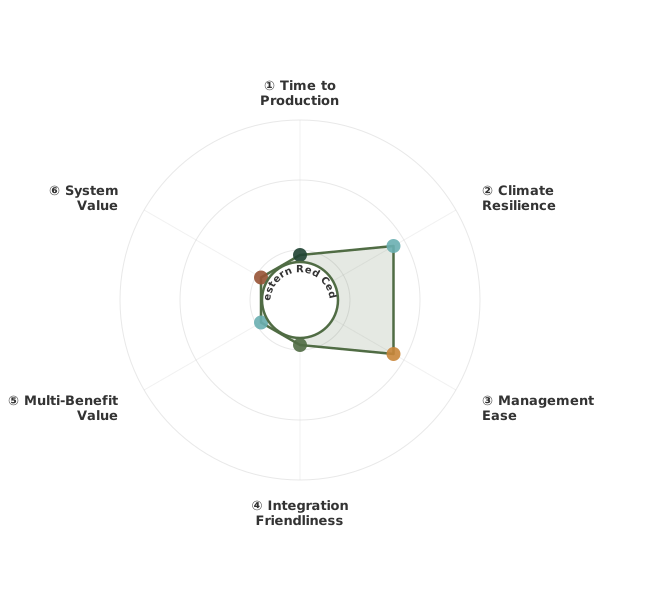
Western Red Cedar (Thuja plicata), also known as the 'Tree of Life,' holds significant historical and cultural importance, particularly for Indigenous peoples of the Pacific Northwest, who utilized nearly every part of the tree. While our knowledge base has limited coverage regarding its direct use in regenerative agriculture systems, its characteristics suggest potential benefits. Its longevity and decay-resistant, fibrous bark hint at its utility in soil building and long-term agroforestry applications, potentially acting as a durable component in soil amendments or windbreaks. Historically, its use was deeply integrated with the environment, suggesting a co-evolved relationship that aligns with regenerative principles. Direct applications as a cover crop, forage, or nitrogen fixer are not detailed in the provided excerpts. Further research into its ecological role and potential integration within systems like agroforestry or permaculture would be beneficial to fully understand its regenerative agricultural applications.

Regenerative Quick Profile

All recommendations assume integrated, regenerative practices—not conventional inputs.

Climate & Soil Fit

Climate: Tropical Savanna, Hot Semi-Arid (Steppe), Cold Semi-Arid (Steppe), Cold Desert, Humid Subtropical, Oceanic (Maritime Temperate), Hot-Summer Mediterranean, Warm-Summer Mediterranean, Monsoon-Influenced Humid Subtropical, Subtropical Highland, Hot-Summer Continental, Warm-Summer Continental, Subarctic, Monsoon-Influenced Hot-Summer Continental

Zones: USDA 5-8, Australian Zones 3-5

Optimal Soil: Loam Soil

System Role & Functions

Primary: Windbreak

Secondary: Specialty, Food Forest

Key Benefits: Pest resistant

Management Level

Experience: Beginner-Friendly

Maintenance: Moderate maintenance - Once established, its natural resilience and pest resistance minimize the need for external interventions, integrating seamlessly into a low-input system.

Time to Production: Slow (5+ years) - As a slow-growing species, significant harvestable biomass is realized over 10-15+ years, reflecting a long-term investment in ecosystem development and timber resources.

Value Streams

  • Fruit/nut harvest
1

Climate Suitability Assessment

Will this plant thrive in your climate?

IDEALLY SUITED

Köppen Zone: Cfa (Humid Subtropical), Cfb (Oceanic (Maritime Temperate)), Csb (Warm-Summer Mediterranean), Cwb (Subtropical Highland), Dfa (Hot-Summer Continental), Dfb (Warm-Summer Continental)
USDA Zone: 5a, 5b, 6a, 7a
Australian Zone: temperate
EU Climate Region: atlantic

Western Red Cedar performs exceptionally well in cool, moist climates with mild winters and moderate summers. These conditions are met in Köppen Cfb zones, USDA zones 5b through 7b, Australian temperate zones, and the EU Atlantic climate region. In these areas, the species benefits from consistent precipitation (typically 30-60 inches annually) and temperatures that support its growth cycle without extreme stress. Establishment is reliable, with vigorous growth leading to effective windbreak formation within a few years. Minimal supplemental irrigation is usually required, and the species demonstrates excellent winter hardiness and resilience to pests and diseases. Its dense foliage provides superior wind reduction, and its longevity ensures a durable, long-term solution for regenerative agriculture practices. These zones offer the optimal balance of temperature, moisture, and growing season length for the species' primary function.

ADEQUATE

Köppen Zone: BSk (Cold Semi-Arid (Steppe)), Csa (Hot-Summer Mediterranean), Cwa (Monsoon-Influenced Humid Subtropical), Dfc (Subarctic)
USDA Zone: 4a, 8a

Western Red Cedar can perform adequately in climates with more pronounced temperature fluctuations or shorter growing seasons, including Köppen Cfc and Dfb zones, USDA zones 3a through 5a and 8a through 8b, and Köppen Dfc zones. In these regions, while the species can survive and grow, its performance may be limited by factors such as colder winters, shorter growing periods, or warmer, drier summers. Establishment might be slower, and growth rates reduced. In colder zones, winter damage or slower development can occur, while in warmer zones, supplemental irrigation may be necessary to mitigate heat and drought stress. Site selection becomes more critical to find sheltered microclimates. Despite these challenges, Western Red Cedar can still fulfill its windbreak function, albeit with potentially longer establishment times and slightly reduced density compared to ideal conditions. Management may involve more careful timing of planting and occasional watering.

NOT RECOMMENDED

Köppen Zone: Af (Tropical Rainforest), Am (Tropical Monsoon), Aw (Tropical Savanna), ET (Tundra), BSh (Hot Semi-Arid (Steppe)), BWh (Hot Desert), BWk (Cold Desert), Dwa (Monsoon-Influenced Hot-Summer Continental)
USDA Zone: 2a, 3a, 3b, 9a, 10a, 11a, 12a

Western Red Cedar is not recommended for cultivation in USDA zones 1a, 1b, 2a, 2b, 3a, 3b, 9a, and 9b due to extreme climatic conditions that prevent reliable establishment and survival. In the coldest zones (1a-3b), extremely low winter temperatures (-50 to 0°F) and very short growing seasons lead to high risk of winter kill, slow growth, and poor windbreak development. In the warmest zones (9a-9b), prolonged periods of high heat (often exceeding 90°F) and significant drought stress are detrimental, causing wilting, reduced growth, and often mortality, as the species requires consistent moisture and cooler temperatures. Economically and practically, the investment in planting and attempting to establish Western Red Cedar in these zones is unlikely to yield a functional windbreak, making alternative species a far more sensible choice for regenerative agriculture. These zones fall outside the species' natural hardiness and moisture requirements.

Better alternatives for these "not recommended" zones: Siberian Larch (Larix sibirica) (Extremely cold-hardy conifer for very cold zones.), White Spruce (Picea glauca) (Cold-hardy conifer suitable for northern regions.), Eastern Redcedar (Juniperus virginiana) (Drought and heat tolerant evergreen for warmer, drier zones.), Arizona Cypress (Cupressus arizonica) (Drought and heat resistant for arid and semi-arid warmer climates.)

Note: Zones listed above represent climates where this plant can produce reliably with reasonable management. Climate zones not mentioned would require intensive climate modification (greenhouses, extensive infrastructure) and are not economically viable for regenerative agriculture purposes.

2

Soil Suitability Assessment

Which soil types work best for this plant?

IDEALLY SUITED

Loam Soil

This plant thrives in these soil types without requiring amendments or remediation. Natural soil conditions support optimal growth and productivity.

ADEQUATE

Acidic Soil, Clay Soil, Rich Soil, Rocky Soil, Sandy Soil

This plant performs acceptably in these soil types with moderate, manageable remediation such as pH adjustment, compost addition, or drainage improvement. The required amendments are practical and cost-effective for regenerative agriculture.

NOT RECOMMENDED

Alkaline Soil, Desert Soil, Saline Soil, Wet Soil

Growing this plant in these soil types would require impractical remediation such as complete soil replacement, extensive amendments, or cost-prohibitive infrastructure. These conditions are not economically viable for regenerative agriculture.

Note: Soil suitability assessments focus on remediation requirements. "Ideally Suited" means the plant generally thrives without the need for substantial amendments, "Adequate" means manageable remediation (lime, compost, mulch), and "Not Recommended" means impractical soil changes would be required. Climate factors like rainfall and temperature also influence success.

3

Seasonal Considerations

Planting timing, growth duration, and harvest windows

Establishing western red cedar requires careful timing to leverage its natural cycles. For nursery stock, the ideal planting window is during the dormant season, either in late fall after leaf drop or very early spring before bud break. This allows roots to establish before the stress of active growth. Bare-root transplants are best planted in early spring, while container-grown trees offer more flexibility but still benefit from cooler, moist conditions of early spring or late fall.

Expect your young cedars to take several years for full establishment, typically 3-5 years before they begin to show robust growth. While not typically harvested for lumber until much later, if managing for foliage or other products, a light harvest might be possible after 7-10 years, with full production realized over a decade or more. These trees are long-lived, often productive for many decades.

Seasonal management focuses on supporting this long-term growth. Pruning is best undertaken during the dormant season, after the risk of severe cold has passed but before sap begins to rise in early spring. This minimizes stress and disease. The primary "harvest" season for many products is during the active growing period of spring and summer. Observe the plant's natural winter dormancy; it requires no special intervention beyond ensuring adequate moisture in the fall before the ground freezes, especially for newly established trees.

4

System Role & Multi-Benefit Value

Functional roles, integration strategies, and stacked benefits

Functional Role

Total System Value

Western red cedar offers significant system value in regenerative agriculture, extending far beyond its primary role as a windbreak. While direct harvest value is minimal in a typical regenerative farm context (focusing on its ecological functions), its contribution to system enhancement is substantial. As an evergreen windbreak, it protects soil from wind erosion, reduces evaporation, and creates more favorable microclimates for crops and livestock, potentially increasing yields and animal comfort. Ecosystem services are considerable: it sequesters carbon, provides crucial year-round habitat and shelter for diverse wildlife, including beneficial insects and birds, and its root system helps stabilize soil. The tree's longevity and resilience, noted by its resistance to decay and fire, contribute to farm risk diversification, ensuring a stable ecological component that endures over decades. By integrating Thuja plicata, farmers can enhance the farm's overall ecological health, productivity, and resilience against environmental stressors.

Integration Characteristics

Multi-Benefit Value: Not Recommended - Valued for its durable wood, it also offers habitat and shelter for wildlife, contributing to biodiversity within the agroecosystem.

Integration Friendliness: Not Recommended - Its substantial size and shade tolerance make it best suited for perimeter plantings or woodlots, where it can provide shelter and timber without compromising companion crop or animal integration.

5

Management & Care Requirements

Integration guidance, maintenance needs, and care practices

How to Integrate This Plant

Western red cedar (Thuja plicata) is an excellent candidate for integration into regenerative farming systems, primarily serving as a robust windbreak due to its dense foliage and adaptability. Its primary function in a regenerative context is to buffer agricultural areas from harsh winds, thereby reducing soil erosion, protecting crops and livestock, and potentially moderating microclimates. While not explicitly mentioned for nitrogen fixation or direct pollinator support, its evergreen nature provides year-round habitat and shelter for beneficial insects and wildlife. Compatible practices include its use in hedgerows bordering fields or pastures, or as part of multi-layered windbreak systems. In silvopasture, it can provide shade and shelter for livestock. The tree begins contributing to wind reduction from Year 1-2 as it establishes, offering significant windbreak value by Year 5-10, and reaching its full potential as a mature, long-lived component of the farm ecosystem by Year 20+. Its multi-benefit stacking includes habitat provision, carbon sequestration, and potential for timber or craft materials, enhancing overall farm resilience beyond its windbreak role.

Integration Practices & Management

The provided knowledge base offers limited direct insights into the specific regenerative agriculture integration methods for Thuja plicata. While sources highlight its cultural significance to Indigenous peoples of the Pacific Northwest and its botanical characteristics, including its fibrous bark and scale-like leaves, they do not detail establishment practices like seeding rates, timing, or tillage methods used by regenerative farmers. Similarly, the integration of Thuja plicata with grazing systems, such as mob grazing or rotational management, is not discussed. Termination strategies and ongoing management considerations like fertility needs, competition management, or succession planning within a regenerative farming context are also absent from the text. Furthermore, the knowledge base does not provide information on how Thuja plicata might be integrated with cash crops through relay cropping, intercropping, or specific rotation sequences. The focus remains on the tree's inherent qualities and historical importance rather than its practical application in modern regenerative farming systems.

Management Profile

Maintenance Intensity: Adequate - Once established, its natural resilience and pest resistance minimize the need for external interventions, integrating seamlessly into a low-input system.

Pest Disease Pressure: Ideally Suited - Exhibits exceptional resistance to pests and diseases, requiring minimal management and contributing to a resilient, self-sustaining plant community.

Time To Production: Not Recommended - As a slow-growing species, significant harvestable biomass is realized over 10-15+ years, reflecting a long-term investment in ecosystem development and timber resources.

6

Economics & Value Streams

Direct harvest, system benefits, ecosystem services, and risk diversification

Comprehensive economic analysis including direct harvest value, system enhancement contributions, ecosystem services, value timeline, and risk diversification strategies.

Per-Tree Production Economics

Metric Value
Establishment Cost $10-20
Years to First Harvest 10-15 years
Annual Maintenance $3-5
Yield 20-40 lbs/year 9-18 kg/year
Market Price $0-0/lb $0-0/kg
Productive Lifespan 50-75 years
Net Annual Return* $-5 to $-3/year (negative)

Values shown per mature tree, not per acre. In regenerative systems, trees are integrated at low densities across diverse landscapes. Establishment costs spread over the lifespan of the tree. Early years have costs but no revenue.

* Net Annual Return = (Yield × Market Price) − (Amortized Establishment Cost + Annual Maintenance). This return is realized only at/after first harvest; early years have costs but no revenue. Range shows worst case to best case scenarios.

System Enhancement Value

Beyond harvest: wind protection and erosion control from grasses/shrubs

Windbreak & Erosion Control Value

Protects 2-14 acres per 100ft row (based on 10-15x height windbreak protection range).

Western red cedar (Thuja plicata) offers significant windbreak value due to its dense evergreen foliage and potential for substantial height, as indicated by its historical use and natural resilience. As a windbreak, it can effectively reduce wind speed across agricultural fields, mitigating soil erosion and protecting crops from wind damage. This protection extends downwind, potentially benefiting a considerable area. The effectiveness is amplified by the tree's rot resistance, ensuring longevity and consistent performance. In integrated systems, this windbreak function can create microclimates conducive to higher yields and reduced stress on other farm components, such as livestock or sensitive crops. Its use in silvopasture settings, while not explicitly detailed for shade, implies a role in modifying environmental conditions for animal comfort and productivity.

Additional System Contributions

Western red cedar's rot-resistant wood, described as 'exceptional durability' and suitable for direct ground contact, offers significant value in farm infrastructure. Historically, Indigenous peoples utilized nearly every part for crafts, tools, and even teas, highlighting its multifaceted utility beyond timber. Its fibrous bark is noted for fire and decay resistance. While not a primary nitrogen fixer, its dense structure provides excellent habitat for wildlife, offering nesting sites and shelter. The 'Tree of Life' designation by Pacific Northwest Indigenous peoples underscores its profound ecological and cultural significance, hinting at a deep co-evolved relationship that suggests resilience and long-term ecosystem support. Its slow-growing nature and longevity contribute to stable, long-term ecosystem services.

Ecosystem Service Contributions

Environmental contributions: carbon, pollinators, wildlife, and water

  • Carbon Sequestration: As a long-lived conifer, Western red cedar has high carbon sequestration potential, storing carbon in its substantial biomass over centuries. Its dense wood and slow growth rate contribute to stable, long-term carbon storage.
  • Pollinator Support: Low. While it produces cones, it is not a primary nectar or pollen source for most agricultural pollinators.
  • Wildlife Habitat: High. Provides excellent habitat, nesting sites, and shelter due to its dense evergreen foliage. Historically used for a wide range of tools and crafts, indicating a strong connection to local ecosystems.
  • Water Quality: Not applicable

Value Timeline: Protection Development

When you'll see results: faster than trees, protection begins 1-3 years

Years 1-2

Establishment of windbreak function, providing initial wind speed reduction and erosion control. Early habitat provision for wildlife.

Years 3-5

Windbreak effectiveness increases significantly as the tree grows. Beginning of specialty wood product potential (e.g., rot-resistant components for farm use).

Years 10-20

Mature windbreak providing substantial protection to agricultural areas. Significant contributions to wildlife habitat. Potential for initial harvest of specialty wood products or materials for farm infrastructure.

20+ Years

Long-term, stable windbreak and habitat provision. Potential for harvest of high-value timber. Continued and enhanced ecosystem services.

Farm Risk Reduction

How this reduces farm risk: crop protection and erosion reduction

  • Multiple Revenue Streams: Windbreak protection (crop yield improvement, reduced soil loss), specialty wood products (rot-resistant construction materials, crafts), wildlife habitat, potential timber harvest, erosion control.
  • Temporal Income Spread: Provides immediate windbreak and habitat services, with increasing value over decades. Long-term potential for high-value timber harvest, complementing annual or shorter-term farm revenues.
  • Market Risk Hedge: Reduces reliance on external inputs (e.g., by protecting crops from wind damage). Provides on-farm material sources for infrastructure, reducing market price volatility for building materials. Its longevity and resilience offer stability against environmental and market fluctuations.
7

Regenerative Suitability Details

Comprehensive trait ratings for system integration assessment

Comparative ratings for this plant across key regenerative agriculture traits.

Trait Suitability Explanation
Drought Tolerance Adequate This species thrives with consistent moisture, supported by soil organic matter and mulching practices that enhance moisture retention, though it can endure moderate dry spells.
Establishment Ease Adequate Western red cedar establishes readily through seed or cuttings, demonstrating good early vigor and naturally suppressing weeds through its dense growth, contributing to soil health.
Time To Production Not Recommended As a slow-growing species, significant harvestable biomass is realized over 10-15+ years, reflecting a long-term investment in ecosystem development and timber resources.
Multi Benefit Value Not Recommended Valued for its durable wood, it also offers habitat and shelter for wildlife, contributing to biodiversity within the agroecosystem.
Climate Adaptability Adequate Hardy in cooler, moister climates (zone 5+), it performs best where soil moisture is reliably managed, demonstrating moderate tolerance to heat.
Hardiness Zone Range Adequate Prefers zones 5-8, showcasing good cold tolerance and reliable performance in temperate, moisture-rich environments.
Maintenance Intensity Adequate Once established, its natural resilience and pest resistance minimize the need for external interventions, integrating seamlessly into a low-input system.
Pest Disease Pressure Ideally Suited Exhibits exceptional resistance to pests and diseases, requiring minimal management and contributing to a resilient, self-sustaining plant community.
Integration Friendliness Not Recommended Its substantial size and shade tolerance make it best suited for perimeter plantings or woodlots, where it can provide shelter and timber without compromising companion crop or animal integration.

Comparative System: Ratings compare plants within their economic category (e.g., cover crop nitrogen fixation compared to other cover crops, not to all plants). Individual farm conditions and management practices significantly influence actual performance.

8

Learn More

Why farmers use this plant and additional resources

Why Regenerative Farmers Use This Plant

Western Red Cedar (Thuja plicata) is a cornerstone species for regenerative agroforestry and perennial systems, offering profound ecological and economic benefits over its multi-decade lifespan. At maturity, typically between 15-40 years, established trees can sequester an estimated 2-5 tons of CO2e per acre annually, contributing significantly to climate change mitigation and carbon drawdown. Its dense, evergreen canopy provides crucial shade regulation, moderating temperatures for understory crops and livestock, and acts as a formidable windbreak, protecting fields and farmsteads from harsh winds, mitigating soil erosion, and reducing wind-driven rain impact. The long-term asset value of mature cedar, both for timber and its ecosystem services, makes it a strategic investment for resilient farm economies.

Integrating Western Red Cedar into farm landscapes enhances biodiversity and soil health. As a slow-growing but long-lived tree, it builds substantial biomass over time, contributing organic matter to the soil profile. Its deep root system, reaching depths of 6-20+ feet (1.8-6+ m), improves soil structure, enhances water infiltration, scavenges nutrients from lower soil horizons, and prevents erosion, particularly on sloped terrain. While not a nitrogen fixer, its presence supports a complex soil microbiome, creates microclimates conducive to beneficial fungi and insects, and enhances nutrient cycling by efficiently scavenging available nutrients and preventing their leaching into waterways. As a perennial tree species, it provides stable habitat for beneficial insects and birds throughout the year, supporting natural pest control mechanisms.

Beyond its carbon sequestration and microclimate services, Western Red Cedar offers tangible economic returns through sustainable timber harvesting. Managed stands can provide high-value lumber for construction, furniture, and specialty wood products, with harvests typically occurring every 30-60 years for mature trees. First timber harvest for pulp or smaller wood products might occur between 15-25 years. The aesthetic appeal and durability of cedar also contribute to land value appreciation. Its longevity ensures consistent ecosystem services and economic potential for multiple generations of farmers, solidifying its role in long-term farm planning and wealth accumulation.

Regional success stories highlight the adaptability of Western Red Cedar. In the Pacific Northwest of North America, it is a native species successfully integrated into silvopasture systems, providing shade and wind protection for livestock while producing timber, and is often interplanted with forage crops or used in hedgerows. In parts of Europe, particularly the UK and Ireland, it is increasingly used in windbreak plantings, as part of mixed-species shelterbelts on arable land, in forest gardens, and for riparian buffer zones, demonstrating its value in diverse agricultural landscapes. Its tolerance for moist conditions also makes it suitable for wetland restoration projects. In New Zealand, it is valued for its timber potential within mixed-species forestry blocks that also incorporate pasture for sheep and cattle. Its use in mixed hedgerows or windbreaks across these regions helps to create biodiversity corridors and protect crops from wind damage. In silvopasture systems, the shade it provides can reduce heat stress on livestock, potentially increasing weight gain and milk production.

9

How to Integrate This Plant

Practical guidance for regenerative systems

Establishing Western Red Cedar can be achieved through direct seeding, transplanting nursery-grown seedlings, or utilizing larger containerized stock for quicker establishment. For direct seeding, a rate of approximately 0.5-1 lb/acre (0.56-1.12 kg/ha) is recommended, with seeds planted at a depth of 0.25-0.5 inches (0.6-1.3 cm). For planting seedlings or transplants, rates can range from 400-600 trees per acre (988-1482 trees/ha). Spacing for timber production or windbreaks is often 8-20 feet (2.4-6 m) apart in rows, with row spacing adjusted based on management goals and equipment access, ranging from 15-40 feet (4.5-12 m). For alley cropping or silvopasture designs, rows are typically spaced 30-40 ft (9-12 m) apart to allow for equipment access and grazing. Planting is best undertaken in early spring (March-April in the Northern Hemisphere) as the soil begins to warm, or in early autumn (September-October in the Southern Hemisphere) before the ground freezes, allowing roots to establish before extreme weather. Careful site preparation, including weed control, is crucial for successful establishment.

Management during the establishment phase (1-3 years) is critical for long-term success. Young trees require consistent moisture, with approximately 1-2 inches (2.5-5 cm) of water per week, either from rainfall or supplemental irrigation, especially in drier climates or during the first 1-3 years. Fertility management should prioritize biological approaches: incorporate compost generously at planting, utilize nitrogen-fixing cover crops like clover or vetch in adjacent areas or beneath the canopy once established (around year 2-3) to build soil fertility and provide forage, and allow for natural decomposition of leaf litter. Growth is moderate, with trees reaching 1-3 feet (0.3-0.9 m) in height within the first 2-3 years, and can achieve heights of 30-100+ feet (9-30+ m) within 10-15 years and full maturity over decades. Pest and disease management should focus on cultural practices like proper spacing to ensure good air circulation and selecting disease-resistant varieties where available. Protecting young trees from browsing by deer or other herbivores with physical barriers or repellents is often necessary, especially in the first decade. Pruning may be required to establish a strong central leader and remove competing leaders, typically done annually during the dormant season for the first 5-10 years, or selectively after 5-10 years to manage light penetration to the understory.

In agroforestry systems, Western Red Cedar typically takes 1-3 years to become well-established, with full production potential (timber or biomass) realized between 15-30 years. Measurable soil carbon increases are often observed by year 5-7 as the root system develops and organic matter accumulates. Long-term infrastructure considerations include deer and browse protection, potentially temporary irrigation systems for initial establishment, and support structures for early growth if needed. Canopy management, through selective pruning, can be initiated after 5-10 years to encourage a strong central leader and manage light penetration to the understory, typically aiming for 50-70% light.

View Full Document (Printable single-page version)