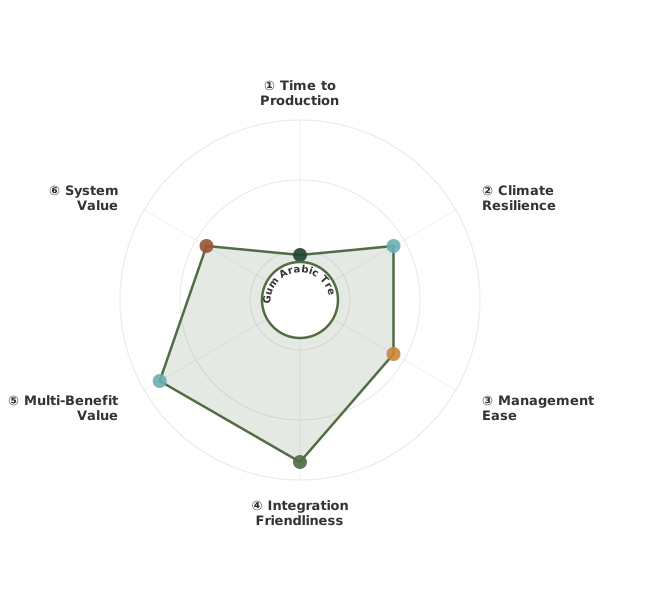
Existing research highlights its potential. Primarily, studies indicate *Vachellia nilotica* contributes to soil health through carbon sequestration, with significant carbon stocks observed in agroforestry systems in Pakistan. Field experiments in Nigeria suggest tree canopy litter, including that from *Vachellia nilotica*, can improve soil carbon content and sequestration rates. Ethnoveterinary uses point to applications in livestock health, potentially supporting regenerative grazing systems by providing medicinal resources for animal well-being. Although not explicitly stated as a cover crop or forage in these excerpts, its role in soil building and carbon sequestration aligns with regenerative principles. Further research is needed to fully understand its integration as a nitrogen fixer or polyculture component in diverse regenerative farming systems. While coverage in our knowledge base is limited, the above represents documented uses in regenerative systems.

Regenerative Quick Profile

All recommendations assume integrated, regenerative practices—not conventional inputs.

Climate & Soil Fit

Climate: Tropical Rainforest, Tropical Monsoon, Tropical Savanna, Hot Semi-Arid (Steppe), Cold Semi-Arid (Steppe), Hot Desert, Humid Subtropical, Oceanic (Maritime Temperate), Hot-Summer Mediterranean, Warm-Summer Mediterranean, Monsoon-Influenced Humid Subtropical, Subtropical Highland

Zones: USDA 9-11, Australian Zones 3-14, EU Mediterranean, Subtropical

Optimal Soil: Loam Soil

System Role & Functions

Primary: Silvopasture

Secondary: Specialty, Nitrogen Fixer

Key Benefits: Multi-benefit value, Drought tolerant, Integration-friendly

Management Level

Experience: Beginner-Friendly

Maintenance: Moderate maintenance - System integration involves occasional pruning for shape and thorn management, leveraging its natural resilience and nitrogen-fixing capabilities; pest monitoring is part of ongoing ecosystem observation.

Time to Production: Slow (5+ years) - Requires a long establishment period, typically 6-10+ years, for significant yield, necessitating long-term system planning and patience as it builds soil fertility.

Value Streams

  • Fruit/nut harvest
1

Climate Suitability Assessment

Will this plant thrive in your climate?

IDEALLY SUITED

Köppen Zone: Af (Tropical Rainforest), Am (Tropical Monsoon), Aw (Tropical Savanna), BSh (Hot Semi-Arid (Steppe))
USDA Zone: 8a, 9a, 10a, 11a, 12a
Australian Zone: subtropical

Gum Arabic thrives in consistently warm to hot climates with a distinct wet season and minimal frost risk, conditions met in Köppen BWh (with irrigation), Cfa, Cwa, Csa, and regional zones like USDA 9-12, Australian subtropical and temperate (with irrigation), and EU Mediterranean (with irrigation). These zones offer long growing seasons (200+ days) and temperatures averaging 25-35°C during the growing period, promoting vigorous growth and nitrogen fixation. Annual rainfall of 400-800 mm is ideal, but these zones can often support the plant with supplemental irrigation during dry spells, particularly in Mediterranean and semi-arid grassland areas. Establishment success is high (>85%) with proper site selection and initial watering. Minimal management is required beyond occasional pruning and irrigation, making it highly productive for silvopasture and specialty uses. Yields of gum and fodder are reliable, and the nitrogen-fixing capability significantly enhances soil fertility, supporting regenerative agriculture practices.

ADEQUATE

Köppen Zone: BWh (Hot Desert), Cfa (Humid Subtropical), Cfb (Oceanic (Maritime Temperate)), Csa (Hot-Summer Mediterranean), Csb (Warm-Summer Mediterranean), Cwa (Monsoon-Influenced Humid Subtropical)
USDA Zone: 7a
Australian Zone: grassland, temperate
EU Climate Region: atlantic, mediterranean

Gum Arabic is adequately suited to regions with moderate temperatures and rainfall, or where supplemental irrigation can mitigate dry periods. This includes Köppen BSh, Cfa, Cwa, Csa, and regional zones like USDA 7-8, Australian grassland and temperate, and EU Atlantic and Mediterranean. These zones typically have 150-250 frost-free days and average temperatures between 20-30°C during the growing season. While natural rainfall might be sufficient in some areas (250-600 mm annually), dry spells, especially during summer in Mediterranean and Cwa climates, necessitate irrigation for optimal performance and to ensure consistent nitrogen fixation. Establishment success is good (70-85%) with proper timing and watering. Management involves standard practices, with increased attention to water management. Productivity is reliable, though potentially lower than in 'ideally suited' zones without adequate irrigation, making it economically viable with careful planning.

NOT RECOMMENDED

Köppen Zone: ET (Tundra), BSk (Cold Semi-Arid (Steppe)), BWk (Cold Desert), Cwb (Subtropical Highland), Dfa (Hot-Summer Continental), Dfb (Warm-Summer Continental), Dfc (Subarctic), Dwa (Monsoon-Influenced Hot-Summer Continental)
USDA Zone: 2a, 3a, 3b, 4a, 5a, 5b, 6a
Australian Zone: arid
EU Climate Region: continental

Gum Arabic is not recommended for zones with extreme cold, very short growing seasons, or prolonged, intense heat and drought without significant intervention. This includes Köppen BWh (extreme heat/drought), BWk, BSh (extreme drought), BSk, and regional zones like USDA 3-6, Australian arid, and EU continental. In cold zones (USDA 3-6, EU continental), winter temperatures below -10°C are lethal, and short growing seasons prevent establishment. In hot, arid zones (Köppen BWh, Australian arid), extreme heat (>40°C) and severe drought (<200 mm rainfall) lead to high mortality and stunted growth, requiring extensive irrigation and intensive management that is often economically unfeasible. Establishment success is low (<60%) due to harsh conditions. While technically possible in some marginal areas with significant inputs, the high risk of failure, low productivity, and substantial management costs make it a poor choice for regenerative agriculture in these regions. Alternative nitrogen-fixing plants better adapted to these specific challenging conditions are strongly advised.

Better alternatives for these "not recommended" zones: Prosopis cineraria (Khejri) (highly drought-tolerant nitrogen-fixing tree adapted to arid conditions), Caragana spp. (Pea Shrub) (cold-hardy nitrogen-fixing shrubs for arid/semi-arid environments), Atriplex spp. (Saltbush) (extremely drought and cold tolerant shrubs for arid/semi-arid regions), Robinia pseudoacacia (Black Locust) (nitrogen-fixing tree tolerant of colder climates and various soils)

Note: Zones listed above represent climates where this plant can produce reliably with reasonable management. Climate zones not mentioned would require intensive climate modification (greenhouses, extensive infrastructure) and are not economically viable for regenerative agriculture purposes.

2

Soil Suitability Assessment

Which soil types work best for this plant?

IDEALLY SUITED

Loam Soil

This plant thrives in these soil types without requiring amendments or remediation. Natural soil conditions support optimal growth and productivity.

ADEQUATE

Alkaline Soil, Clay Soil, Rich Soil, Rocky Soil, Sandy Soil

This plant performs acceptably in these soil types with moderate, manageable remediation such as pH adjustment, compost addition, or drainage improvement. The required amendments are practical and cost-effective for regenerative agriculture.

NOT RECOMMENDED

Acidic Soil, Desert Soil, Saline Soil, Wet Soil

Growing this plant in these soil types would require impractical remediation such as complete soil replacement, extensive amendments, or cost-prohibitive infrastructure. These conditions are not economically viable for regenerative agriculture.

Note: Soil suitability assessments focus on remediation requirements. "Ideally Suited" means the plant generally thrives without the need for substantial amendments, "Adequate" means manageable remediation (lime, compost, mulch), and "Not Recommended" means impractical soil changes would be required. Climate factors like rainfall and temperature also influence success.

3

Seasonal Considerations

Planting timing, growth duration, and harvest windows

For establishing Vachellia nilotica, aim for nursery planting in early spring, after the risk of frost has passed and soil temperatures are warming. This allows containerized seedlings to establish actively growing root systems. Bare-root stock is best planted during the dormant season, before new growth begins, to minimize transplant shock.

Expect your trees to reach establishment within the first few years, with the first significant gum arabic harvest typically occurring around year 5 to 7. Full production, where yields are maximized, will be realized by year 10 to 15, with trees remaining productive for several decades.

Seasonal management focuses on supporting this long-term growth. Pruning is best performed during the dormant season, typically in late fall or winter, to encourage structure and manage canopy. Bloom occurs in late summer or early autumn, followed by seed pod development. While Vachellia nilotica is drought-tolerant, providing adequate water during establishment and dry periods in summer will significantly boost growth and gum production. Winter dormancy is a period of reduced activity, allowing the tree to conserve energy before the next active growing season commences in spring.

4

System Role & Multi-Benefit Value

Functional roles, integration strategies, and stacked benefits

Functional Role

Total System Value

Vachellia nilotica offers substantial multi-benefit stacking in regenerative systems. Its primary role in silvopasture provides direct benefits through shade and fodder for livestock, improving animal health and reducing heat stress. Beyond direct use, its biomass and litter contribute to significant soil carbon sequestration, enhancing soil health, water retention, and fertility, which in turn supports pasture growth and reduces the need for external inputs. This plant contributes to ecosystem services by stabilizing soil, preventing erosion, and potentially providing habitat for wildlife. In terms of risk diversification, establishing Vachellia nilotica creates a more resilient farm system by adding a long-term, drought-tolerant perennial that diversifies income streams (if gum is harvested) and enhances the overall ecological function of the landscape, making it less susceptible to climate variability and market fluctuations.

Integration Characteristics

Multi-Benefit Value: Ideally Suited - As a nitrogen fixer, it enhances soil fertility and structure with its deep roots, while providing valuable wildlife habitat, fodder, and harvestable products like gum, timber, and pods.

Integration Friendliness: Ideally Suited - An excellent nitrogen fixer, it provides fodder, tannins, and wood, integrating seamlessly into silvopasture and windbreaks by offering multiple ecosystem services and enhancing farm system resilience.

5

Management & Care Requirements

Integration guidance, maintenance needs, and care practices

How to Integrate This Plant

Gum arabic tree (Vachellia nilotica) is a valuable component for regenerative agriculture, primarily functioning in silvopasture systems. Its deep root system aids in soil stabilization and nutrient cycling, contributing to erosion control and improved soil carbon stocks, as indicated by research on its litter's impact on soil organic carbon. In silvopasture, it provides shade and browse for livestock, enhancing animal welfare and pasture quality. It can also serve as a windbreak. Compatible practices include silvopasture and potentially alley cropping, though the latter is not explicitly mentioned. Year 1-2: Establishment and initial soil improvement. Year 3-5: Provides significant shade and browse material. Year 10-20: Mature tree offers substantial shade, windbreak benefits, and continued soil enhancement. Its role in carbon sequestration is a key benefit, with studies showing significant carbon stock in its biomass and associated soils.

Integration Practices & Management

While the literature highlights its ethnoveterinary uses for livestock health in Africa and its role in soil carbon sequestration, particularly through canopy litter in Nigeria's Sudan Savannah, it does not detail practical farmer-level integration strategies. The sources do not address establishment methods like seeding rates or tillage practices, nor do they elaborate on integration with grazing systems such as mob or rotational grazing, including timing and rest periods. Similarly, termination strategies and management considerations like fertility needs or competition management are not discussed. The knowledge base also lacks information on how Vachellia nilotica is integrated with cash crops through intercropping or rotation sequences. One study in Pakistan mentions Acacia nilotica's carbon sequestration potential in urban and rural sites, but this does not translate into specific regenerative farming practices for this species within the given texts. Therefore, the knowledge base coverage on the 'how' of regenerative integration for Vachellia nilotica is minimal. While coverage in our knowledge base is limited, the above represents documented uses in regenerative systems.

Management Profile

Maintenance Intensity: Adequate - System integration involves occasional pruning for shape and thorn management, leveraging its natural resilience and nitrogen-fixing capabilities; pest monitoring is part of ongoing ecosystem observation.

Pest Disease Pressure: Adequate - Generally resilient with good drought tolerance, it may require observation for potential insect pests or fungal issues in wetter conditions, managed through balanced ecosystem health.

Time To Production: Not Recommended - Requires a long establishment period, typically 6-10+ years, for significant yield, necessitating long-term system planning and patience as it builds soil fertility.

6

Economics & Value Streams

Direct harvest, system benefits, ecosystem services, and risk diversification

Comprehensive economic analysis including direct harvest value, system enhancement contributions, ecosystem services, value timeline, and risk diversification strategies.

Per-Tree Production Economics

Metric Value
Establishment Cost $5-15
Years to First Harvest 5-8 years
Annual Maintenance $2-5
Yield 40-80 lbs/year 18-36 kg/year
Market Price $0-0/lb $0-1/kg
Productive Lifespan 30-50 years
Net Annual Return* $-5 to $-2/year (negative)

Values shown per mature tree, not per acre. In regenerative systems, trees are integrated at low densities across diverse landscapes. Establishment costs spread over the lifespan of the tree. Early years have costs but no revenue.

* Net Annual Return = (Yield × Market Price) − (Amortized Establishment Cost + Annual Maintenance). This return is realized only at/after first harvest; early years have costs but no revenue. Range shows worst case to best case scenarios.

System Enhancement Value

Beyond harvest: shade for livestock, soil building, and system benefits

Shade Value for Livestock

$50-150/head/year for cattle in silvopasture (variable based on climate and livestock density)

The gum arabic tree (Vachellia nilotica) offers significant shade benefits in silvopasture systems, crucial for livestock well-being and productivity, particularly in warmer climates. Shade reduces heat stress in animals, leading to improved feed intake, growth rates, and reproductive performance. This reduced stress also translates to fewer health issues, potentially lowering veterinary costs. The canopy provides a comfortable resting area, encouraging livestock to congregate in specific areas, which can aid in manure management and pasture rotation. The quantitative value of shade is highly variable, depending on the density and spread of the canopy, the type of livestock, and the prevailing environmental conditions. However, by mitigating heat stress, V. nilotica directly contributes to animal welfare and economic returns within the farm system.

Nitrogen Fixation (if legume)

56-168 kg N/ha/year = $48-135/acre fertilizer replacement (estimated based on 50-150 lbs N/acre/year)

As a legume, Vachellia nilotica is a nitrogen fixer, contributing valuable atmospheric nitrogen to the soil. This natural fertilization process reduces the farm's reliance on synthetic nitrogen fertilizers, which are costly and can have negative environmental impacts. The fixed nitrogen becomes available to the tree itself and can be transferred to surrounding vegetation and pasture grasses through litter decomposition and root exudates. This enhances soil fertility and promotes better growth of forage for livestock, directly benefiting the silvopasture component of the integrated system. The nitrogen fixation capacity of V. nilotica, estimated to be between 50-150 lbs N/acre/year, represents a substantial in-kind contribution to farm fertility, potentially offsetting significant fertilizer expenses and improving the overall sustainability of the system.

Windbreak & Erosion Control

Variable; can protect 3-5 acres per effective row, potentially improving yield by 5-15% in protected areas.

While not explicitly detailed in the provided excerpts for Vachellia nilotica, trees in general, and particularly dense canopies like those of gum arabic, can provide valuable windbreak services. In agricultural landscapes, windbreaks can protect crops and pastures from damaging winds, reducing soil erosion and minimizing physical damage to plants. This protection can lead to improved crop yields and better pasture establishment and growth. For livestock, windbreaks offer shelter from harsh winds, reducing energy expenditure for thermoregulation and improving comfort, especially during colder months. The effectiveness of a windbreak is dependent on its height, density, and length, and it can protect an area several times its own height downwind. Integrating V. nilotica into farm designs can therefore offer passive protection and enhance the microclimate for both crops and animals.

Other System Contributions

Beyond shade and nitrogen fixation, Vachellia nilotica offers a range of other significant system benefits. Its ethnoveterinary uses, as highlighted in excerpt, point to its potential in traditional livestock health management, offering antimicrobial and anthelmintic properties, though toxicity at high doses is a concern. This suggests potential for use in natural remedies, reducing reliance on commercial veterinary drugs. Furthermore, the tree's biomass and litter contribute to soil carbon sequestration, as evidenced by excerpt which shows significant improvements in soil carbon stock and sequestration rates under V. nilotica canopies. This contributes to climate change mitigation and soil health improvement. The tree also likely supports biodiversity by providing habitat and food sources for various insects and wildlife, and its deep root system can improve soil structure and water infiltration.

Ecosystem Service Contributions

Environmental contributions: carbon, pollinators, wildlife, and water

  • Carbon Sequestration: Vachellia nilotica demonstrates a notable capacity for carbon sequestration, with studies indicating rates of 20.19 t C ha-1 yr-1 (excerpt). This is attributed to its biomass accumulation and the contribution of its litter to soil organic carbon.
  • Pollinator Support: Medium. While not explicitly stated, many Acacia species are known to flower and provide nectar and pollen, supporting pollinators. Specific data for V. nilotica's pollinator impact would require further investigation.
  • Wildlife Habitat: Provides habitat and potential food sources (e.g., pods, leaves) for various wildlife, contributing to biodiversity within the farm ecosystem. Its thorny nature may also offer protection for smaller animals.
  • Water Quality: Not applicable

Value Timeline: When Benefits Begin

When you'll see results: shade in years 1-5, fruit/nut harvest 3-10, timber 20+

Years 1-2

Initial establishment of soil improvement through leaf litter, early stages of nitrogen fixation, and potential for minor windbreak effects. Erosion control benefits begin as ground cover improves.

Years 3-5

Established nitrogen fixation providing noticeable fertility benefits to surrounding forage. Canopy development leads to more significant shade provision for livestock. Early fruit/seed production may begin.

Years 10-20

Mature canopy provides optimal shade, maximizing benefits for livestock. Significant contribution to soil carbon sequestration. Potential for initial harvesting of gum arabic, if managed for that purpose, adding a direct revenue stream.

20+ Years

Full development of ecosystem services, including robust carbon sequestration, habitat provision, and windbreak efficacy. Long-term timber value may become accessible if the tree is allowed to mature without extensive harvesting of its primary products.

Farm Risk Reduction

How this reduces farm risk: backup income, weather protection, market hedges

  • Multiple Revenue Streams: Gum arabic (specialty crop), livestock shade and improved well-being (indirect income), nitrogen fertilization (fertilizer cost savings), soil carbon sequestration (potential future carbon credits), potential biomass for fodder or fuel.
  • Temporal Income Spread: Ongoing ecosystem services (shade, nitrogen, carbon sequestration) are provided continuously. Gum arabic harvest is periodic, offering a distinct income stream. Long-term timber value provides a capital asset.
  • Market Risk Hedge: Reduces reliance on purchased inputs (fertilizers, veterinary drugs). Diversifies farm income beyond primary livestock production. Drought tolerance of V. nilotica can provide resilience in arid/semi-arid environments.
7

Regenerative Suitability Details

Comprehensive trait ratings for system integration assessment

Comparative ratings for this plant across key regenerative agriculture traits.

Trait Suitability Explanation
Drought Tolerance Ideally Suited Vachellia nilotica excels in water management, thriving in arid landscapes through its deep root system and efficient moisture retention, requiring minimal external water input.
Establishment Ease Adequate Establishes well in its native arid/semi-arid environments with supportive soil preparation and mulching; seedling vigor is adequate once integrated into the soil ecosystem.
Time To Production Not Recommended Requires a long establishment period, typically 6-10+ years, for significant yield, necessitating long-term system planning and patience as it builds soil fertility.
Multi Benefit Value Ideally Suited As a nitrogen fixer, it enhances soil fertility and structure with its deep roots, while providing valuable wildlife habitat, fodder, and harvestable products like gum, timber, and pods.
Climate Adaptability Adequate Thrives in arid and semi-arid regions (zones 9-11), tolerating heat and drought, but its frost sensitivity requires careful consideration of microclimates for broader integration.
Hardiness Zone Range Not Recommended Primarily a tropical/subtropical species (zones 9-11), its limited cold hardiness restricts its geographic cultivation to areas with suitable microclimates for agroforestry integration.
Maintenance Intensity Adequate System integration involves occasional pruning for shape and thorn management, leveraging its natural resilience and nitrogen-fixing capabilities; pest monitoring is part of ongoing ecosystem observation.
Pest Disease Pressure Adequate Generally resilient with good drought tolerance, it may require observation for potential insect pests or fungal issues in wetter conditions, managed through balanced ecosystem health.
Integration Friendliness Ideally Suited An excellent nitrogen fixer, it provides fodder, tannins, and wood, integrating seamlessly into silvopasture and windbreaks by offering multiple ecosystem services and enhancing farm system resilience.

Comparative System: Ratings compare plants within their economic category (e.g., cover crop nitrogen fixation compared to other cover crops, not to all plants). Individual farm conditions and management practices significantly influence actual performance.

8

Learn More

Why farmers use this plant and additional resources

Why Regenerative Farmers Use This Plant

Vachellia nilotica, commonly known as Babul or Egyptian Gum Acacia, is a cornerstone species for building resilient and productive regenerative agricultural systems, particularly in arid and semi-arid regions. This perennial legume tree is a long-term asset, offering multifaceted benefits that mature over decades and providing multi-decade economic returns through timber, gum arabic, and fodder, while also accumulating significant asset value on the farm.

Soil Fertility and Structure: As a nitrogen-fixing tree, Vachellia nilotica contributes significantly to soil fertility by making atmospheric nitrogen available to the ecosystem. Its symbiotic relationship with rhizobia bacteria allows it to convert atmospheric nitrogen into plant-available forms, typically contributing 30-80 lbs of nitrogen per acre (34-90 kg/ha) annually to the surrounding soil ecosystem once mature. Its deep taproot system, often reaching 15-30 feet (4.5-9+ m) or more, enhances soil structure, improves water infiltration, breaks up compacted soil layers, reduces runoff, and scavenges water and nutrients from lower soil profiles, bringing them to the surface through litterfall. This leads to measurable improvements in soil organic matter over time, with farms integrating Vachellia nilotica often observing soil organic carbon increases of 0.5-1.5% within 5-10 years.

Carbon Sequestration and Climate Mitigation: At maturity, Vachellia nilotica is a significant carbon sink, sequestering an estimated 2-5 tons of CO2e per acre per year, playing a crucial role in carbon sequestration and climate change mitigation.

Microclimate Regulation and Biodiversity: Its dense foliage offers critical shade regulation, protecting understory crops and livestock from intense solar radiation, thereby reducing water stress, heat stress, and improving animal comfort and moderating microclimates. As a windbreak, it can significantly reduce wind erosion, protect sensitive crops and pastures, and create more stable microclimates within the farm landscape. The tree's flowering period, often in the dry season, provides a vital nectar and pollen source for pollinators and beneficial insects when other resources are scarce, supporting biodiversity and natural pest control mechanisms across the farm.

Economic Value and Resilience: The tree produces valuable pods, leaves, and gum arabic, a highly sought-after commodity used in food, pharmaceuticals, and industrial applications. While initial establishment requires investment, the tree begins to yield marketable gum arabic and fodder from year 3-5, with full production realized by year 7-10. This staged production timeline allows for integration into existing farm economies while building a sustainable, multi-decade income stream. Its hardy nature makes it an excellent choice for intercropping and agroforestry systems, where it can be integrated with drought-tolerant cash crops or forage grasses. Its presence can lead to a significant increase in local biodiversity, supporting a greater abundance of birds, insects, and other wildlife, thereby enhancing the farm's natural pest control mechanisms and overall resilience.

Regional Successes: Vachellia nilotica has demonstrated success across diverse regenerative farming contexts globally.

  • In the Sahel region of Africa, it is a vital component and key species in farmer-managed natural regeneration (FMNR) systems, providing fodder, fuel, and gum arabic while combating desertification and improving food security.
  • In India, it has been a cornerstone of agroforestry systems for centuries, providing timber, fuel, and gum arabic while improving degraded lands, and is widely used in arid and semi-arid farming systems for soil conservation, fodder production, and its medicinal properties.
  • Australian farmers in semi-arid and dryland regions integrate it into silvopasture systems, using its pods and leaves as high-protein livestock feed, its shade to improve grazing conditions, and planting it in windbreaks and rows to stabilize soils.
  • In Mediterranean climates, it can be incorporated into olive or almond groves, providing windbreak benefits and contributing to a diversified farm income.
  • In parts of the Middle East, it is planted for windbreaks and to stabilize sandy soils, demonstrating its adaptability to extreme arid conditions, and in afforestation projects and oasis agriculture.
  • In parts of Brazil, it can be incorporated into agroforestry systems alongside coffee or other perennial crops, contributing to soil fertility and providing shade.
9

How to Integrate This Plant

Practical guidance for regenerative systems

Establishing Vachellia nilotica typically involves direct seeding or planting seedlings raised in nurseries.

Seeding and Planting: For direct seeding, rates can range from 1-3 lbs/acre (1.1-3.4 kg/ha) for scattered planting or up to 10-20 lbs/acre (11-22 kg/ha) when establishing dense stands or windbreaks, depending on seed viability and desired density. Seeds often require scarification (mechanical or hot water treatment) or soaking to break dormancy before sowing. Planting depth should be shallow, around 0.25-0.5 inches (0.6-1.3 cm), ensuring good seed-to-soil contact in well-prepared soil. Optimal planting times are at the beginning of the rainy season to provide adequate moisture for germination and early growth. In the Northern Hemisphere, this often means April-June or March-May, while in the Southern Hemisphere, it would be October-December or September-November. Planting nursery-raised seedlings offers a faster route to establishment.

Spacing and System Design: Seedlings are typically spaced 15-30 ft (4.5-9 m) apart for agroforestry applications, allowing for mature tree development and intercropping. In alley cropping or silvopasture designs, rows of Vachellia nilotica are typically spaced 30-40 ft (9-12 m) apart to allow for equipment access and the cultivation or grazing of intercrops. In Australian dryland regions, row spacings of 20-30 ft (6-9 m) are common for silvopasture. In arid parts of the Middle East, significant spacing is used to maximize water availability.

Establishment and Growth Timeline: Vachellia nilotica typically requires 1-3 years to establish a robust root system and begin significant above-ground growth. Full production of timber or gum can take 10-20 years, depending on management and environmental conditions, with significant pods and gum arabic production occurring between 3-15 years, reaching full potential by 7-10 years. Measurable soil carbon increases are typically observed by year 5-7 as the tree matures and its root system expands and litterfall becomes substantial.

Water and Fertility Management: While the tree is drought-tolerant once mature, providing approximately 1 inch (2.5 cm) of water per week during the first 1-2 years of establishment will significantly accelerate growth and improve survival rates. In very arid regions, a basic irrigation system for the initial years may be beneficial. Fertility management should prioritize biological approaches: incorporating compost, utilizing animal manure from integrated livestock systems, and leveraging the tree's own nitrogen-fixing capabilities. Adding a balanced compost or well-rotted manure at planting can significantly boost early growth. Compost application and integration of cover crop residues beneath the canopy will support soil health and microbial activity.

Pruning and Canopy Management: Pruning is generally minimal, focusing on removing dead or crossing branches to maintain tree health and structure, and to manage light penetration for understory components. Light annual pruning can be used to maintain desired structure and encourage branching and gum production.

Long-Term Infrastructure: Long-term infrastructure considerations include initial irrigation for establishment years, protective fencing against browsing animals (especially during the first few years), and potentially support structures for young trees in windy areas. Ensuring high-quality seed sources is crucial.

Mature Characteristics: Vachellia nilotica can reach a height of 20-50 feet (6-15 m) or more at maturity, with a lifespan of several decades, often 50+ years.

View Full Document (Printable single-page version)