
Mungbean
Mung bean (Vigna radiata) serves multiple roles in regenerative agriculture, primarily as a cover crop and nitrogen fixer. It is listed among ideal subtropical cover crops for hot and humid regions, valued for its rapid germination and potential to outcompete weeds early in its growth cycle. Its nitrogen-fixing capabilities are a key regenerative benefit, contributing to soil fertility within cropping systems. Mung beans are integrated into various regenerative practices, including crop rotations with grains like rice and wheat, and maize. They are also utilized in polyculture systems, seeded alongside cereal rye and other intercrops like milo and buckwheat. Long-term studies highlight its positive impact on soil health, with benefits observed in soil organic carbon (SOC) levels and aggregate stability, particularly when combined with no-tillage and organic amendments like rice straw and cow dung. While not explicitly detailed as forage in these excerpts, its role as a cover crop implies potential biomass production. Farmer experience insights from the knowledge base emphasize its effectiveness in rotations and its contribution to soil moisture content and nitrogen levels in organic nutrient management systems.
For a full botanical description see: Wikipedia(opens in new window) (external link)
Regenerative Quick Profile
All recommendations assume integrated, regenerative practices—not conventional inputs.
Climate & Soil Fit
Climate: Tropical Rainforest, Tropical Monsoon, Tropical Savanna, Hot Semi-Arid (Steppe), Cold Semi-Arid (Steppe), Hot Desert, Cold Desert, Humid Subtropical, Oceanic (Maritime Temperate), Hot-Summer Mediterranean, Warm-Summer Mediterranean, Monsoon-Influenced Humid Subtropical, Subtropical Highland, Hot-Summer Continental, Warm-Summer Continental, Subarctic, Monsoon-Influenced Hot-Summer Continental, Tundra
Zones: USDA 8-11, Australian Zones 1-14, EU Mediterranean, Subtropical
Optimal Soil: Loam Soil
System Role & Functions
Primary: Cover Crop System
Secondary: Nitrogen Fixer, Cash Crop With Services
Key Benefits: Multi-benefit value, Easy establishment, Nitrogen Fixation
Management Level
Experience: Beginner-Friendly
Maintenance: Moderate maintenance - Mungbeans integrate seamlessly into regenerative systems, benefiting from soil fertility management through compost and mulch, and requiring minimal intervention beyond standard crop care.
Value Streams
- Cover crop (soil investment)
- Soil building and erosion control
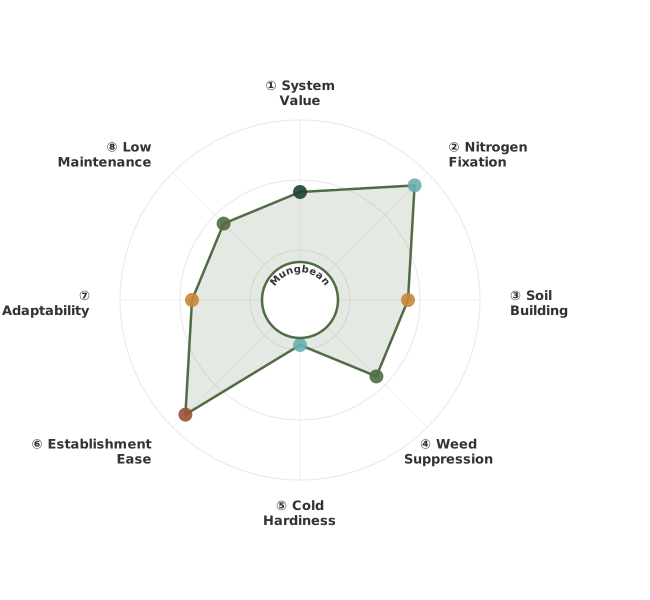
How These Traits Are Calculated
Trait dimensions are ordered clockwise starting from the top of the chart (12 o'clock position):
1. System Value
Ecosystem service stacking across nitrogen, carbon, water, biodiversity
WHAT: Synthesizes the compounding value of multiple ecosystem services delivered simultaneously—nitrogen fixation, soil organic matter building, pollinator support, erosion control, and water infiltration improvement. This is the total regenerative impact beyond single-function metrics.
WHY: The highest-value cover crops deliver 3-5 significant ecosystem services at once. A legume that fixes nitrogen, builds biomass, supports pollinators, and improves water infiltration provides $150-300/acre in combined benefits versus $30-60 for single-function covers. This service stacking is the core principle of regenerative agriculture.
HOW: Scored via LLM synthesis of economics data, timeline benefits, and trait combinations. Exceptional (3.0): 4-5 major services stacked with strong economic value ratios. Typical (2.0): 2-3 moderate services. Limited (1.0): Single-function covers with minimal service stacking. Considers seed cost relative to benefit value.
2. Nitrogen Fixation
Biological nitrogen production via legume root nodule bacteria
WHAT: Measures the ability to convert atmospheric nitrogen (N₂) into plant-available ammonia through symbiotic bacteria in root nodules. Legumes form partnerships with rhizobium bacteria that fix 60-150 lbs N/acre/year, reducing or eliminating synthetic fertilizer needs for following crops.
WHY: Nitrogen is the most expensive fertilizer input in crop production ($0.50-1.00/lb). Cover crops with exceptional nitrogen fixation can provide $60-150/acre worth of fertility while building soil organic matter. This biological process also reduces groundwater contamination from nitrogen runoff and lowers farm carbon footprint.
HOW: Ratings based on annual nitrogen fixation capacity and reliability across soil conditions. Exceptional (3.0): Legumes like hairy vetch, crimson clover, and field peas fixing >100 lbs N/acre/year. Typical (2.0): Moderate fixers like red clover at 60-100 lbs N/acre/year. Limited (1.0): Non-legumes (grasses, brassicas) with zero fixation capacity.
3. Soil Building
Weighted: biomass production (60%) + root system depth (40%)
WHAT: Combines above-ground biomass production with root depth to measure total soil organic matter contribution. Biomass provides surface organic matter, while deep roots deposit carbon at depth and break up compaction layers.
WHY: Soil organic matter is the foundation of regenerative agriculture, improving water retention, nutrient cycling, and biological activity. Each 1% increase in soil organic matter holds an additional 20,000 gallons of water per acre and represents $500-1,000 in fertility value. Deep roots access subsoil nutrients and create channels for water infiltration.
HOW: Weighted formula prioritizes biomass production (60% weight) for immediate organic matter contribution, with root depth (40% weight) for long-term soil structure. Exceptional (3.0): High-biomass crops with deep roots like cereal rye (8+ tons biomass, 5+ ft roots). Typical (2.0): Moderate on both factors. Limited (1.0): Low biomass or shallow roots.
4. Weed Suppression
Physical competition through rapid establishment and dense growth
WHAT: Measures the ability to outcompete weeds through rapid germination, aggressive early growth, and dense canopy formation. Physical smothering and light competition reduce weed pressure without herbicides.
WHY: Weed management is a major labor and cost burden for farmers. Cover crops that effectively suppress weeds reduce herbicide costs ($20-60/acre), decrease cultivation passes (fuel + labor), and provide clean seedbeds for cash crops. This is especially valuable in organic systems where herbicide options are limited.
HOW: Ratings based on germination speed, tillering density, and canopy closure timing. Exceptional (3.0): Fast-establishing, dense-tillering crops like cereal rye, oilseed radish that close canopy within 3-4 weeks. Typical (2.0): Moderate establishment and coverage. Limited (1.0): Slow-establishing or sparse crops that allow weed competition.
5. Cold Hardiness
Winter survival for fall planting and spring green manure value
WHAT: Measures tolerance to freezing temperatures and ability to survive winter conditions. Winter-hardy cover crops can be fall-planted, overwinter as living mulch, and provide early spring growth before cash crop planting.
WHY: Fall-planted winter-hardy covers extend the growing season into unused months, capturing solar energy and preventing erosion during wet periods. Spring green manure from overwintered covers provides early nitrogen and biomass. This timing flexibility is critical in cold climates with short growing seasons.
HOW: Ratings based on minimum survival temperature and winter active growth. Exceptional (3.0): Winter-hardy crops like cereal rye, hairy vetch, crimson clover surviving to -20°F with active growth in spring. Typical (2.0): Moderate cold tolerance. Limited (1.0): Warm-season crops like buckwheat, cowpea killed by first frost.
6. Establishment Ease
Germination speed, soil requirement flexibility, planting window breadth
WHAT: Measures how easily the cover crop establishes from seed, including germination speed, tolerance for variable soil conditions, and flexibility in planting timing. Easy establishment means reliable stands without intensive management.
WHY: Difficult-to-establish covers increase risk of stand failure, wasted seed costs, and reduced benefits. Easy establishment crops tolerate late planting, poor seedbed preparation, and variable moisture—critical when cover cropping windows are narrow between cash crops. Reliable establishment ensures consistent soil building and weed suppression benefits.
HOW: Ratings based on days to emergence, soil condition sensitivity, and planting window breadth. Exceptional (3.0): Fast germinators like buckwheat (3-5 days) and cereal rye (5-7 days) with wide planting windows. Typical (2.0): Moderate establishment requirements. Limited (1.0): Slow or finicky establishers requiring precise conditions.
7. Adaptability
Weighted: climate tolerance (60%) + multi-benefit versatility (40%)
WHAT: Combines climate adaptability (temperature and rainfall range) with multi-benefit versatility (diverse ecosystem services) to measure overall system flexibility. High adaptability means the cover works across farm regions and provides multiple functions.
WHY: Farmers need cover crops that work reliably across diverse fields and provide stacked benefits. Climate-adaptable covers reduce risk in variable weather, while multi-benefit crops deliver nitrogen fixation + pollinator support + forage value simultaneously. This versatility maximizes return on cover crop investment.
HOW: Weighted formula prioritizes climate tolerance (60% weight) for geographic reliability, with multi-benefit value (40% weight) for functional stacking. Exceptional (3.0): Wide climate range + multiple significant benefits. Typical (2.0): Moderate on both factors. Limited (1.0): Narrow climate range or single-function crops.
8. Low Maintenance
Inverted from maintenance intensity—low inputs mean high scores
WHAT: Measures minimal input requirements for successful cover cropping. Low-maintenance covers require no irrigation, minimal fertility, easy termination, and tolerate variable management timing.
WHY: Cover crops compete for resources with cash crops in tight rotations. Low-maintenance covers fit easily into existing systems without adding labor, equipment, or input costs. Easy termination is especially critical—covers that are difficult to kill can become weeds and delay cash crop planting.
HOW: Inverted score from maintenance intensity trait (4.0 minus raw score). Exceptional (3.0): Self-sufficient crops like cereal rye, field peas requiring no irrigation or fertility, easily terminated by mowing or winter-kill. Typical (2.0): Moderate input needs. Limited (1.0): High-maintenance crops needing irrigation, heavy fertility, or difficult termination (herbicides, multiple tillage passes).
Ratings are based on documented performance in regenerative systems, not conventional high-input scenarios. All traits assume integrated management practices focused on soil health and ecosystem services.
5
Management & Care Requirements
Integration guidance, maintenance needs, and care practices
Management & Care Requirements
Integration guidance, maintenance needs, and care practices
How to Integrate This Plant
Mung bean (Vigna radiata) can be integrated into regenerative systems primarily as a cover crop, offering rapid germination and nitrogen fixation. Its roles include improving soil health, suppressing weeds, and providing biomass. It is compatible with practices like crop rotation and intercropping, as seen in maize-mung bean rotations or intercropping with cereals and milo. Within a year, mung bean provides significant soil benefits. Year 1 contributions include rapid ground cover, weed suppression, and nitrogen input. By Year 3-5, its continued use in rotations will enhance soil organic matter and structure. The multi-benefit stacking includes direct harvest value as a pulse, but more importantly, its role in building soil organic carbon, improving soil moisture content, and increasing available nutrients like nitrogen and phosphorus. This contributes to a more resilient and self-sustaining farm ecosystem by reducing reliance on synthetic inputs and enhancing soil's capacity to retain water and nutrients.
Integration Practices & Management
Regenerative farmers integrate mung bean (Vigna radiata) primarily as a cover crop and in rotation sequences, leveraging its rapid growth and nitrogen-fixing capabilities. Establishment often occurs in warmer months, with sources indicating its use in subtropical regions and as a summer cover crop. While specific seeding rates and precise timing are not detailed, its smaller seed size compared to other beans leads to faster germination, reducing vulnerability and water needs for establishment. Mung bean is incorporated into no-till and minimal tillage systems, with one study showing no-tillage significantly enhancing aggregate stability in a maize-mung bean rotation. It can be part of intercropping or relay cropping systems, mixed with cereals like rye or milo, and sown using specialized planters. In rotations, it follows crops like rice and wheat or maize, contributing to soil organic carbon and aggregate stability. Termination strategies are varied; natural winterkill is a possibility for some cover crop uses, while grazing down, crimping, or mowing are common methods in regenerative systems, though not explicitly detailed for mung bean in the provided text. Fertility needs are generally low due to its nitrogen-fixing ability, and competition management is implicitly handled by its rapid growth and selection for specific roles within a cropping system. Practical insights highlight its value in improving soil properties like soil organic carbon and aggregate stability, especially when combined with organic amendments and reduced tillage.
Management Profile
Maintenance Intensity: Adequate - Mungbeans integrate seamlessly into regenerative systems, benefiting from soil fertility management through compost and mulch, and requiring minimal intervention beyond standard crop care.
Sources behind this view
 Research
-
Mung bean cover crop improved soil organic carbon and maize yield in a semiarid area (opens in new window)
Mung bean cover crops in semi-arid North Lombok increased soil organic matter by 60% and corn yields by 24%. Higher planting density and later termination (35 DAS) maximized benefits.
-
Mitigating Plant and Soil Health Options through Climate Resilient Maize-Mungbean Based Intercropping for Rainfed Agriculture (opens in new window)
Intercropping maize and mung beans with vermicompost in Pakistan boosted crop yields, quality, and soil health, increasing soil organic matter and nutrient availability.
-
Systematic Review of Mungbean Genetic Improvement: Early Maturity for Efficient Cropping Systems (opens in new window)
Breeding faster-maturing mung beans (green gram) improves rice-wheat rotations by allowing quicker crop succession and enhancing soil health through nitrogen fixation.
6
Economics & Value Streams
Direct harvest, system benefits, ecosystem services, and risk diversification
Economics & Value Streams
Direct harvest, system benefits, ecosystem services, and risk diversification
Comprehensive economic analysis including direct harvest value, system enhancement contributions, ecosystem services, value timeline, and risk diversification strategies.
Cover Crop Investment
| Metric | Value |
|---|---|
| Seed Cost | $25-50/acre $62-124/ha |
| Termination Cost | 15-40 37-99 |
| Biomass Production | 1.5-3.0 3-7 |
| N Fixation Value | 50-100 56-112 |
| Weed Control Savings | 20-60 49-148 |
Cover crops are soil investments, not cash crops. Economics measured in soil health gains, input reduction, and subsequent crop performance. Values show direct costs and estimated benefits.
System Enhancement Value
Beyond cost recovery: soil building, nitrogen, biomass, and weed suppression
Nitrogen Fixation & Cycling
30-100 lbs N/acre/year = $27-90/acre fertilizer replacement (based on a hypothetical $0.90/lb N fertilizer cost)
As a legume, mung bean (Vigna radiata) possesses the inherent ability to fix atmospheric nitrogen through a symbiotic relationship with rhizobia bacteria in its root nodules. This biological process significantly reduces the need for synthetic nitrogen fertilizers, which are energy-intensive to produce and can have detrimental environmental impacts. When utilized as a cover crop, mung bean contributes valuable nitrogen to the soil, which is then available to subsequent cash crops. Knowledge base excerpts,, and highlight its inclusion in cover crop blends, often pre-treated with rhizobia, indicating its recognized role in nitrogen management. This nitrogen contribution directly enhances soil fertility, promotes healthier plant growth, and can lead to substantial cost savings for farmers by reducing fertilizer expenditures. The fixed nitrogen also contributes to building soil organic matter over time, further improving soil health and long-term productivity. The quantitative reference data suggests a substantial contribution, ranging from 30-100 lbs N/acre/year.
Soil Building & Weed Suppression
Mung bean offers several other system benefits beyond direct harvest and nitrogen fixation. Knowledge base excerpt notes its fast germination and good weed suppression capabilities, making it an effective cover crop for outcompeting early-season weeds, thereby reducing the need for mechanical or chemical weed control. Excerpts and demonstrate its integration into complex cover crop blends for soil building and structure improvement, where it decomposes to add organic matter. The knowledge base also implicitly suggests its role in enhancing soil biology through the addition of organic residues and the promotion of beneficial microbial activity, particularly in conjunction with mycorrhizal inoculants as mentioned in and. While not explicitly detailed for mung bean, legumes in general can contribute to improved soil aggregation and water infiltration, as seen with the positive impacts of crop residue incorporation in a maize-mung bean rotation in excerpt. Its inclusion in diverse cover crop mixes also supports a more resilient farm ecosystem.
Ecosystem Service Contributions
Environmental contributions: carbon, pollinators, wildlife, and water
- Carbon Sequestration: Mung bean, as an annual legume cover crop, contributes to carbon sequestration through the addition of plant biomass to the soil upon decomposition. While its primary contribution is short-term, its role in improving soil health and structure, as suggested by excerpt's findings on maize-mung bean rotations and aggregate stability, can lead to enhanced long-term carbon storage in the soil organic matter. Its rapid growth cycle allows for multiple applications per year, further increasing organic matter inputs.
- Pollinator Support: Low with brief justification. While mung bean flowers, its primary ecosystem service is not typically considered to be significant pollinator support compared to dedicated pollinator-attracting plants. Its inclusion in cover crop mixes is more for soil health and nitrogen fixation.
- Wildlife Habitat: Low to Medium. Mung bean provides some ground cover and potential food sources for small ground-dwelling wildlife and insects during its growth phase. Its primary value is not in providing significant mast, nesting, or browse for larger wildlife species, but rather in contributing to the overall agricultural landscape's biodiversity and food web.
- Water Quality: Not applicable
Value Timeline: Soil Building Process
When you'll see results: immediate soil benefits, compounding over seasons
Years 1-2
Nitrogen fixation begins immediately upon establishment with appropriate rhizobia inoculation. Weed suppression and organic matter contribution through biomass decomposition become evident. Soil structure improvement starts with residue incorporation.
Years 3-5
Established nitrogen contribution supports improved yields in subsequent cash crops. Continued organic matter addition enhances soil tilth and water holding capacity. Potential for first cash crop harvest of mung beans if grown as a dual-purpose crop.
Years 10-20
Long-term benefits of improved soil organic carbon stocks and aggregate stability are realized, as suggested by excerpt. Reduced reliance on synthetic inputs becomes more pronounced. Enhanced soil biological activity supports a more resilient cropping system.
20+ Years
Sustained high soil fertility, improved water management capabilities, and reduced erosion potential contribute to long-term farm profitability and environmental stewardship. The cumulative benefits of a healthy soil ecosystem provide a robust foundation for diverse agricultural production.
Farm Risk Reduction
How this reduces farm risk: lower input costs and better soil resilience
- Multiple Revenue Streams: Direct cash crop harvest (if grown for sale), fertilizer cost savings (due to nitrogen fixation), reduced weed control costs, potential for biomass for on-farm composting/mulching.
- Temporal Income Spread: Provides immediate benefits through nitrogen fixation and weed suppression within the first growing season. Offers potential for an annual cash crop harvest. Contributes ongoing ecosystem services that build resilience over multiple years.
- Market Risk Hedge: Reduces reliance on volatile synthetic fertilizer markets. Diversifies farm income potential by offering an additional cash crop. Improves soil health, making the farm more resilient to drought and other environmental stresses.
Sources behind this view
 Videos & Podcasts
-
Cover crops offer nitrogen fixation (legumes), nutrient preservation (daikon radish), weed control (rye, sorghum sudan grass via allelopathy), and soil organic matter building (diverse mixes like corn
Research
-
Mung bean cover crop improved soil organic carbon and maize yield in a semiarid area (opens in new window)
Mung bean cover crops in semi-arid North Lombok increased soil organic matter by 60% and corn yields by 24%. Higher planting density and later termination (35 DAS) maximized benefits.
-
Enhancing Sustainable Farming and Climate Resilience: The Role of Cover Crops (opens in new window)
Cover crops boost soil health, fix nitrogen, suppress weeds, and sequester carbon, enhancing farm profitability and climate resilience. Addressing adoption challenges is key.
-
Cover crop and soil quality interactions in agroecosystems (opens in new window)
Cover crops protect soil from erosion and build soil organic matter, improving soil health and nutrient cycling. Legumes fix nitrogen, and some offer natural weed control, contributing to environmenta
-
Evaluating Cover Crops for Benefits, Costs and Performance within Cropping System Niches (opens in new window)
Review of cover crops highlights benefits (pest control, soil health, yield) and costs. Best species identified for different seasons/regions. Rye excels in winter, C4 grasses in summer. Legumes fix N
8
Learn More
Why farmers use this plant and additional resources
Learn More
Why farmers use this plant and additional resources
Why Regenerative Farmers Use This Plant
Mungbeans (Vigna radiata) are a valuable legume for regenerative agricultural systems, primarily recognized for their exceptional nitrogen-fixing capabilities and relatively short growth cycle. As legumes, they form a symbiotic relationship with Rhizobium bacteria in the soil, converting atmospheric nitrogen into a plant-available form. This process can contribute significantly to soil fertility, reducing the need for synthetic nitrogen fertilizers. Under optimal conditions, mungbeans can fix between 40-100 lbs of nitrogen per acre (45-112 kg/ha), offering substantial cost savings for subsequent crops, potentially reducing fertilizer expenses by $20-$60 per acre depending on current market prices. Their vigorous and fibrous root systems, reaching depths of 12-24 inches (30-60 cm), help to break up soil compaction, improving aeration and water infiltration, and contributing to soil structure. They can produce 2,000-5,000 lbs of dry biomass per acre (2,240-5,600 kg/ha) that readily decomposes, adding organic matter to the soil. Over a 3-5 year rotation, consistent integration of mungbeans can measurably increase soil organic matter content by 0.1-0.3%.
Integrating mungbeans into crop rotations offers multifaceted benefits beyond nitrogen. They can serve as an effective break crop, interrupting disease and pest cycles that might affect cereal grains or other staple crops. Their rapid growth and dense foliage provide excellent weed suppression, outcompeting many common weeds and reducing the need for herbicides, especially when managed effectively. In systems where mungbeans are grown as a cover crop, they can scavenge residual nutrients left from previous crops, preventing leaching and recycling them back into the soil. Their presence can also enhance the soil microbiome by providing a food source for beneficial microorganisms.
The ecological contributions of mungbeans extend to supporting beneficial insect populations and pollinators. While not a primary pollinator attractant compared to some other legumes, their flowers do provide a nectar source for bees and other beneficial insects, including predatory wasps and flies that can help manage pest populations in adjacent cash crops. The decomposition of mungbean residue is relatively rapid, typically breaking down within 30-60 days under favorable conditions, releasing a significant portion of their fixed nitrogen into the soil for uptake by the next crop. This rapid nutrient cycling contributes to improved soil organic matter levels over time. Their fibrous root systems enhance soil aggregation and water infiltration, reducing erosion and improving the soil's capacity to store moisture, a critical benefit in increasingly variable climates.
Farmers across various regions have successfully incorporated mungbeans. In the Indo-Gangetic Plain of India, they are a traditional pulse crop, often grown as a spring or kharif season crop, contributing vital protein and nitrogen to the soil. In Australia's dryland farming systems, mungbeans are used in rotation with cereals to improve soil nitrogen and break disease cycles, particularly in Queensland and New South Wales. In the United States, particularly in the Midwest and South, they are increasingly adopted as a short-season cover crop or a cash crop in double-cropping systems, following winter wheat or corn. In Brazilian coffee plantations, mungbeans can be intercropped or used as a cover crop in the off-season, providing nitrogen and ground cover. In European Mediterranean climates, they can be grown as a summer cover crop following winter grains. In tropical and subtropical regions of Africa, they are a vital food security crop and are often intercropped with staple grains like maize.
Sources behind this view
Research
-
Biofortification of mungbean (<i>Vigna radiata</i>) as a whole food to enhance human health (opens in new window)
Mungbean is a nutritious pulse crop with easily digestible protein and low anti-nutrients. Its genetic diversity allows for biofortification to combat widespread protein and micronutrient deficiencies
-
Mung bean cover crop improved soil organic carbon and maize yield in a semiarid area (opens in new window)
Mung bean cover crops in semi-arid North Lombok increased soil organic matter by 60% and corn yields by 24%. Higher planting density and later termination (35 DAS) maximized benefits.
-
Systematic Review of Mungbean Genetic Improvement: Early Maturity for Efficient Cropping Systems (opens in new window)
Breeding faster-maturing mung beans (green gram) improves rice-wheat rotations by allowing quicker crop succession and enhancing soil health through nitrogen fixation.